
Chinatown has always been a place of resilience. Born of the forced displacement of an entire community, it has always had to fight to maintain its identity, from its founders who sought to create their own destiny to its current residents who fight to remain. In recent years, Chinatown has been the site of some of the most visible struggles over gentrification in Los Angeles, with the traditionally working-class and elderly community of Chinatown increasingly finding itself in conflict with an influx of capital and real estate speculation that has already priced out a lot of long-standing businesses.
Chinatown is a place with a strong identity and a lot to take in, from wonderful Asian American businesses and institutions to lively vendor markets to historic landmarks. The Los Angeles Public Library offers a wonderful online exhibit about the history of the neighborhood. Here, we’ve put together a walking tour of what Chinatown has to offer, focusing on the legacy businesses and community landmarks that have endured.
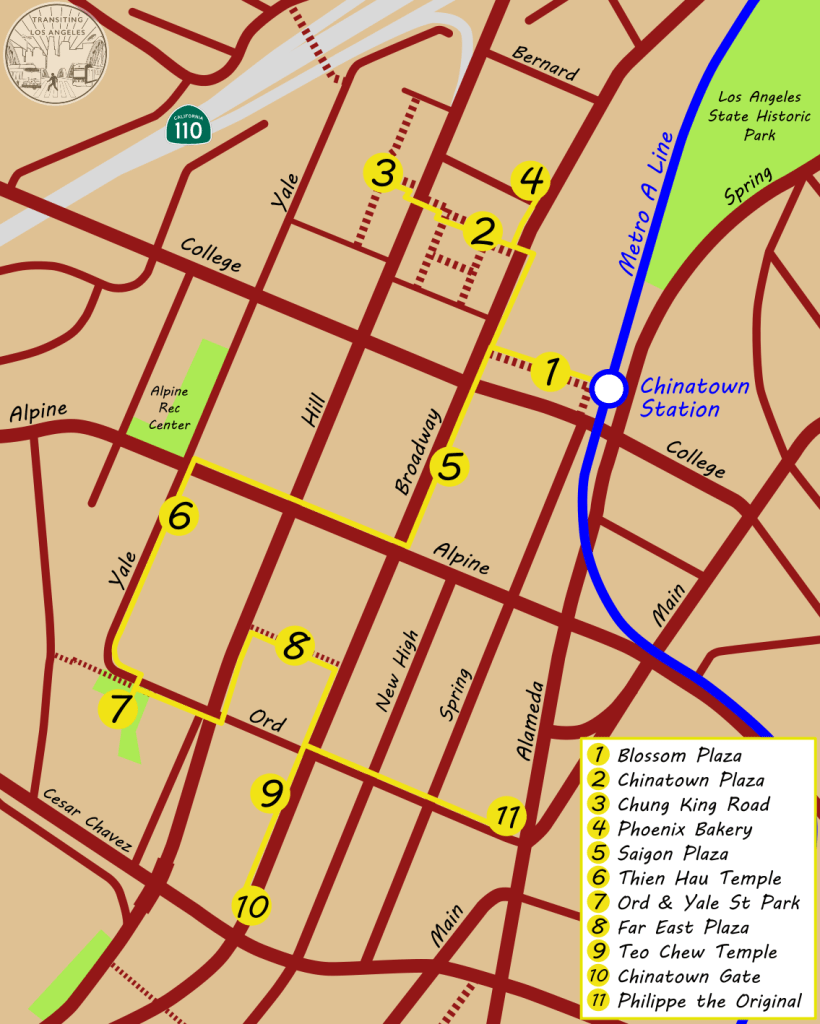
There are plenty of Metro buses travelling through the neighborhood along Broadway (#45) and Hill (#81, 90, and 94), and along Cesar Chavez on the southern edge of Chinatown (too many to list here). But from most places the fastest route would be the A Line, so we’re going to start our tour at Chinatown Station, which puts us right in the middle of everything.
Note that places in Chinatown tend to close early. After dark, the only places that tend to remain open are certain restaurants (and even those are usually closed by 9 or 10pm). Nighttime does offer the opportunity to view the gorgeous neon around Chinatown, but a lot of the stuff on this tour, particularly the shops, are only open during the day.
1: Chinatown Station/Blossom Plaza
The elevated platform of Chinatown Station offers a good vantage point over the neighborhood. To the north, you can see the tracks curve around Los Angeles State Historic Park, which we covered in a previous guide. Just a block to the south, the tracks run past the headquarters of Homeboy Industries, a local non-profit that provides job training and support to former gang members. One of their enterprises is the Homegirl Cafe, only open for breakfast and lunch on weekdays and an excellent place to grab a cup of coffee and a hearty breakfast.
To the west, you can see the entryway from the station to Chinatown: the passageway through Blossom Plaza, one of the newer developments surrounding the station. Of all the newer buildings in Chinatown, Blossom Plaza has to be the most friendly and public-facing, even if it still suffers from a little of the sterility that plagues any new development. It is beautifully lit at night, with a little rock feature with steam coming out of it in the plaza facing the station. Just to the north, the historic Capitol Milling Co. building—the oldest industrial building still standing in Los Angeles—has recently finished an extensive renovation, although it remains closed to the public.


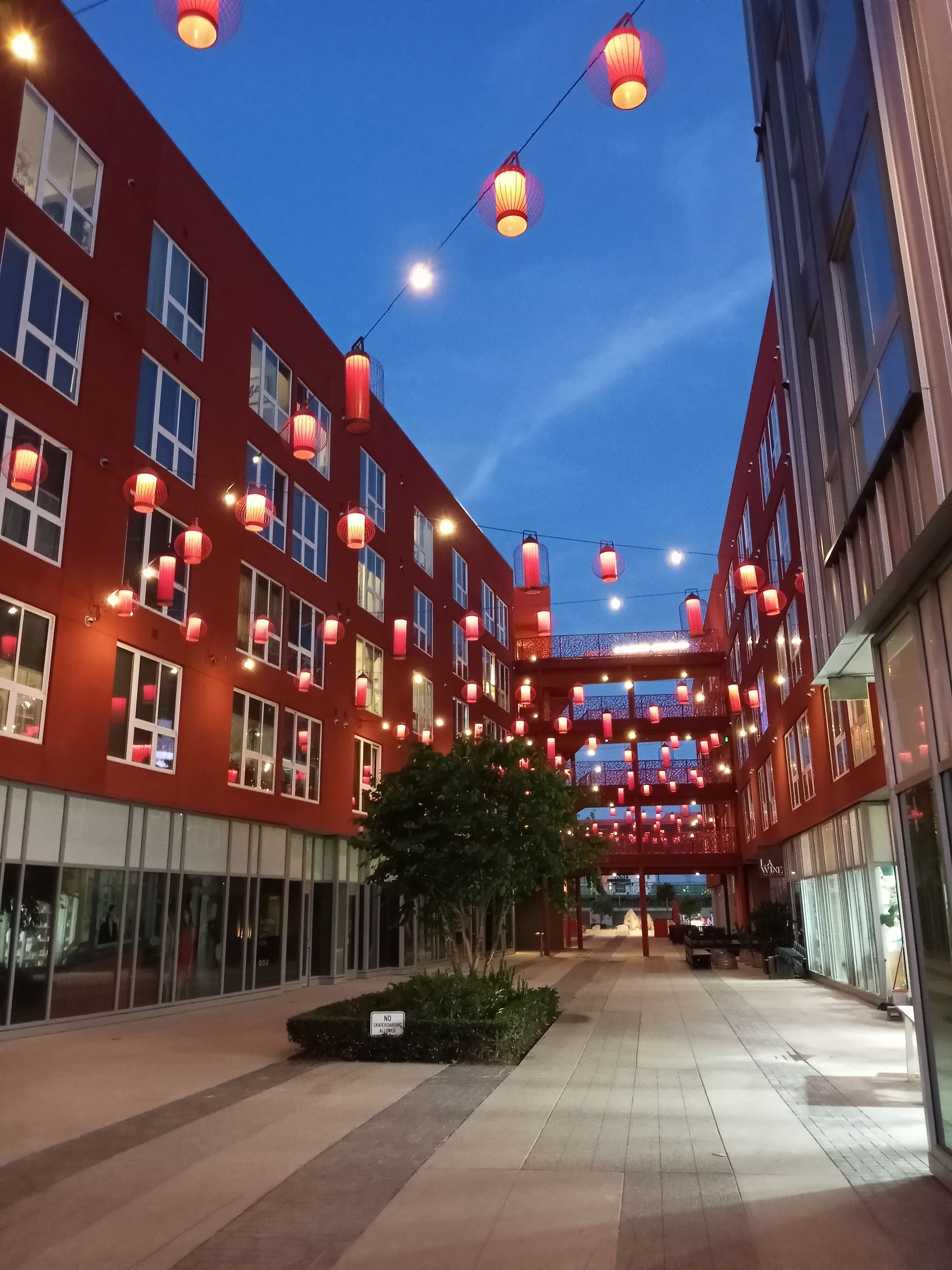
Walk on through Blossom Plaza, where you’ll pass a café, a ceramics studio, and a pretty decent art gallery called Eastern Projects. When you reach Broadway, turn right. After about a block you’ll be standing right across the street from the elaborate gateway to the most famous landmark in Chinatown.
2: Chinatown Central Plaza
From the 1870s to the 1930s, the city’s original Chinatown was located just to the south along Alameda, where Union Station is located today. Civic leaders of the time were very open in their disdain and racism, painting the neighborhood as a den of vice and corruption. With no plan to relocate the Chinese community, most of the neighborhood was razed to make way for the train station, and what little was left was demolished to make way for the 101 freeway in the 1940s. Today, the Garnier Building in the El Pueblo district, now home to the Chinese American Museum, is the only surviving remnant of Old Chinatown.
“New Chinatown,” as Chinatown Central Plaza was referred to when it was completed in 1938, was a first-of-its-kind development. With Chinese Americans excluded from purchasing property in most of the country at the time, Chinatown Central Plaza was the first planned Chinatown in the nation to be owned by Chinese Americans. Housing and offices occupied the floors above storefronts, with modern amenities. The buildings were designed in a mixture of Chinese and American architecture: pagodas, overhanging tile roofs, intricate woodwork, hanging lanterns, and colorful neon adorning the rooflines. It was a romanticized vision of Chinese culture, and when it opened it was very successful at drawing tourists.

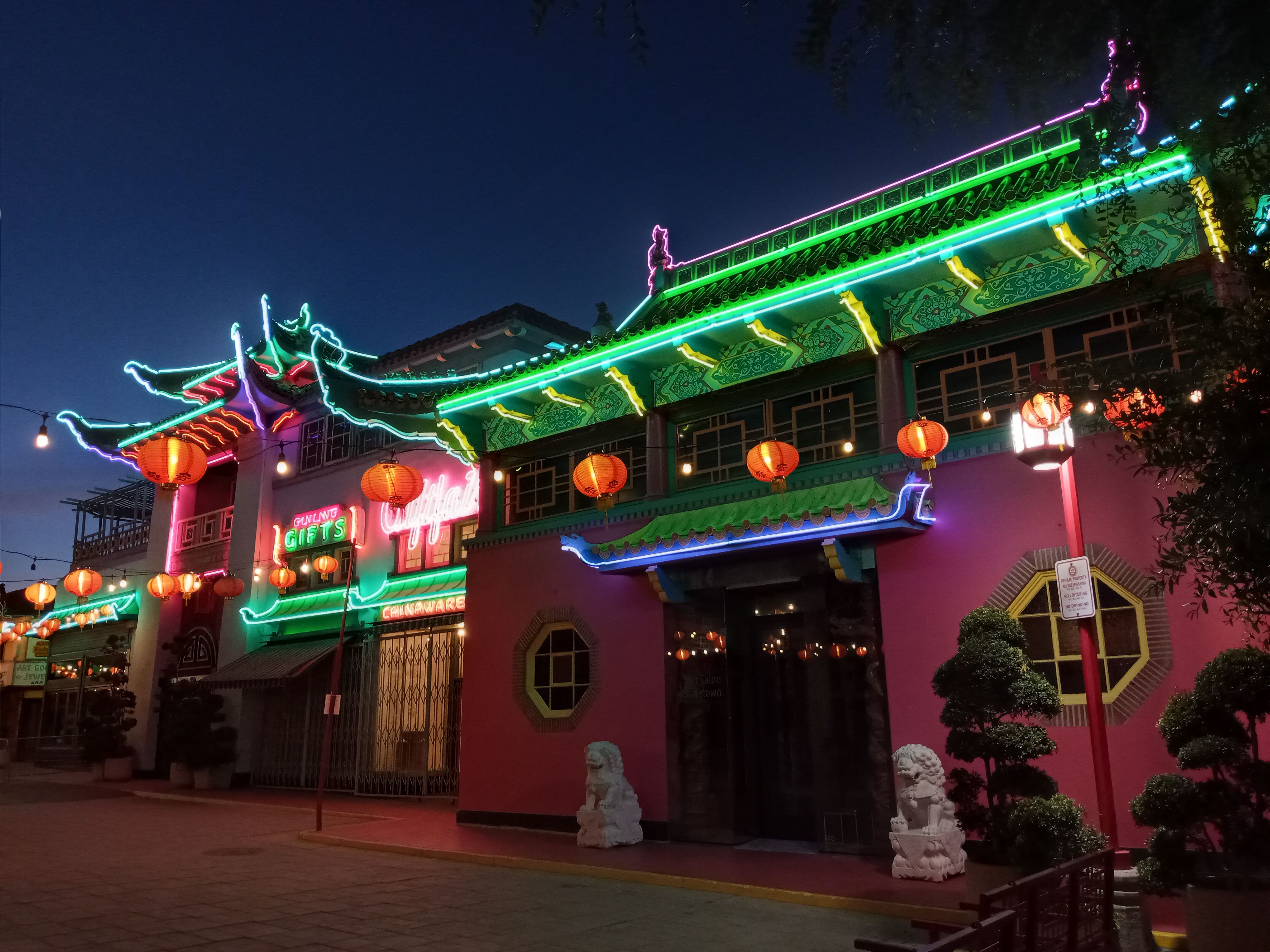
Over the years, foot traffic has declined as Chinese American culture has grown past the need for romanticized Chinatowns. Nowadays, the suburbs of the San Gabriel Valley are widely regarded as the heart of the city’s Chinese American community, while the novelty of Chinatown has worn off for most tourists. Nevertheless, Chinatown Central Plaza remains a beloved landmark, with colorful architecture and hanging lanterns, aglow in soft neon at night. The plaza is the center of community festivals, especially Lunar New Year when the Golden Dragon Parade circles the plaza and the walkways get covered in confetti.
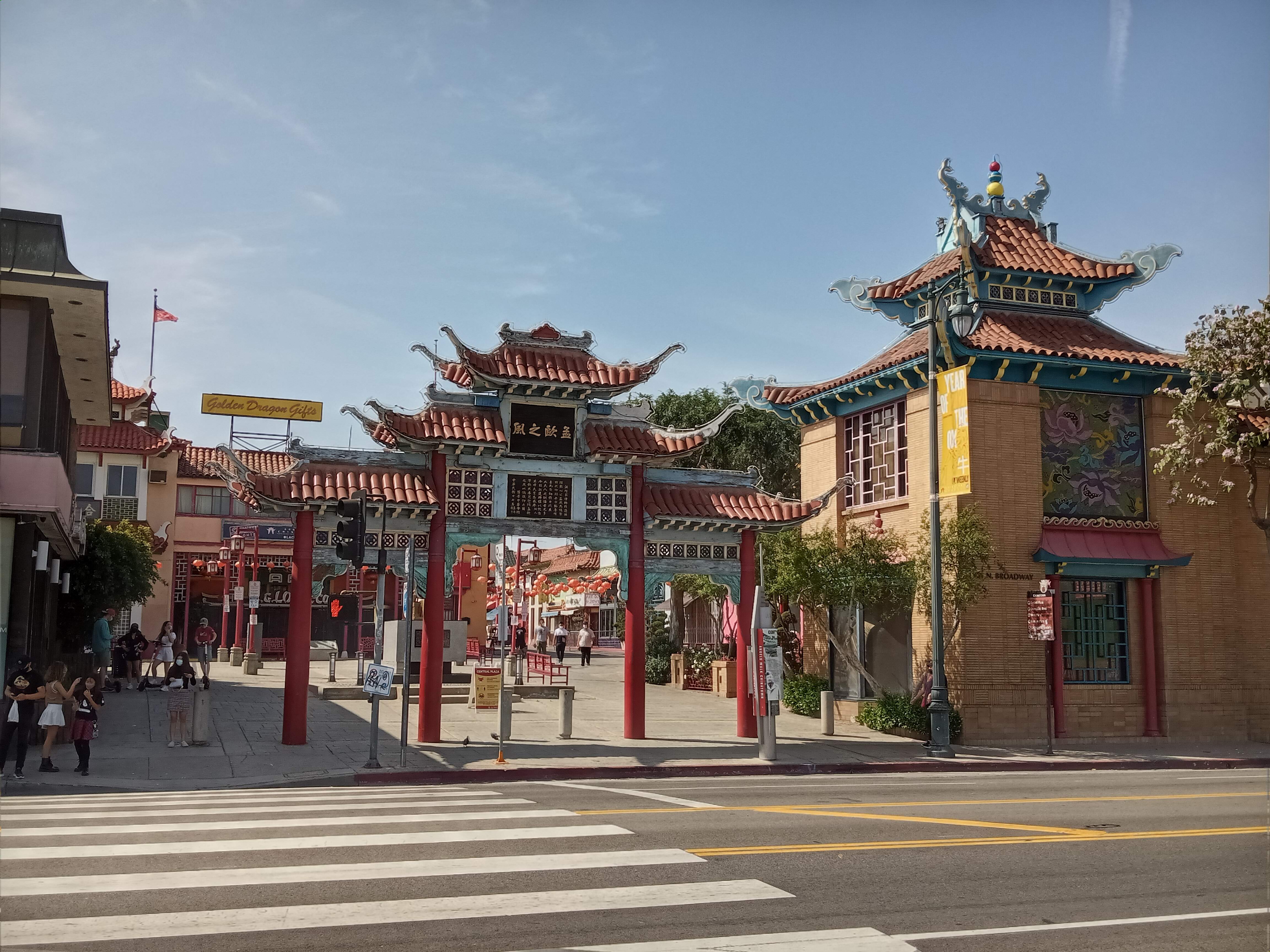
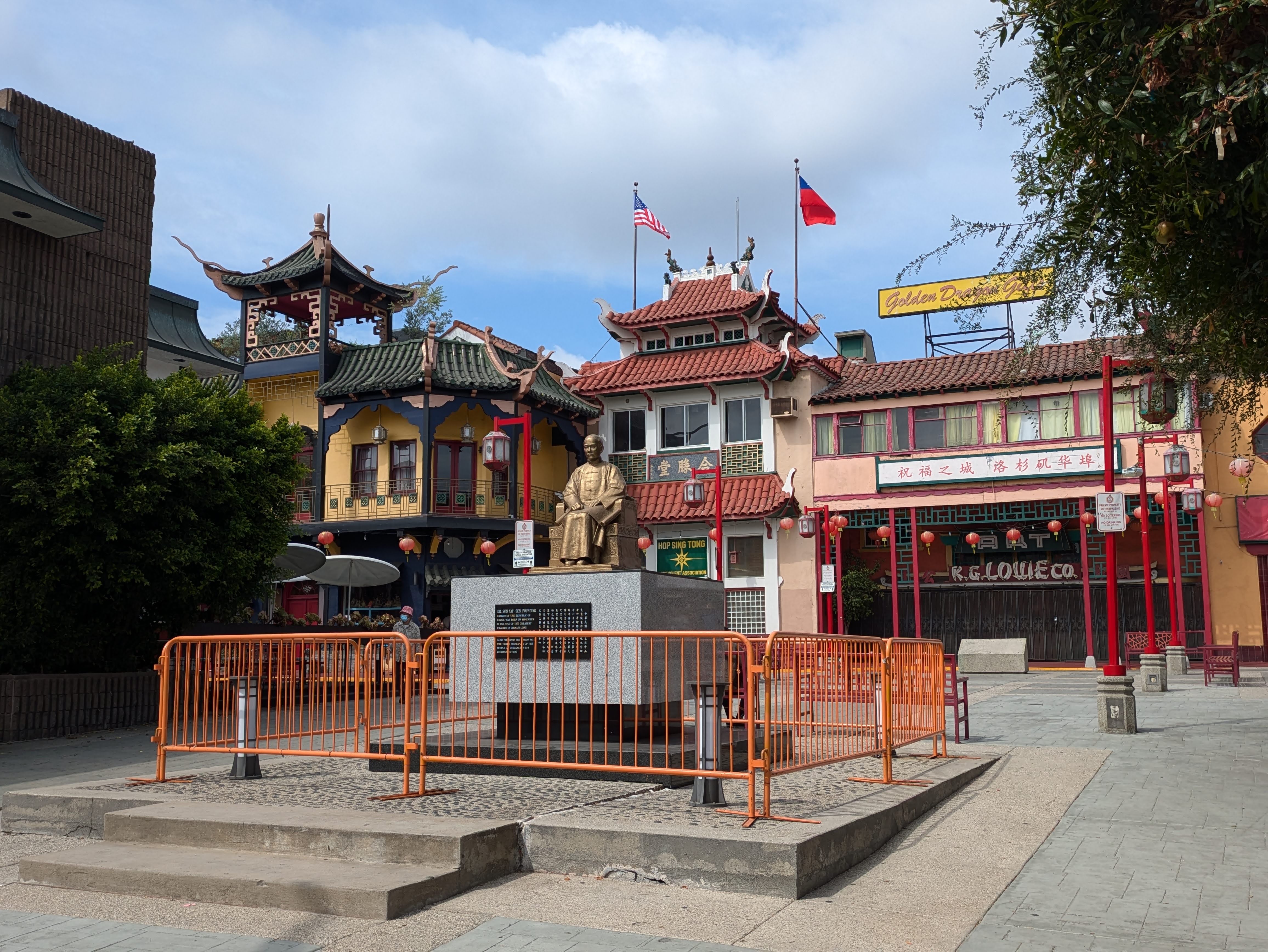
At the entrance to the plaza is an elaborate wooden gateway and a statue of Sun Yat-sen, Chinese revolutionary and the first leader of the Republic of China. Around the plaza you might notice the “blue sky, white sun, red earth” flags of the Republic of China (better known as the flag of Taiwan today), which was the national flag of China at the time the plaza was constructed, prior to the Chinese Communist Revolution of the late 1940s.
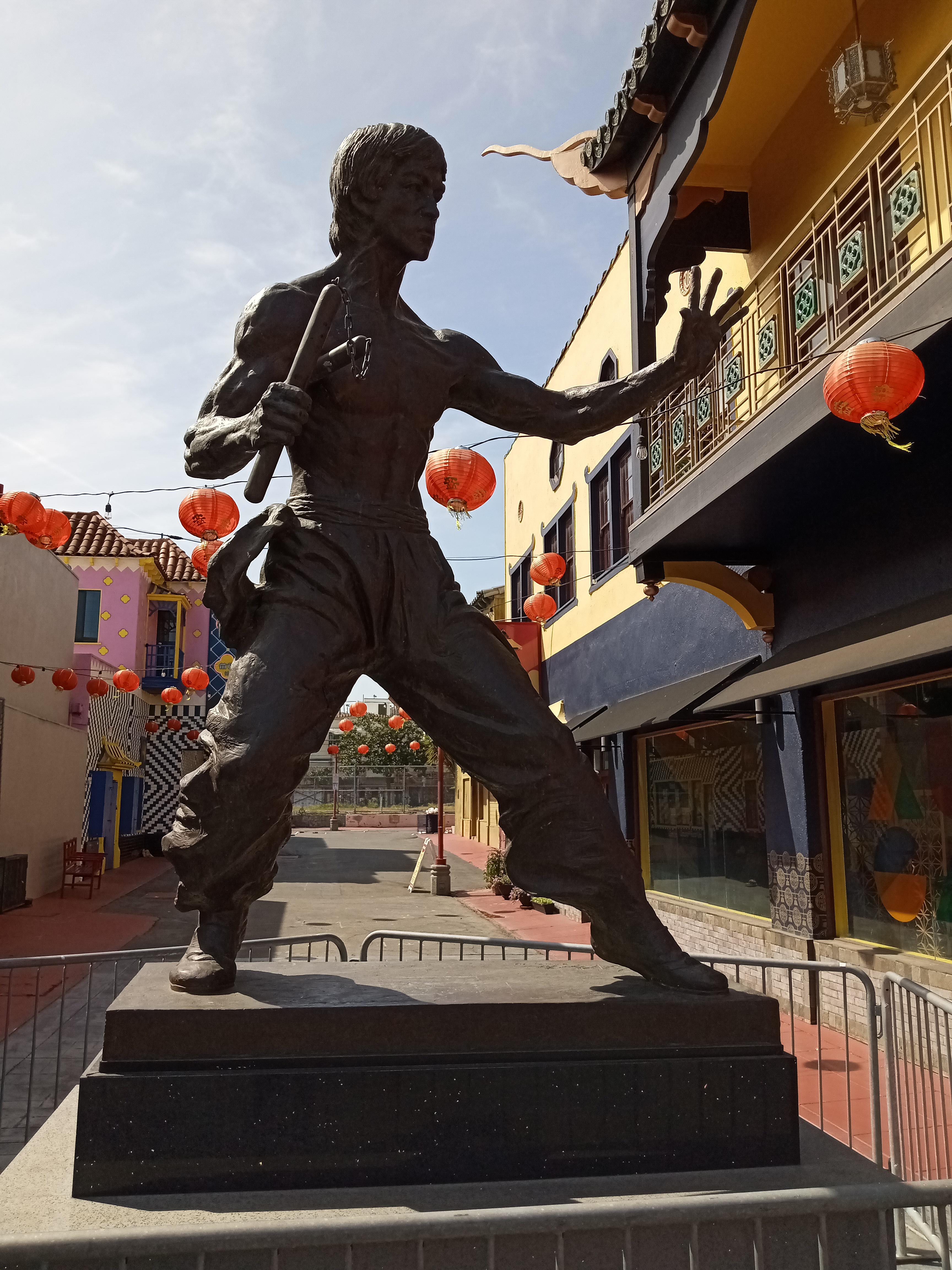
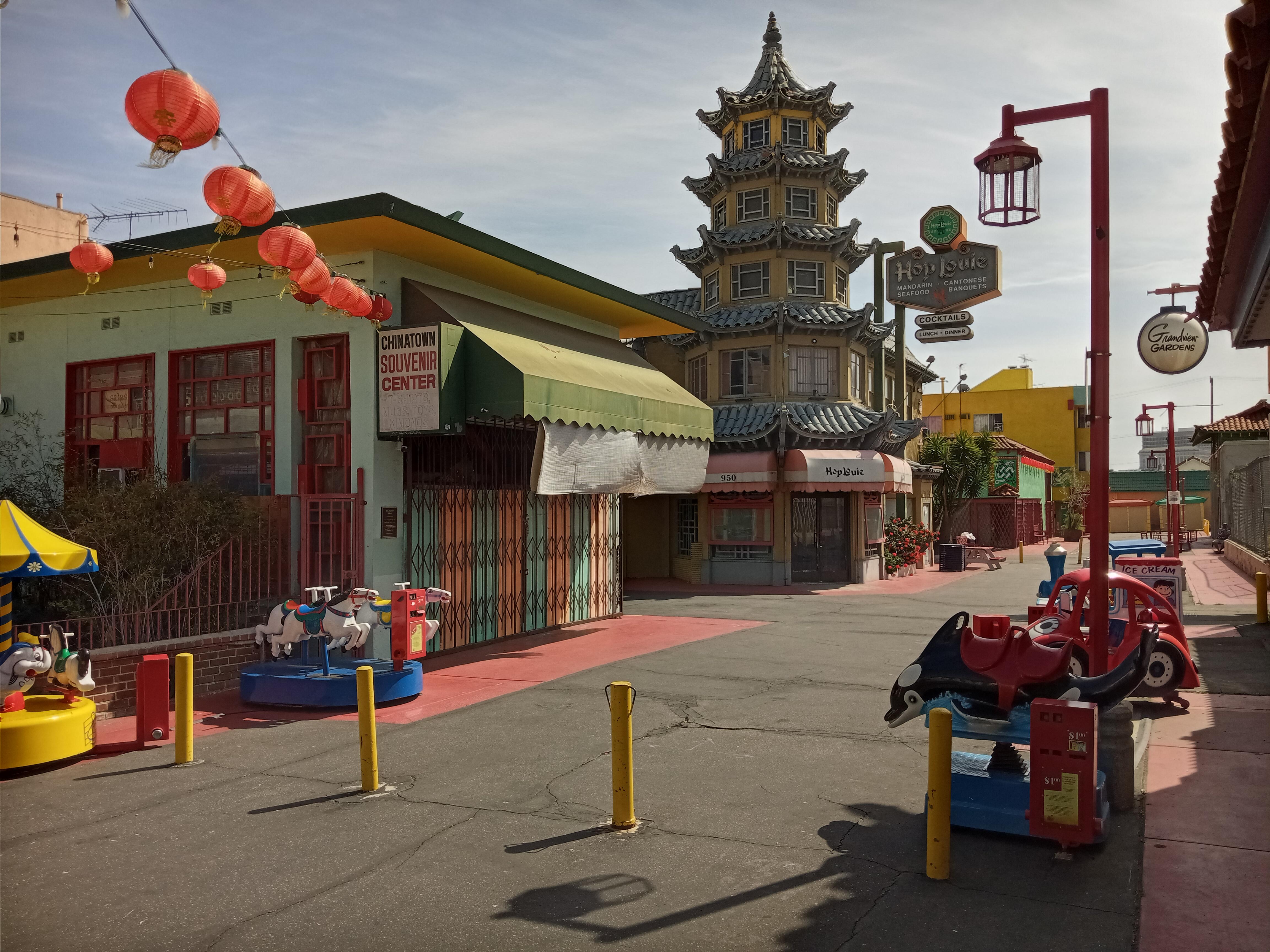
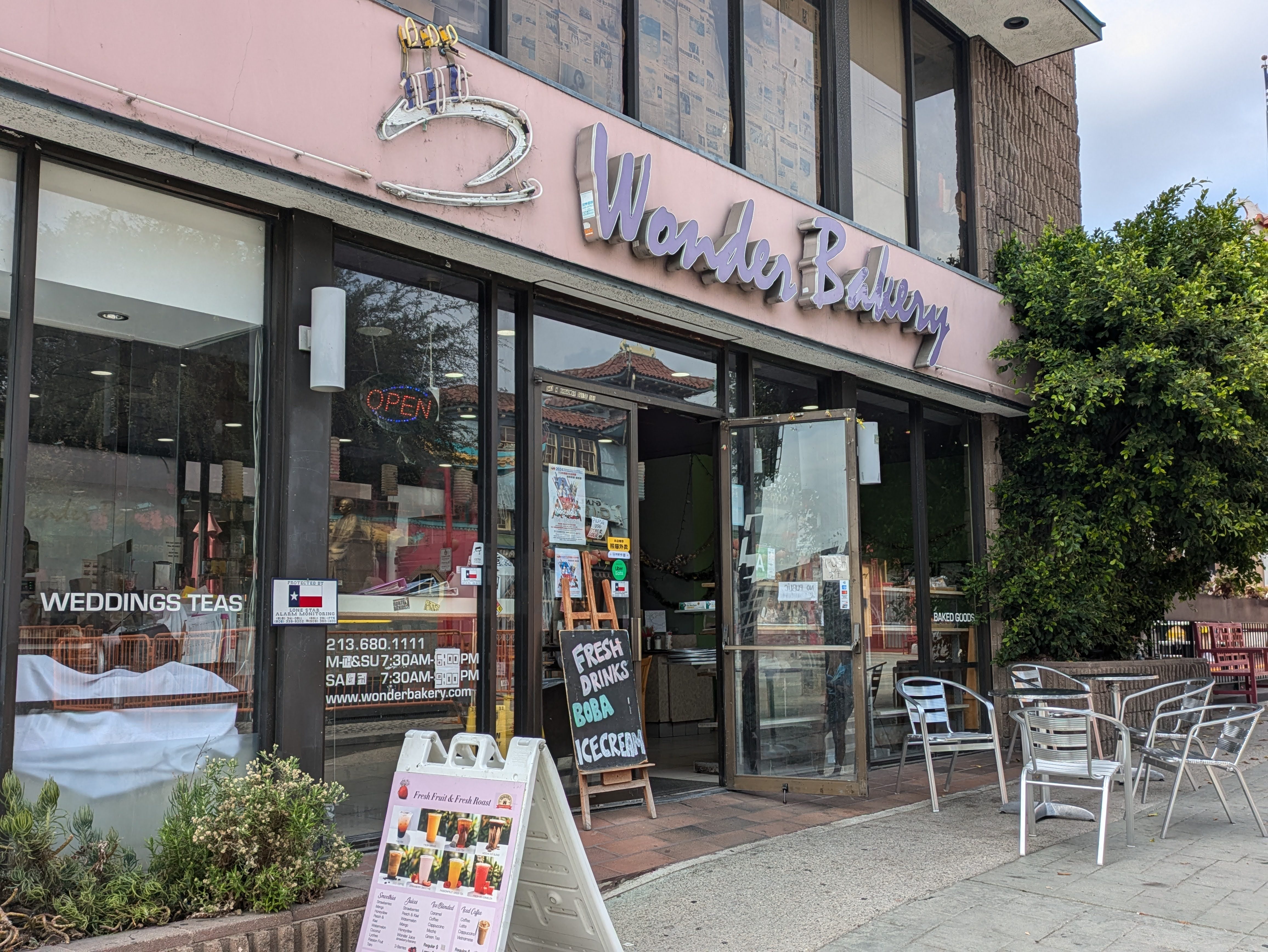
The plaza is full of fun souvenir shops and interesting landmarks. At the Broadway entrance is Wonder Bakery, a quiet bakery with delicious pastries, coffee, and boba drinks. Just to the left and down the alley is a larger-than-life statue of Bruce Lee in a fighting stance, a popular selfie spot for martial arts fans. In the center is an elaborate wishing well next to a bunch of kiddie rides. Facing Hill Street, just south of the west gate, is Thank You Coffee / Paper Plant Co., an adorable stationery store which shares a space with a coffee shop, with plenty of delightful paper products and really cute designs made by local artists. On weekend evenings, you can find the DS Night Market taking place in the back of the plaza, with most of the stalls selling Thai food, with some Korean and Taiwanese stalls mixed in, all of it delicious.
3: Chung King Road
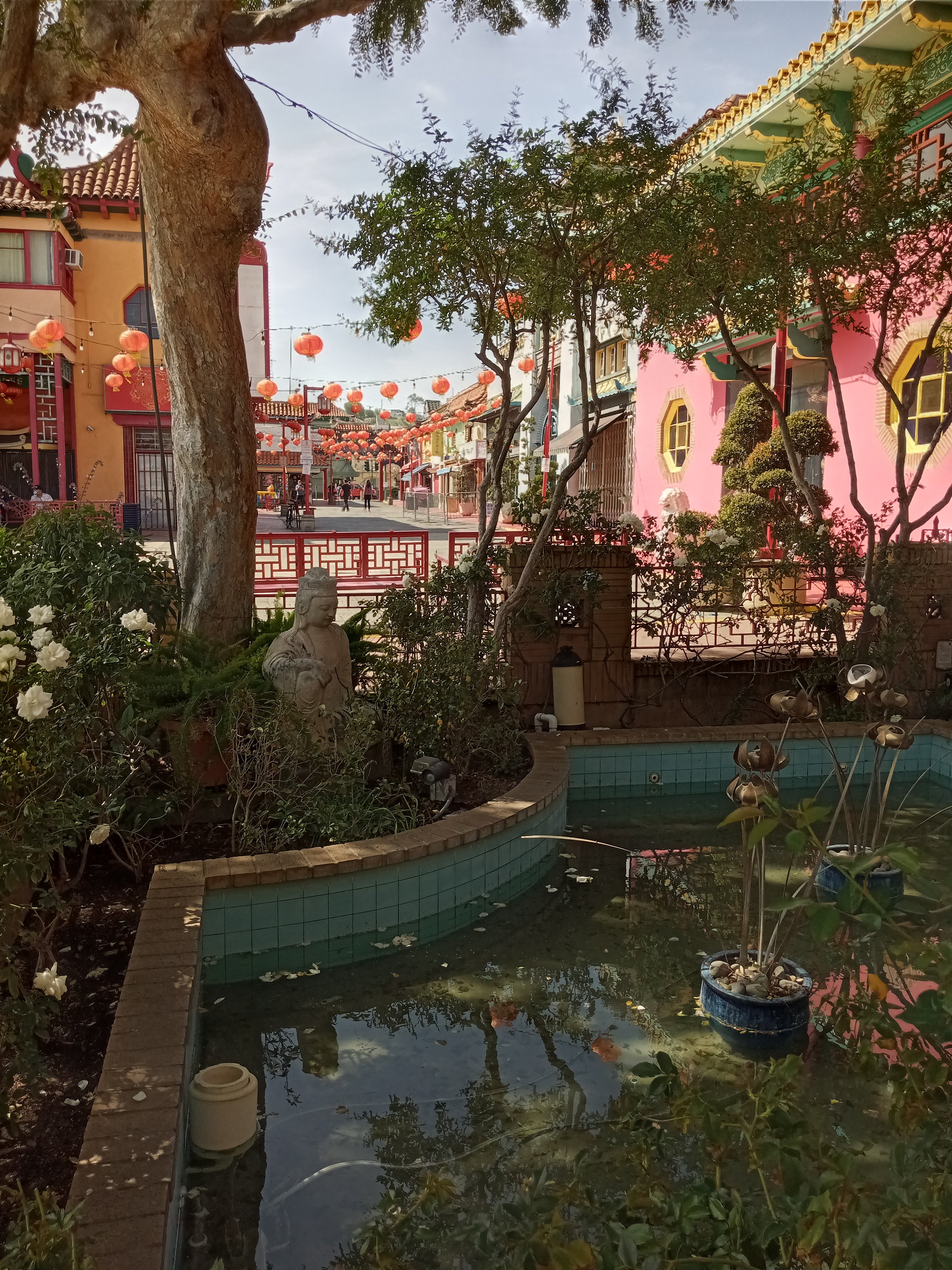
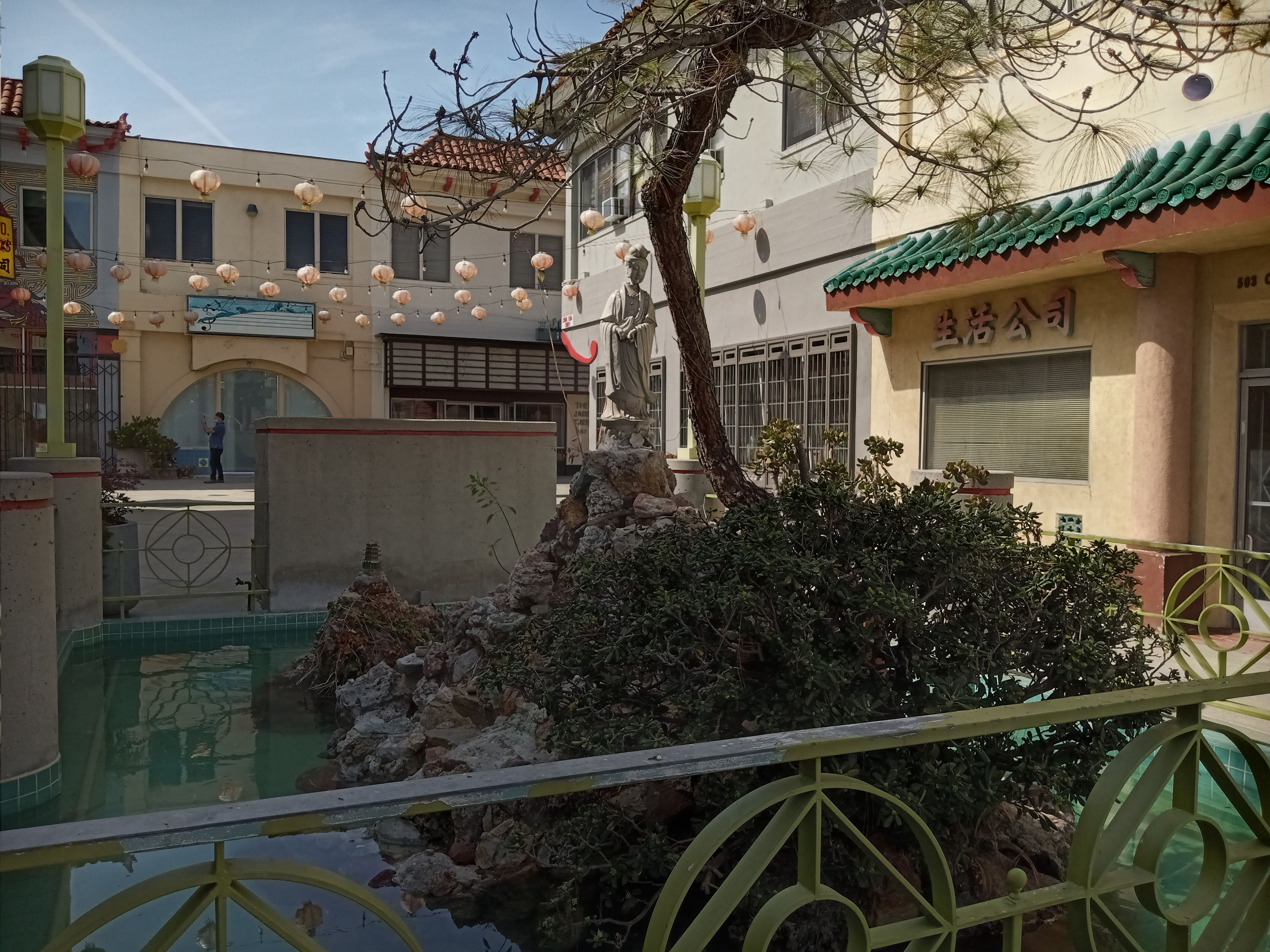
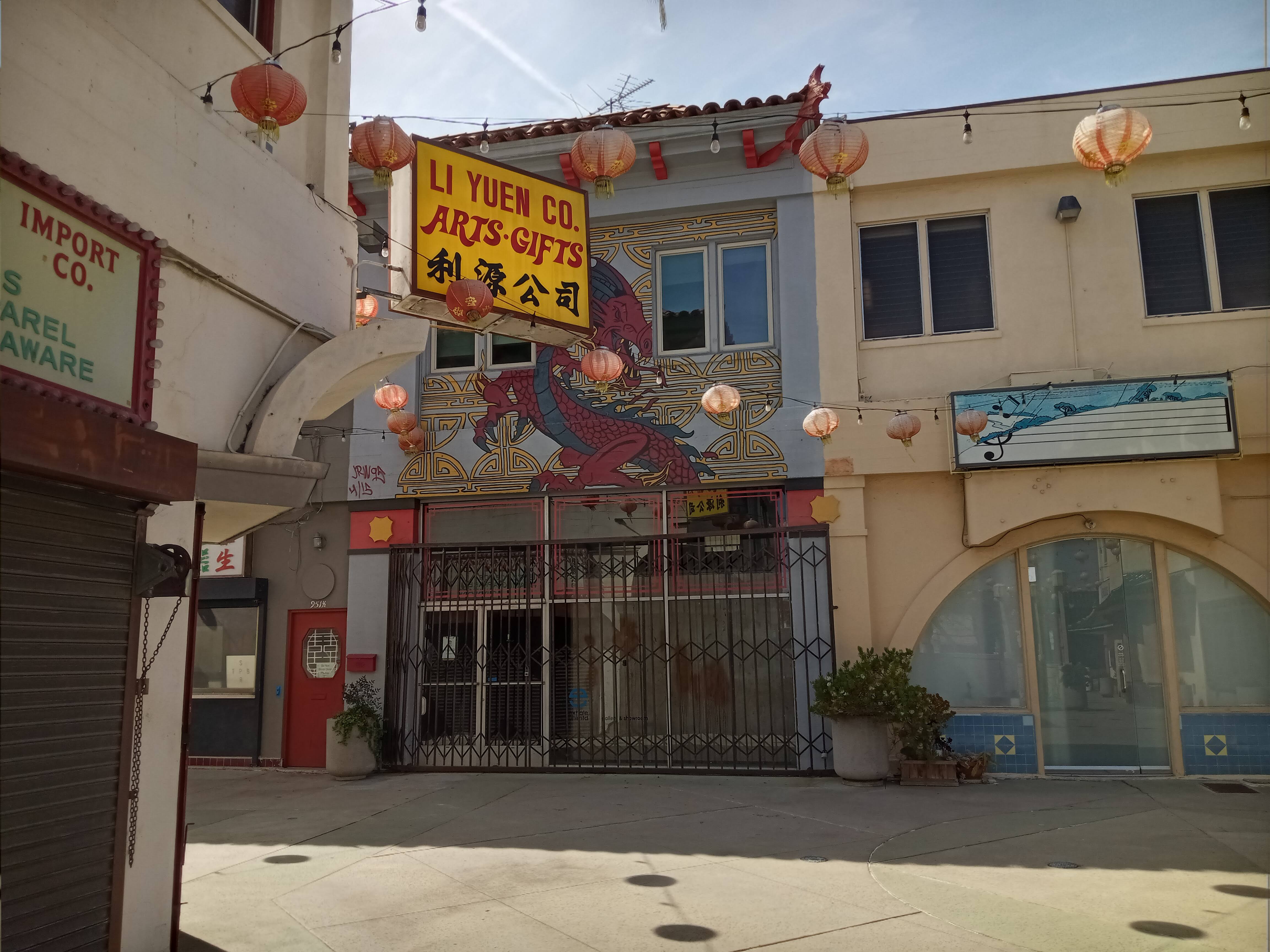
Chung King Road is essentially the western extension of Chinatown Central Plaza, sitting across Hill Street from the plaza proper and with more hanging lanterns, Chinese architecture, and colorful murals. But where the plaza is typified by gift shops and souvenir stores, Chung King Road is dominated by art galleries and antique shops. At the entrance is a little plaza with a tranquil fountain, and in the back is a quiet pedestrian alleyway with apartments sitting above the galleries and stores that line the alley. A lot of the studios have very limited hours or are only open by appointment; check ahead for gallery openings.

Backtrack through Chinatown Central Plaza to Broadway, then make a left.
4: Phoenix Bakery
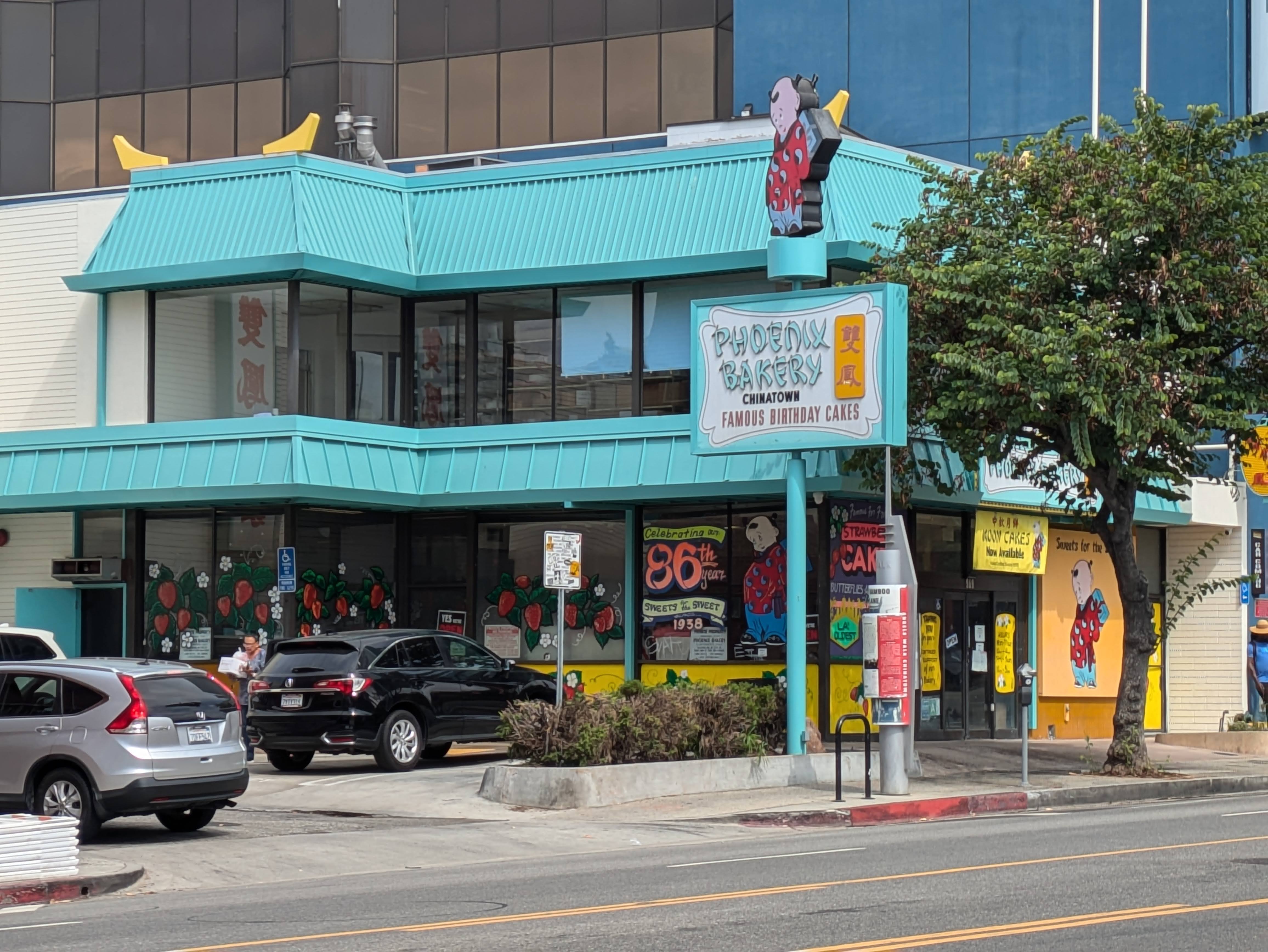
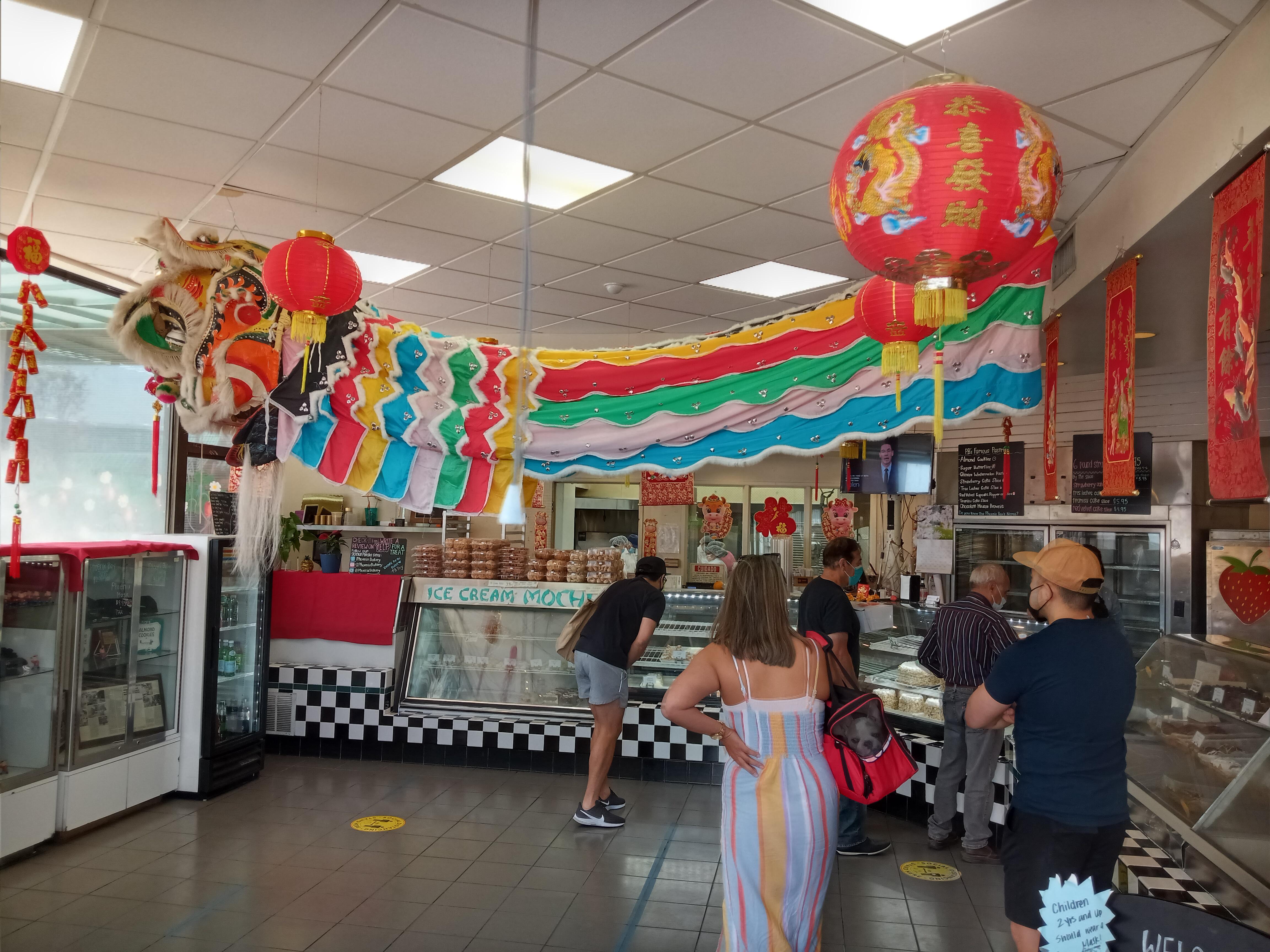
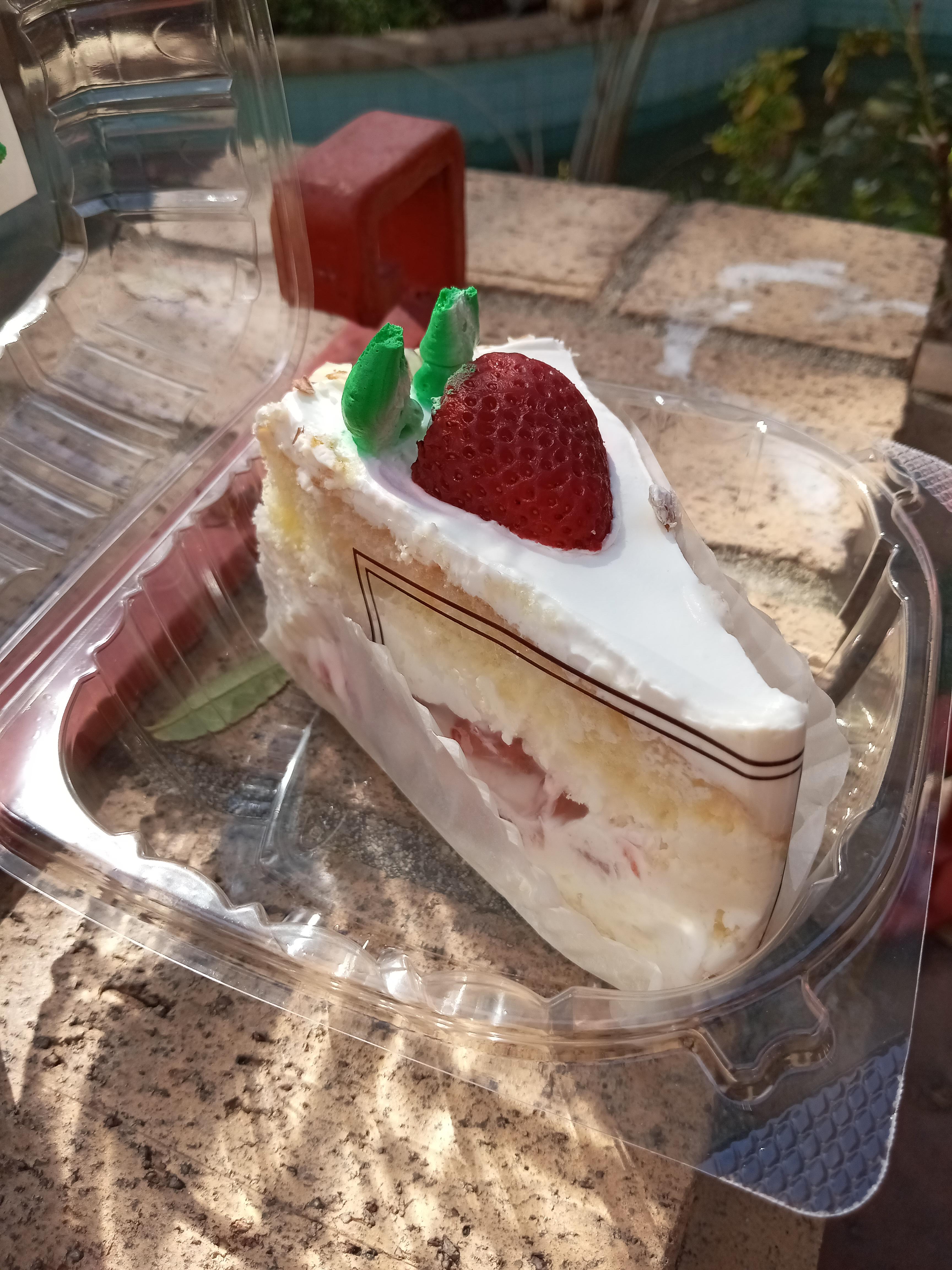
Maybe the most beloved business in Chinatown, Phoenix Bakery is as old as the neighborhood itself, opening in Chinatown Central Plaza the year it was completed in 1938. In the 1970s, it moved to its current location on Broadway a block north of the plaza and has remained since. As such a mainstay of the community, it has become a local tradition to savor their cakes and pastries for special events. The almond cookies, watermelon pastries, and strawberry cakes are among the favorites, but it’s all delicious.
If you happen to be in Chinatown on a Sunday afternoon, you can drop by the Chinese Historical Society of Southern California, which sits around the corner at 415 Bernard Street, just a block north of Phoenix Bakery. The historical society is located inside a pair of Victorian houses dating back to the 1880s, making them some of the oldest buildings still standing in Chinatown. Inside is a little museum on the history of Chinatown, with displays of artifacts from the original Chinatown, as well as a research library and a small bookshop. The center is only open to the public on Sundays 2-5pm.
Backtrack down Broadway, past the Chinatown Central Plaza and Blossom Plaza. When you reach College Street, cross to the other side of Broadway and continue south until you reach the bustling vendor market with all the colorful umbrellas.
5: Saigon Plaza
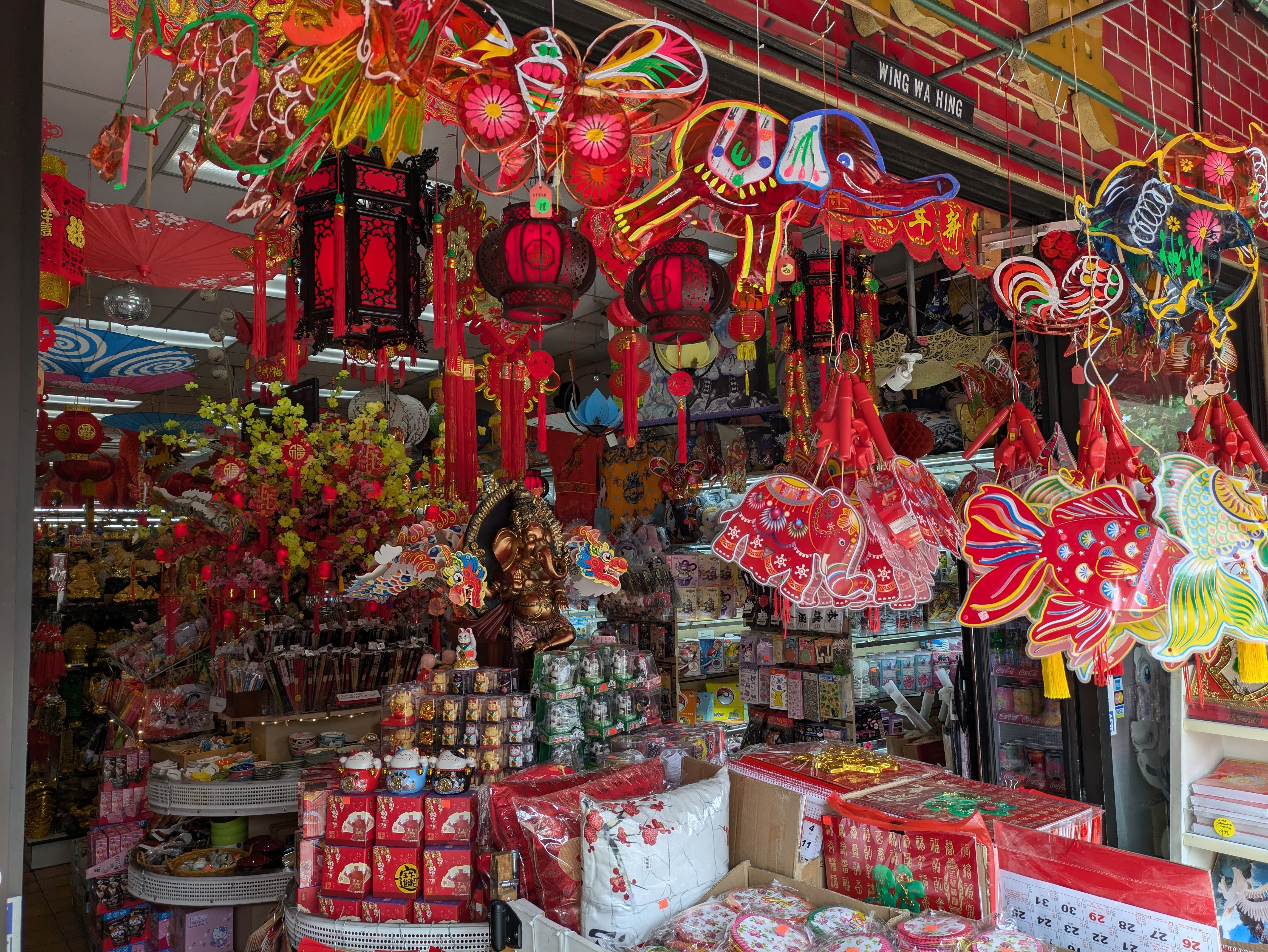
This stretch of Broadway is particularly active, with many shops spilling out onto the sidewalk, selling tchotchkes, clothing, souvenirs, umbrellas, lanterns, houseplants, and even tiny fountains and little pet turtles. The west side of Broadway is lined with small businesses like restaurants, bubble tea stands, bakeries, pharmacies, and souvenir stands.
The other side of the street is dominated by shopping centers and vendor markets, with Saigon Plaza being the most active. Weekends are the busiest times, when the open-air aisle can get really packed beneath colorful umbrellas and tarp roofs flapping overhead. Inside, you’ll find stalls selling clothing, accessories, toys, and household goods. In the back, Saigon Plaza merges into the adjacent Dynasty Center, a quieter shopping center which extends down to Spring Street and wraps around to an entrance further down Broadway.

Make a right at Alpine Street and continue up for two blocks, where you’ll enter the relatively quiet residential area of Chinatown. Make a left onto Yale Street.
6: Thien Hau Temple
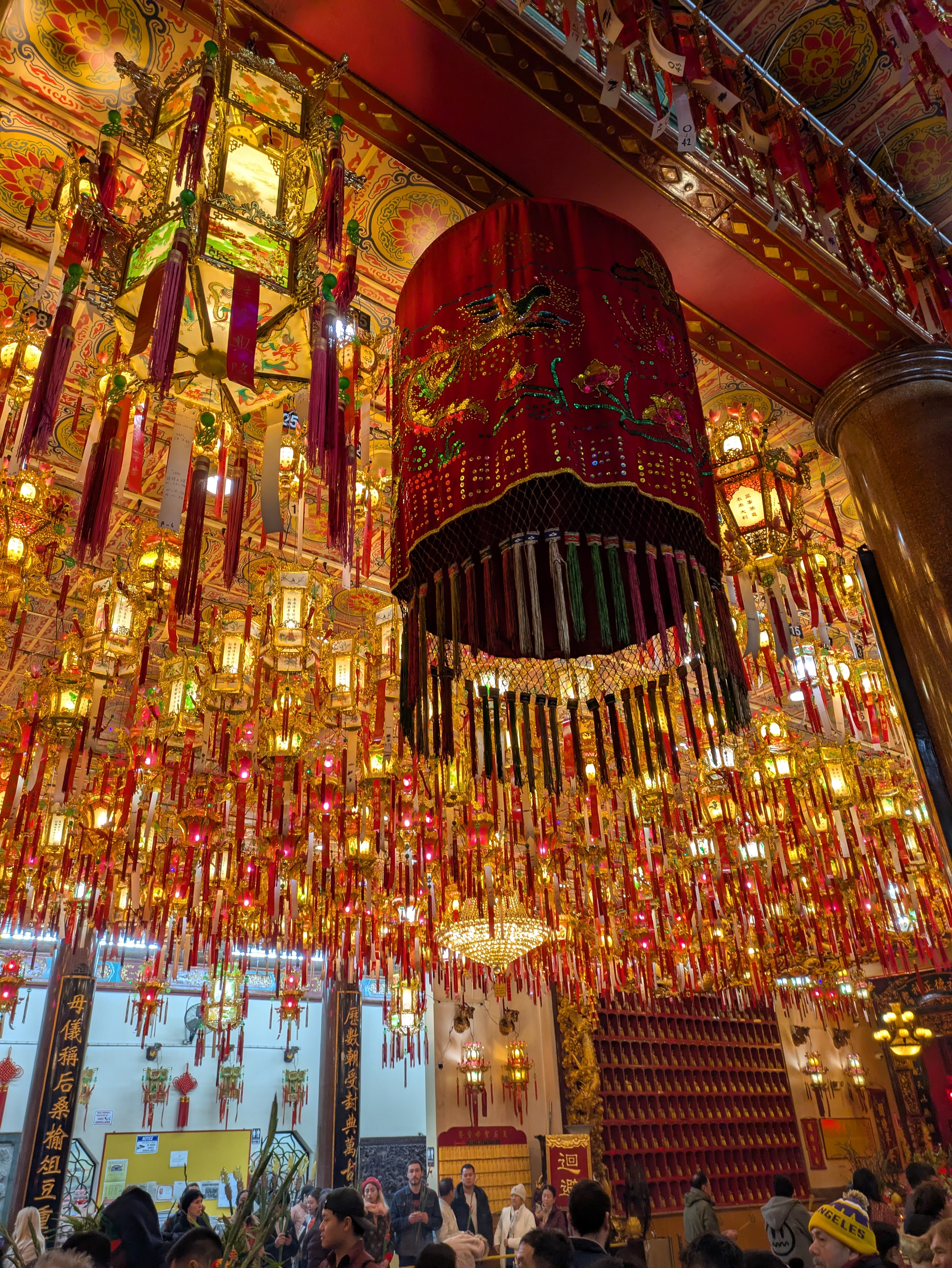
Of Chinatown’s several temples, this one is the largest and most elaborate. Built in 2005, this Taoist temple owes its existence to a local group of devout Vietnamese refugees primarily from the Ca Mau province, on the southern tip of Vietnam. Many of the refugees were “boat people,” those who fled by sea in the wake of the Vietnam War. Thien Hau, as she is known in Vietnam, is the Taoist goddess of the sea and one the devout ask for safe passage over the water.
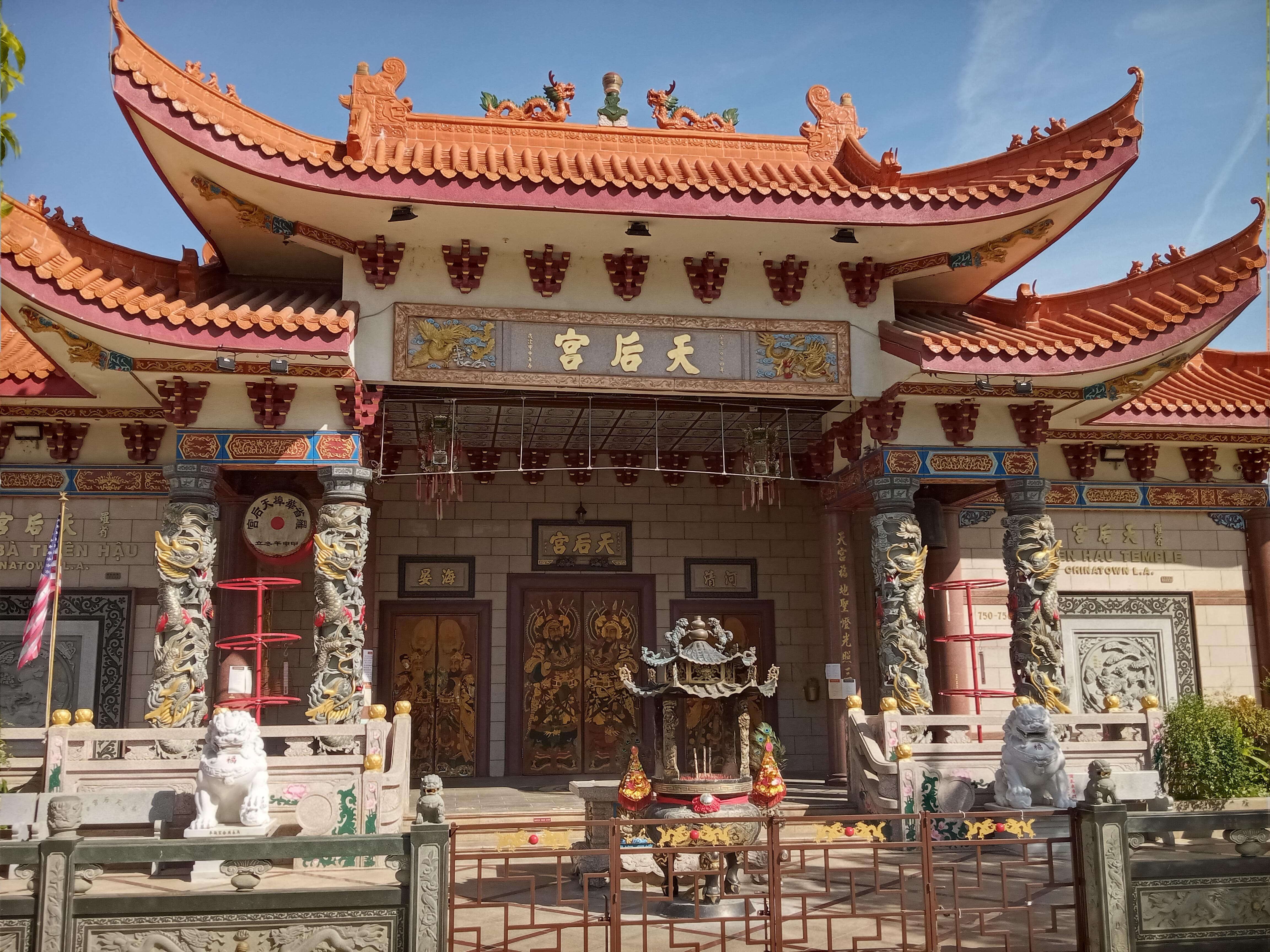
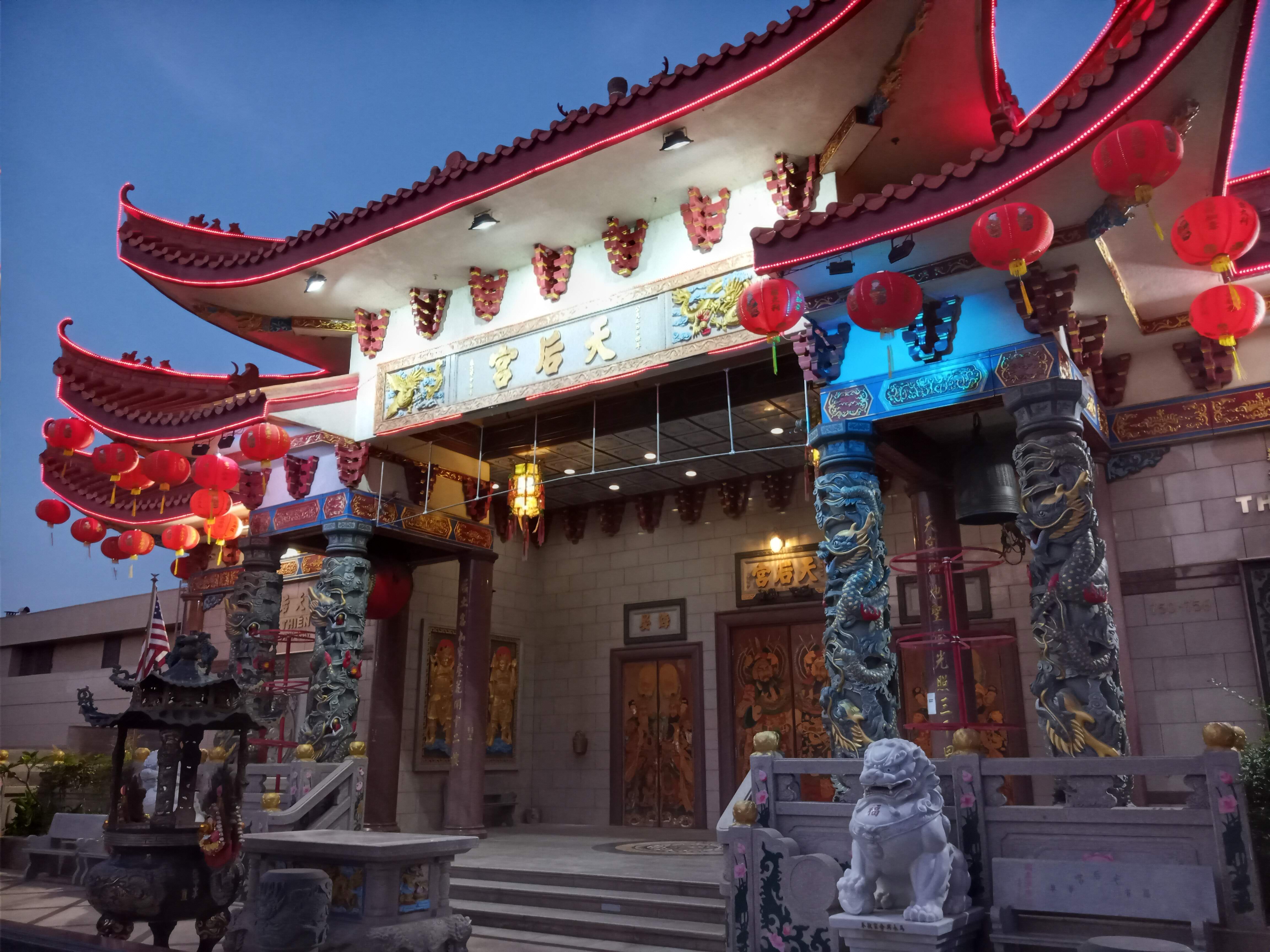
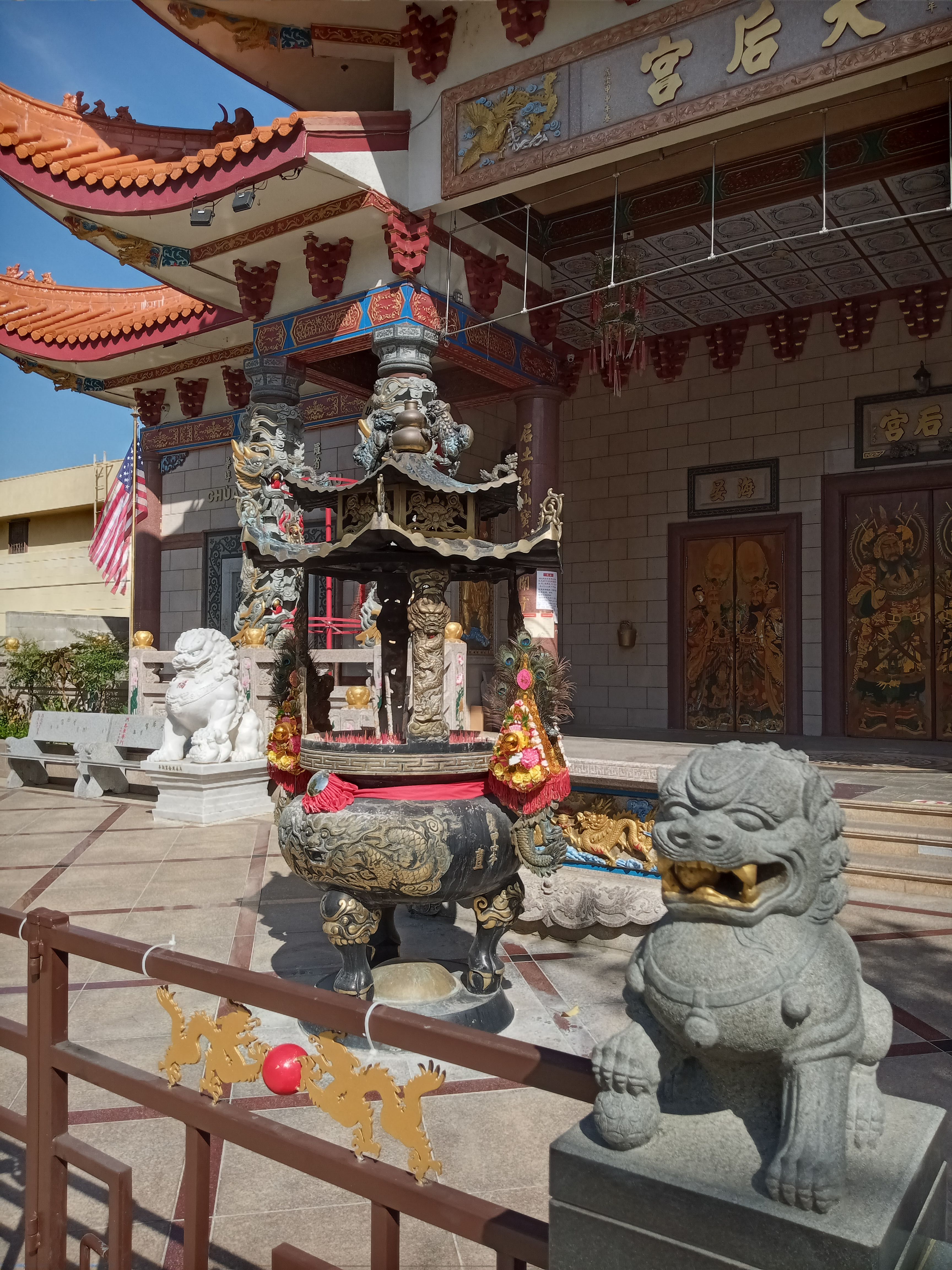
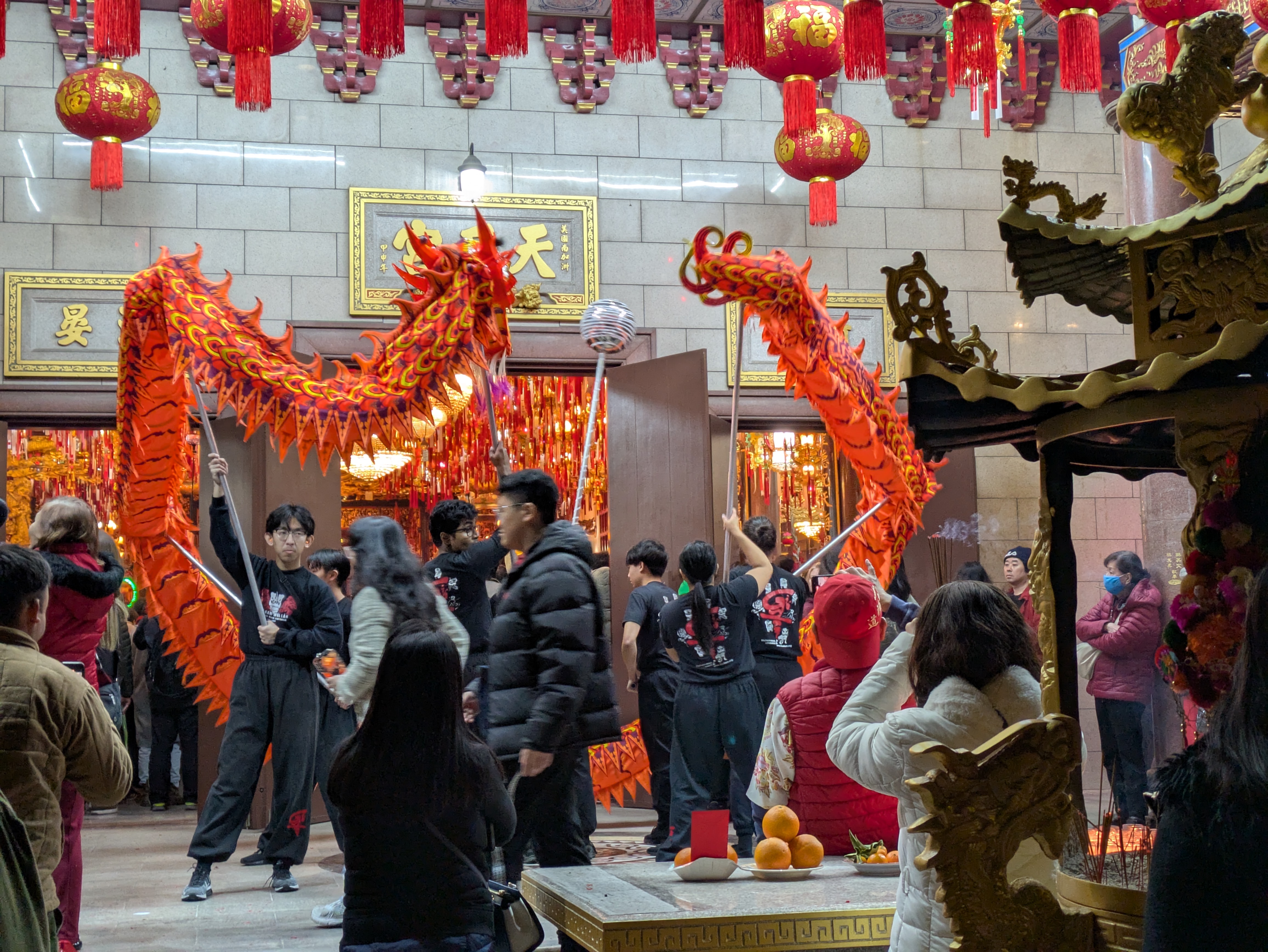
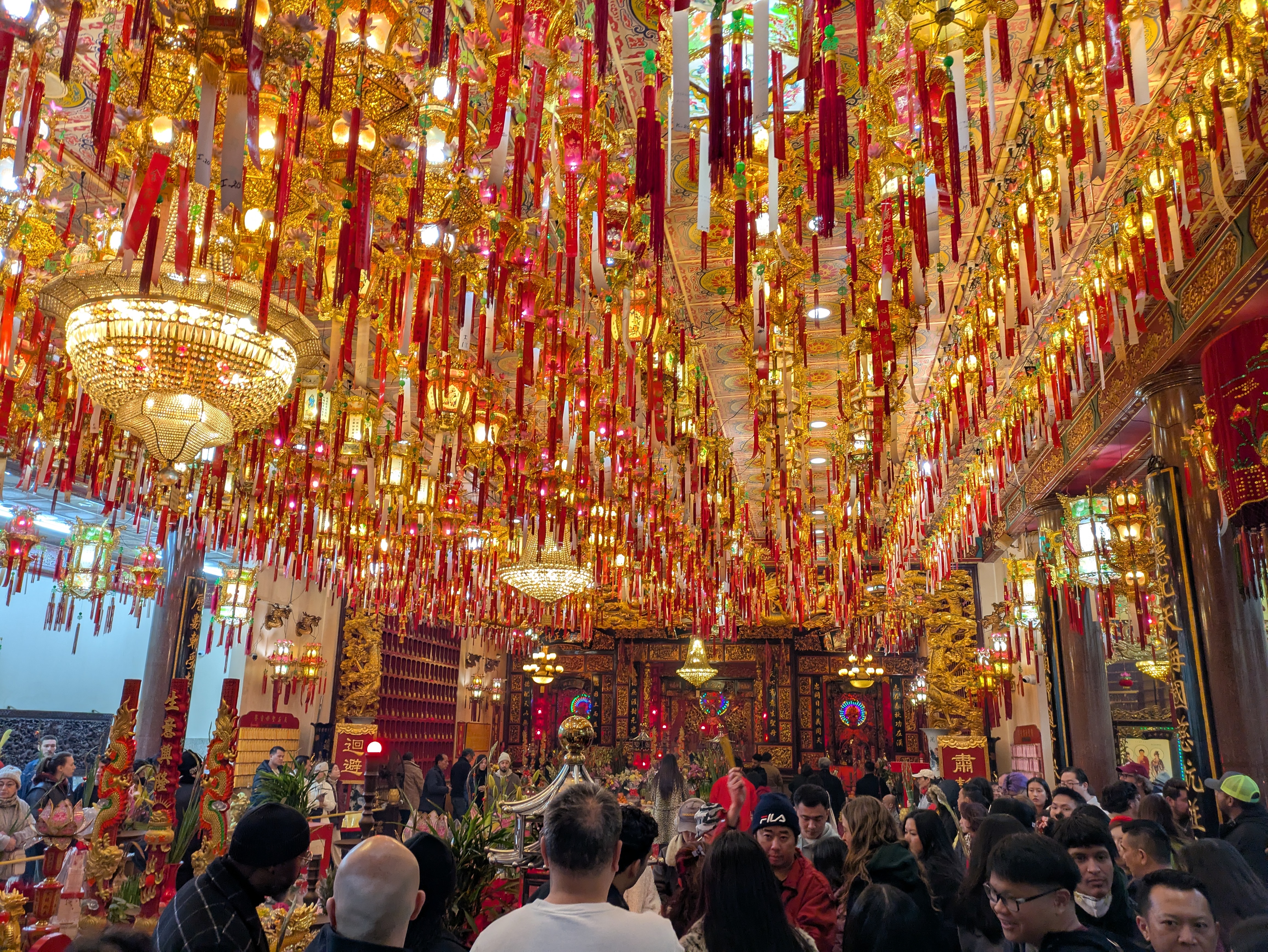
If you get a chance to peek inside during opening hours, it’s worth it to gaze at the shrines and admire the intricate decorations carved on the columns and the dozens of lanterns hanging from the ceiling. But the best time to come is definitely on the eve of Lunar New Year, when hundreds attend the new year ceremony to pray and receive blessings. The temple will be jammed pack with people and thick with the smoke of thousands of incense sticks, and as midnight draws near, local school children perform lion dances on the street out front before firecrackers are set off. It’s loud, claustrophobic, and an absolutely glorious sight to behold.
7: Ord and Yale Street Park
Down the block from the temple, where Yale curves into Ord Street, a brand new park has been built on the steep slope behind the local branch of the public library. It’s made up of a series of concrete terraces linked by stairways and ramps. In the little plaza at the front, a small waterfall cascades down a rock garden, while tucked in the back is a playground and a few sheltered picnic tables, with restrooms and exercise equipment. Don’t be intimidated by the fences and the keypads on the gates; when we visited, we found that the two gates facing the stairway were unlocked, even if the main gate under the ‘welcome’ arch was locked.

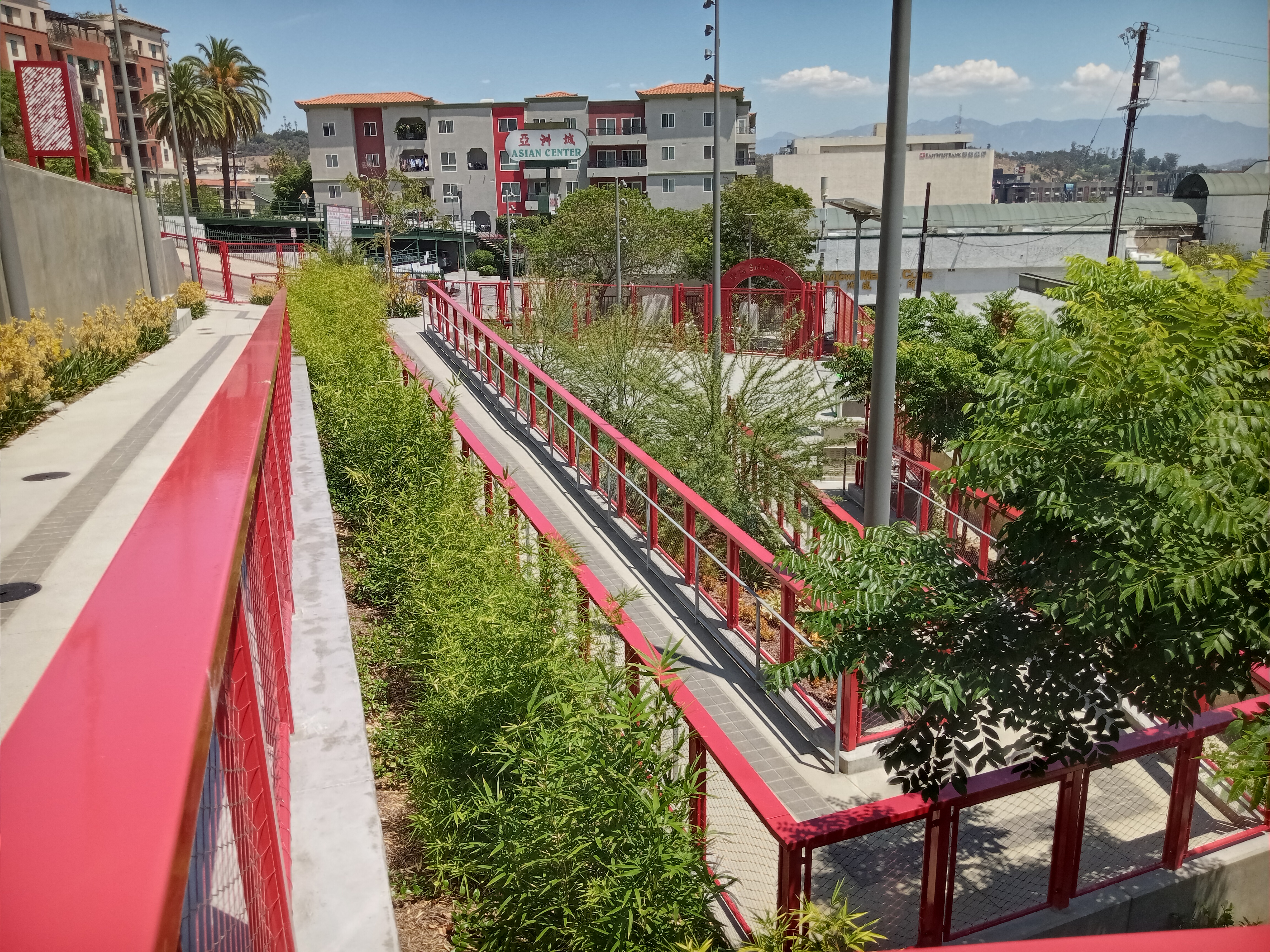
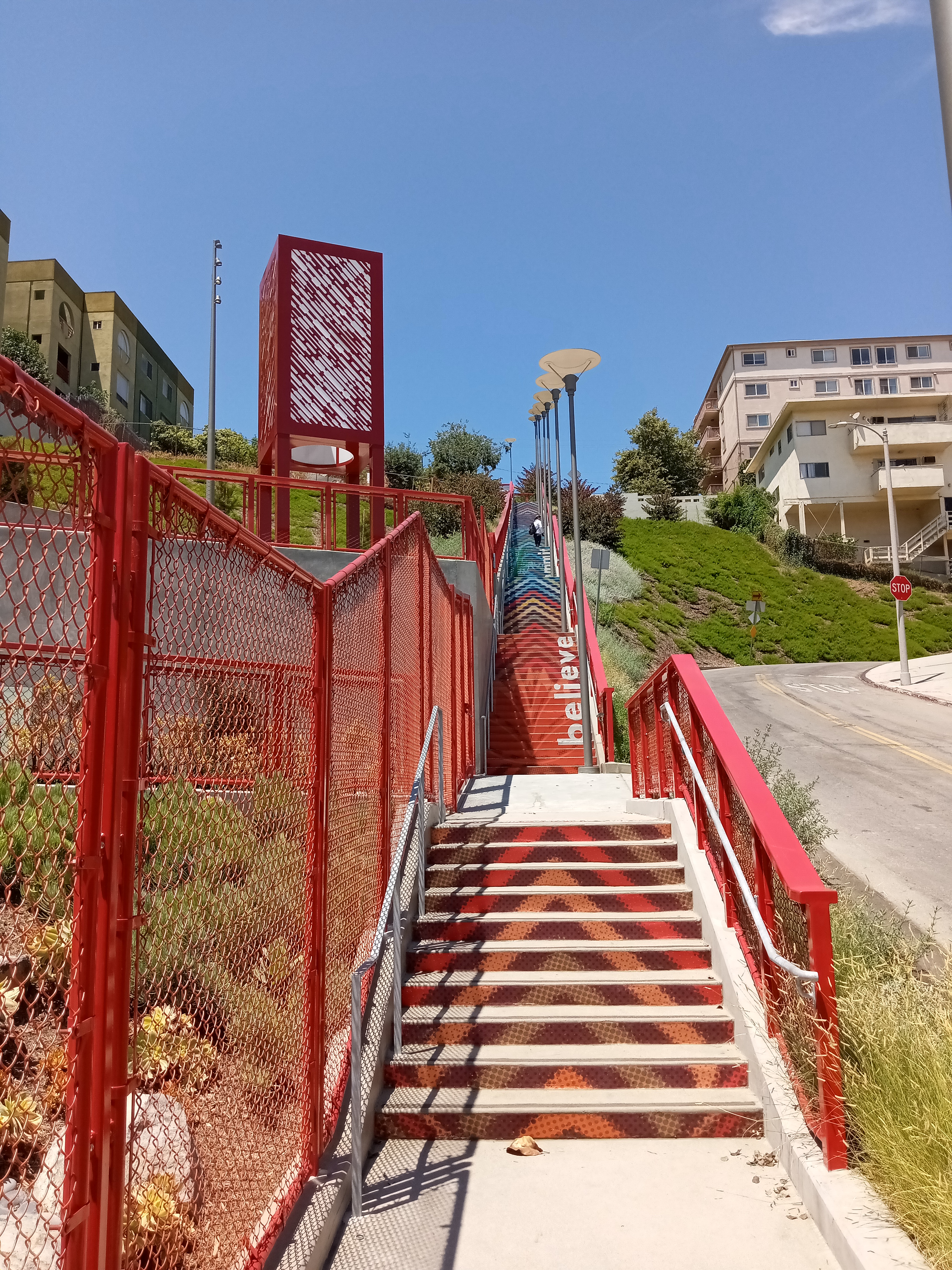
The centerpiece of the park is a long, brightly painted stairway linking to the street and apartment buildings atop the hill. At 147 steps, it’s a steep climb but you’ll be rewarded with an excellent view over all of Chinatown. From the top, you can look out towards the mountains, watch the bustle of the neighborhood below, or spot trains pulling into Union Station.


Continue down Ord to Hill Street, cross the street and turn left up Hill. You’ll pass an empty lot adorned with an old sign sporting a dapper turtle wearing a top hat and monocle. This was once the site of the Velvet Turtle restaurant, and since it was demolished the site has been the subject of a lot of development speculation, but nothing seems to have come of it so far.
8: Far East Plaza
This two-story mall spans the block between Hill and Broadway and is a major foodie destination. For a while, seemingly every up-and-coming chef was opening a place in Far East Plaza, with the most popular being Howlin’ Rays, with long lines for their amazing Nashville-style hot chicken sandwiches.
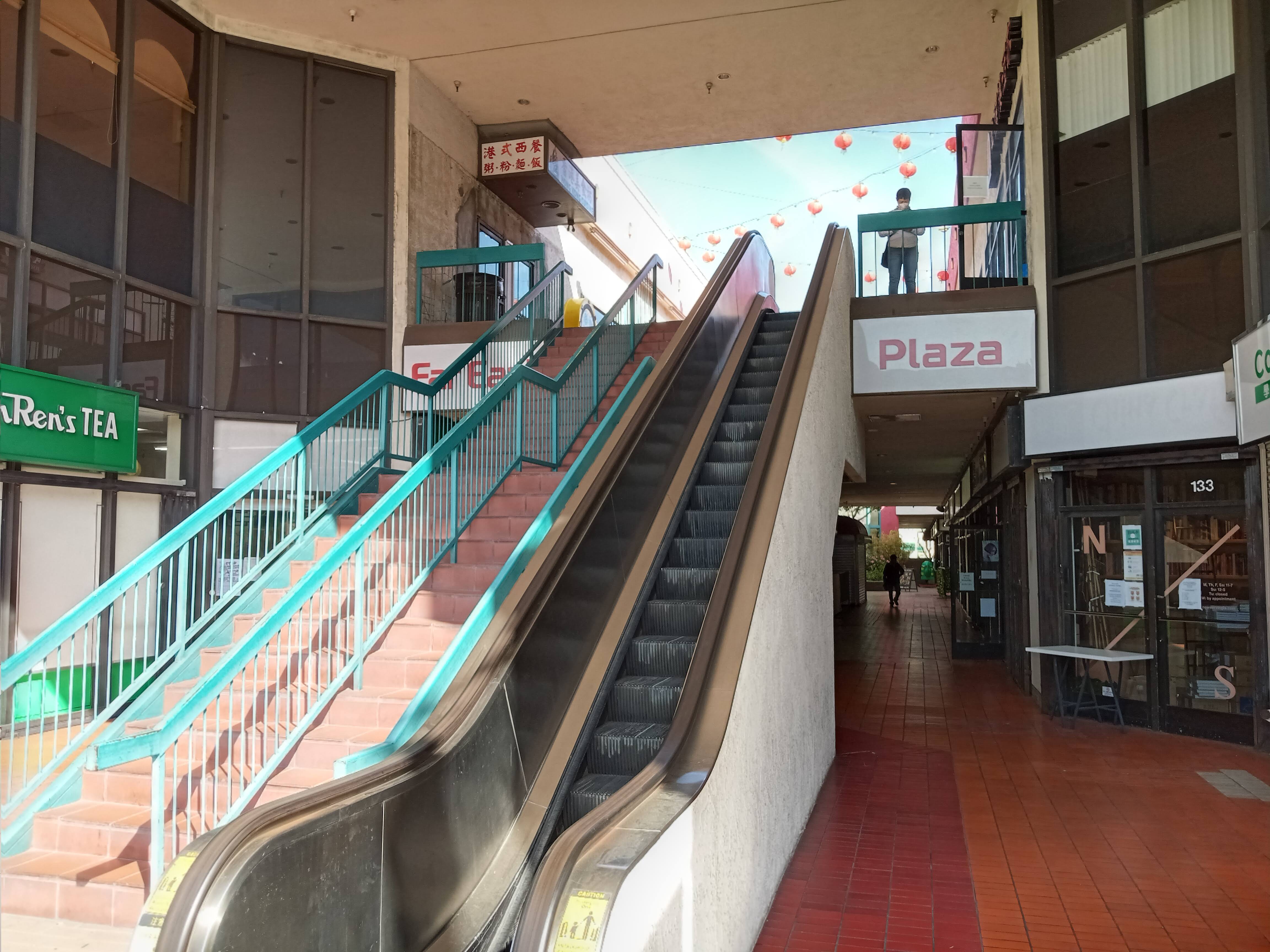
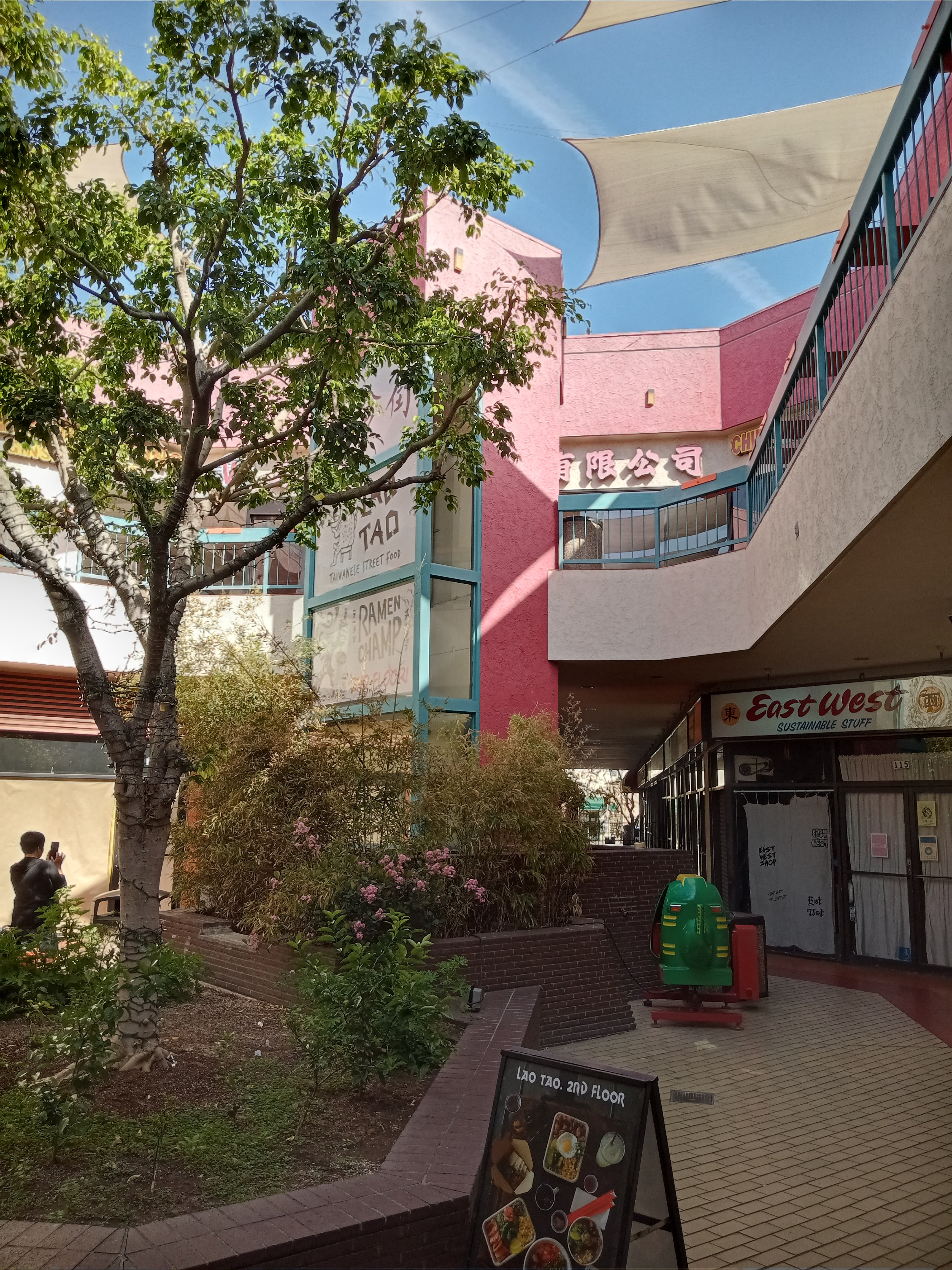
A couple of old standbys are also hanging in there, like noodle shop Kim Chuy and pho restaurant Thien Huong, both of which sit near the entrance on the Broadway side. New places are constantly swapping in, so there’s a good variety of cuisines to choose from.
When you reach Broadway, turn right and continue down the street. You’ll pass through the busy intersection of Broadway and Ord, which has lots of produce stands spilling out onto the sidewalk. Continue on for another block and on your right you’ll suddenly come across another temple.


9: Teo Chew Temple
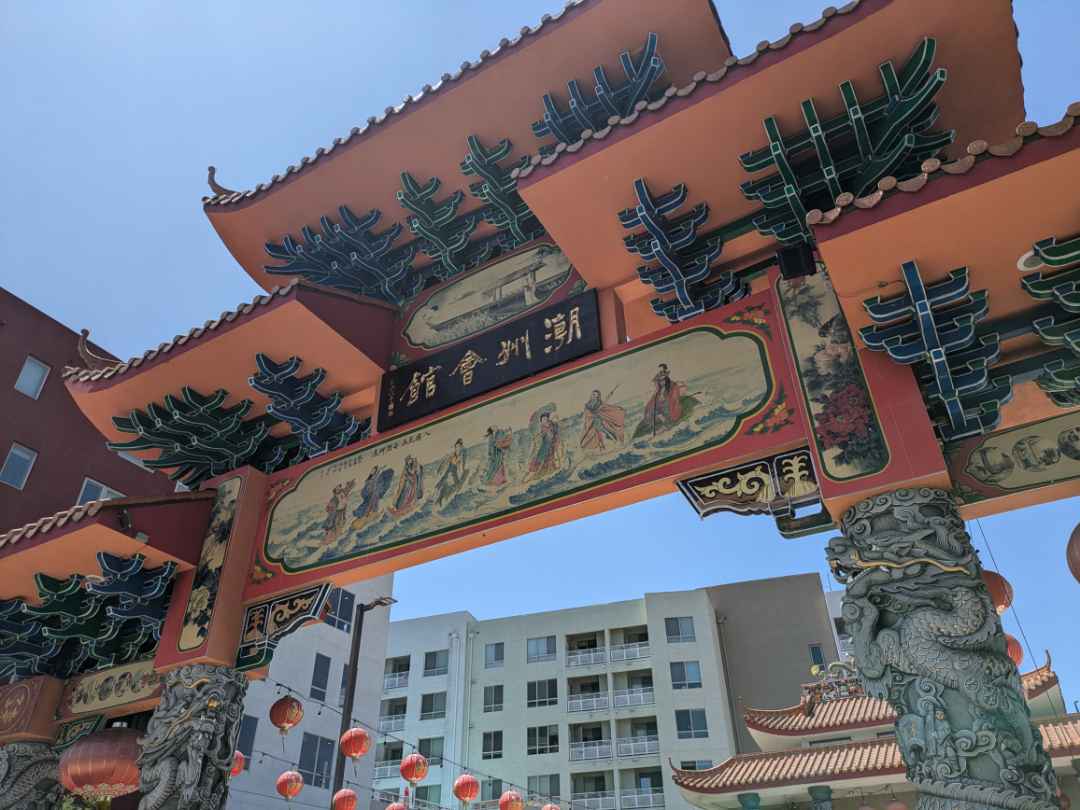
This beautiful and ornate Buddhist temple is run by the Teo-Chew Association of Southern California. The Teochew are an ethnic Chinese group native to the Guangdong region of South China, although many of the Teochew who came to Southern California immigrated from Vietnam, Cambodia, and Thailand. The temple is small but really beautiful, with an elaborate gate and façade facing Broadway, with stone lions guarding the temple and columns adorned with intricately carved dragons. Inside, you’ll find a set of small Buddhist shrines. There’s not a lot of information provided in English (even the website is mostly in Chinese), but it’s still worth a look.
10: Chinatown Gate
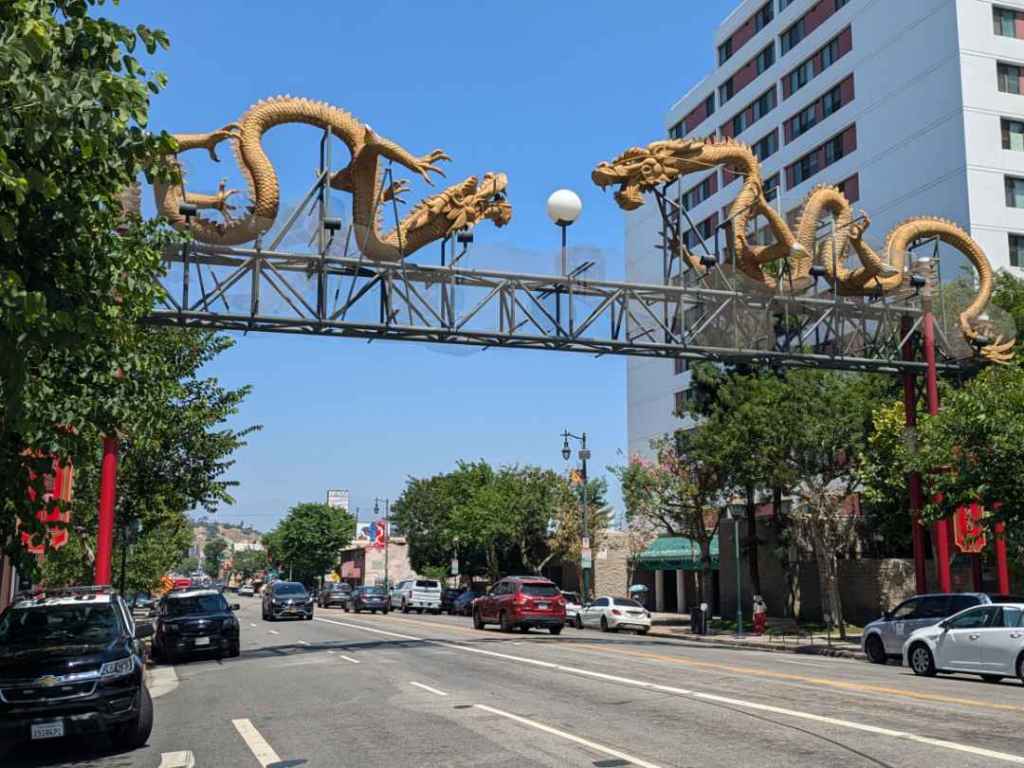
A little further down Broadway is the iconic Chinatown Gateway, featuring two golden dragons perched above the street, fighting over a pearl positioned between them. Always eye-catching, by day the very expressive dragons look kinda goofy, but at night, with their eyes glowing brightly, they look considerably more intimidating.
Backtrack on Broadway to Ord Street, then make a right and start heading downhill. This stretch of Ord has a lot of good places to eat. Right near the corner of Broadway is My Dung Sandwich Shop, a beloved bahn mi place, while on the next block is The Little Jewel of New Orleans, a small grocer selling Cajun and Creole ingredients with a deli in the back that makes excellent po’boys. But the most famous restaurant along Ord is found at the end of the street, on the corner with Alameda.
11: Philippe the Original
One of the oldest continuously-running restaurants in Los Angeles, Philippe has been in business since 1908 and has sat in its current location since 1951. It’s most well-known for its French dip sandwiches, which it claims to have invented, an achievement also claimed by the equally old Cole’s in Downtown. Inside, you’ll find a classic deli counter and lots of seating both upstairs and down. The servers are all very friendly and prepare your whole meal when you order, as well as handle your payment before you take your tray and find a place to sit.
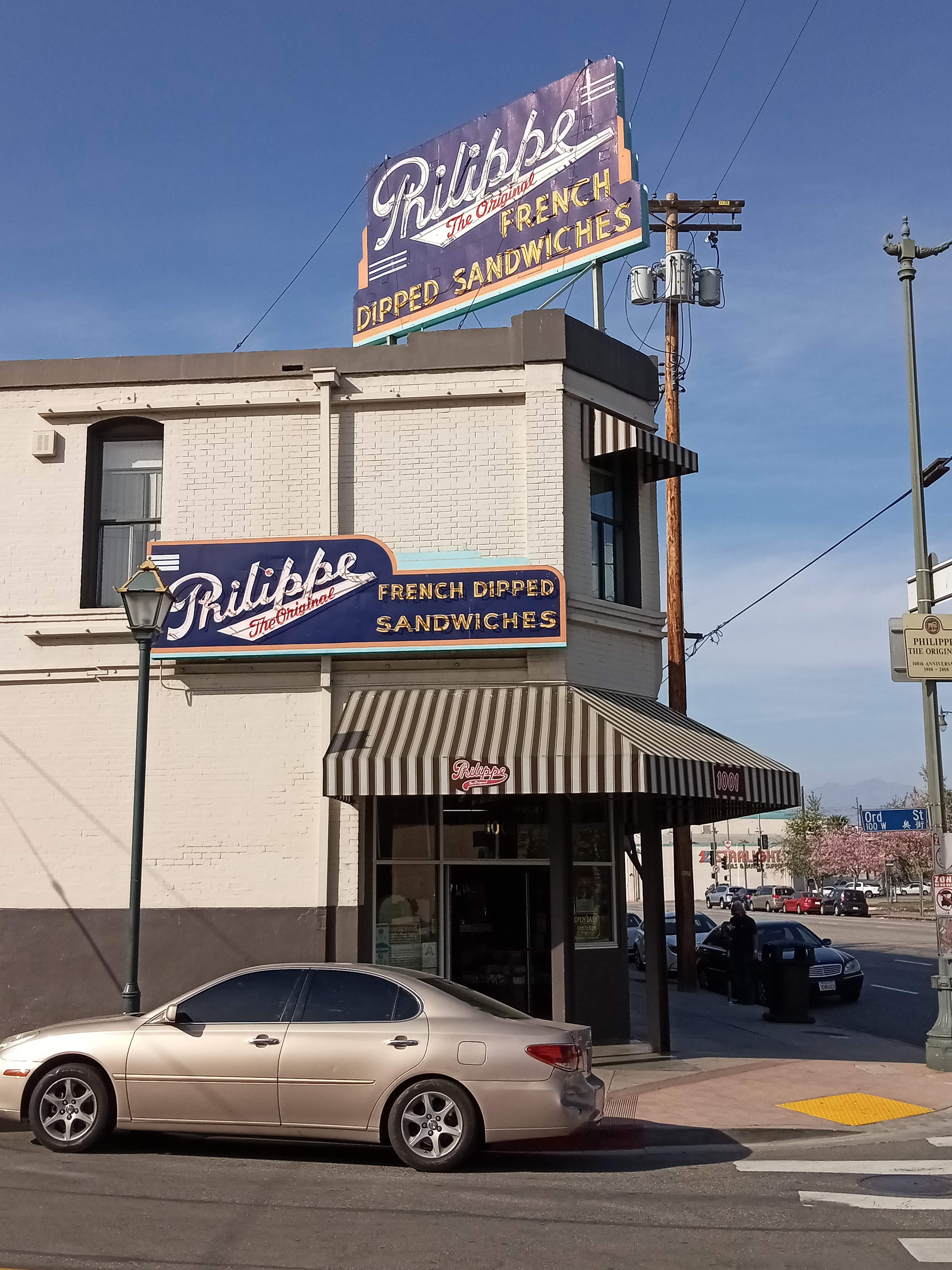
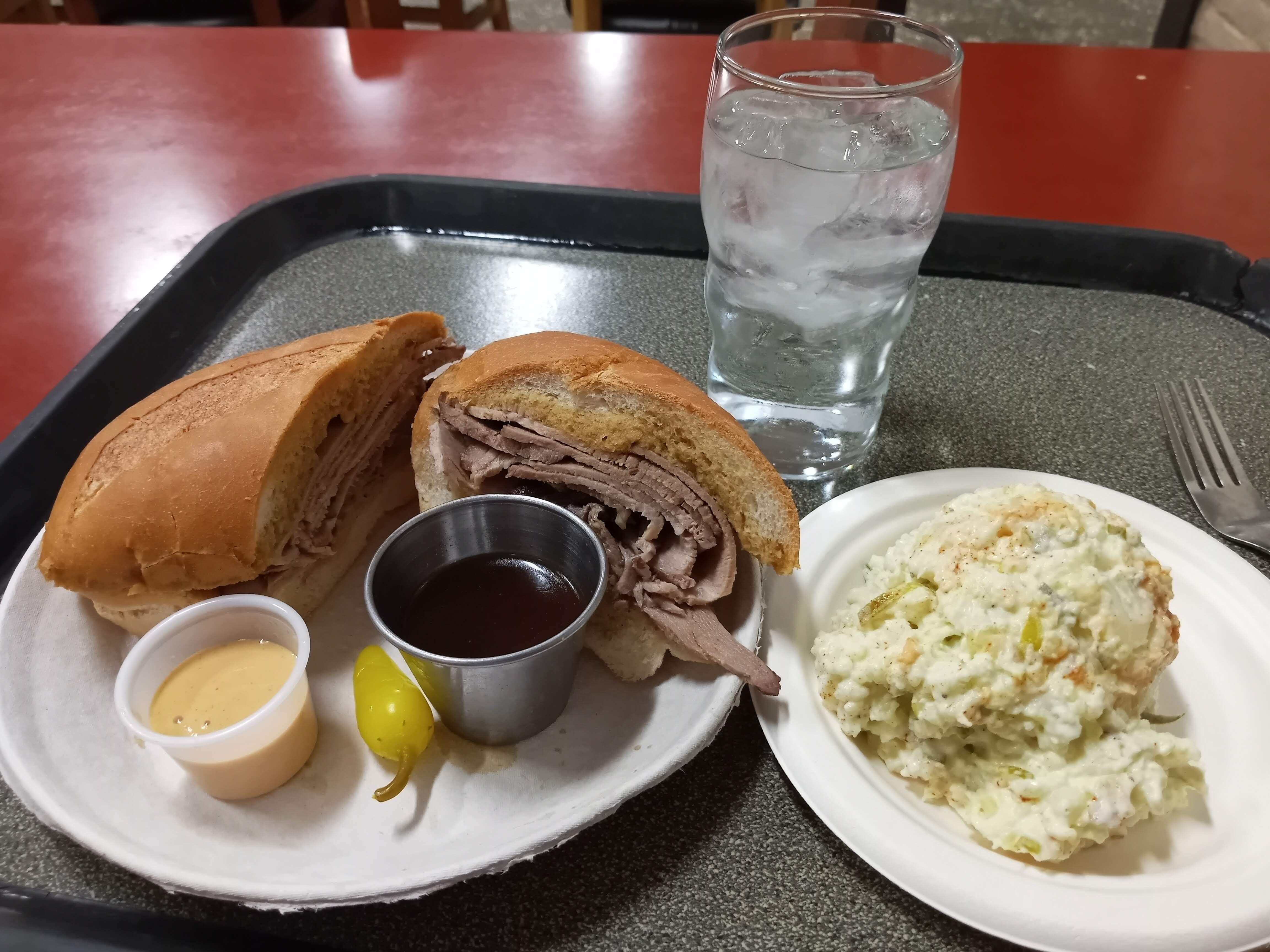
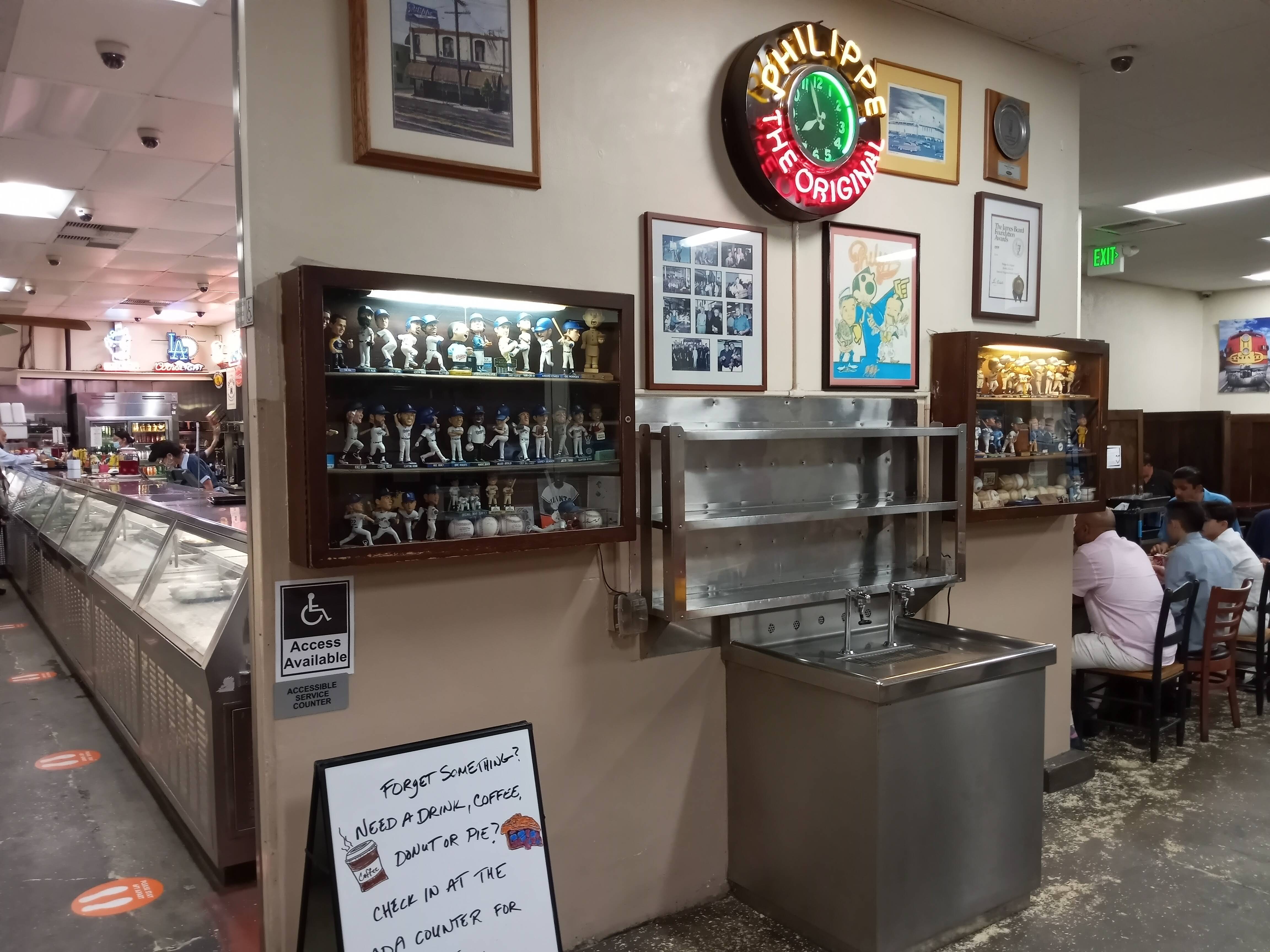
The sandwiches are fantastic, served with au jus for dipping and a cup of house mustard, which is so spicy it tastes almost like horseradish! There’s tons of fun decor, like old phone booths, neon beer signs, a candy counter, and a train museum in the back room which has lots of model trains and old railroad memorabilia, including a collection of circus train posters.
This concludes the Chinatown tour, but if you want to continue, Olvera Street and Union Station sit just a couple blocks south off Alameda. Just past Olvera Street and the Plaza is the only surviving building from the original Chinatown, now home to the Chinese American Museum. Across Alameda, Union Station sits on the site of Old Chinatown and has a couple of monuments to commemorate this fact: one is a plaque in the Metropolitan Water District courtyard that marks the boundary of the old neighborhood, while the other is a fountain that contains artifacts from Old Chinatown that were excavated while they were building the subway. You can find more information on these, and everything else Union Station has to offer, in our guide to Union Station.
 Transiting Los Angeles
Wonderful article!!! Thanks for writing this well detailed description about all the places in Chinatown 🤗♥️
LikeLiked by 1 person
Thank you! ♥️
LikeLike