
Union Station holds a special place in my heart. For the first few years of my life living in Los Angeles, I regularly passed through its corridors, swept up in its crowds of commuters and often running into friends and coworkers who were also rushing to catch their trains. Standing on the train platform and taking in the sights around me became one of those crucial first impressions I got of the city. I’d savor the warm evening air and admire the silhouette of the downtown skyline, the changing colors projected on the Union Station tower, the pink of the San Gabriel Mountains in the sunset, while listening to the clang and rumble of Metrolink trains slowly pulling out of the station.
Thousands of people pass through Union Station every single day. Its beauty is well known. But there are relatively hidden delights throughout the complex which you would miss if you just follow the crowds from one platform to another. Poke around some of the corners of this building and you’ll find some lovely tranquil spots and some really immersive public art. This is our comprehensive guide to Union Station.

Union Station East
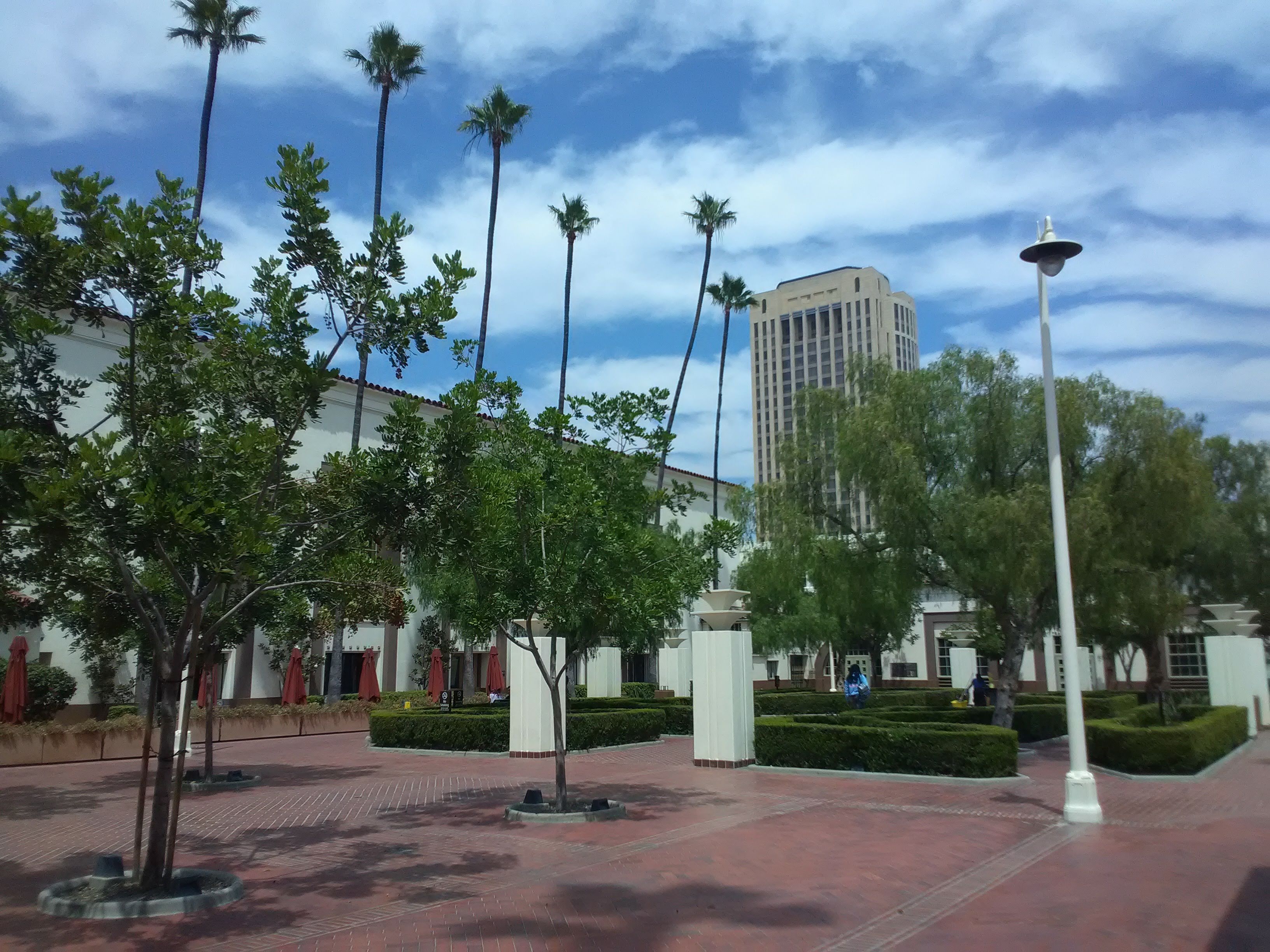
East of the train platforms is the newer side of Union Station, built in the 1990s and centered around the Metro Headquarters Building, a sort of neo-Art Deco highrise which is by far the tallest building around. There are two main components to Union Station East: the bus plaza and the vast, below-ground atrium beneath its majestic half-dome ceiling.
“A Train”. At the top of the escalators to the subway platforms is Union Station’s most compelling piece of public art, but you wouldn’t realize that just by glancing at it. Crowds of people rush by this artwork every day, not realizing there’s hidden images waiting to be glimpsed.
At first glance, Bill Bell’s A Train appears to be nothing more than a set of vertical bars of flashing colored lights. And strictly speaking, it is nothing more than that, but there is a trick to it. Stare at it long enough, and the seemingly random lights will form images passing across the wall: portraits of old Hollywood stars, famous icons, trains, taxis, and buses will start passing by. It takes a moment to see them; I’ve found that it helps to let your eye trace the path of the lights across the wall to see the images.
Discovering the hidden images is exciting enough, but there’s one more aspect of this piece that makes it even more intriguing. Across the escalators from the artwork, on the sign for A Train, is a microphone. If you say the right words, you can activate one of a couple dozen or so prerecorded sounds that are part of the artwork. Each one is activated by saying, “Hey Bill, old buddy…” followed by the name of an old Hollywood legend or cultural icon. There’s too many to list here, but probably the most popular one is to give it the name Johnny Weissmuller, known for his icon Tarzan yell.
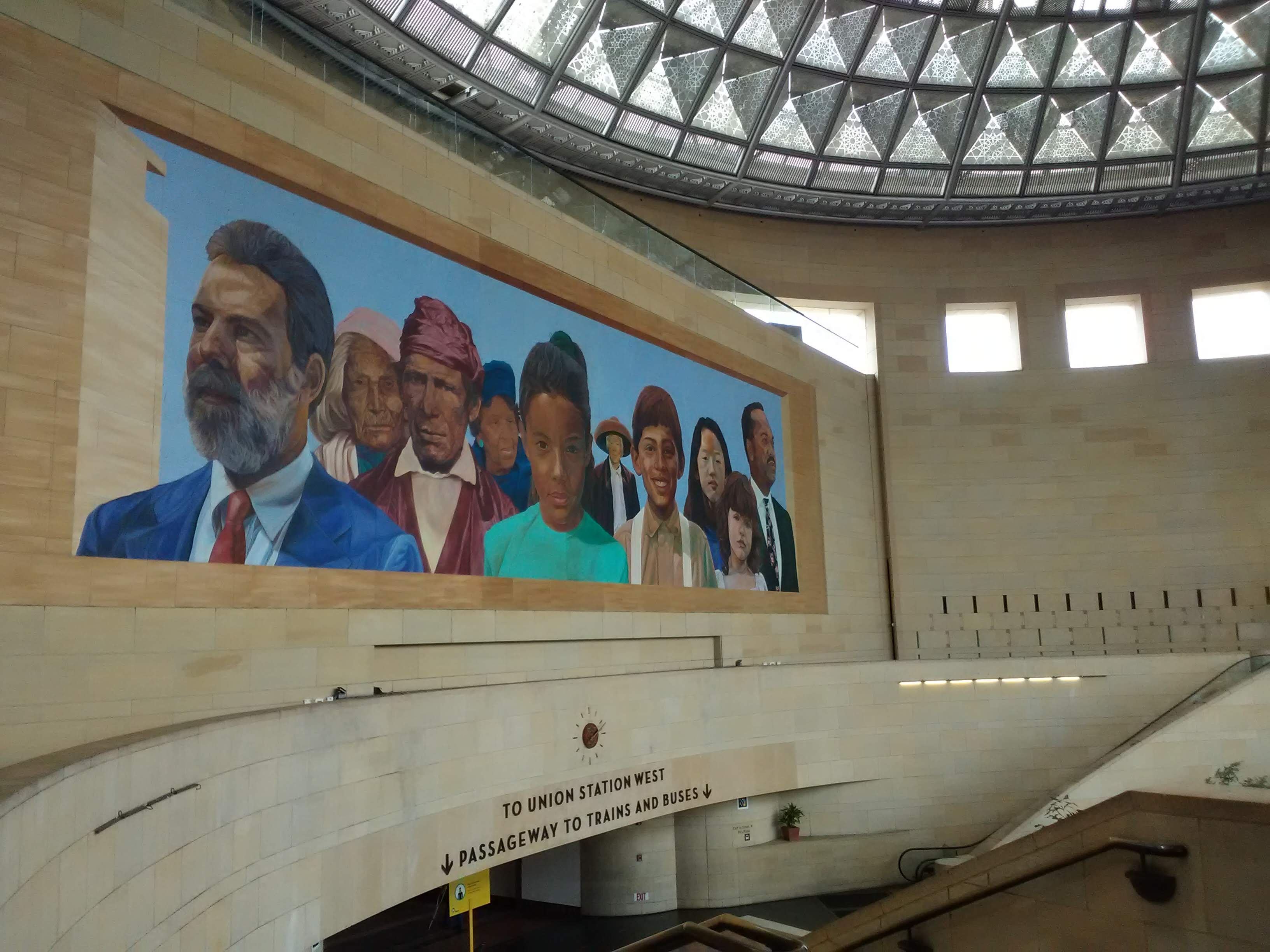
“City of Dreams, River of History”. This artwork, which sits in the atrium at the east portal to the train platforms, is made up of three parts which feel so distinct that I had always assumed they were three different artworks. The most noticeable part is the huge mural above the east portal, depicting a multi-ethnic group representing many of the city’s earliest settlers.
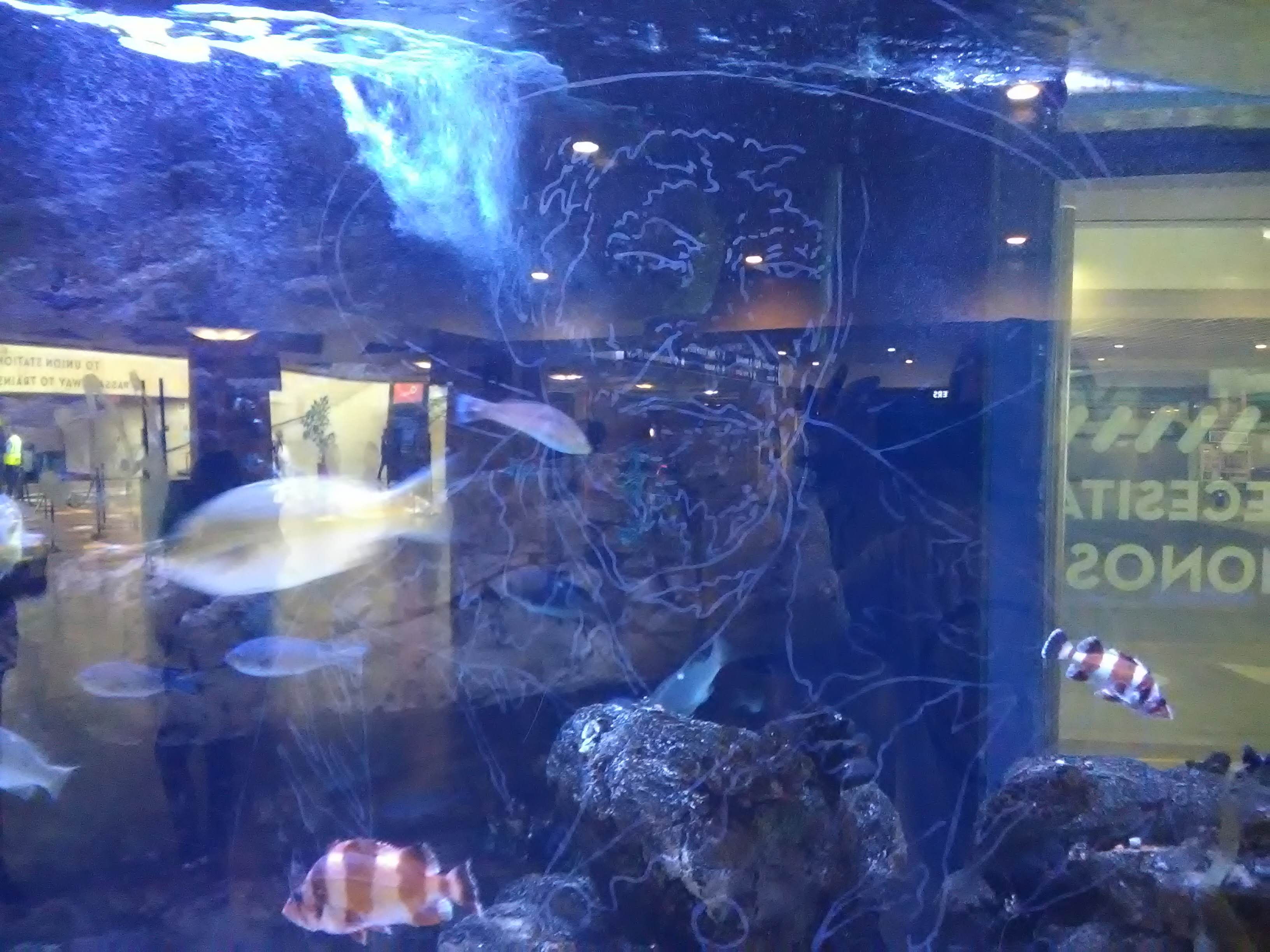
On the north side of the atrium is the other very noticeable part, a large aquarium filled with native coastal fish. This always appeals to kids, and the best part is there’s a tile bench encircling the tank, allowing families to sit down while the kids press their hands to the glass and point at all the colorful fish swimming by. Etchings of historical figures from Los Angeles past are imprinted on the aquarium glass, tying it to the other two parts of the artwork, while the floor of the atrium has bronze symbols of native plants and animals.

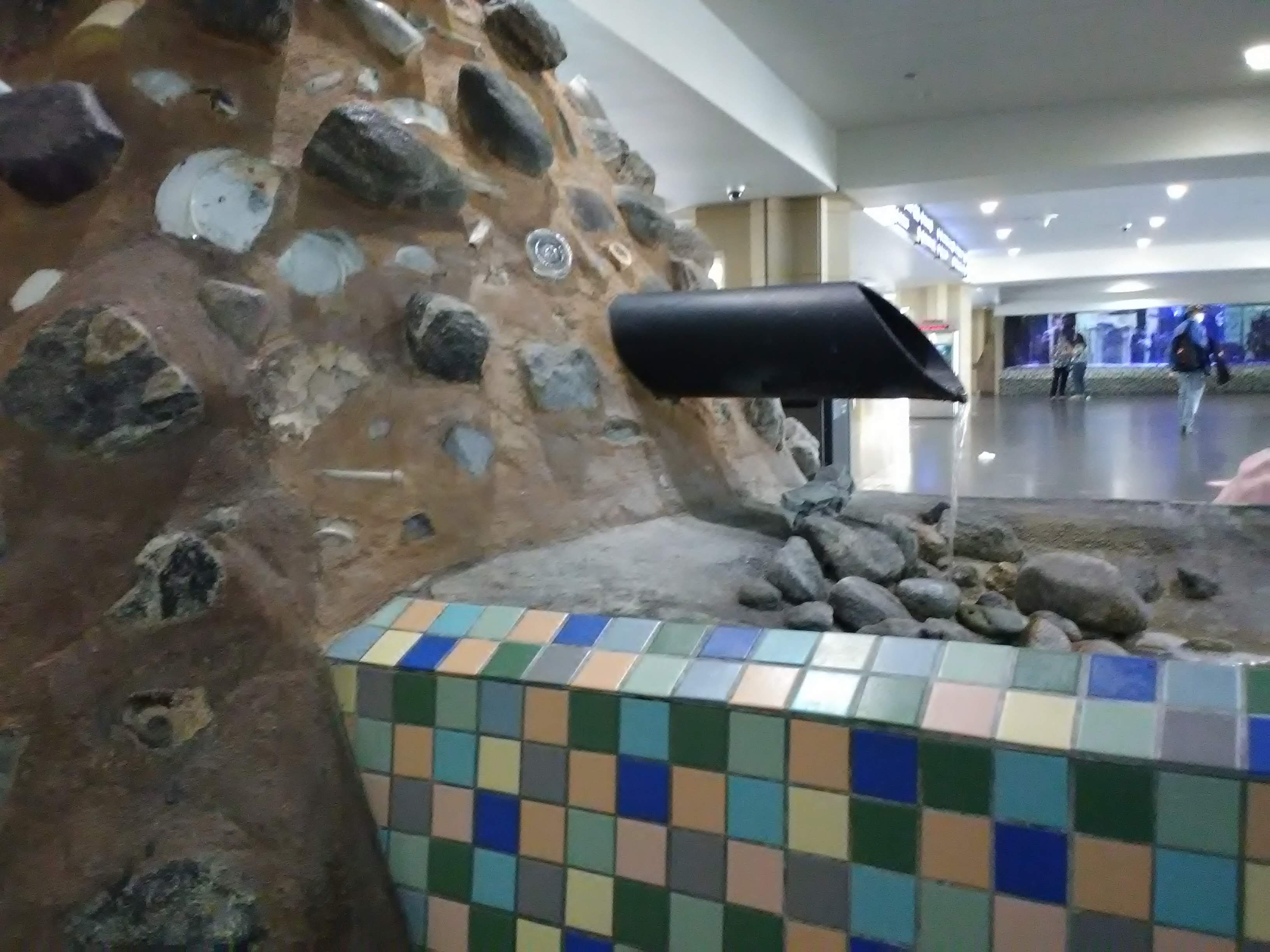
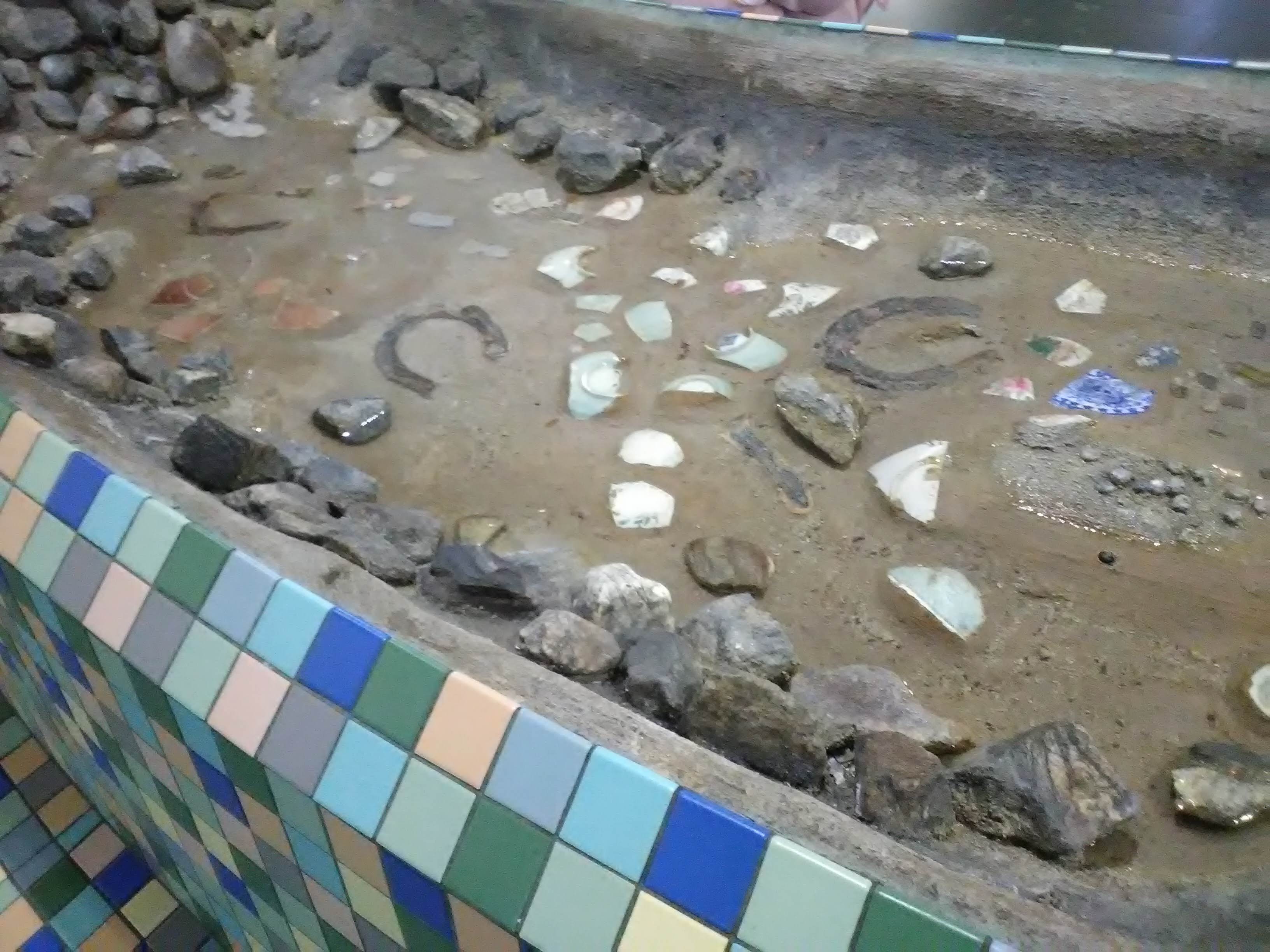
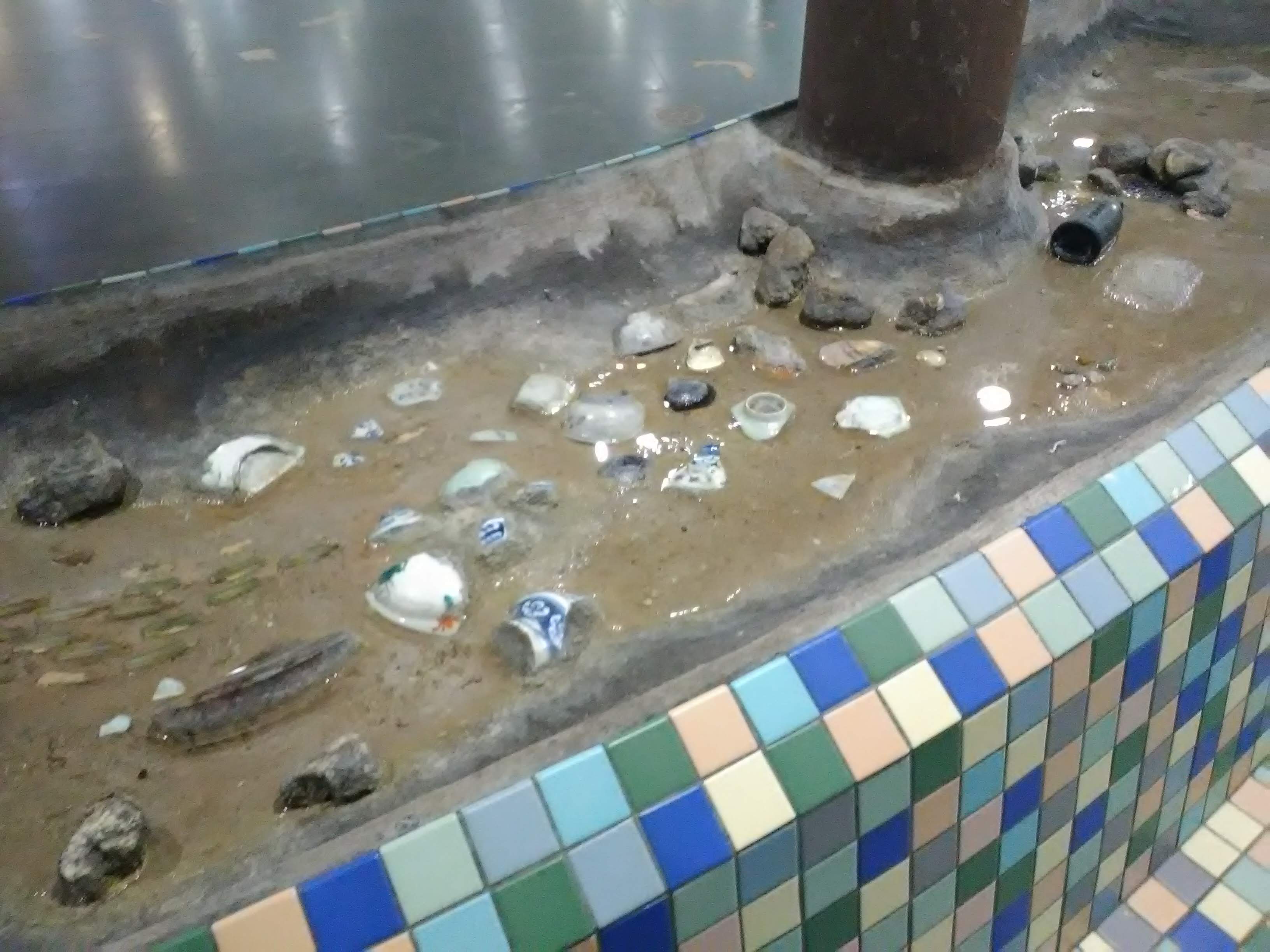
The third part is the most understated one, but I think it’s also the most intriguing. On the south side of the atrium is a fountain embedded in a conical-shaped pile of debris, with a dirty-looking pipe sticking out of one side. A trickle of water spills out of the pipe, forming a tiny stream of water that runs between a pair of tile benches. If you look in the space between the benches, you’ll see horseshoes, fragments of chinaware, and jade crystals embedded in the cement. These are actual artifacts of L.A.’s original Chinatown, which sat on this site and was demolished to make way for Union Station. It’s not a very photogenic piece, but that’s the brilliance of it. The concrete channel, the dirty pipe, and the debris are evocative of the Los Angeles River, full of history that has been buried by modern industry. But all it takes to recover that history is dig a little beneath the surface.
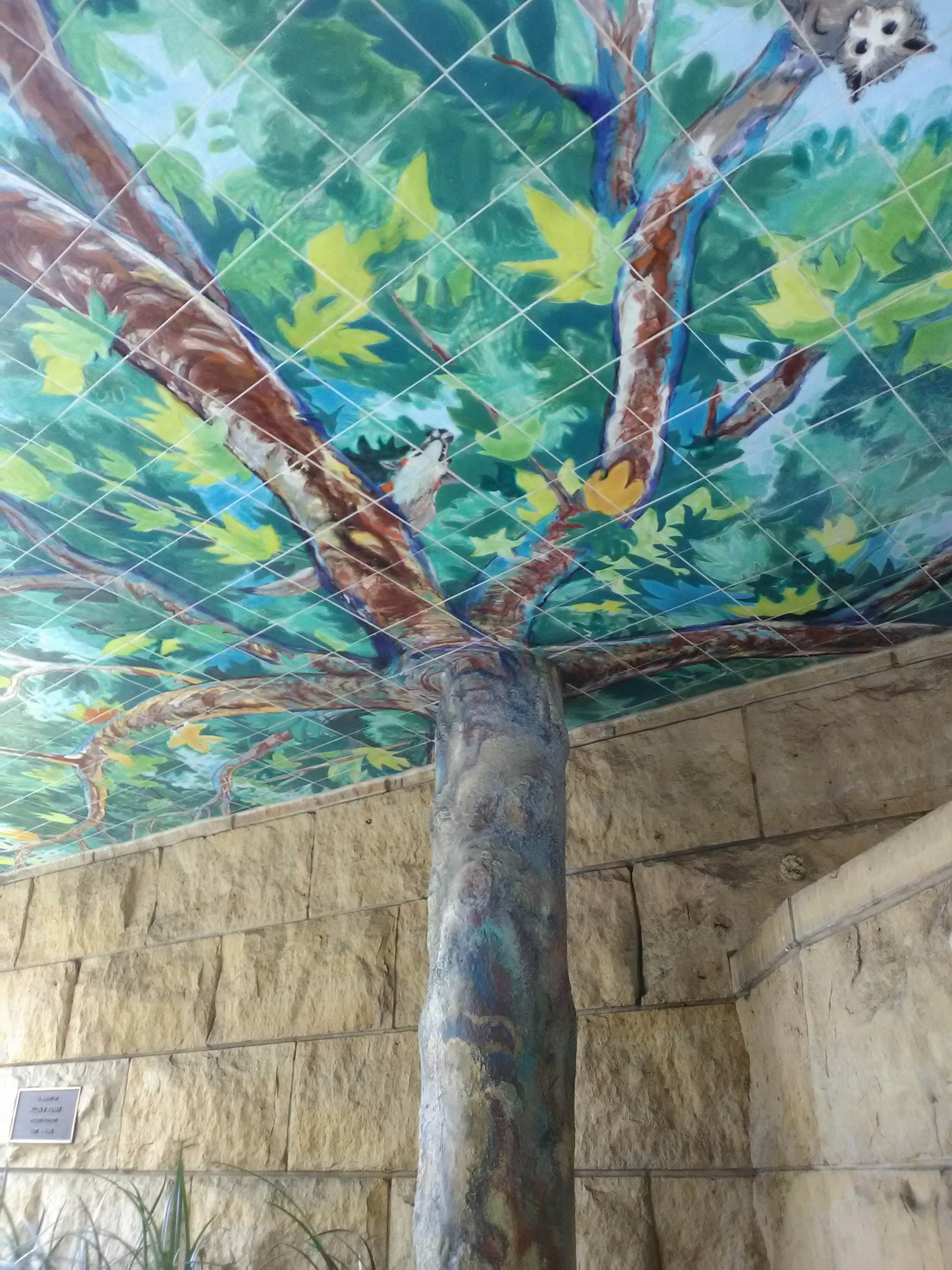
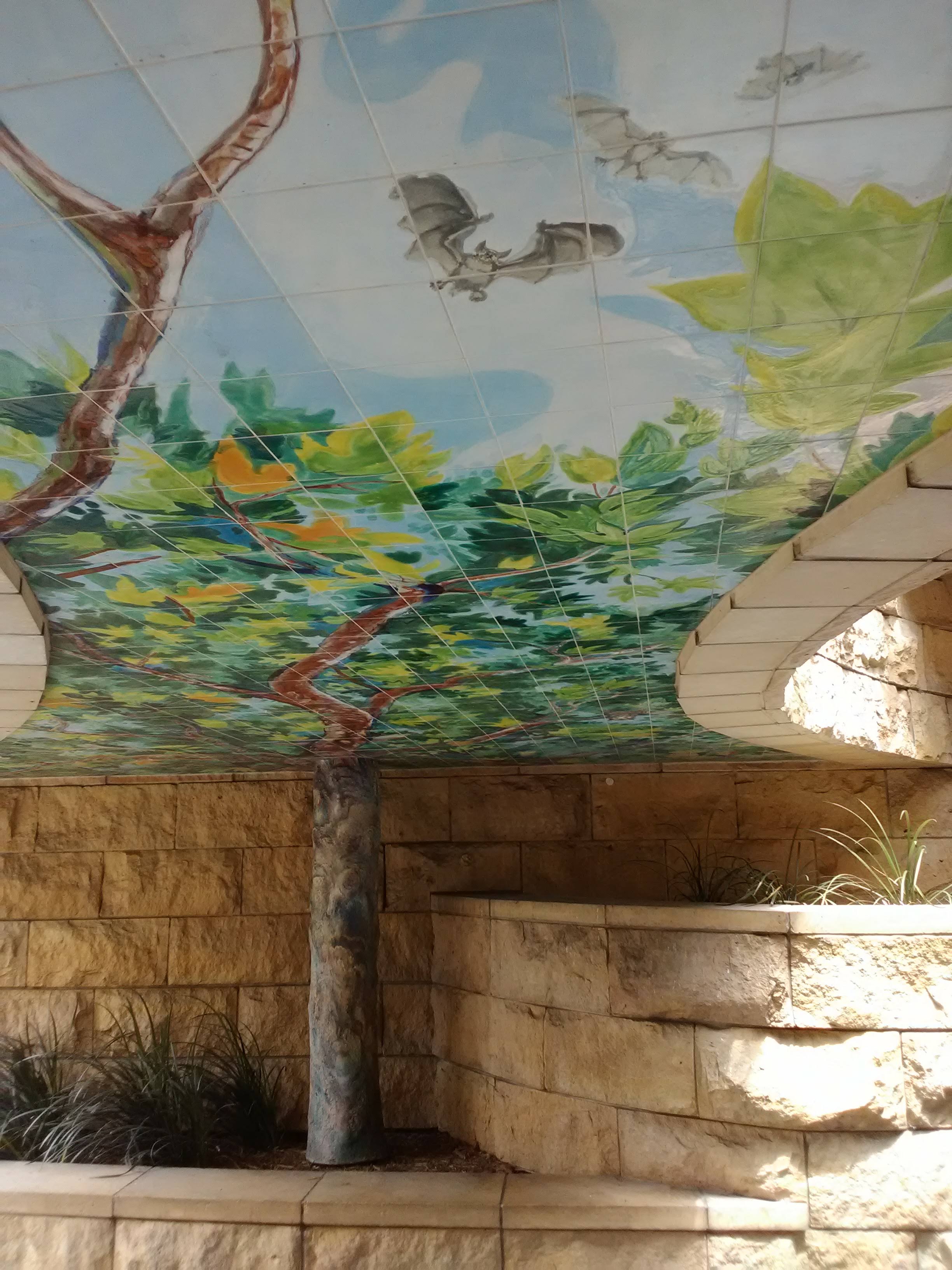
Patsaouras Bus Plaza. The passageway leading from the atrium up to the center of the bus plaza has lots of interesting delights, such as a cascading fountain down the sandstone steps, native plants, and a beautiful mosaic on the underside of a pedestrian bridge attached to a bronze tree truck to give the illusion of standing under a serene tree. Look up and you’ll see plenty of cute critters painted among the branches and leaves, as well as a set of bronze plates inscribed with depictions of local flora and fauna.

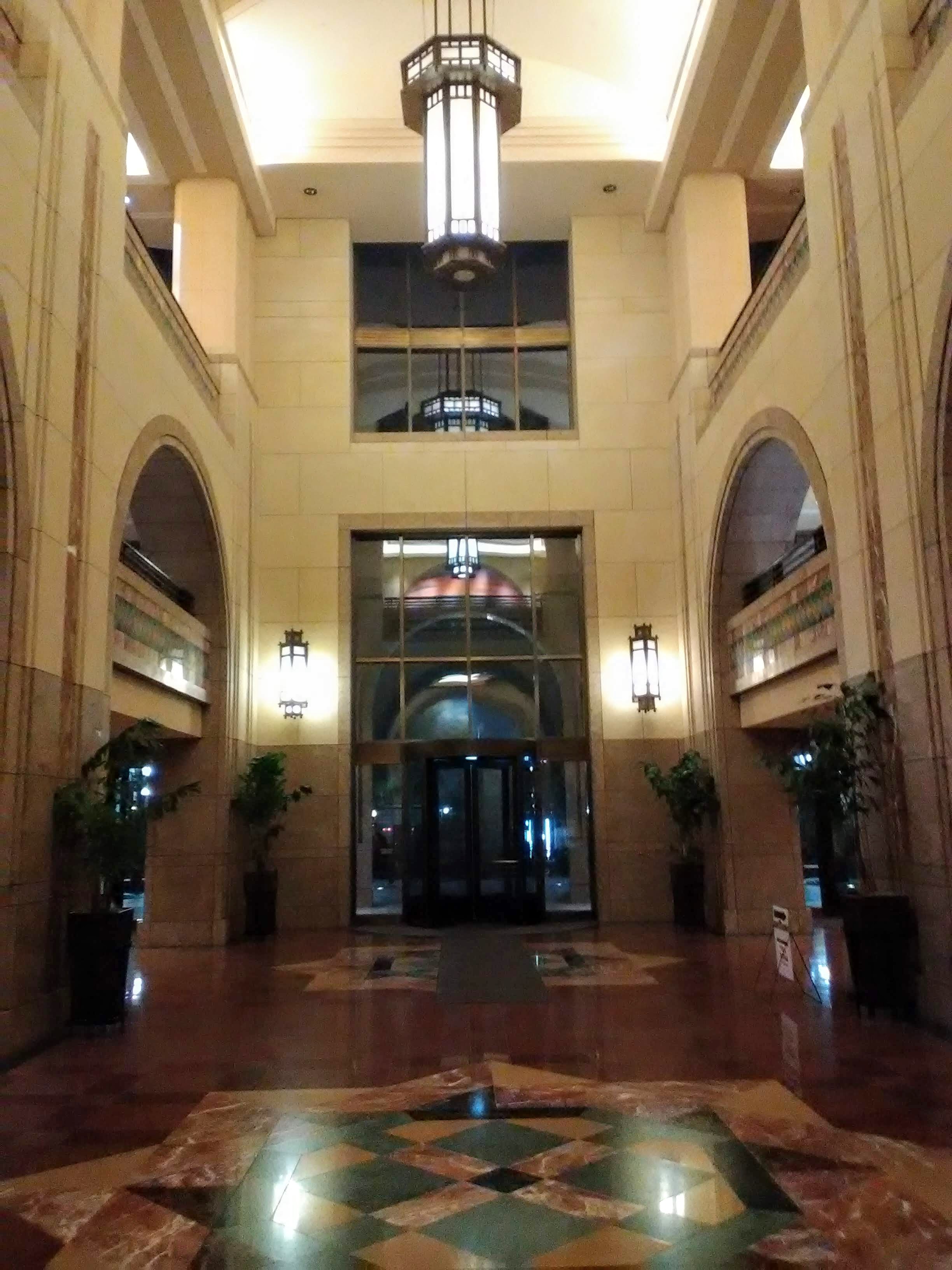
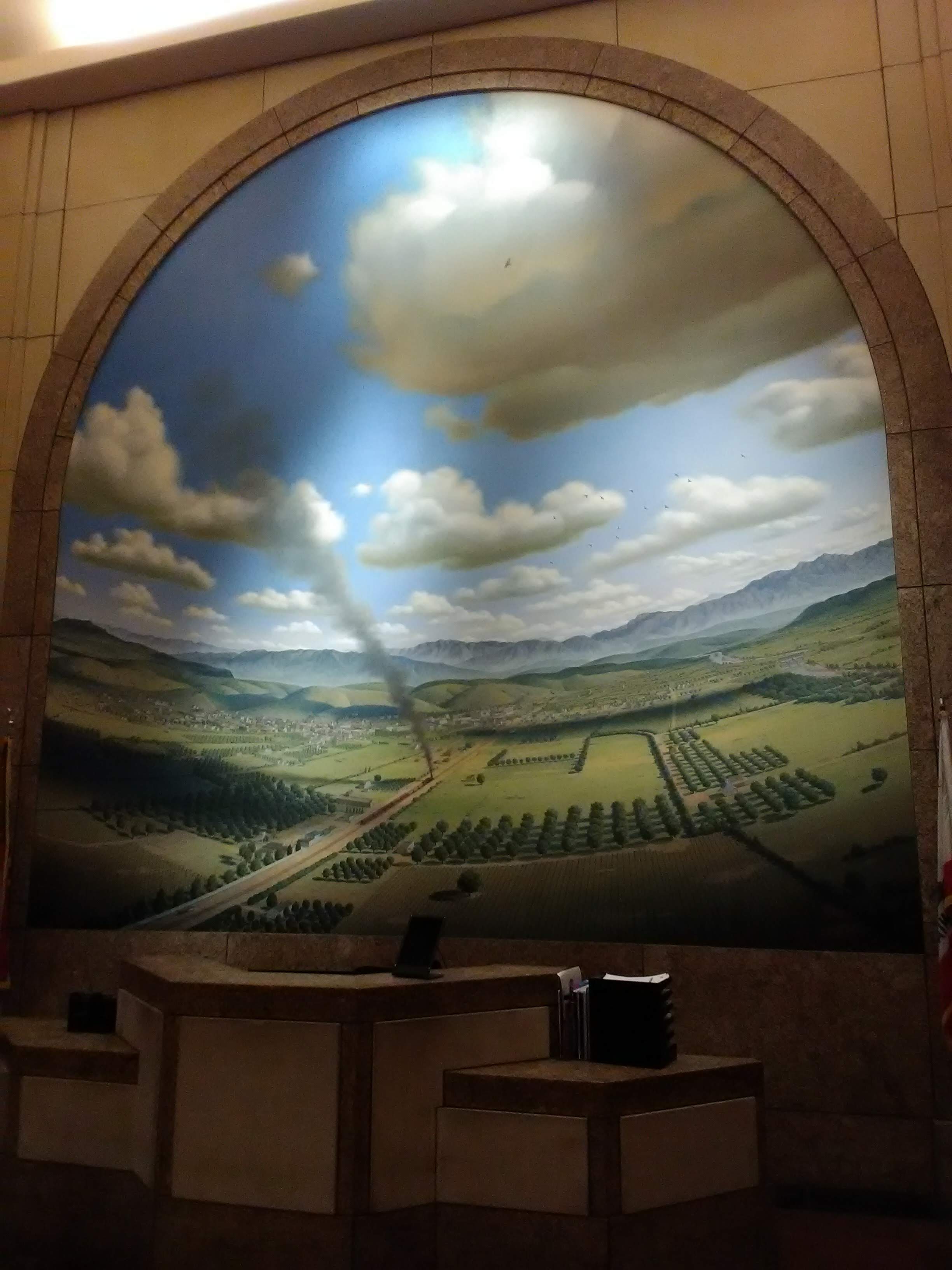
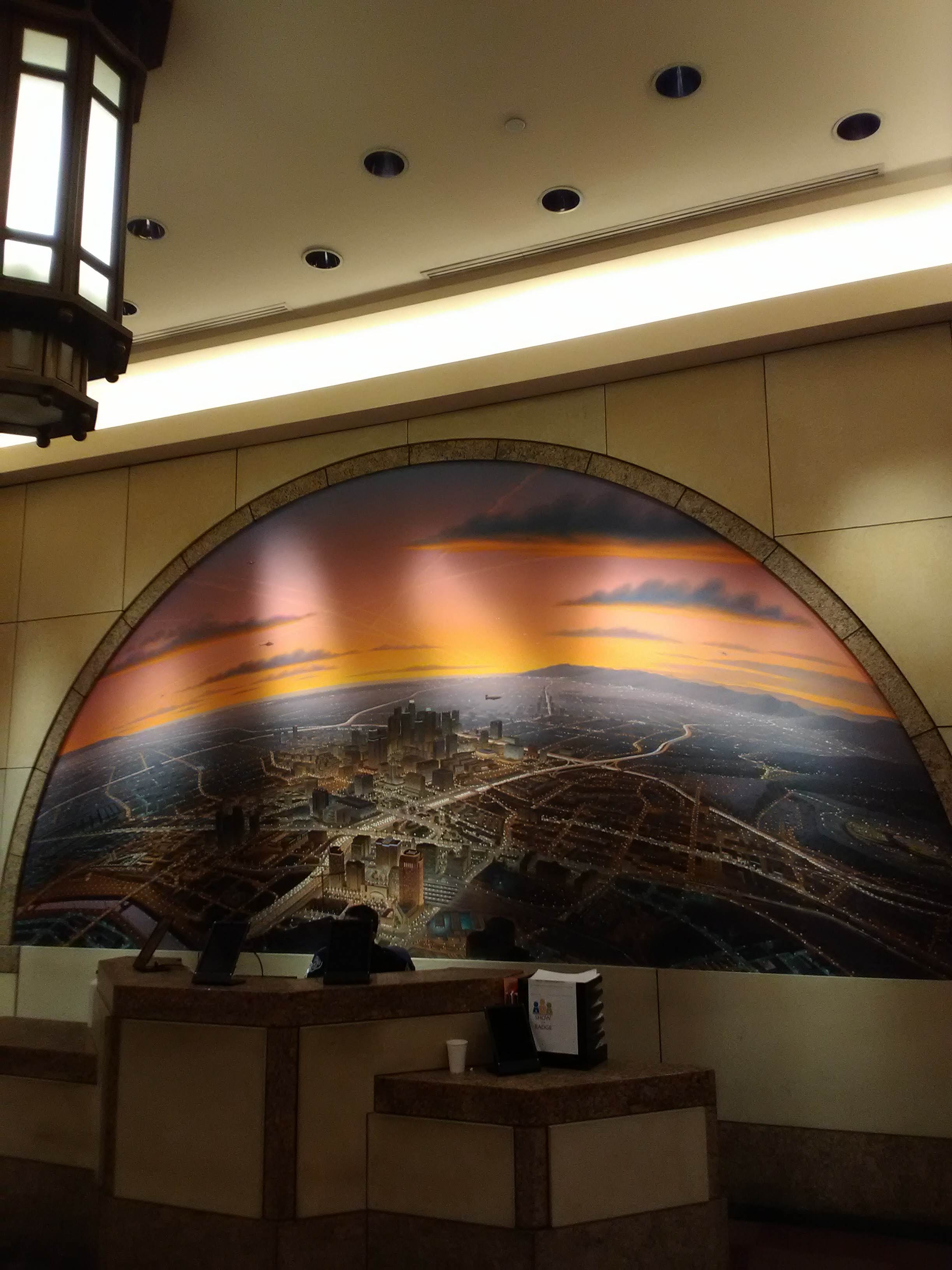
Metro Headquarters. I’ve only had reason to go inside this building to attend a Metro board meeting or public session, but if you have a chance, the atrium is pretty grand. Huge murals adorn a pair of arched alcoves which depict the history of transportation in Los Angeles. The one on the ground floor is an idealized view of LA circa 1870s, after the construction of the city’s first railroad, while the one on the second floor is a fanciful near-future LA, which shows a lot of tall buildings surrounding Union Station (something that has been in plans for the area for years but has never been built).
Union Station West
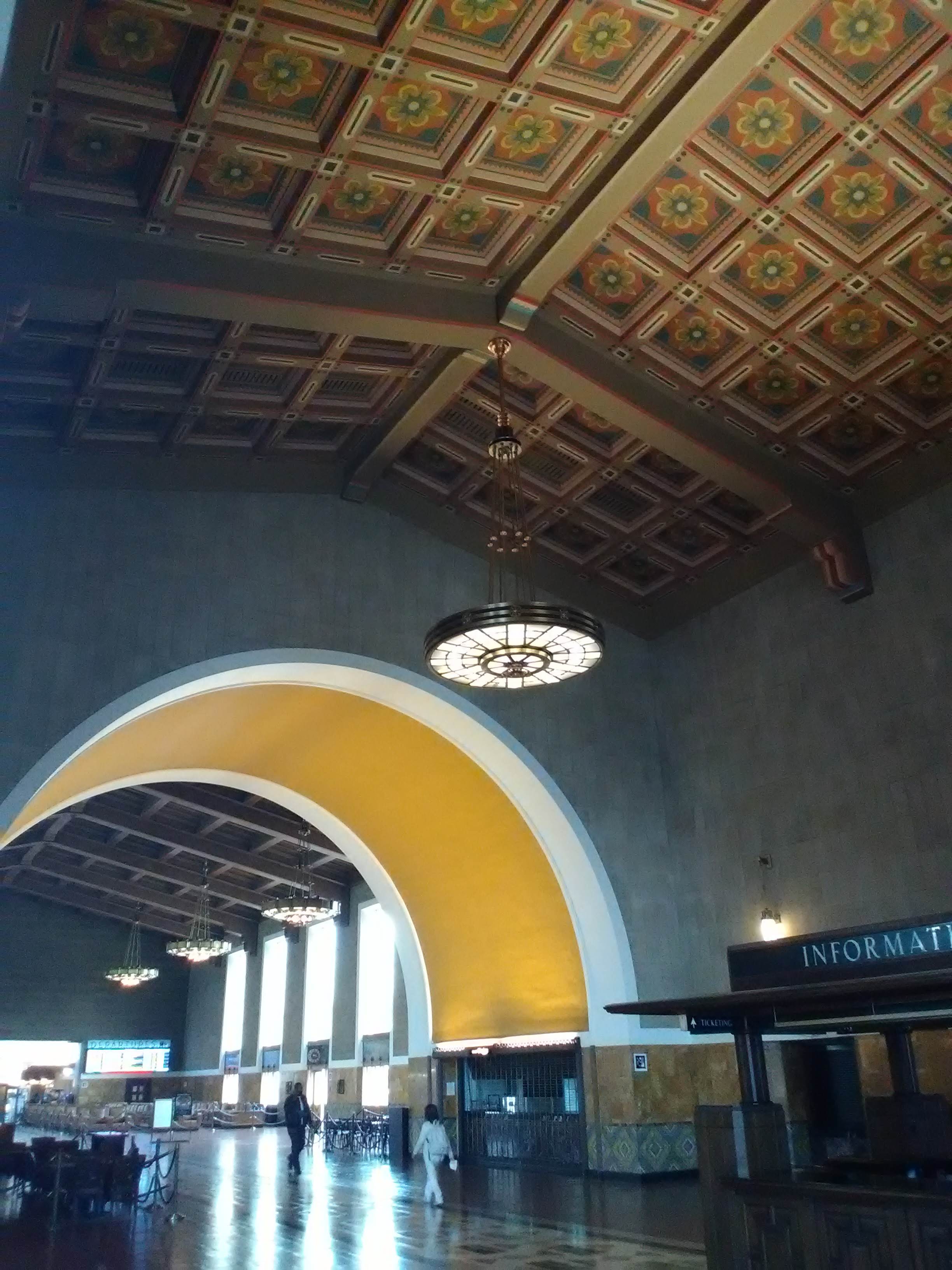
This side of the station needs no introduction; it’s what most people think of when you say “Los Angeles Union Station.” The western side, facing Alameda Street, is the more beloved and famous one, holding the historic station that dates back in 1939, built in a seamless blend of Art Deco and Mission Revival styles.
A little food court surrounds the spot where the train tunnels deposit you into the building, with some fairly generic options: a Starbucks, a Wetzel’s Pretzels (whose smell often carries down to the subway platform), a Subway, a Ben & Jerry’s, and a Trimana convenience store. This is also where all the Amtrak ticketing and baggage facilities are. You might hear someone playing the piano tucked in one corner, and if not, see if it’s available for you to show off your talent.
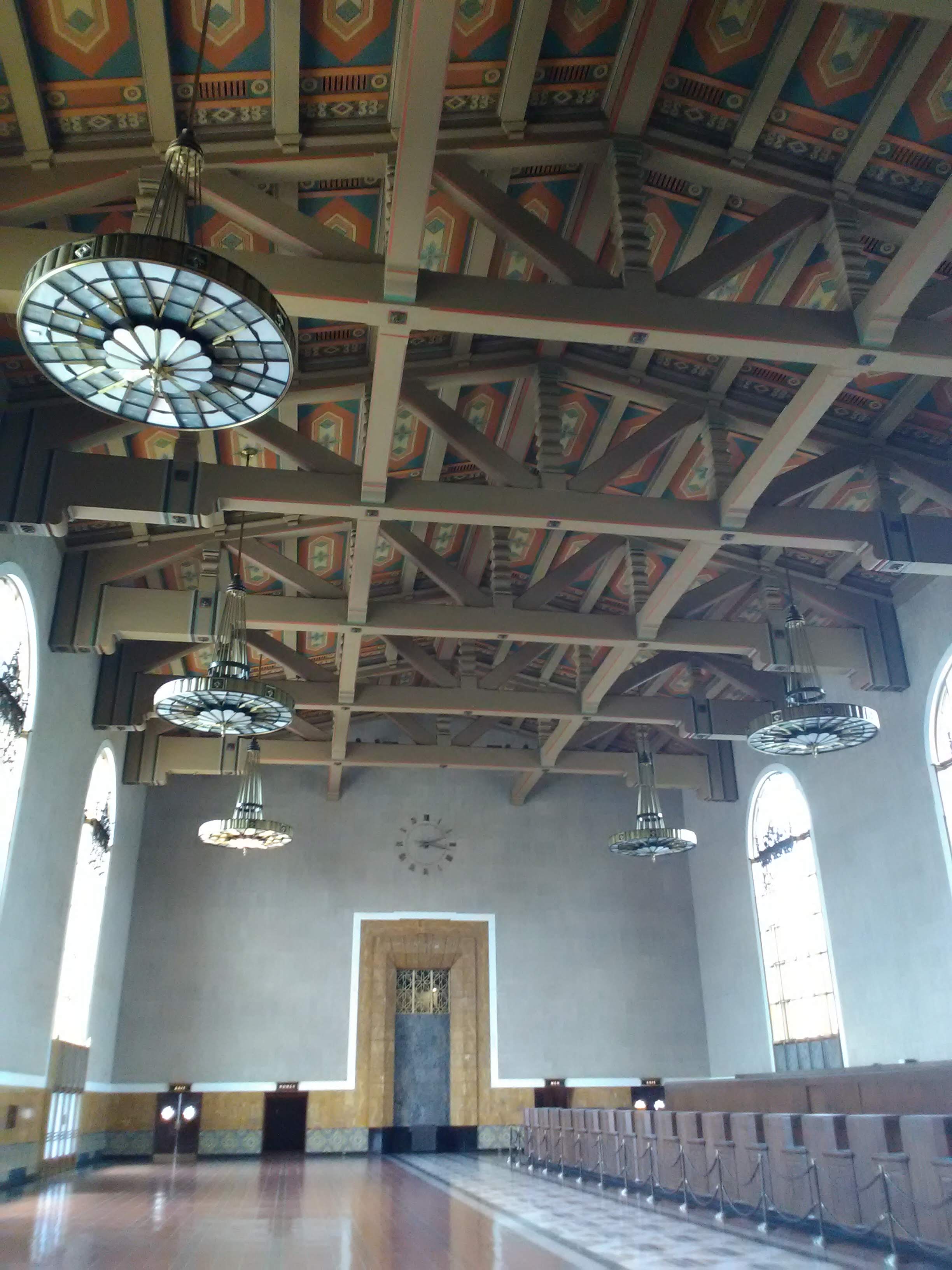
The focal point of the historic building is the grand waiting hall, with its high ceilings, arched windows and glossy tiles, and annoyingly roped-off chairs that only Amtrak passengers get to use. Still, the architecture is too grand to get frustrated over a lack of seating. At the far end of the building, next to the entrance onto Alameda Street, is the historic ticketing hall, which still has the original ticket counter on one side of the room. It’s roped off and just used for events now, but you can still look inside.
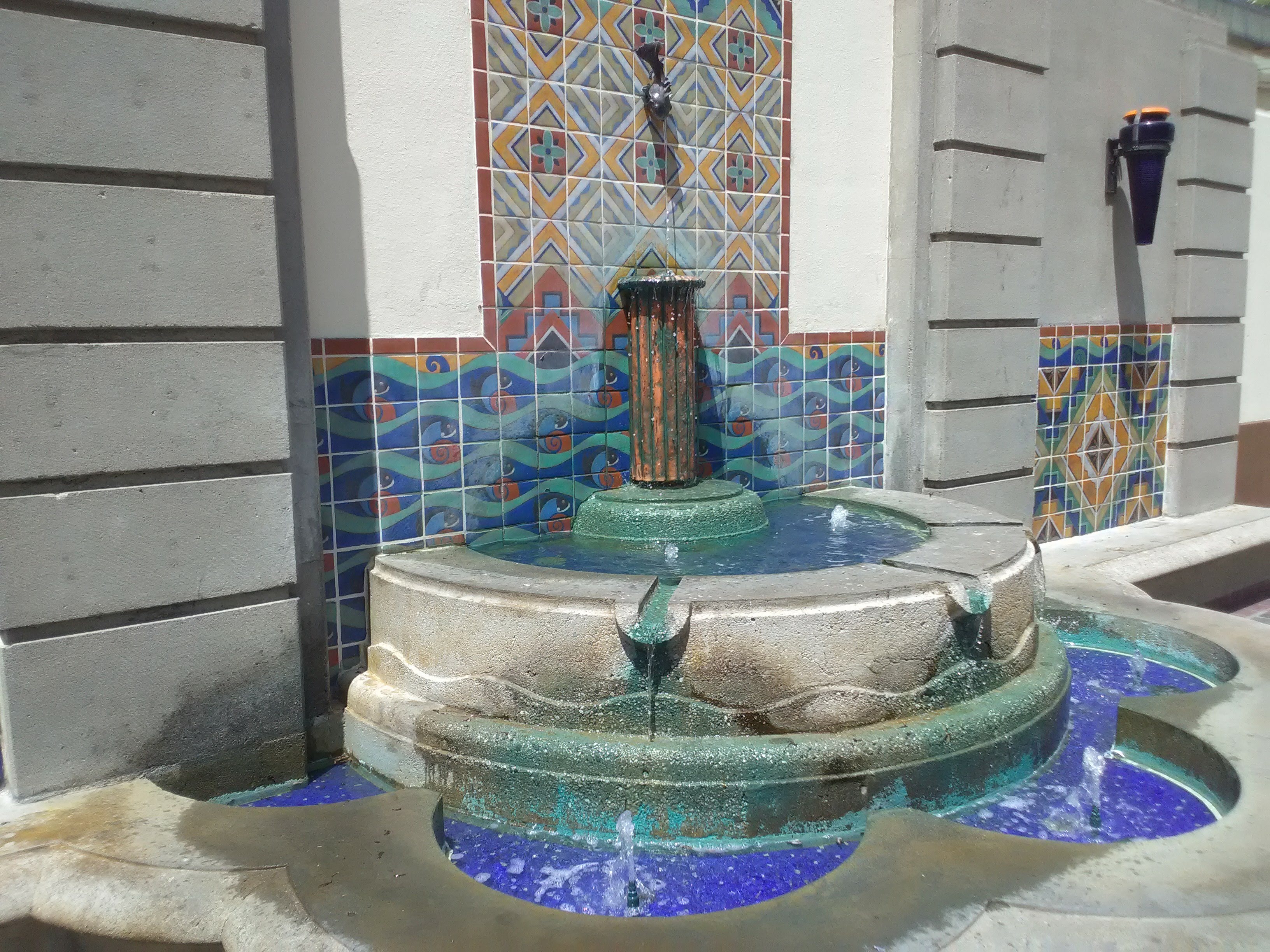
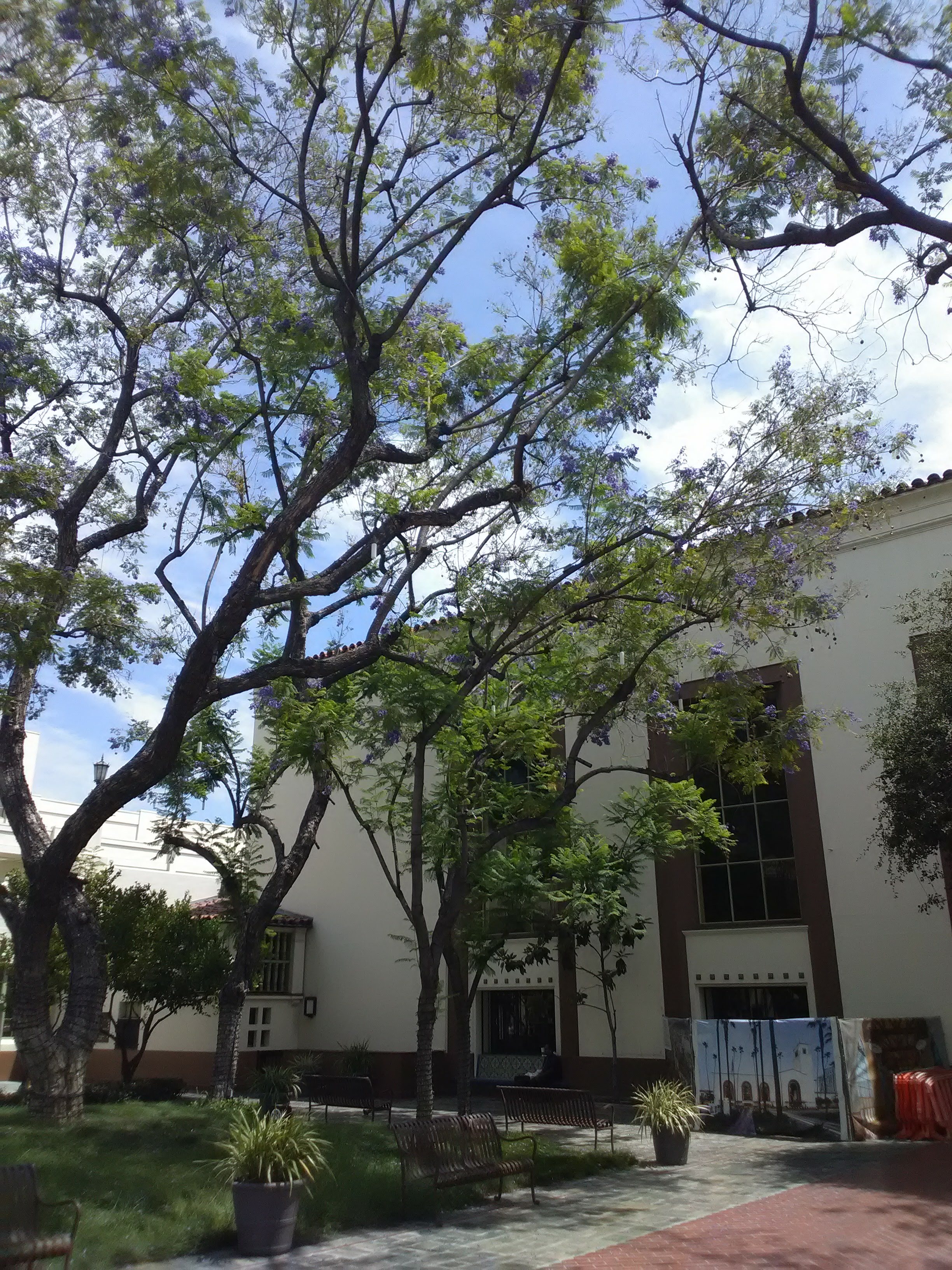
North Patio. Forget sitting inside. The best place to take a seat is in this shady, surprisingly tranquil little courtyard on the north side of the waiting hall. The walkways are lined with benches sitting beneath a grove of jacarandas while a little fountain trickles nearby. Come when the flowers are blooming and the smell will be heavenly.

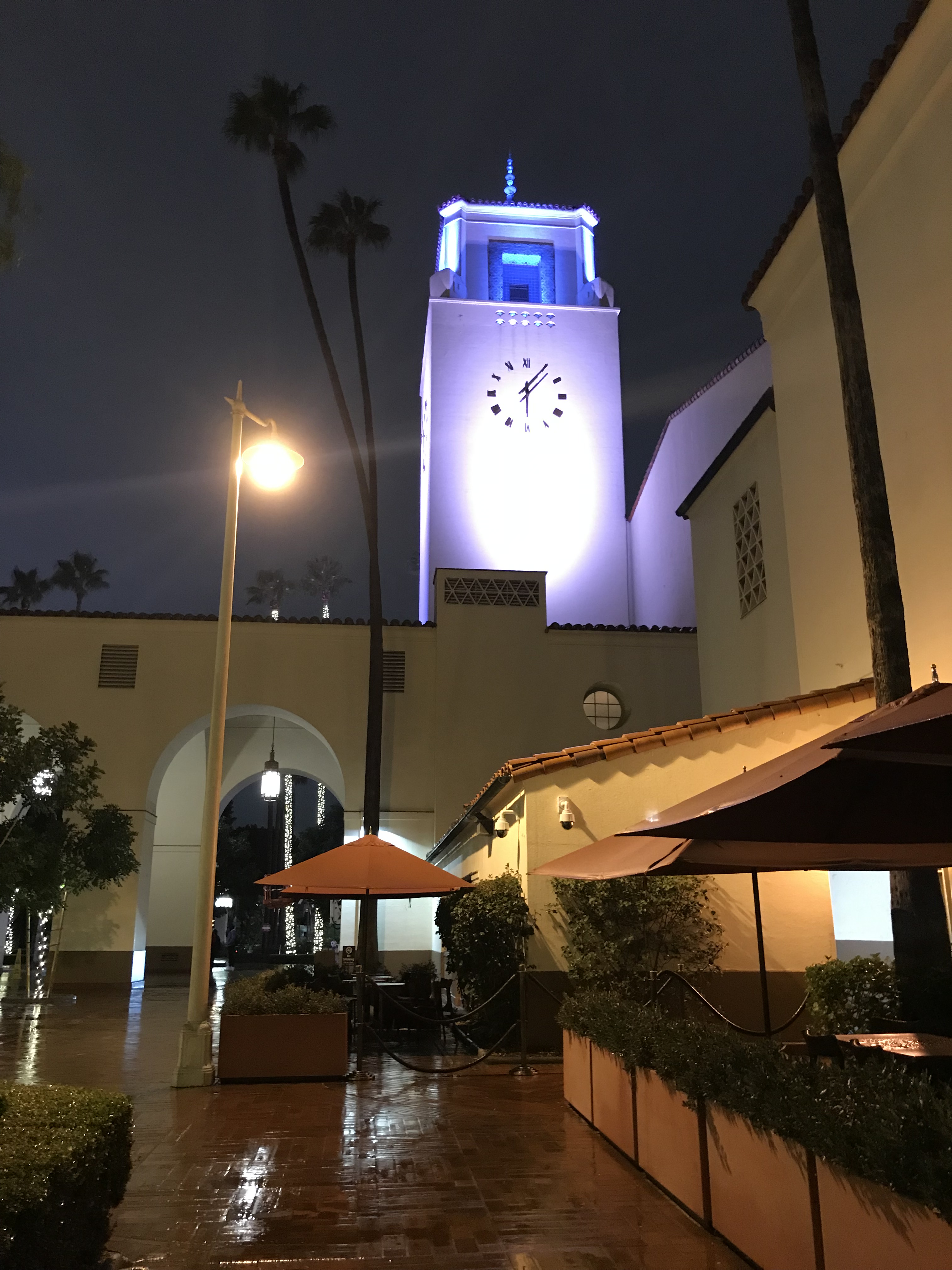
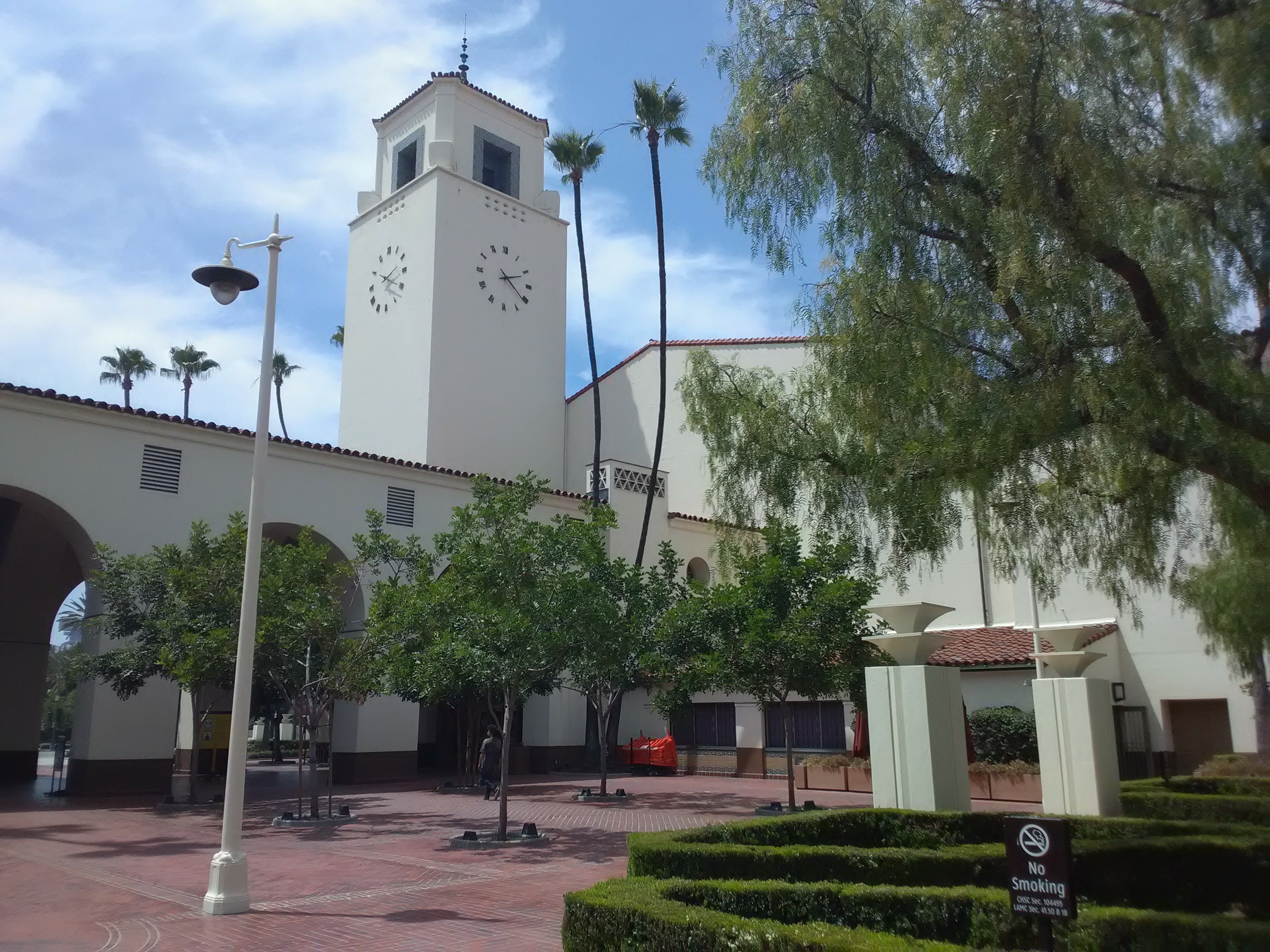
South Patio. The more spacious south courtyard has more benches and a nice view of the clock tower, but also has less shade and gets more crowded. During the holiday season, this is where they set up the big Christmas tree.
 Transiting Los Angeles
Los Angeles Union Station is a great place to Hangout watching the trains dispatch arrivals it’s just a downright good place to hang out at
LikeLike
Los Angeles Union Station it’s a great place to get away get on the train go to San Diego or to Santa Barbara
LikeLike
I love Los Angeles Union Station it’s a beautiful
LikeLike