The automobile was absolutely vital to the early success of the Miracle Mile, an illustrious stretch of Wilshire Boulevard stretching from La Brea to Fairfax Avenues. Now it may be a transit line that gives it new energy.
In the 1920s, developer A.W. Ross envisioned his dusty stretch of Wilshire west of Western as a commercial center to rival Downtown. To that end, he leaned heavily into embracing the automobile, which was now becoming commonplace. His stretch of Wilshire was designed completely with cars in mind: buildings and signage meant to be viewed through a windshield, parking lots for every commercial building, and even the first dedicated left-turn lanes and timed traffic lights in the entire United States. Features now typical of the American landscape were pioneered here, in a flashy district of large, bold structures meant to catch the eye of passing motorists. And it was so successful that it provided a template that Los Angeles—nay, the entire country—repeated countless times over.
The Art Deco and Streamline Moderne department stores of the Miracle Mile’s early years were joined by mid-century Modernist towers in the 1950s and ’60s. But the same forces that gave the Mile its prominence threatened to undermine it. Standalone department stores lost favor to shopping malls surrounded by parking lots, and suburban office parks began popping up across the county. Today, the decline of retail is unfortunately very visible along Wilshire: a lot of the old Art Deco buildings and storefronts now sit empty.
But the Miracle Mile still has civic status on its side. In the 1960s, LACMA established itself alongside the unique geologic feature of the tar pits, which soon gained its own museum. These have since been joined by the Craft Contemporary, the Petersen Automotive Museum, and the Academy Museum of Motion Pictures, with the last two both occupying former department stores on the corner of Wilshire and Fairfax. City planners have long regarded the Wilshire corridor as the ideal backbone of an urban rail system, and in 2026 that vision was finally realized with the opening of the D Line extension beneath the Miracle Mile. Now a corridor made famous by the car is getting new vitality from transit.
We’re going to explore the Miracle Mile from east to west, starting at La Brea and ending with the complex of museums surrounding the tar pits. On the way, we’ll highlight some of the sights and more remarkable buildings along the route.
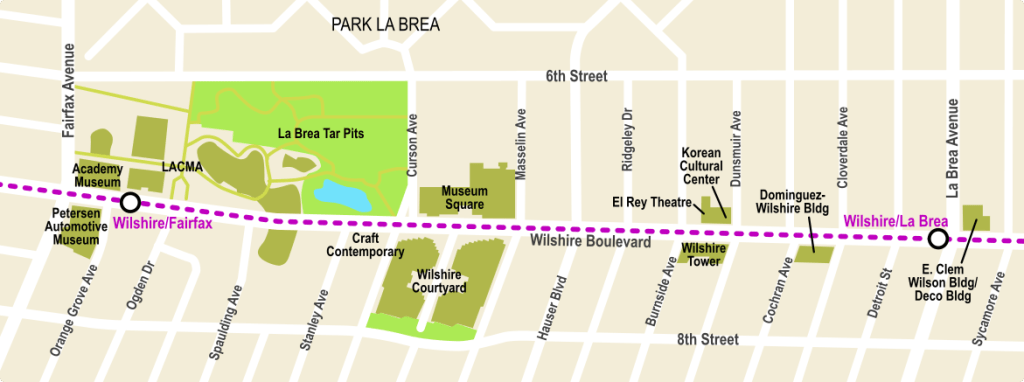
The Miracle Mile is bookended by two D Line stations, one at Wilshire/La Brea and one at Wilshire/Fairfax (technically, the Fairfax one is actually a block to the east, at the corner of Wilshire and Orange Grove Ave, but it’s still called Wilshire/Fairfax). Along Wilshire, the 20 and 720 Rapid buses make stops and both run very frequently. And for north-south connections, the 217 bus runs along Fairfax while the 212 runs on La Brea, both with good frequency.
The distance from La Brea to Fairfax is indeed almost exactly one mile, so walking along it without stopping will take you about 20-30 minutes, depending on your walking speed. But what’s the point of going if not to stop?
Wilshire/La Brea
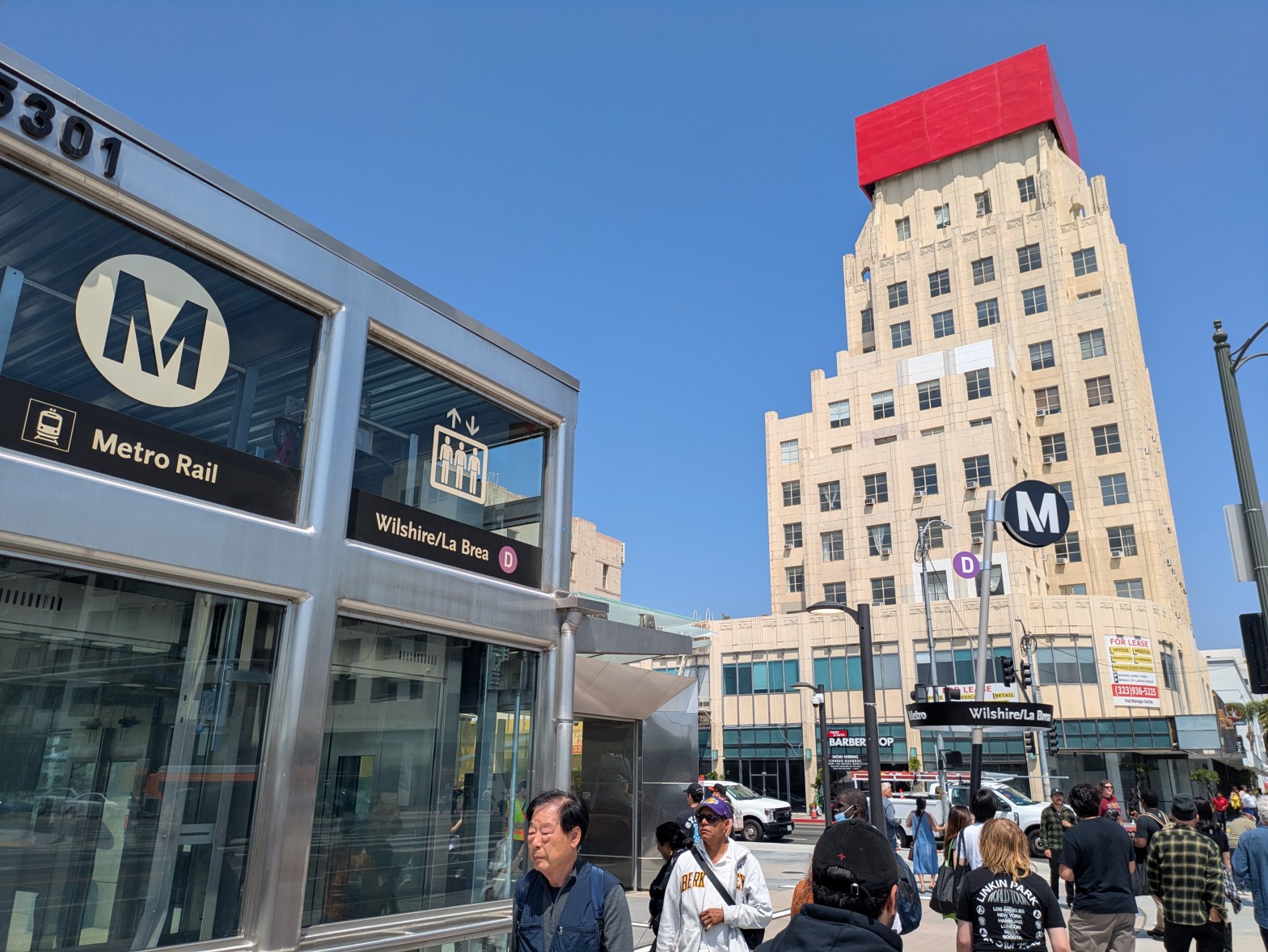
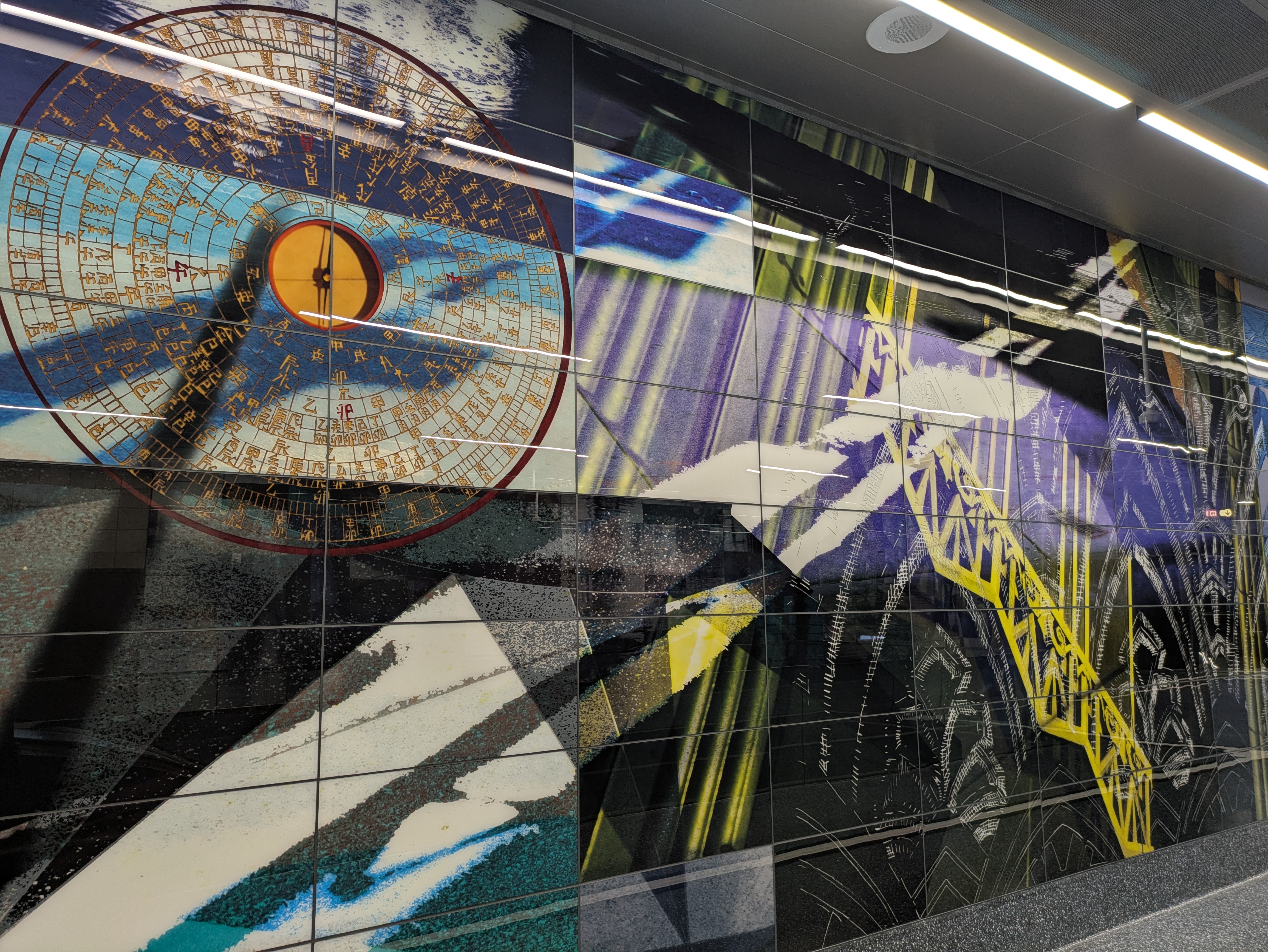
Wilshire/La Brea station holds a lot of Art Deco-themed artwork, with strong geometric patterns that reference the architecture of the Mile. The artwork on the mezzanine is particularly striking, a photo collage that combines imagery of the tar pits with architectural elements and icons of the neighborhood. On the street-level plaza, a farmers market takes place every Sunday morning.
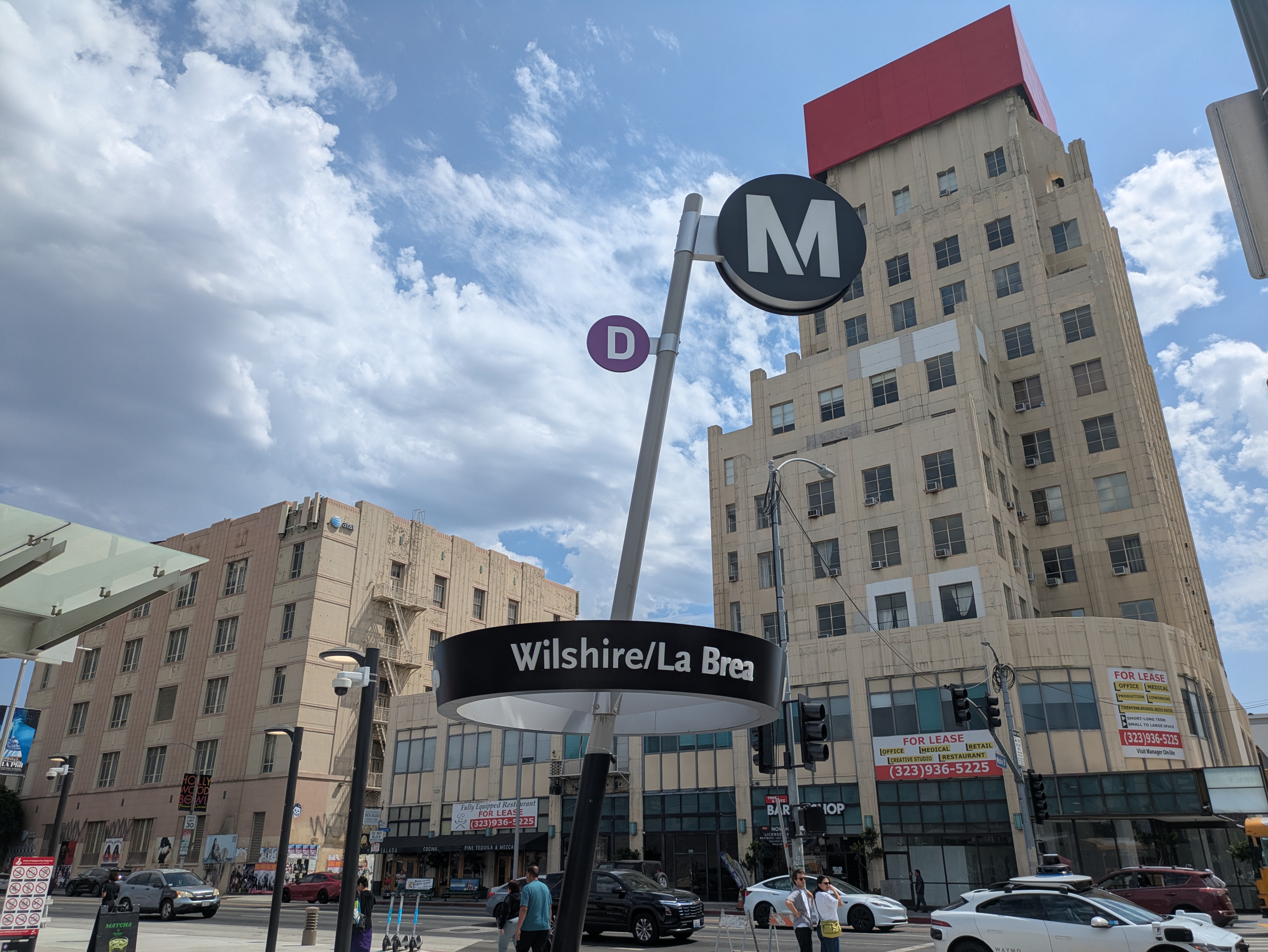
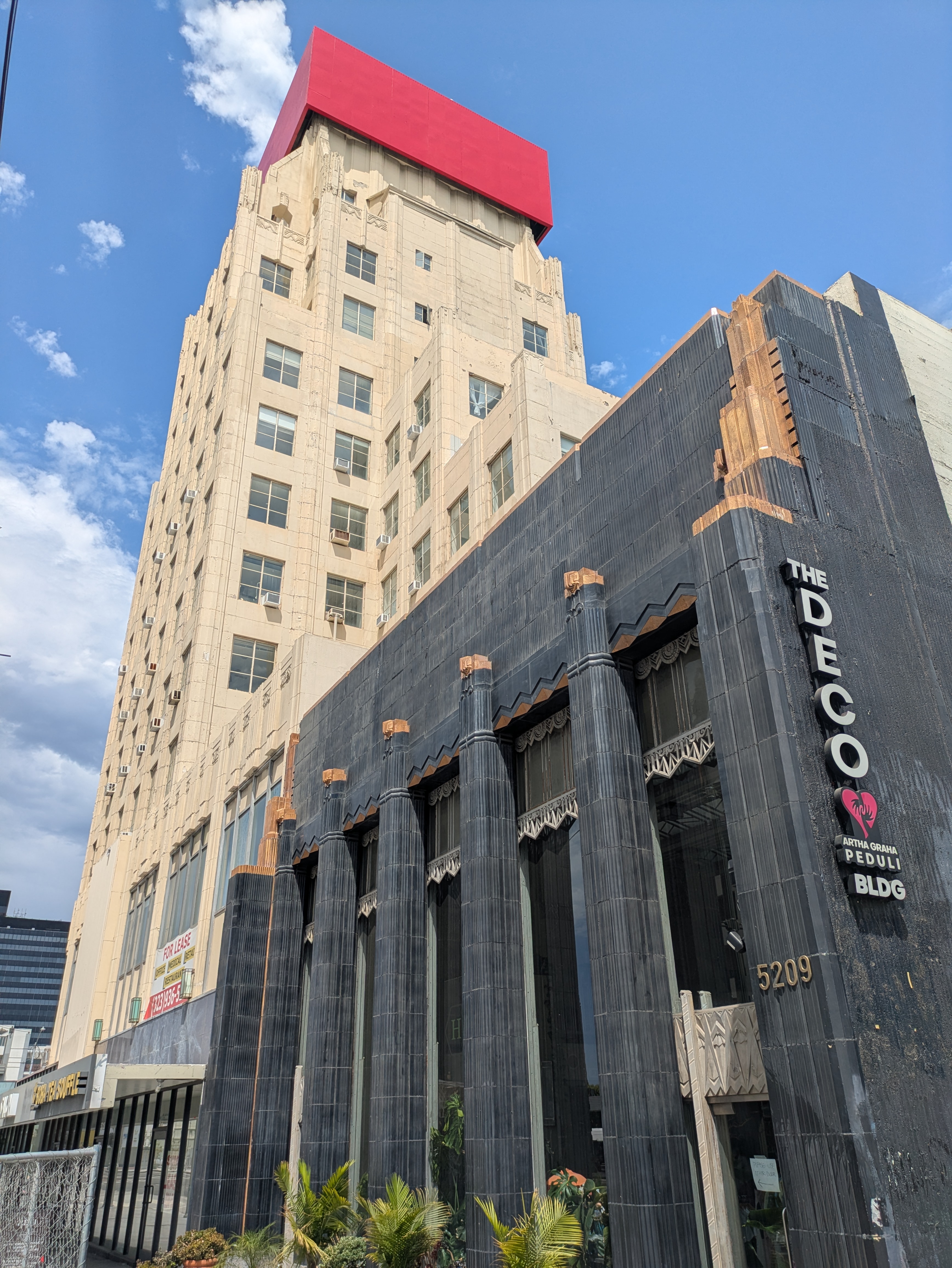
On the surface, the intersection outside the station is dominated by the E. Clem Wilson Building, a beautiful Art Deco tower somewhat marred by a giant red billboard covering the top of the spire. The billboard has often been a feature of the building, albeit with different sponsors; for many years, the building was known as the Mutual of Omaha Building because the sign on top bore the name of the insurance company. When it was completed in 1930, the tower was topped by a dirigible mast (although I couldn’t tell if it was ever actually used) and served as an anchor that announced the start of the Miracle Mile.
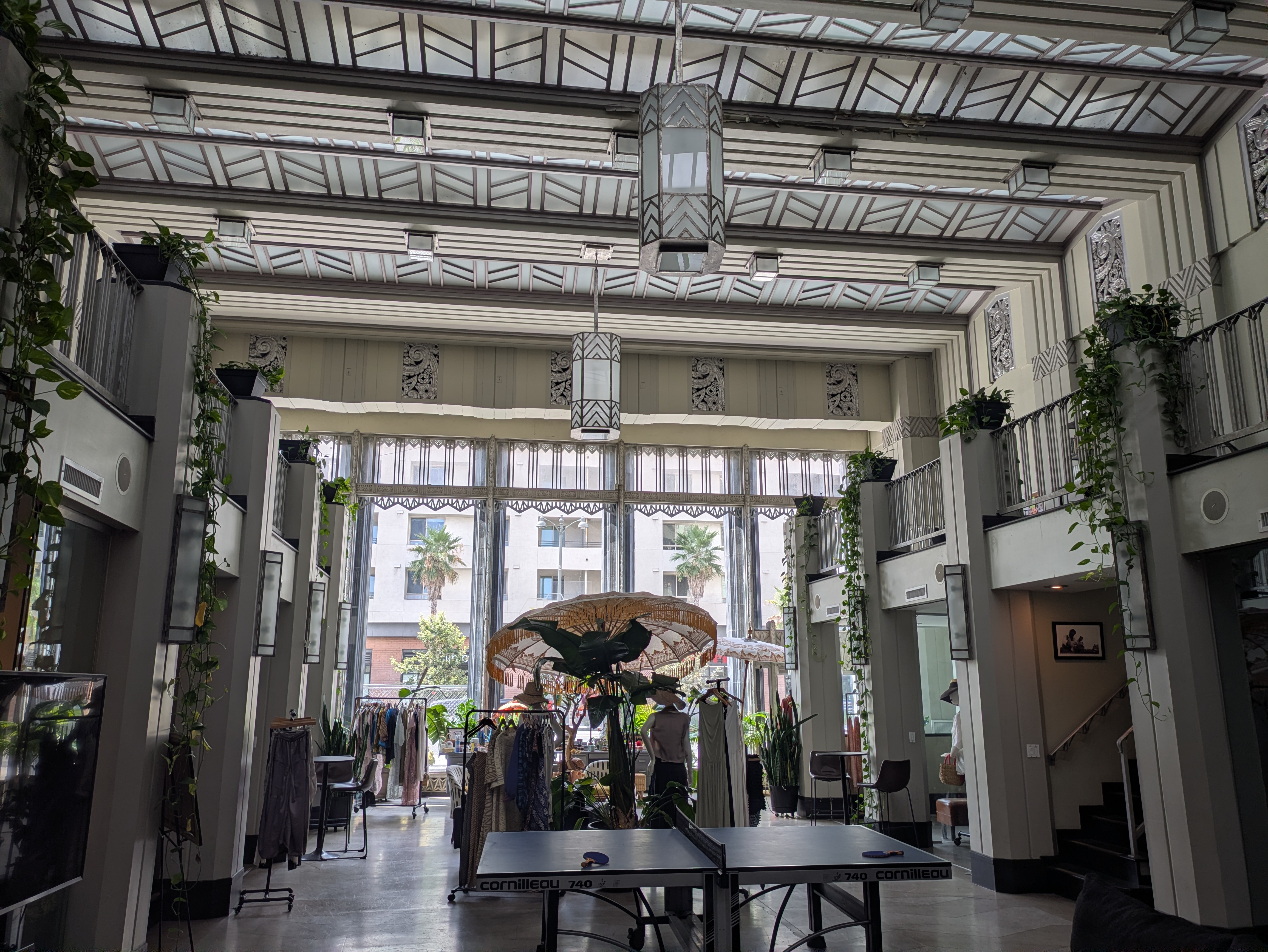
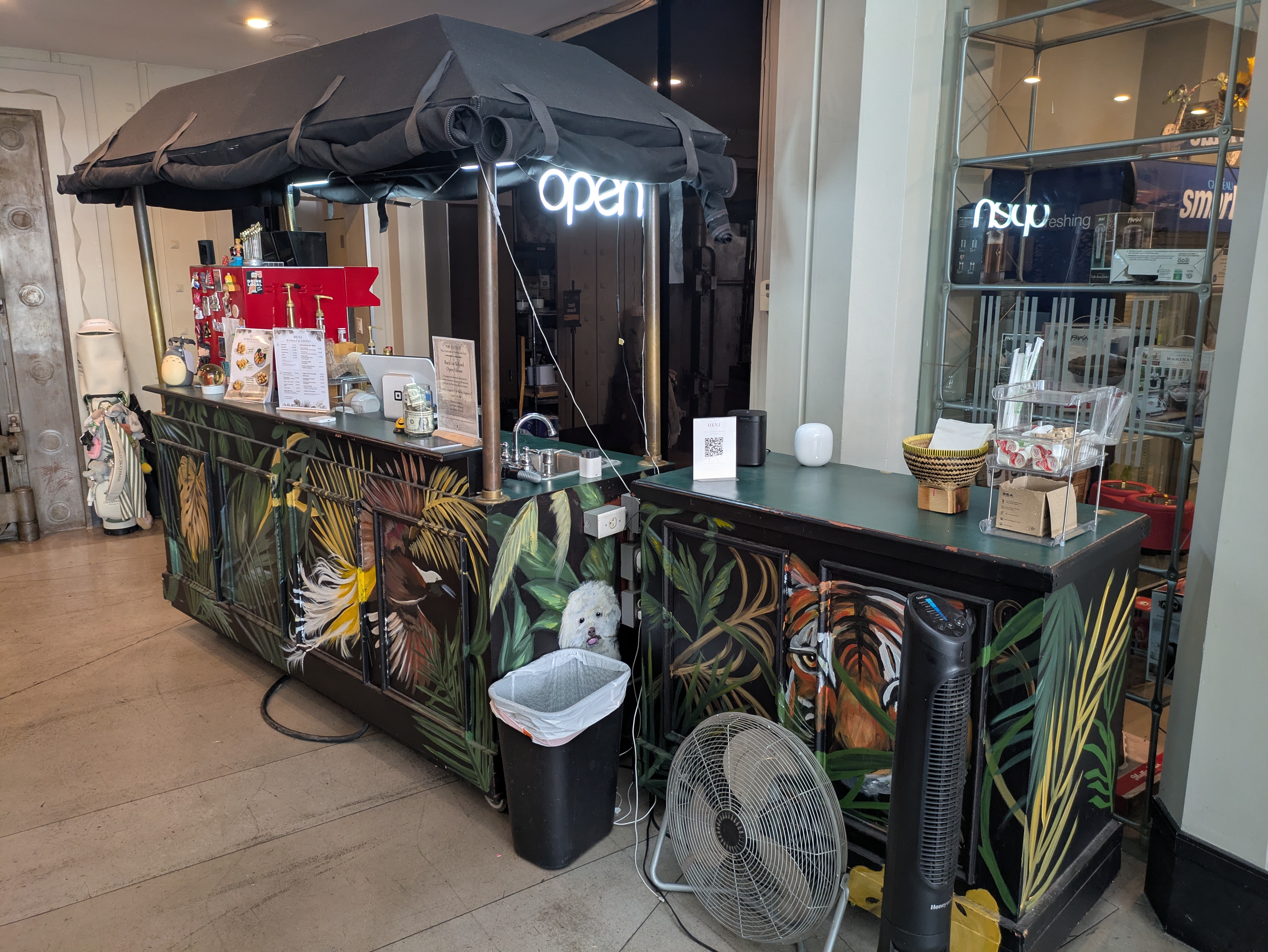
Directly attached to the E. Clem Wilson Building on its eastern side, opposite La Brea, is the relatively tiny Deco Building. Originally built as a bank in the 1920s, the building is notable today for being one of the last remaining examples of a black-and-gold Art Deco structure in Los Angeles. Today, it’s a co-working space that houses HEXI, a collective of Indonesian vendors that sell clothing and accessories, as well as a small market and a coffee cart selling Indonesian-style coffee. Pop in on a weekday afternoon (they’re open Tues-Sun 11am-5pm) and admire the incredible architecture and the restored bank vaults in the back while enjoying a sweet treat.
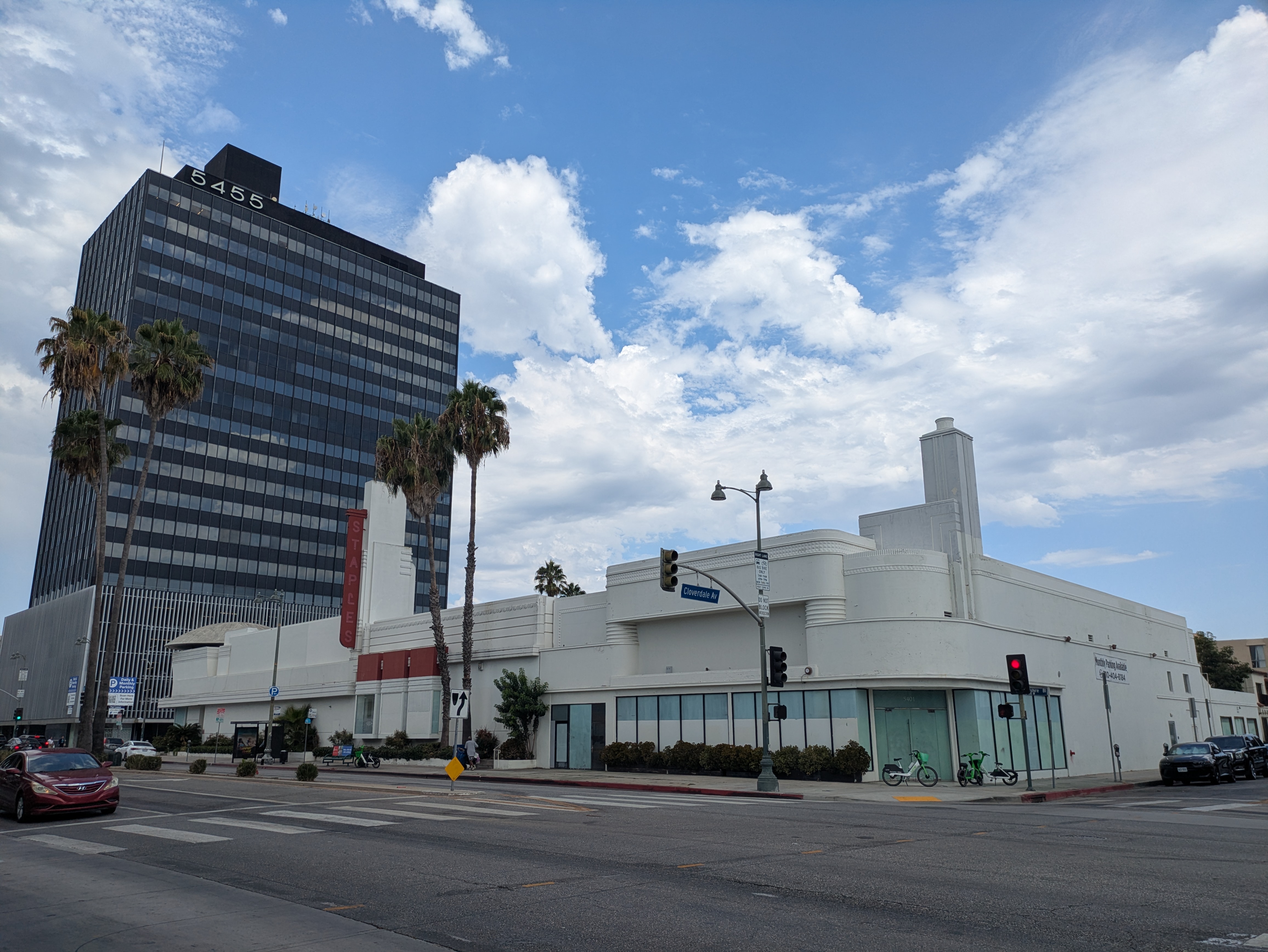
Moving westward, much of the commercial architecture along Wilshire remains intact, even if some of it has seen better days. Just a block west of the station, the former location of The Darkroom (now a church) still has its distinctive blue-and-white striped facade, although the giant camera that once greeted passersby now sits hidden behind plywood boards. Another block further on, the former Staples between Cloverdale and Cochran Aves is still an impressive example of Streamline Moderne from the 1930s, gleaming white even while it sits empty.
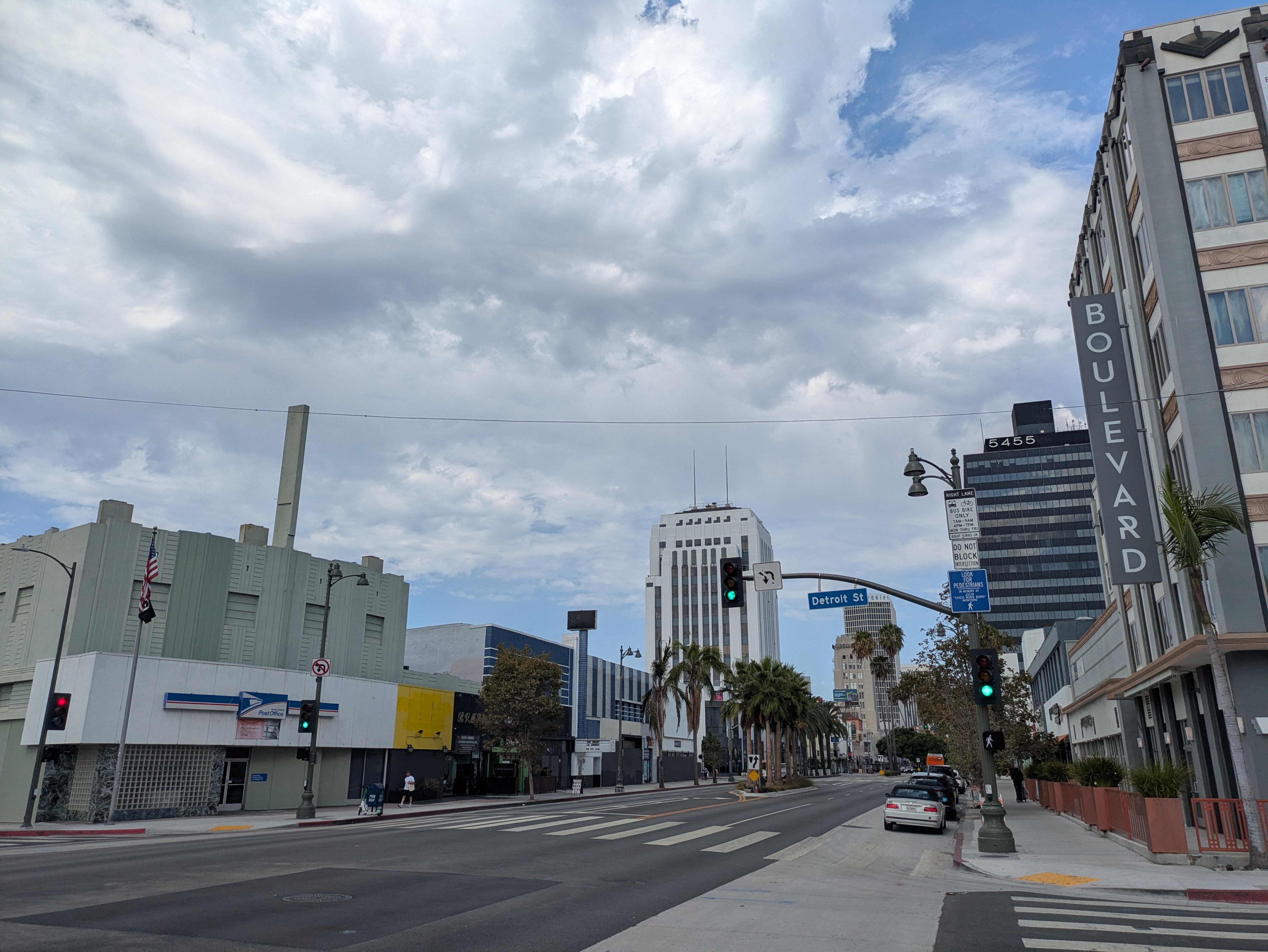
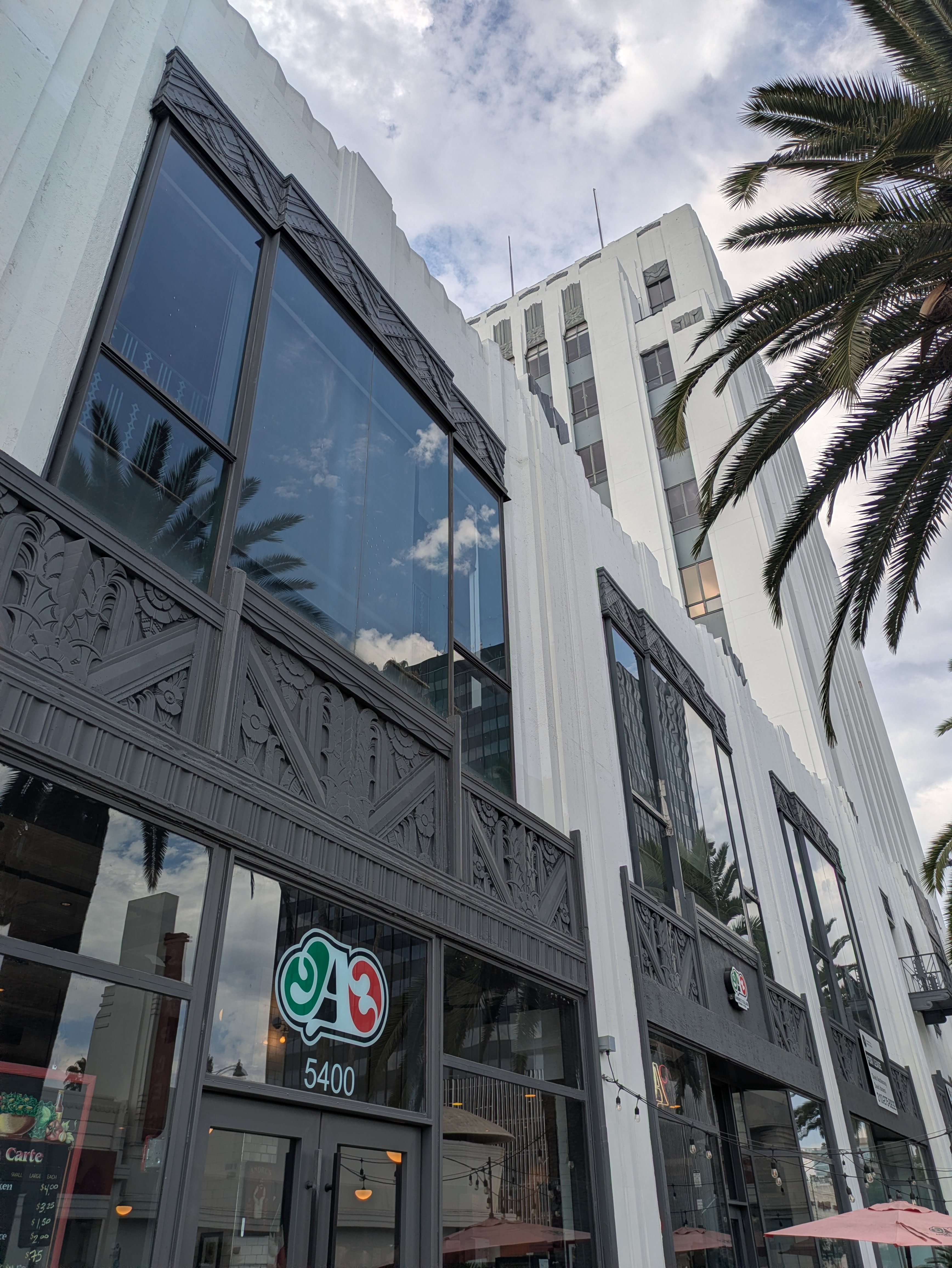
Right across the street from the old Staples is the Dominguez-Wilshire Building, another Art Deco landmark from the 1930s that served as one of the anchors of the Miracle Mile in its early years. The detailing on the building is beautiful, with impressive entrance doors and a pretty sleek tower.
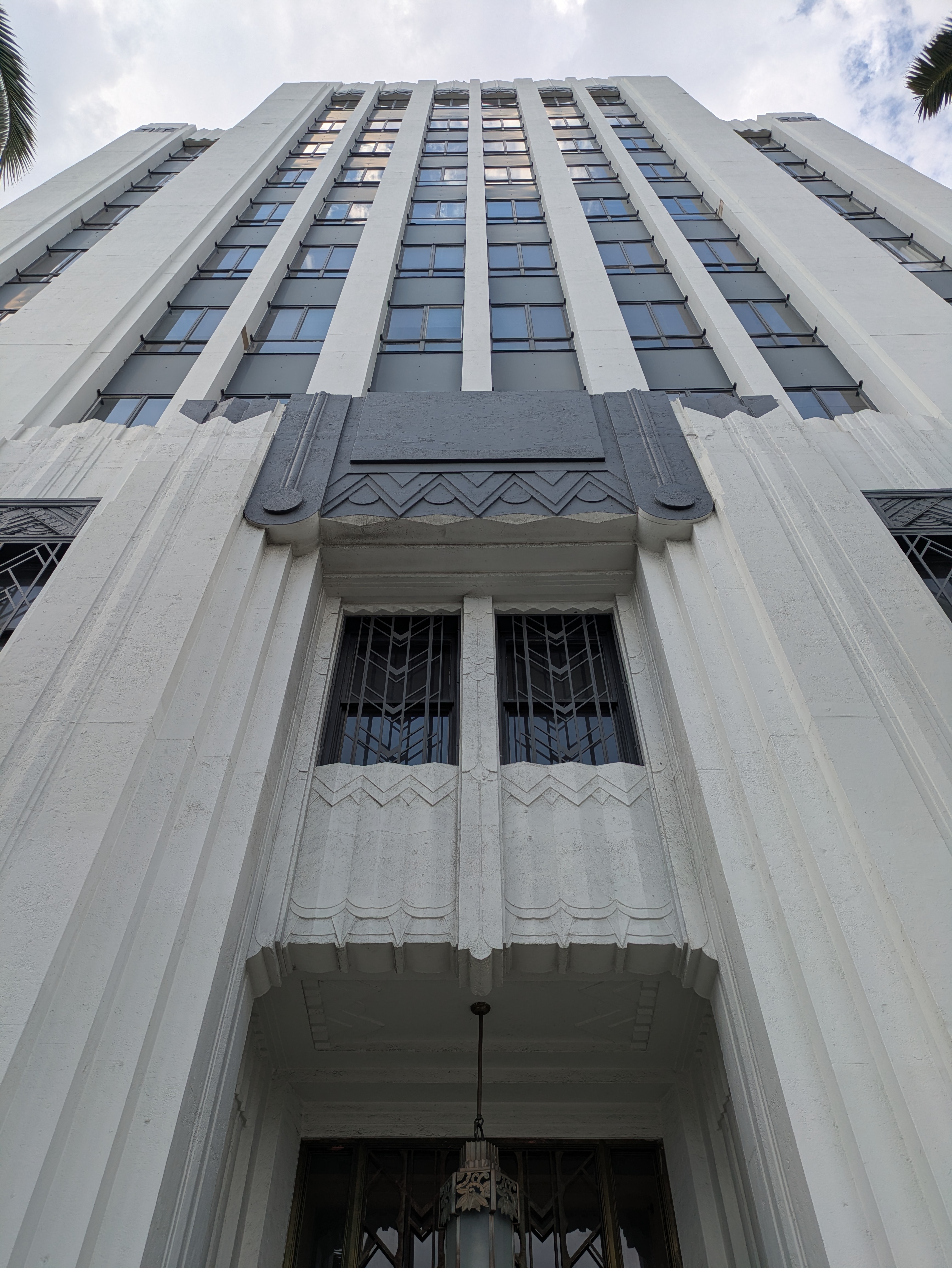
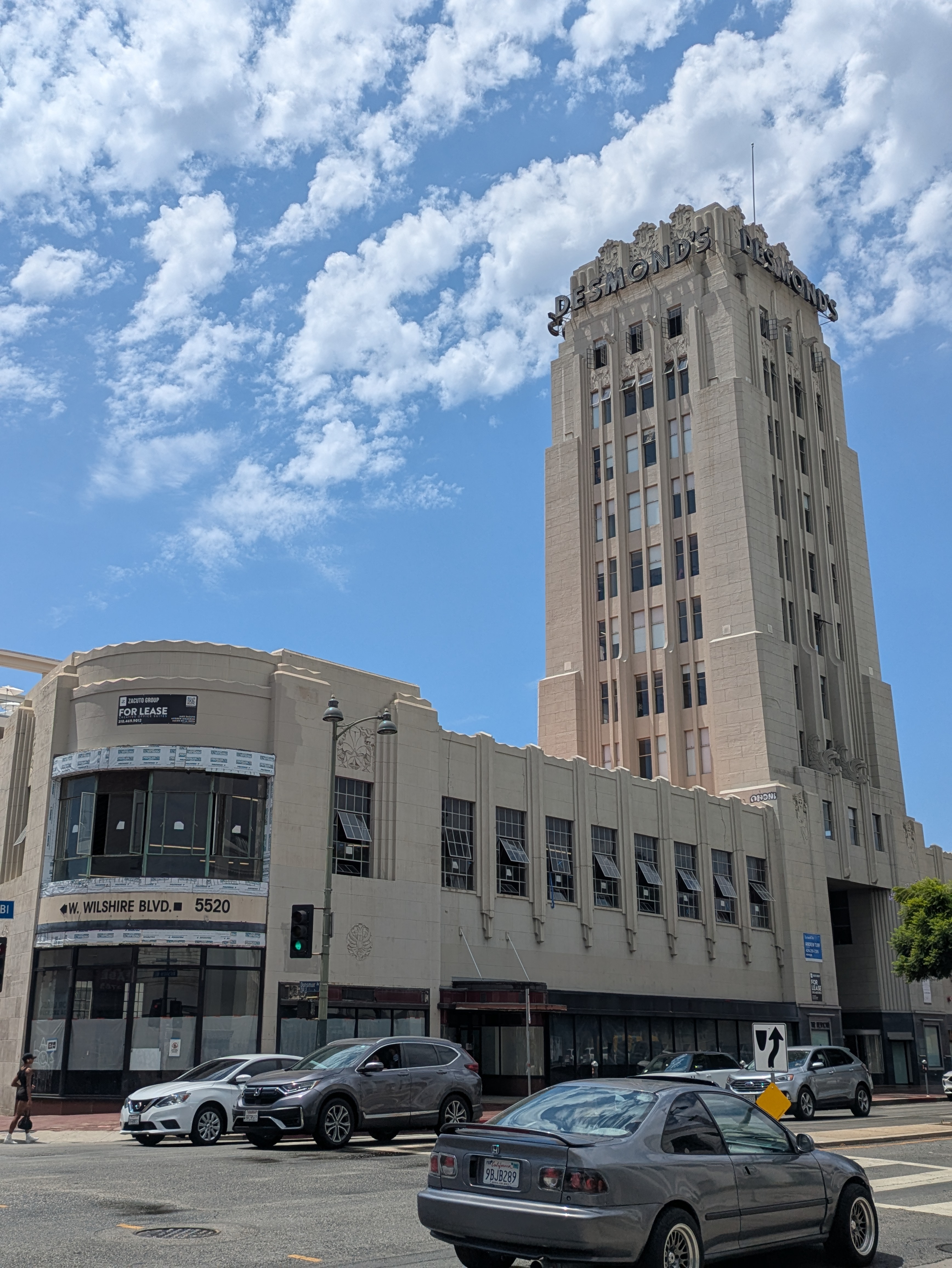
A couple blocks further on, between Dunsmuir and Burnside Aves, is the Miracle Mile’s original Art Deco tower: the Wilshire Tower, also known as the Desmond’s Building for the department store that once occupied one of its wings. The building is still a striking landmark and set the precedent for future Miracle Mile structures, particularly the other two Art Deco towers just to the east that were built shortly afterwards. The Wilshire Tower was designed by Gilbert Stanley Underwood, architect of the federal courthouse in Downtown L.A. and many national park lodges, most notably the Ahwahnee Hotel in Yosemite National Park.
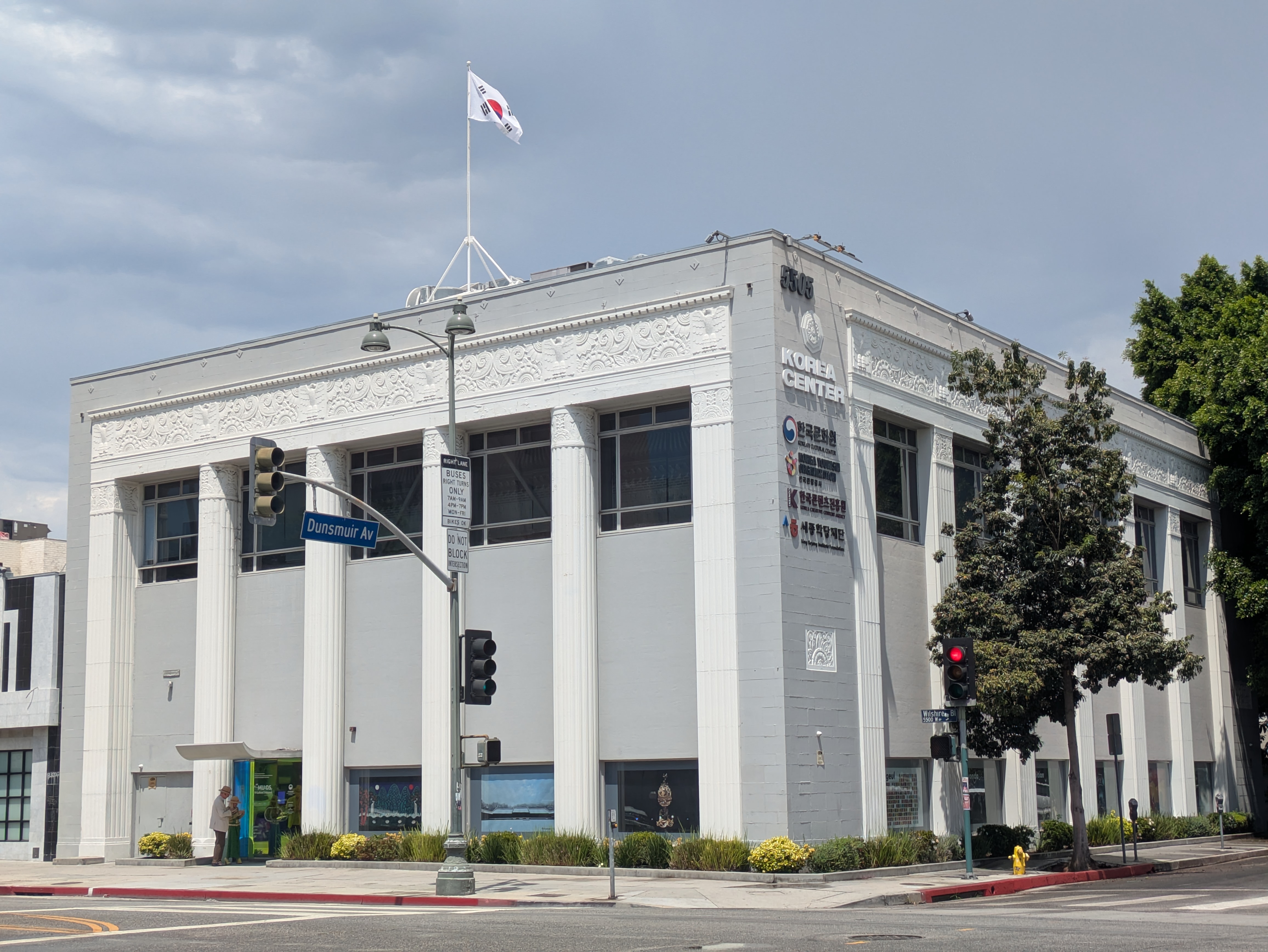
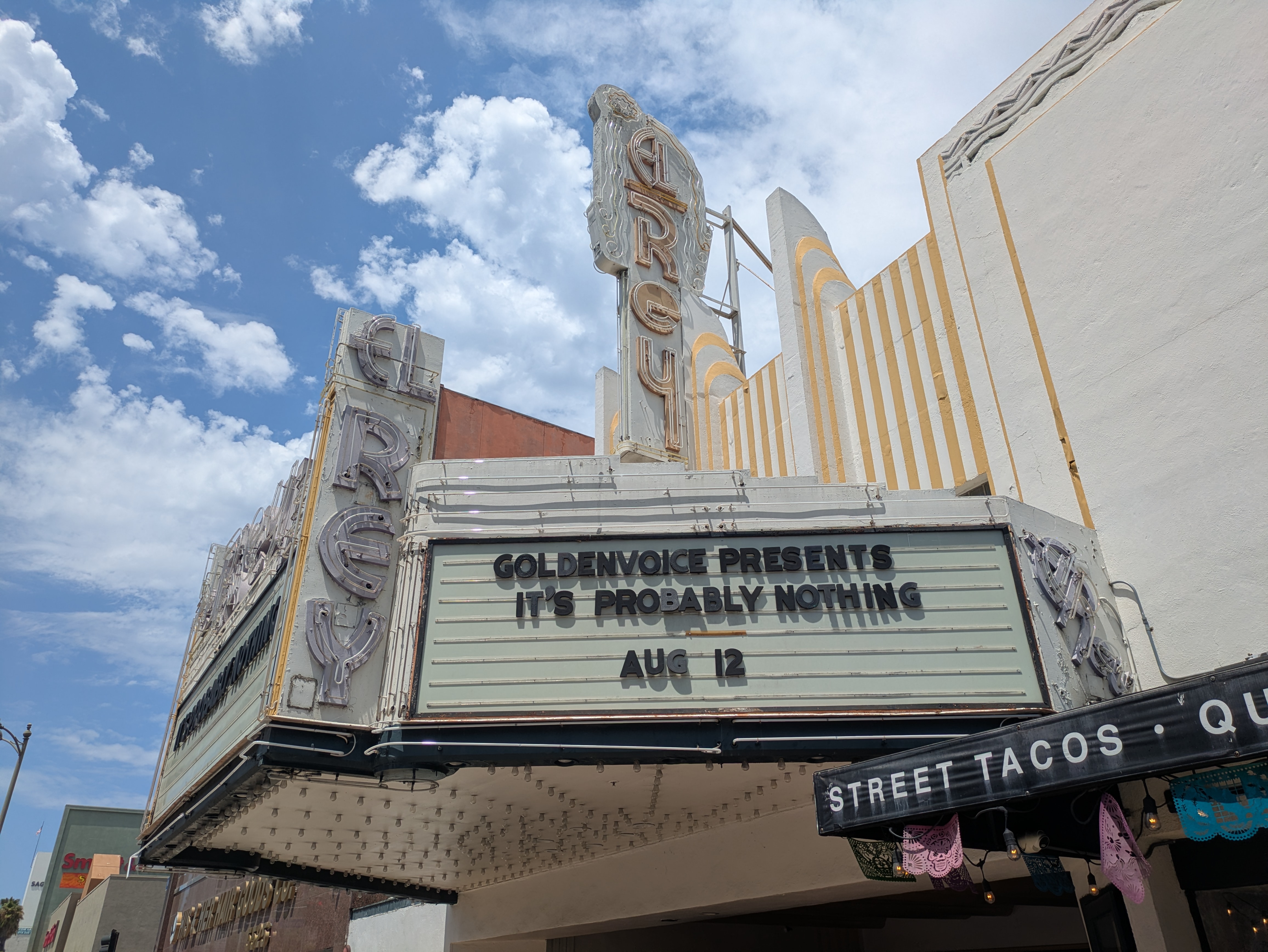
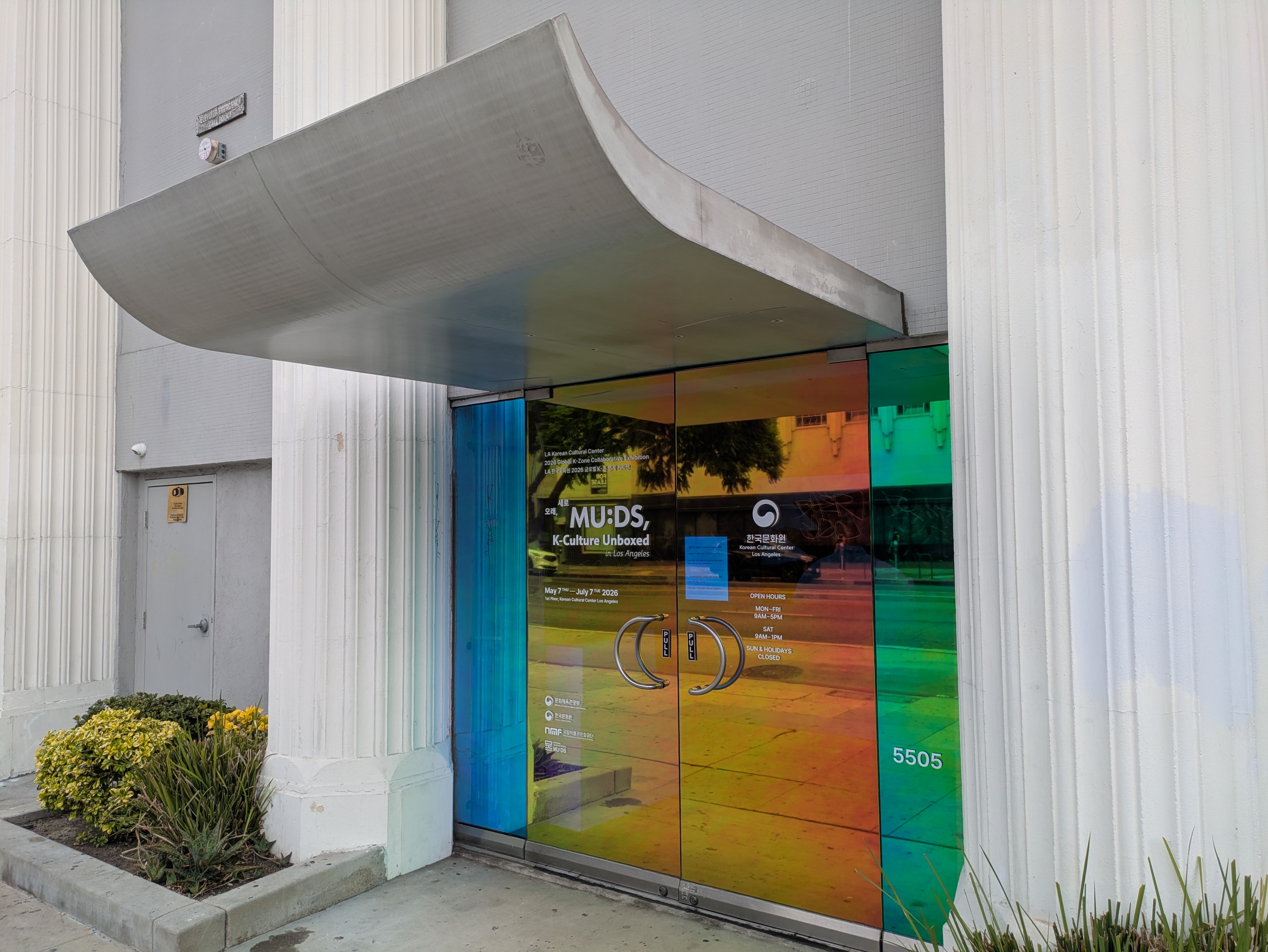
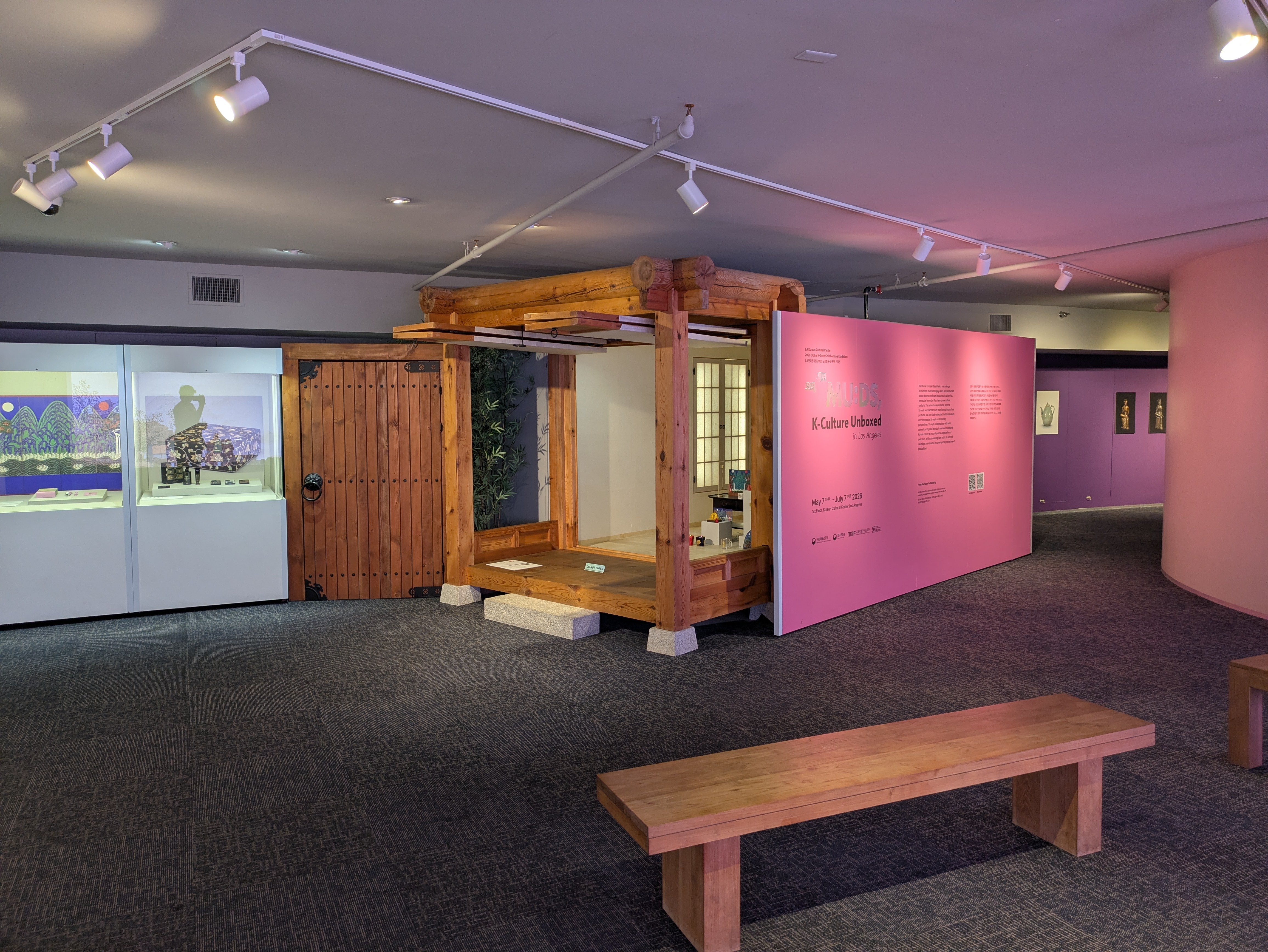
Directly across the street are a pair of cultural institutions right next door to each other. First is the El Rey Theatre, a beloved concert venue that still hosts plenty of notable acts, famed for its Art Deco interiors and colorful neon sign. The other is the Korean Cultural Center, a small museum and event space dedicated to sharing Korean culture. Inside, you’ll find a museum gallery with changing exhibitions on Korean culture, while upstairs is an art gallery showcasing work by local Korean artists. The exhibitions change frequently, so check the website to see what’s on. There’s also a library and an auditorium on-site, hosting talks, film screenings, performing arts, and other events throughout the year. Admission is free, they’re open Mon-Fri 9am-5pm, Sat 9am-1pm.
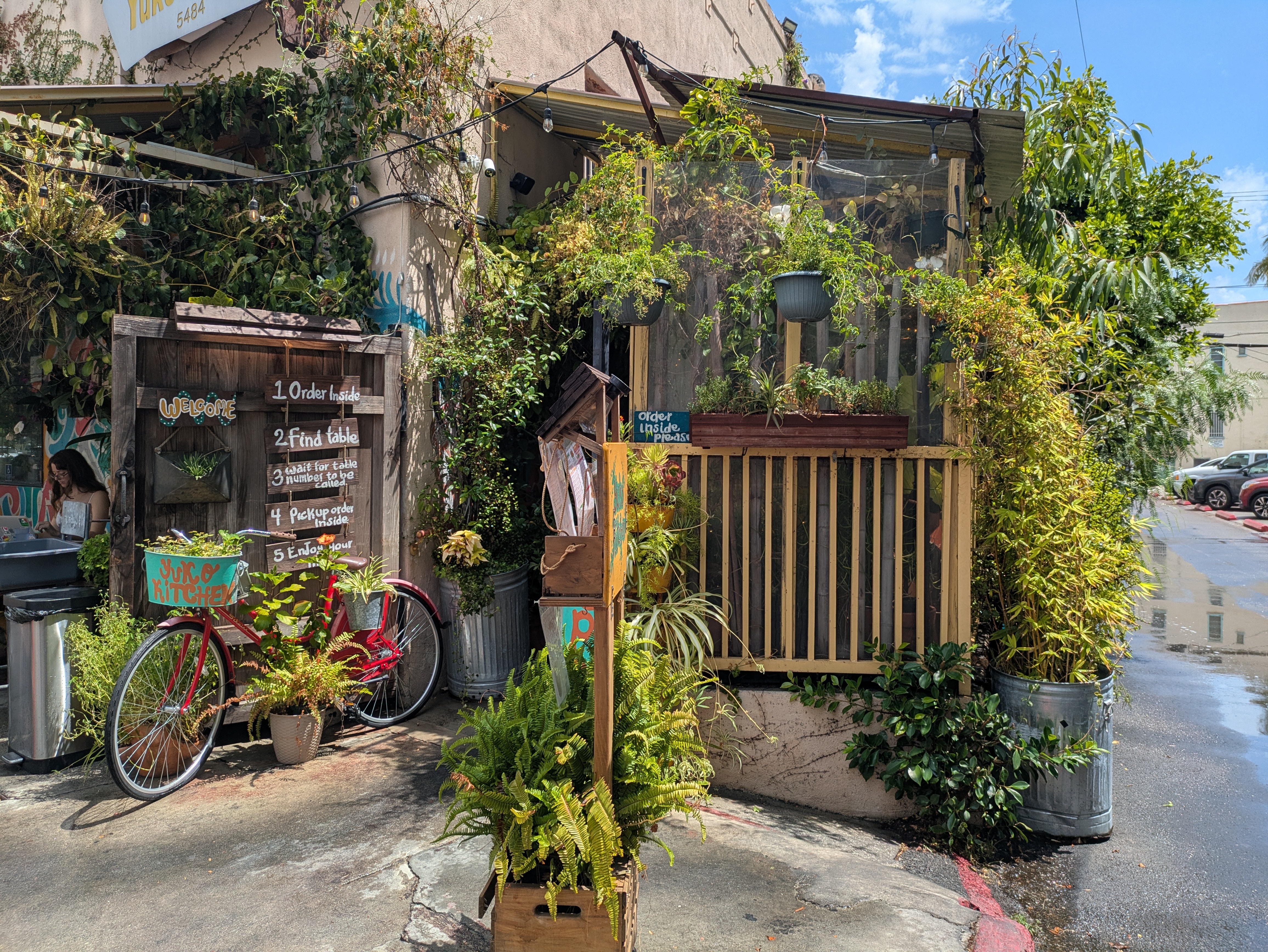
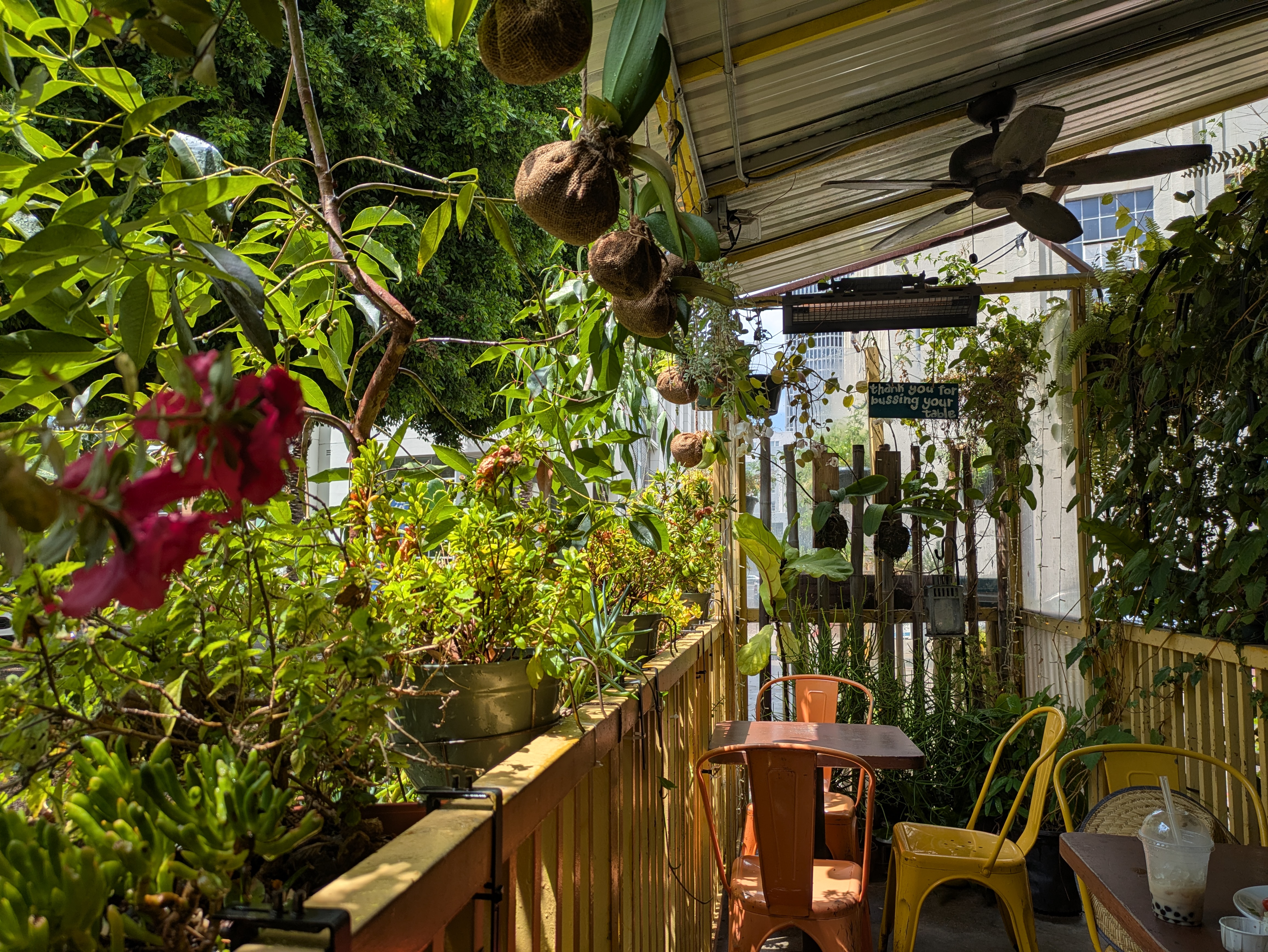
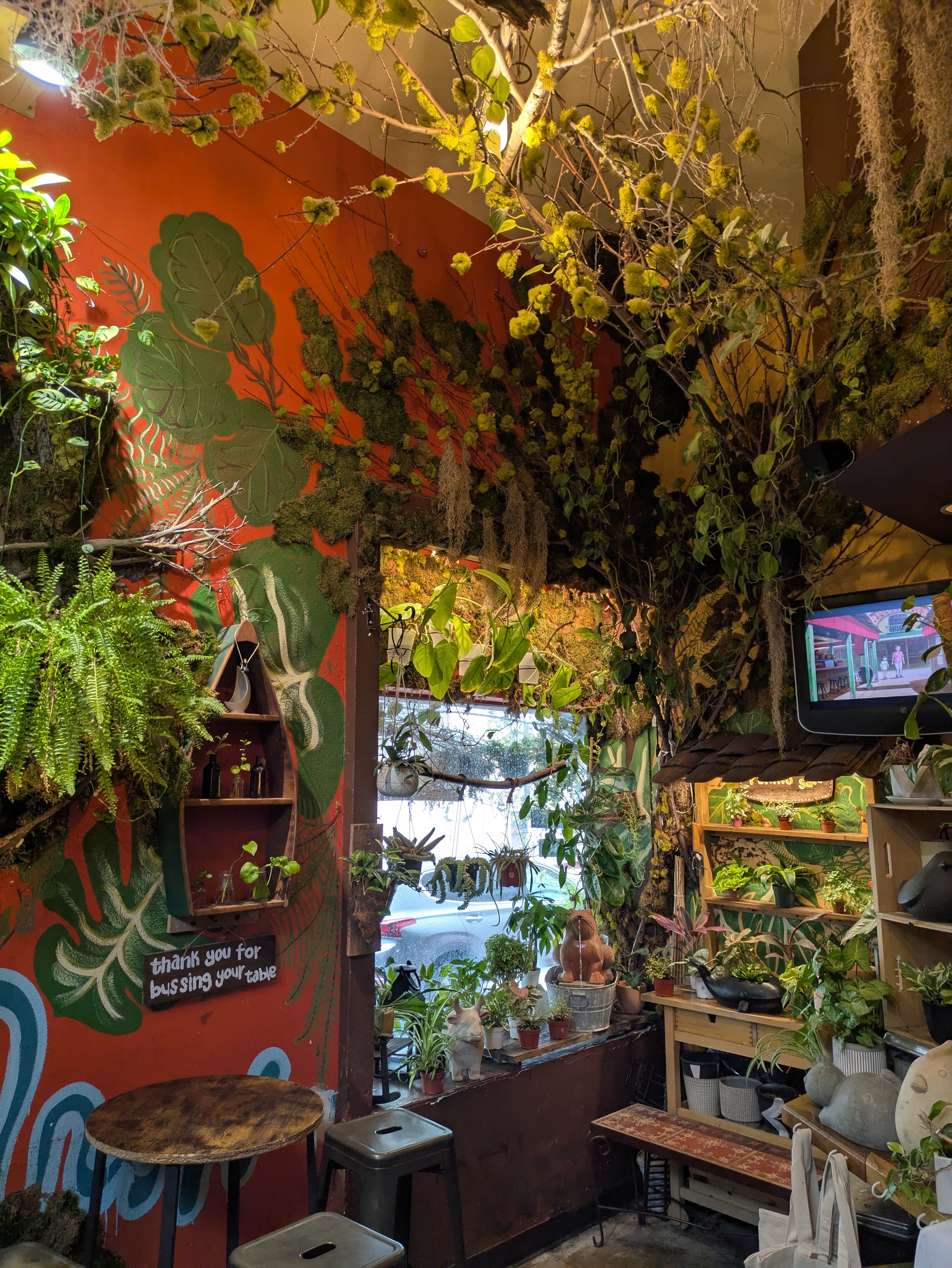
If you’re getting hungry, this is the perfect time for a bite to eat. Right across Wilshire from the Korean Cultural Center, just a short ways down Dunsmuir, is Yuko Kitchen, an incredibly charming Japanese cafe housed in a small space positively overflowing with greenery. Plants line the walls both inside and out (inside you’ll even find a handful of plants for sale), but if you can find a seat on the patio, it really feels like dining in a lush greenhouse. The menu is fairly extensive and covers a lot of Japanese favorites: rice bowls, udon noodles, teriyaki, sushi rolls, or if you want something handheld, get a “bowlito” (sushi burrito). Or just grab a cookie and help yourself to some of the refreshing cucumber water.
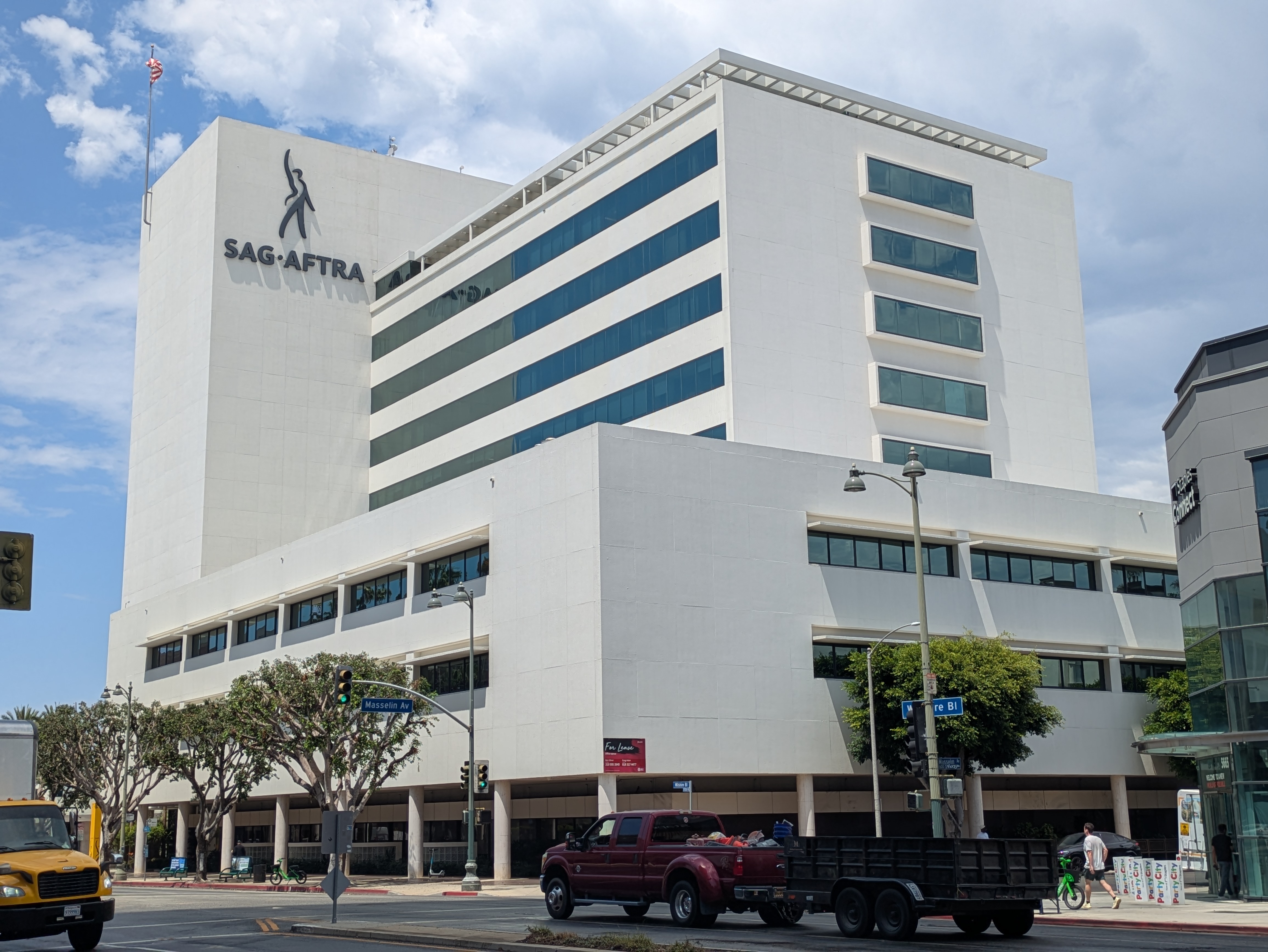
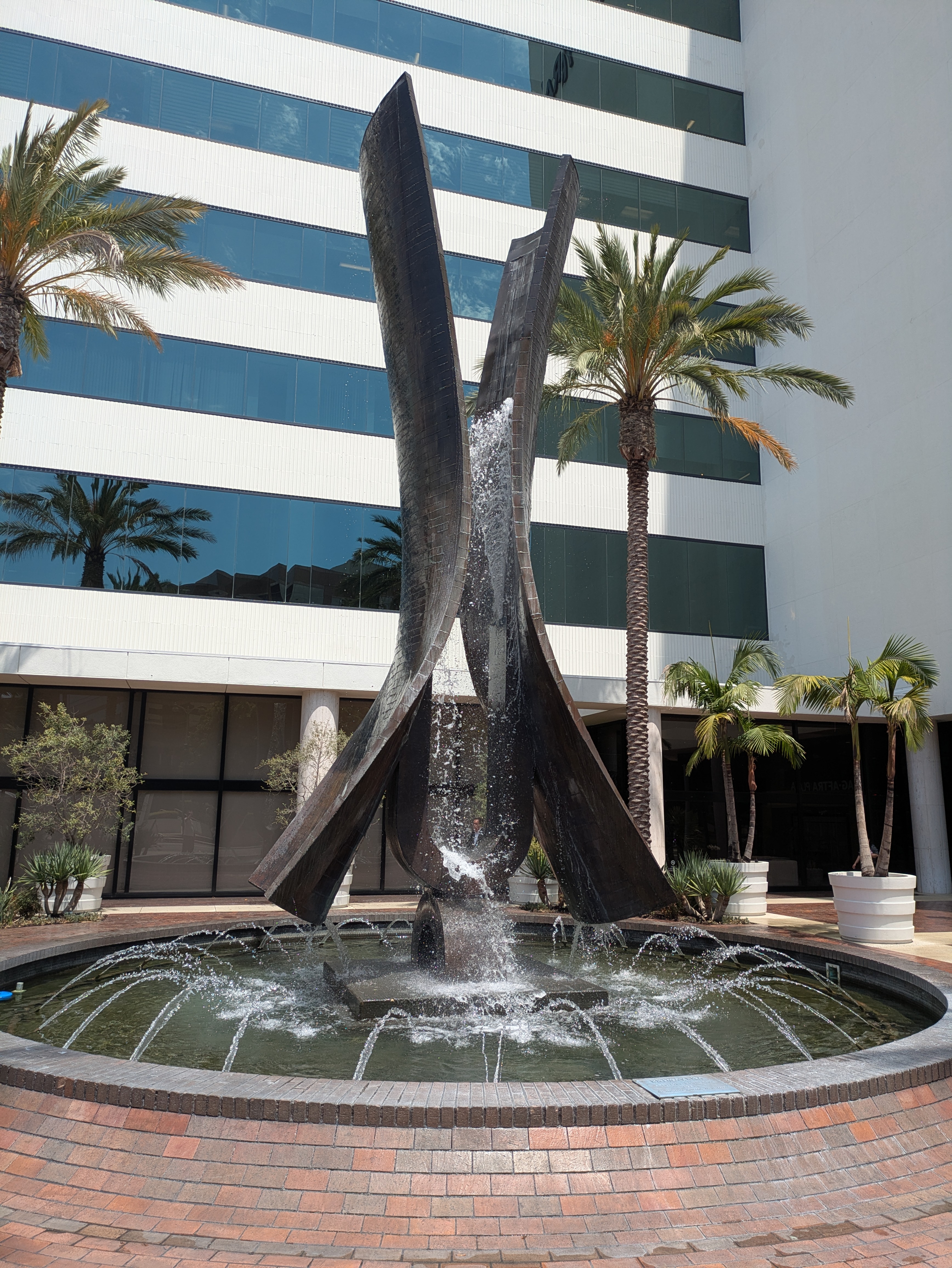
The architecture gets notably more modern and corporate as we approach Museum Row. Between Masselin and Curson Avenues, right before we reach the tar pits, are two notable examples across the street from each other. On the north side of Wilshire is Museum Square, better known as the SAG-AFTRA Building for its biggest tenant. This modernist structure dates back to 1949 and shifted the character of the Miracle Mile from a retail corridor to an office district. The tall windowless shaft in the center of the structure holds the building’s electrical and mechanical infrastructure, which had to be put above ground given the site’s proximity to the tar pits. Since then, it’s proven doubly useful as a prominent billboard for whichever tenant cares to put their name on it.
Across the street is Wilshire Courtyard, a decidedly postmodern office campus that retains its 1980s look, with red granite cladding typical of corporate architecture of the era. Behind the building, at the end of the little street that cuts through the middle of the campus, is a small park with a cute turtle pond and some nice benches.
Museum Row
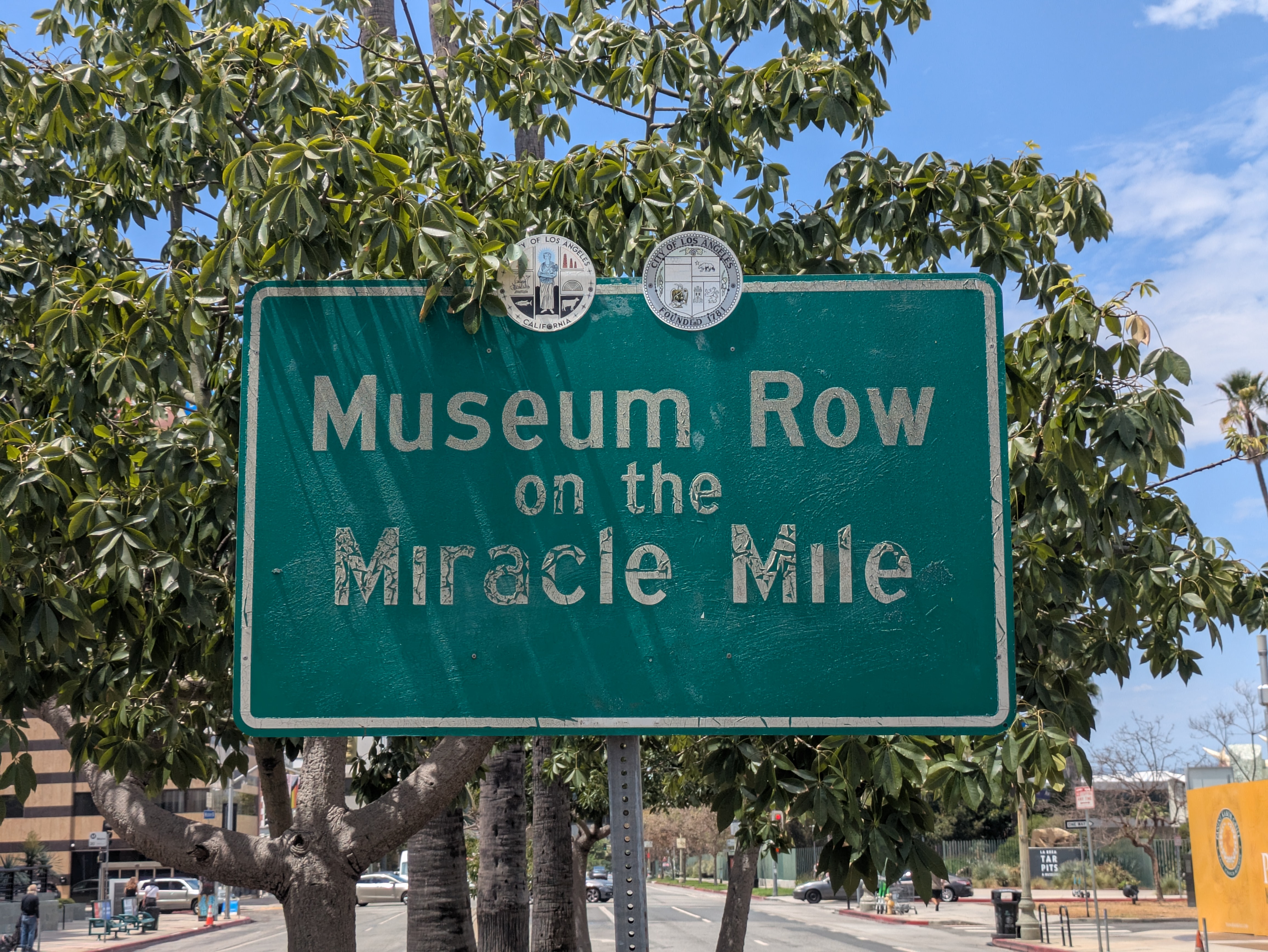
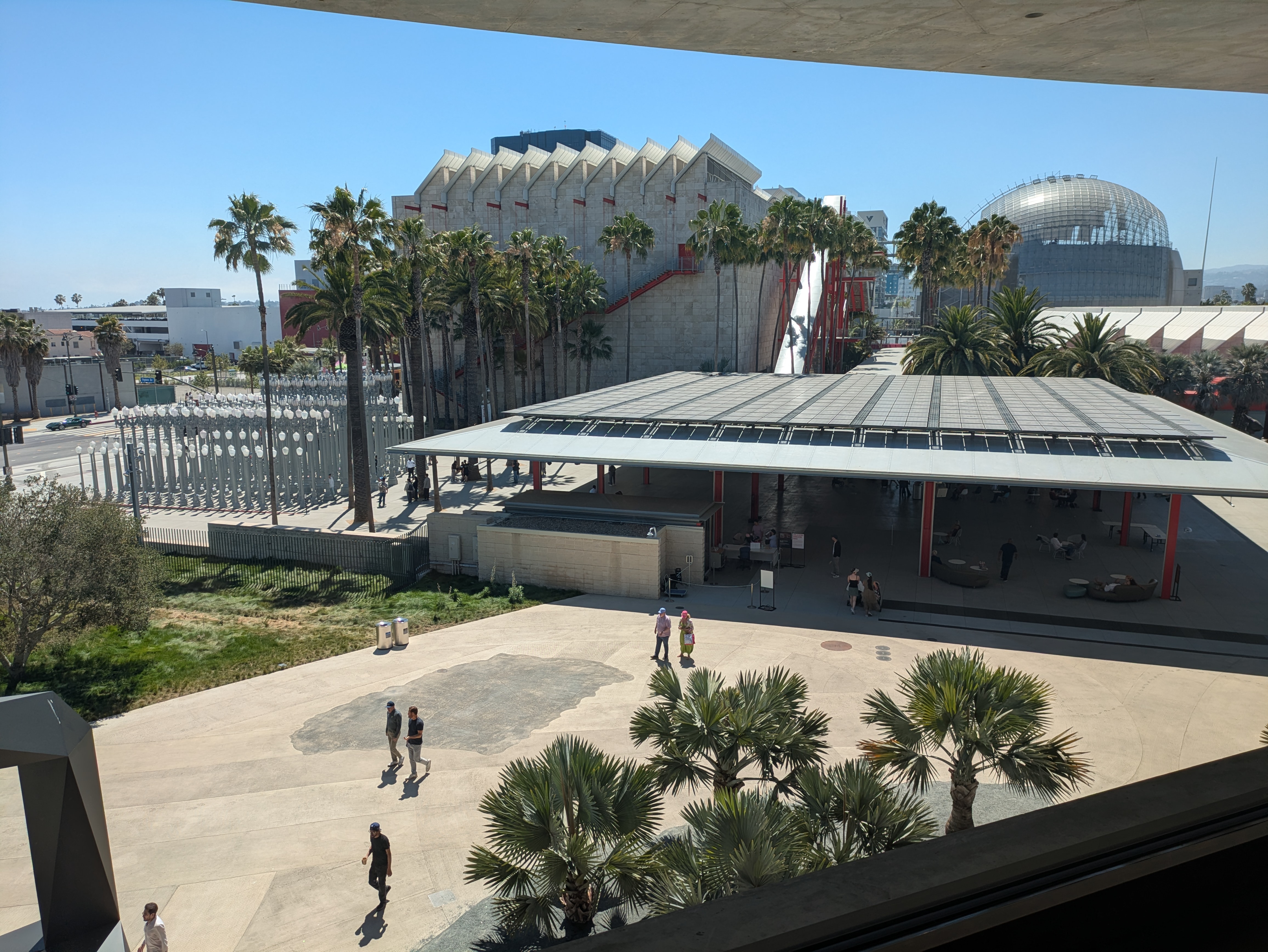
Between Curson and Fairfax, this stretch of Wilshire holds five different museums, including the city’s largest art museum, the semi-official museum of its most famous industry, and an incredibly significant and unique geologic site. And now there’s a subway station right in the middle of it, making it very transit accessible.
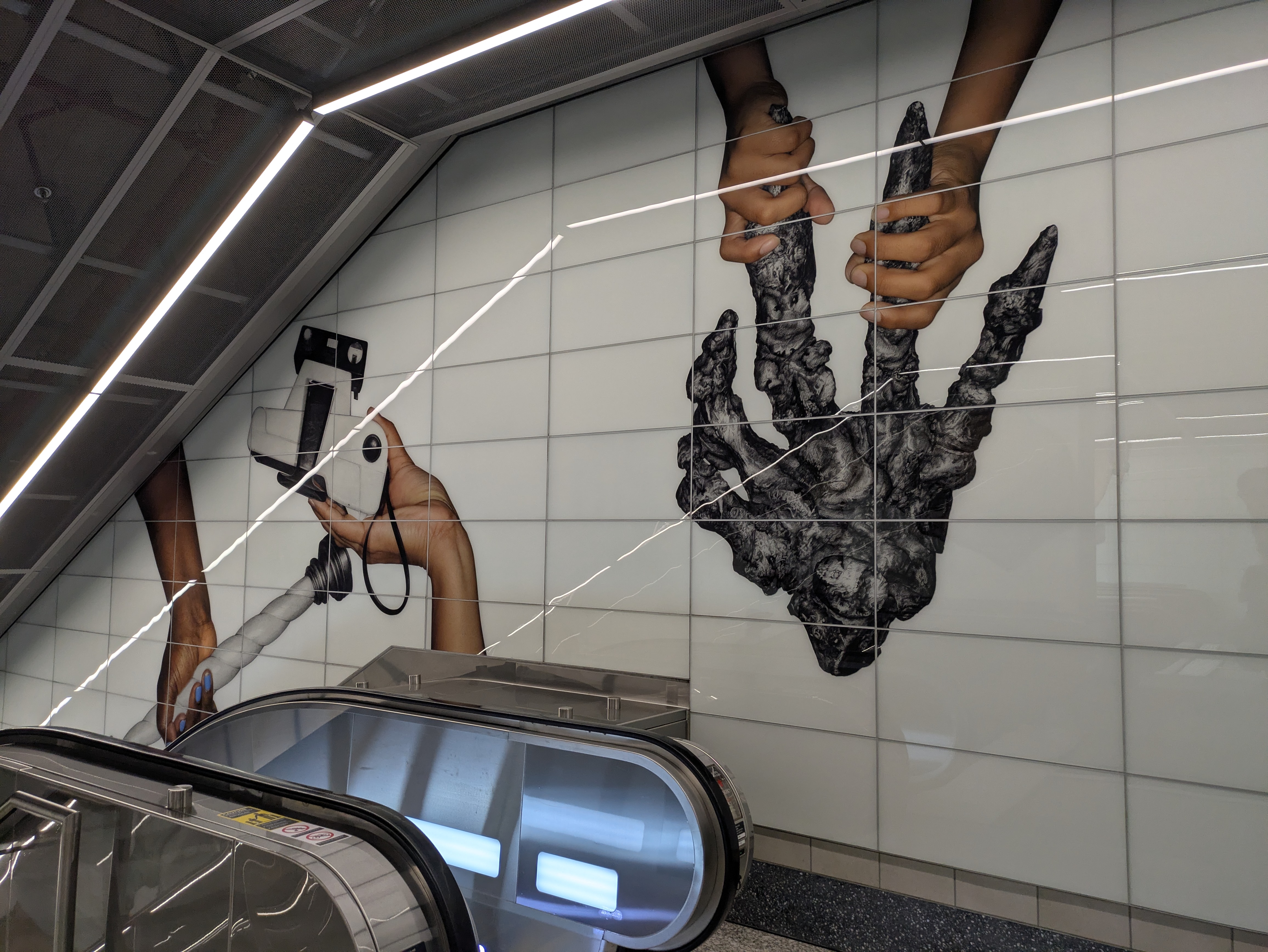
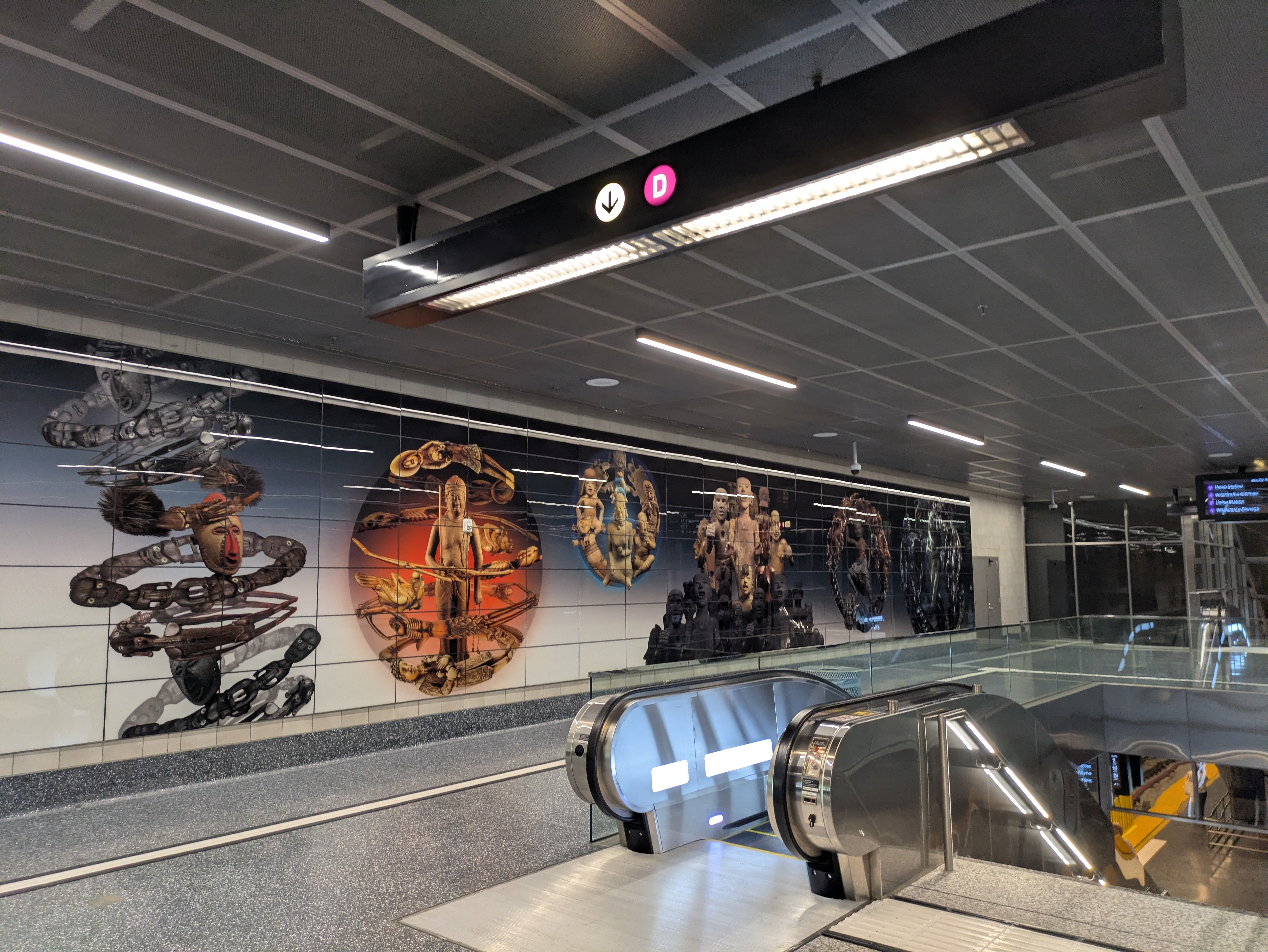
Wilshire/Fairfax station sits at the corner of Wilshire and Orange Grove Ave, a block east of Fairfax proper, and directly across the street from three separate museums. The artwork here references the station’s neighbors, with photographs of artifacts from the LACMA collection and a series of images of hands holding objects that reference the local museums: a fossil for the tar pits, a steering wheel for the Petersen, a film camera for the Academy, etc. A farmers market takes place in the station plaza every Tuesday afternoon.
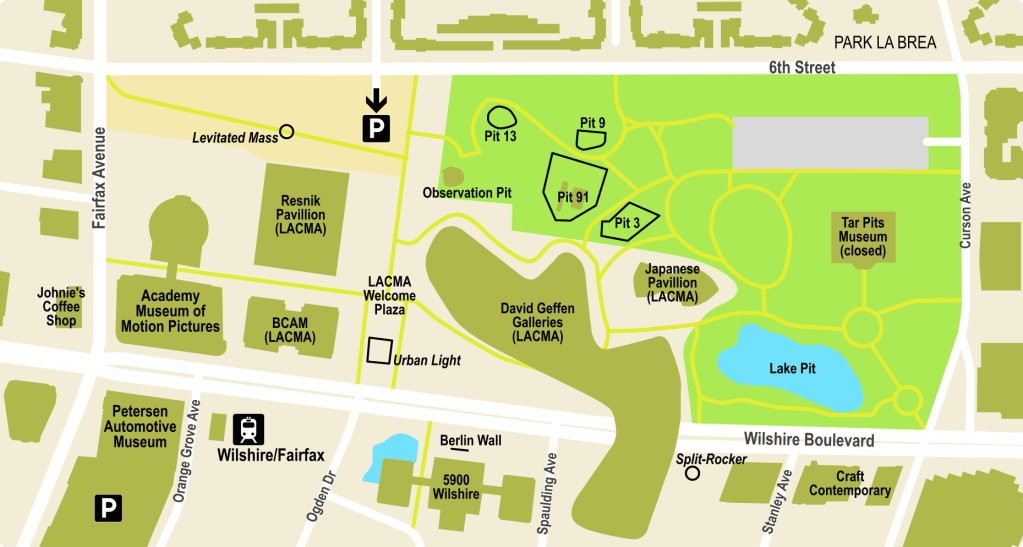
The side north of Wilshire is essentially a large public park, with the buildings of LACMA dominating the center and spilling out over Wilshire. The tar pits take up the eastern side of the park, while the western corner facing Fairfax is dominated by the Academy Museum of Motion Pictures. The open campus design of the block means you’re allowed to walk around outside the museums without buying a ticket; paid admission is only required to enter the buildings.
Ironically, the museum closest to the train station is a car museum, so we might as well start there: the Petersen Automotive Museum sits on the corner of Wilshire and Fairfax, in a striking bright red building with a stainless steel ribbon assembly mounted on the facade that wraps around the structure.
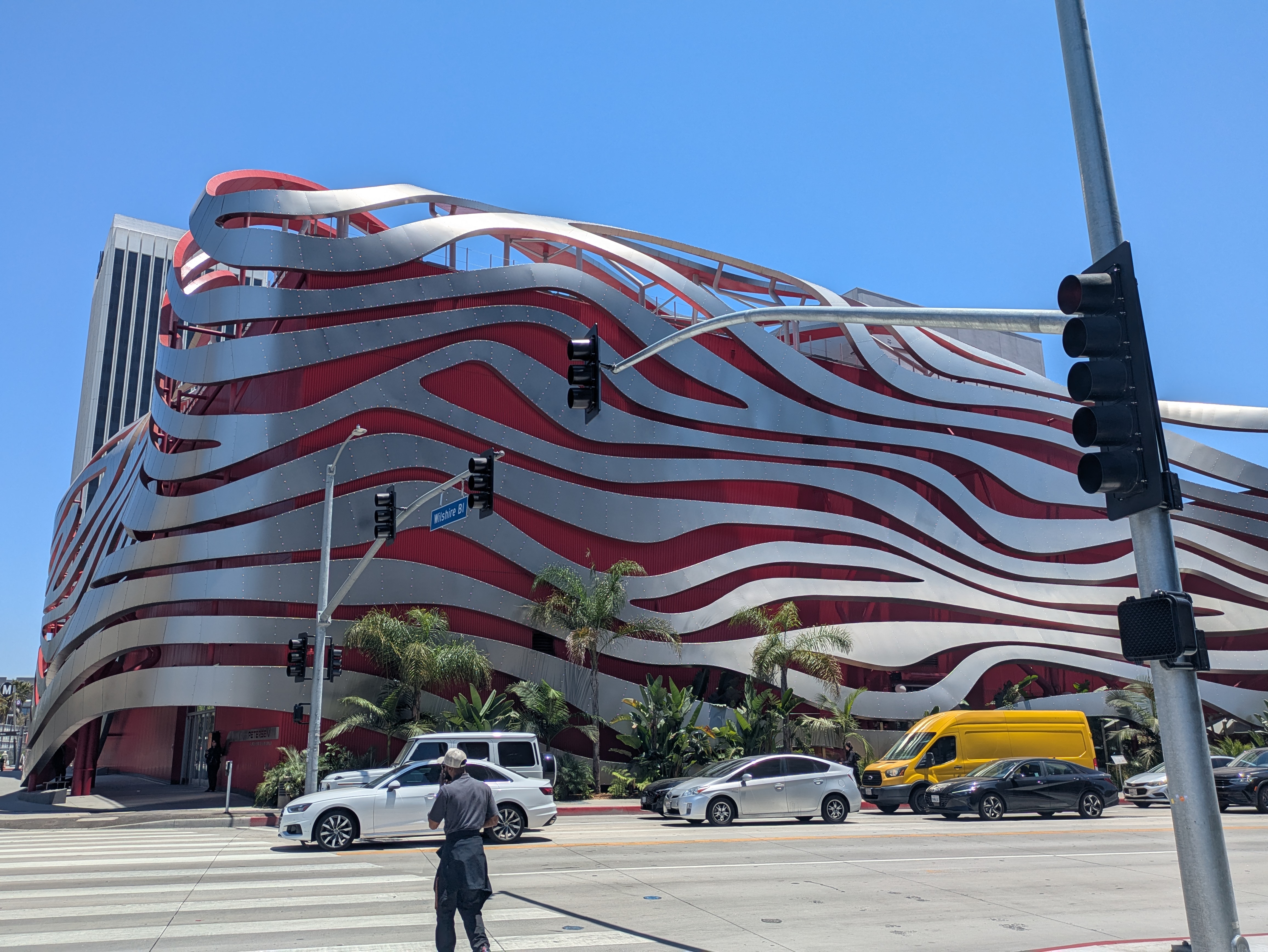
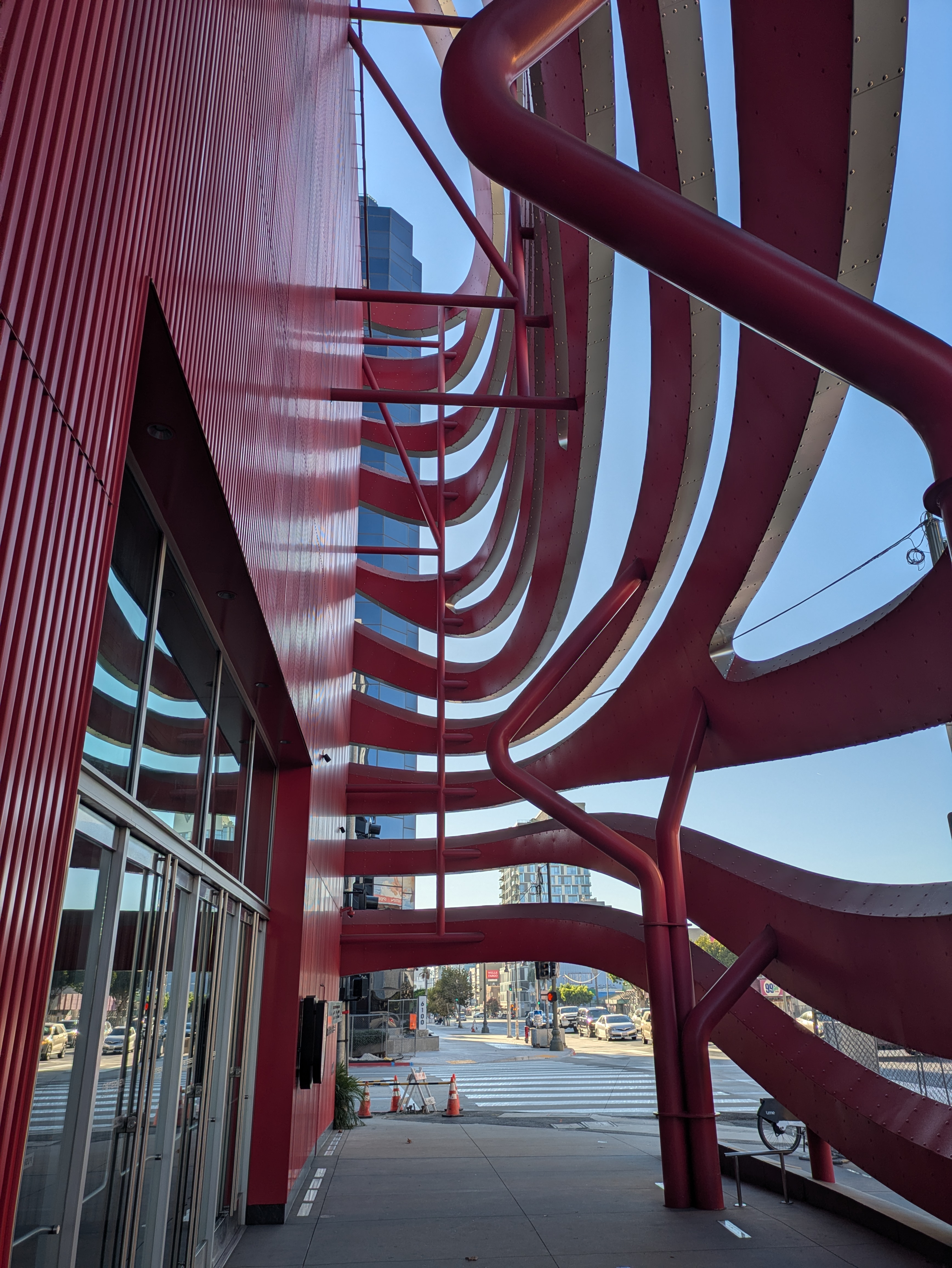
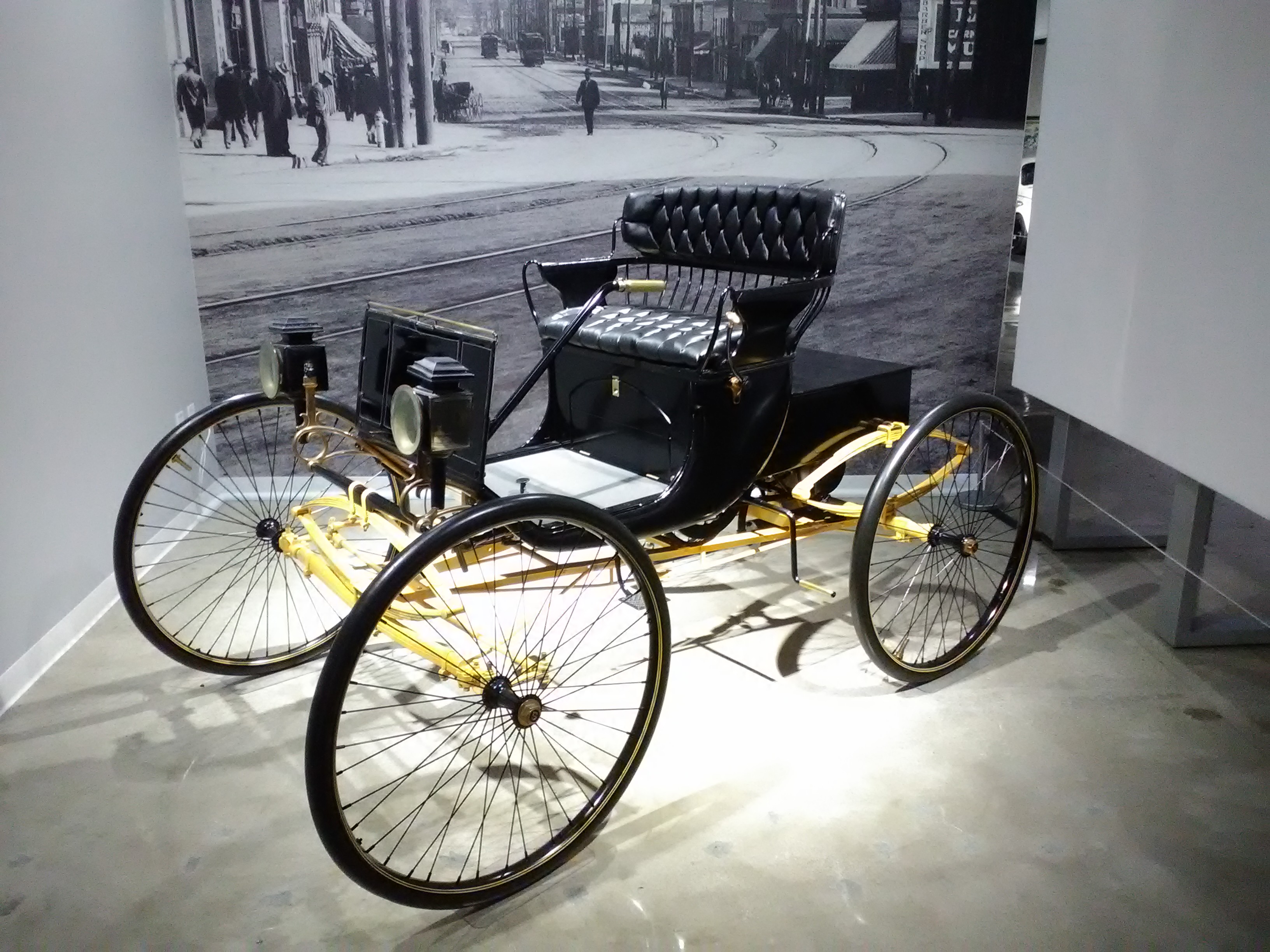
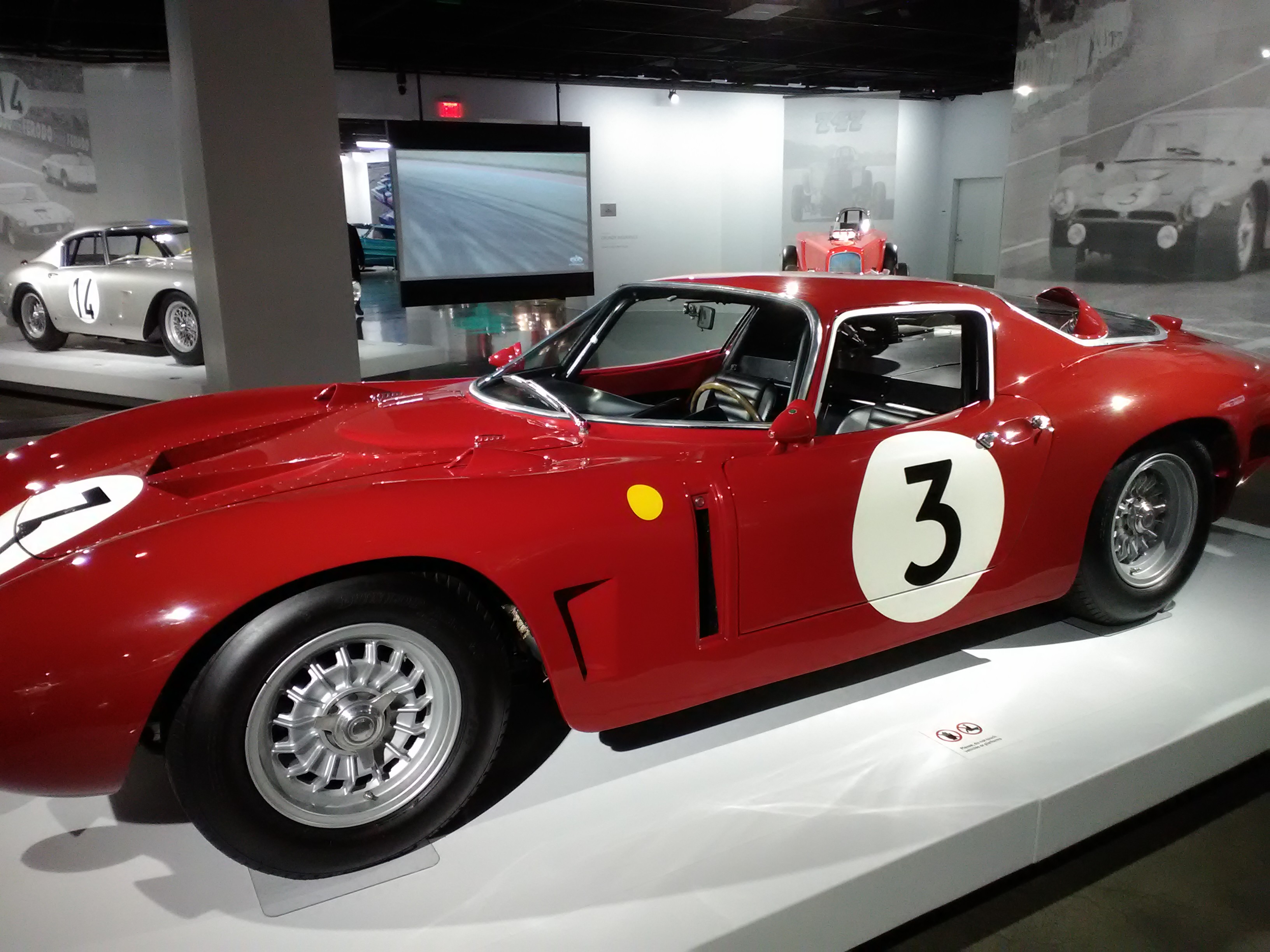
Inside, the building has three floors of exhibits, plus a special basement level called “The Vault” that requires a premium charge which alone costs more than the regular ticket. But the regular exhibits still offer a lot to look at and will take you a solid hour or two to take in. The staff’s advice is to start on the 3rd floor, which covers some of the early history of cars in California and has a bunch of iconic Hollywood cars, including the Batmobile, the DeLorean from Back to the Future, and many others. From there you’ll descend to the 2nd floor, which focuses more on auto engineering and performance, with the galleries on the 1st floor focusing on art cars. The Petersen is open daily 10am-6pm. For ticket prices, check the website.
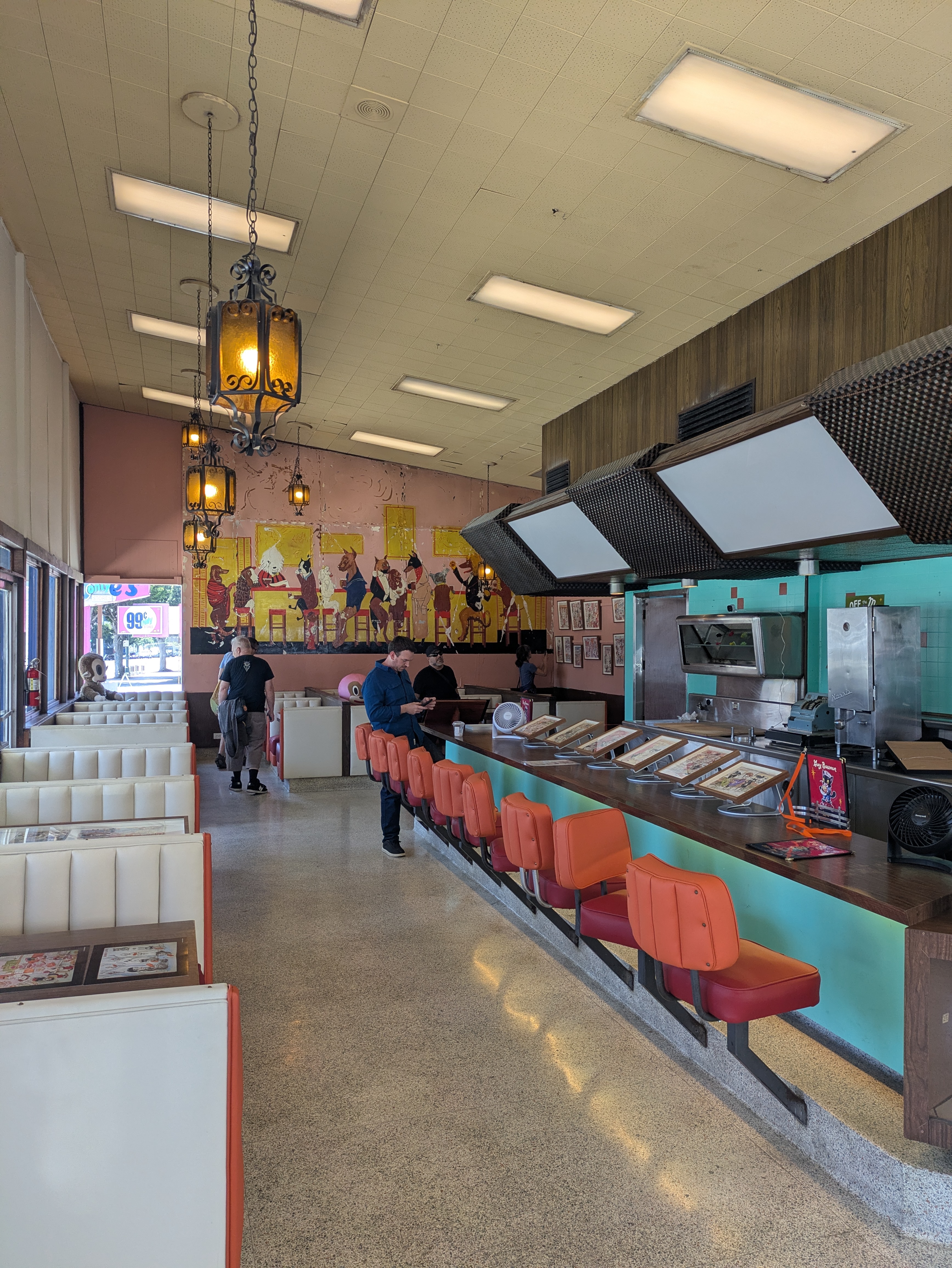
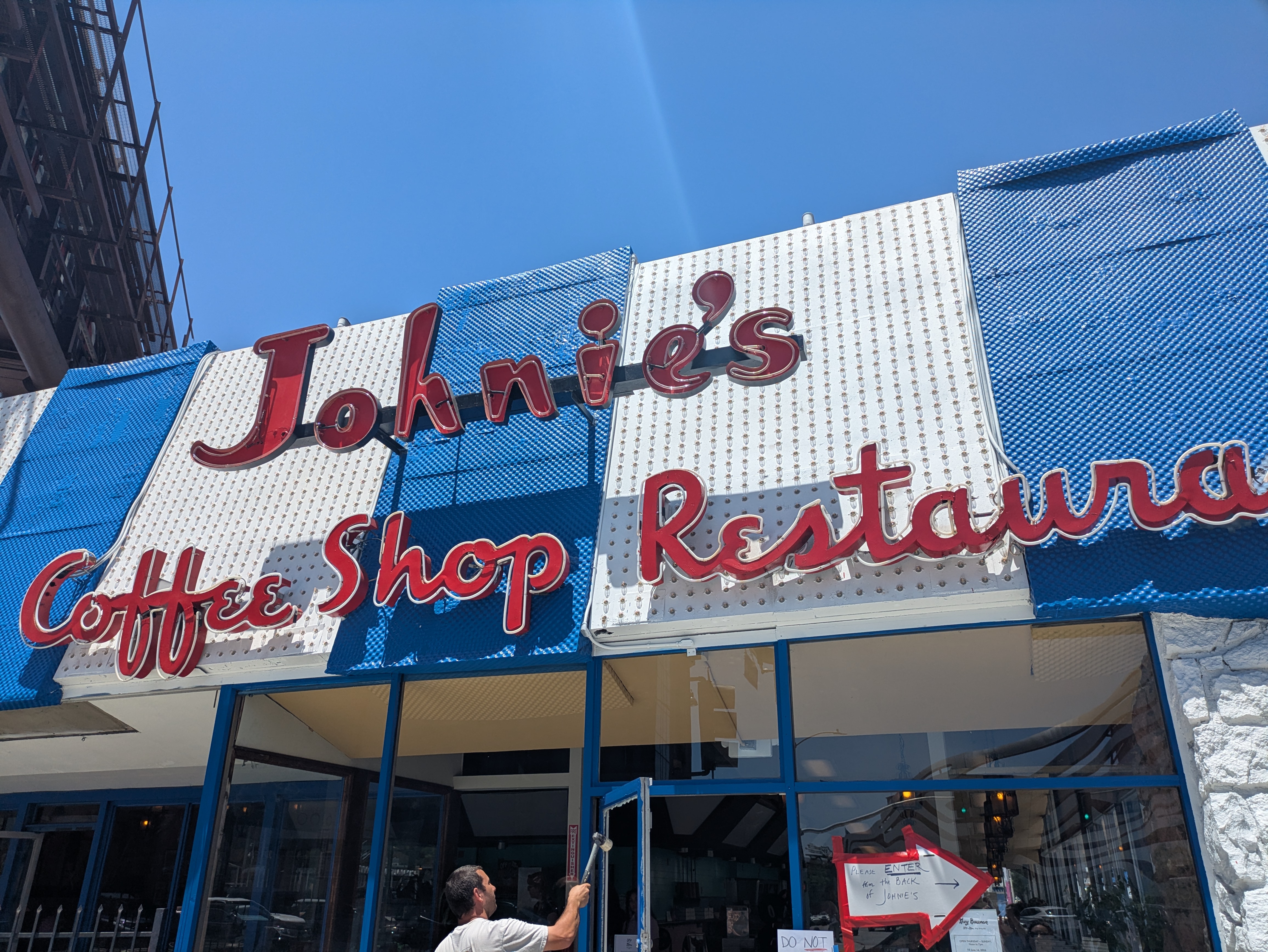
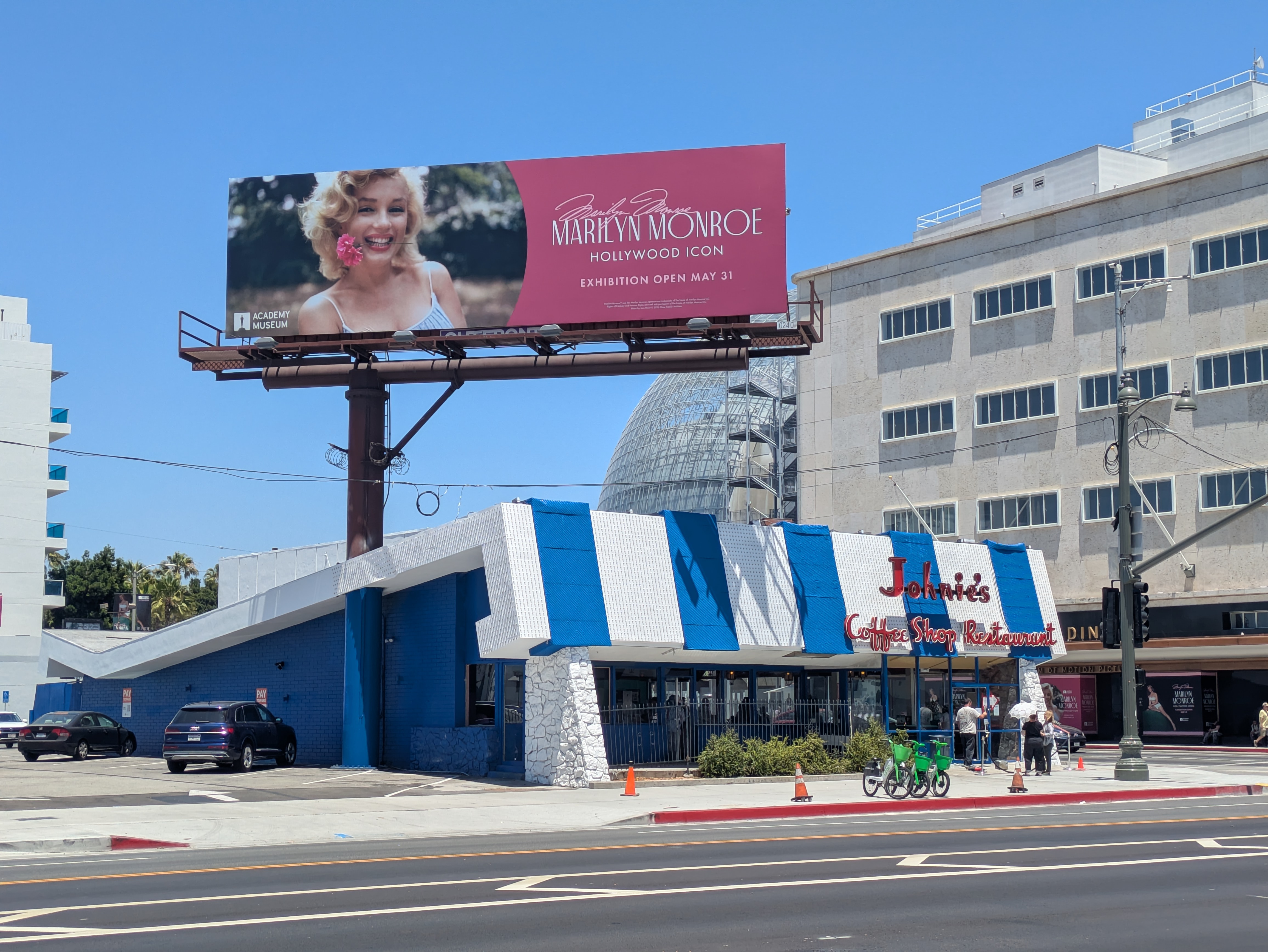
On the opposite corner from the Petersen, on the northwest corner of Wilshire and Fairfax, is one of the city’s best surviving examples of Googie architecture: Johnie’s Coffee Shop. Built in 1956, this iconic diner showed up in a bunch of movies and music videos before closing in 2000. Nowadays it sits empty and is mainly used as a filming location, occasionally activated for an event or a pop-up. In 2016 it was used by the Bernie Sanders campaign as a local headquarters, and their mural still adorns the side of the building facing Fairfax. If you ever get the opportunity to go inside, take advantage!
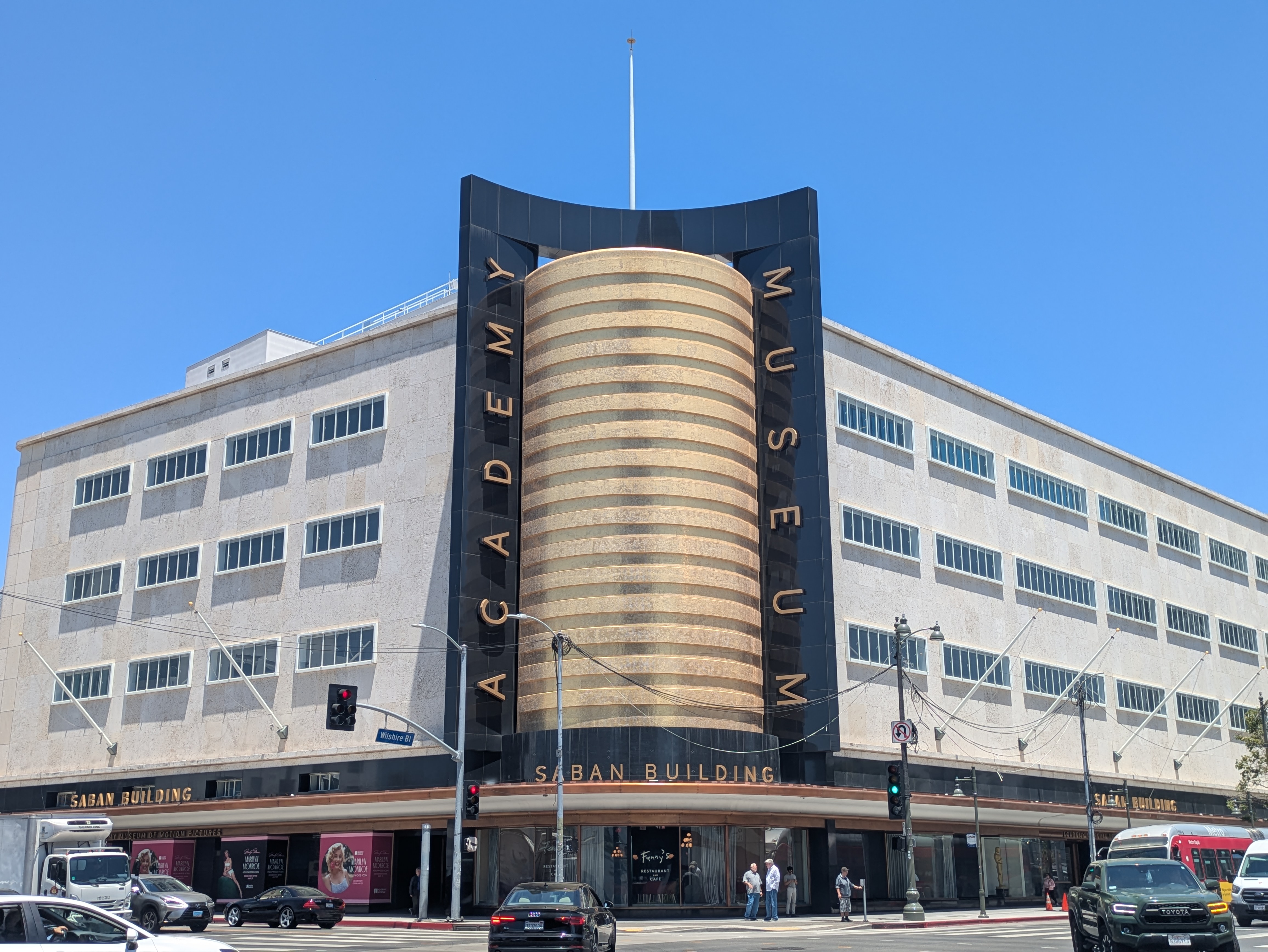
Shifting to the northeast corner, we get to our city’s official movie museum: the Academy Museum of Motion Pictures. Opened in 2021, the museum occupies a 1939 department store building that is a celebrated example of Streamline Moderne, with a giant gold-tiled cylinder on the corner facing the intersection.
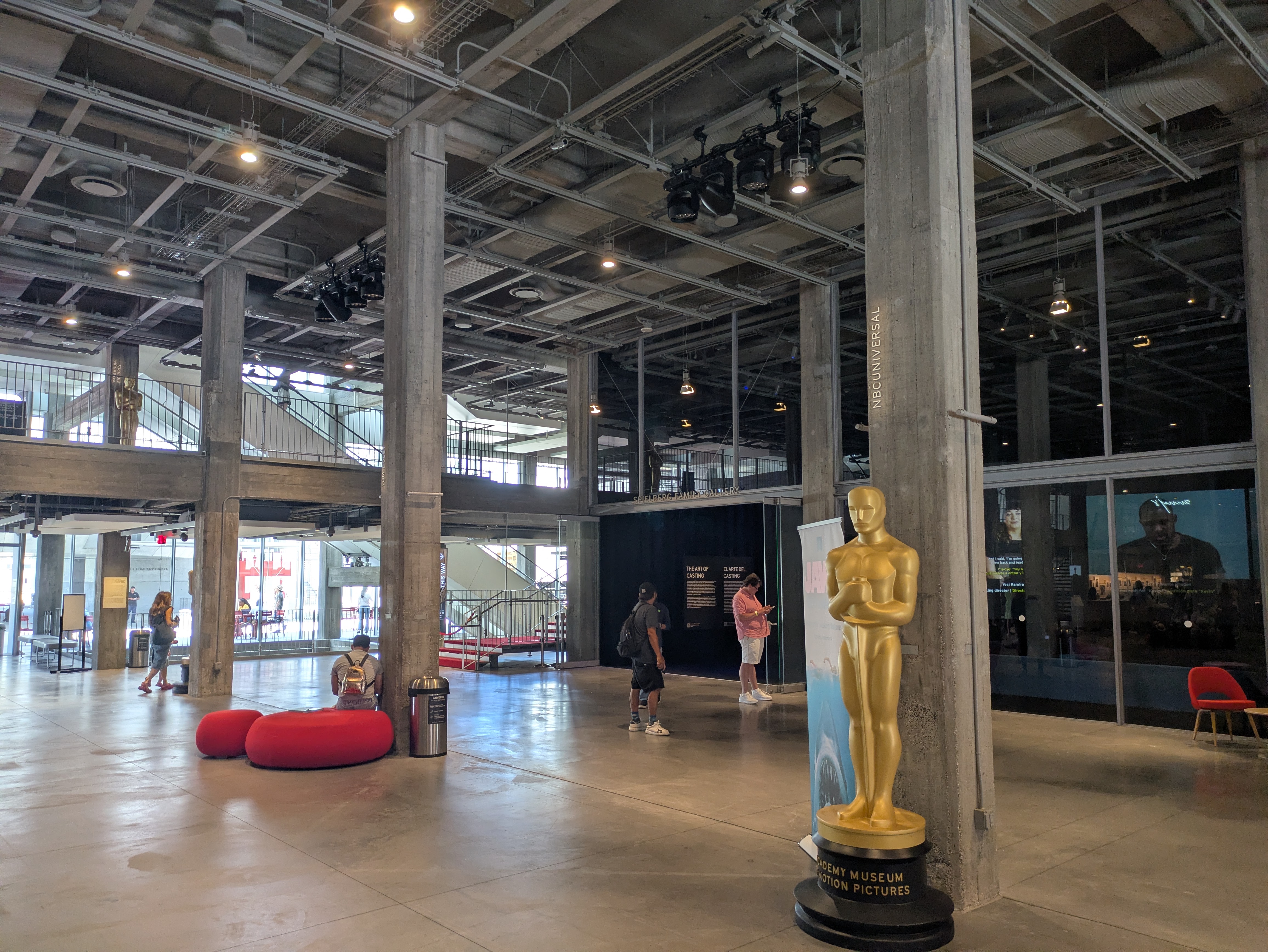
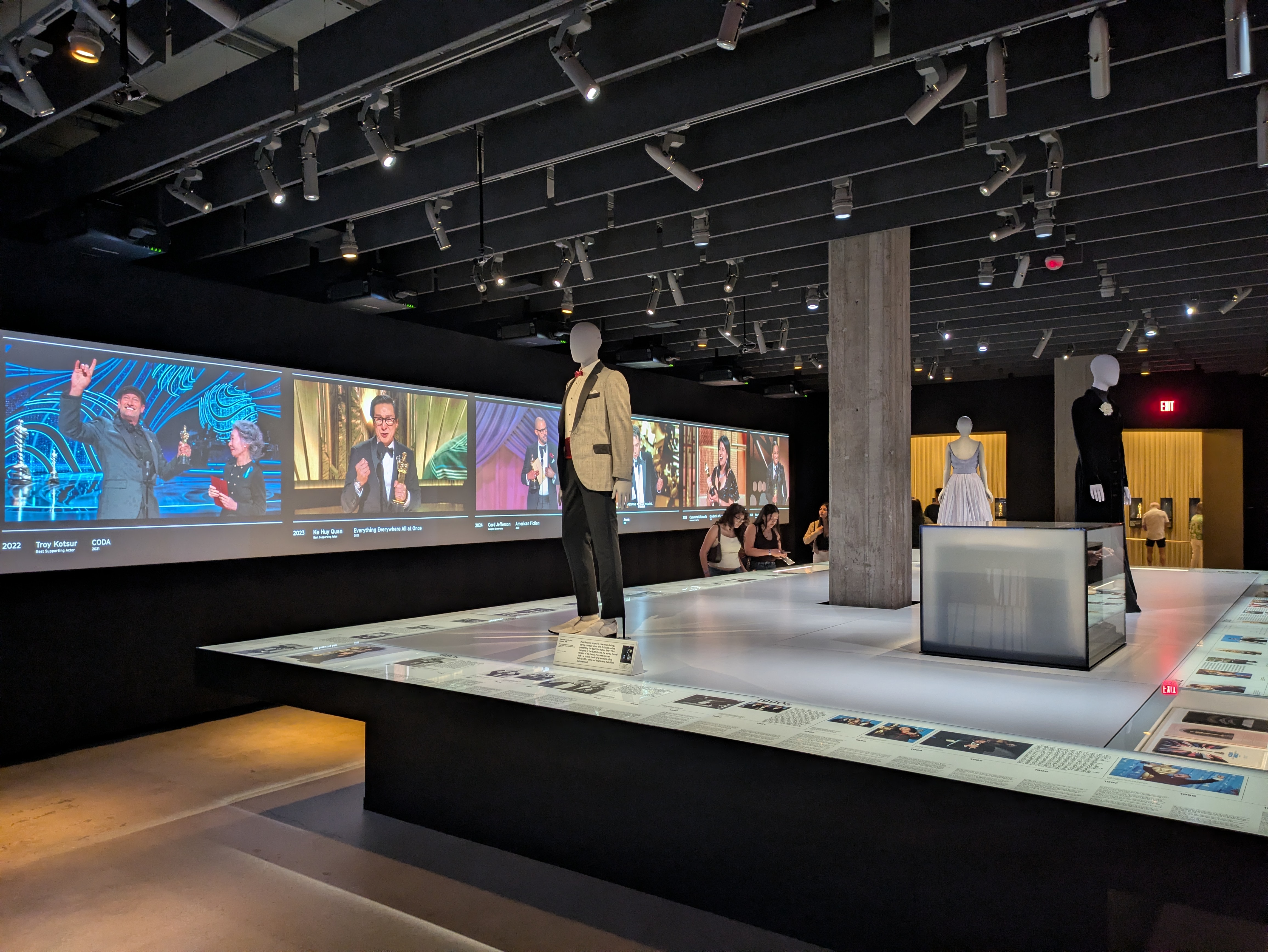
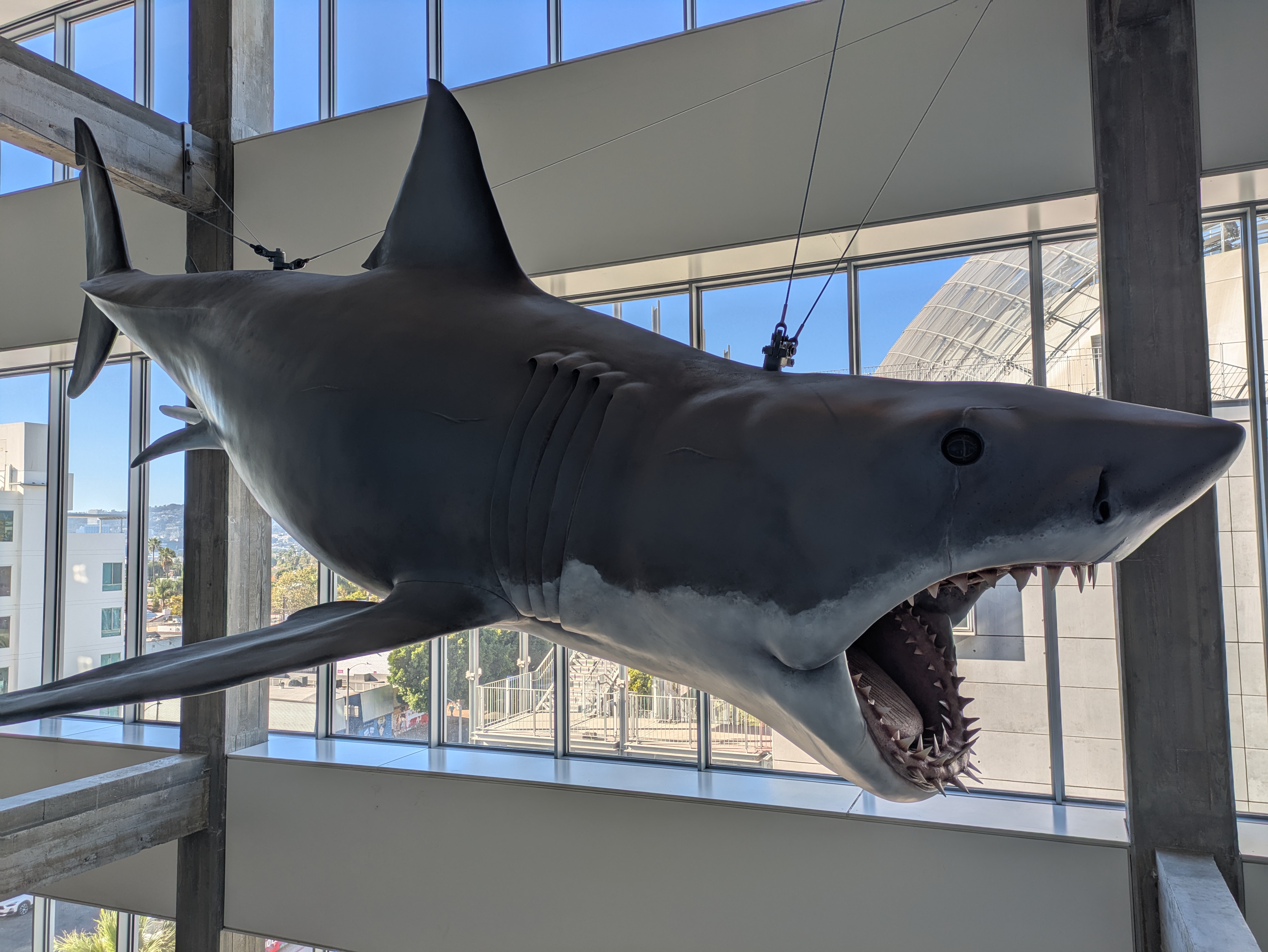
Inside, the exhibits are primarily on the 2nd, 3rd, and 4th floors, with an introductory gallery in the lobby showing a montage covering the history of film. Most of the exhibitions are temporary, covering a broad swath of cinema genres and history. But on the 2nd floor you’ll find an ongoing exhibit on the history of the Oscars, and on the 3rd is a permanent exhibit on the predominantly Jewish founders of the Hollywood studio system that is very in-depth and engaging. And hanging above the bank of escalators is one of the life-size shark models from Jaws. There’s also an education room in the basement that has some great interactive activities for children.
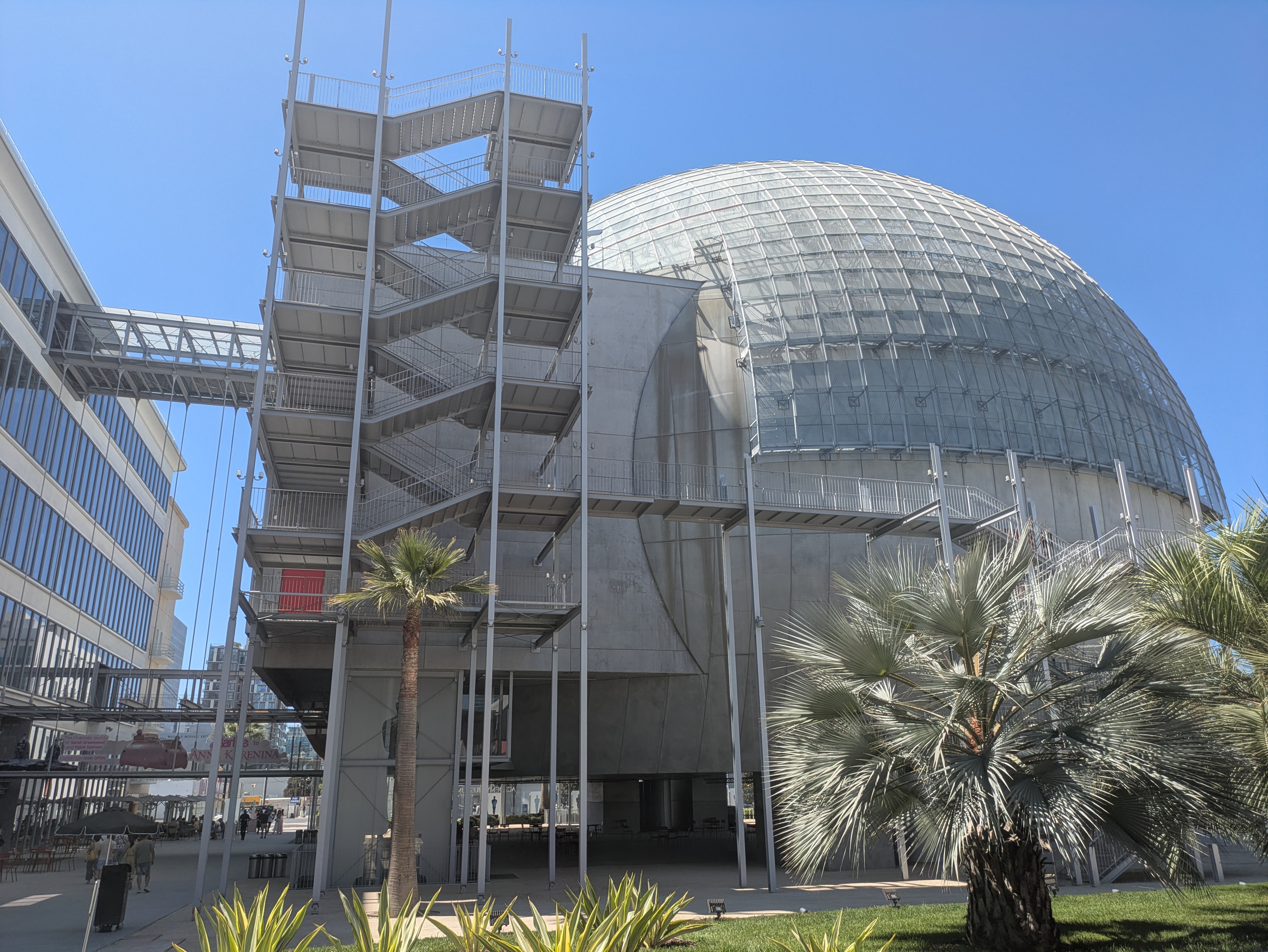
Besides the exhibits, the museum has two theaters (including the giant Death Star-esque sphere behind the main building) that regularly host film screenings, panels, and other public programs, and the depth of talent the Academy can pull from is immense. The ticket prices for these can be quite affordable, and you never know who’s going to show up.
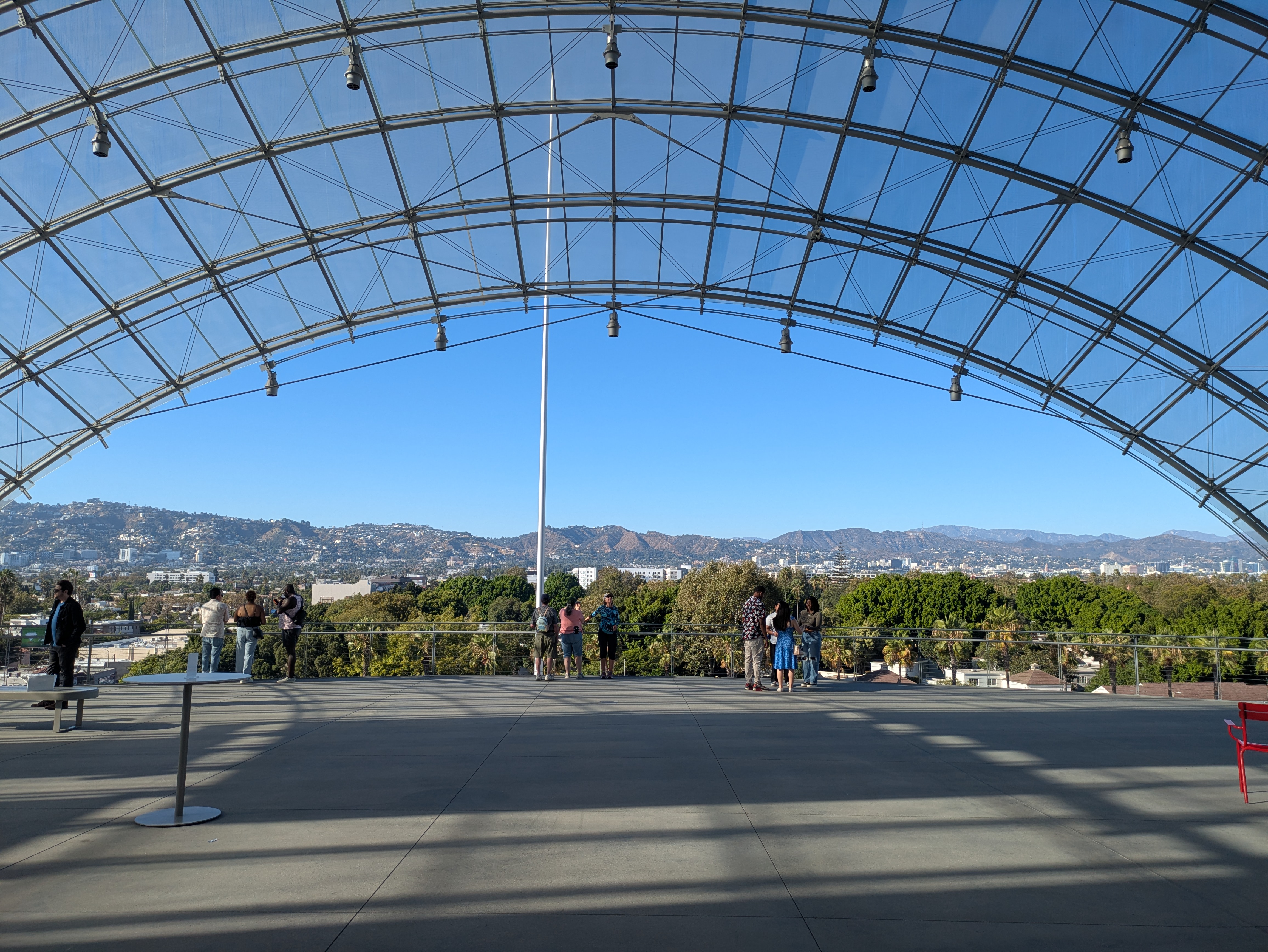
Lastly, make sure to go up to the 5th floor to check out the view from the rooftop terrace above the main theater. It’s a fantastic view over the city, with a great vista of the Hollywood hills. The Academy is open Wed-Mon 10am-6pm (closed Tuesdays); see the website for ticket prices.
Moving on, we reach the institution that has anchored this collection of museums: the Los Angeles County Museum of Art, better known as LACMA (pronounced “lack-mah”). By gallery space, LACMA is the largest art museum in the city (in fact, the largest in the western U.S.), and its most prestigious aside from the Getty. But where the Getty focuses almost exclusively on European art, LACMA takes more of a global view.
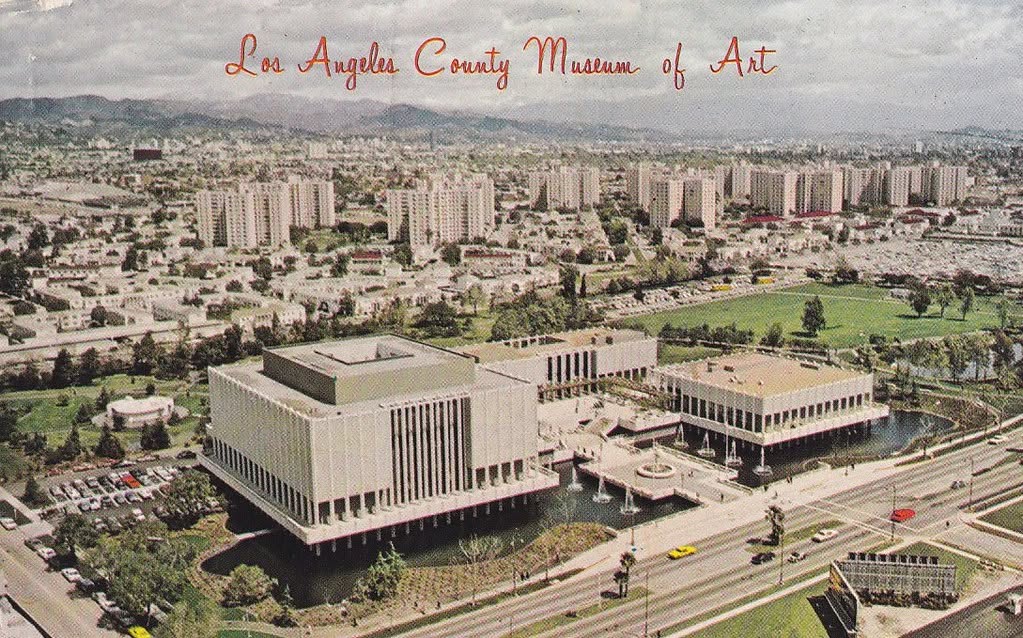
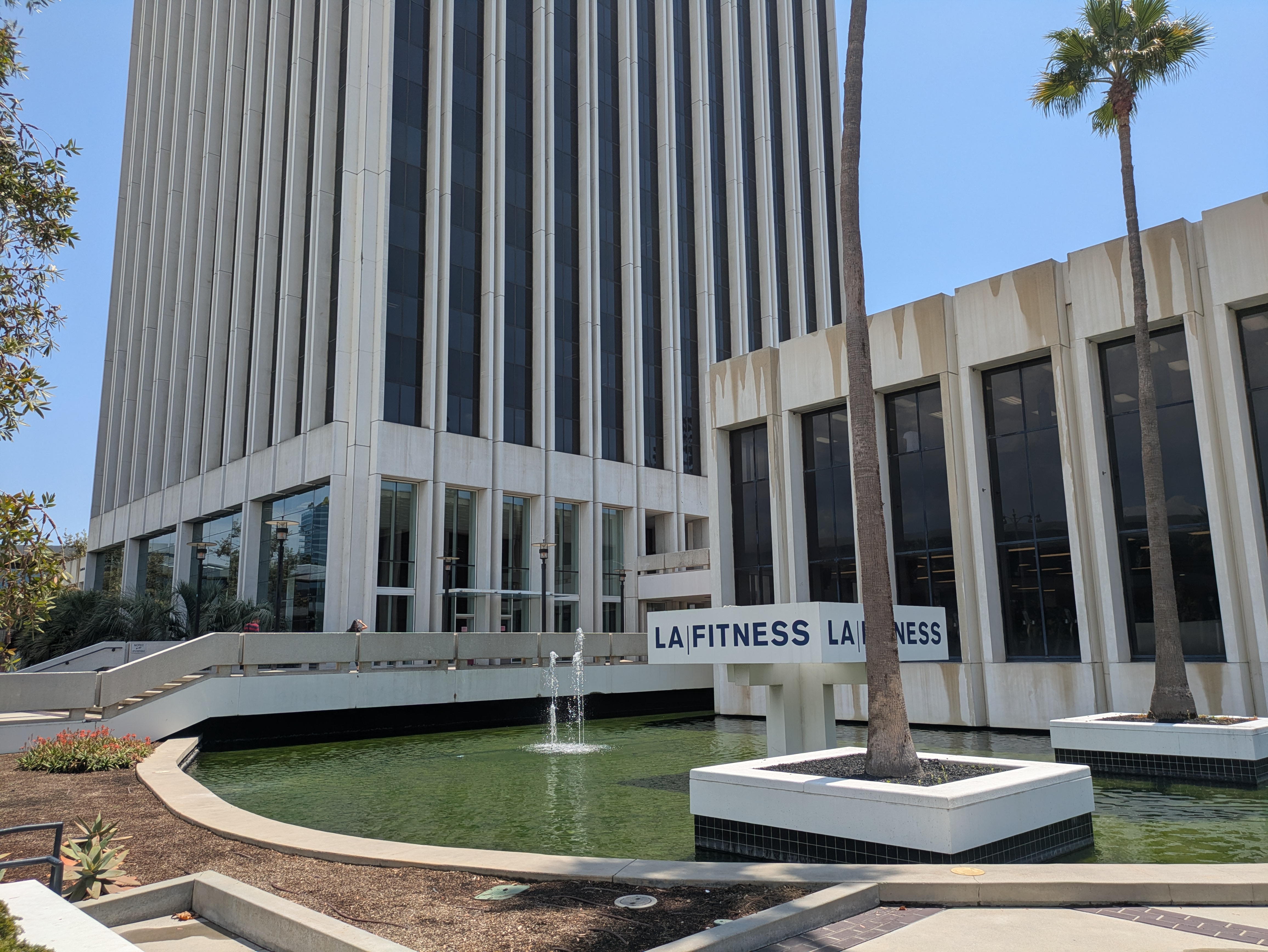
When LACMA opened in 1965, the museum consisted of three modernist buildings arranged around a prominent entrance suspended above a large water feature. However, the pool proved susceptible to seepage from the neighboring tar pits, and was later filled in. Today, all of the original buildings have been torn down, but if you want to see a rough approximation of what the original LACMA would have felt like, you can visit 5900 Wilshire, the tall office building just across the street.
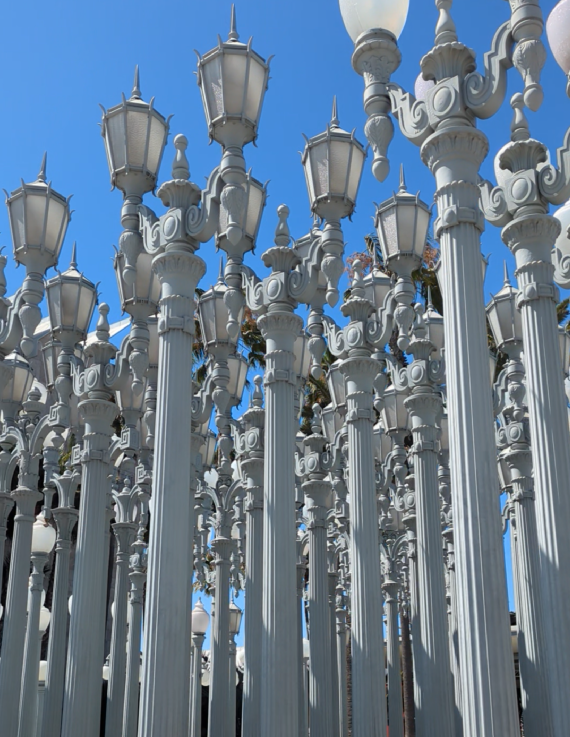
LACMA’s campus has a lot of art outside that doesn’t even require a ticket. The main entrance on Wilshire, directly across the street from Wilshire/Fairfax station, holds the museum’s most popular piece: Urban Light, a sculpture consisting of 202 ornate streetlamps arranged in a grid which has proven extremely popular with photographers and influencers. Throughout the day, you’ll see people plunging into the forest of streetlamps, from children racing between the poles to adults grasping one while posing for a shot.
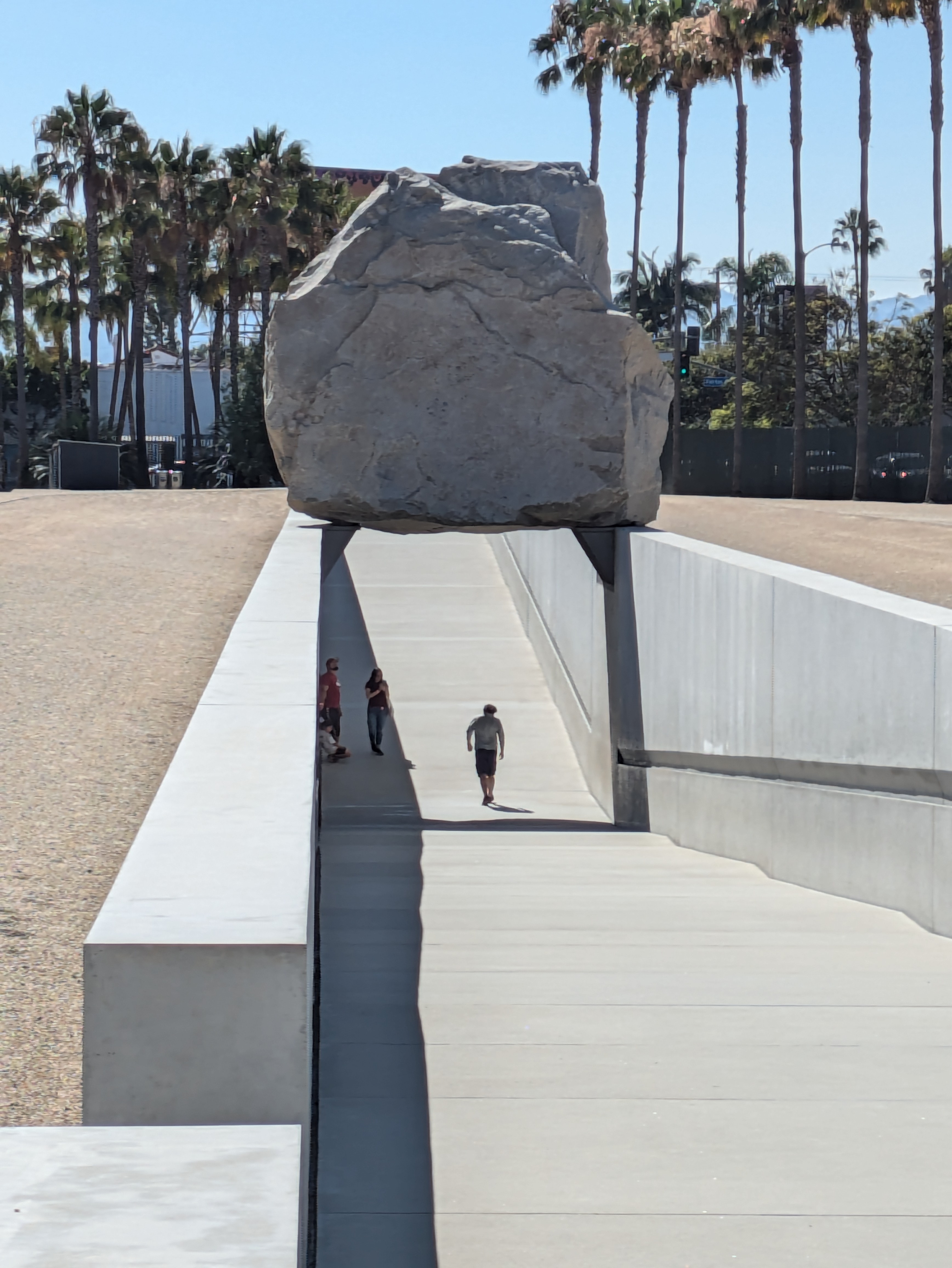
LACMA’s other famous outdoor installation sits around the back, in the midst of a sandy, rather barren patch of ground facing the corner of 6th and Fairfax. Levitated Mass, by land artist Michael Heizer, consists of a 340-ton boulder suspended over a trench that you can walk through, allowing you to get right under it. The boulder comes from a quarry in the Jurupa Valley, and transporting it to the museum was quite the media spectacle when it happened.
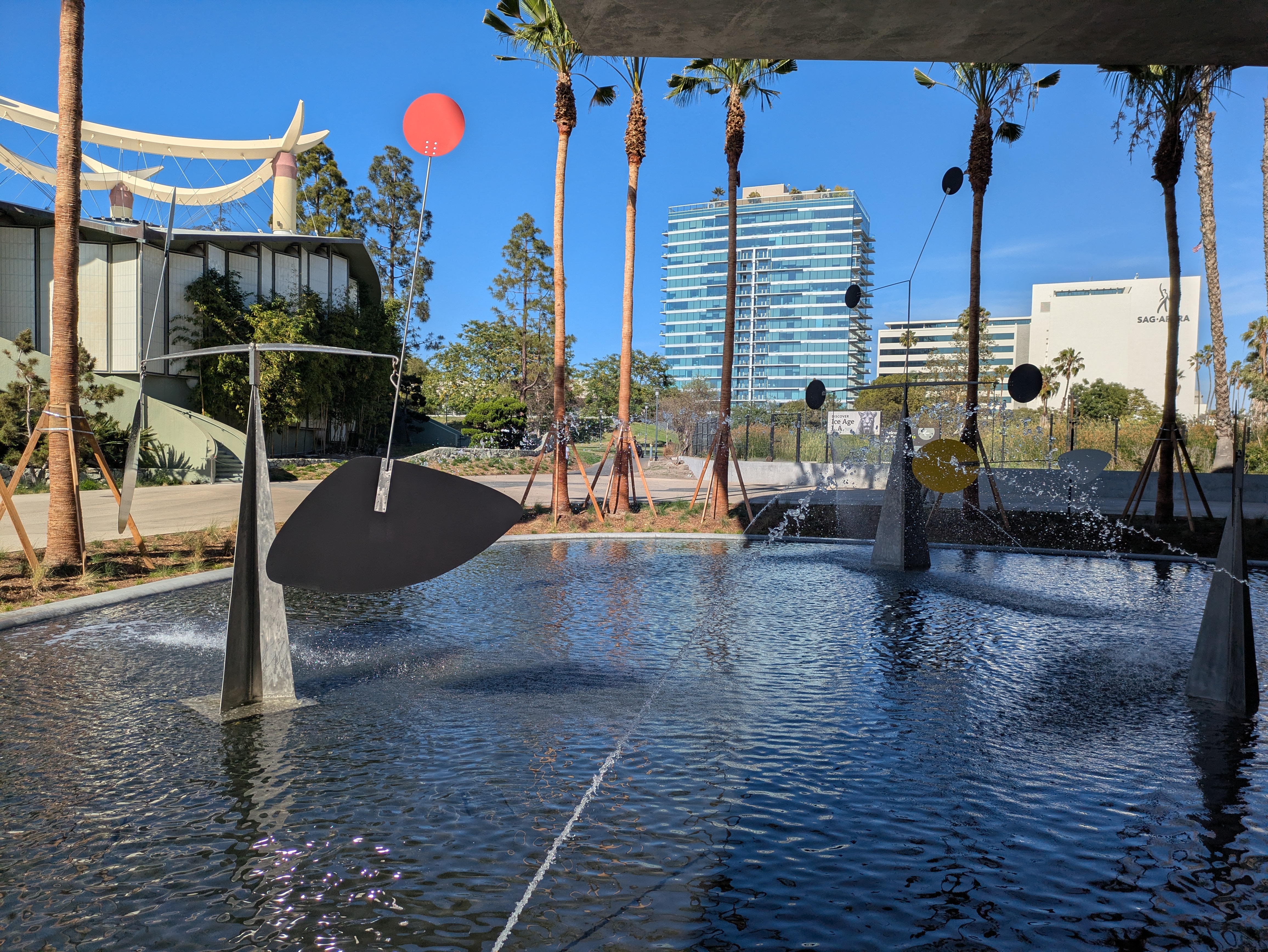
Other pieces dot the grounds, with a sculpture garden along the side facing Wilshire and a fountain beneath the main structure on the side facing the tar pits, which holds a couple of Alexander Calder sculptures that interact with a spray fountain.
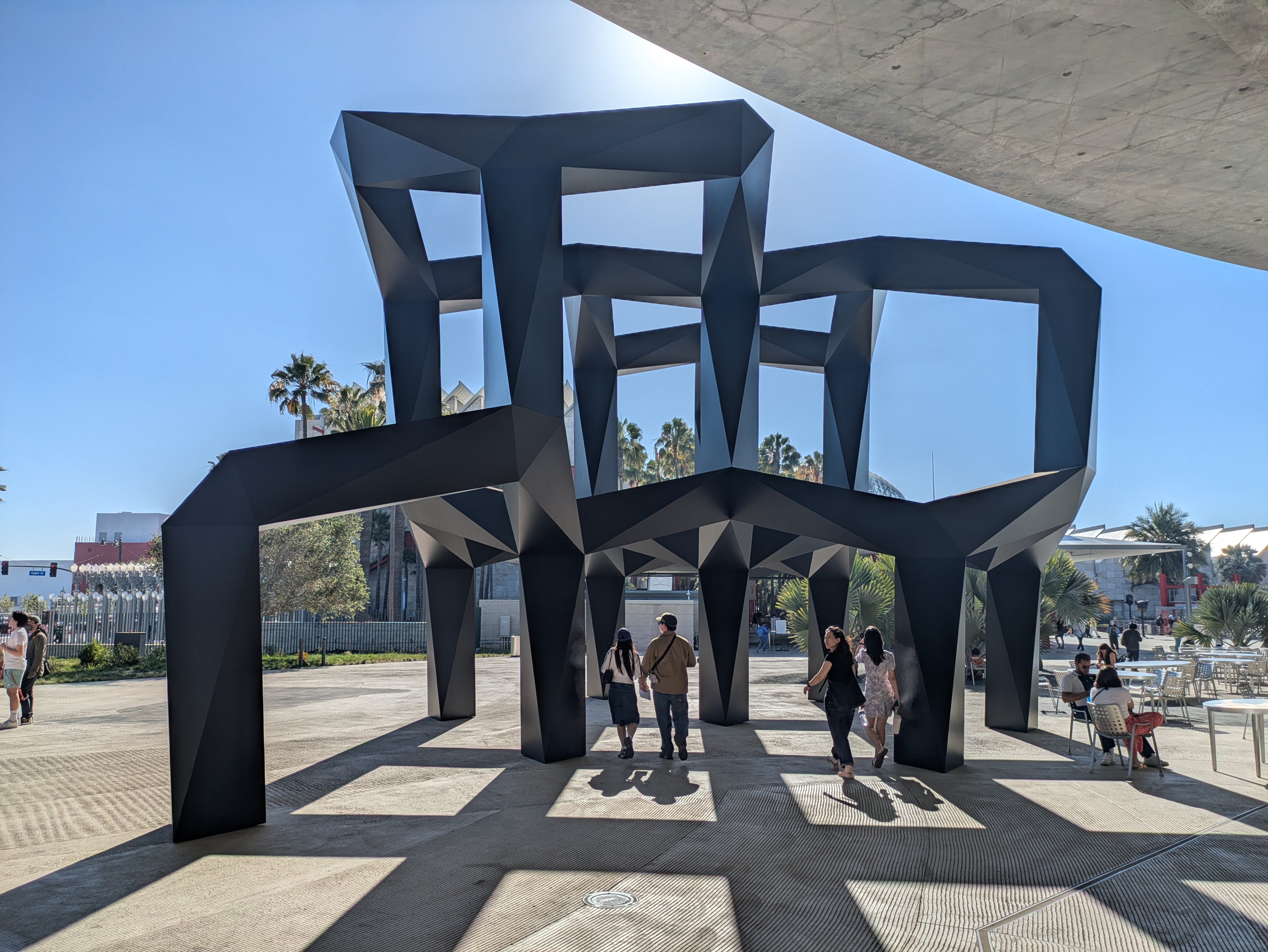
LACMA is made up of three buildings (not counting the Japanese Pavilion, which is currently closed), with the ticket windows located in the plaza adjacent to Urban Light. After you purchase your ticket, you’ll be given a sticker to wear that grants you entry to all the buildings.
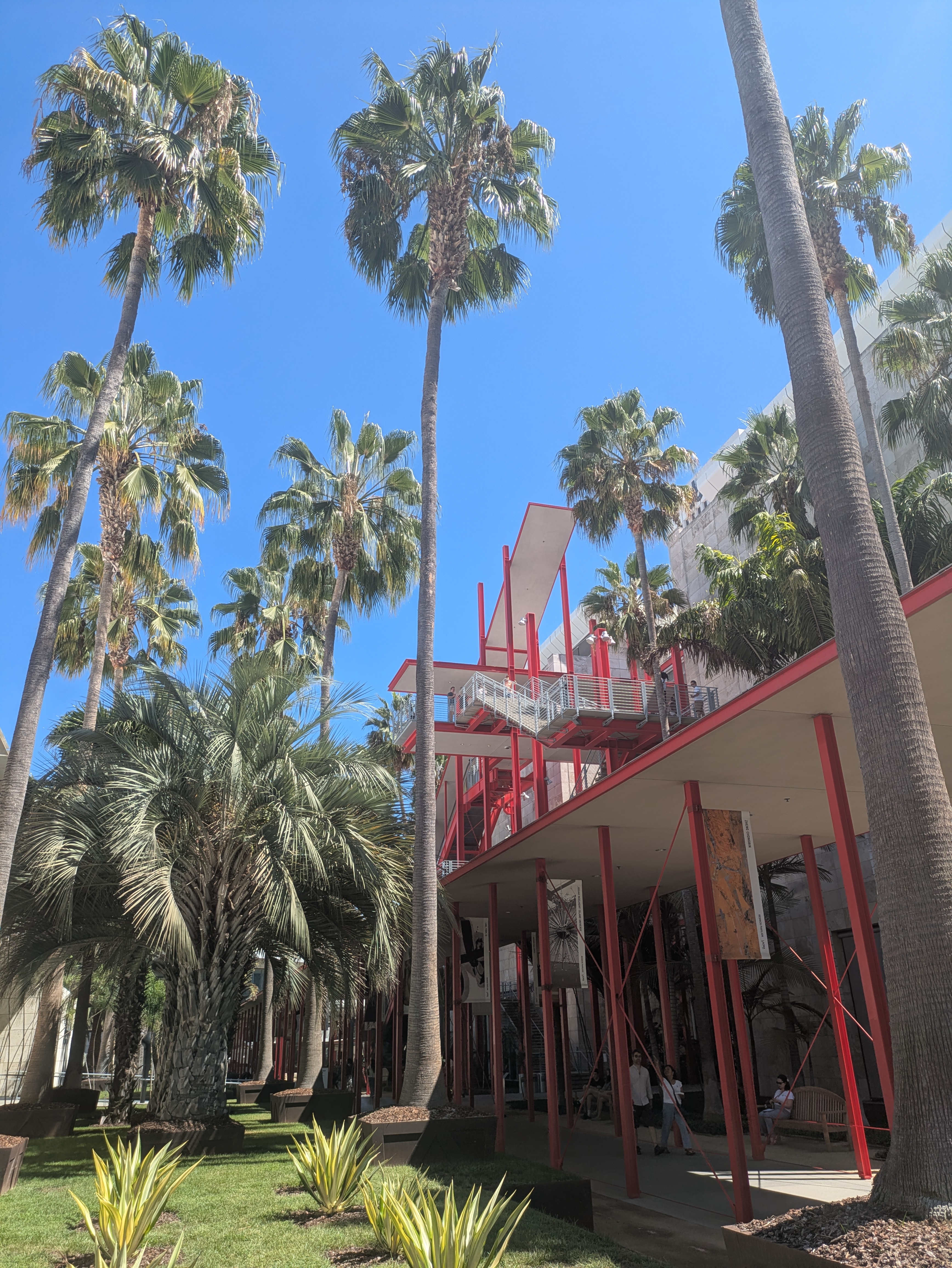
Starting with the building closest to the Academy Museum, we’ll visit BCAM, or the Broad Contemporary Art Museum (not to be confused with The Broad, the contemporary art museum in Downtown L.A. that was also funded by Eli Broad). The building has three floors of modern and contemporary art, with some truly impressive pieces. I recommend taking the outdoor escalator from the plaza straight to the third floor, so you can take in the cool view before heading inside.
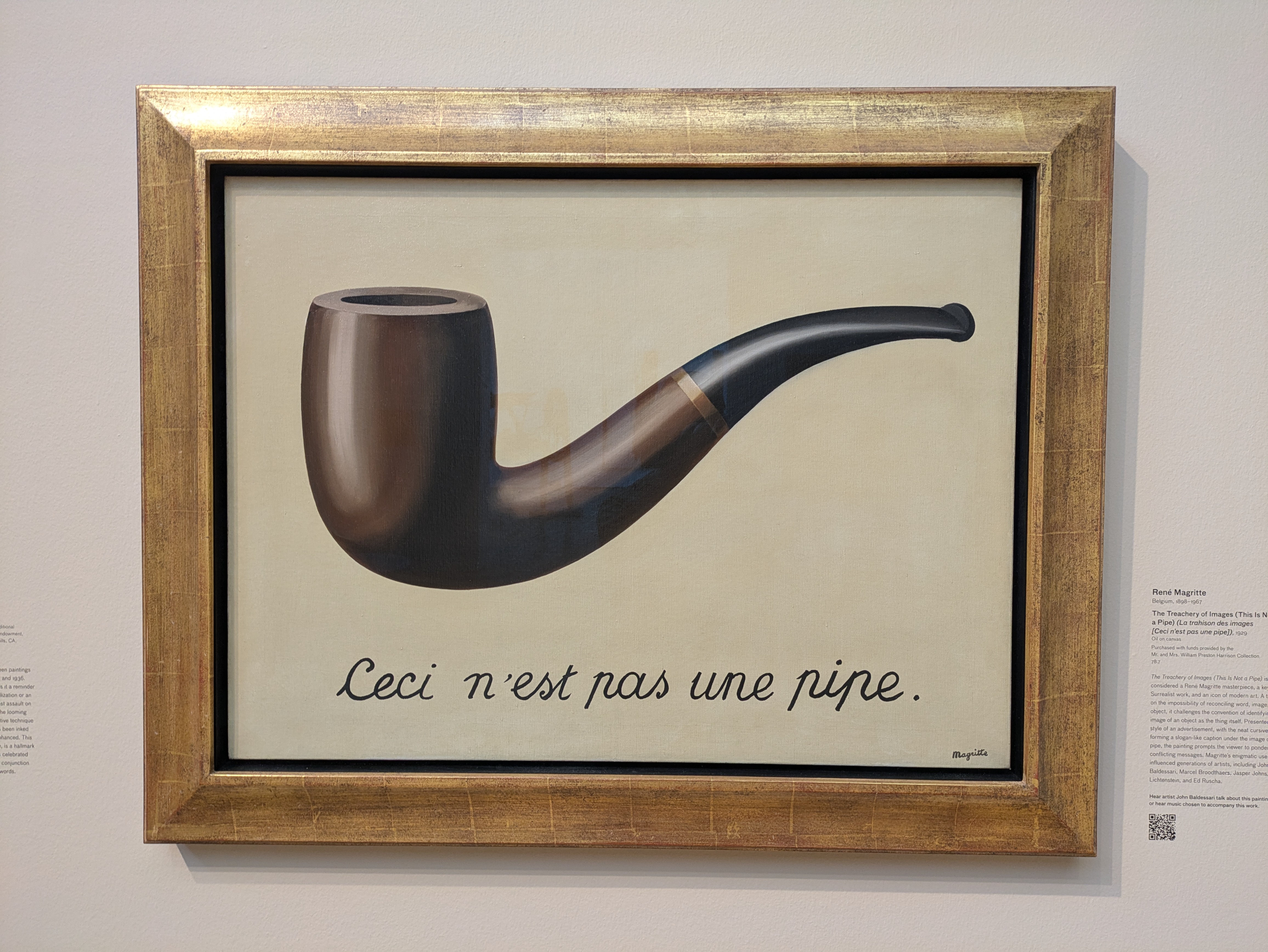
Floors 2 and 3 hold a lot of changing exhibitions, with the third floor also housing an ongoing exhibition of work from LACMA’s extensive modern art collection. Here you’ll find pieces from Picasso, Giacometti, Magritte, Georgia O’Keefe, Diego Rivera, and other modern art icons. Another highlight is Michael McMillen’s Central Meridian (The Garage), a walk-through installation that simulates an old-fashioned garage, with tons of immersive details that make it feel truly authentic.
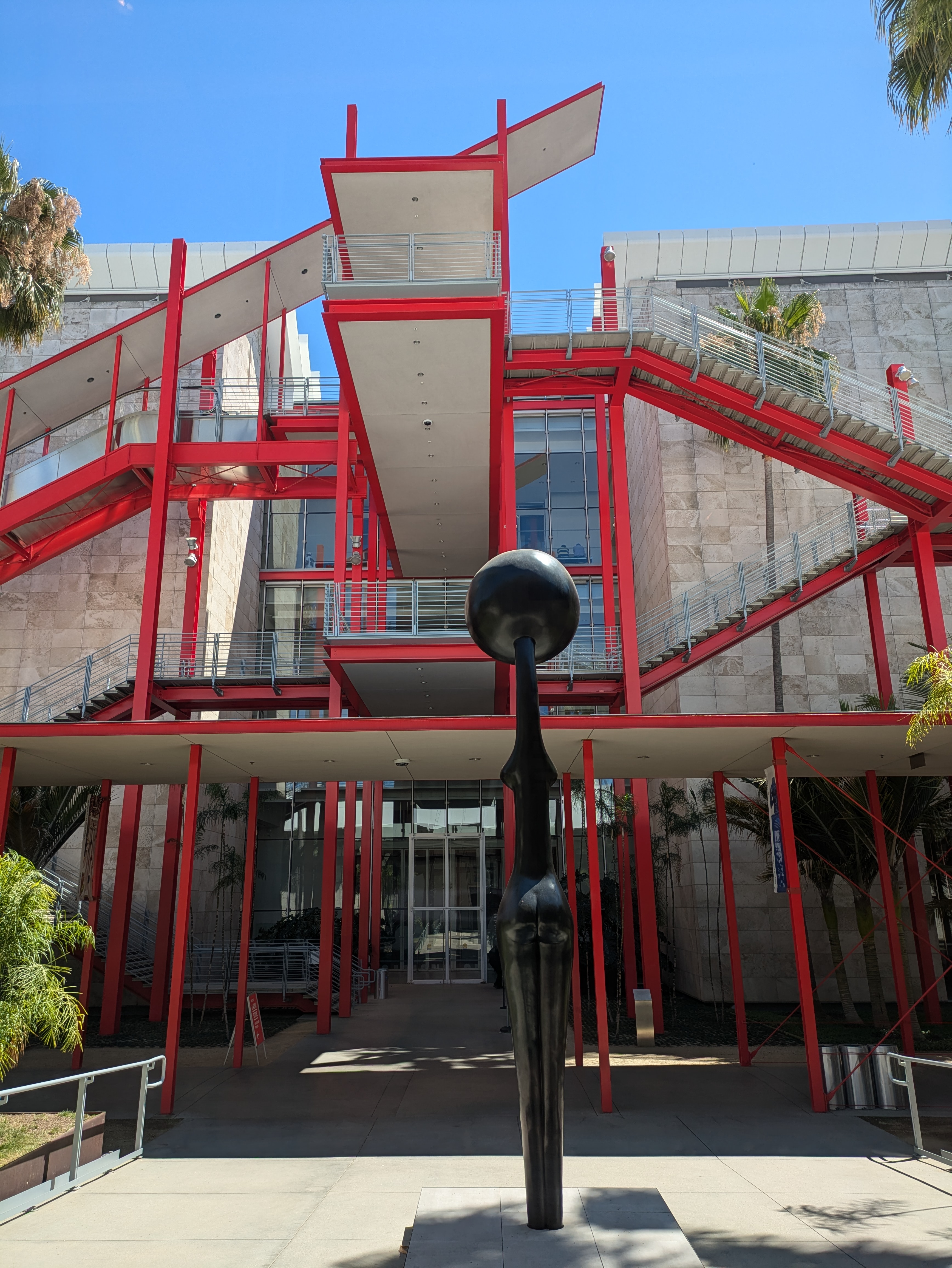
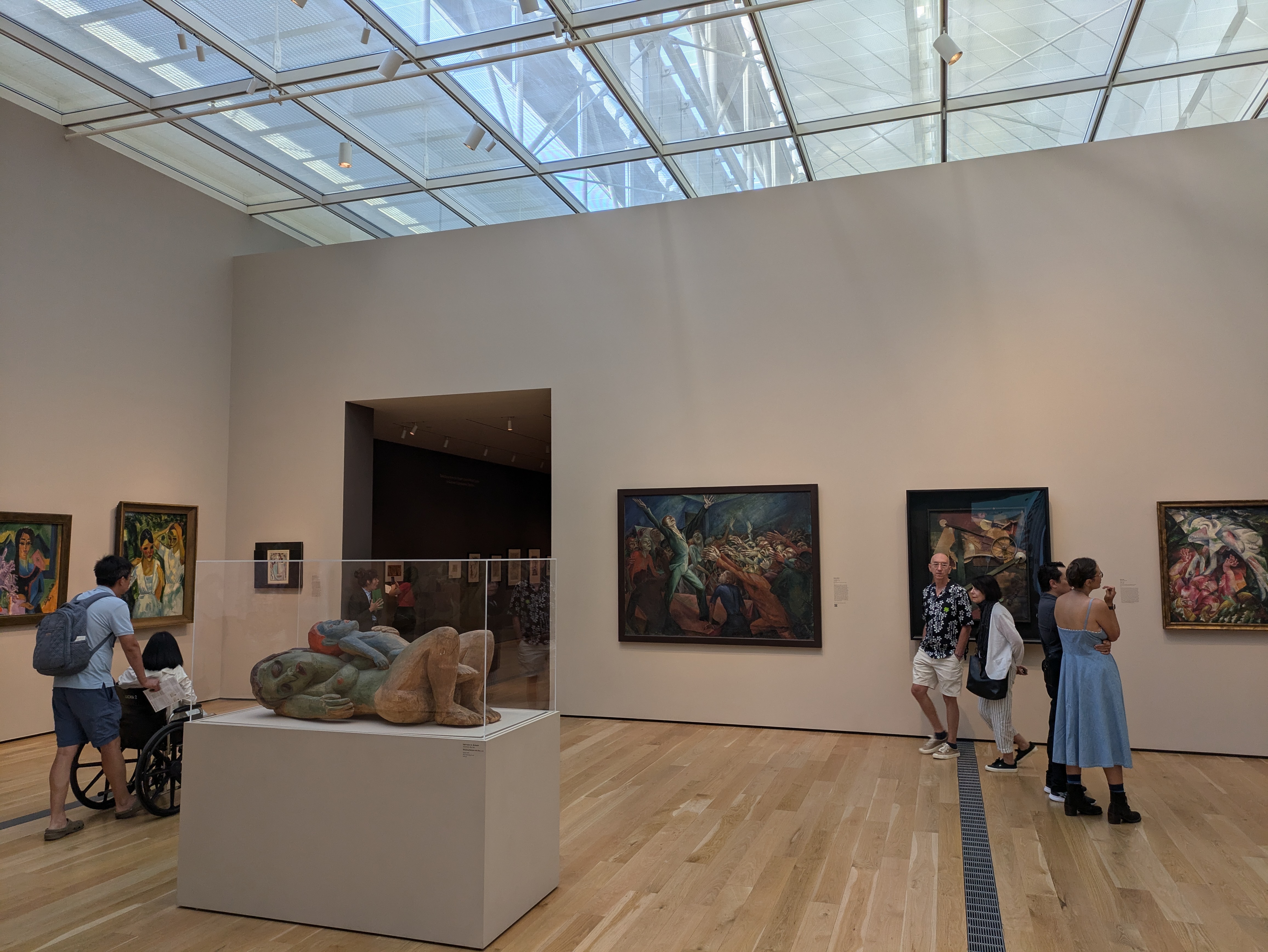
The first floor has several large-scale permanent installations. Richard Serra’s Band is a massive steel ribbon that takes up an entire room, with room to wander into its fold. Robert Irwin’s Miracle Mile consists of a wall of colored fluorescent lights that face a broad window looking out onto Wilshire. And then there’s the building’s most popular work: Metropolis II by Chris Burden, a gigantic model city intertwined with model trains and highways, on which race tiny toy cars. When it’s running, it’s absolutely hypnotic to watch, and there is even an observation platform to let you observe from above. The piece only operates for 30 minutes at a time, and only from Thursdays through Sundays; see the webpage for the full schedule.
Across from BCAM is the Resnik Pavilion, which is devoted almost entirely to changing exhibitions, so your mileage will vary depending on what’s on view. The one permanent installation is in the lobby, which has a striking mural by Mark Bradford.
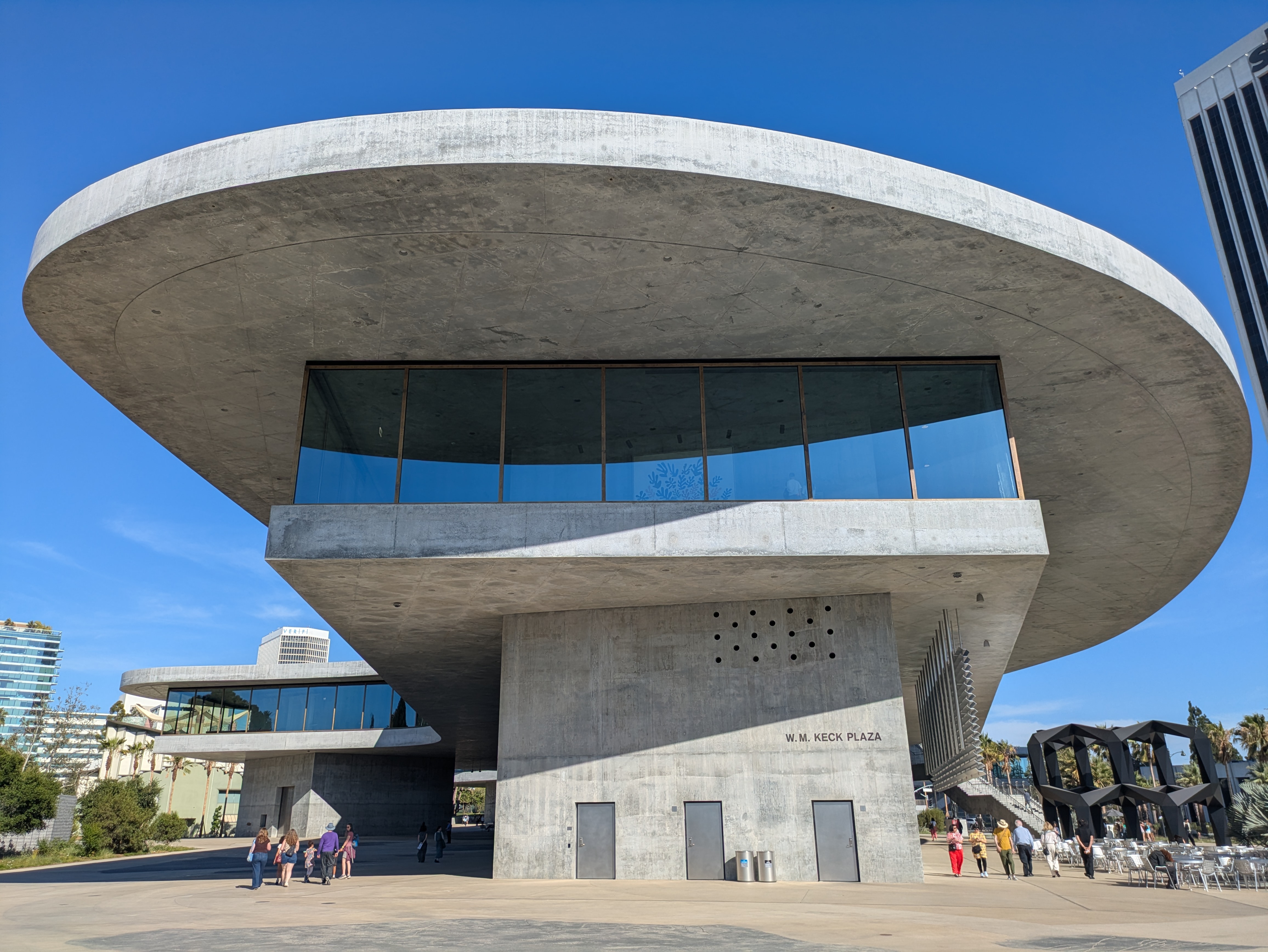
And there’s the main building, which sits just east of the plaza and sprawls out towards the tar pits and across Wilshire Boulevard: the newly-opened (as of 2026) David Geffen Galleries (again, not to be confused with the Geffen Contemporary, a branch of MOCA in Downtown L.A.). The building holds the bulk of the on-view permanent collections, covering almost every region of the world with historical artifacts from across the globe.
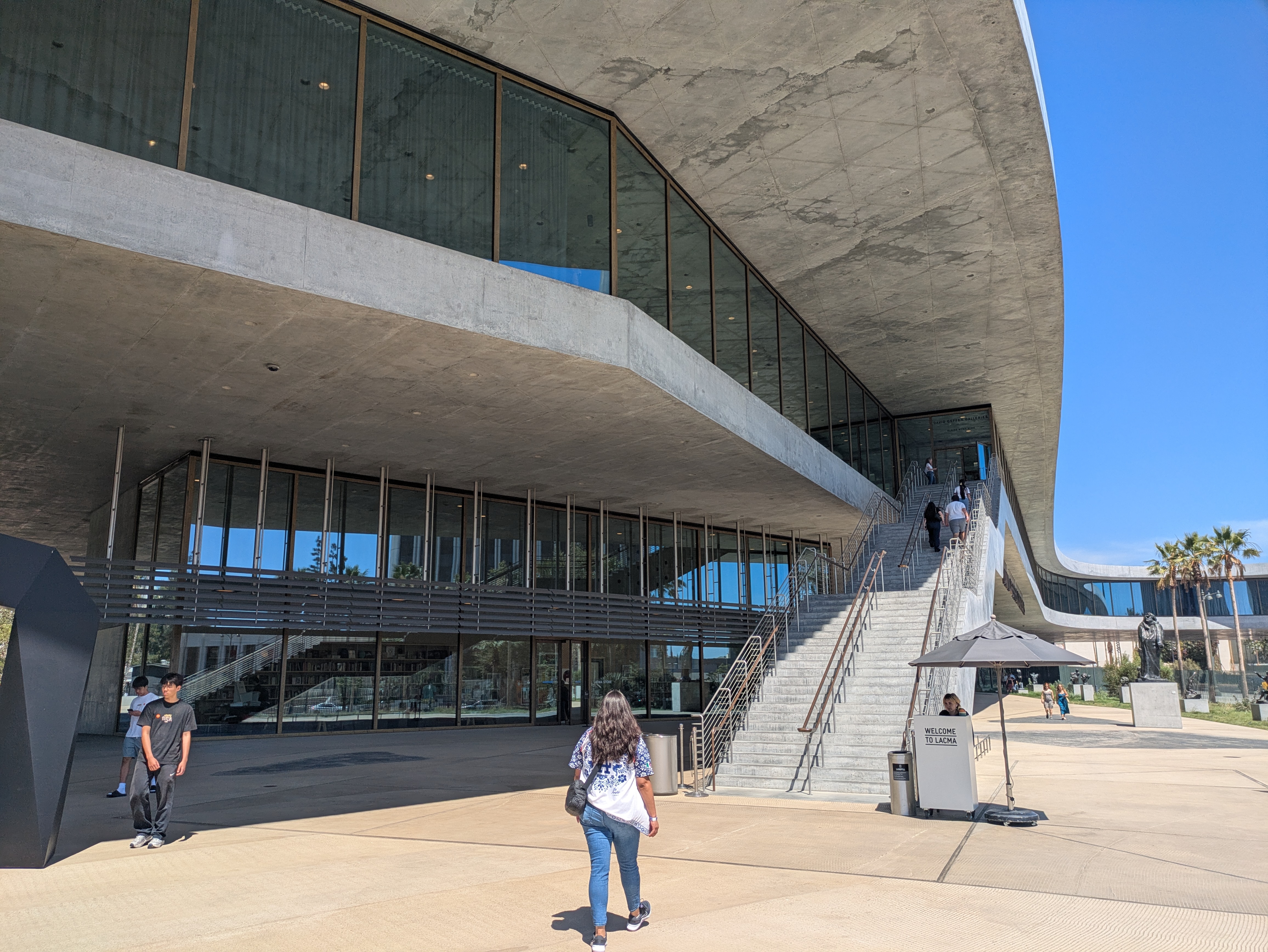
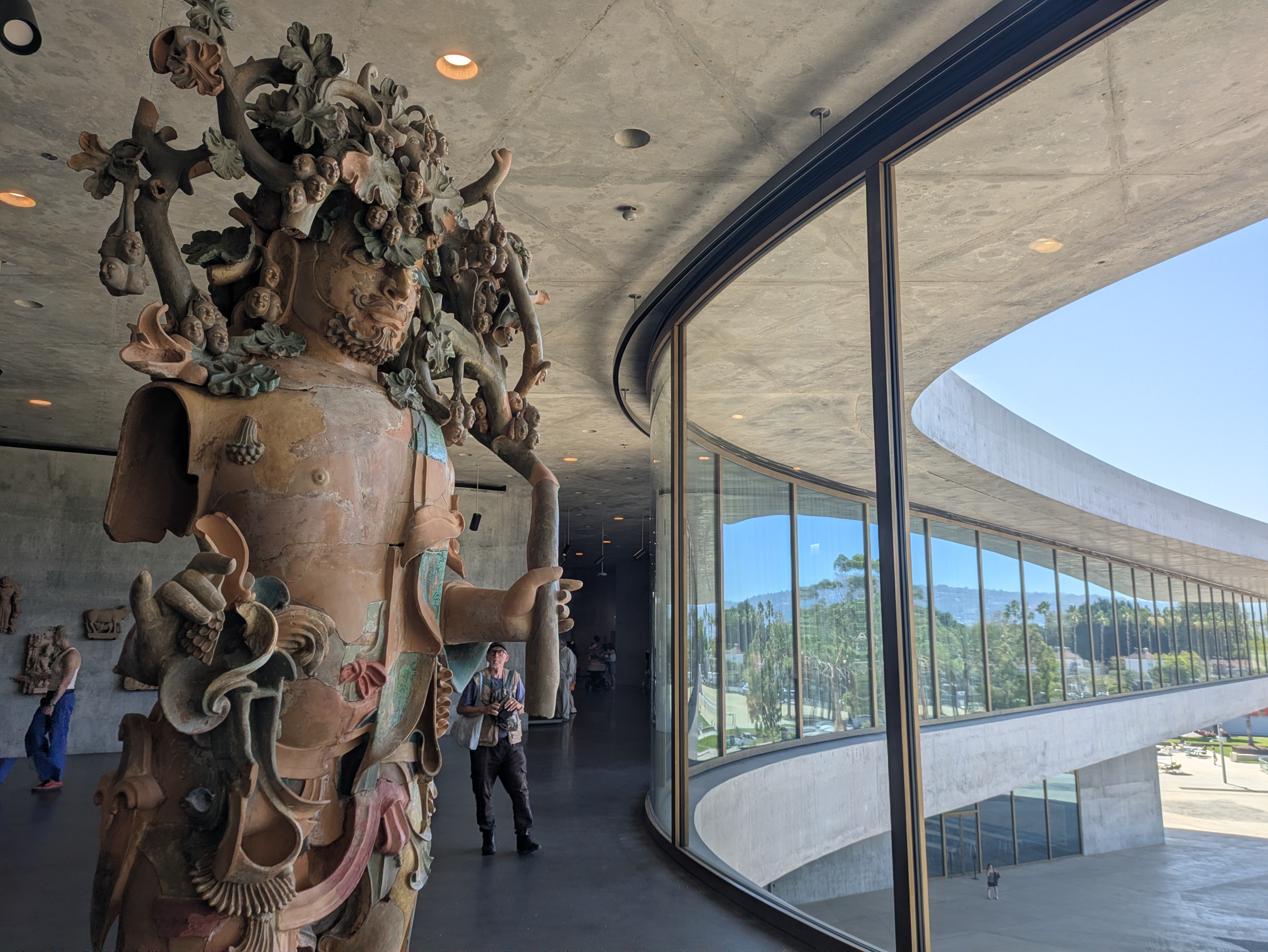
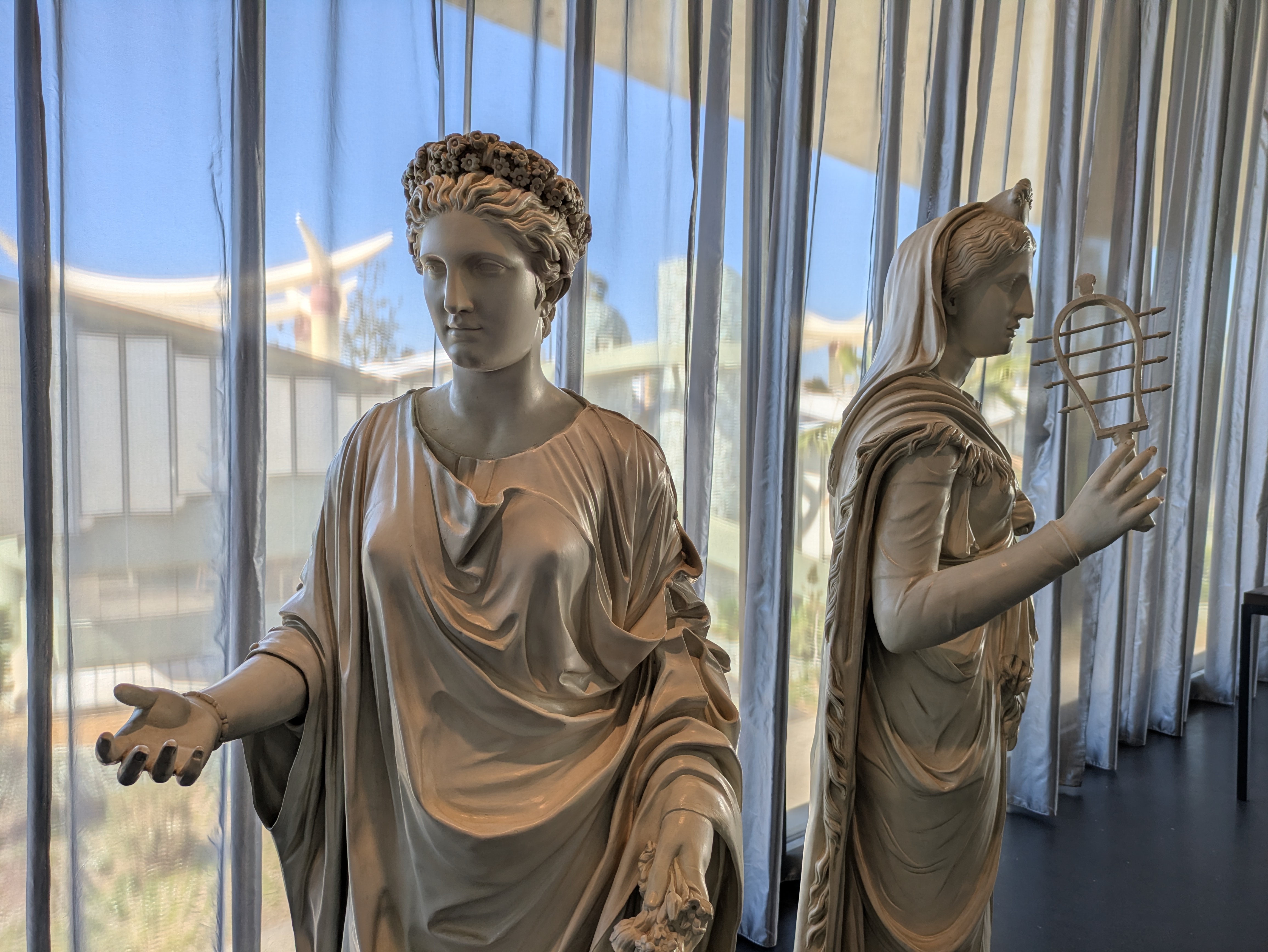
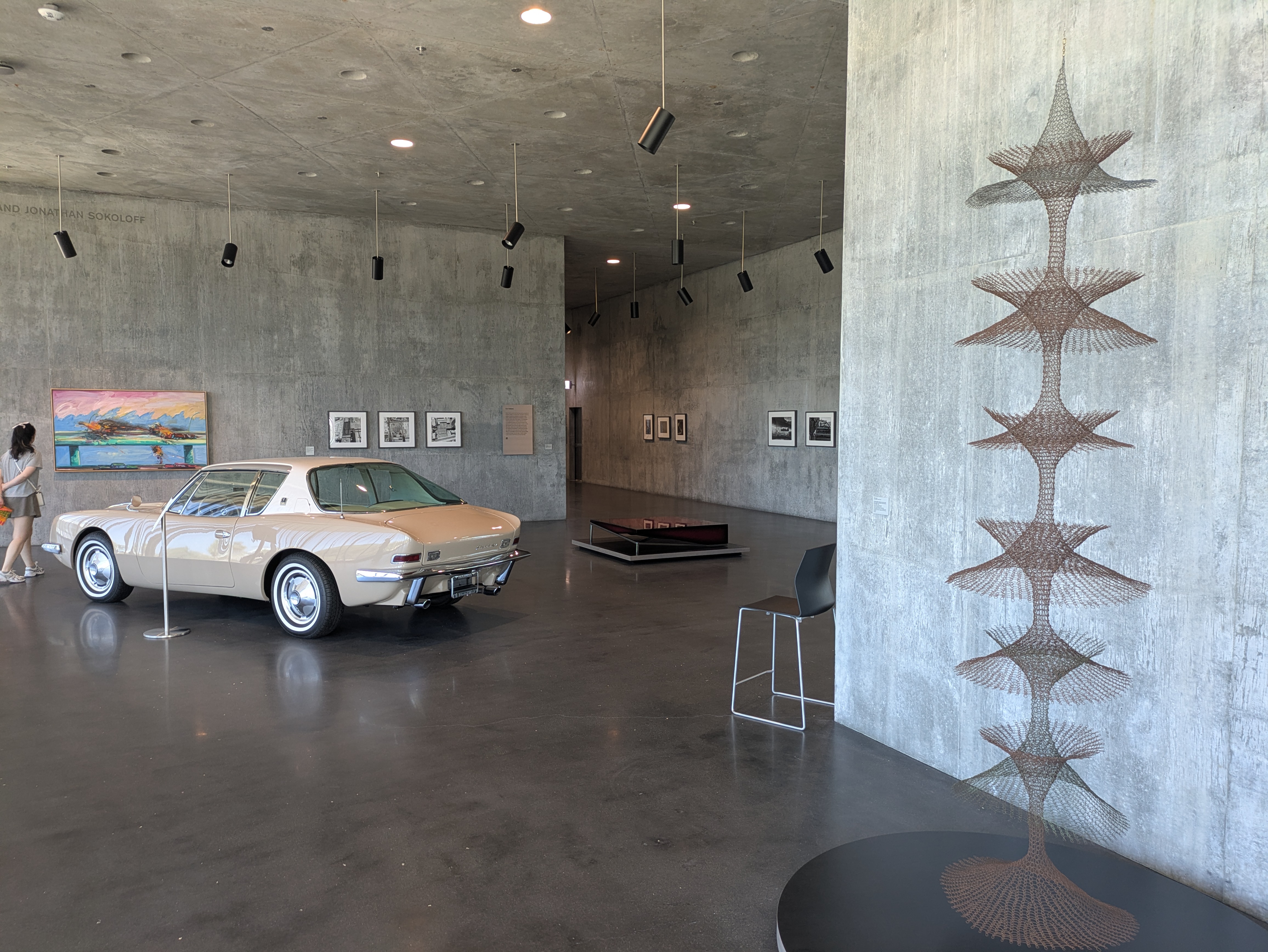
The galleries are all on a single floor that spans the upper level of the entire building; from the plaza, you just climb the stairs or go up the elevator and start exploring. The galleries are arranged loosely by regions of the world, and lead to some very interesting juxtapositions. Pieces are often arranged to be in conversation with each other or with the expansive windows that look out onto the campus below.
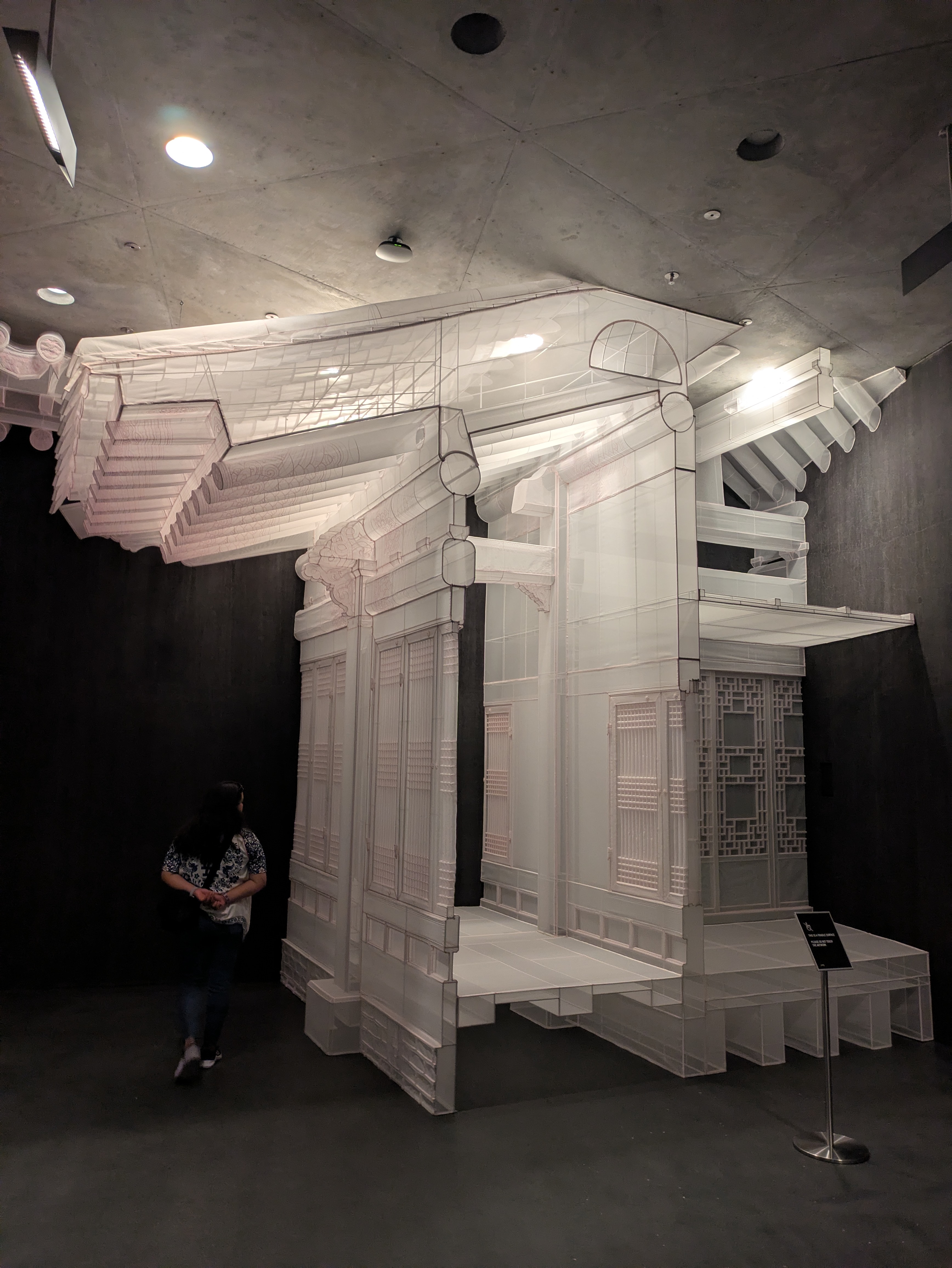
The building is so large that even with everything on a single floor, it can take a couple hours to do it justice. Some highlights include a gallery on L.A. car culture, Henri Matisse’s gigantic work La Gerbe, and the monumental Jagyeong Hall, Gyeongbok Palace by Do Ho Suh. There are also ancient works from all over the world, including ceramics from Mesoamerica, a sarcophagus from ancient Egypt, Assyrian reliefs, and Buddhist sculpture. And this is to say nothing of the views over the tar pits and Wilshire Boulevard.
LACMA is open Mondays, Tuesdays, and Thursdays 11am-6pm, Fridays 11am-8pm, Saturdays and Sundays 10am-7pm, and closed Wednesdays. L.A. County residents who bring their ID can get free admission after 3pm on weekdays; see the website for full ticket information.
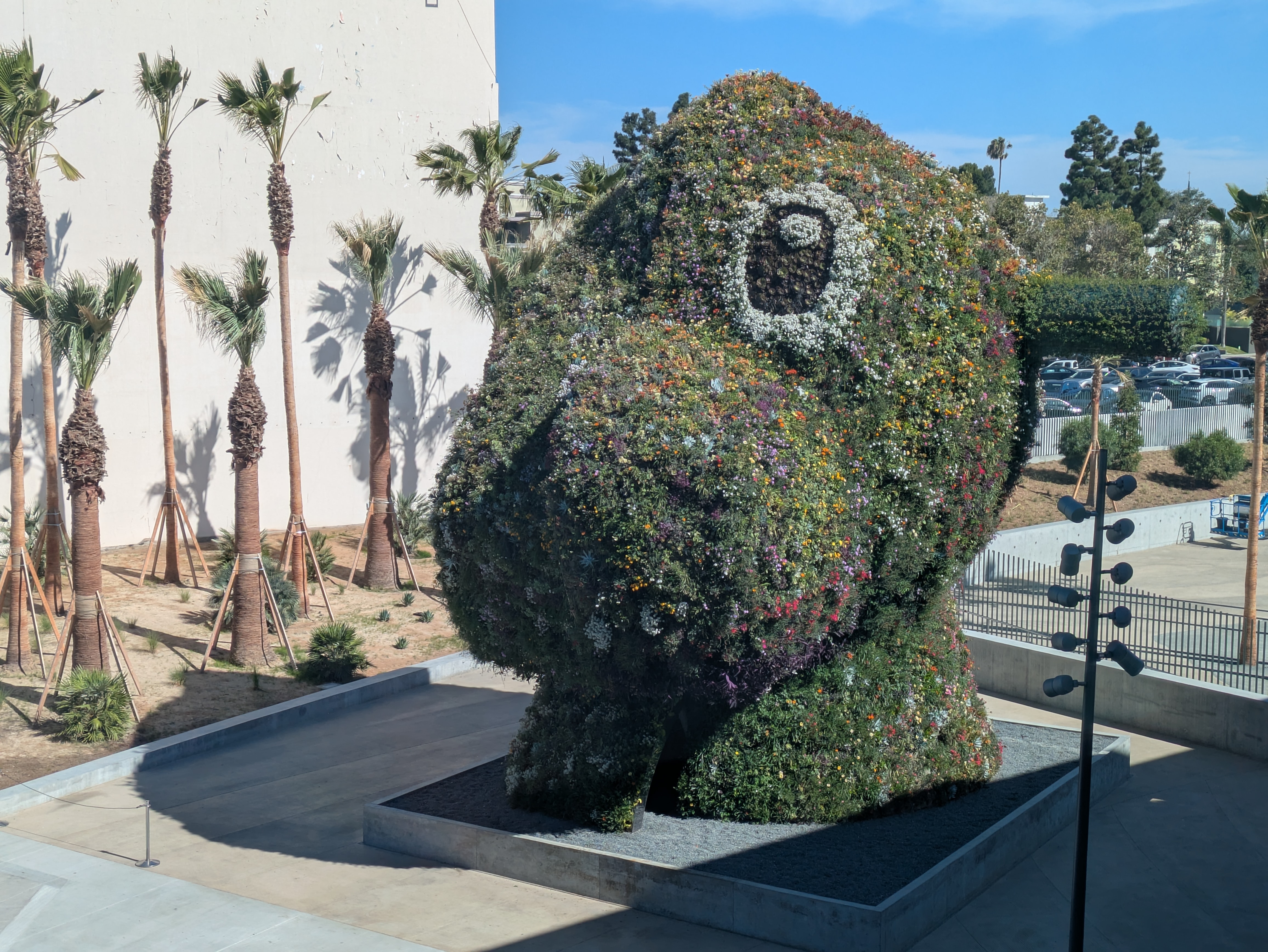
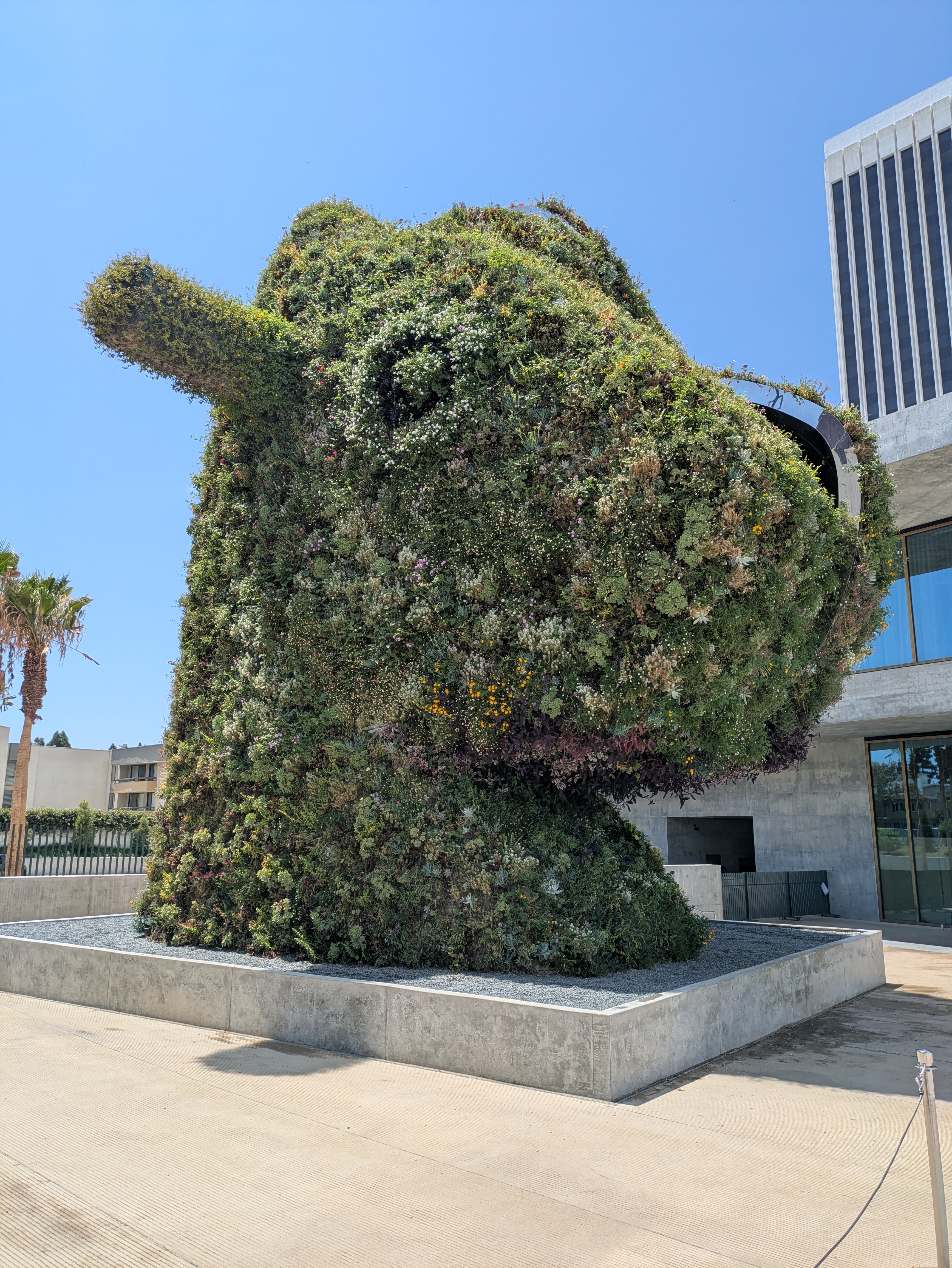
LACMA’s main building crosses over to the southern side of Wilshire, where there’s a handful of lesser-known landmarks that are worth exploration. Outside the south entrance to the David Geffen Galleries is Jeff Koons’s Split-Rocker, a colossal sculpture that looks like the head of a rocking horse covered with tens of thousands of flowering plants, making it look like a giant chia pet.
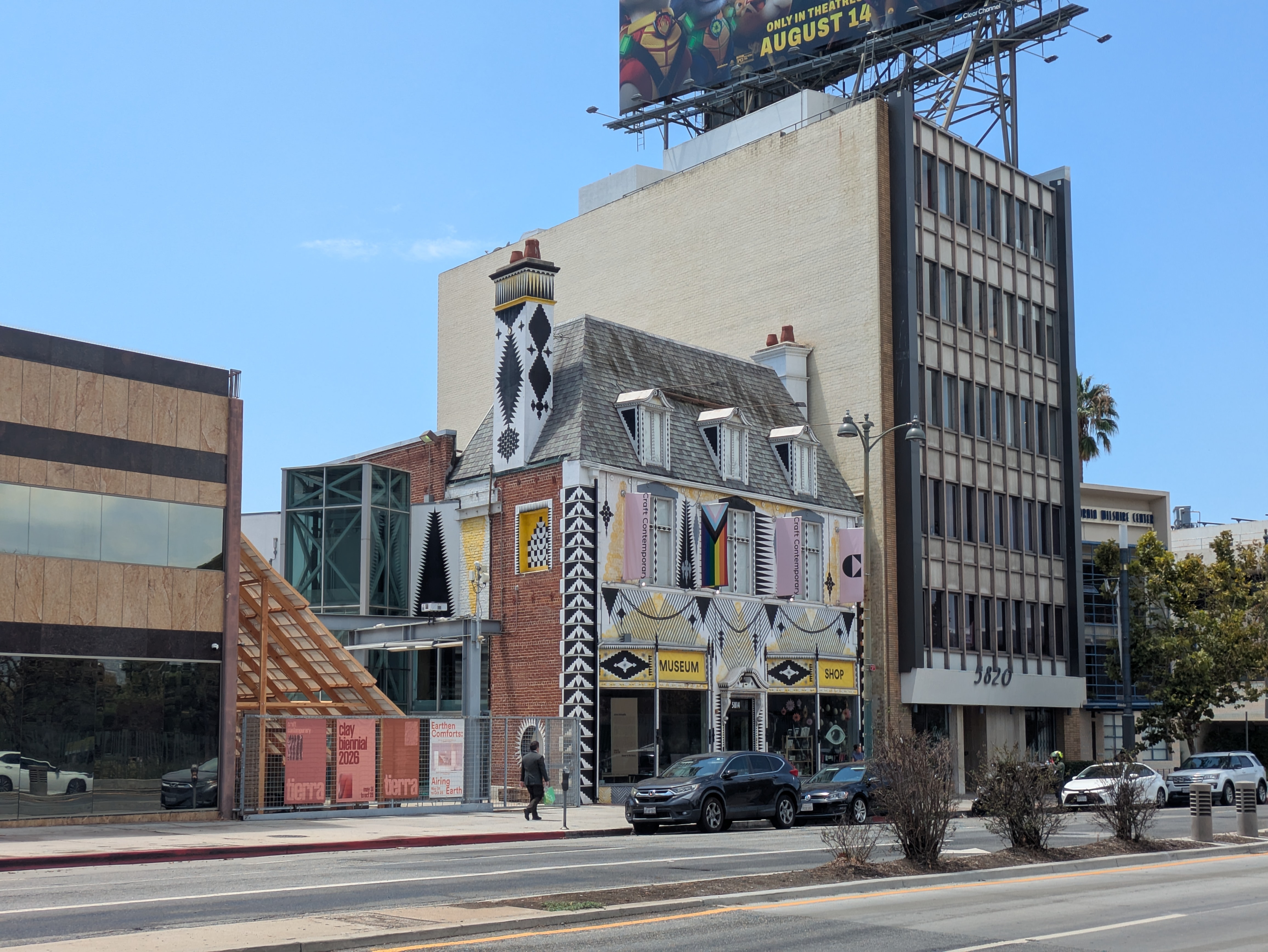
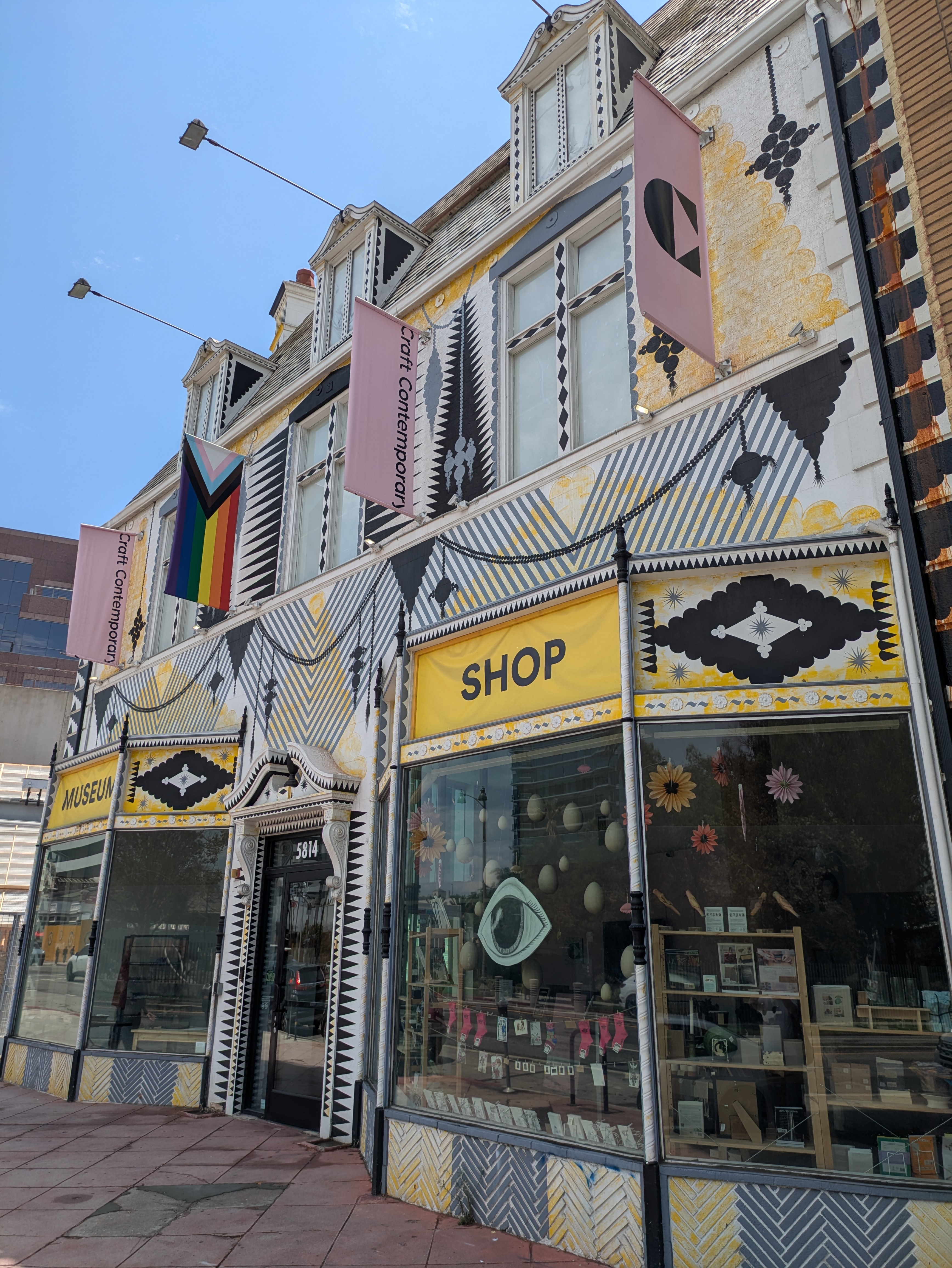
A block to the east is an oft-overlooked museum on Museum Row, the Craft Contemporary. The museum is housed inside a French Provincial revival building, a striking contrast to the predominately Modernist structures of the Miracle Mile, made even more striking by the dazzling geometric patterns painted on the front. The exhibitions are all temporary, but focus on craft and folk art, with a particular emphasis on Indigenous and local artists. The museum is open Wed-Sun 11am-5pm (closed Mondays and Tuesdays), with Sunday being a pay-what-you-wish day; ticket info can be found on the website.
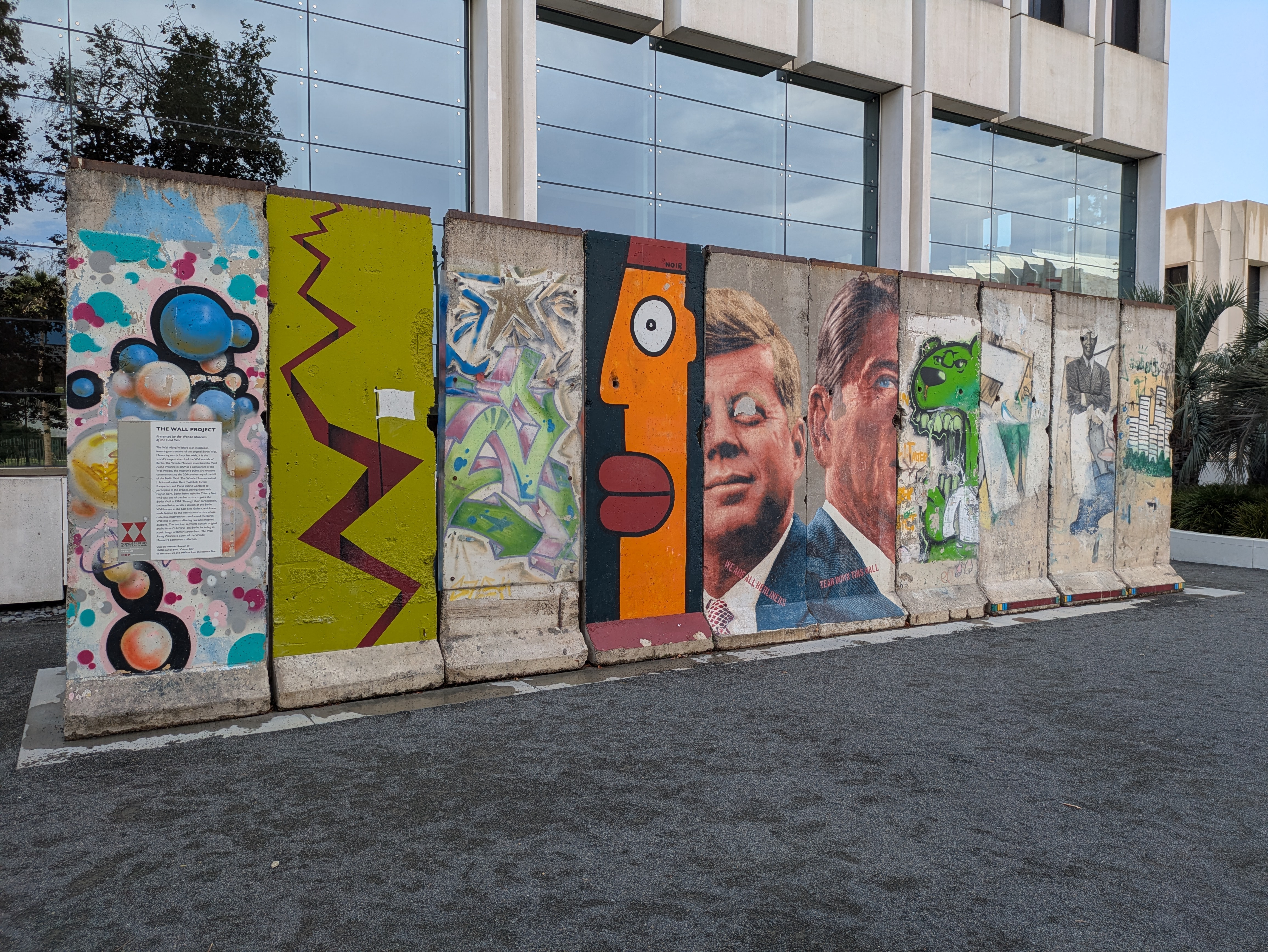
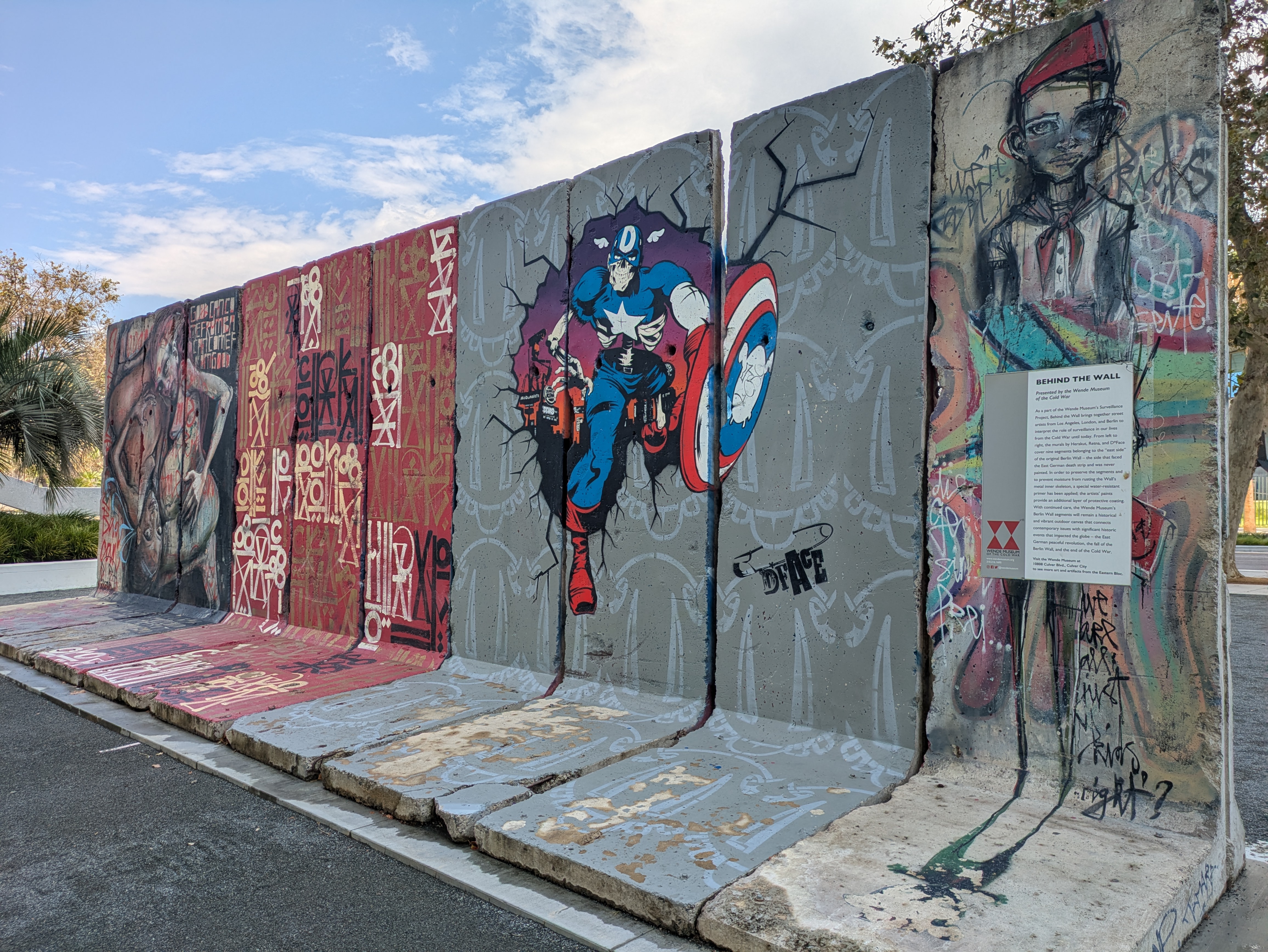
Just to the west of LACMA, the office tower at 5900 Wilshire holds its own very significant installation: a section of the Berlin Wall, consisting of 10 segments, making it the longest stretch of the Berlin Wall outside of Germany. The segments are all covered in art and graffiti, some of it dating back to when these concrete slabs were standing in Berlin, and sit on a small plot outside the building facing Wilshire, totally free and open for people to explore.
Finally, let’s turn our attention to the original attraction of the Miracle Mile, the feature that predates the Mile, Los Angeles, and possibly even any human activity in the area: the La Brea Tar Pits, an active geologic site and one of the only active tar pits located in an urban area. You’ll likely smell them before you see them; the smell of asphalt permeates the immediate area.
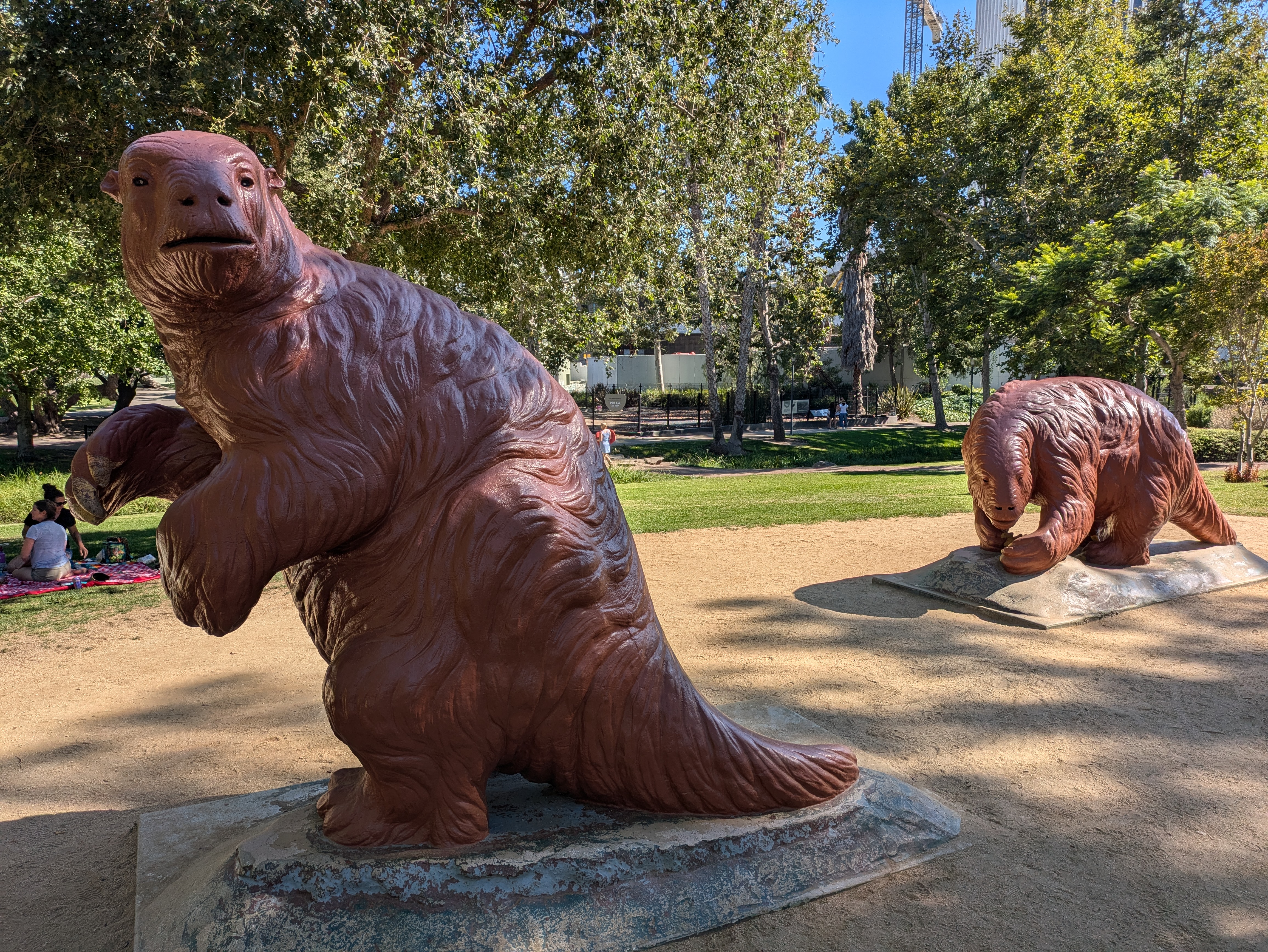
Beneath this section of Los Angeles is an oil field, which for tens of thousands of years has been producing highly viscous oil that has seeped to the surface through fault lines in the ground. That oil has formed into pools of sticky tar that have trapped countless animals over the millennia, inadvertently preserving their remains and forming one of the most important paleontological research sites in the world. La Brea has produced tons of fossils from the last ice age, with fauna such as mammoths, saber-toothed cats, dire wolves, giant ground sloths, ancient bison and horses, among many other species.
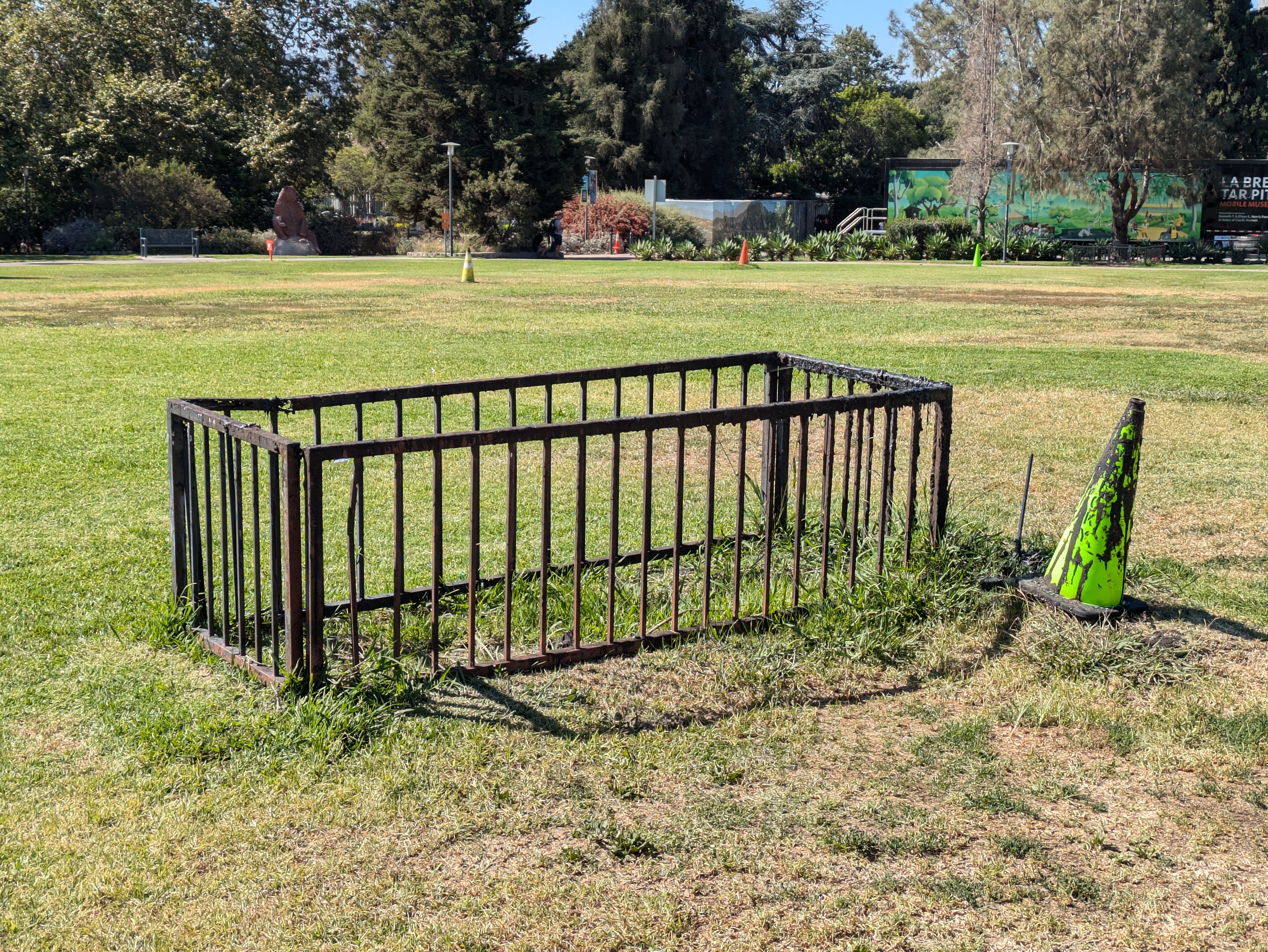
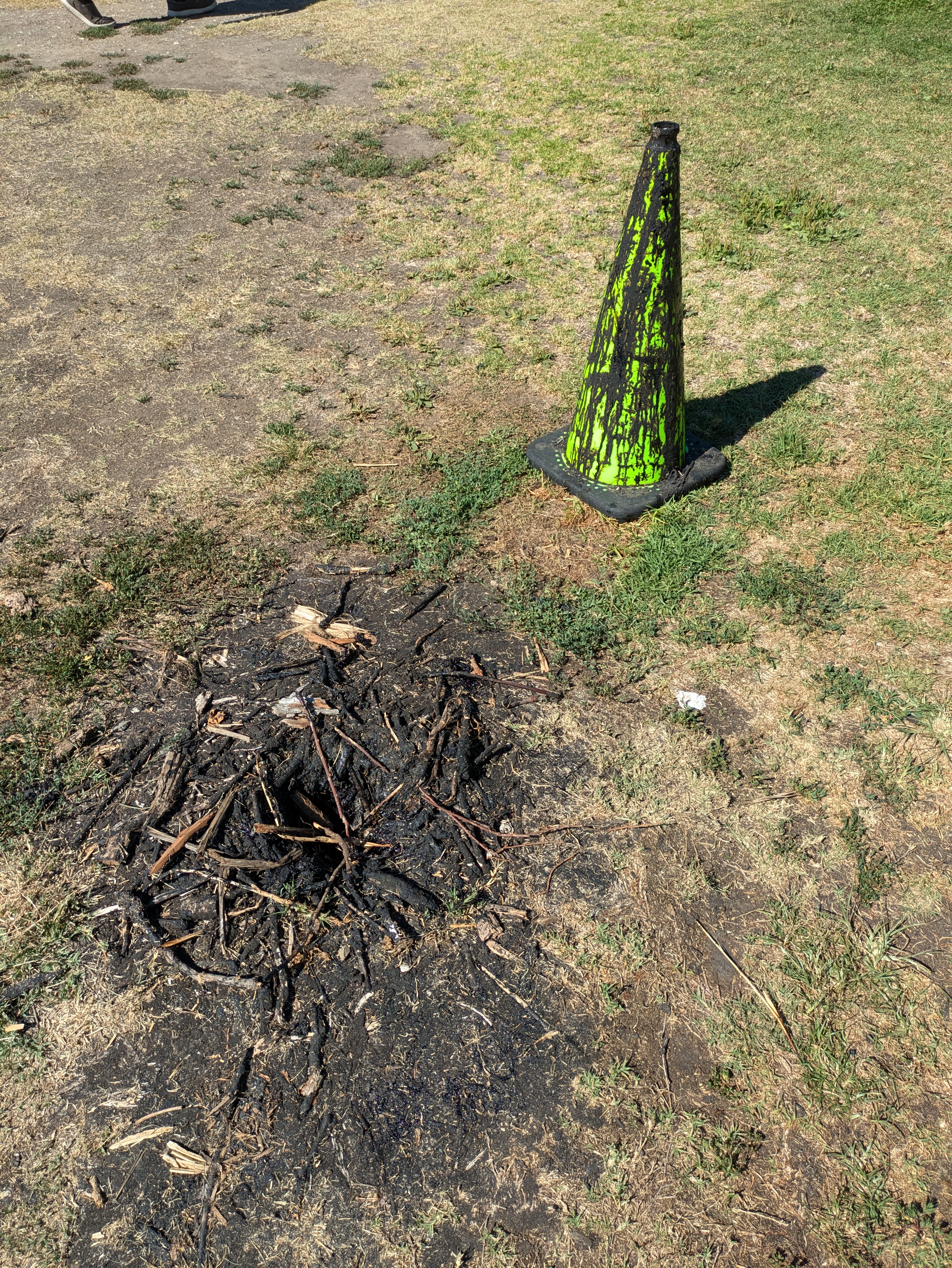
Visiting the tar pits today is a remarkable experience, because it’s a rare example where you can safely observe an active geological phenomenon. The tar pits are now a public park, and as you stroll through you’ll see green, tar-smeared traffic cones that mark spots around the grounds where tar has seeped to the surface. These spots are temporary (the more permanent seepages are all fenced off) and quickly dry into asphalt, but in their short period of activity they become magnets of curiosity, with visitors poking sticks into the tar.
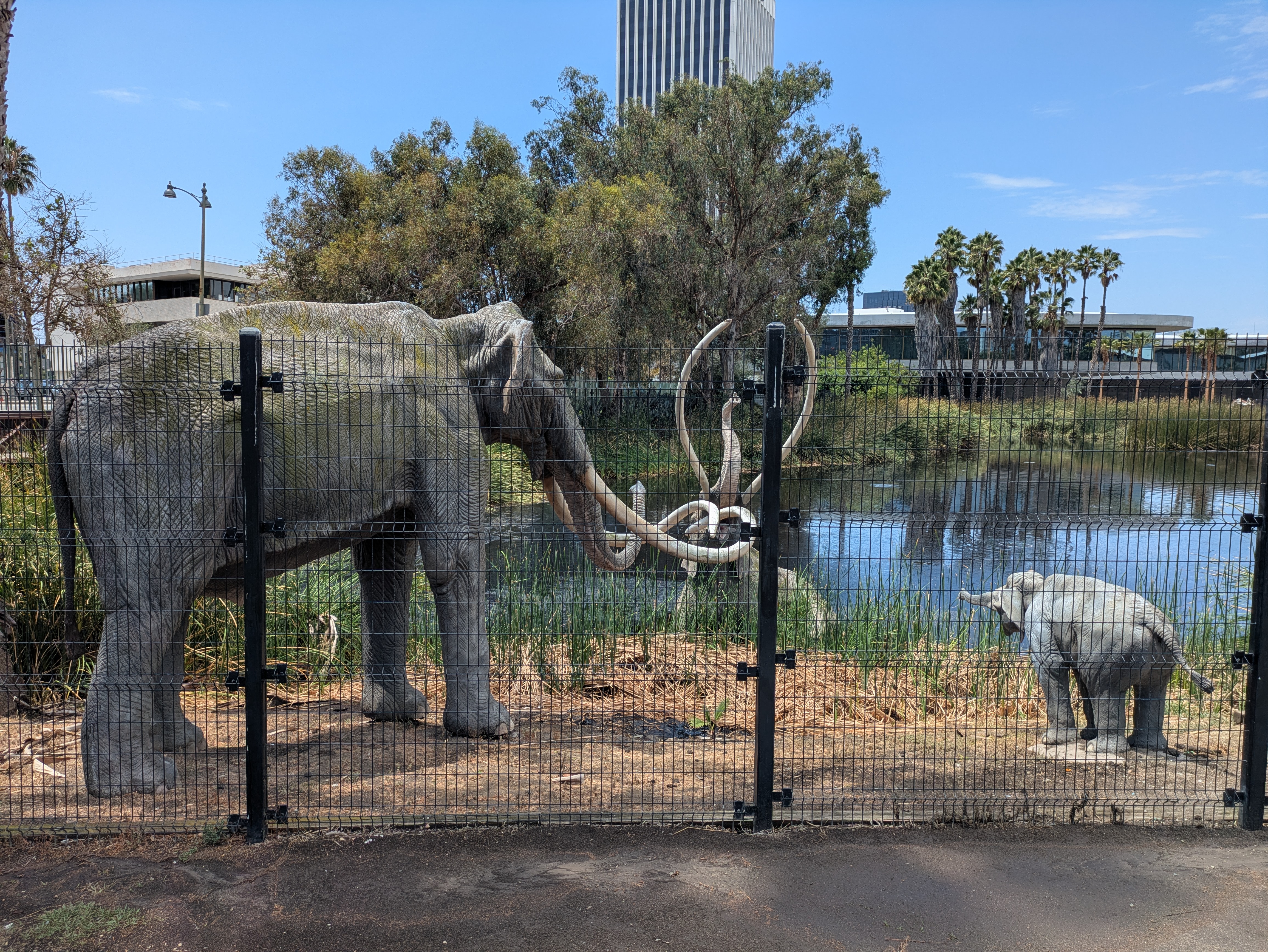
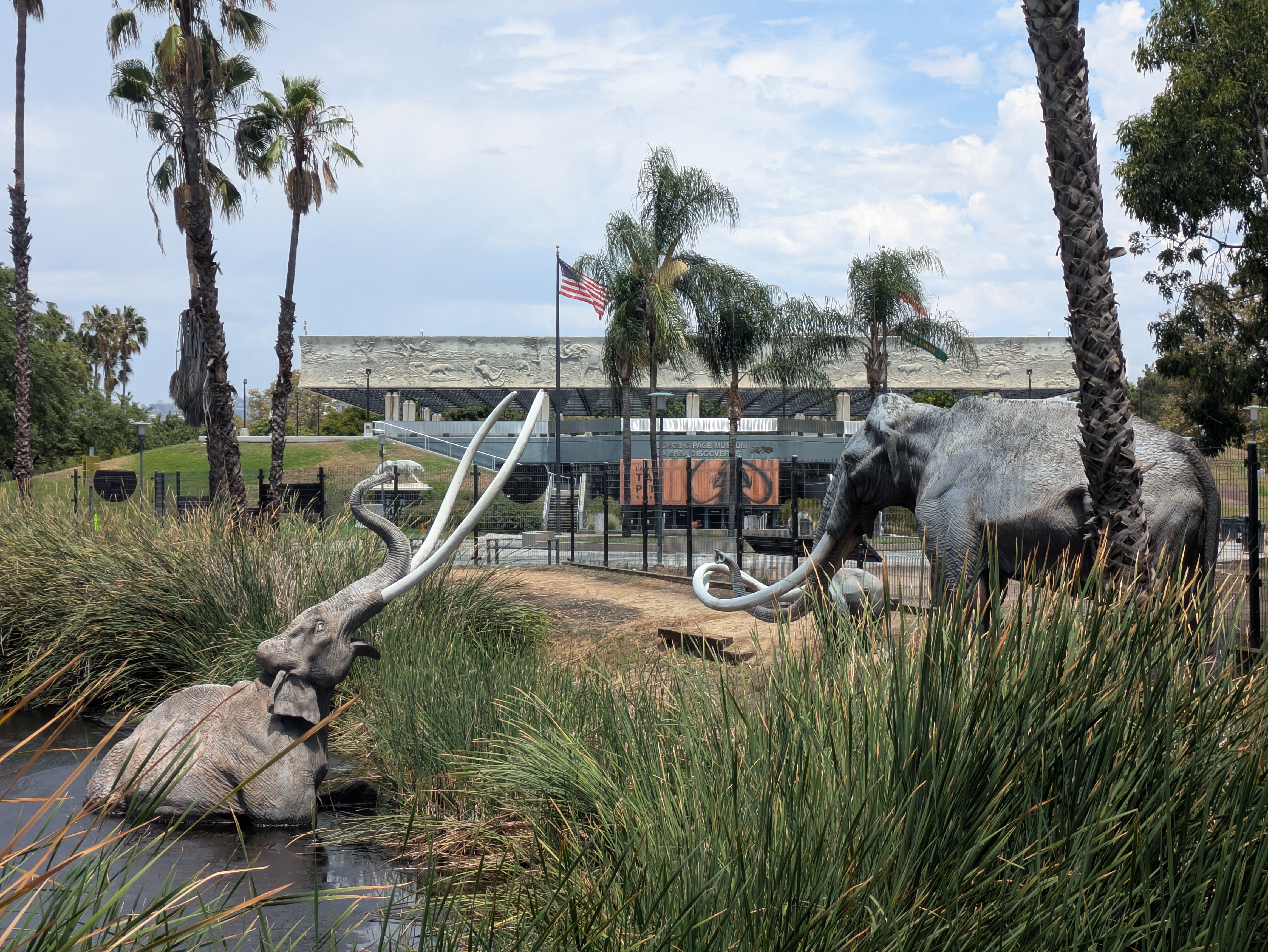
The visual centerpiece of the tar pits is the Lake Pit, a pond of water along Wilshire that holds a few sculptures of ice age animals, including the famous one of a terrified mammoth trapped in the tar while its family watches on. The Lake Pit is in fact mostly water (although you will see gas bubbles emerge out of the pond if you watch long enough), and is a modern landscaping feature; paleontologists will inform you that the tar pits did not in fact look like this in ancient times.
The other pits scattered around the grounds, often covered in leaves or debris that hide their true nature, are not as visually exciting but are more accurate representations of what they would have looked like in their natural state. Behind another set of fences you’ll also see stacks of crates, the result of the hasty removal of tons of fossils to make way for LACMA’s underground parking garage, which are slowly being unpacked and studied. You’ll also find the Observation Pit (currently closed), a small building that was essentially the first museum for the tar pits, with a small excavated pit in the center.
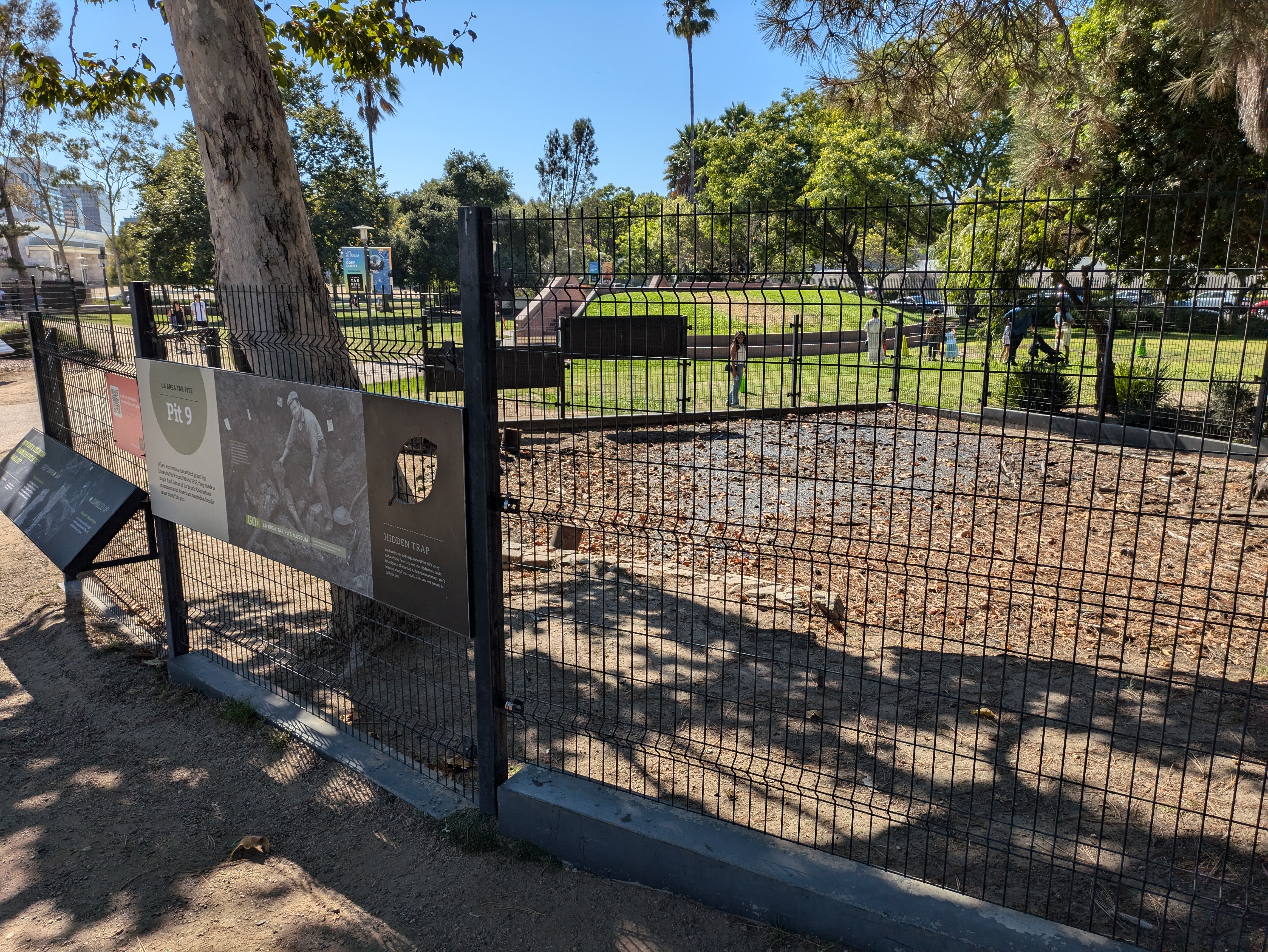
As of 2026, the museum is closed for an extensive renovation that is expected to last two years, which may result in portions of the park closing as well. While the museum did give a more comprehensive overview of the tar pits, with lots of reconstructed skeletons on display, there are enough informational displays around the grounds that the pits are still worth a visit if you haven’t been before.
Nearby food
Museum Row admittedly isn’t a great place to find good food; all the museum cafes are overpriced and have limited selections. Fortunately, there are some good options within walking distance.
At the corner of Wilshire and Crescent Heights Blvd, a roughly five minute walk west of Wilshire and Fairfax, you’ll find a strip mall with a pretty good variety of eateries, including Cafe Fresco, an Ecuadorian cafe that has really good coffee, breakfast dishes, and sandwiches, and it’s a fairly popular brunch option.
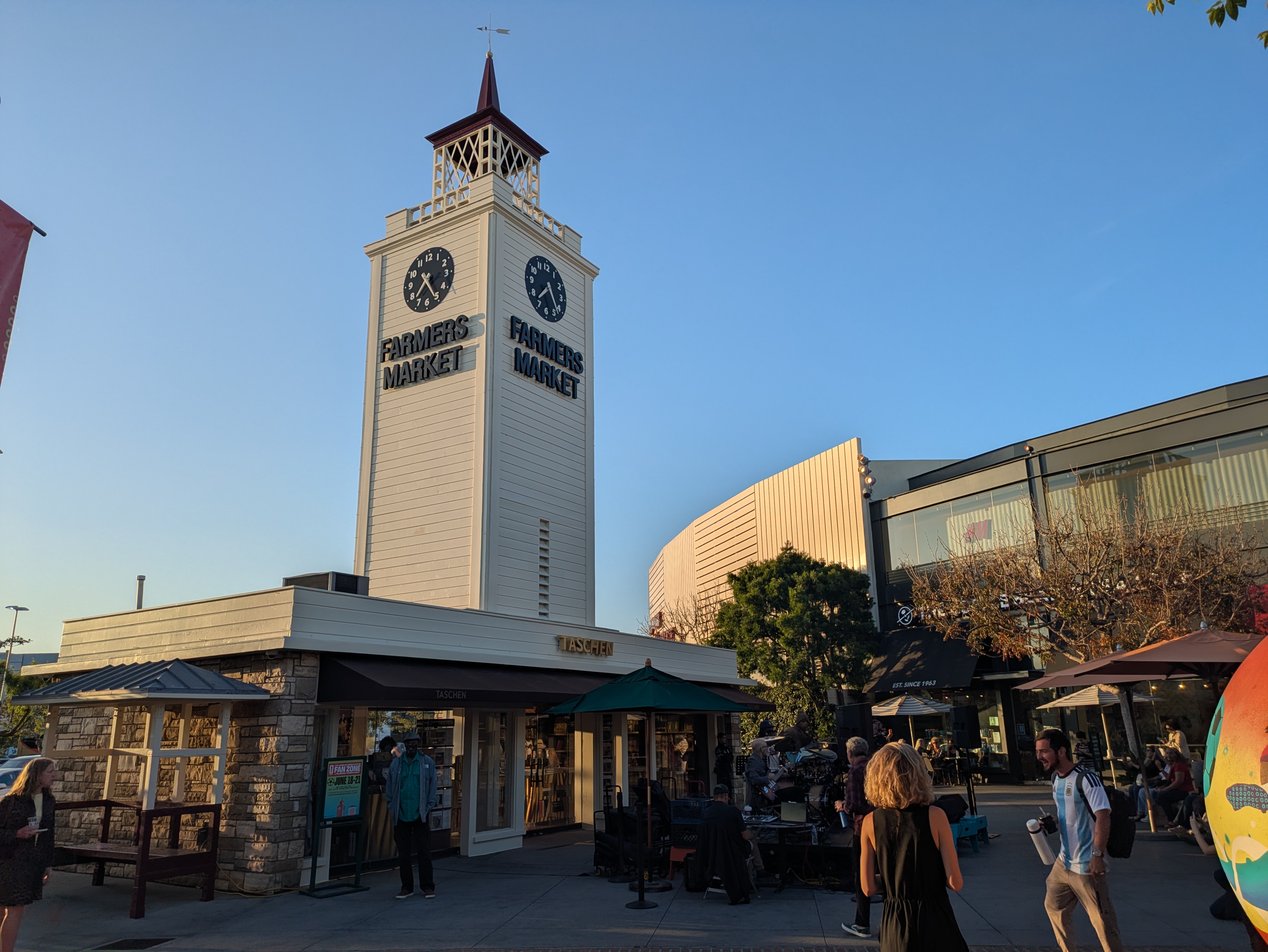
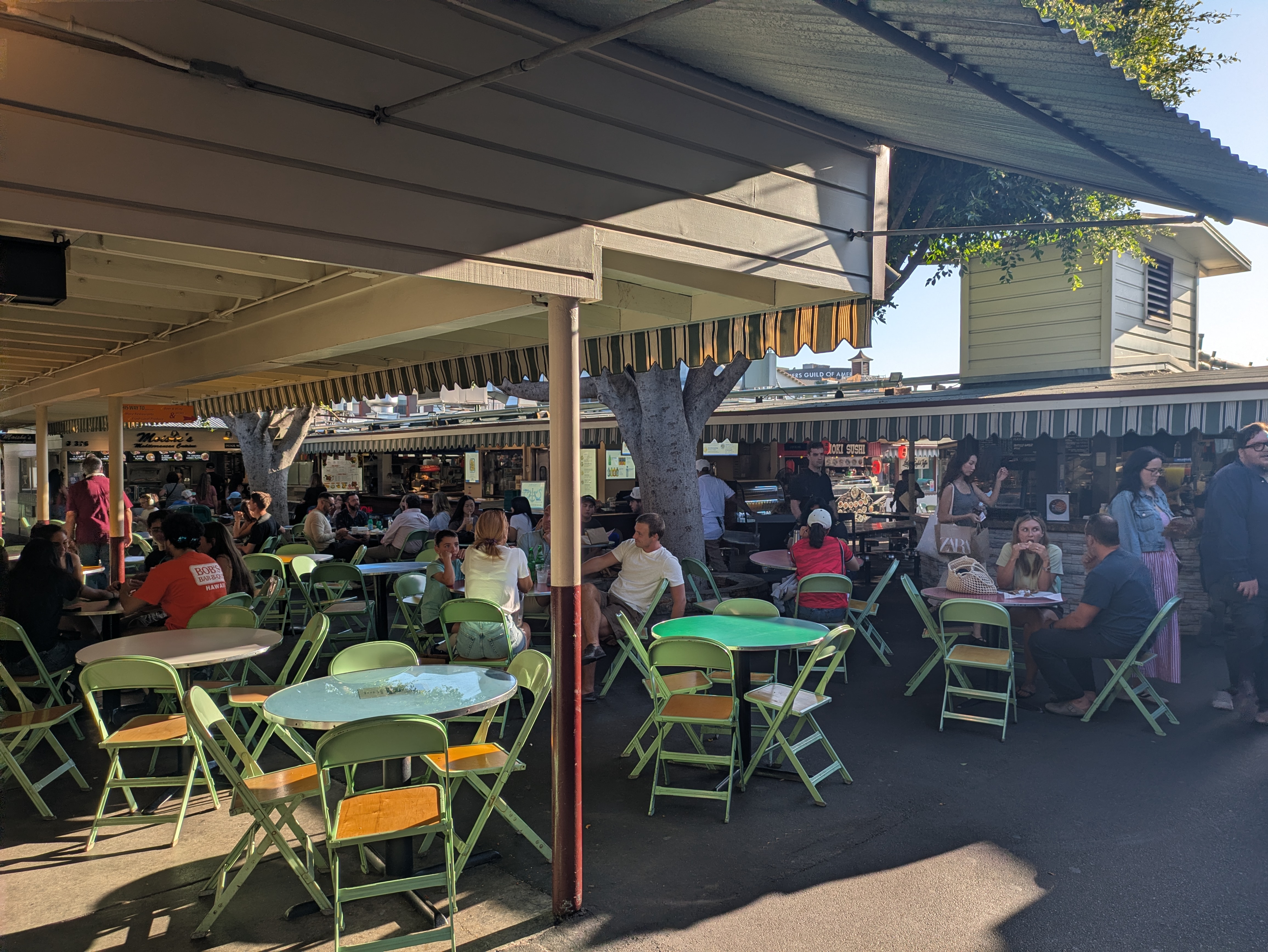
Or you can head to The Original Farmers Market, which is about a 15 minute walk north of Wilshire on Fairfax, at the corner of Fairfax and 3rd. The Farmers Market (not actually a farmers market, although there are a couple of produce stands left) is L.A.’s original food hall, dating back to the 1930s and home to dozens of eateries, vendors, and a couple of gourmet grocers as well as some souvenir stands. Food here definitely isn’t cheap, but there are a lot of options and the atmosphere is fun. The market is also directly connected to The Grove, a popular upscale outdoor shopping mall noted for its gaudy architecture, dancing fountain, and old-fashioned trolley that rides from one end of the mall to the other.