Much like its neighbor San Pedro, which we visited for an earlier guide, Wilmington feels a long way from Los Angeles, despite being within the official city limits. Both communities are centered around the harbor, but in Wilmington that relationship seems to underline every aspect of life in town. From the freight cranes punctuating the skyline, to the many murals and business names referencing the harbor, to the constant reminders of the powerful ILWU dock workers union, the presence of the harbor is felt throughout town.
That’s right, a blue-collar union town right in the midst of Los Angeles. At times, Wilmington feels more like a Rust Belt industrial town than a Southern California suburb. The combined ports of Los Angeles and Long Beach are the busiest in the Americas, with a massive portion of the goods imported from Asia offloaded right here. If “Trenton Makes, The World Takes,” then Wilmington Freights, America Awaits.
The only rapid transit line that comes anywhere near Wilmington is the J Line (formerly the Silver Line), an express bus service that mostly operates in freeway bus lanes between El Monte, Downtown LA, and San Pedro. It takes about an hour to get from Union Station to the Pacific Coast Highway station, a freeway stop on the 110 above the Pacific Coast Highway, located on the edge of Wilmington.
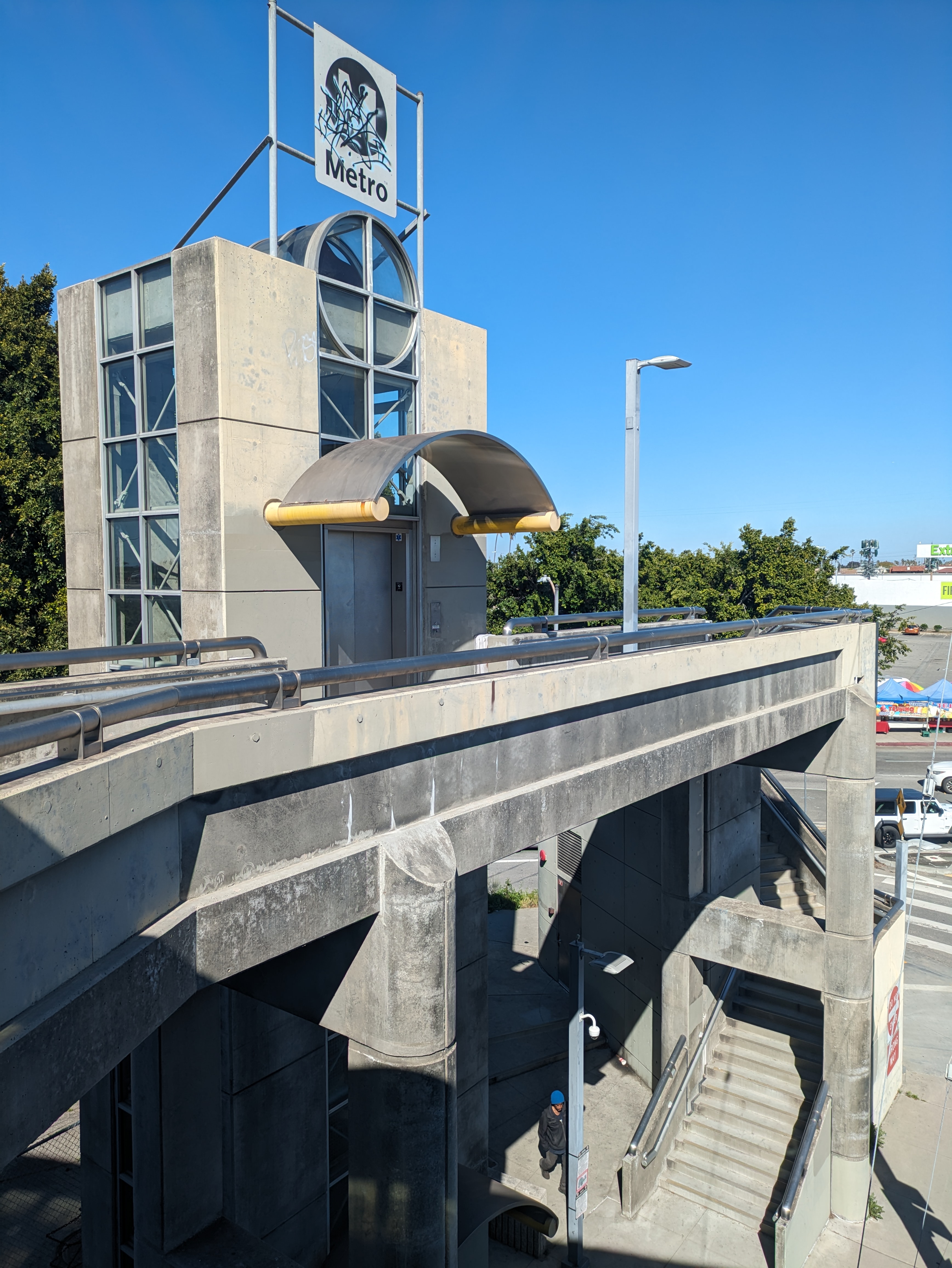
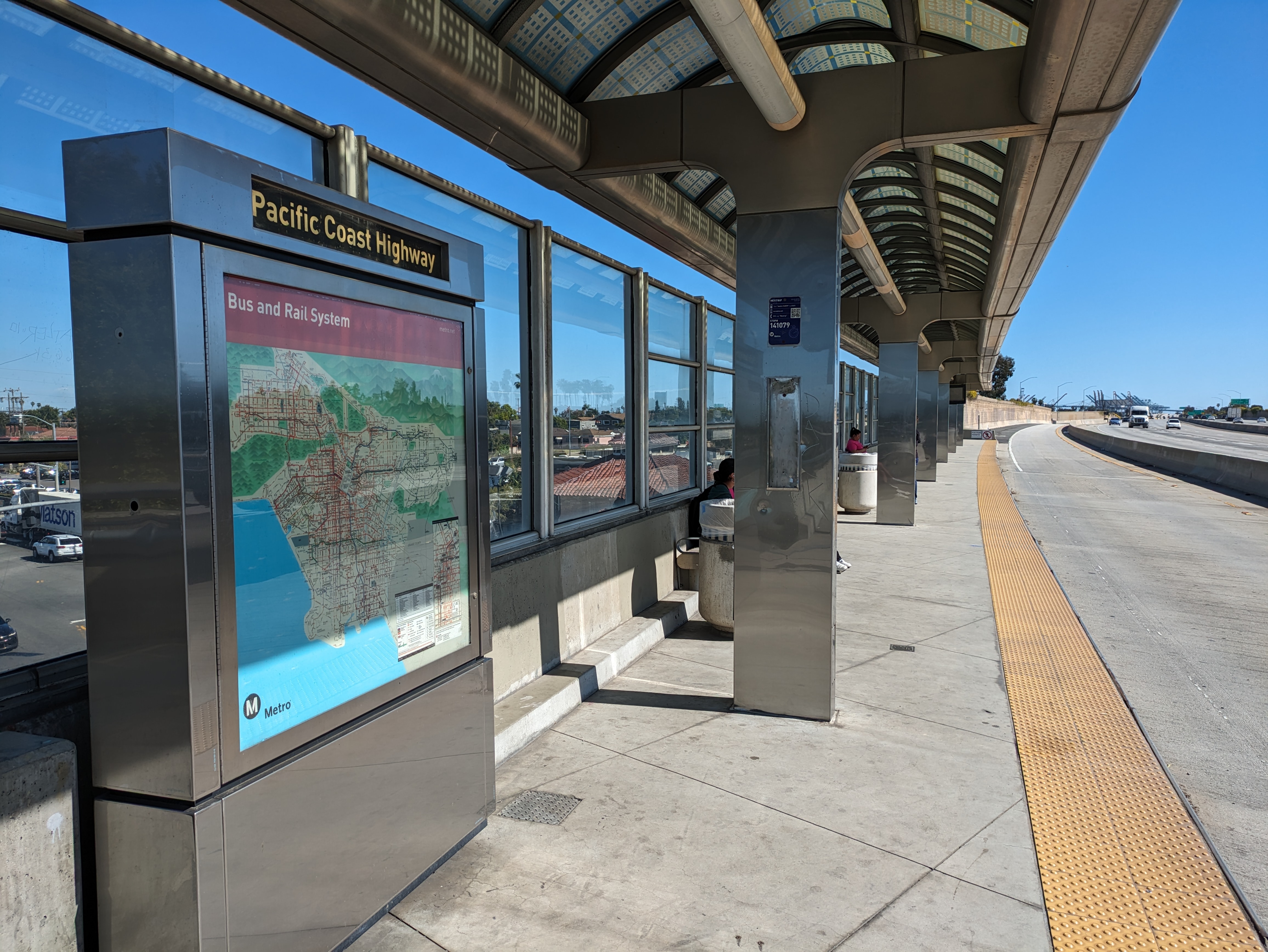
One important thing to remember about the J Line is that it’s actually two overlapping lines, the #910 and the #950. The #910 only goes as far as Harbor Gateway station, so you want the #950 to get to Wilmington.
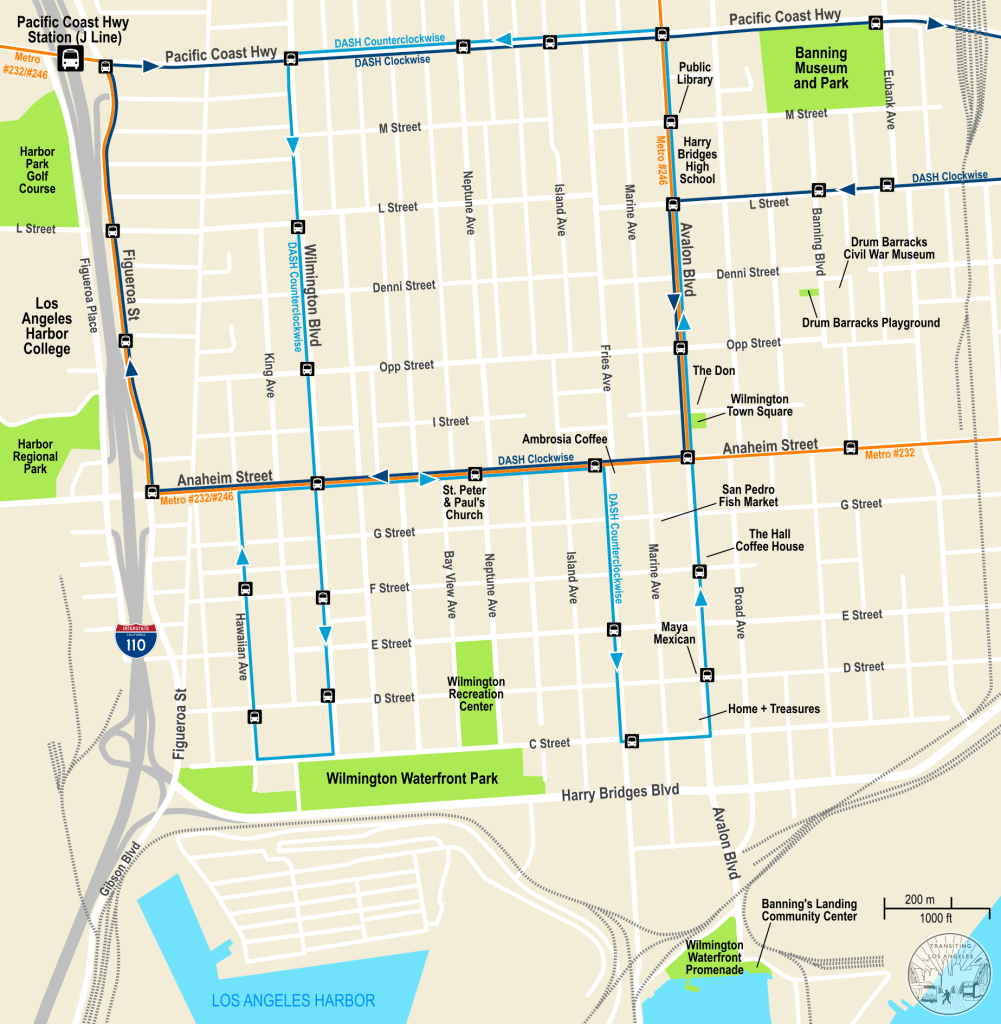
From the Pacific Coast Highway station, head downstairs to the street and then to the corner of Figueroa, on the east side of the freeway. There, you can take Metro bus #232 or #246 down Figueroa and Anaheim Street into the heart of Wilmington itself. Or you can cross the street to take the DASH “Wilmington Clockwise” shuttle, which will take you along Pacific Coast Highway past the Banning Museum before looping back through the center of the neighborhood. (There’s also a “Counterclockwise” DASH shuttle, which takes a completely different route through Wilmington and doesn’t stop at the J Line station.) DASH fare is 50¢, or 35¢ if you pay with a TAP card.
The best place to start is with perhaps Wilmington’s most significant historic landmark, a true gem and charming spot amidst the numerous strip malls and drive-thrus of Pacific Coast Highway: the Banning Museum.
The Banning Museum is the centerpiece of a large public park situated between Pacific Coast Highway and M Street, a couple blocks east of Avalon Blvd. The park itself is very pleasant, with lush grass lawns and plenty of shade trees, as well as exercise equipment and lots of picnic tables. The museum is a small fenced-in complex in the center of the park, with the entrance facing the corner of M Street and Banning Blvd.
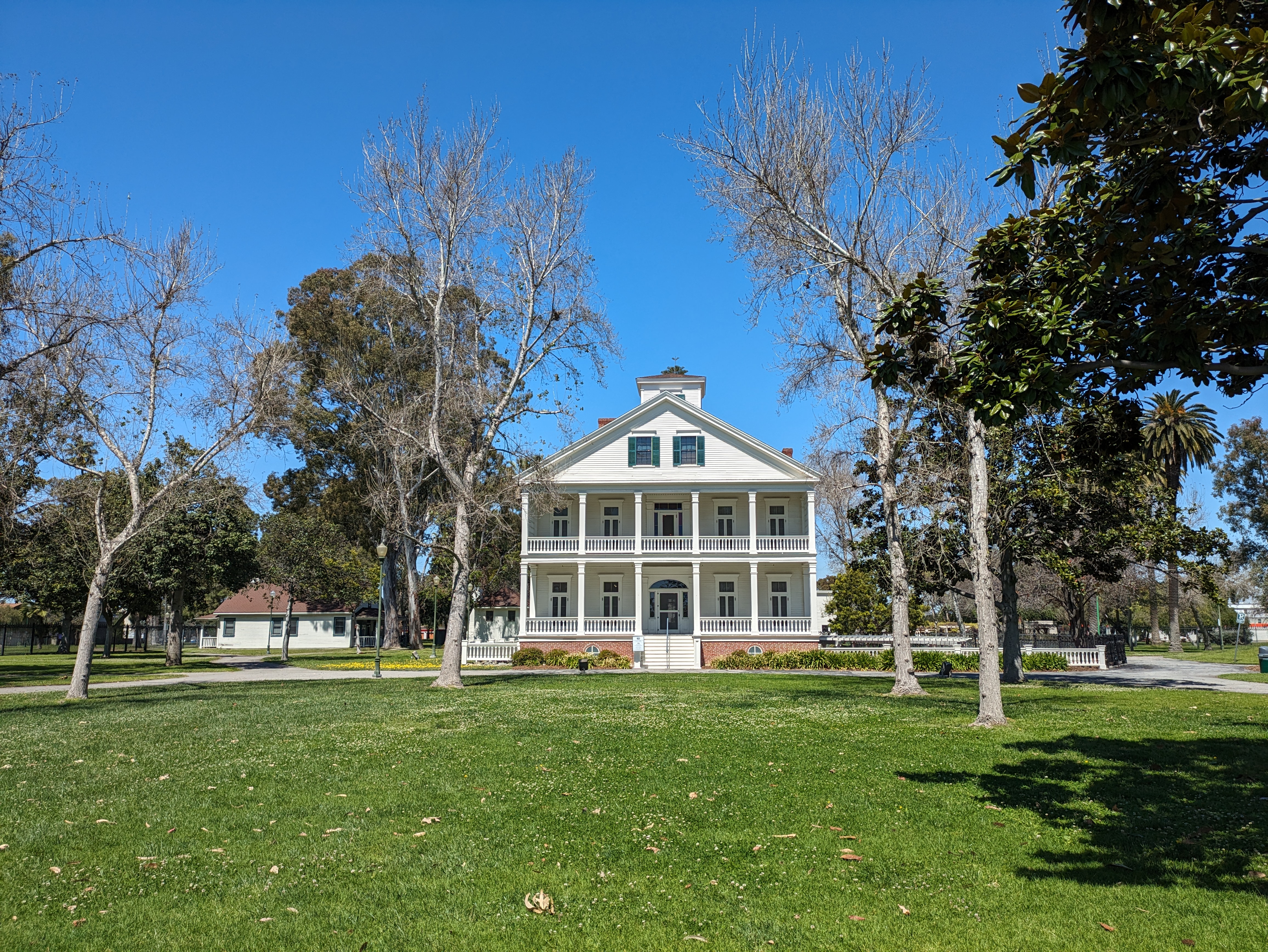
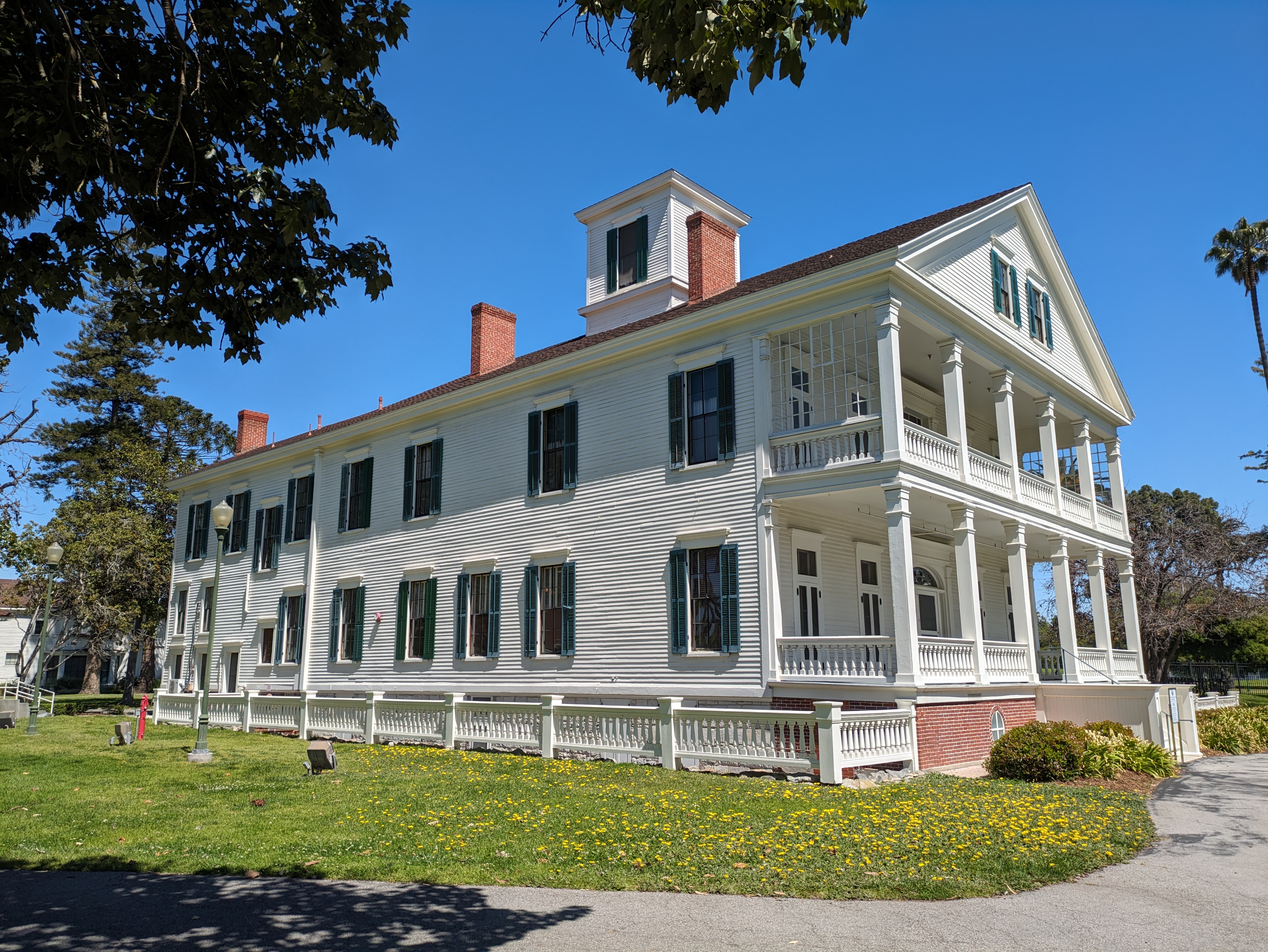
The Banning House, which was built in 1863, was the residence of Phineas Banning, the principal founder of Wilmington (named for Banning’s birthplace of Wilmington, Delaware) and the man most often credited for the creation of the Los Angeles Harbor. Banning came to Southern California in 1851, settling in San Pedro and immediately taking up a job as a stagecoach driver. By his 30s, he was running his own stagecoach business, with stage lines reaching as far inland as Salt Lake City and Yuma, Arizona (it’s for this reason why there’s a town called Banning on the road to Palm Springs). But Banning’s real ambition was the development of the harbor, and after convincing a group of local businessmen to invest in the marshy land adjacent to San Pedro, expanded the port and oversaw dredging of the harbor to transform it into a deep water port. He also presided over the construction of Southern California’s first railroad, built to connect the harbor to Los Angeles just as California was being linked to the rest of the nation.
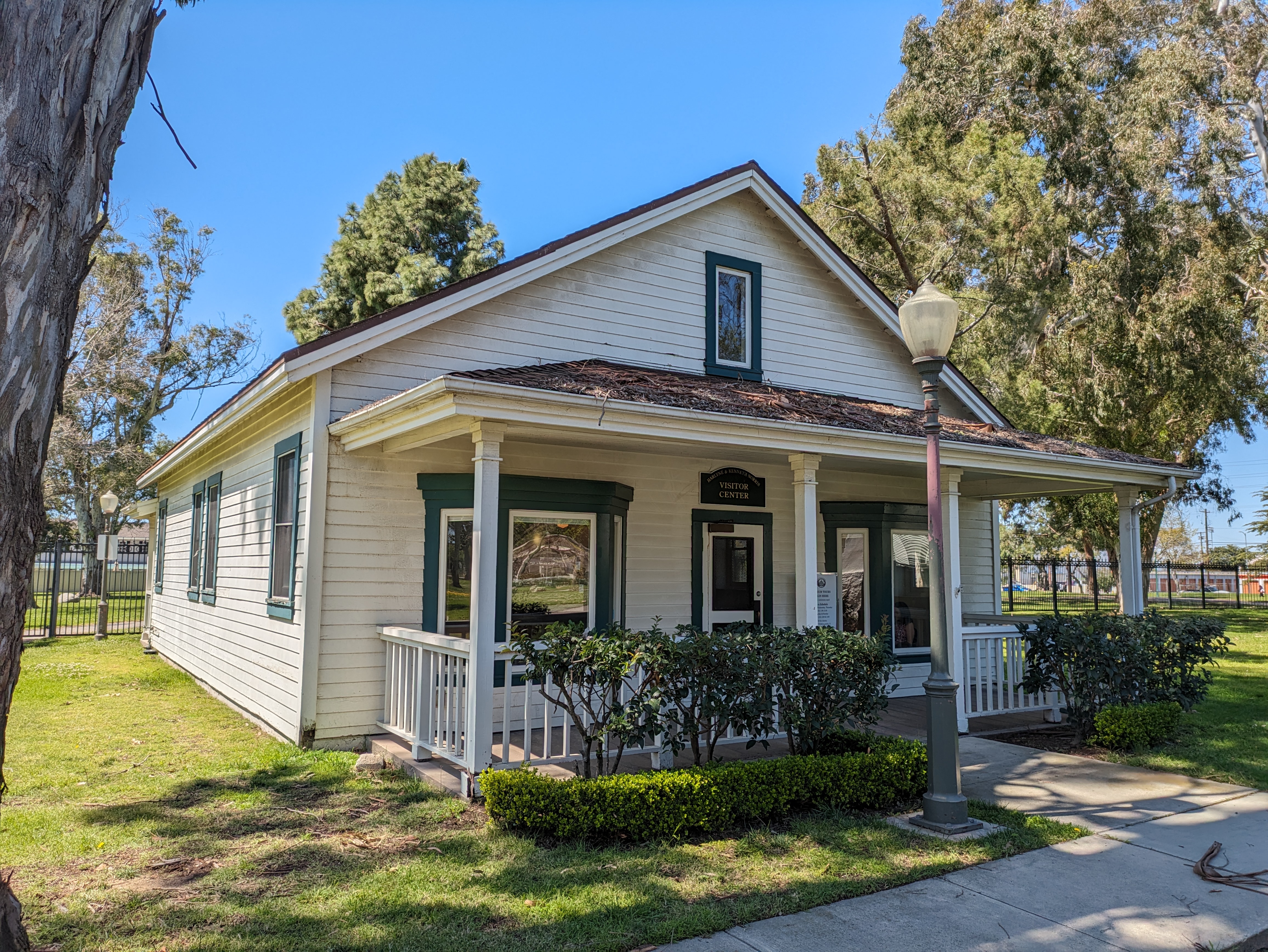
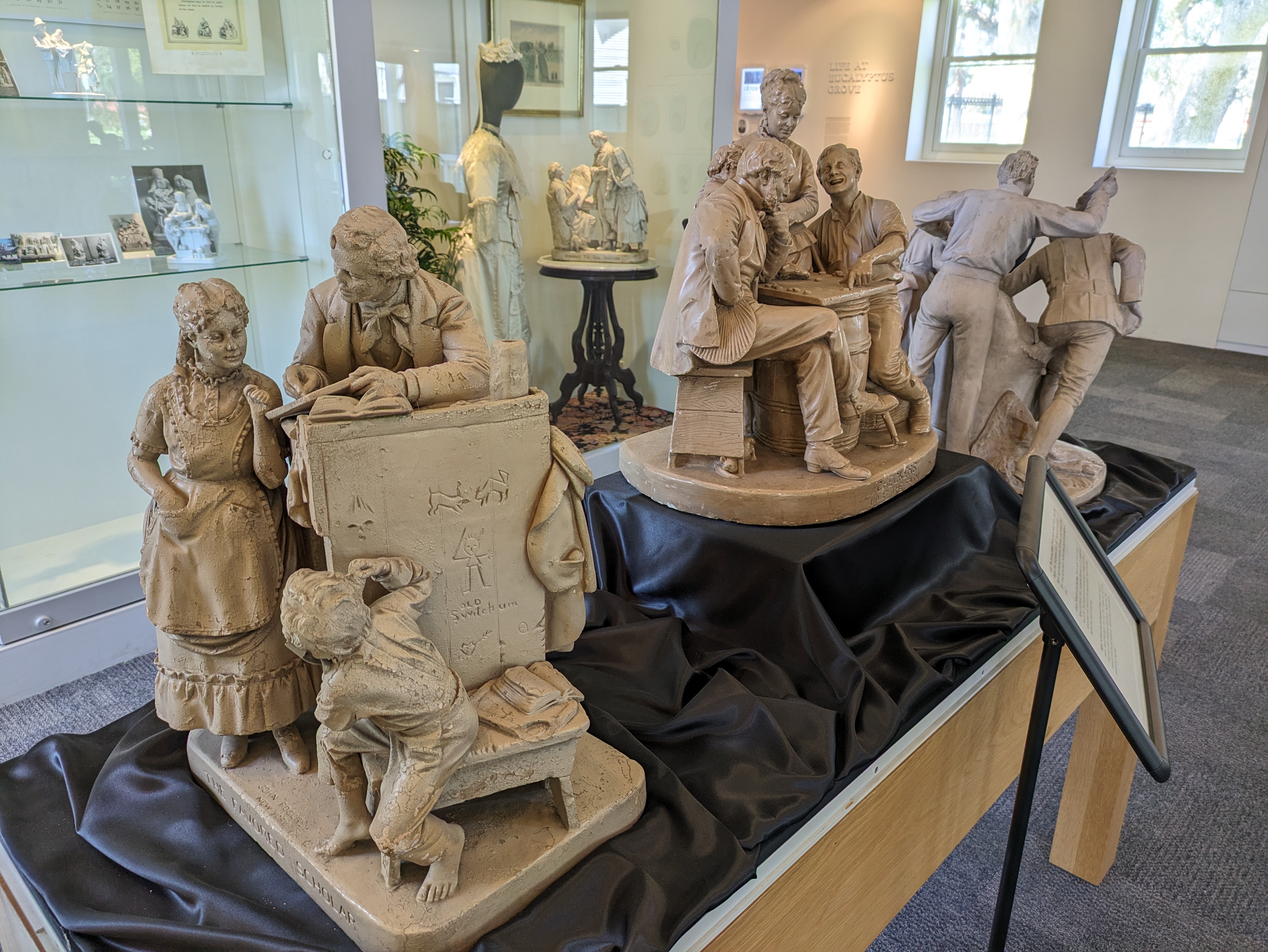
The museum preserves the house, which is decorated with period Victorian furniture, some of which actually belonged to the Banning family. You can only enter the house by guided tour, which starts from the visitor center, located in a small building behind the house. Photography in the house isn’t permitted, but the furnishings are impressive, with an elaborate ballroom and a charming family room. The tour guides are very informative, doing an exceptional job to paint a picture of domestic life in the Victorian period. The visitor center has some exhibits on the Banning family and objects collected by the historical society that runs the museum, as well as a little film on the history of the house.
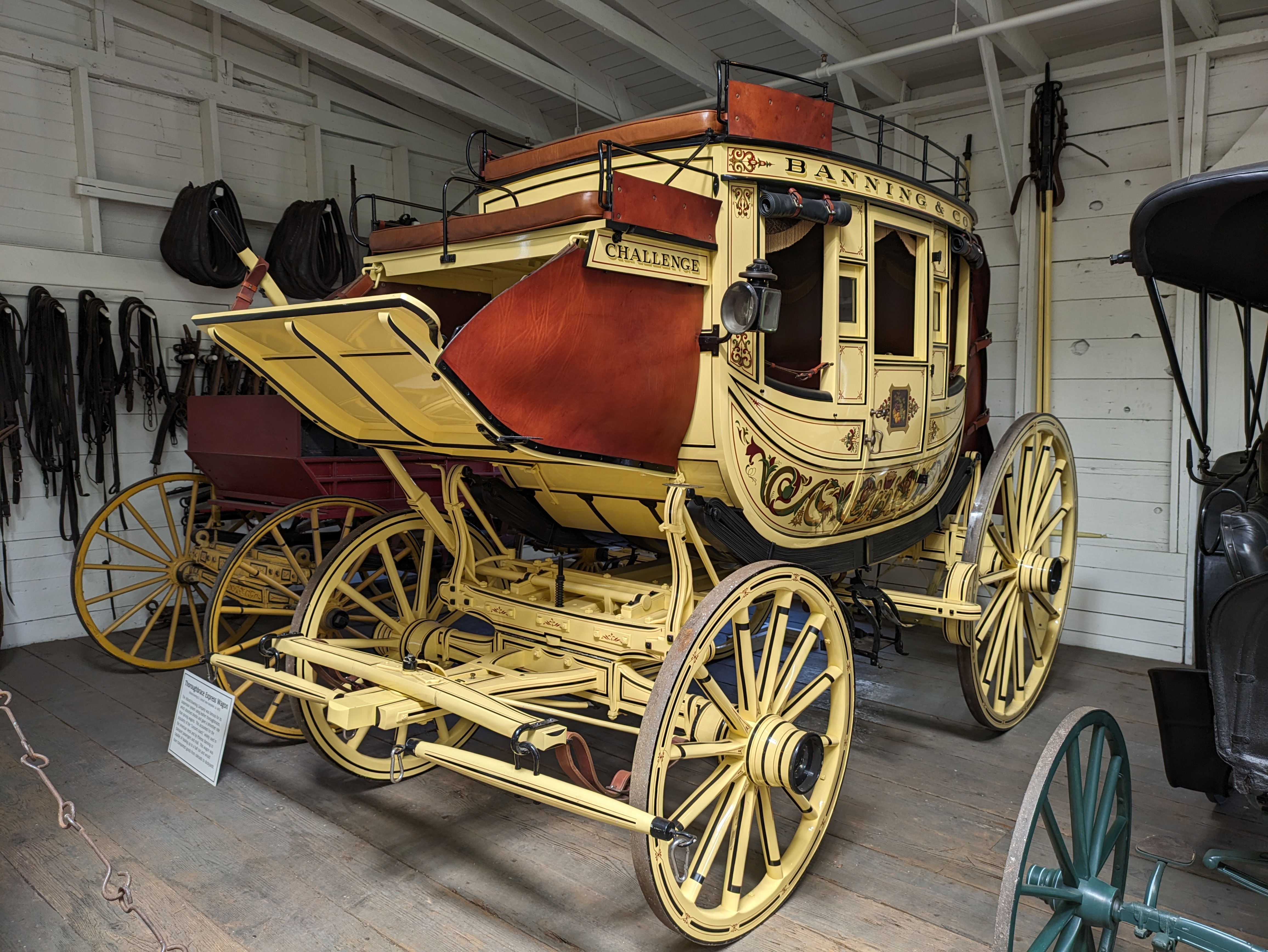
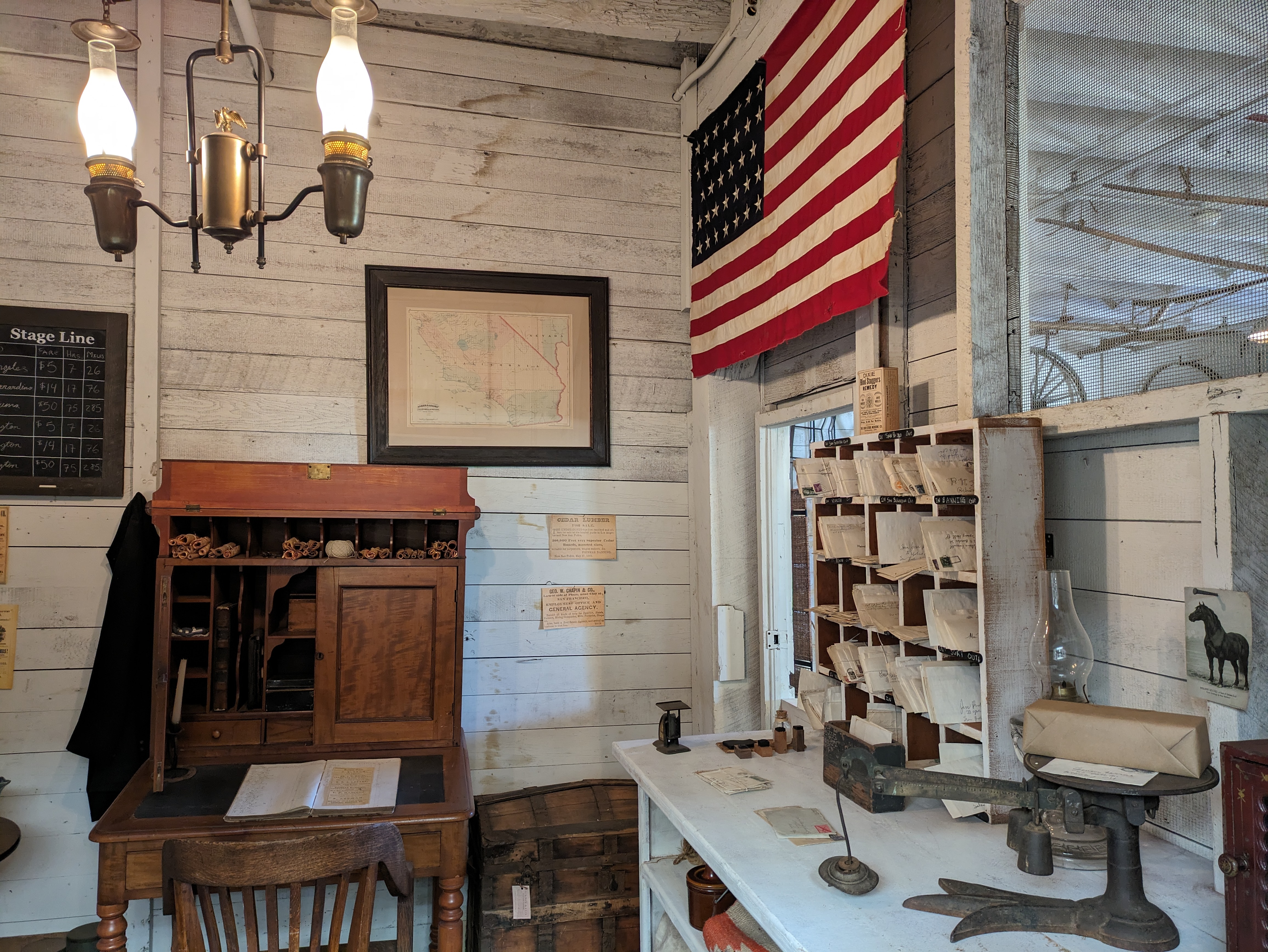
The other highlight of the guided tour is that you get to enter the stagecoach barn behind the house, which contains several authentic stagecoaches and early automobiles, as well as the original stables and blacksmith shop that supported Banning’s stagecoach enterprise. The blacksmith shop and an office are elaborately decorated with objects of the period, to capture what they would have looked like when they were in use.
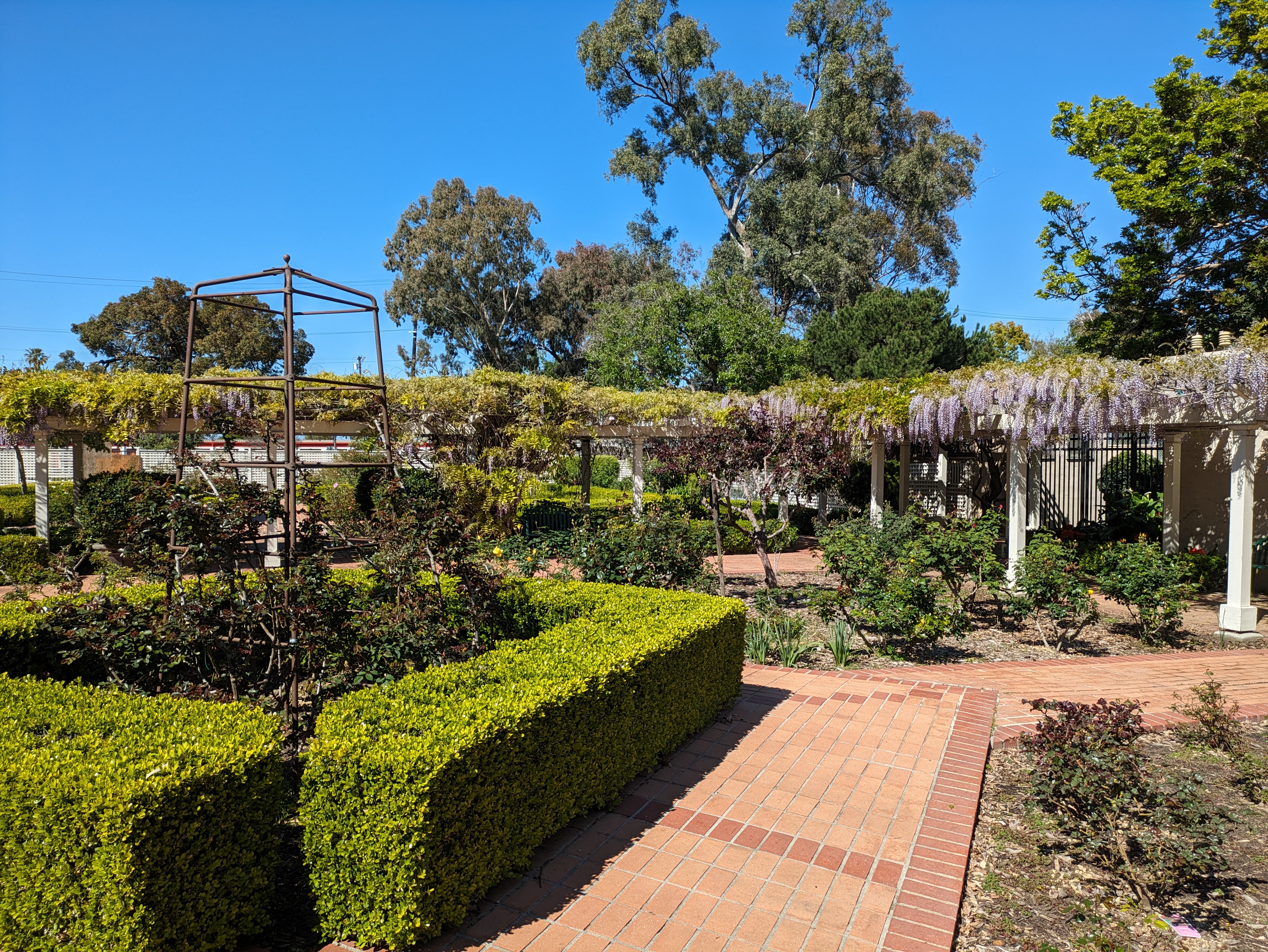
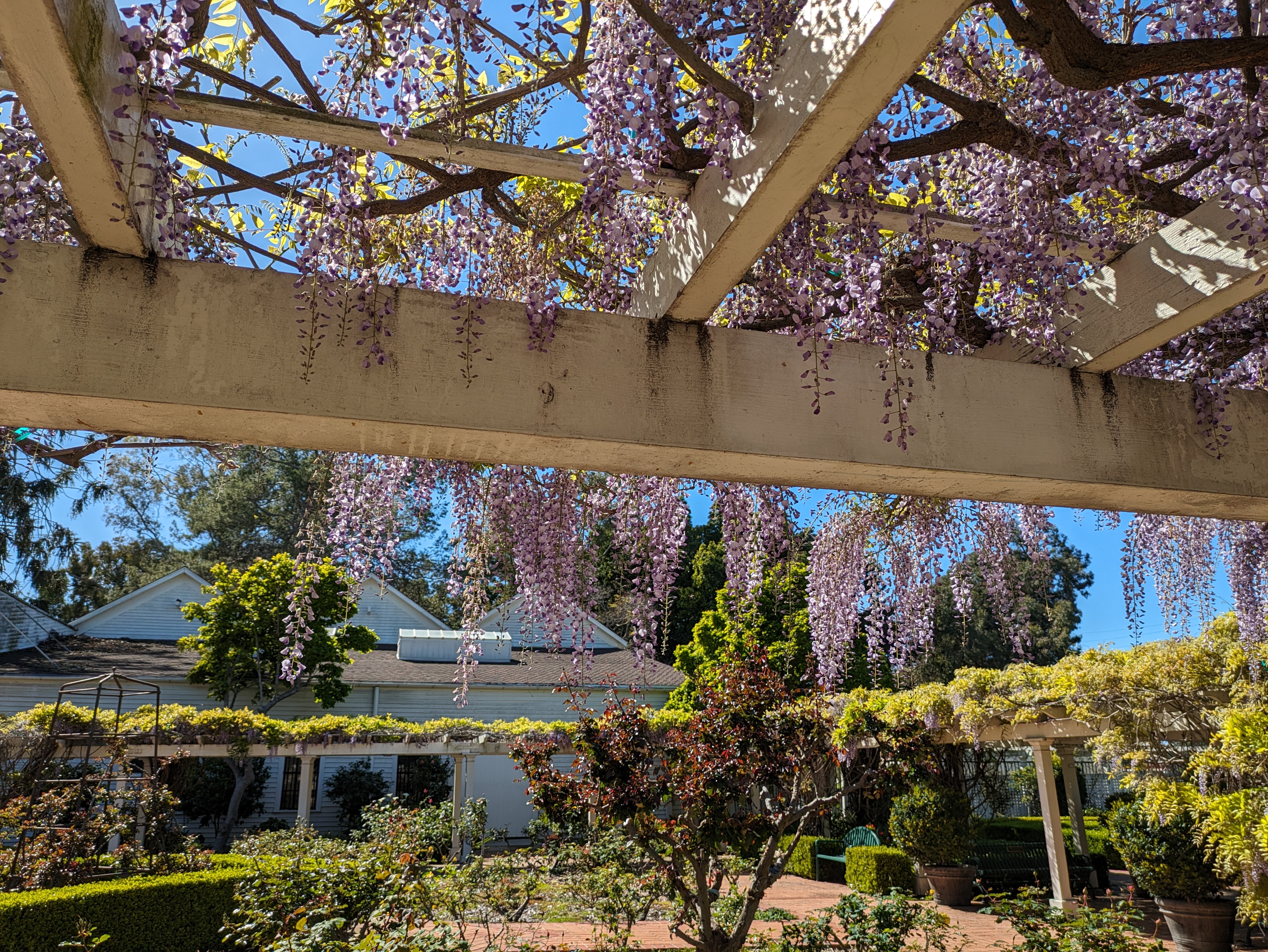
There’s also a lovely garden on the grounds, lush with roses and flowering wisteria in season. Entrance to the grounds is free, with a $5 donation requested for tours (cash or check only). Tours are offered Tuesday-Thursday, Saturday, and Sunday at 12:30, 1:30, and 2:30, with an extra tour at 3:30 on Saturdays and Sundays. The museum is closed Mondays and Fridays.
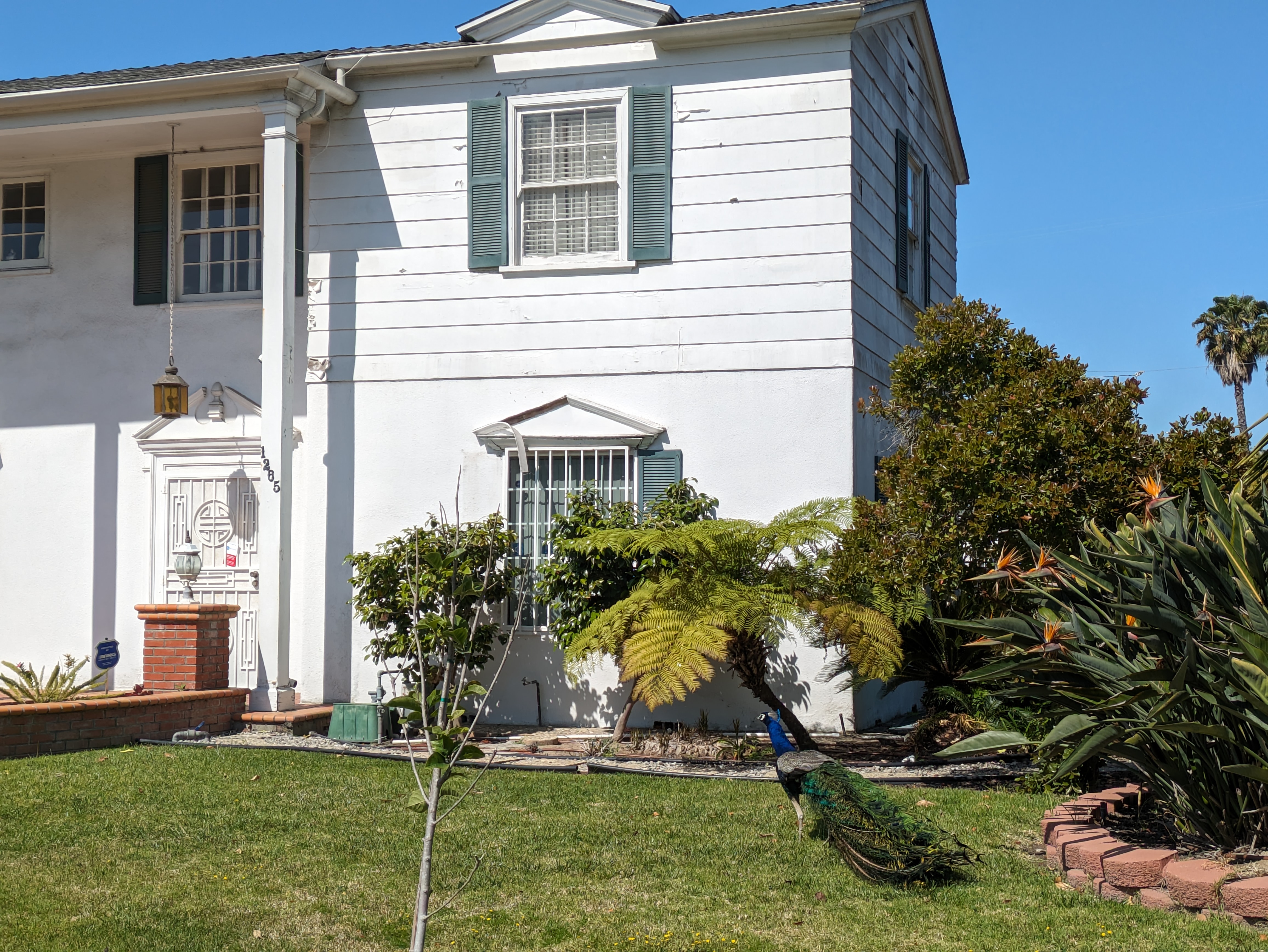
Stepping across M Street from Banning Park, you’ll enter Wilmington’s most pleasant neighborhood. Banning Blvd, which heads directly south from the museum towards the harbor, is lined with stately old houses, with a pair of colonial-style houses directly across from the park that beautifully complement the Banning House.
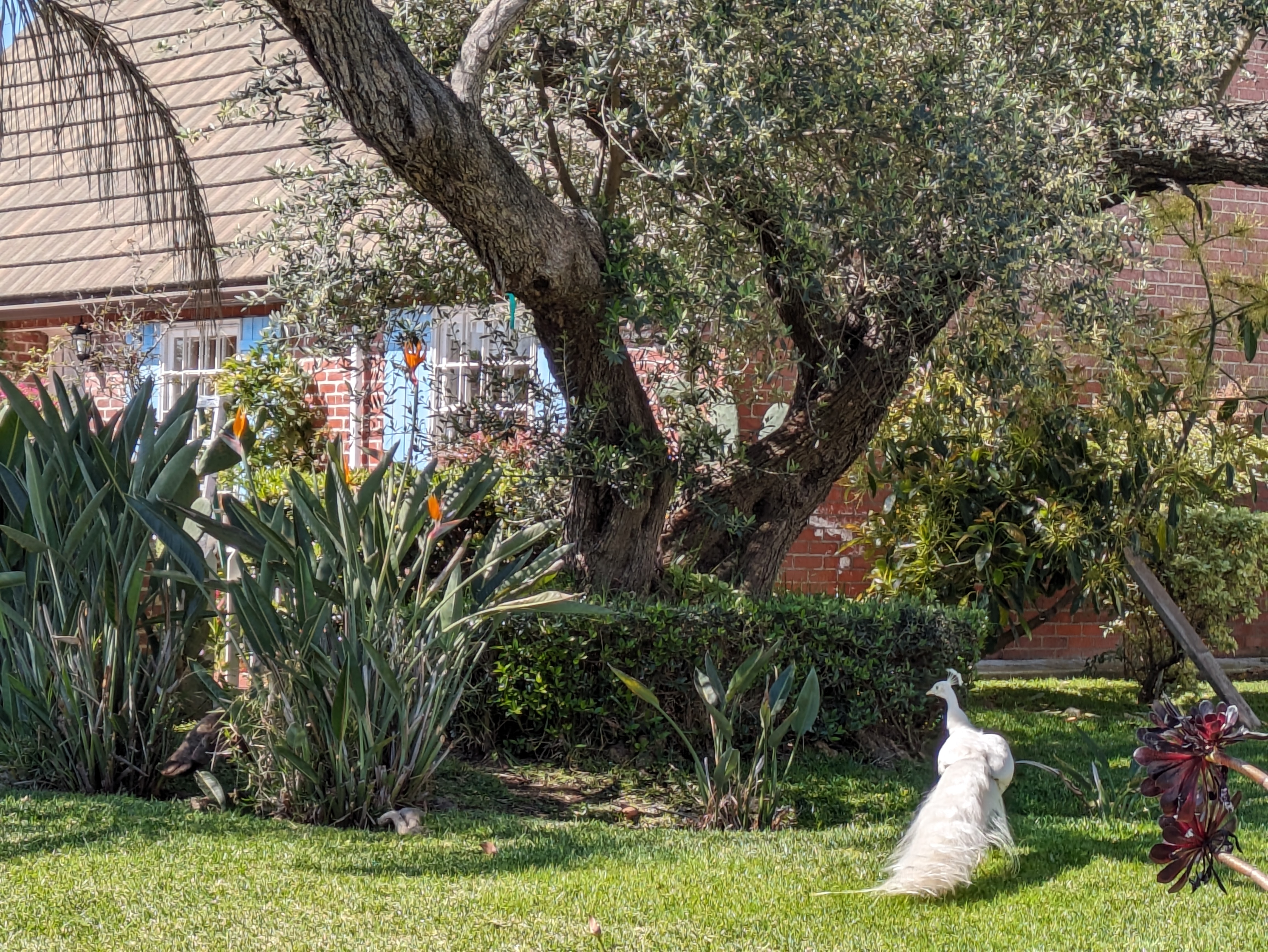
This block of Banning Blvd is also locally famous for its large flock of peacocks, which have taken up residence among the well-tended gardens and whose distinctive cries can easily be heard from blocks away. You’ll often find them strutting down the street, sometimes in the sidewalk and sometimes just in the middle of the road. Among the flock is an albino peacock, which always delights people when they spot it.
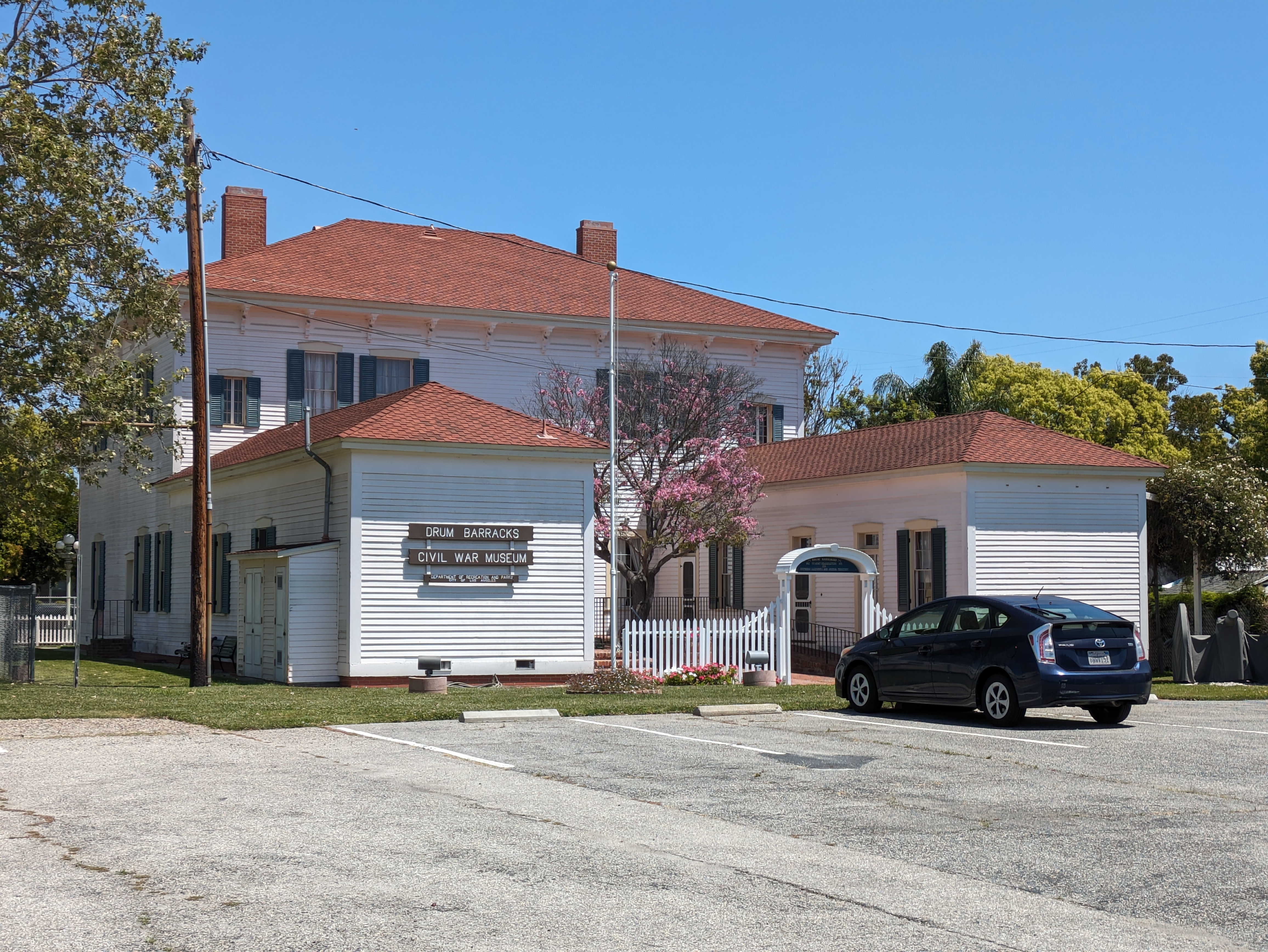
A couple blocks south on Banning Blvd is Wilmington’s other significant historic landmark: the Drum Barracks Civil War Museum. This small building is the last remaining wooden structure from a Civil War-era U.S. Army post that served as the Union Army headquarters for Southern California, and now houses the only museum in Los Angeles devoted to the American Civil War.
Phineas Banning is significant to this site as well. At the outbreak of the Civil War, Southern California had strong Confederate sympathies, owing to the large number of transplants from the South. Banning, a native of Delaware and a loyal Unionist, sold a large chunk of land in Wilmington to the Union Army at a discount. This was both a shrewd business move for Banning and allowed the Union to keep a secure presence over the Los Angeles Harbor. From here, a column of California Unionists marched into Arizona, stopping a Confederate advance there and crushing any Southern hopes of seizing the west to circumvent the Union’s naval blockade of the South.
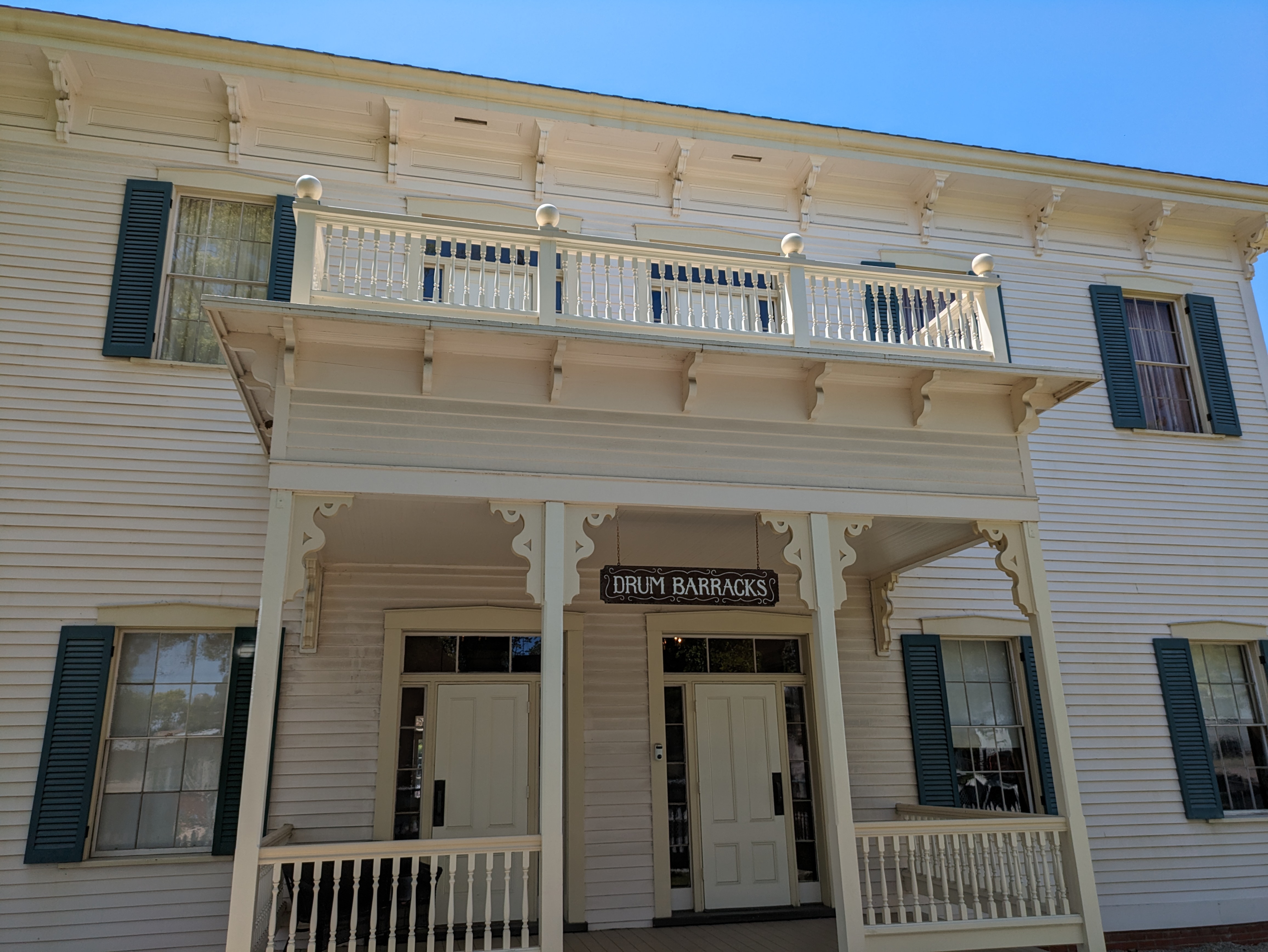
Like the Banning House, the Drum Barracks is only open by guided tour. Certain rooms are adorned with period furniture, and there are plenty of exhibits covering life in the army, the history of the barracks, and California’s role in the Civil War, with some interesting artifacts like an authentic flag from a Civil War battlefield and an 1870s Gatling gun. Tours are offered Tuesday, Wednesday, Thursday, and Saturday at 10:30am and 12:30pm. A donation of $5 is requested. And if the museum is closed, there’s also a playground across the street from the museum that has a few displays about the history of the barracks aimed at children.
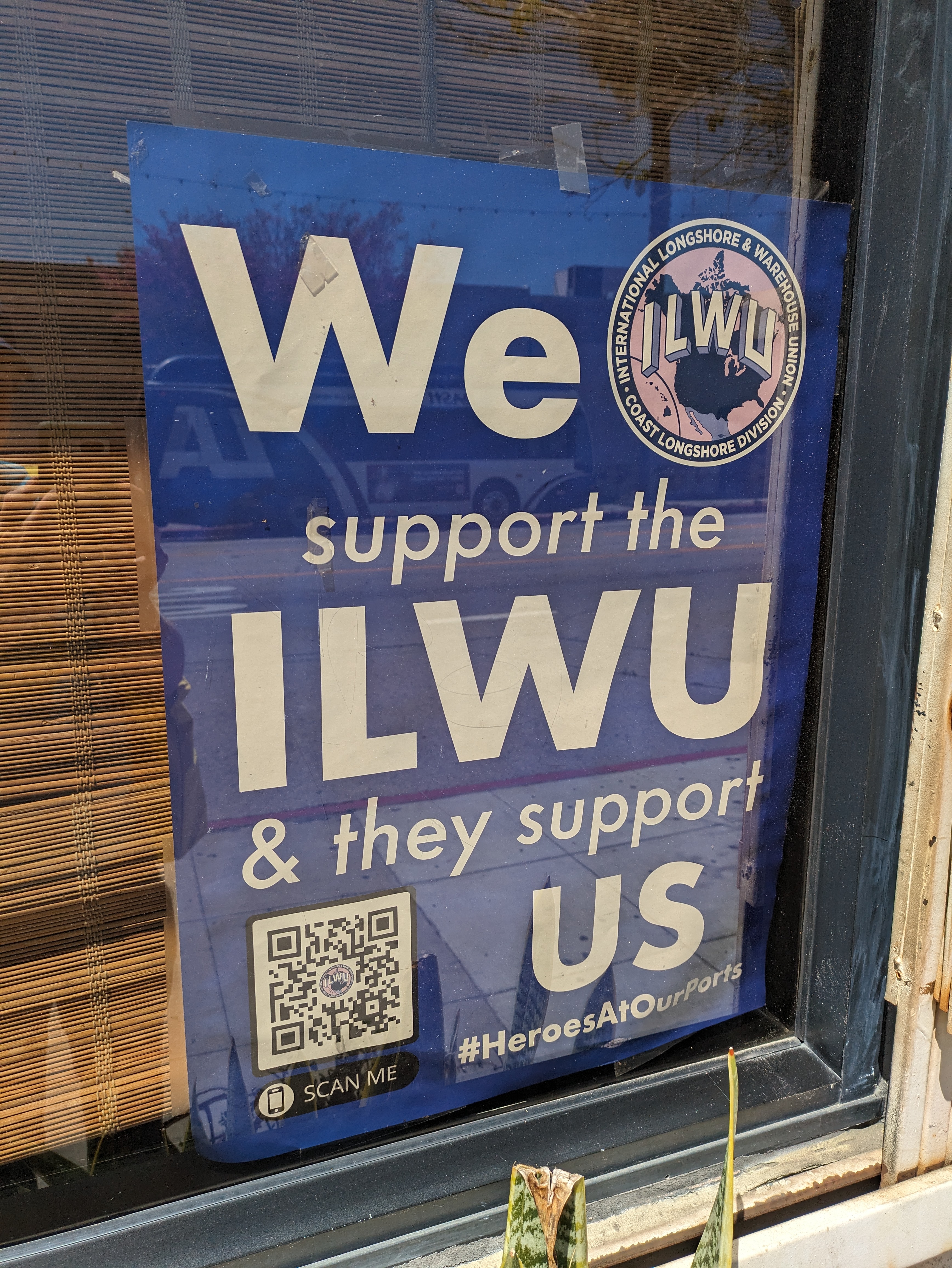
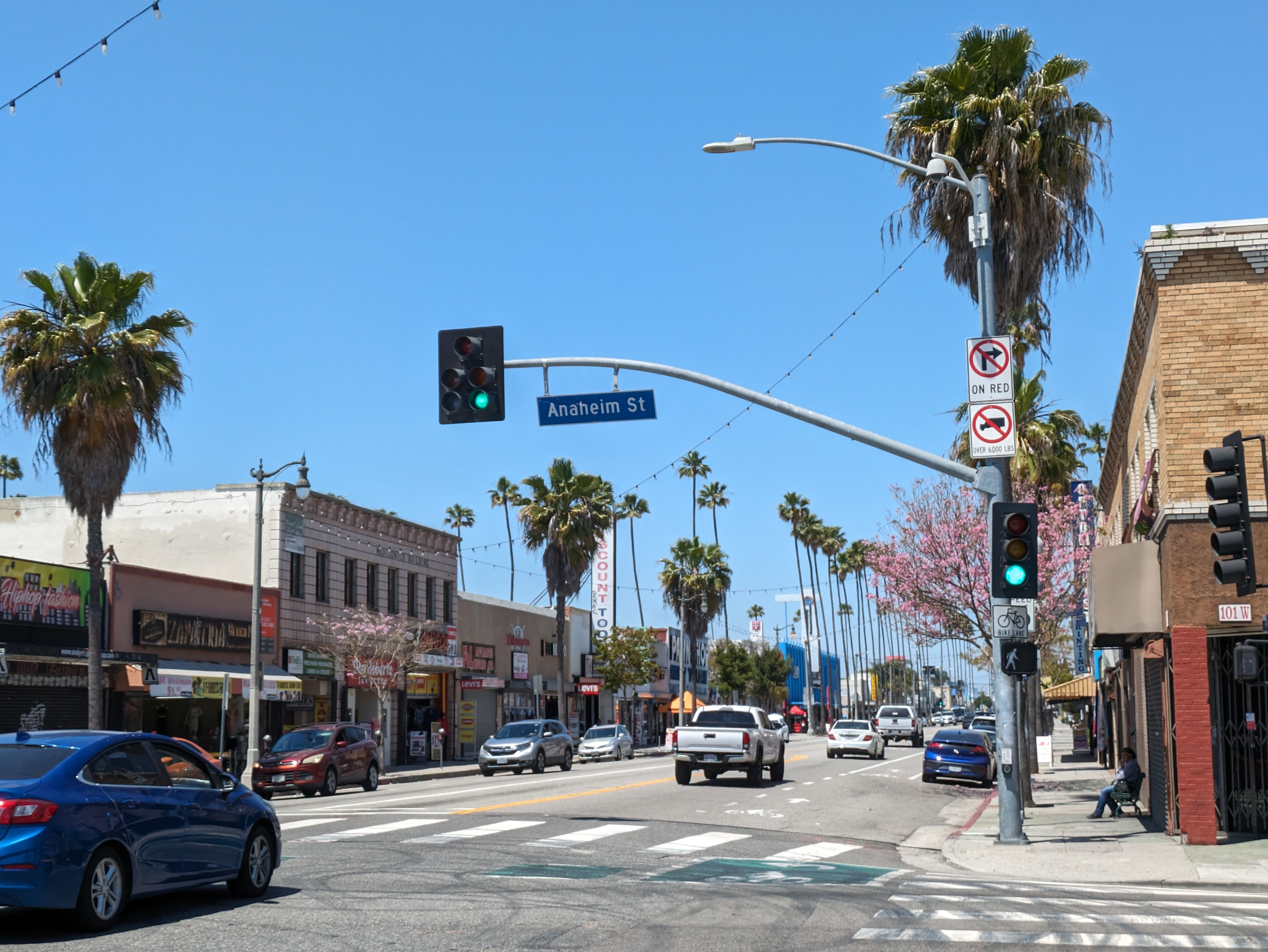
Moving west a few blocks will bring you to palm tree-lined Avalon Boulevard, the main commercial street through the heart of Wilmington, with the center of activity around the intersection of Avalon and Anaheim Street. Even here, things can be pretty sleepy, with a lot of small businesses closed on the weekends.
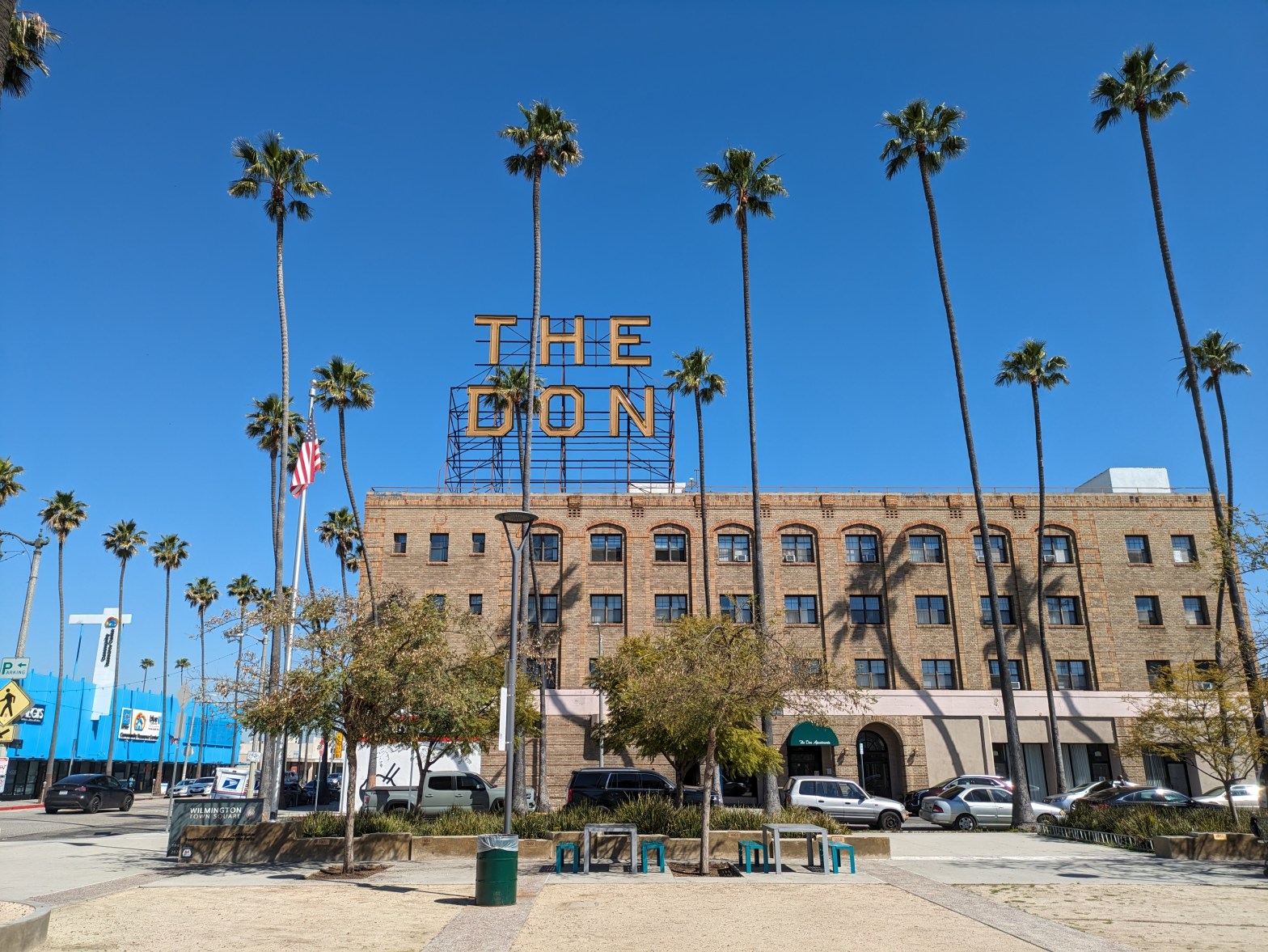
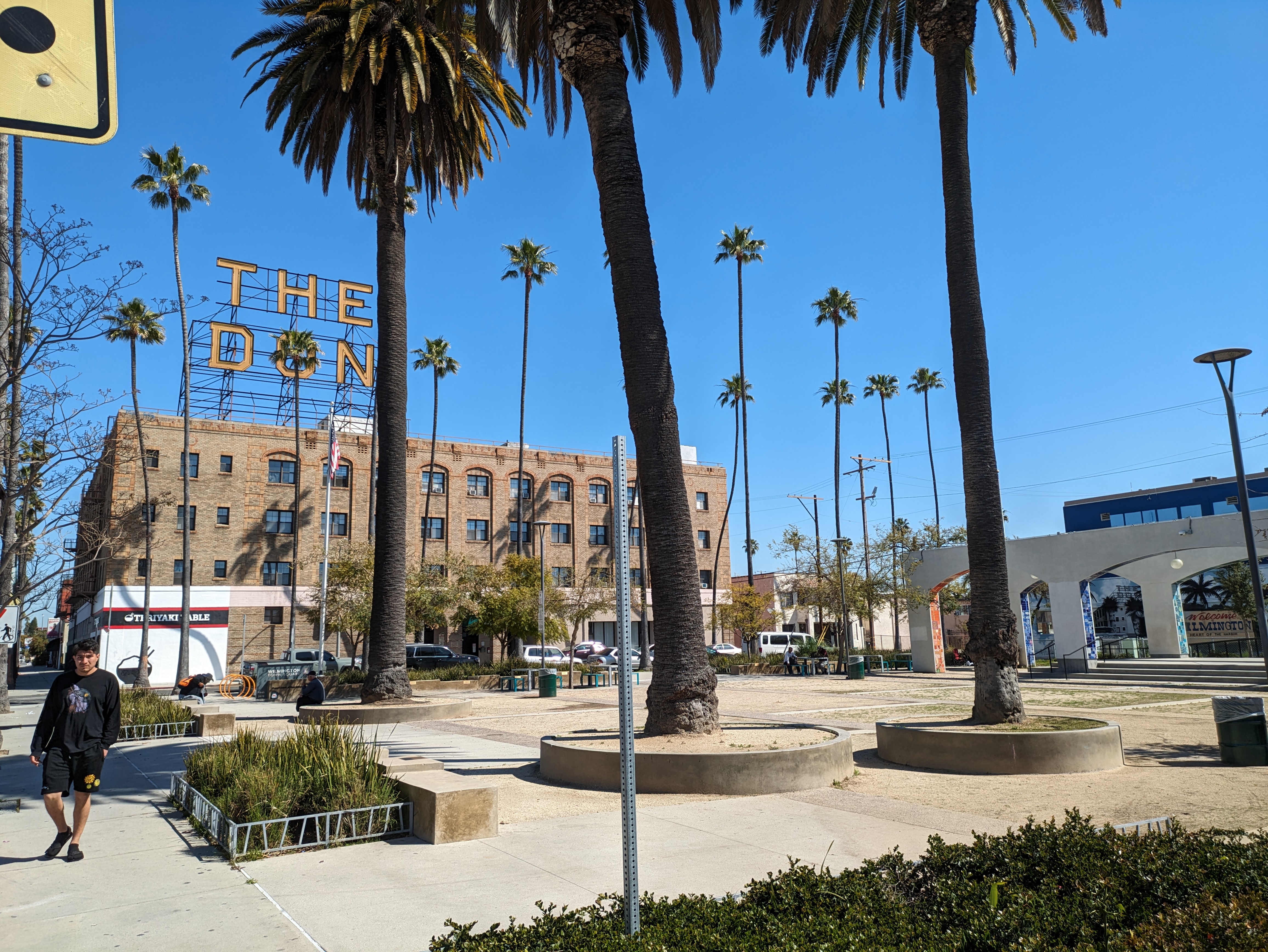
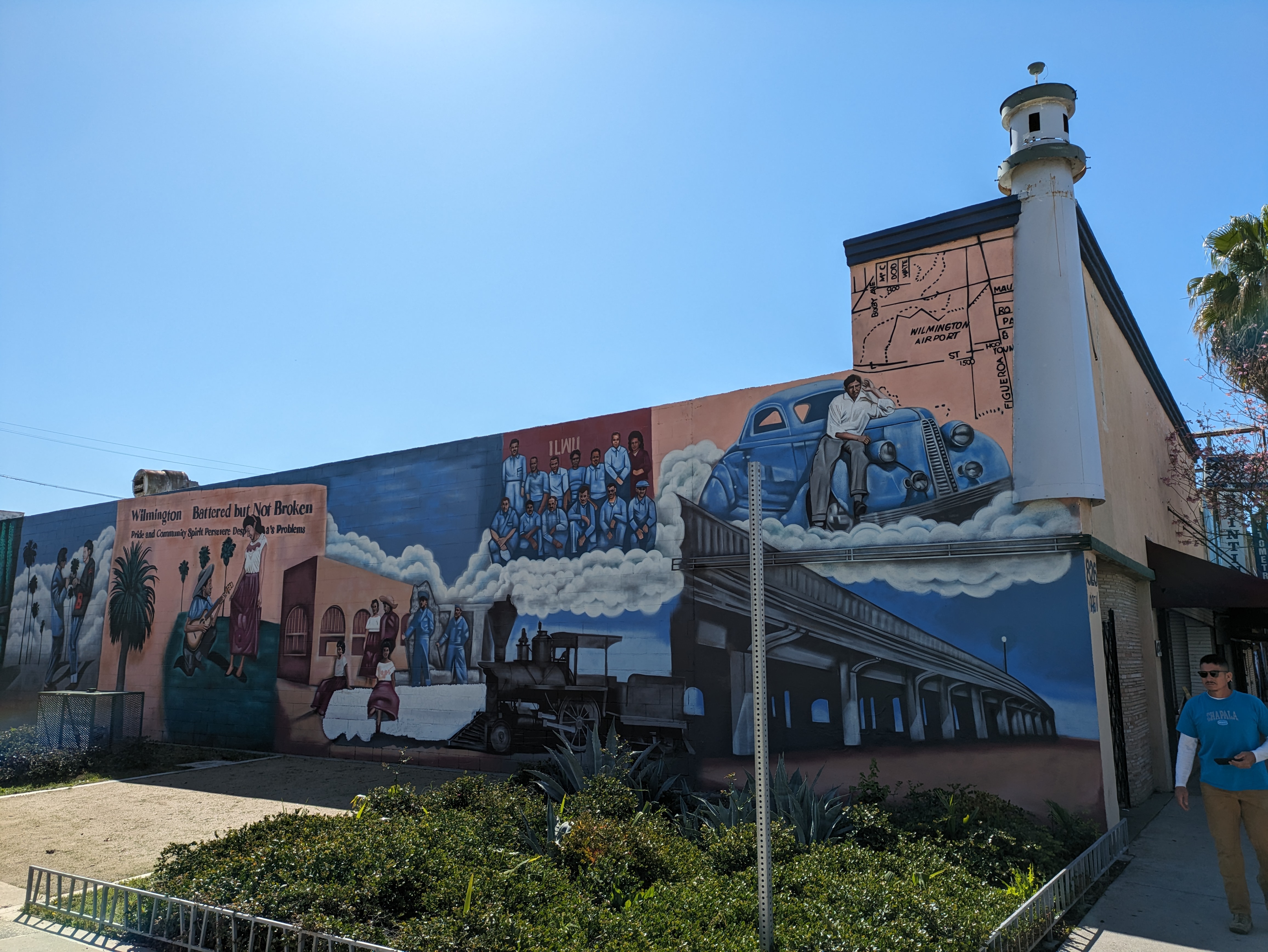
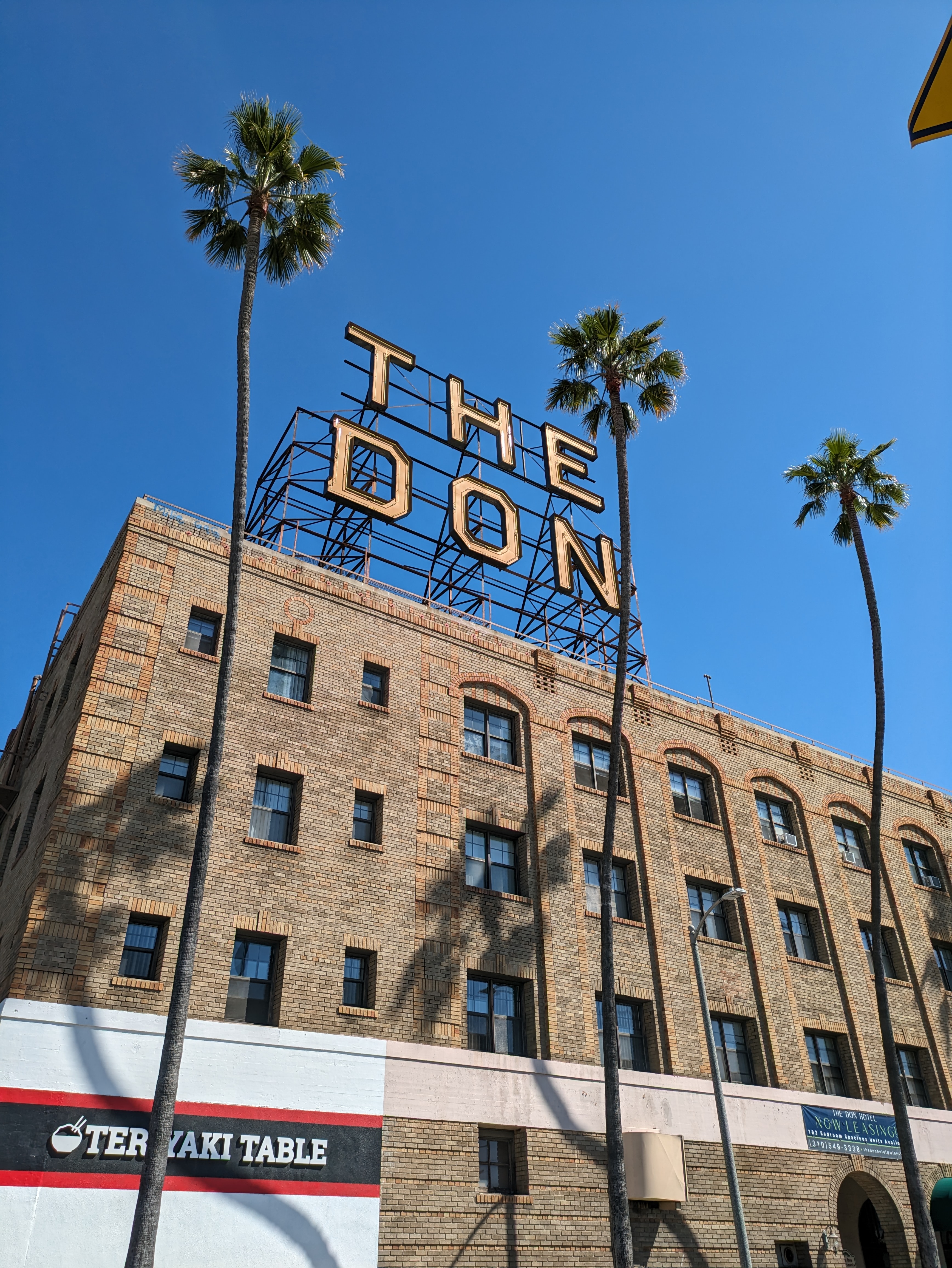
But there are a handful of historic buildings worth admiring, the most obvious being The Don, a grand hotel built in the 1920s that has been renovated into a senior housing complex. It lives on as a beloved local landmark, namely for its massive rooftop sign that’s almost as tall as the building itself. The best view of the sign is from Wilmington Town Square across the street, a small public square lined with murals and historic markers celebrating the history of the neighborhood.
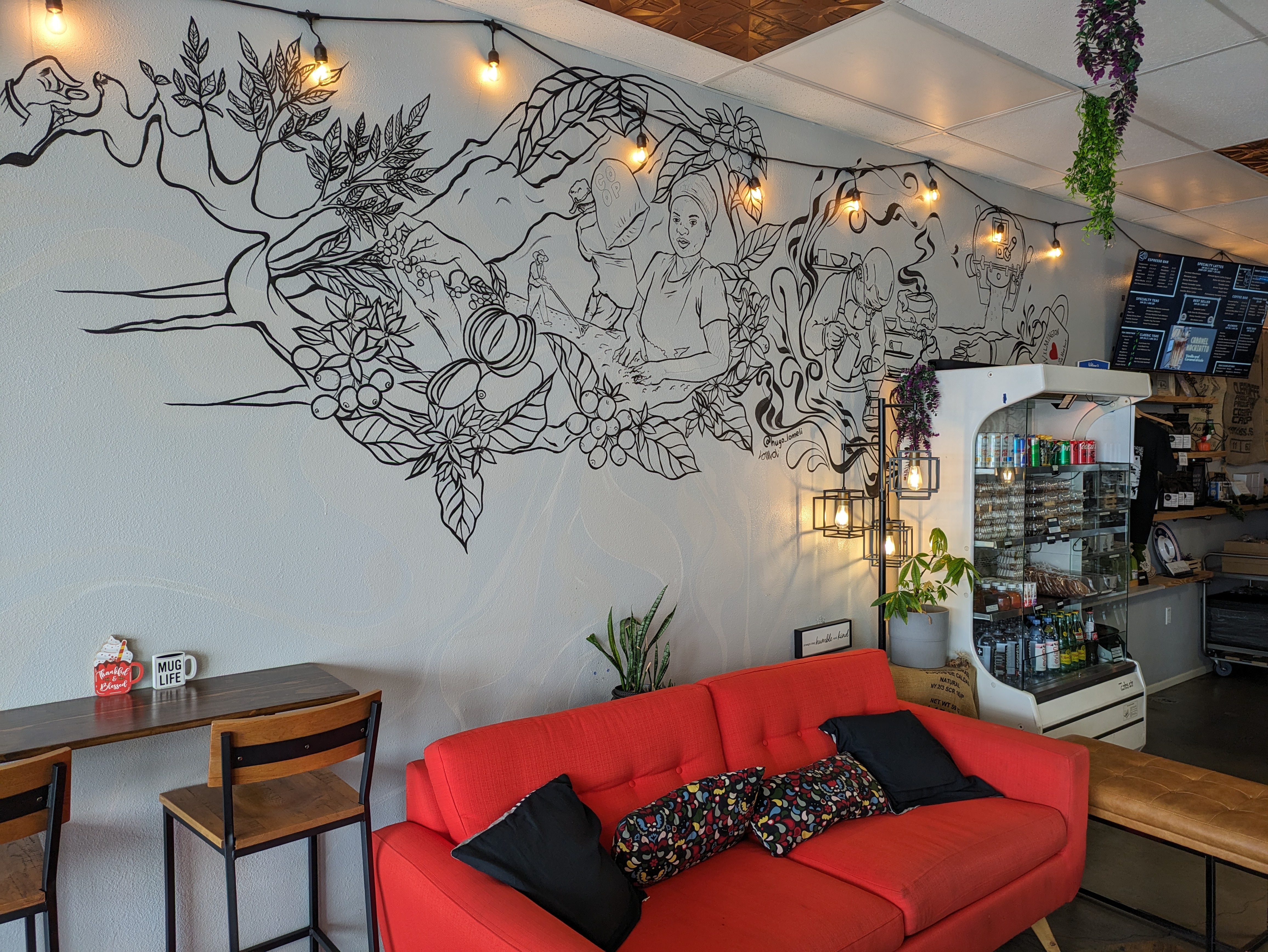
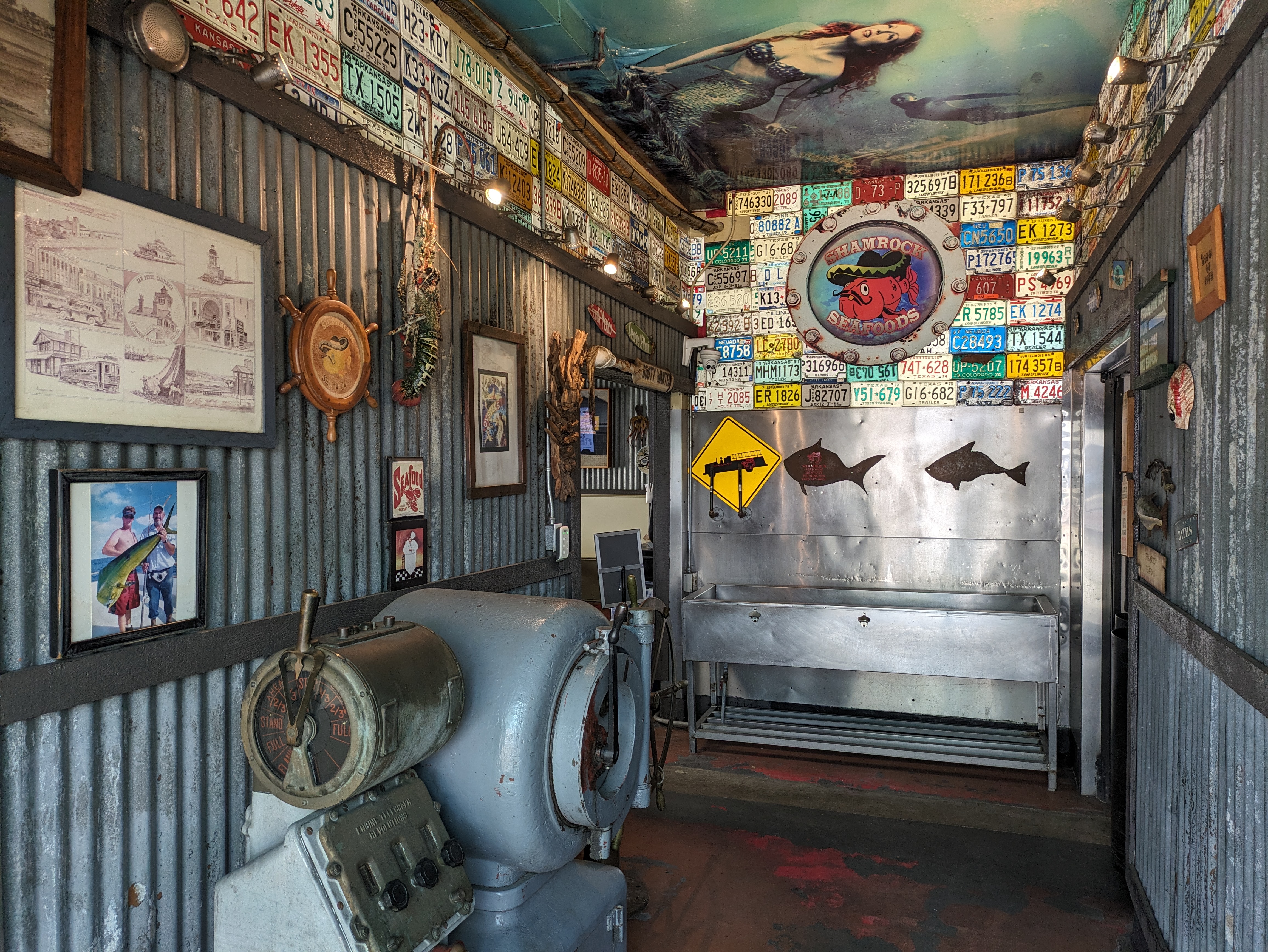
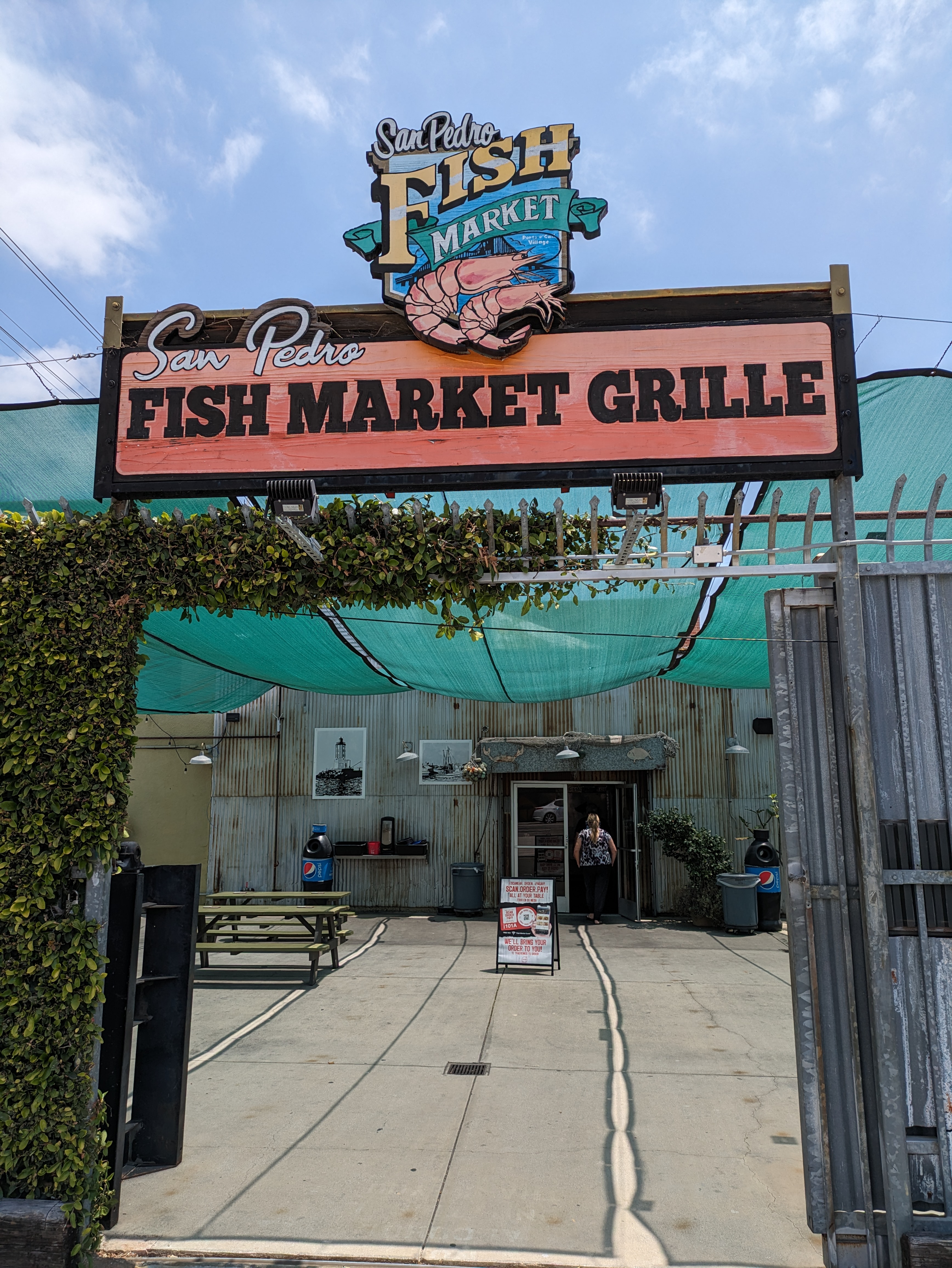
Just off Avalon and Anaheim, there’s a couple notable local eateries. One is Ambrosia Coffee, just a couple blocks west on Anaheim, which has a really nice space and makes excellent lattes. The other is a satellite location of the San Pedro Fish Market, around the corner at G Street and Marine, which is widely loved for its fresh and fried seafood, shrimp trays, and seafood tacos and burritos.
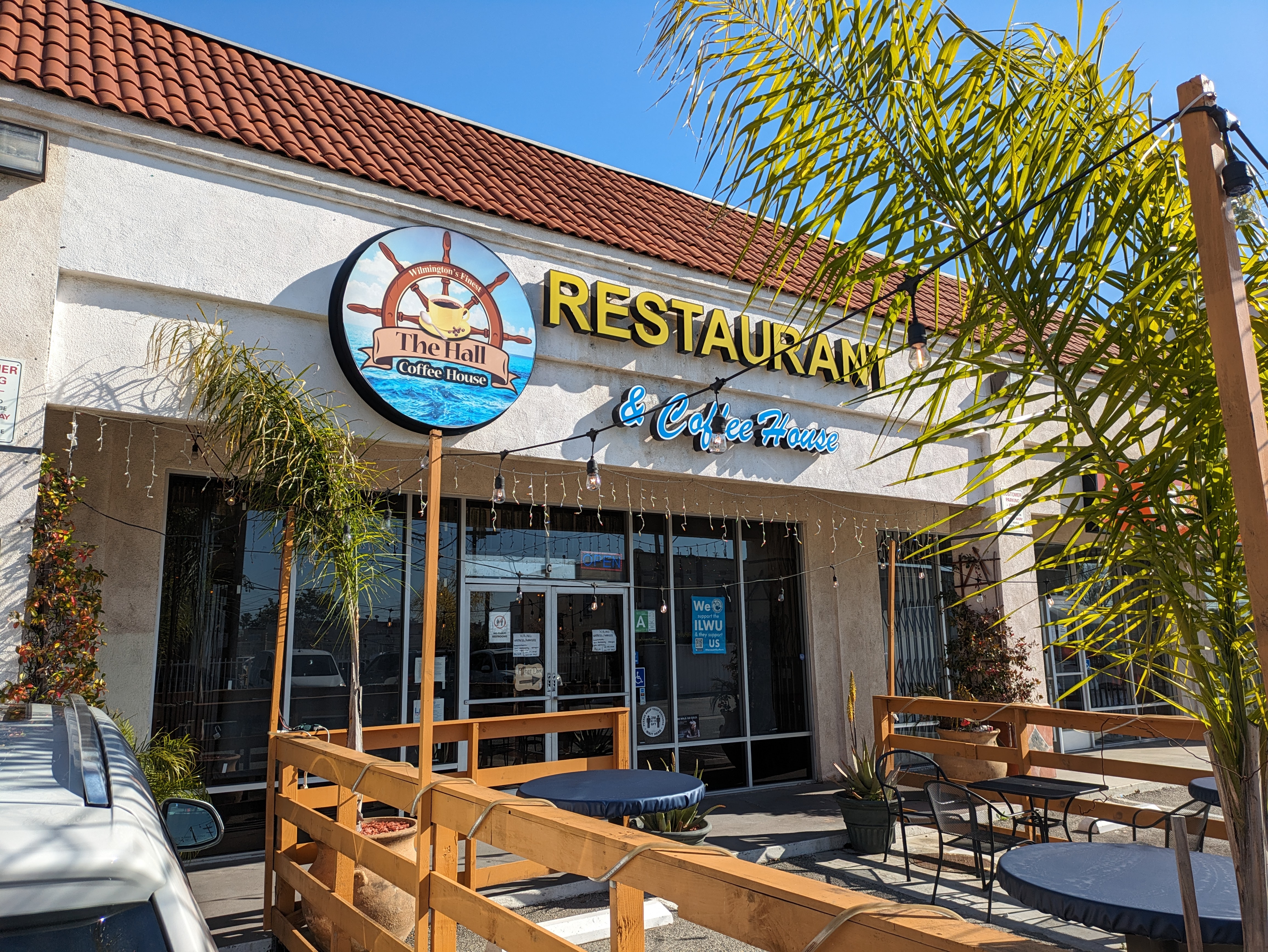
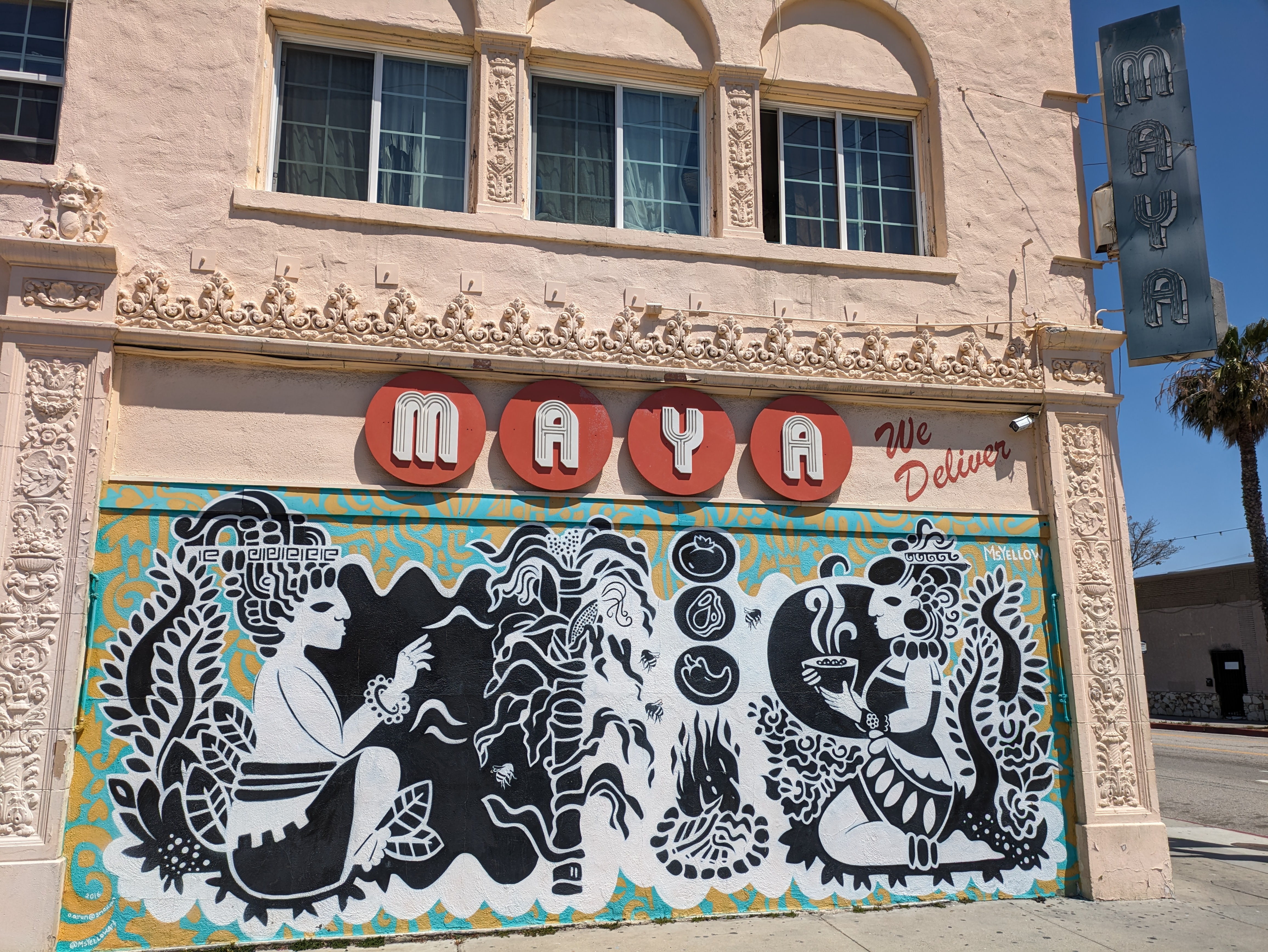
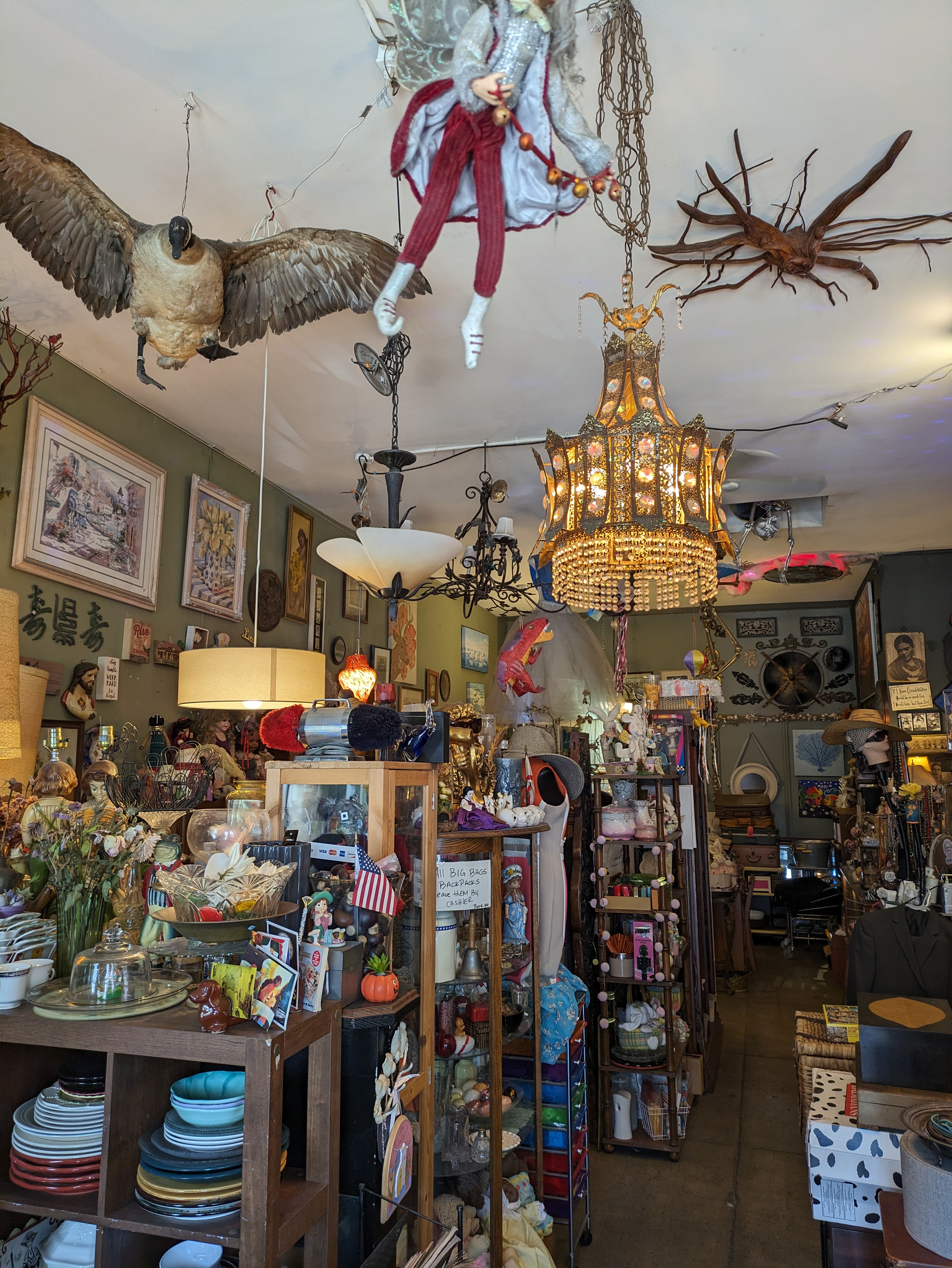
Things get really quiet (if not a bit desolate) south of Anaheim Street, as the residential areas behind the commercial buildings give way to a mostly industrial section of town. But here too are a few local gems. At the corner of F Street is The Hall Coffee House, which has good coffee and exceptional breakfast burritos and sandwiches. Another couple blocks further south, at the corner of D Street, is the eye-catching Maya Mexican Restaurant, which will immediately grab your attention with its gorgeous mural and signage and offers delicious Mexican food. And then there’s Home + Treasures at 311 Avalon Blvd, a lovely antique store packed to the gills with interesting treasures.
Something else that you start to notice walking down Avalon Boulevard is how often you come across the letters ILWU. The International Longshore and Warehouse Union represents dock workers up and down the West Coast and is noted for its willingness to flex its muscle, empowered by its control over a crucial chokepoint in the system of global trade. You’ll see the presence of ILWU everywhere in Wilmington: union halls, memorials, a branch of the organization’s own credit union, and tributes to ILWU founder Harry Bridges. But you’ll also find displays of support for the union from locals, such as flyers in the windows of local businesses, bumper stickers, and print shops showing off union membership cards. The loyalty to the ILWU here is real and it is deep.
As you near the harbor, the blocks increasingly fill with the signs of industry: warehouses, machine shops, junk yards, and collections of shipping containers. However, in the midst of this industrial landscape, there are two surprising finds: a pair of newly constructed parks, both of which are exceptionally well-designed.
The first is the Wilmington Waterfront Park, which opened in 2011 and occupies several blocks along C Street on the west side of the neighborhood. Confusingly, it’s not actually located on the waterfront, but serves as a buffer between the port zone to the south and the residential neighborhood immediately to the north.
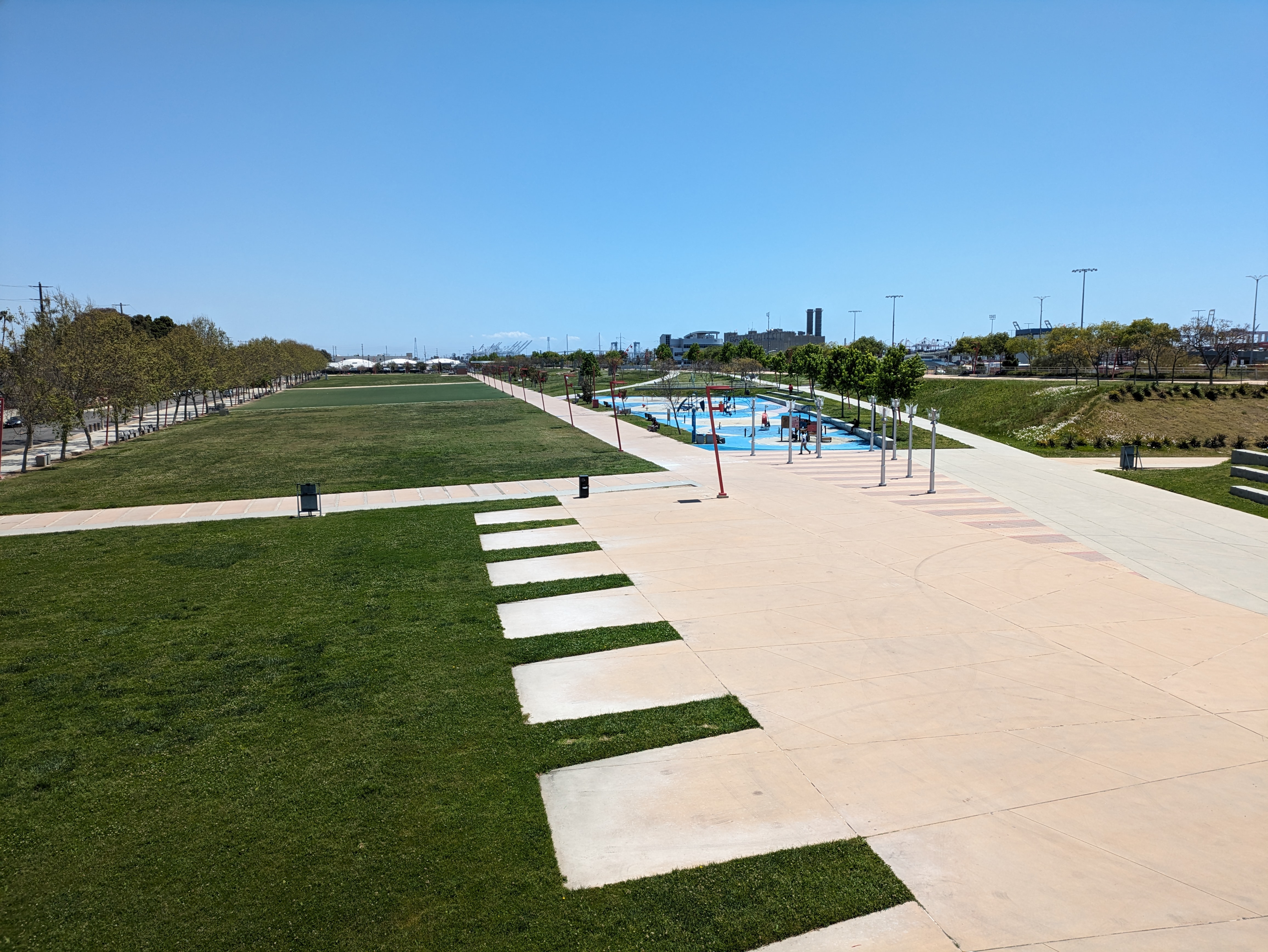
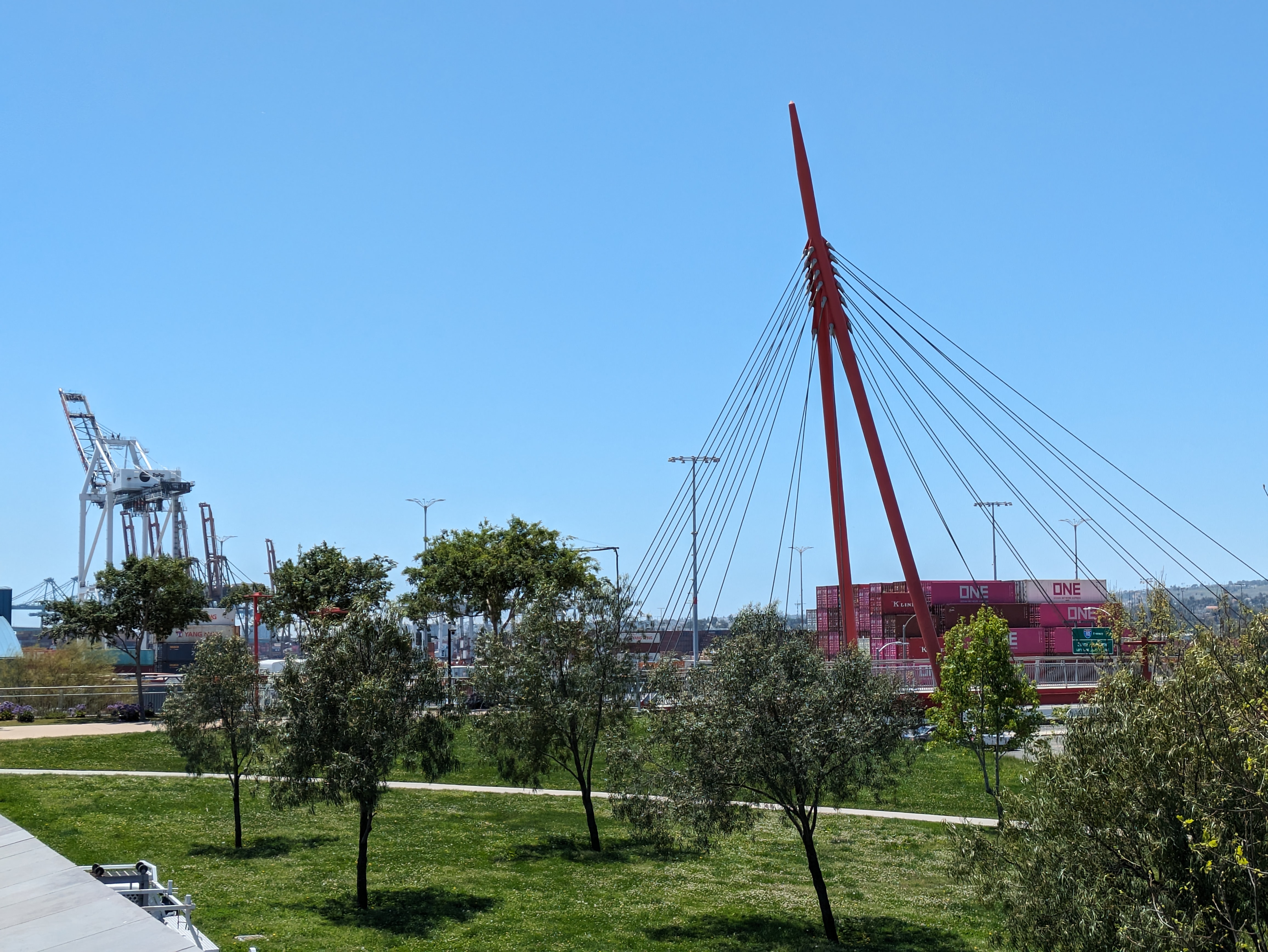
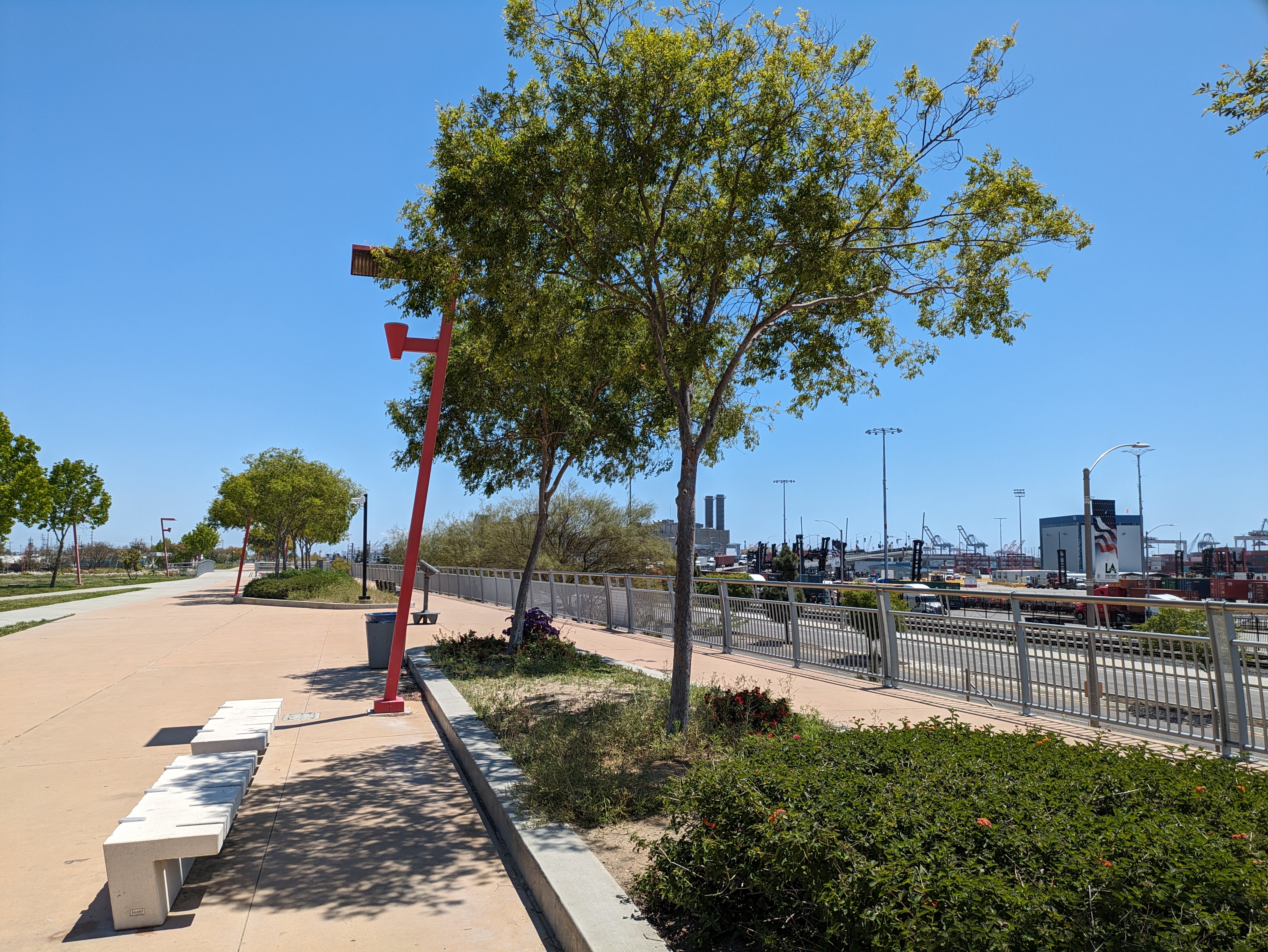
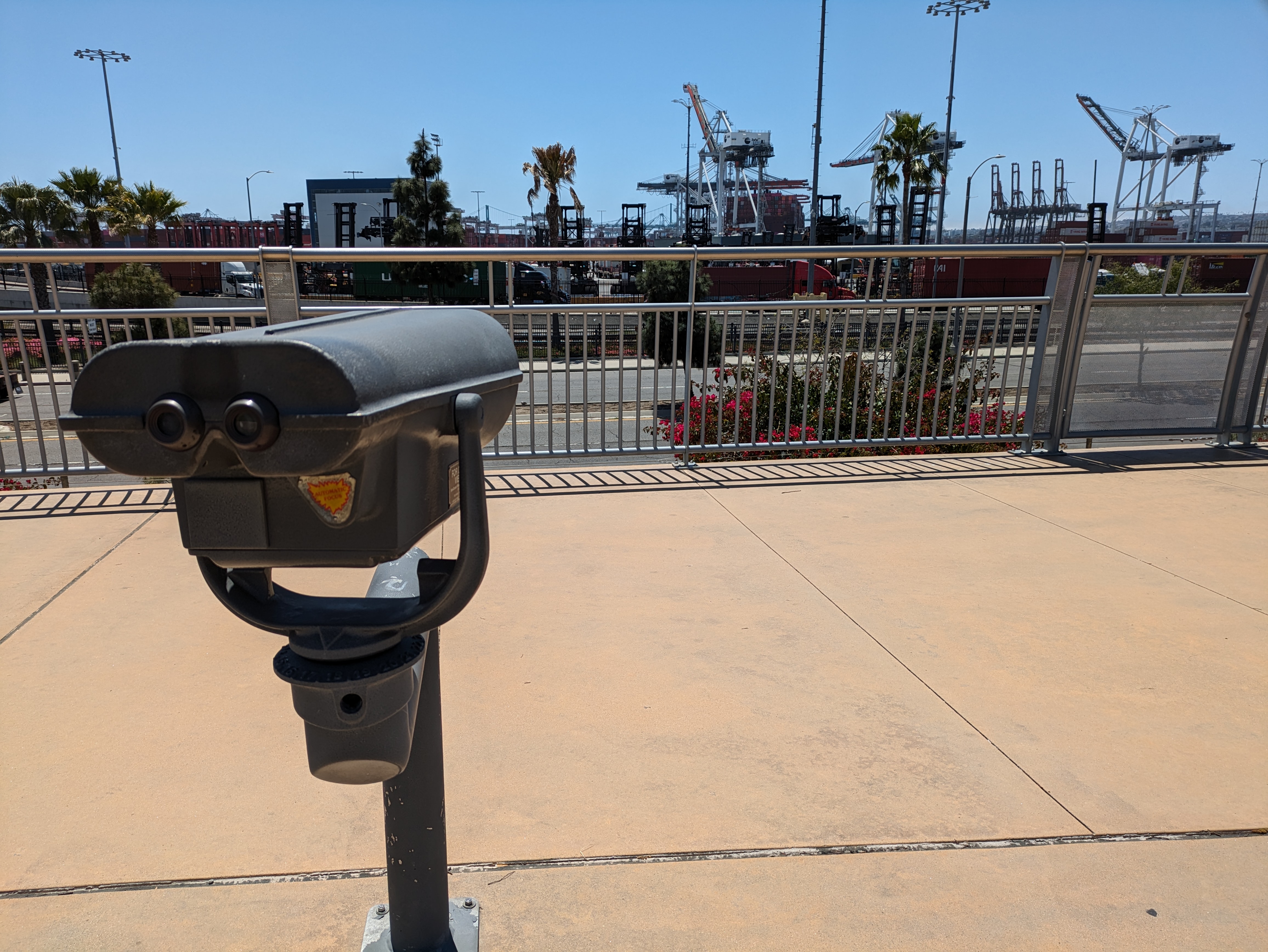
The flats of the park along C Street are filled with sports fields and a large playground, while a huge berm along Harry Bridges Blvd shields the park and the neighborhood from the sight and noise of the port. But the berm also carries a lovely pedestrian promenade on the top, which offers a great view over the harbor. A really nice touch is that the promenade has benches and binoculars that let you enjoy the view of the port, letting kids take in the bustling activity of the harbor, the constant movement of trucks and freight trains, and the colorful and ever-changing towers of shipping containers.
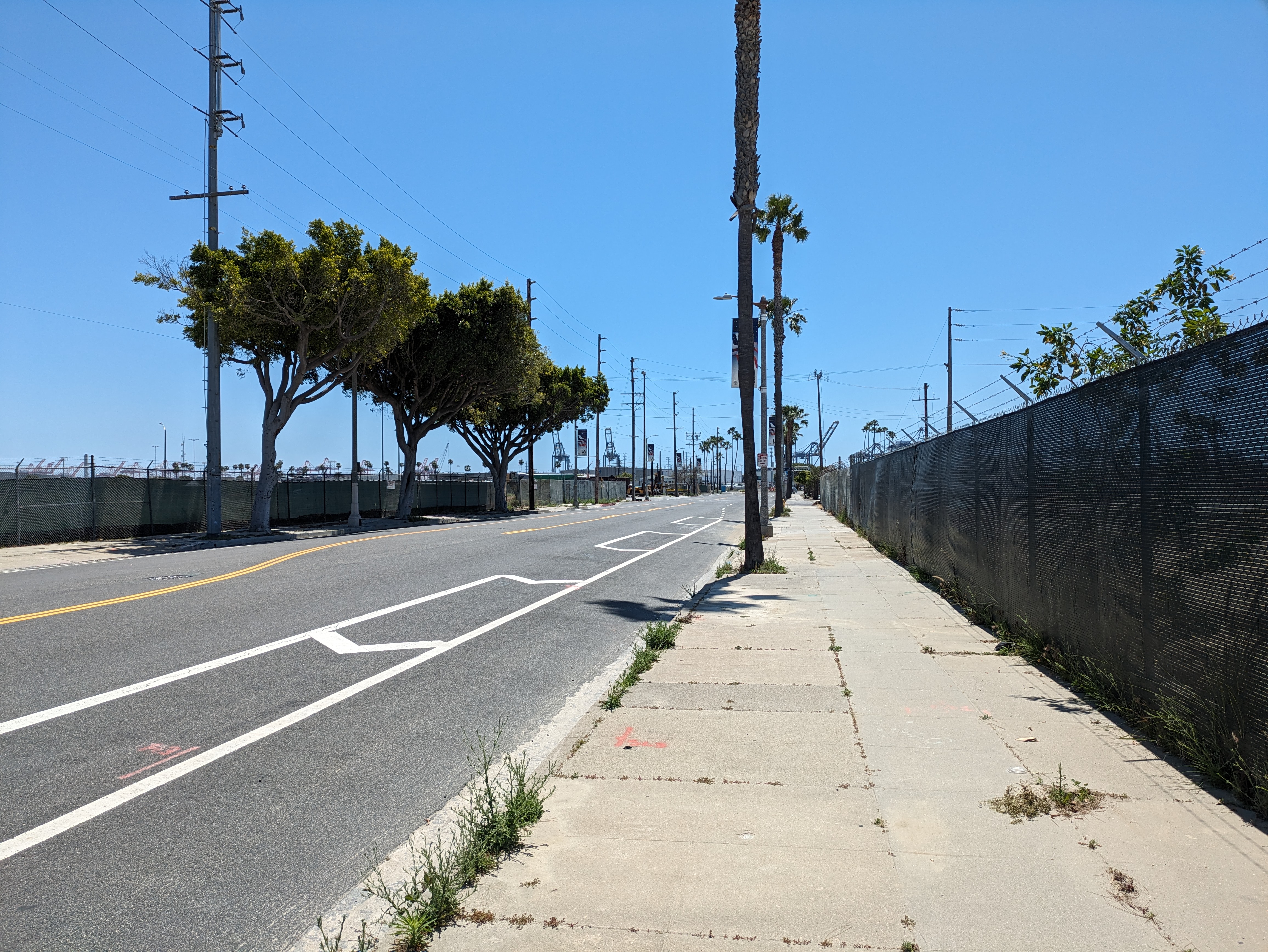
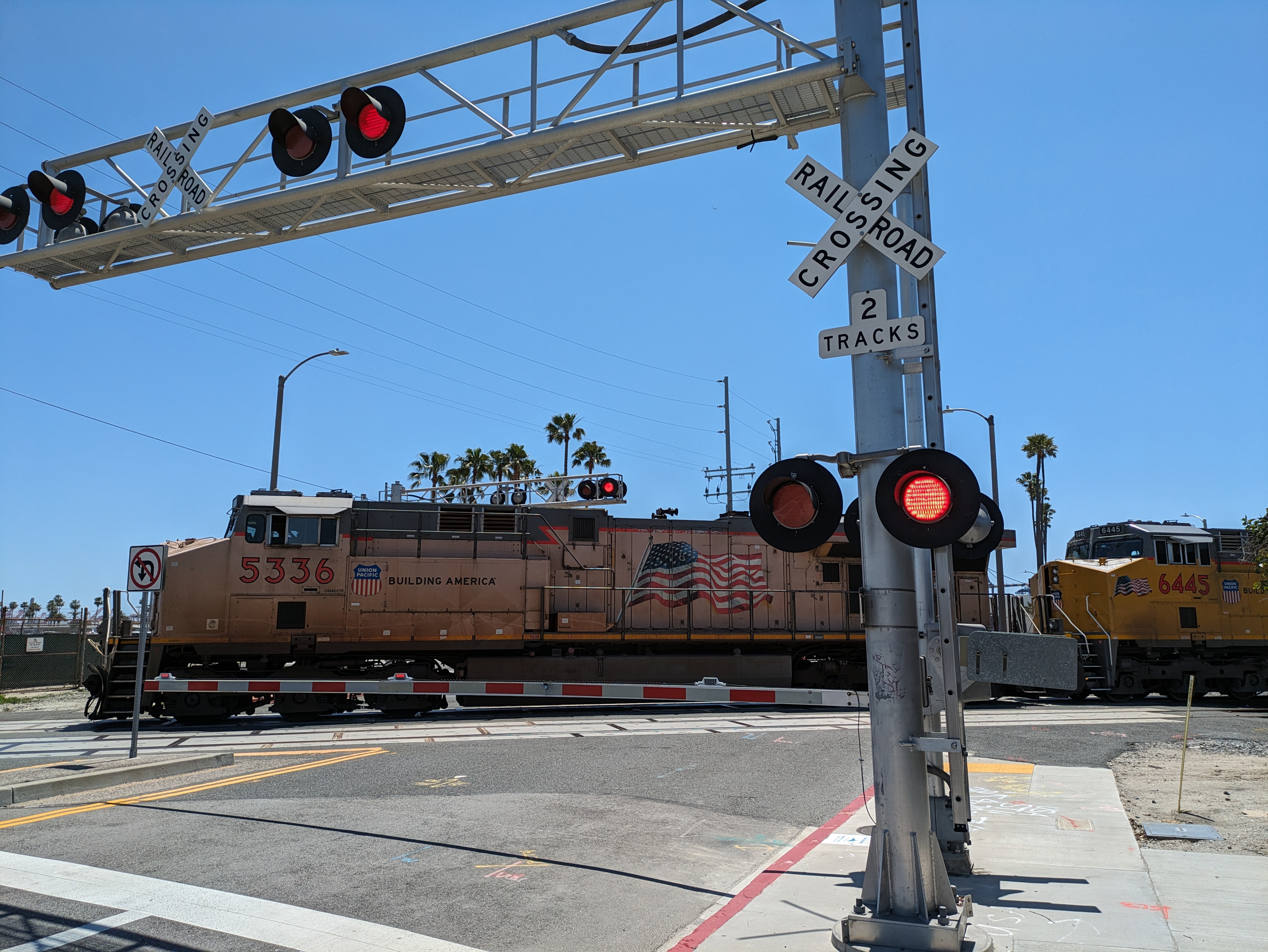
The other park is brand new, having just opened in 2024, and is genuinely excellent: the Wilmington Waterfront Promenade (again, not to be confused with the Waterfront Park), which actually is on the waterfront. The Promenade is still somewhat separated from the Wilmington neighborhood proper, situated at the foot of Avalon Blvd in the midst of the port. Walking there is possible, it just requires walking a few blocks past a series of empty lots and a heavily-used freight train crossing. There is a plan to build an expansion of the park with a pedestrian bridge to Harry Bridges Blvd, which will connect the park to Wilmington proper, but until then you just have to put up waiting for the occasional long freight train to pass.
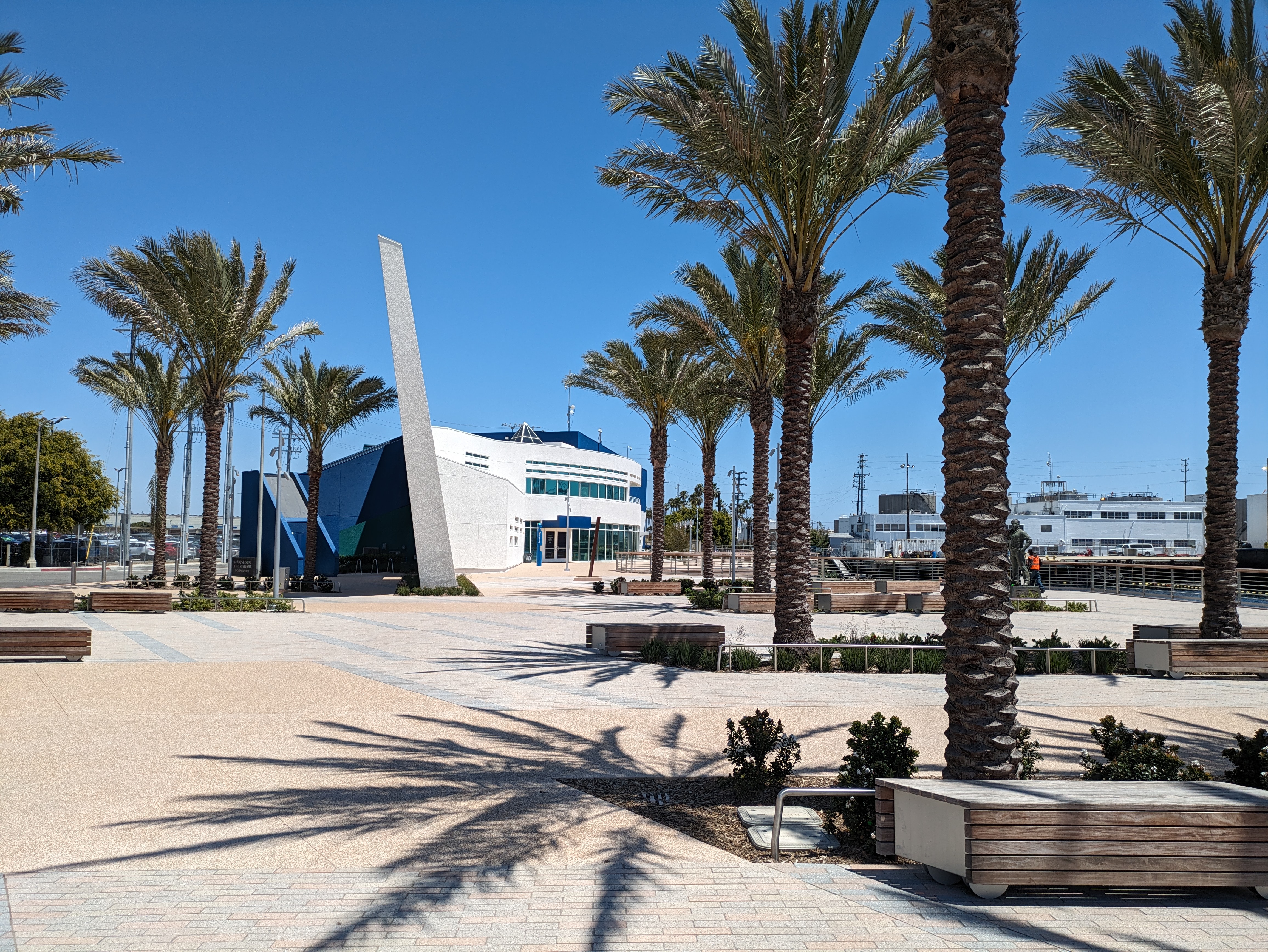
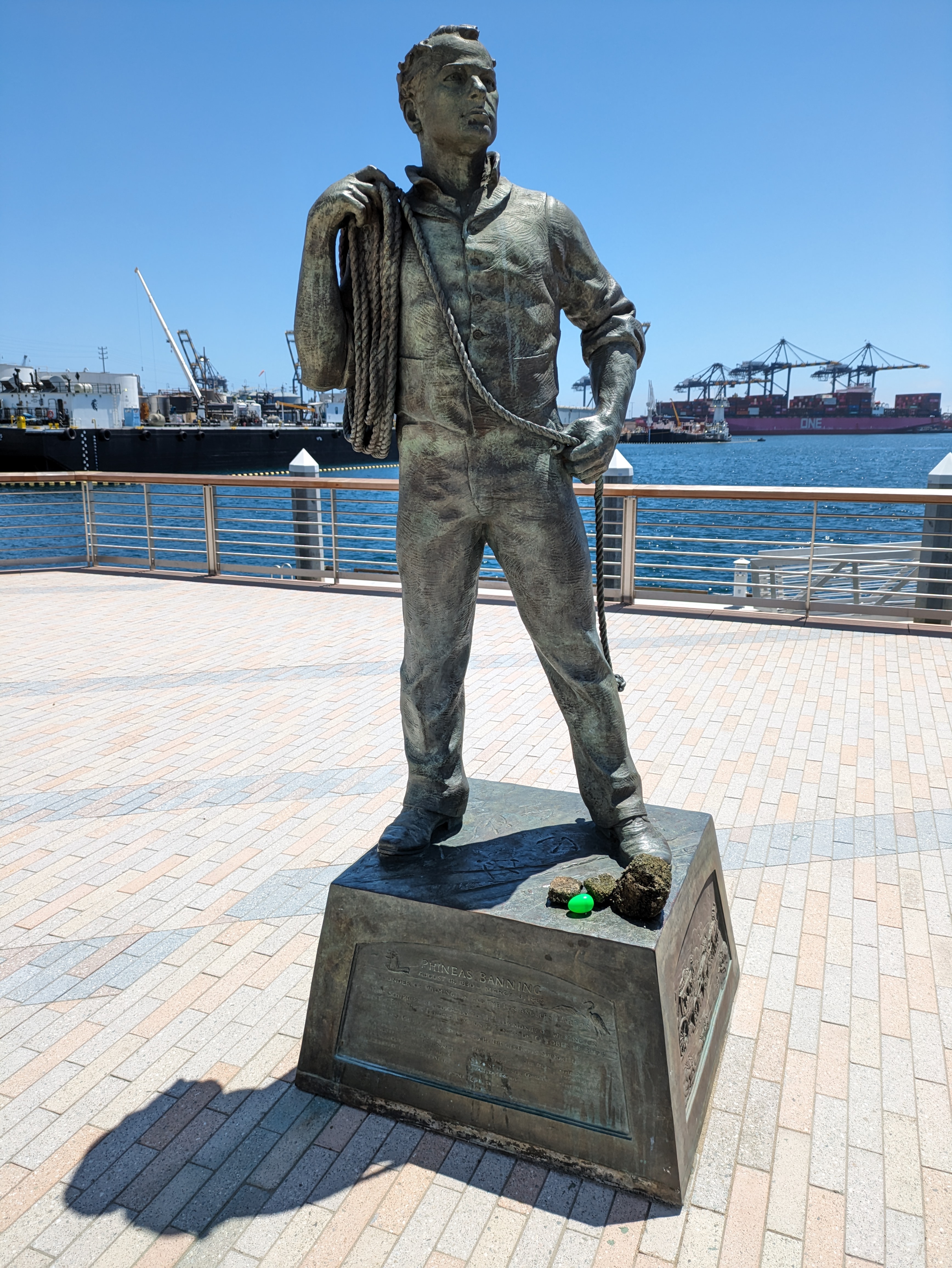
Once you reach the Promenade, it’s marvelous. A conspicuously boat-shaped building at the entrance plaza houses a community center, with a statue of Phineas Banning standing guard in the plaza and a small boat dock. The plaza is located at the site of “Banning’s Landing,” the original wharf developed by Banning that eventually expanded into the Wilmington Harbor. As soon as you arrive, the salt breeze invitingly sweeps across you, drawing you to the waterfront.
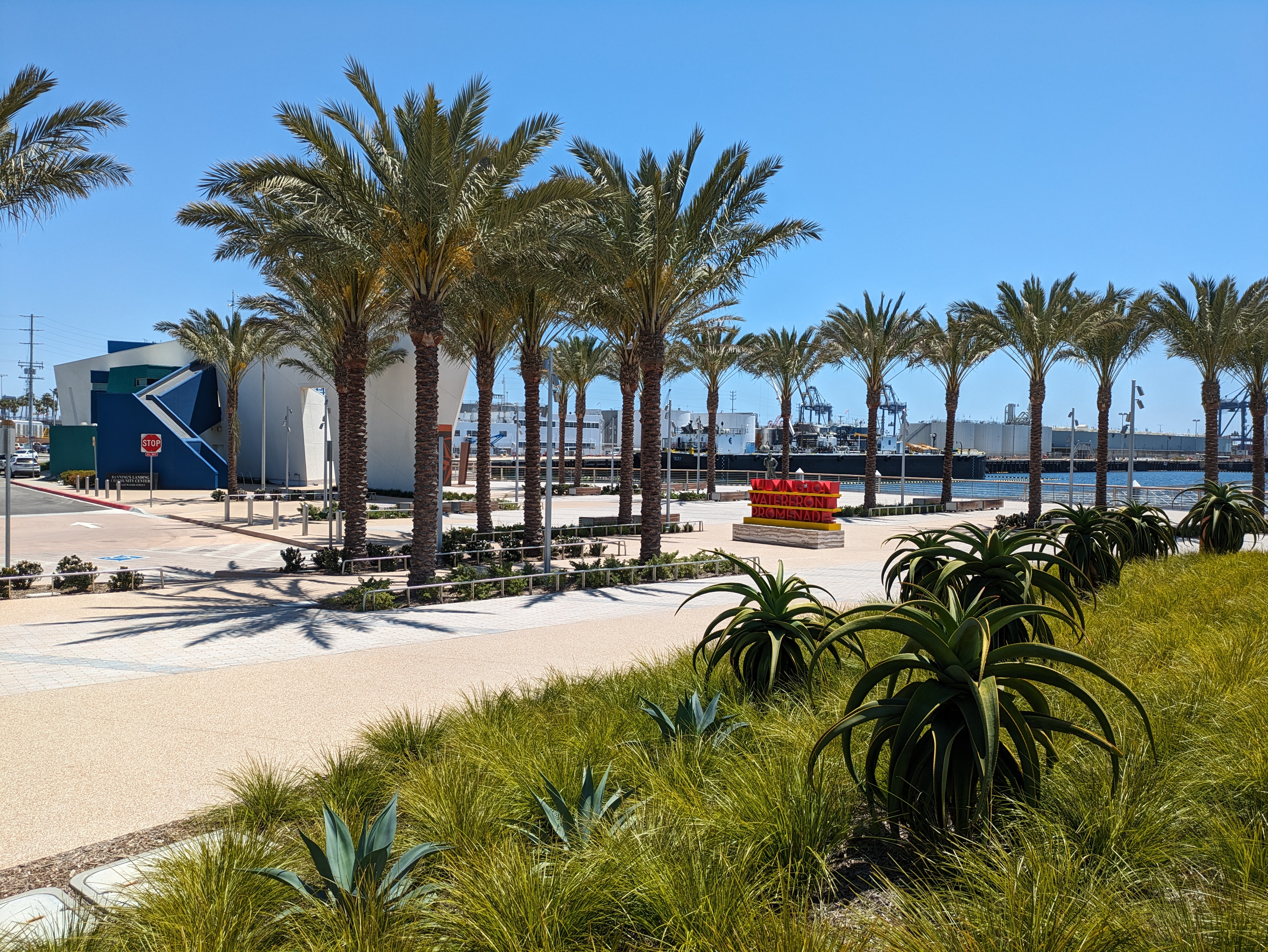
From here, a small landscaped berm and the promenade curve along the waterfront to your right. One of the nicest features of the promenade is a series of shaded swinging benches, which let you relax and soak in the view of the harbor. While the view is taken up by piers, freight cranes, cargo ships, and the distant towers of the Vincent Thomas Bridge, there’s still something compelling about being on the edge of the water.
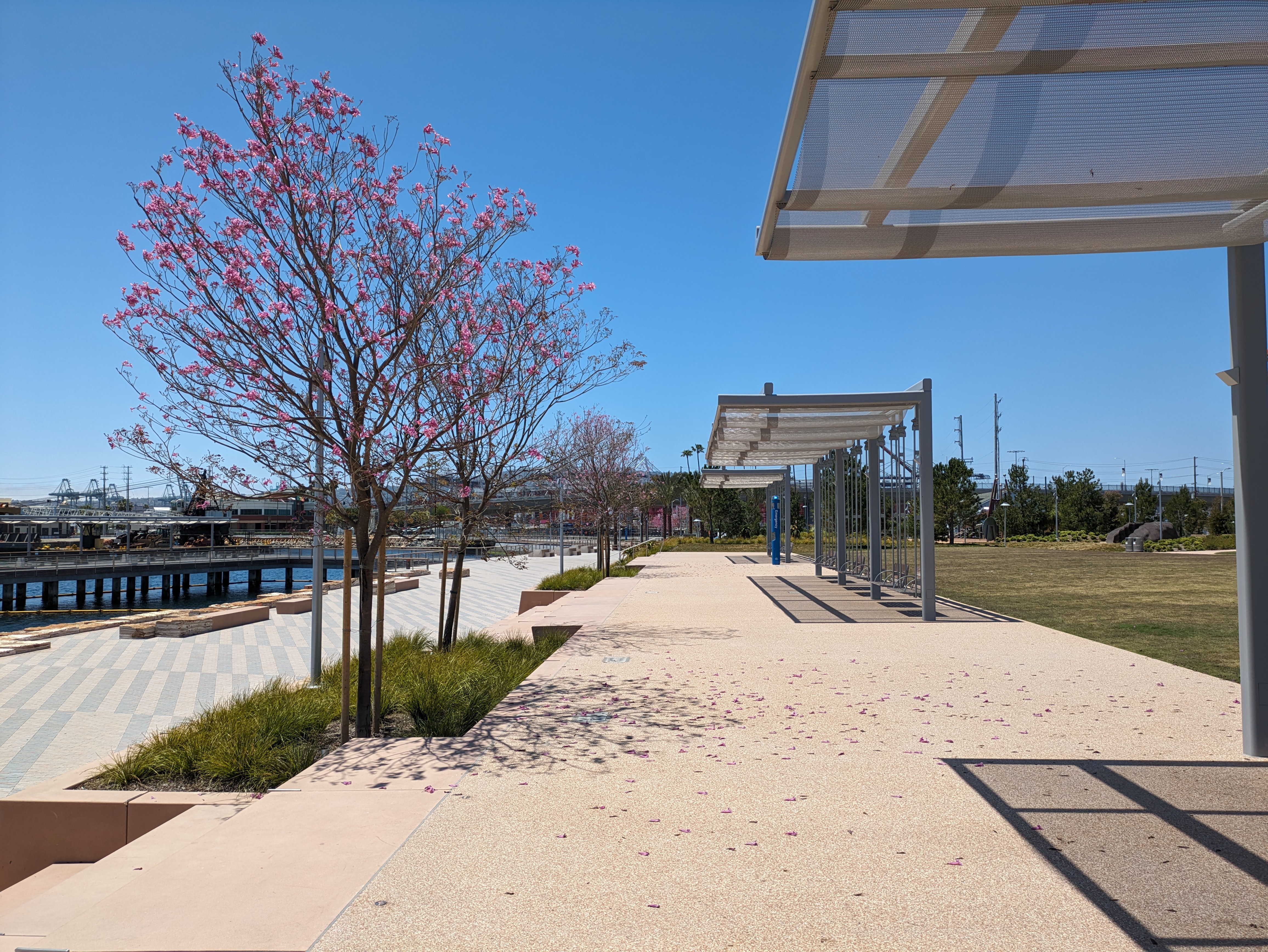
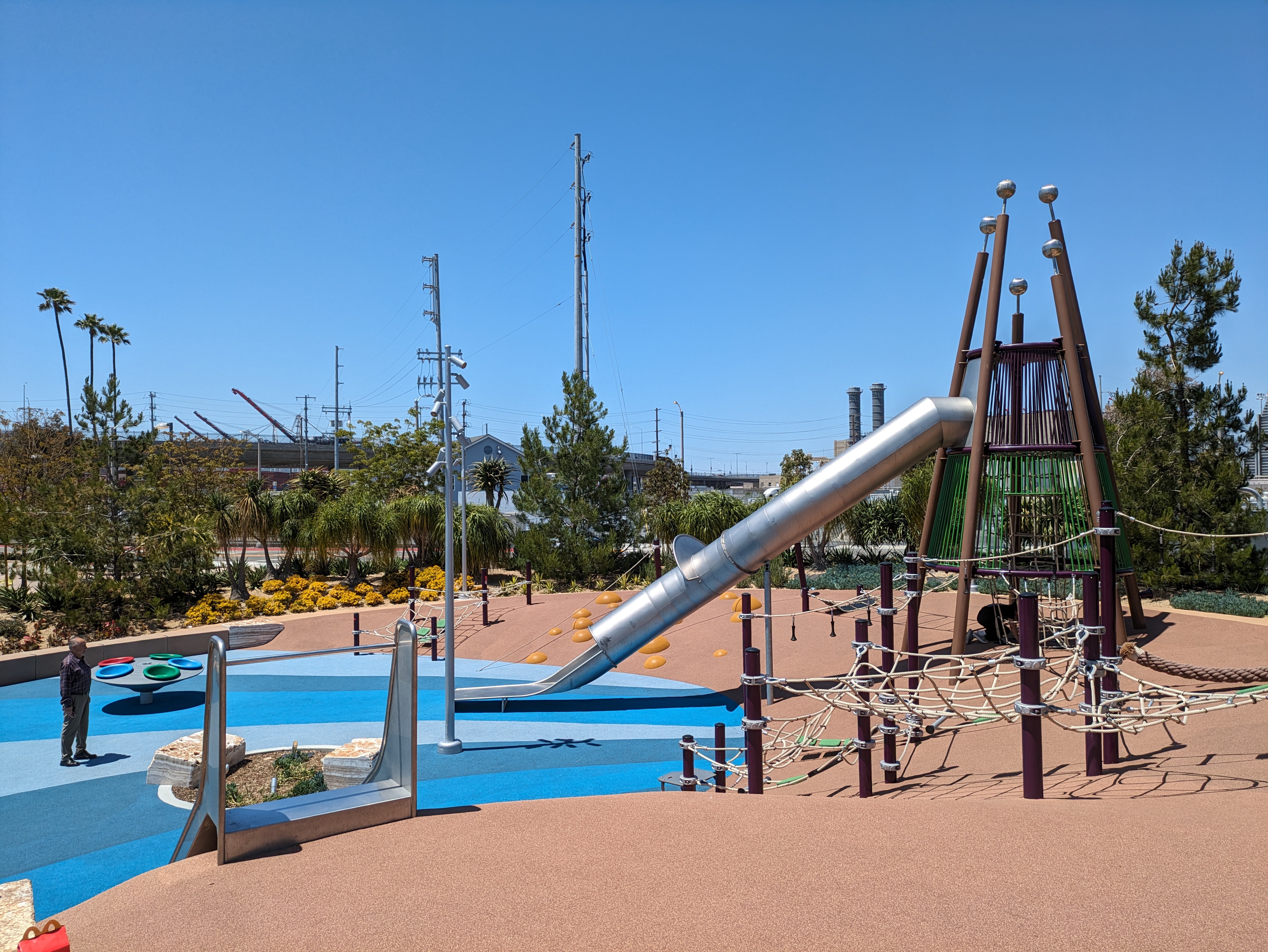
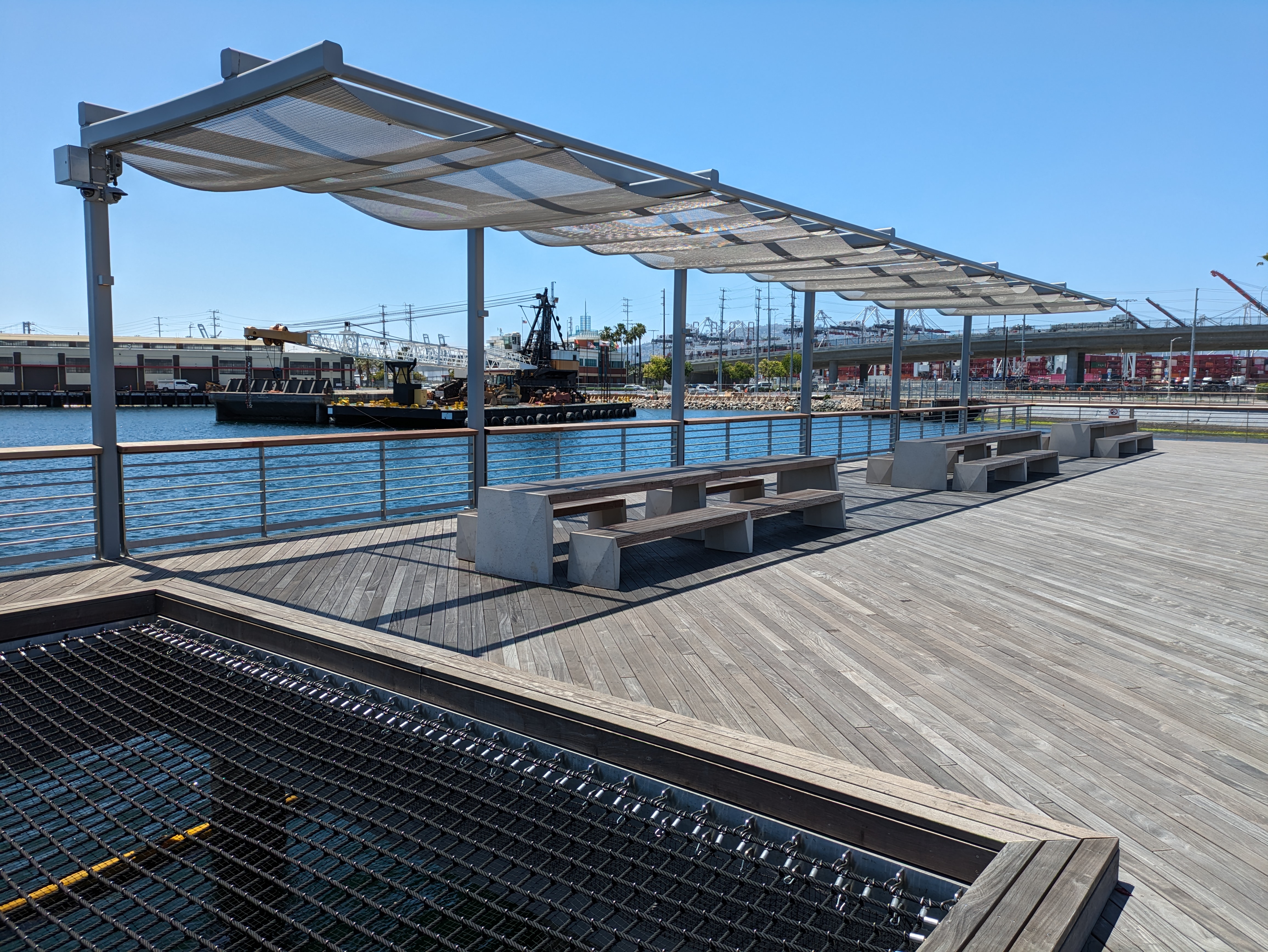
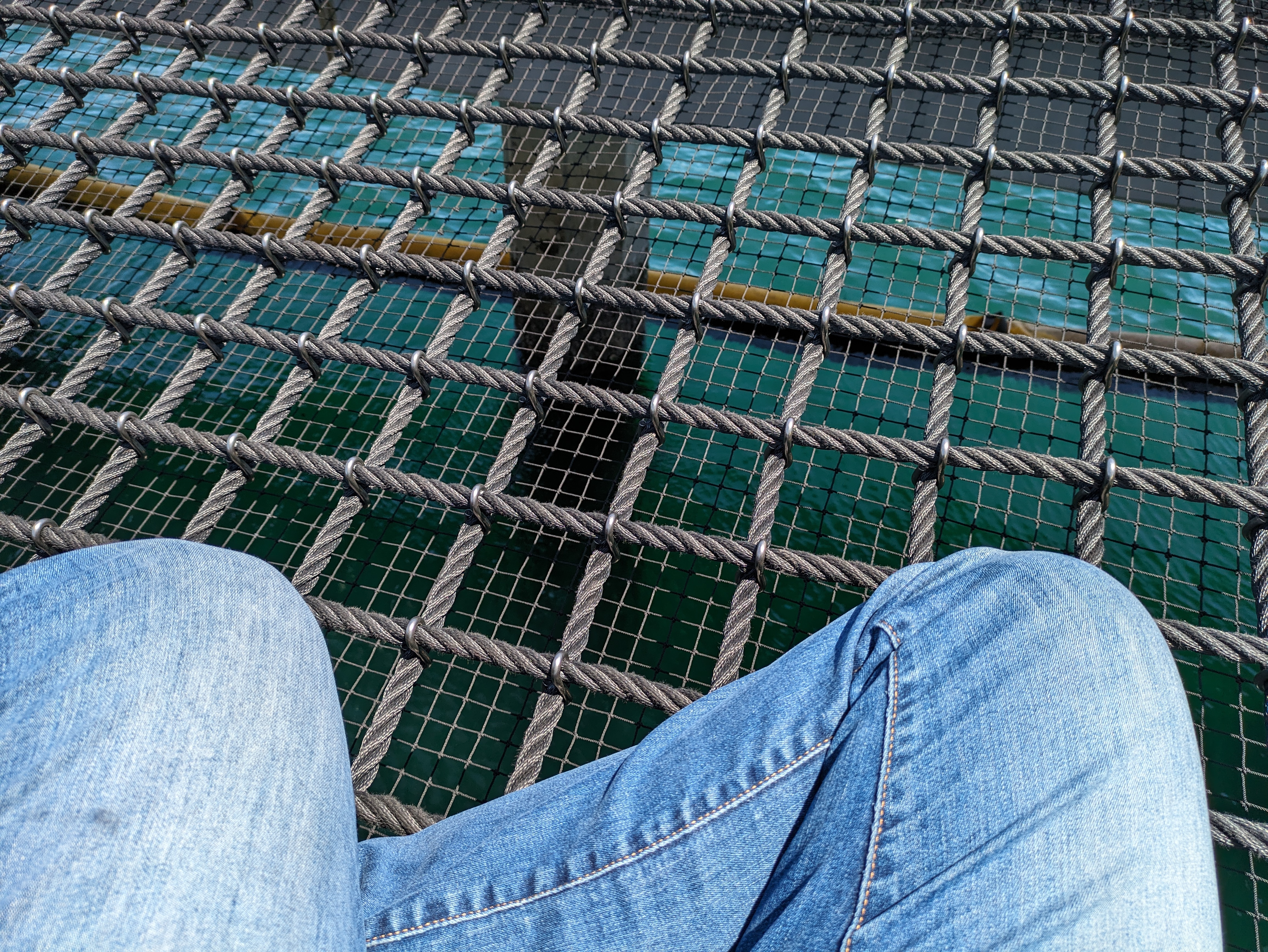
Continuing along the promenade, you’ll pass by a delightful playground cleverly built into the berm, with a pair of slides that take advantage of the extra height afforded by the berm and a lot of great interactive features for children. A bit further on is perhaps the best feature of the promenade: a sightseeing pier, with shaded picnic tables and a play net suspended in a hole cut into the pier that lets you sit directly above the water. It’s a great spot to sit and contemplate the choppy water below, allowing you a moment to connect with the waters that gave Wilmington its reason for being.
 Transiting Los Angeles