Despite its conservative reputation, Riverside has a fair amount going for it. Visitors will find remarkable architecture, intriguing history, some genuinely great art museums, and fun places to eat, all in a very walkable downtown area with easy access to a train station.
Metrolink provides train service to Riverside, although a trip here requires some careful planning. Most Riverside service is focused on getting commuters into L.A. in the morning and back out in the afternoon. Unfortunately, this makes it almost impossible to take the train to Riverside as a day trip; it has to be done as an overnight trip. Make sure to pay close attention to the schedules.
Two lines run from L.A. Union Station to Riverside: the Riverside Line and the 91/Perris Valley Line. They take different routes, but both take about 90 minutes to make the trip from Union Station to Downtown Riverside. There is also a third line, the Inland Empire-Orange County Line, which stops in Riverside on its way between San Bernardino and Orange County.
On weekdays, there’s a few morning trains that’ll take you from L.A. to Riverside (two on the Perris Valley Line and one on the Riverside Line), with all others heading out in the afternoon. Going back, almost all of the return trains to L.A. are in the morning, with the last direct train back leaving at 2pm.
On weekends, service is extremely limited, with just two afternoon trains going to Riverside and two morning trains returning to L.A. (If you want to stay until the afternoon on a Saturday or Sunday, you have to resort to taking the 4:39 train to San Bernardino and transferring to the next L.A.-bound train from there, a trip that will take about 2 hours and 45 minutes.)
Once in Riverside, everything in Downtown is within easy walking distance, including the train station. There is a local bus system, the RTA, that has a transit center located across the street from the train station called the Vine Street Mobility Hub. Route 1 is the only consistently frequent RTA route, going to UC Riverside in one direction and through Downtown Riverside to Corona in the other. But unless you plan to venture beyond Downtown, the bus really isn’t necessary.
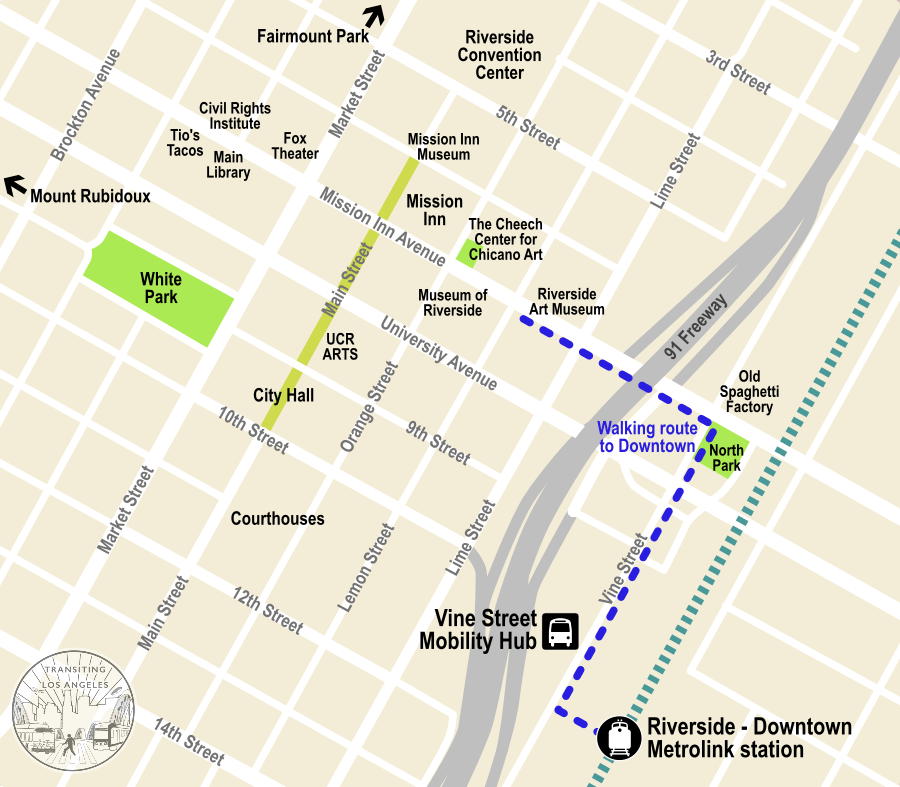
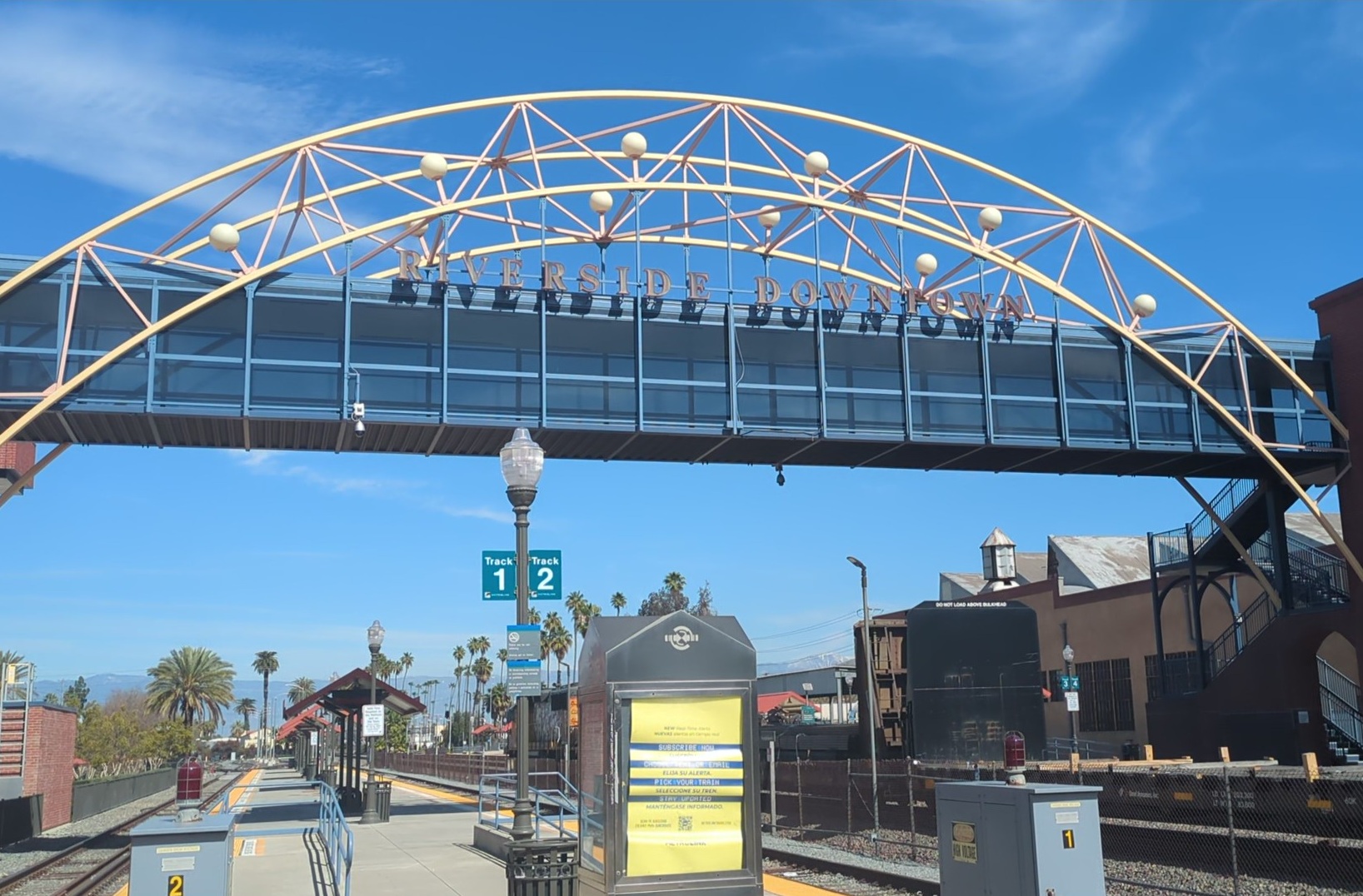
Downtown Riverside station is located just east of downtown itself, separated by a few blocks and the 91 Freeway, but still a very walkable distance from downtown. The station itself is little more than a pair of platforms with a pedestrian bridge and a parking lot, but the neighborhood does have a couple reminders of the city’s railroad history.
Head out the station through the parking lot and make a right onto the street, then head up a couple blocks until you reach Mission Inn Avenue, which will be your walking route into downtown. On your way, you’ll pass a small park on your right. On the backside of the park, along the train tracks, is the old Santa Fe Railway depot, dating back to the 1920s and now occupied by office space but still bearing the logo of the old railroad on its front.
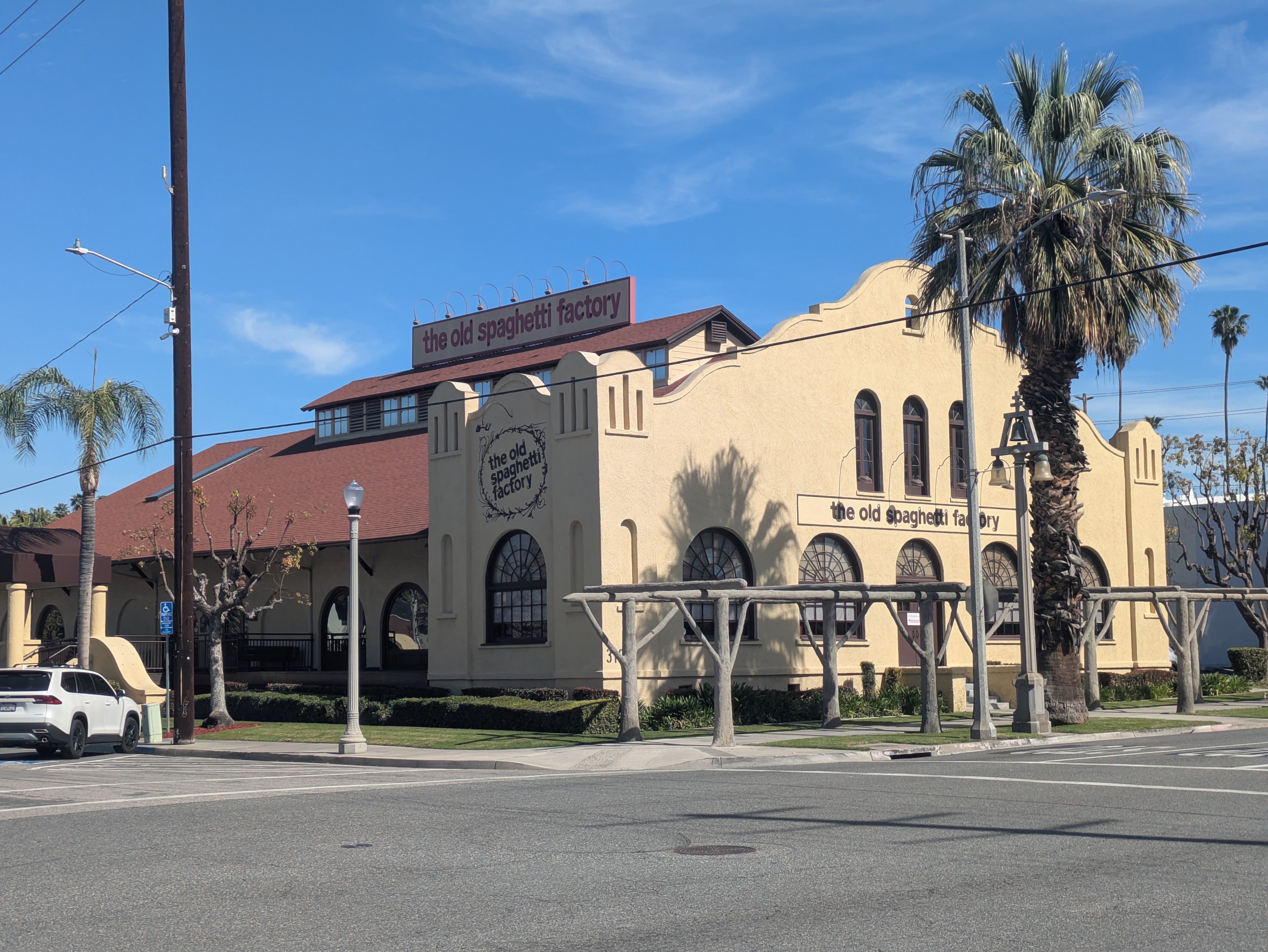
The more accessible railroad landmark is on the corner of Mission Inn Avenue right across from the park: the Old Spaghetti Factory, a chain of pasta restaurants that has an interesting knack for selecting historic buildings for their locations. This particular location is inside the former Sutherland Fruit Company Packing House, where the fruit of the local citrus industry was packed for shipment by train across the country. Inside the restaurant, you’ll see lots of decor referencing this history, such as old citrus company posters and some train models of produce freight cars.
After crossing under the freeway, the next couple of blocks of Mission Inn Avenue serves as Riverside’s museum row, with three prominent attractions. One of them, the Museum of Riverside, the town’s history museum, is currently undergoing an expansion project and is scheduled to reopen in 2027.
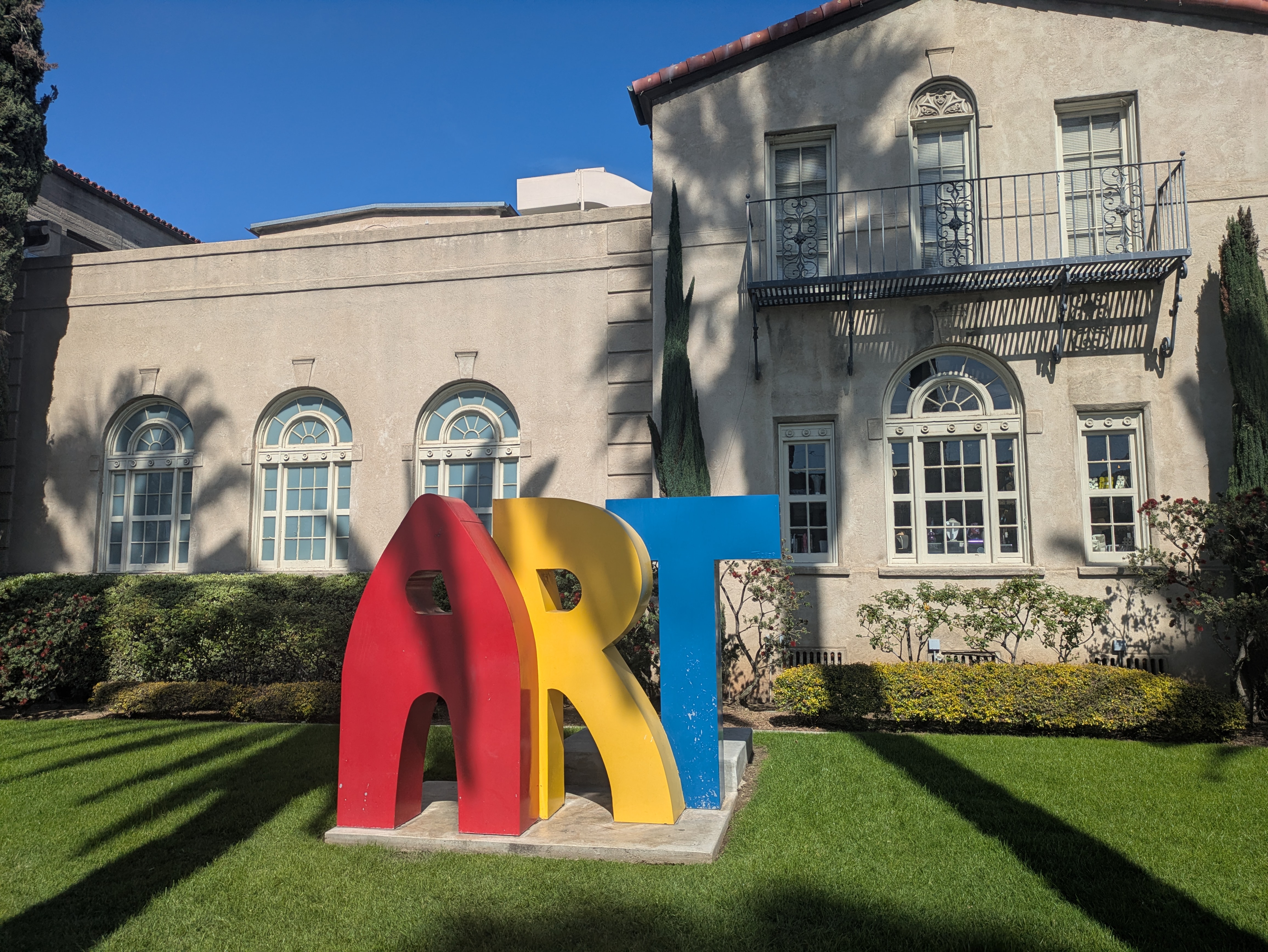
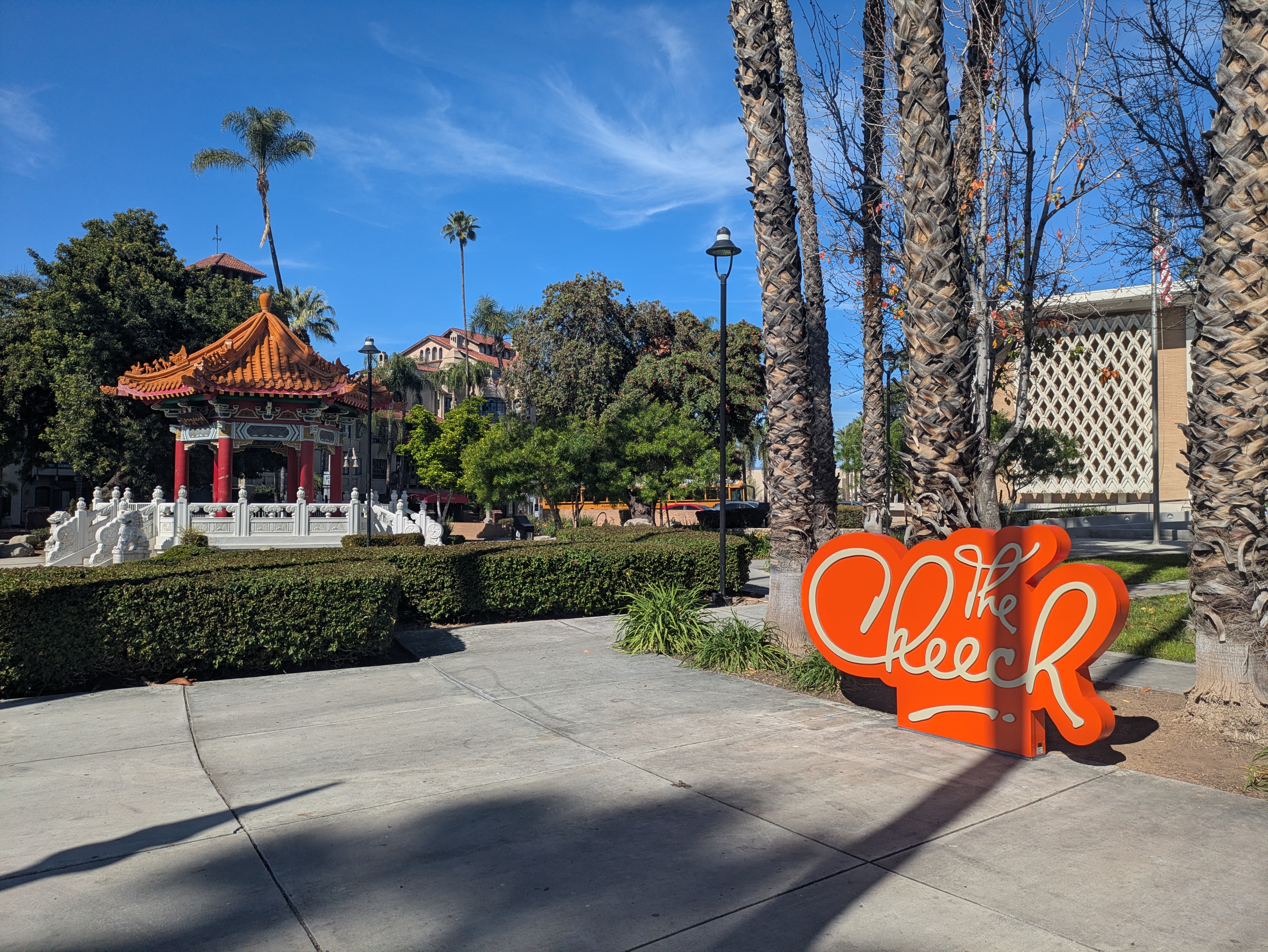
The big highlight is the Riverside Art Museum, which is split between two buildings across the street from each other: the original art museum, which occupies a historic 1920s building, and the brand new Cheech Marin Center for Chicano Art, established by famed comedian Cheech Marin. Admission to either one covers both, and both are very much worth your time.
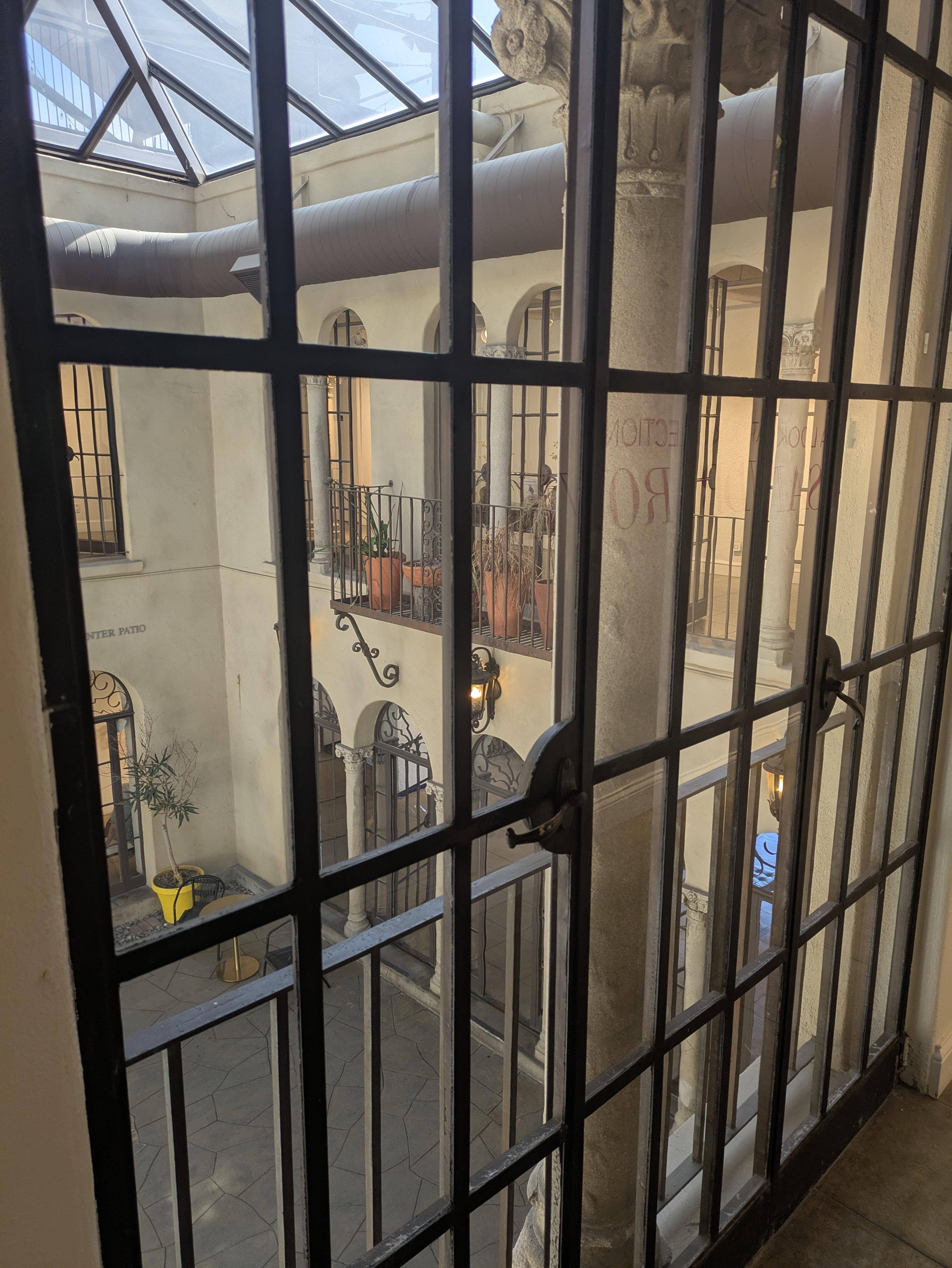
The Riverside Art Museum sits inside the city’s historic YWCA Building—not the YMCA, but rather the YWCA, or Young Women’s Christian Association, an organization focused on the empowerment of women that was far more prominent in the 1920s. The architecture is a blend of classical and Mission Revival style, with a skylit courtyard that rises two floors, with all the galleries on both floors arranged around it. The art exhibitions are all temporary, but the focus is generally on Inland Empire artists.
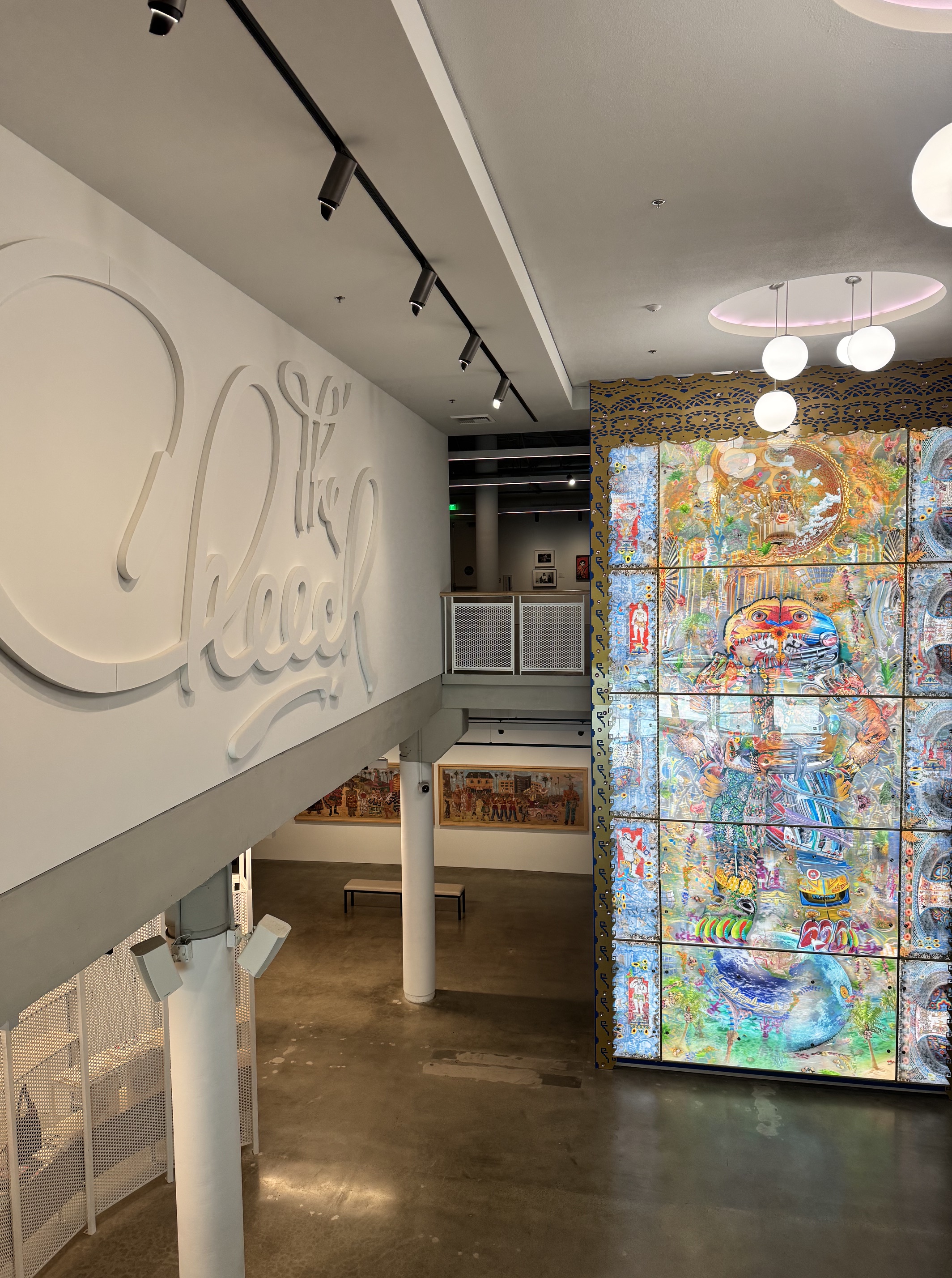
The Cheech, on the other hand, is in a more modern building, with the lobby dominated by a towering kaleidoscopic mural created by the de la Torre brothers, inlaid with images of nature and iconography of Latinx culture that morph as you shift your perspective. Study it carefully and you’ll find many little details, including a map that puts East L.A. at the center of it all.
Speaking of East L.A., a remarkable thing about the collection is how L.A.-centric it is for being located in Riverside. You’ll find many depictions of very specific, predominantly Latino quarters of L.A.: Boyle Heights, East L.A., Echo Park, etc. Granted, it’s probably not that surprising from the collection of the star of Born in East L.A. And it’s a good overview of some of the most prominent names in Chicano art.
The Cheech has the more impressive presentation, but the Riverside Art Museum definitely has the better gift shop, with some really nice crafts by local artists and Riverside-specific souvenirs. The Cheech’s shop, by contrast, is a bit sparse by comparison.
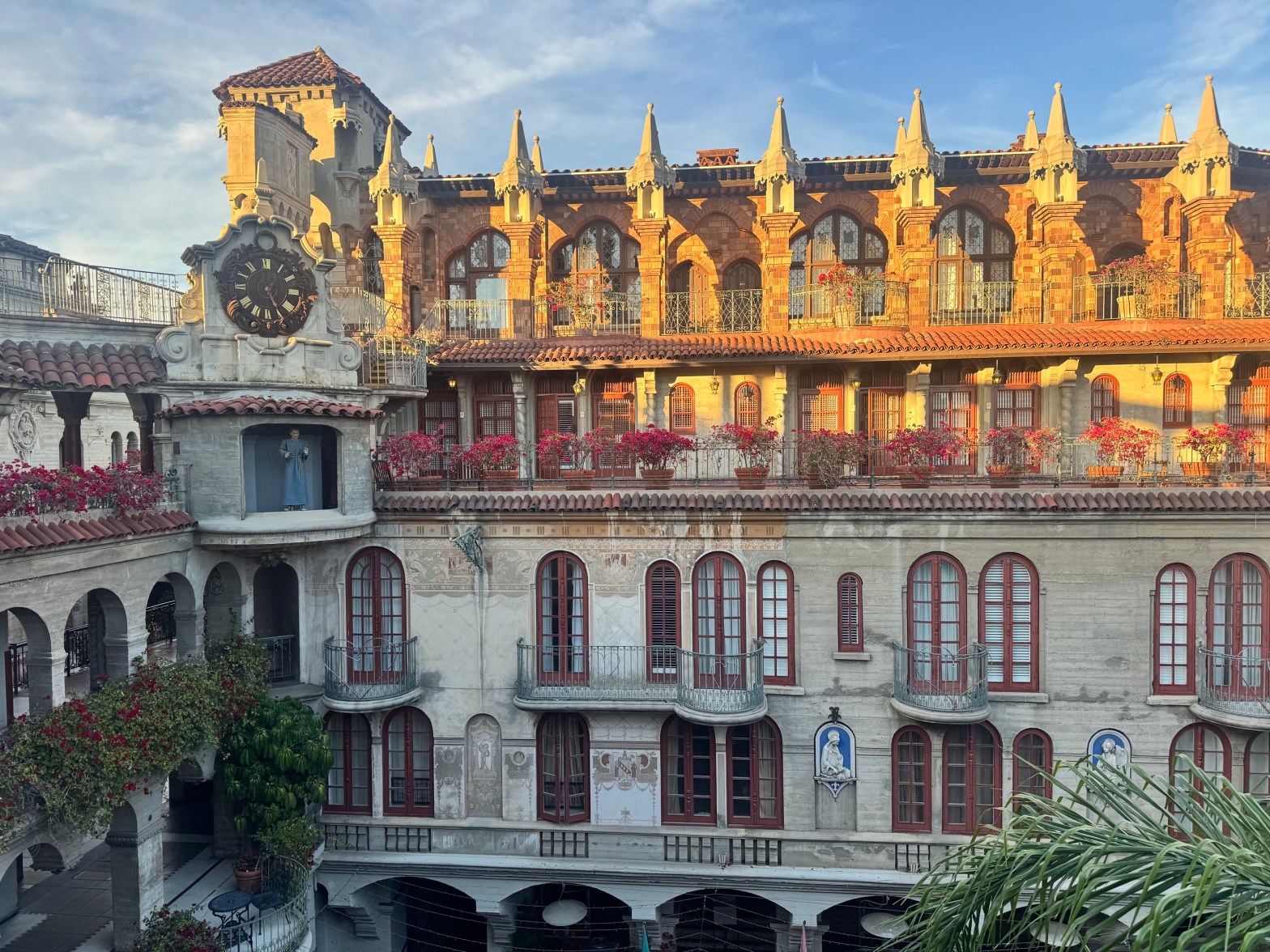
On the block past The Cheech is Riverside’s most famous attraction, and arguably the entire reason the town has a tourist economy at all: the Mission Inn. Primarily developed between the 1900s and the 1930s by local booster Frank Augustus Miller, the hotel is an eccentric mix of styles that coalesce into what might be one of the most European-esque buildings in the country. Built wing by wing, with numerous additions in slightly different styles and with a stunning attention to detail (how many American buildings have flying buttresses?), it gives the impression of being much older than it actually is.
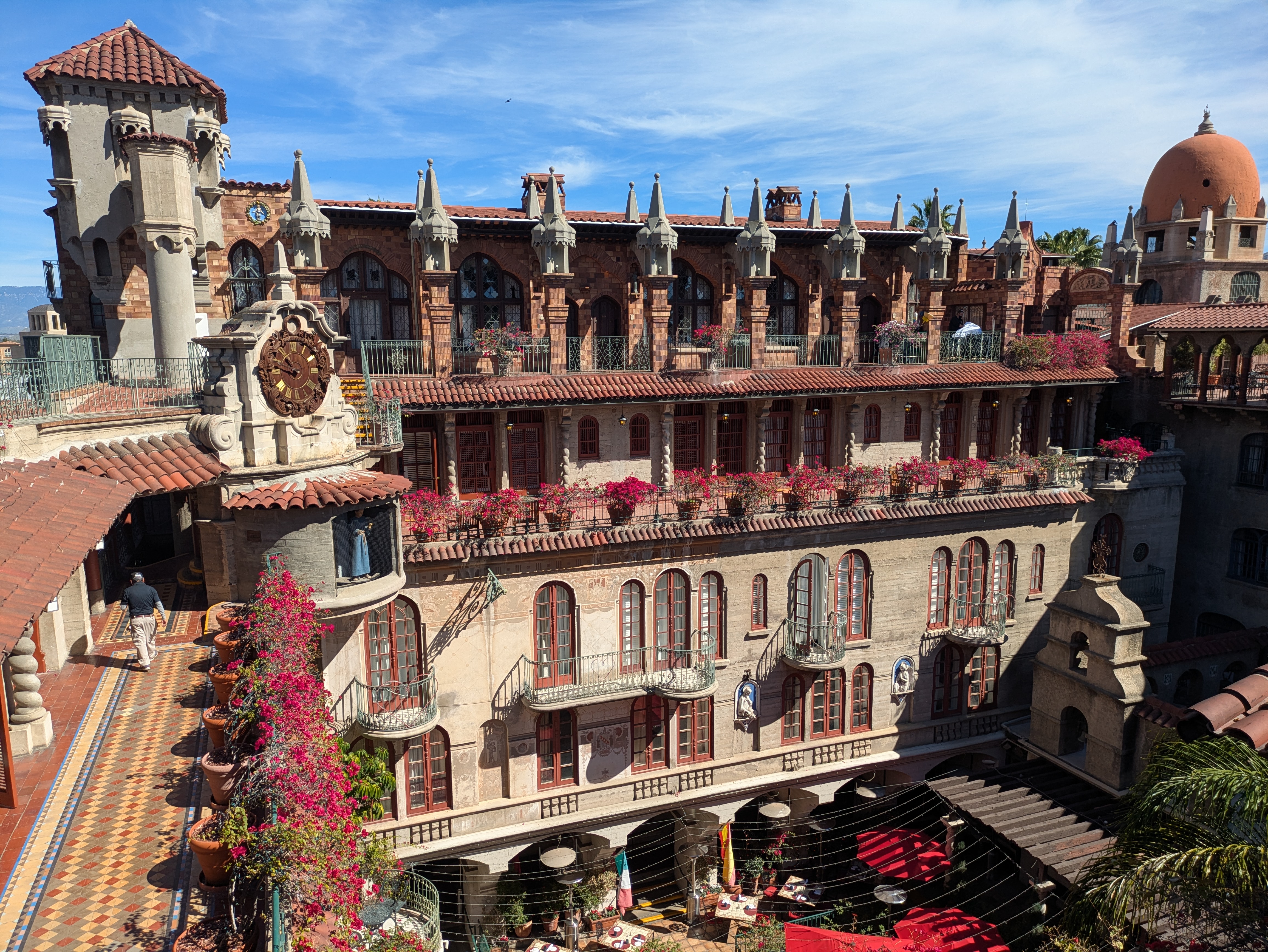
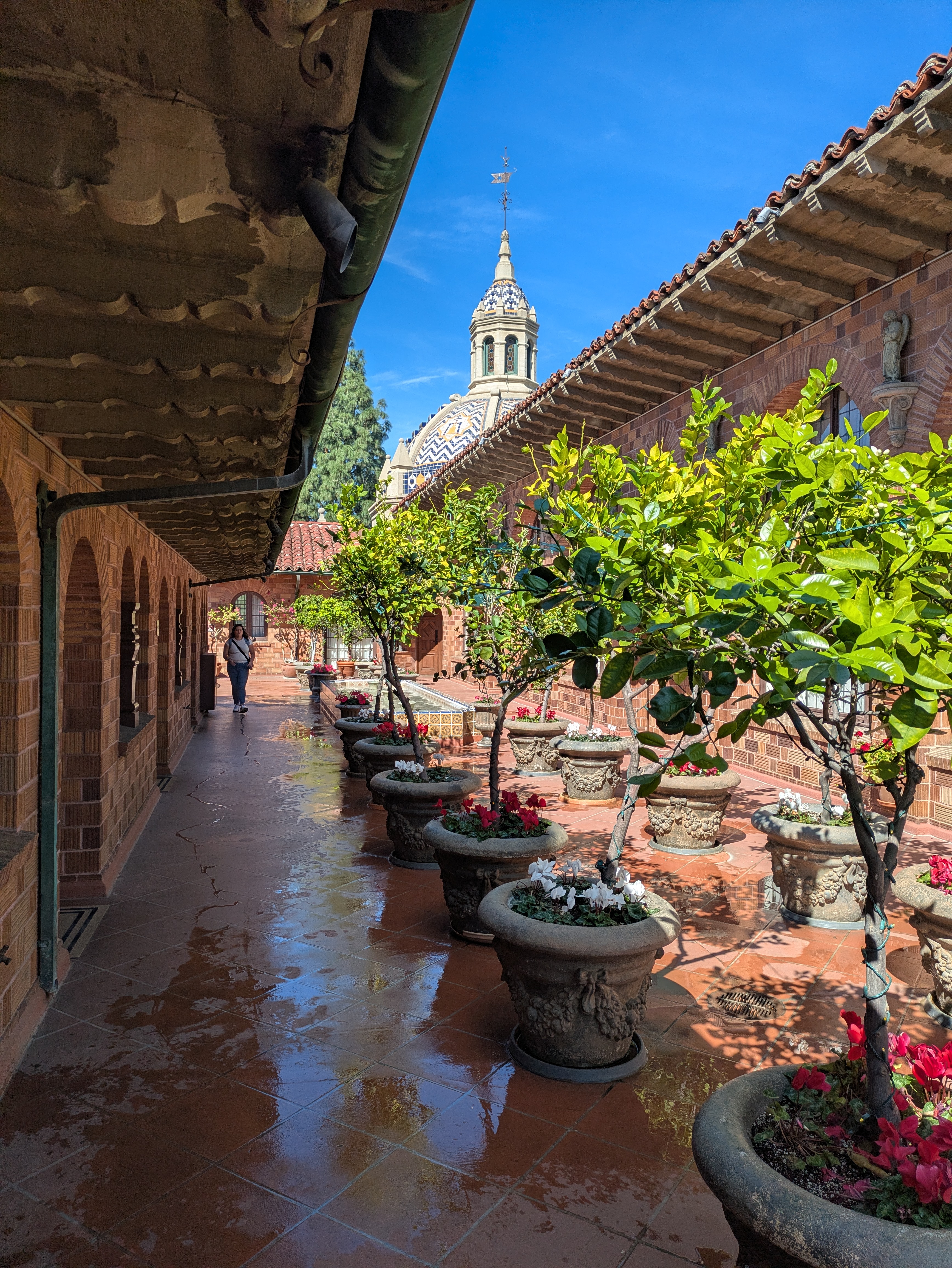
Riverside is not, nor ever was, home to one of the Spanish missions of California. This didn’t deter Miller, who allegedly resorted to dressing as a monk and hanging around train stations to promote the existence of “the Mission” to passing tourists. It also hasn’t stopped Riverside from embracing Mission Revival style architecture with the same fervor as a mission town—in effect, a reference to a reference. Even the icon of the Mission Inn, a combination of a mission bell and a double-armed Native American cross that Miller patented, is used by the City of Riverside as an official symbol.
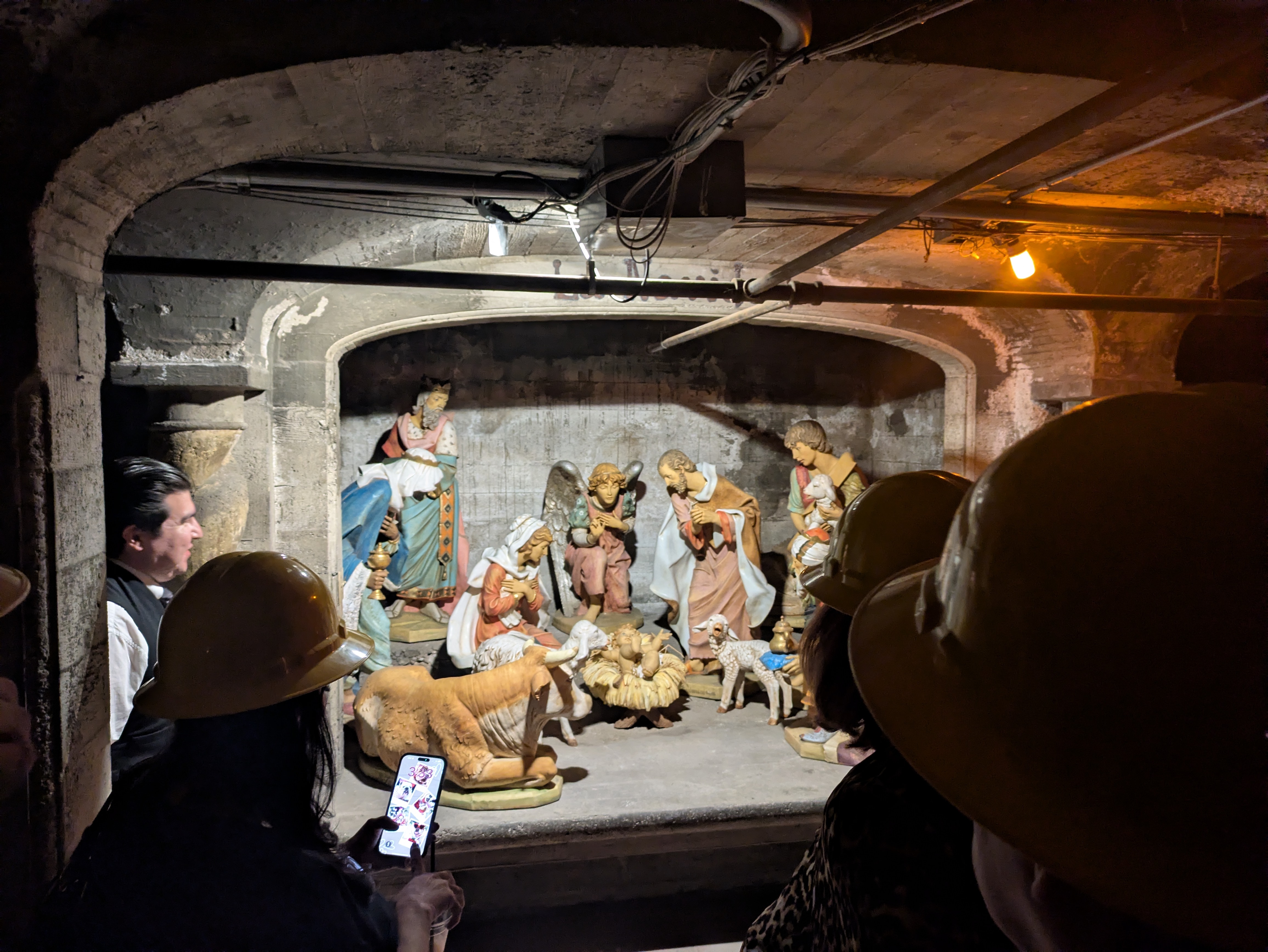
The Mission Inn occupies an entire block in the middle of Downtown Riverside, and if you want to get a better sense of its history and really get a feel for its architecture, you have to take one of hotel’s guided tours. They last about an hour and cost $45 per person, but you get to enter many parts of the building that are off-limits to the public and even to hotel guests, such as the wedding chapel, the ballroom, the art gallery, and most notably the hotel’s catacombs, a set of underground passageways built to resemble Medieval cloisters. They were originally used to house Miller’s extensive collection of European artifacts, but the tunnels proved a poor environment for preserving artwork, so they’re mainly used for storage and a fun, spooky setting for the tours. Besides being charismatic, the tour guides share a lot of entertaining stories about the hotel and its place in Riverside history. You also get a complimentary glass of champagne at the end of the tour.
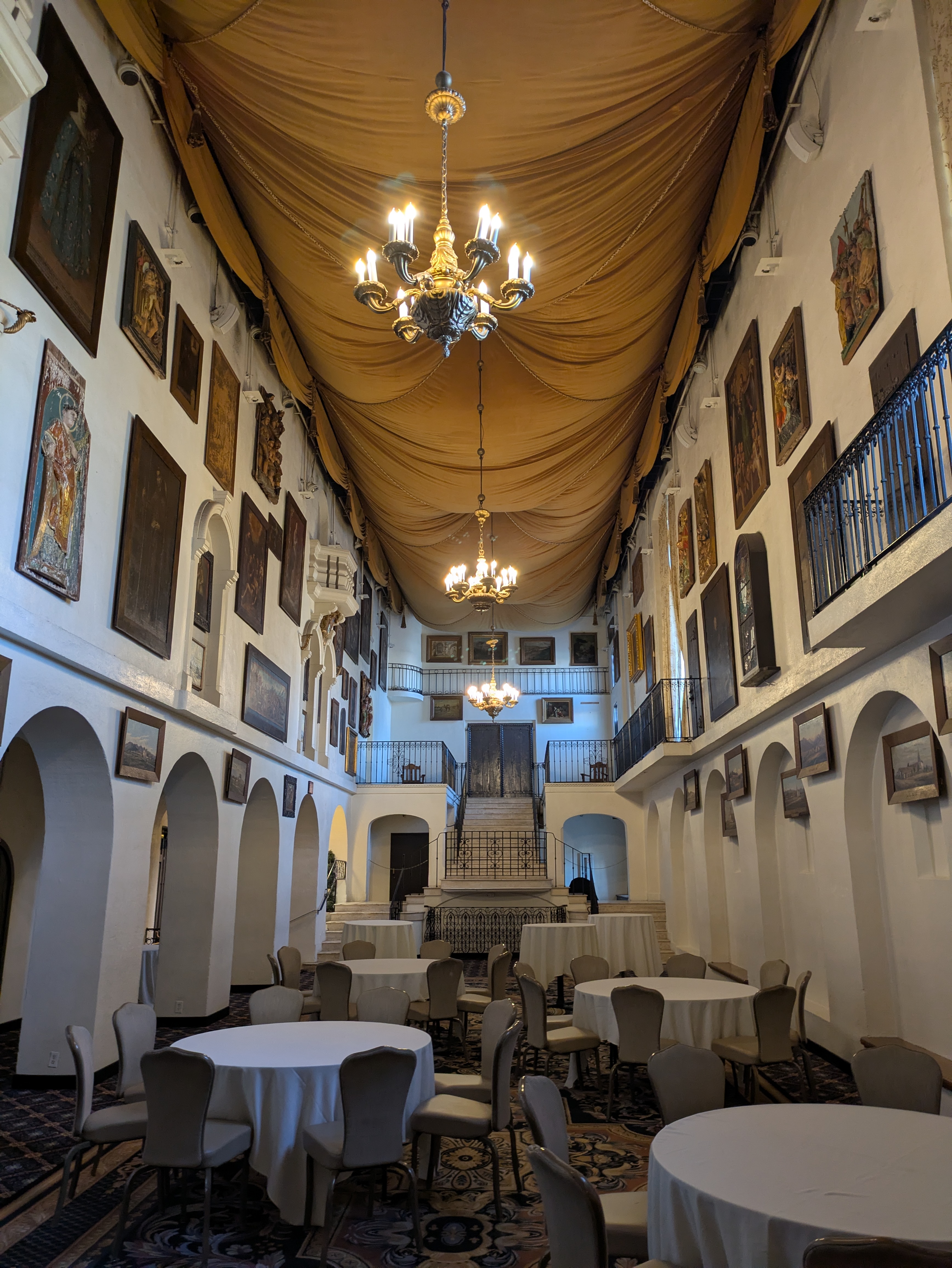
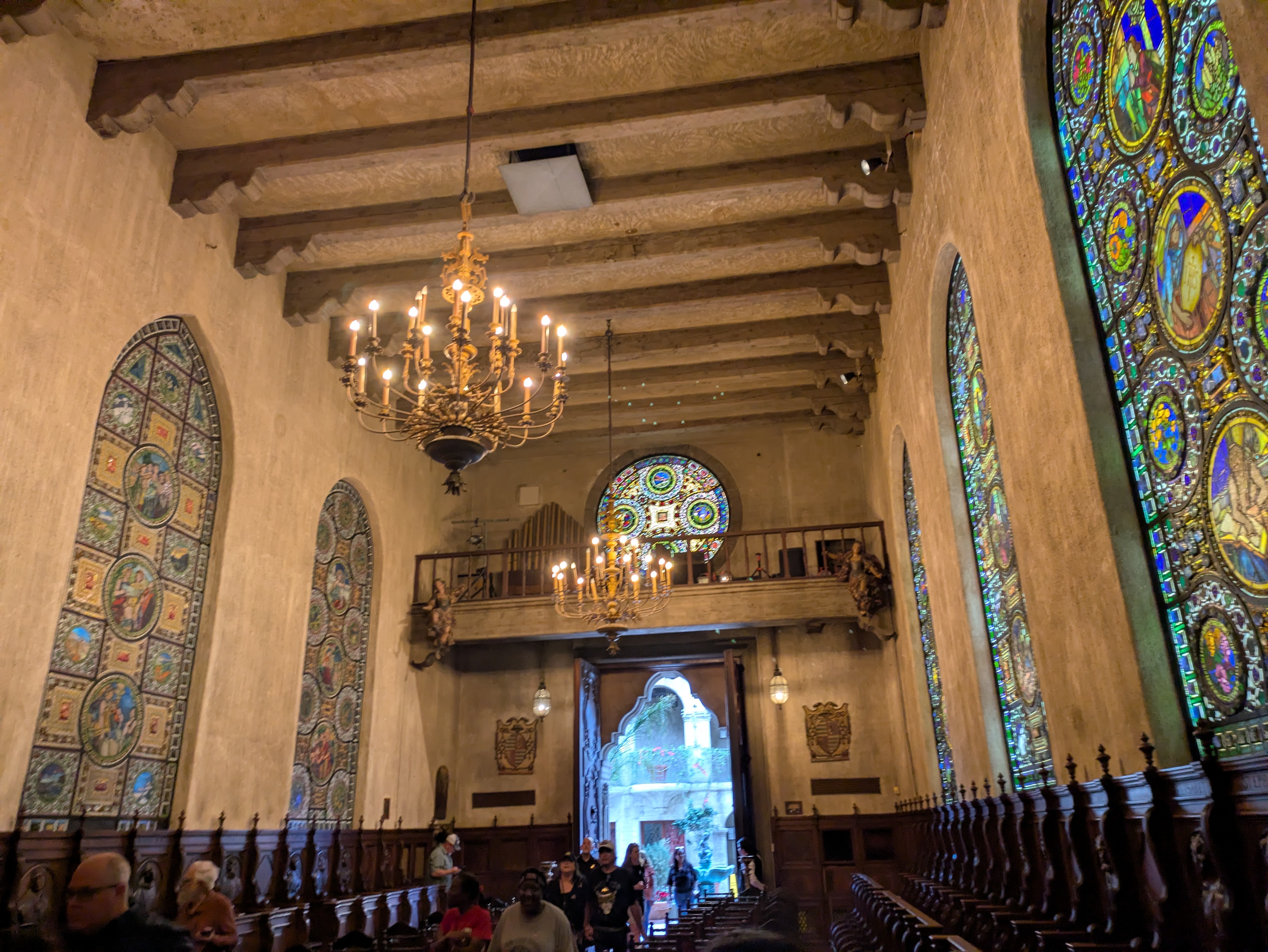
Of course, another way to get a better appreciation of the hotel is to stay there. The Mission Inn has a pretty wide range of accommodations, from luxury suites to more modest rooms that go for around $200/night at minimum, although this will vary significantly depending on the season and the day of the week. By modern hotel standards, the rooms can feel dated, but then again the appeal of the Mission Inn is its quirkiness and history than anything else. And of course, by staying at the hotel you have free rein to explore the various wings, save for the stuff they keep off limits for the tour.
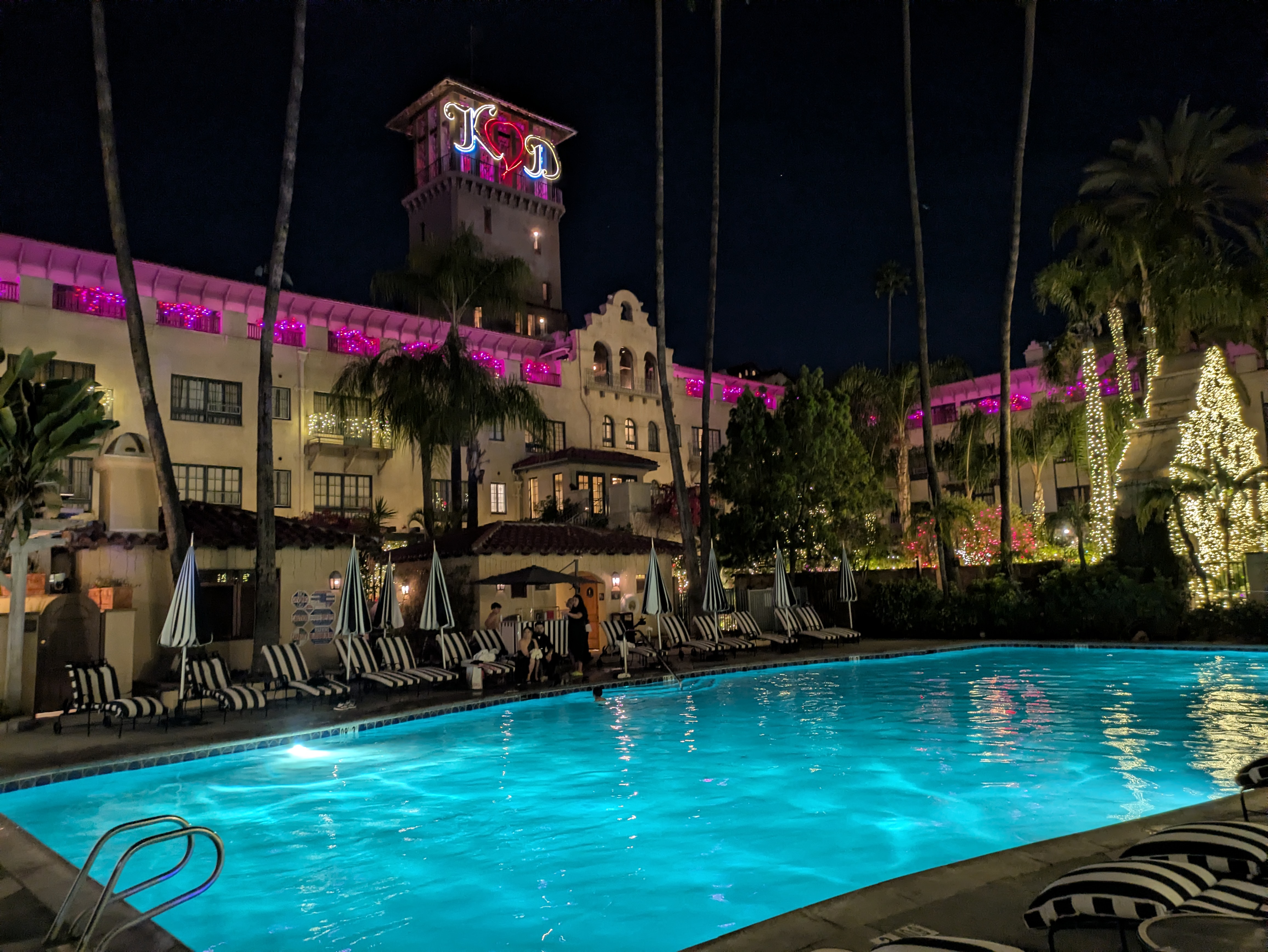
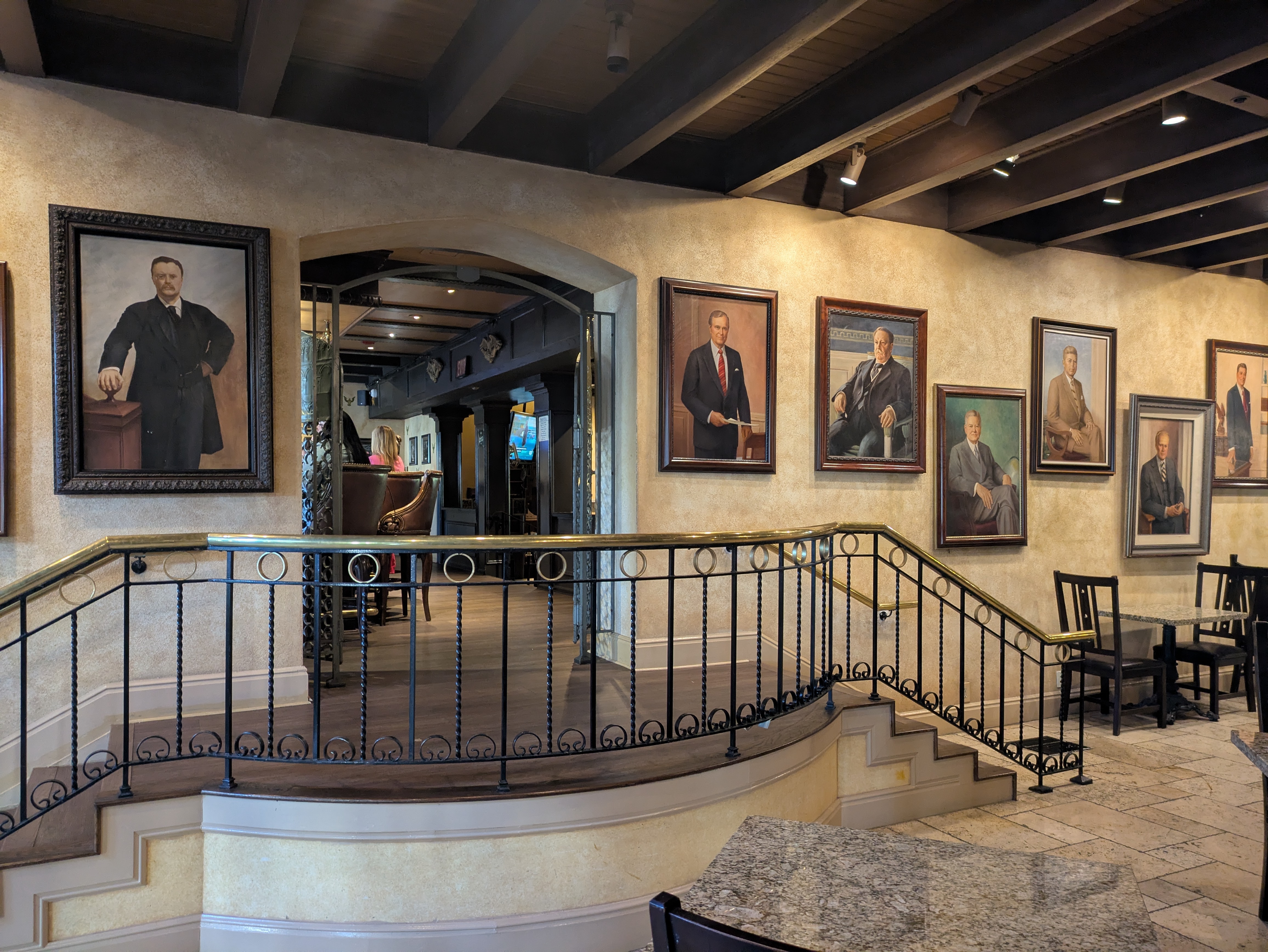
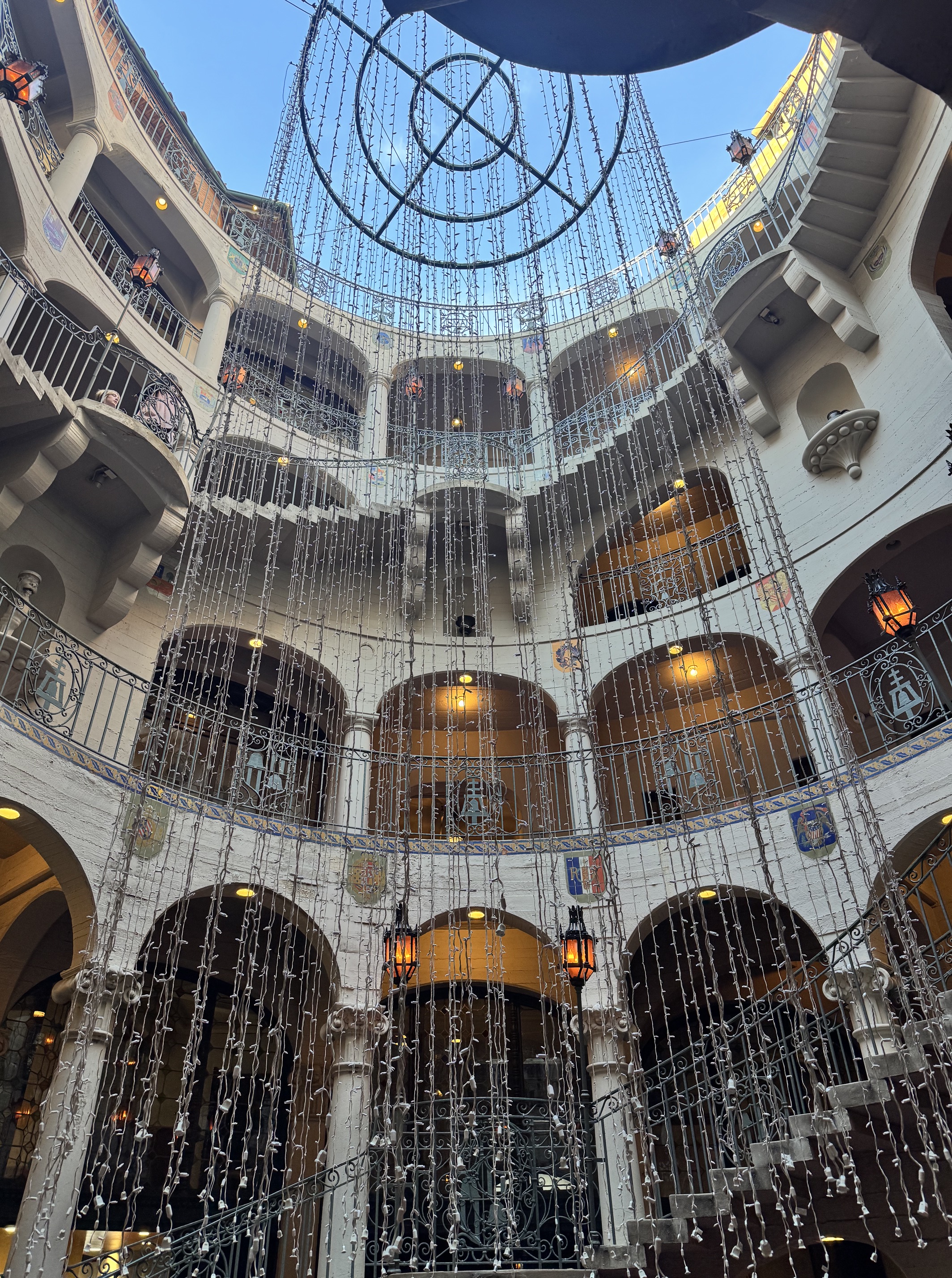
If you don’t want to shell out for a room, you can also dine at the Mission Inn, though this can also be pricey. There’s a trio of restaurants within the hotel, one of which has outdoor seating in the striking Spanish Patio in the center of the building. There are also a couple of bars in the hotel, most notably the Presidential Lounge, a cocktail bar themed after the various U.S. presidents that have stayed at the hotel. The ties to the individual presidents can feel a little dubious at times (most of the listed presidents didn’t stay at the hotel while they were president), but there is at least one very strong claim to fame: Richard Nixon, Southern Californian that he was, got married at the Mission Inn.
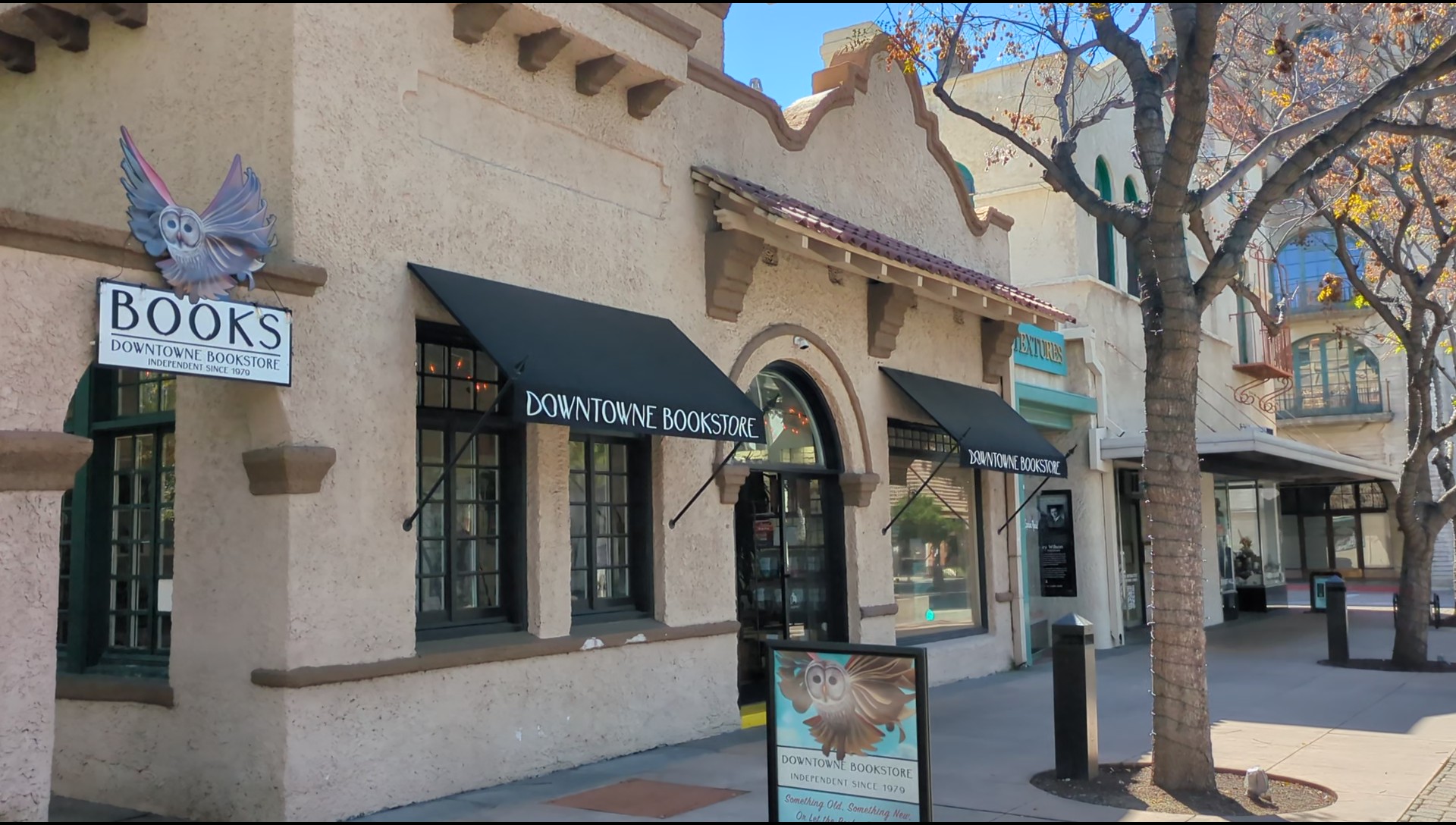
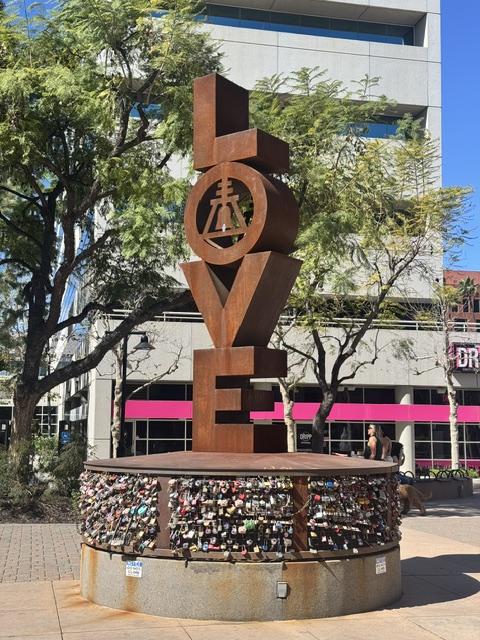
On the west side of the Mission Inn, Main Street is a pleasant pedestrian mall stretching a few blocks from the Inn south to City Hall, linking downtown’s primary civic landmarks. The mall is lined with public art, memorials, trees, benches, and, at least along the block where the Inn is located, with cafes, restaurants, and small shops. This stretch of local businesses extends north along a non-pedestrianized block of Main St., where you’ll find a charming local bookstore and a couple of popular coffee shops.
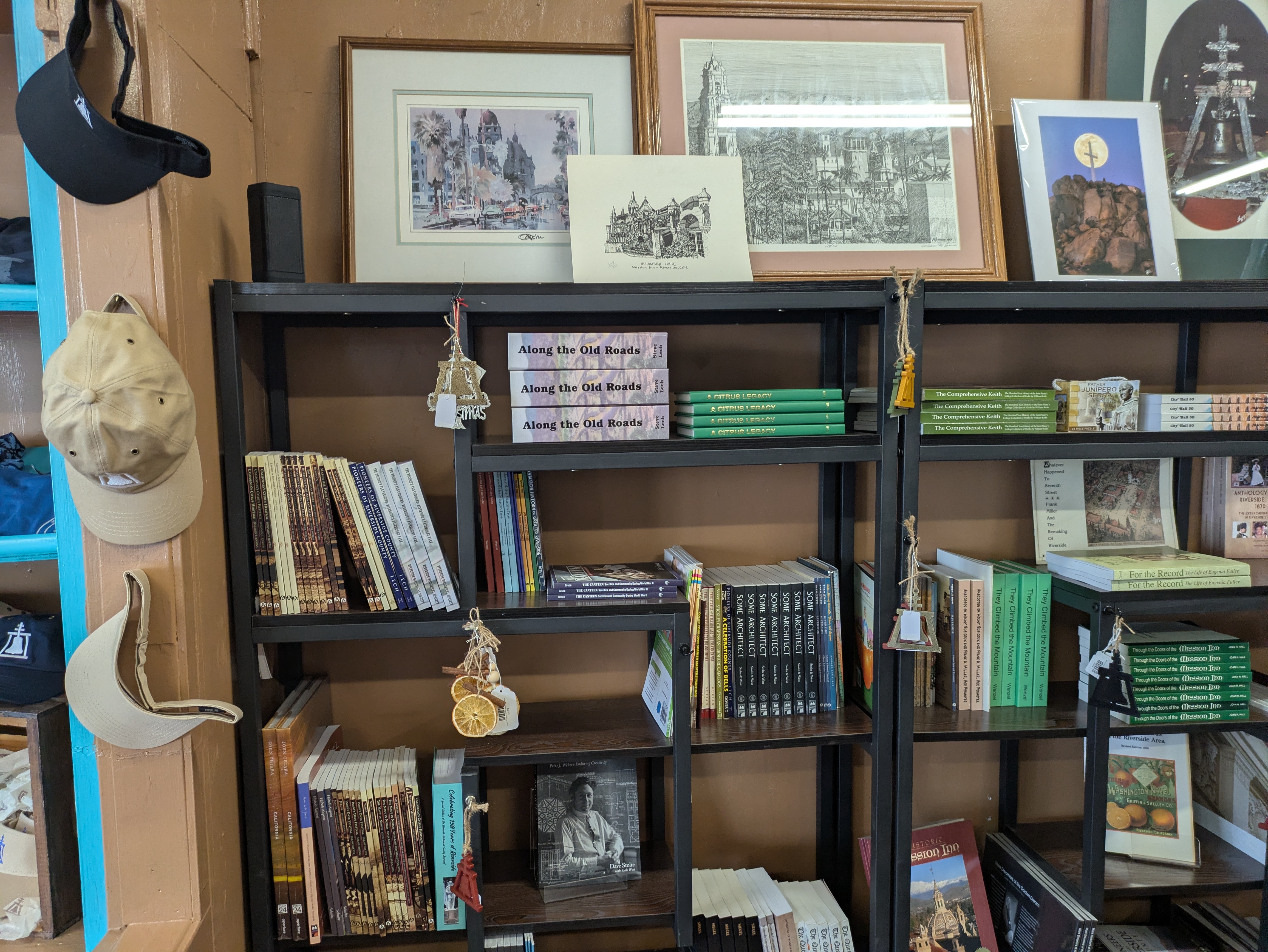
Another feature on this block is the Mission Inn Museum, on the corner of Main and 6th just across the street from the Inn proper. Run by the Mission Inn Foundation, a historical society dedicated to preserving the history of the Inn, the small museum has a handful of artifacts from the hotel, such as a kimono worn by Miller at a ceremony where he greeted Japanese dignitaries and a time clock used by employees of the hotel. The museum itself is tiny, consisting of only one small gallery. Truthfully, the foundation’s gift shop is a more impressive draw, with a lot of products based on Riverside and its history.
Heading south down the pedestrian mall, just before you reach City Hall, on the block between University Ave and 9th St., you’ll pass UCR ARTS, the art museum for nearby UC Riverside. UCR ARTS actually consists of two museums, both within adjacent buildings connected inside and covered under the same admission. One is the Culver Center of the Arts, a contemporary art museum housed inside a former department store built in the 1890s, with an impressive skylit atrium two floors tall. The galleries host changing exhibitions of contemporary art, and the center also holds a theater and a dance studio for regular events and screenings.
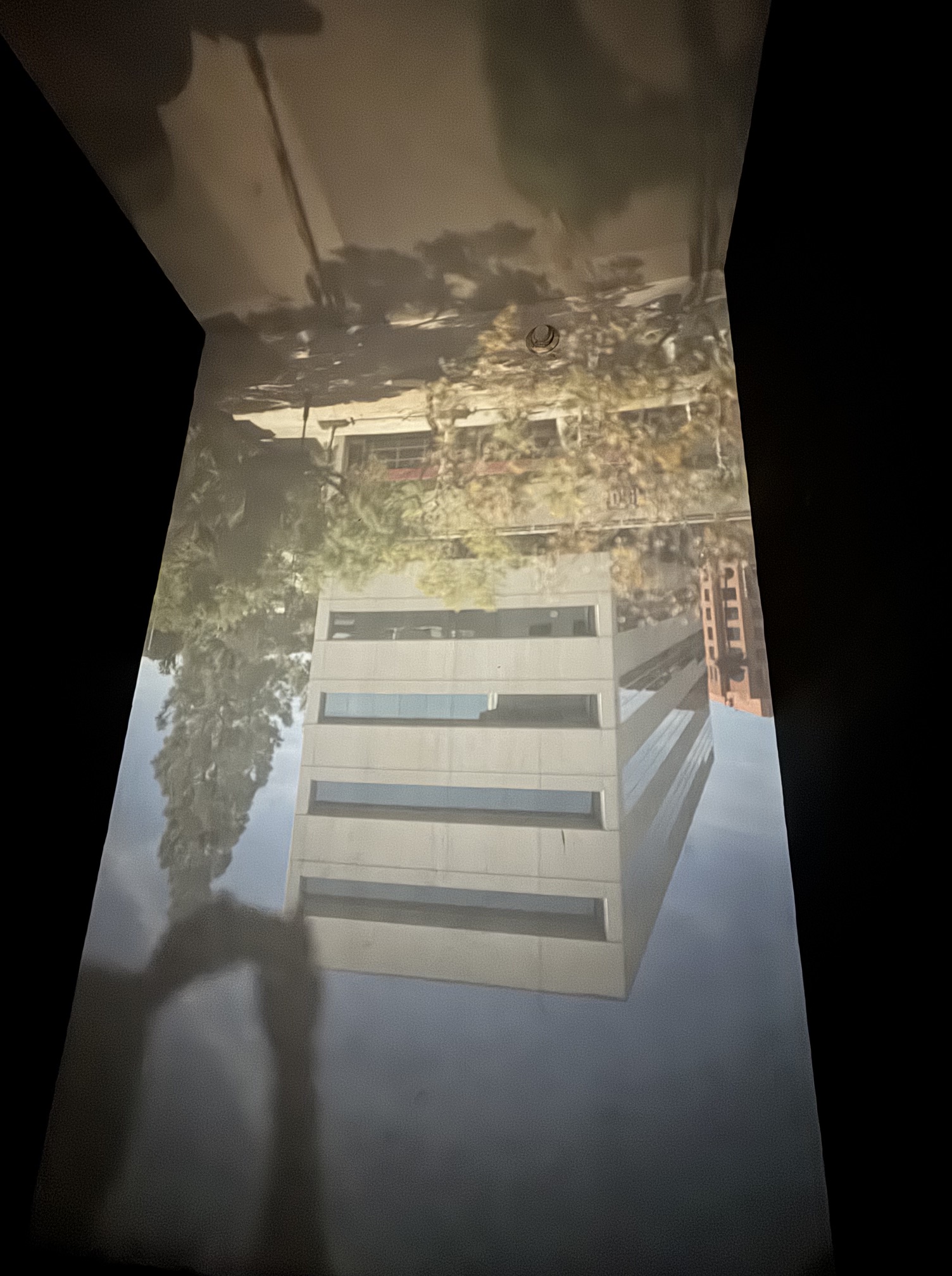
The other half of UCR ARTS is the California Museum of Photography, which holds the most extensive collections of photographs in the Western U.S., spanning the entire history of photography. What’s actually on view will change as all the exhibitions are temporary, but there are some fairly prestigious objects in the collection, and one thing you’re likely to see is some very old cameras from the museum’s extensive technology collection. There’s also a camera obscura on the second floor, displaying a projection of the pedestrian mall right outside.
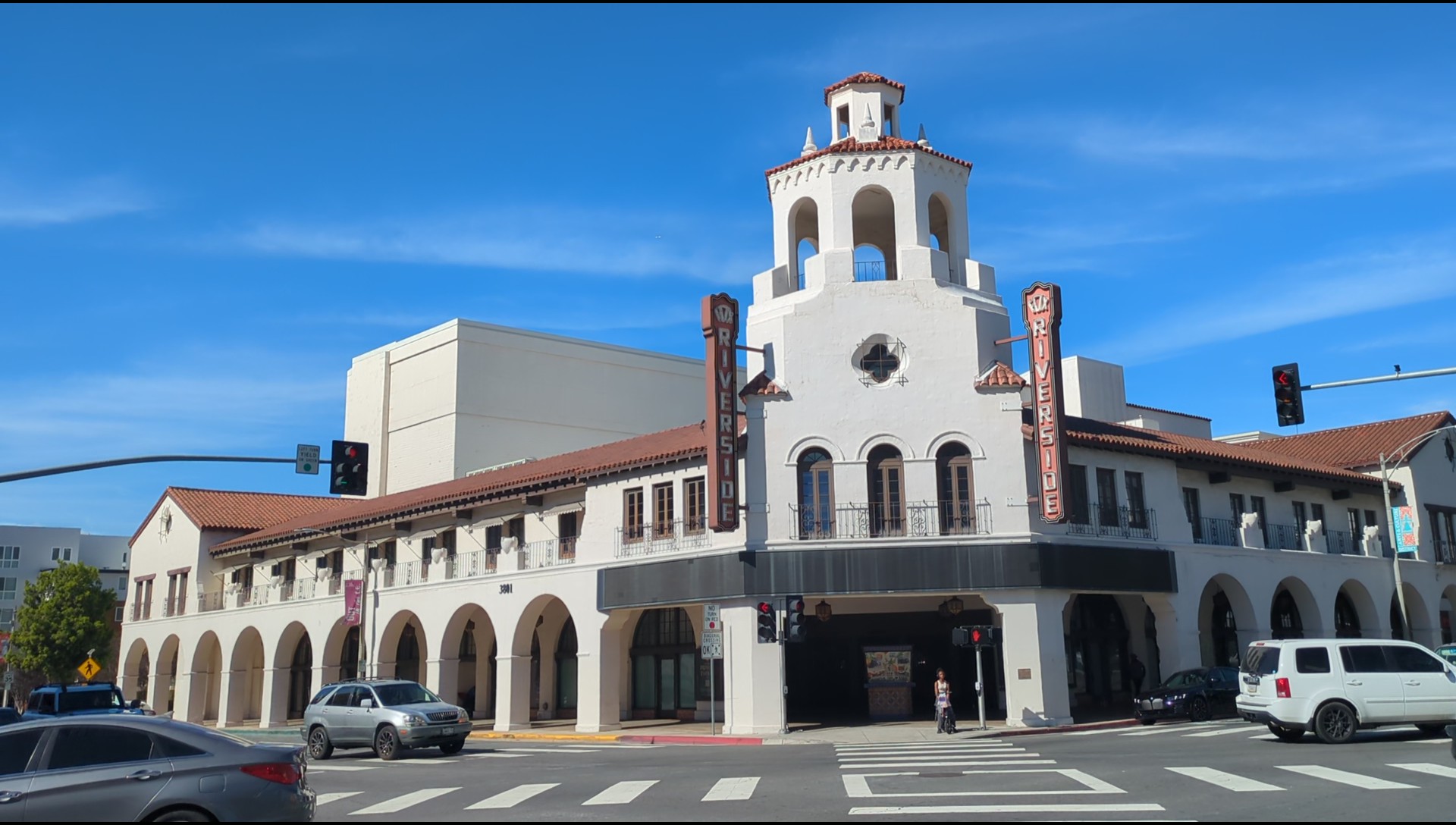
Taking Mission Inn Avenue west from its namesake, you’ll see the old Fox Theater on the corner of Market Street, which opened in the 1920s as a movie theater and is now a major performing arts and concert venue. Right behind the Fox Theater, just up the block on Market St., is a food hall and the Riverside Game Lab, a popular arcade bar.
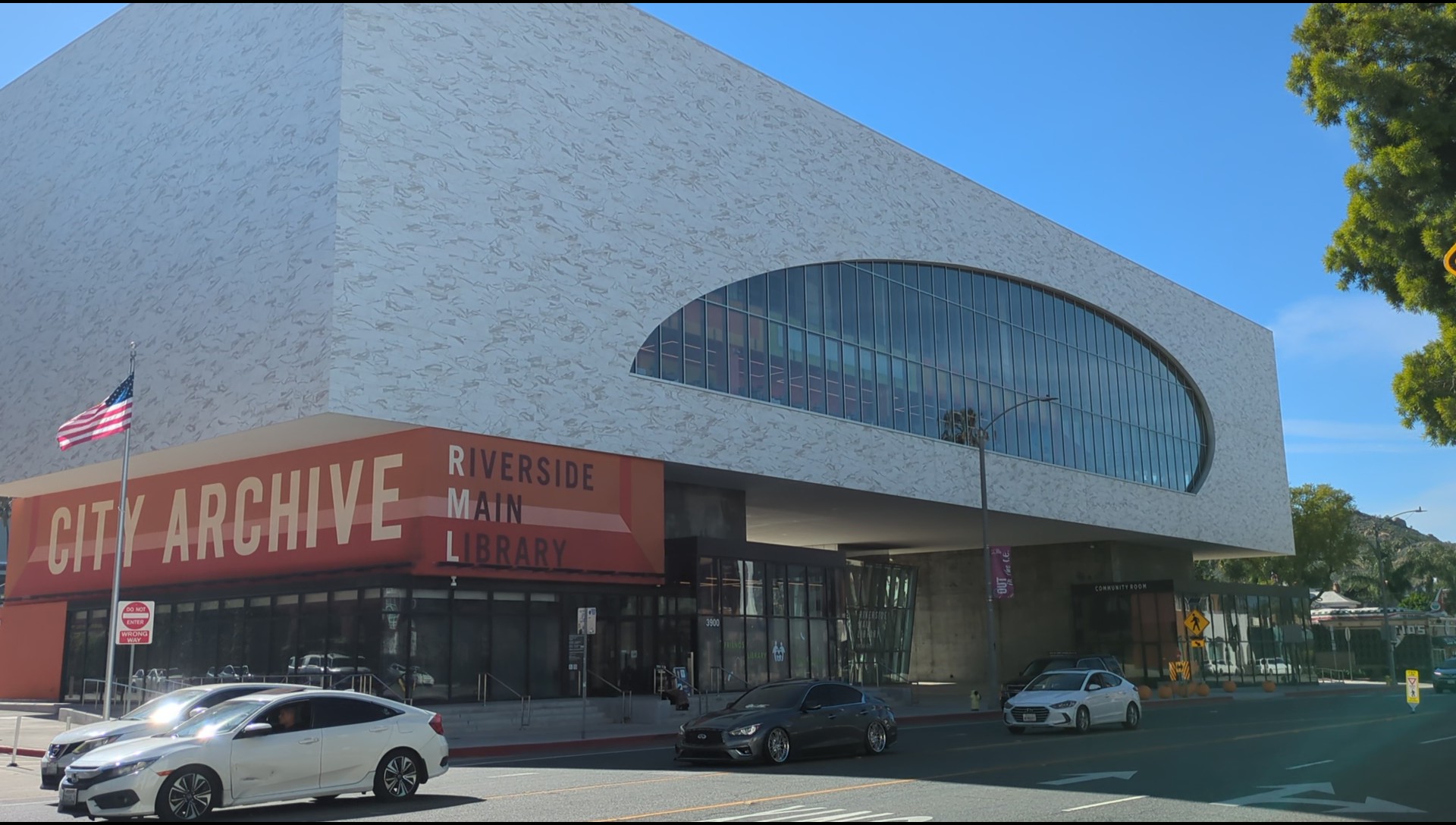
Continuing west on Mission Inn Ave., you’ll immediately spot the Riverside Main Library, which occupies an impressive modern building mostly suspended off the ground. On the ground floor is a bookstore run by the Friends of the Library. Take the elevator up and you’ll get a nice view over the west side of town from the outdoor deck, and inside there’s plenty of seating arranged around the giant, arcing window overlooking the street. Just across the street from the library is the Civil Rights Institute Inland Southern California, a civil rights organization that maintains a small museum devoted to civil rights struggles in the Inland Empire.
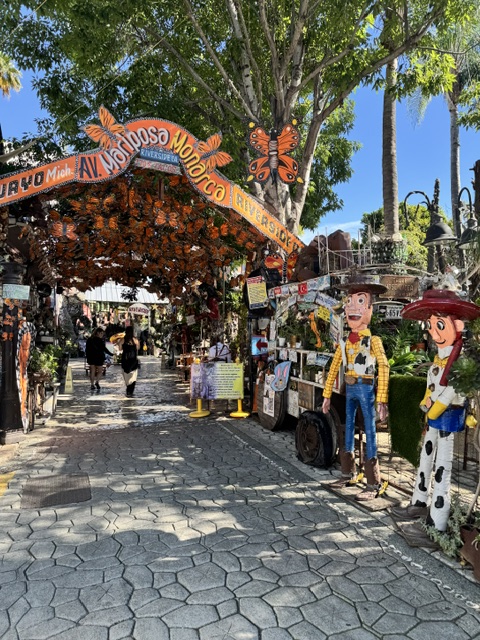
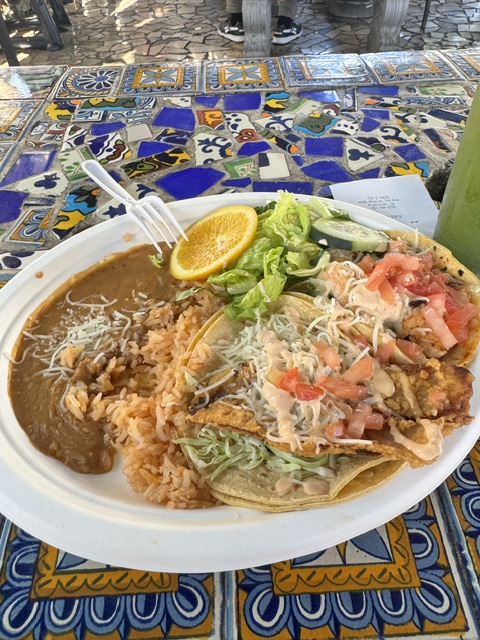
Lastly, just past the library is Riverside’s most colorful eatery, which you likely caught a glimpse of looking down the library deck: Tio’s Tacos, a beloved local taco stand that is just as much an art museum as it is a restaurant. Throughout the building is folk art created by Martin Sanchez, the owner of the restaurant, made from scrap materials. In the large patio in back, you’ll find a chapel made of bottles, sculptures of massive humanoid figures, objects scattered across the roof, and a tunnel filled with monarch butterflies. The ground is covered in ceramic tile laid out in beautiful patterns, and water fountains in the patio make for a very pleasant atmosphere. Not to mention the food itself is pretty good; the tacos and burritos are solid, and there’s a large selection of aguas frescas.
Of course, this doesn’t cover everything in Downtown Riverside. There’s tons of places to eat and drink, and plenty more interesting shops. And if you’re up for a hike, there’s a couple of interesting parks on the edge of Downtown. To the west is Mount Rubidoux, the prominent hill overlooking town, with trails leading to the cross at the top of the hill. On the way up, you’ll pass the Peace Tower and adjoining bridge, both made of stone and built in the 1920s in honor of the Mission Inn’s founder. The trailhead is at the top of 9th Street, just remember to bring water and sun protection for the climb.
North of Downtown, about a mile up Market Street, is Fairmount Park, which surrounds a small lake off the banks of the Santa Ana River. Pedal boats are available to rent and there are gardens and recreational facilities, as well as a steam locomotive on display at the entrance on Market Street.
 Transiting Los Angeles