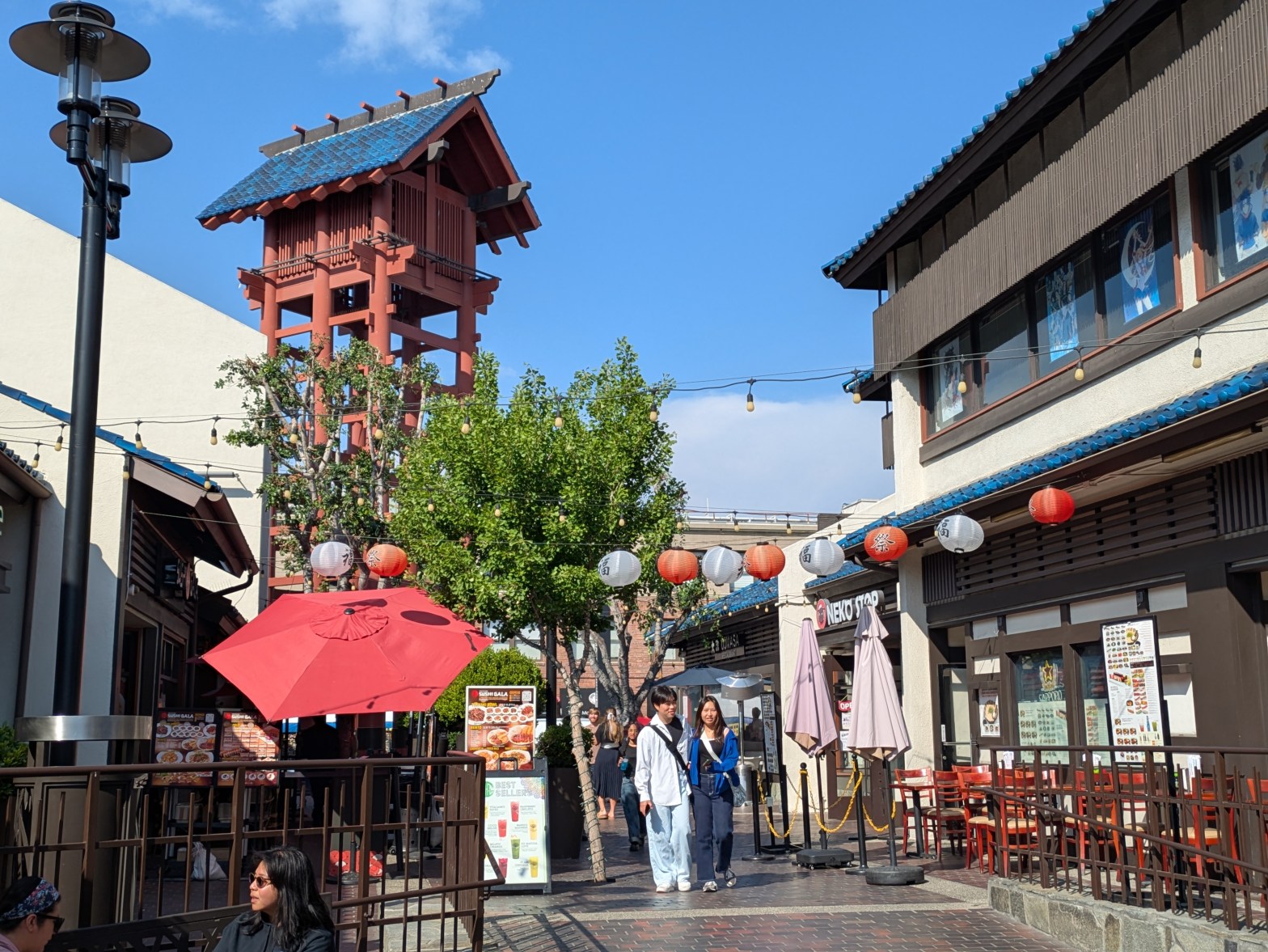
Little Tokyo has to be the most dynamic and fun neighborhood to visit in Downtown. Between a great dining scene, nightlife, and fun shopping, Little Tokyo draws in tons of visitors, keeping it active and hip. And with a brand new and super convenient Metro station, it’s a great place to visit by transit.
Dating back to the 1890s, Little Tokyo is also home to a established Japanese American community and a handful of legacy businesses that have withstood the many changes the neighborhood has experienced. Little Tokyo also has a pair of museums, historic buildings, and Downtown landmarks for visitors to see between browsing the neighborhood’s many shops.
Any time of the year is a good time to visit Little Tokyo, but there are a few annual events that are extra good times to visit. The biggest is Nisei Week in mid-August, a weeklong cultural celebration that includes a parade, a festival, the crowning of a festival queen, and lots of food and music. Children’s Day, a popular Japanese holiday, is celebrated on the first weekend in May with a family-friendly art and music festival. Then there’s Delicious Little Tokyo in the springtime, a community festival with art and music that spotlights the neighborhood’s many restaurants, with food tours and demonstrations. And around Halloween time, Haunted Little Tokyo brings a big block party with DJs, vendors, and costumes. We also highly recommend the Go Little Tokyo website and Instagram for their calendar of events and great local business recommendations.
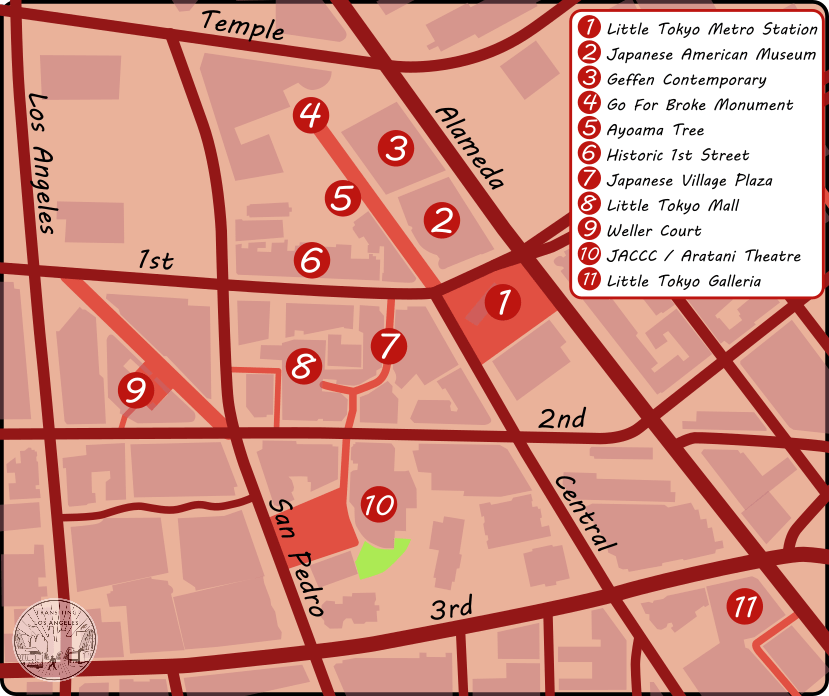
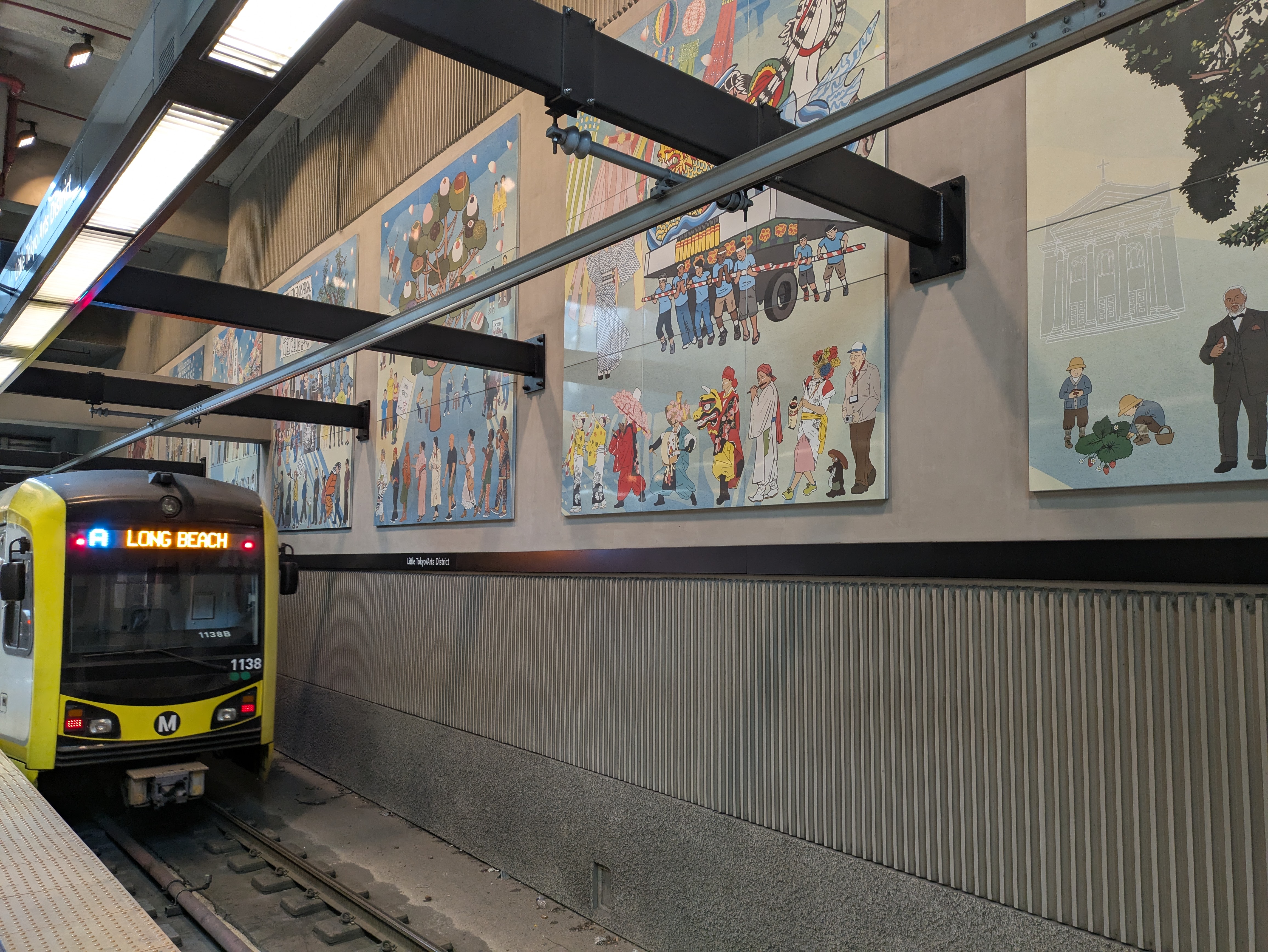
Little Tokyo is served by Metro’s A and E rail lines, which both stop at the Little Tokyo/Arts District station at 1st Street and Central Avenue, right in the heart of the neighborhood. It’s also served by Metro buses 30, 76, and 106 and the DASH A shuttle, which all stop near the station.
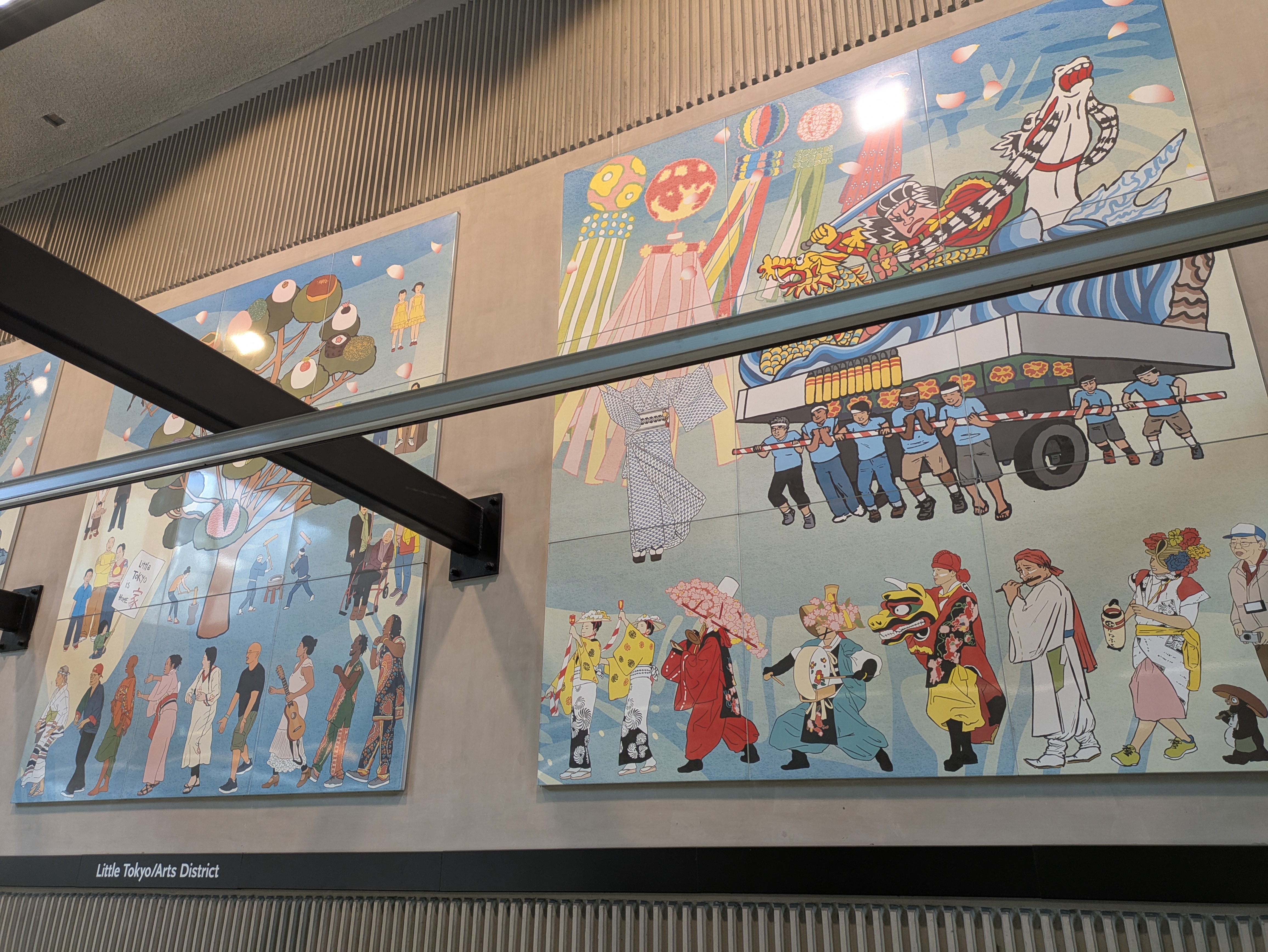
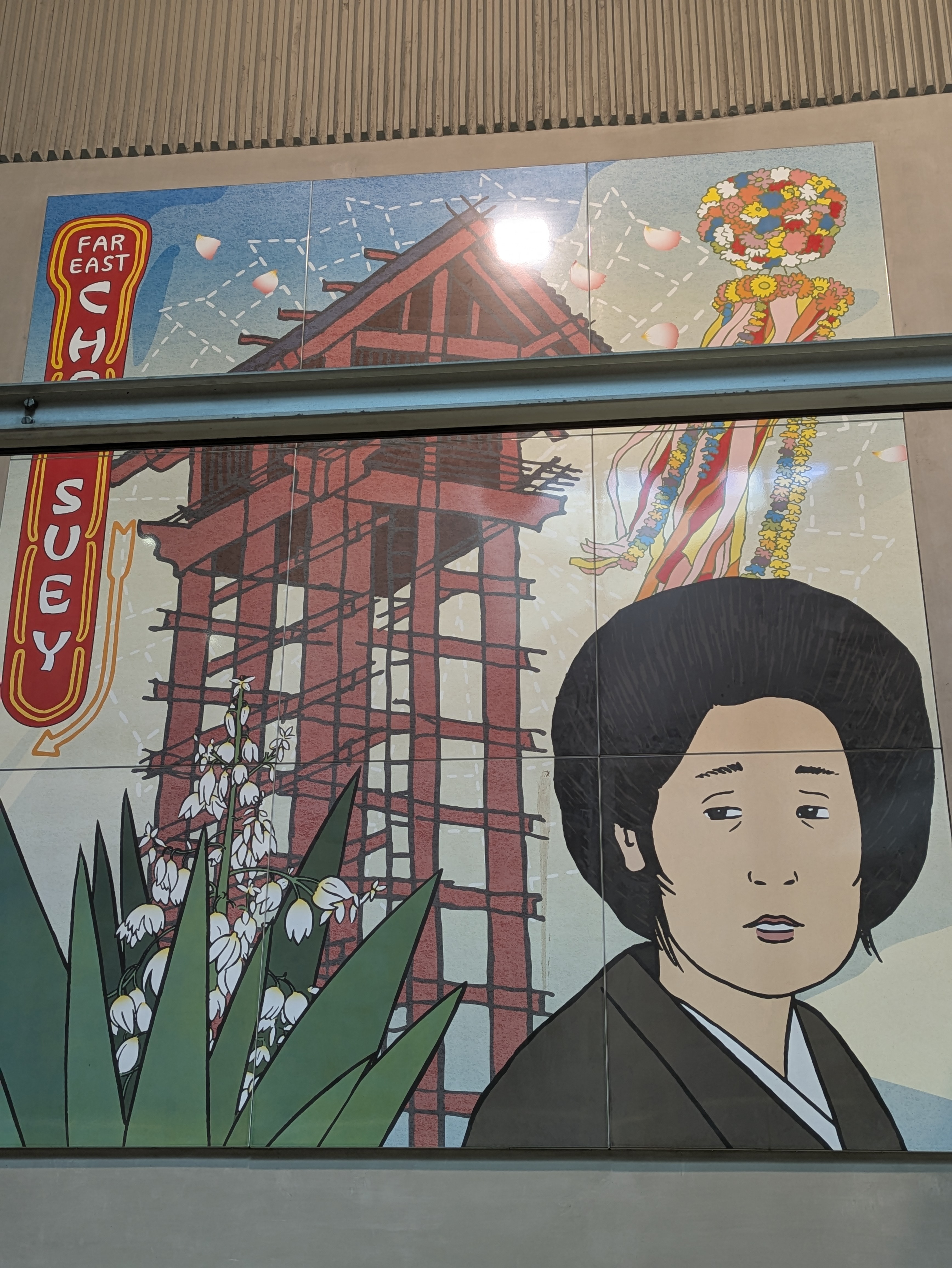
Since opening in 2023, the Little Tokyo/Arts District Metro Station station quickly became a favorite of Metro riders. For one, it’s very convenient, located right in the middle of the neighborhood. Secondly, it’s beautiful, with a skylit ceiling that allows natural light to filter down to the platform, and a series of wonderful murals by Audrey Chan illustrating the complex and colorful history of Little Tokyo, including its many social movements and landmarks both present and lost, such as the Atomic Cafe, which stood on the site of the station (a separate sign up on the surface in the back of the station goes into more detail on the history). The murals are worth spending some time examining, and make for an entertaining diversion while you’re waiting for your train.
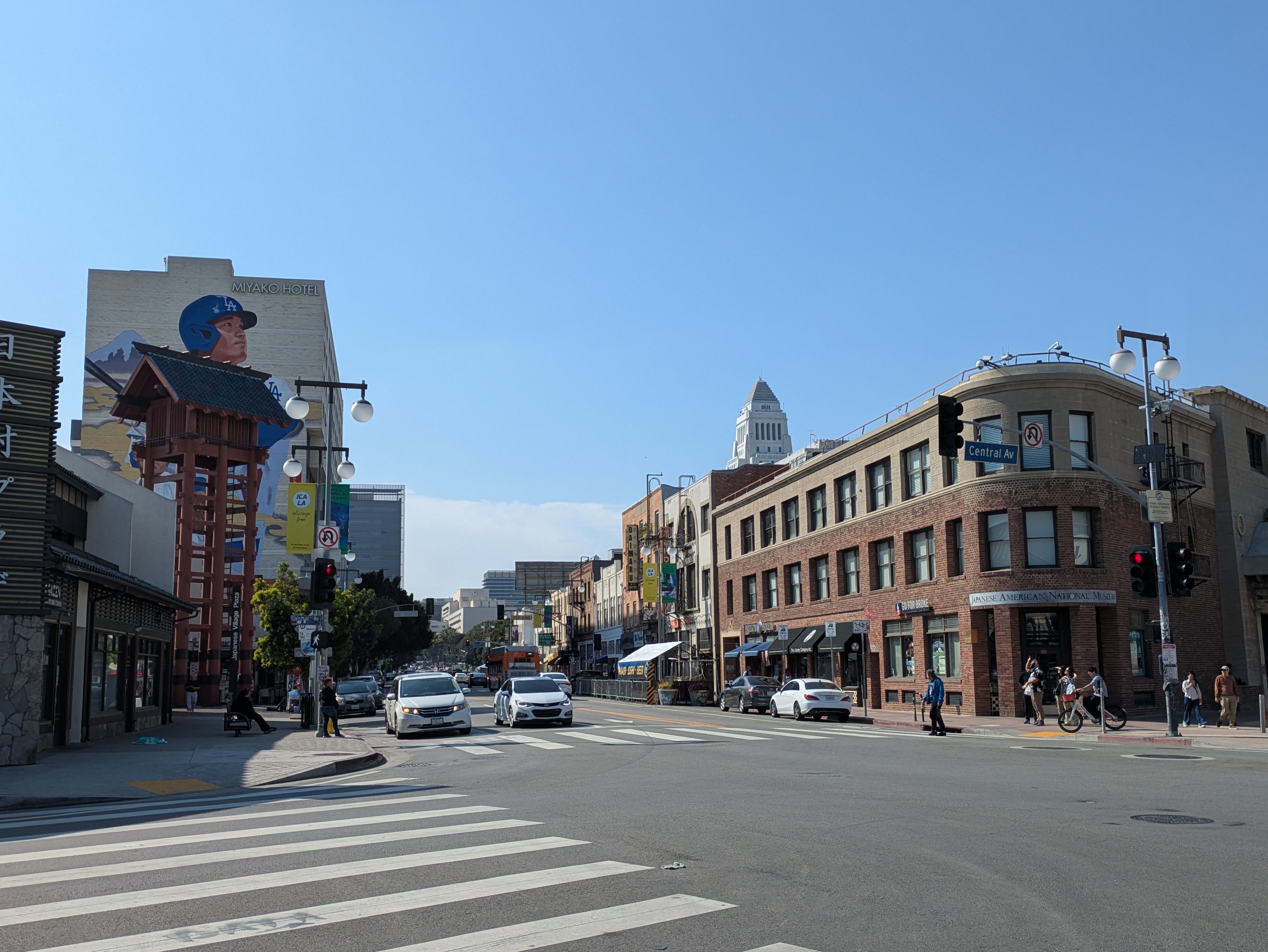
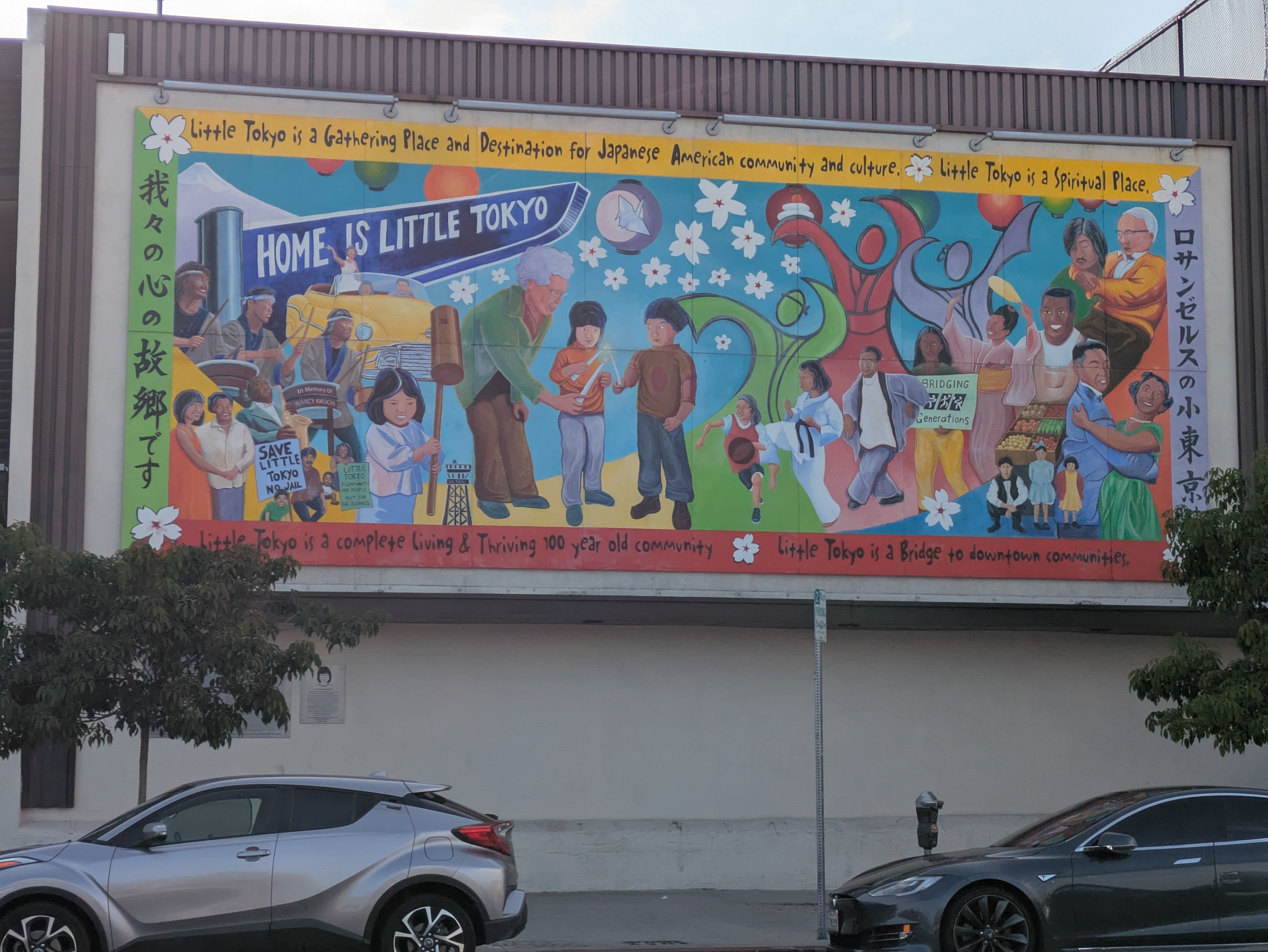
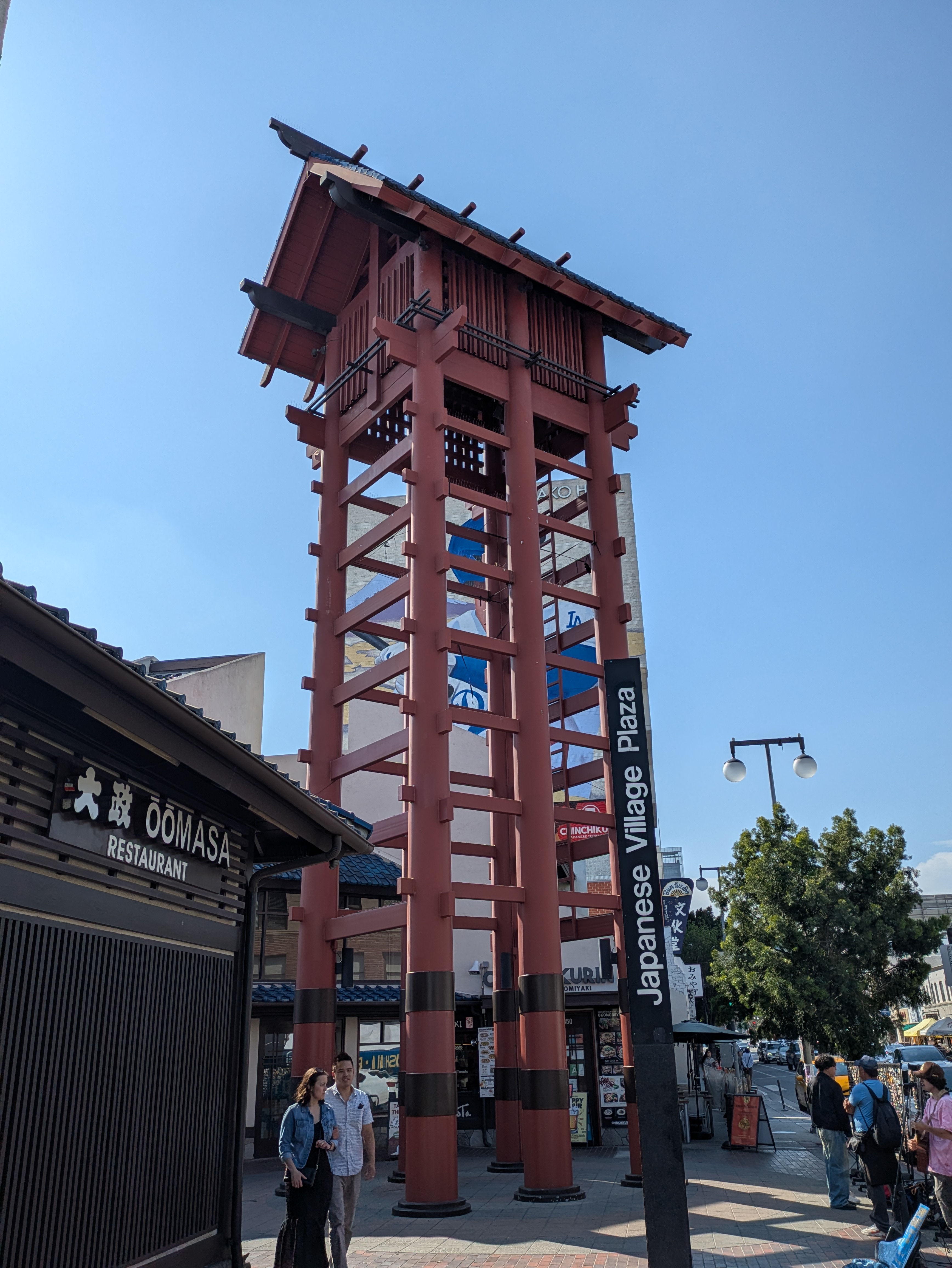
Upstairs, as you leave the station, the plaza spills out into the intersection of 1st and Central, the heart of activity for the neighborhood. Up 1st Street you can glimpse the red watchtower that marks the entrance to Japanese Village Plaza, the massive Shohei Otani mural just beyond, and City Hall in the distance. On the wall directly across Central is the colorful “Home is Little Tokyo” mural, itself something of a neighborhood landmark.
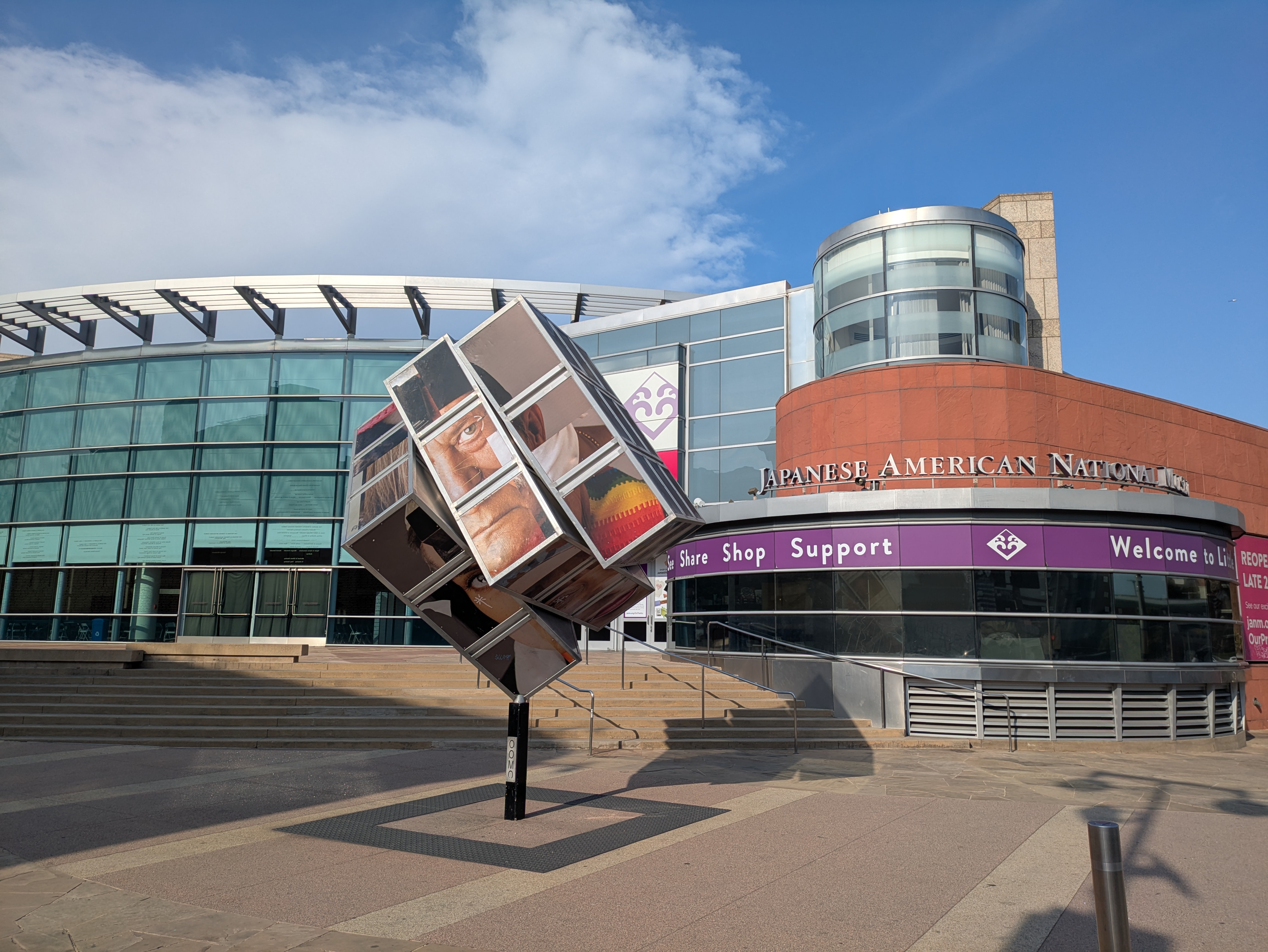
Across 1st Street is the gleaming facade of the Japanese American National Museum (JANM), a Smithsonian-affiliated institution devoted to Japanese American culture. Unfortunately, the museum is currently closed through late 2026 for renovations, but they still put on a lot of public events, so check the calendar on their website. When they’re open, their exhibits are detailed and informative, with a focus on the Japanese American internment during WWII, and marvelous changing art exhibitions.
Out front is a fun piece of public art, called OOMO (Out Of Many, One), by Nicole Maloney. It’s essentially a giant Rubik’s cube, with huge mix-and-match photographs of faces on the sides. It’s explicitly designed to be interactive, allowing you to actually rotate the giant cube and try to change the layout. Despite its size, it’s surprisingly easy to move, and it’s fun to watch people play around with it.
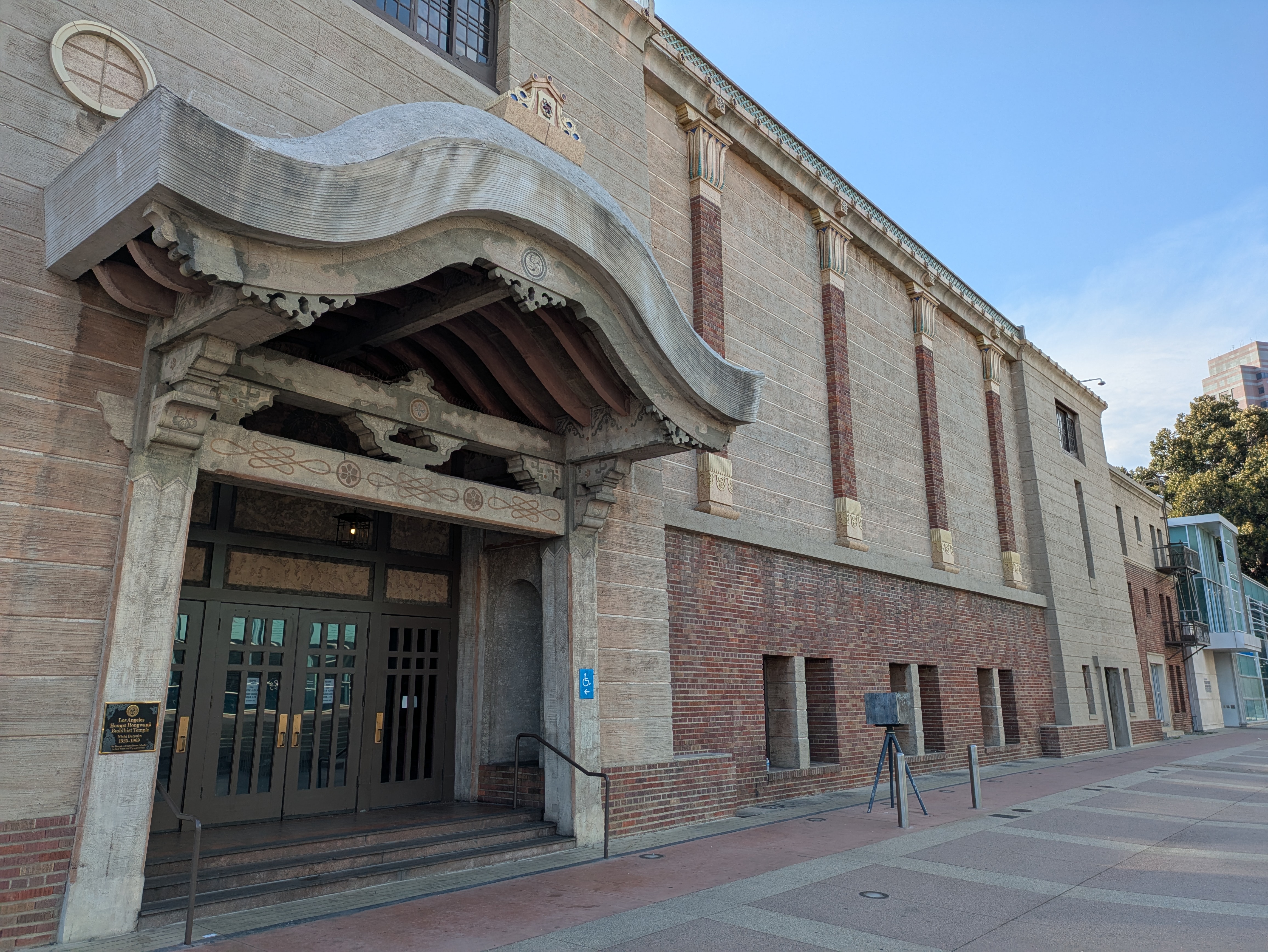
On the other side of the pedestrian street from JANM is the historic Hompa Hongwanji Buddhist Temple, dating back to 1925 and the original home of JANM. The building now houses the Go For Broke National Education Center, which is dedicated to the memory and legacy of Japanese American WWII veterans, most notably the 442nd Regiment, an army unit of Japanese Americans who fought valiantly in the European theater of the war even while their families back home faced prejudice and discrimination from their fellow Americans. “Go for broke” became the motto for this unit, invoking putting everything on the line to prove themselves as worthy Americans.
For the visitor, the center has an exhibit gallery upstairs called Defining Courage, which is open on the weekends and costs $10 to enter. The exhibit deals with the Japanese American experience of WWII but also takes a broader view of how it fits in the history of racial prejudice in the United States, and is very well put together. The actual memorial to the 442nd Regiment, the Go For Broke Monument, is outdoors at the very end of the pedestrian street, although it’s currently fenced off due to construction.
Outside the Go For Broke Center is another great piece of public art, a sculpture of an old-fashioned box camera on a tripod facing the building. This is Toyo Miyatake’s Camera, a commemoration to a Japanese American photographer who opened a photo studio in Little Tokyo before being imprisoned at the Manzanar incarceration camp during WWII. There he secretly documented life at Manzanar, providing invaluable documentation of the ordeal. The sculpture sits on the spot where, at the outbreak of the war, hundreds of Japanese Americans were forced to board buses that would transport them to internment camps. (As a side note, Miyatake had a protege, Jack Iwata, who would open his own Little Tokyo photo studio after the war. The neon sign for Iwata’s studio has been preserved and is on view at the Museum of Neon Art in Glendale.)
Further up the walkway, behind JANM, is the Geffen Contemporary, the secondary location of the Museum of Contemporary Art (MOCA). Formerly a warehouse that stored police cars, the Geffen tends to hosts MOCA’s large-scale installations that don’t fit inside their main location on Grand Avenue. All exhibitions here are temporary and often require paid admission; check their website to see what’s on view.
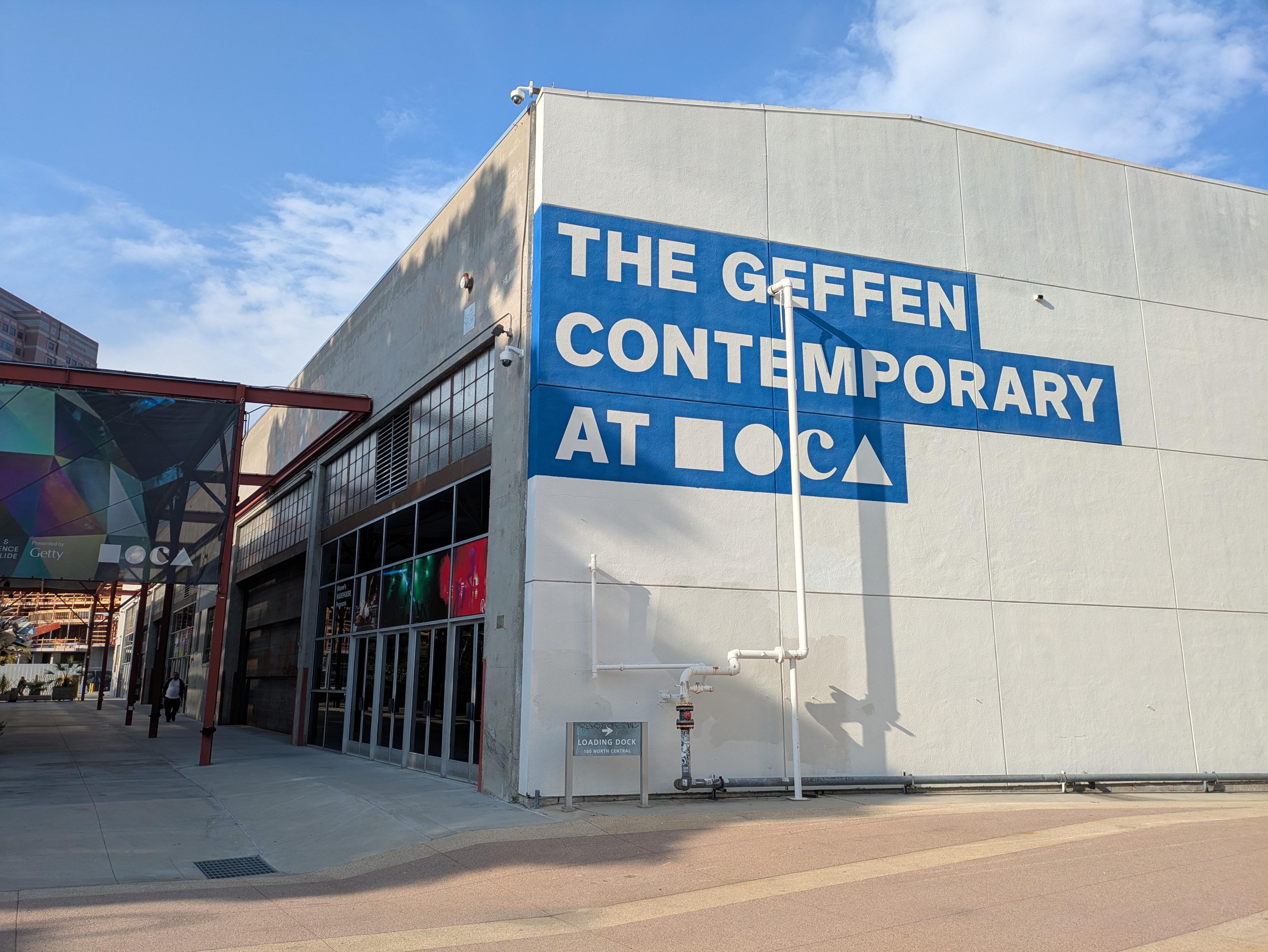
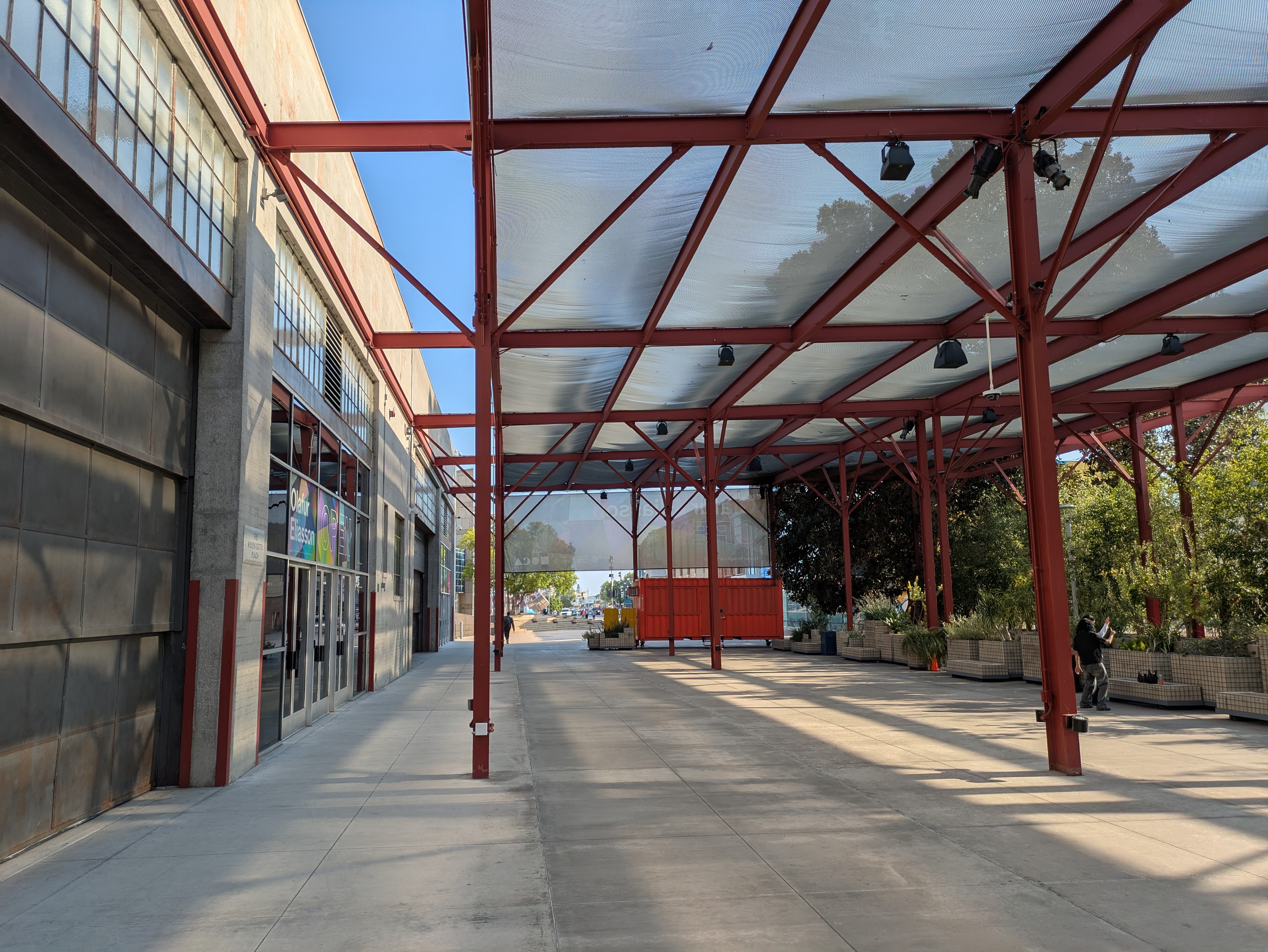
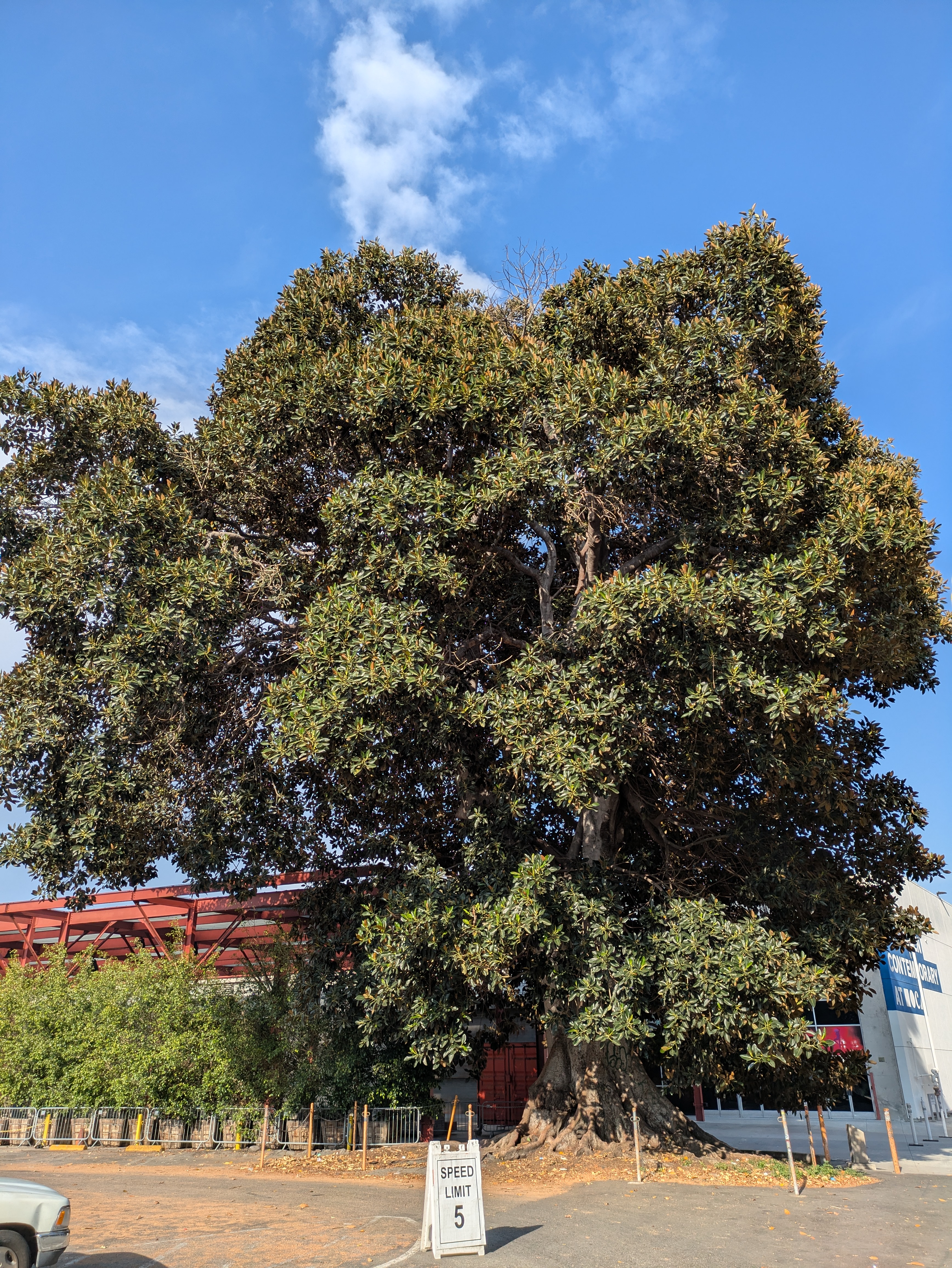
Across from the Geffen, just before you pass under their outdoor pavilion, is the Aoyama Tree. This massive Moreton Bay Fig, planted in 1920, stood at the entrance to a Buddhist temple that once stood at this site. The temple is long gone, but the tree was somehow spared, and lives on today.
Returning to 1st Street, look across to the right and you’ll see the red watchtower that marks the entrance to Japanese Village Plaza. Just past is Robert Vargas’ massive mural of Shohei Otani, a figure who Little Tokyo has readily embraced since he became a Dodger, if the amount of merchandise is anything to go by. The mural has an interactive element as well: scattered at a few viewpoints along the sidewalk are QR codes which open a webpage which uses your smartphone camera to project an augmented reality animation on top of the mural, a very neat little trick to show to your friends.
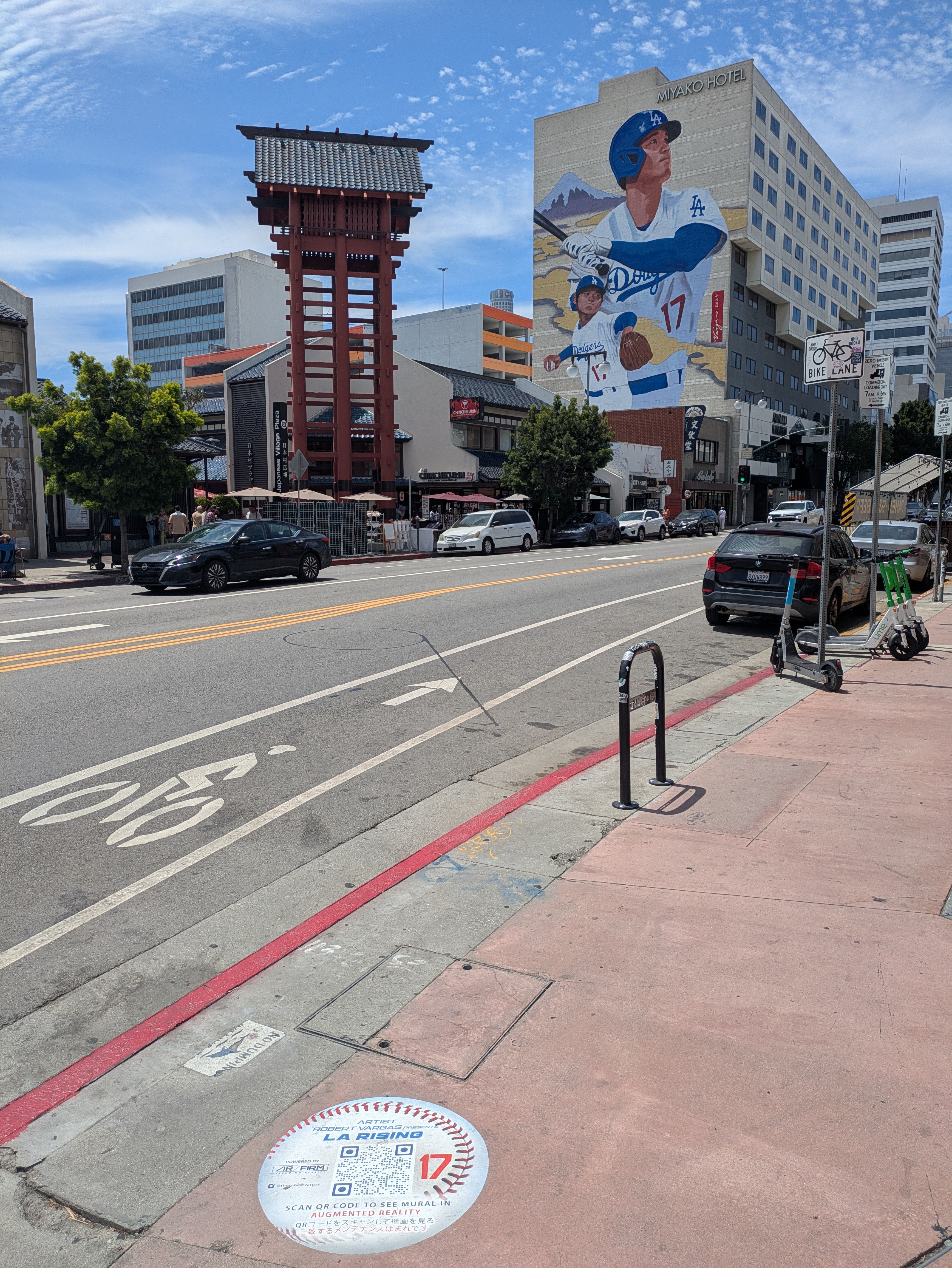
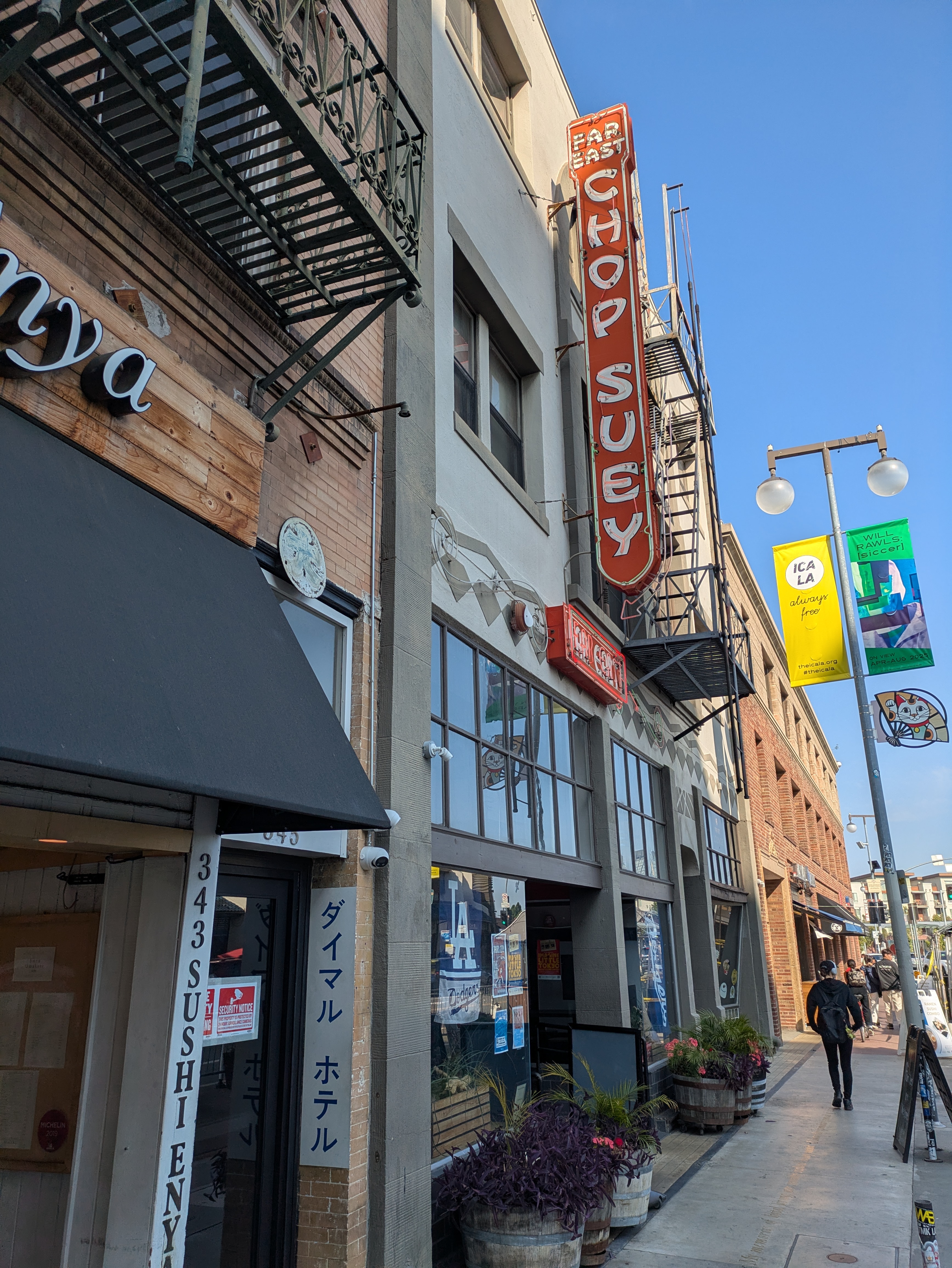
The north side of this block of 1st Street is the historic heart of Little Tokyo, with a row of buildings dating back to before WWII. There are several ramen restaurants among the storefronts here (including the wildly popular Daikokuya, which you can always expect to have very long lines at dinner time), along with Far Bar, which has a lovely back patio and some excellent bar food inside the historic Far East Building, with its noteworthy Chop Suey neon sign.
This block of 1st has some legacy businesses, including many of the oldest in Little Tokyo. Right beneath the Shohei Otani mural is Bunkado, a gift shop dating back to 1947 that sells all sorts of really wonderful stuff: books, stationery, origami, figurines, kitchenware, and all kinds of other Japanese goods and trinkets. Upstairs on the second floor, you’ll find a huge collection of Japanese CDs, as well as a secondary artisan store selling clothing and wonderful candles and incense.
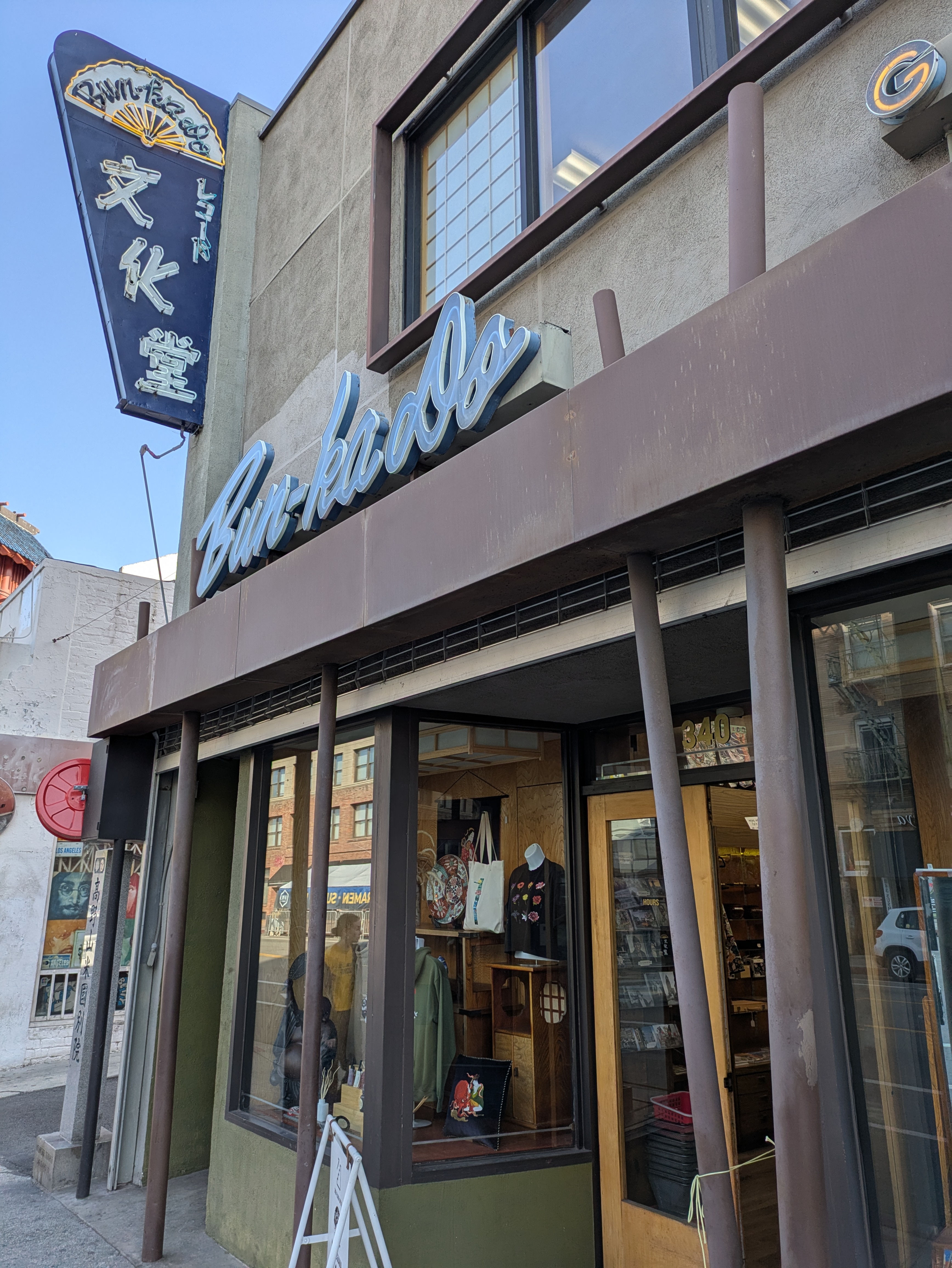
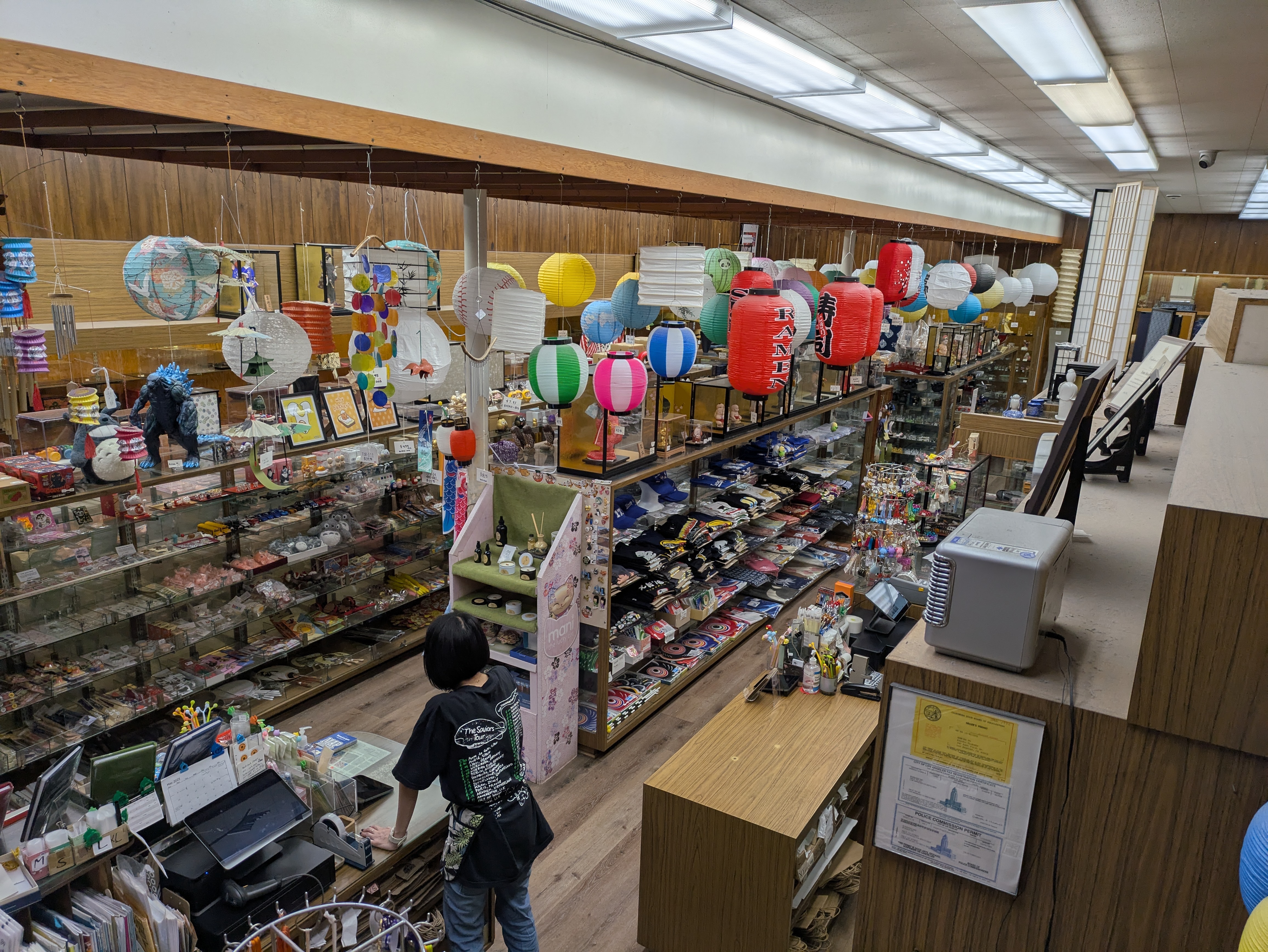
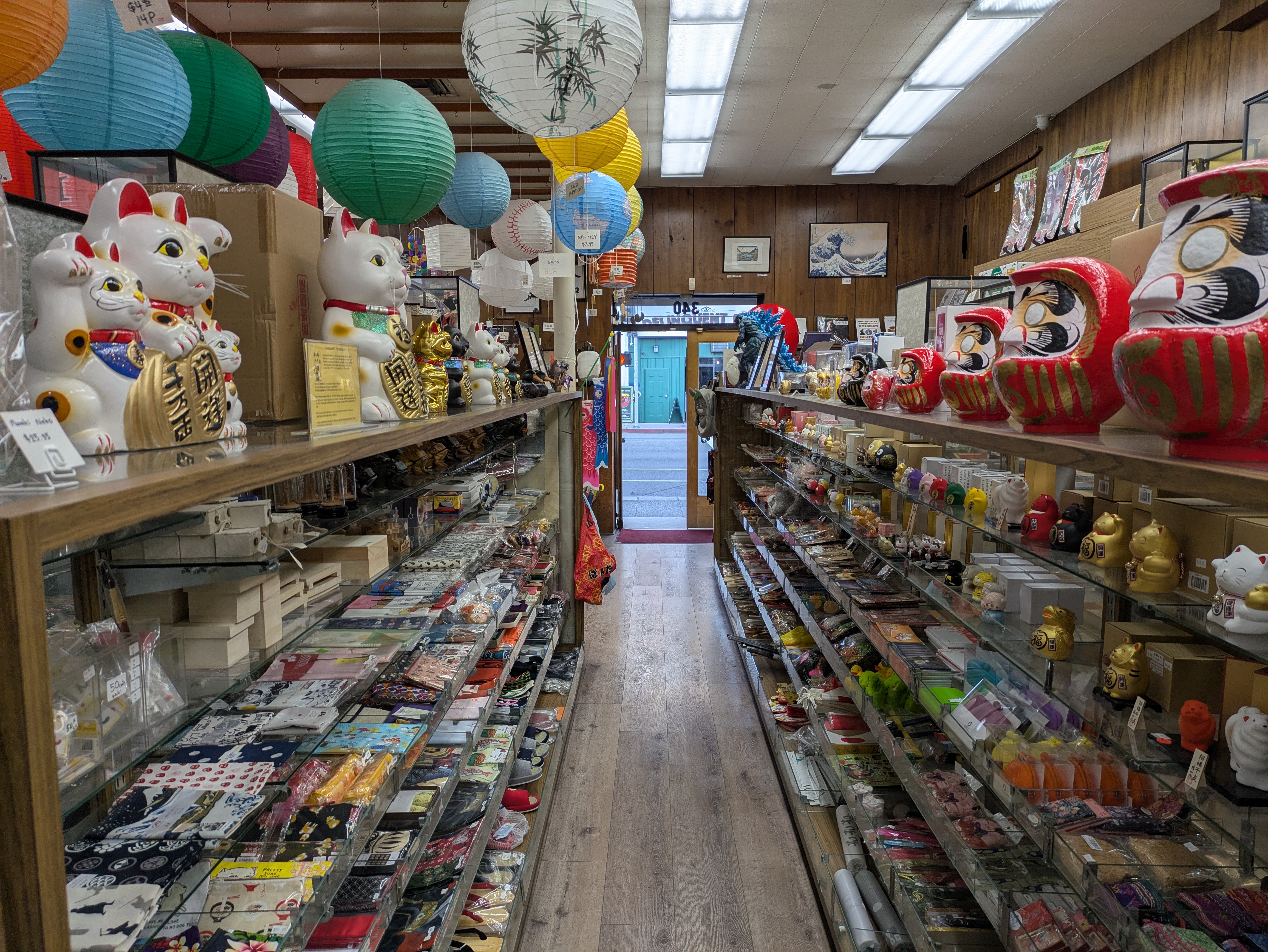
Next to Bunkado is the Miyako Hotel, whose lobby holds one of Little Tokyo’s most popular coffee shops: Okayama Kobo Cafe, a tiny little cafe tucked into one side of the lobby that specializes in matcha drinks and baked goods, with fluffy bread rolls and adorable pastries. The coffee is also quite good, and the matcha lattes are excellent.
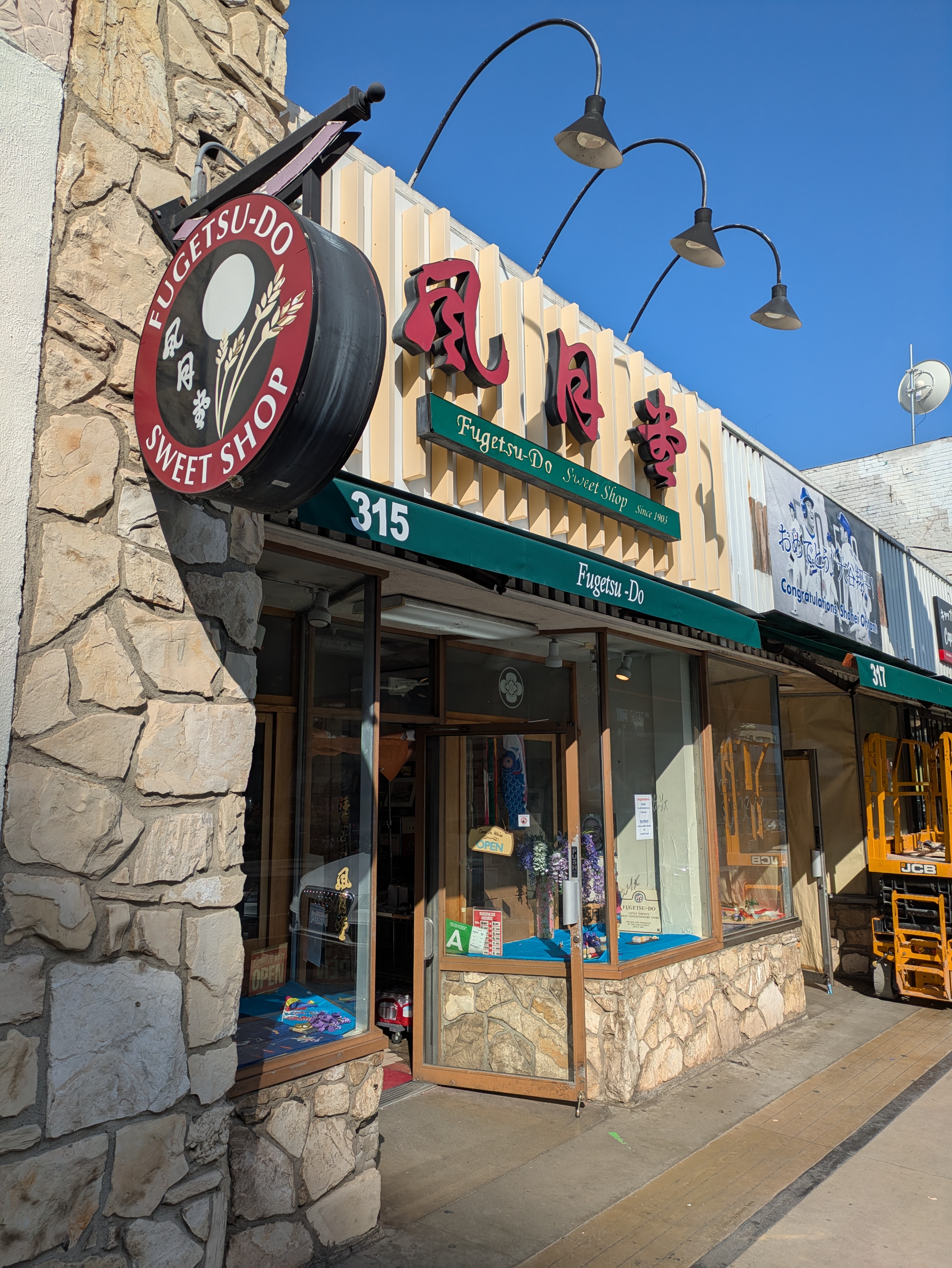
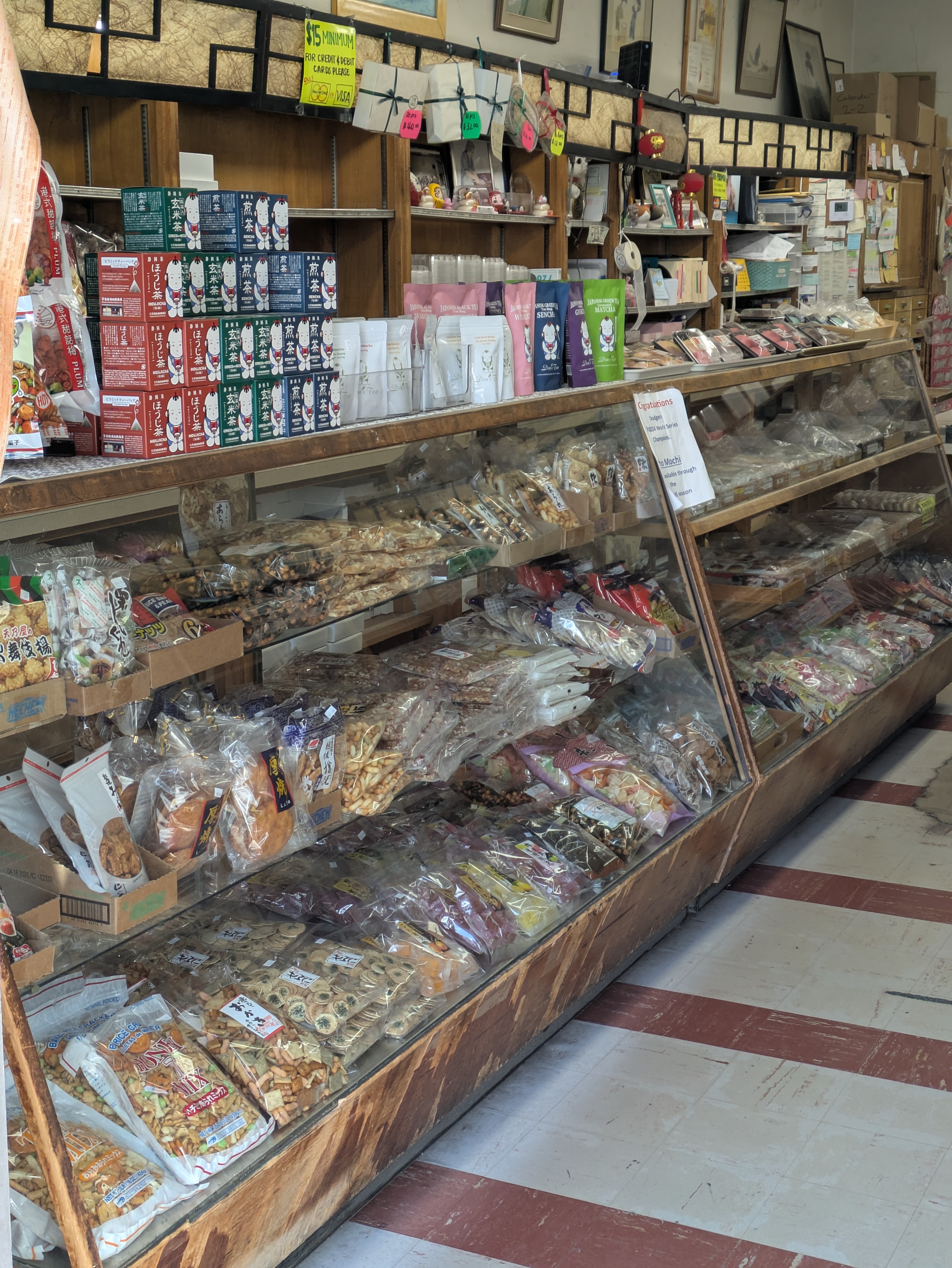
On the other side of 1st, further up the block, is Little Tokyo’s oldest business: Fugetsu-Do Sweet Shop, a family-run bakery that has been in business since 1903. Inside the tiny store you’ll find a display case with a wide variety of mochi in dozens of flavors, including some seasonal varieties. If you have trouble deciding, you can buy a sampler box to try a variety of flavors. They also have plenty of Japanese snacks and candy available.
Past Fugetsu-Do at the very end of the block is the Koban Little Tokyo Visitor Center, which has lots of maps and information on the neighborhood, with very helpful staff who are always happy to answer your questions. Right around the corner on Judge John Aliso Street is the Union Center for the Arts, housed inside an old church dating back to the 1920s, which is home to East West Players, a highly acclaimed Asian American theater company.
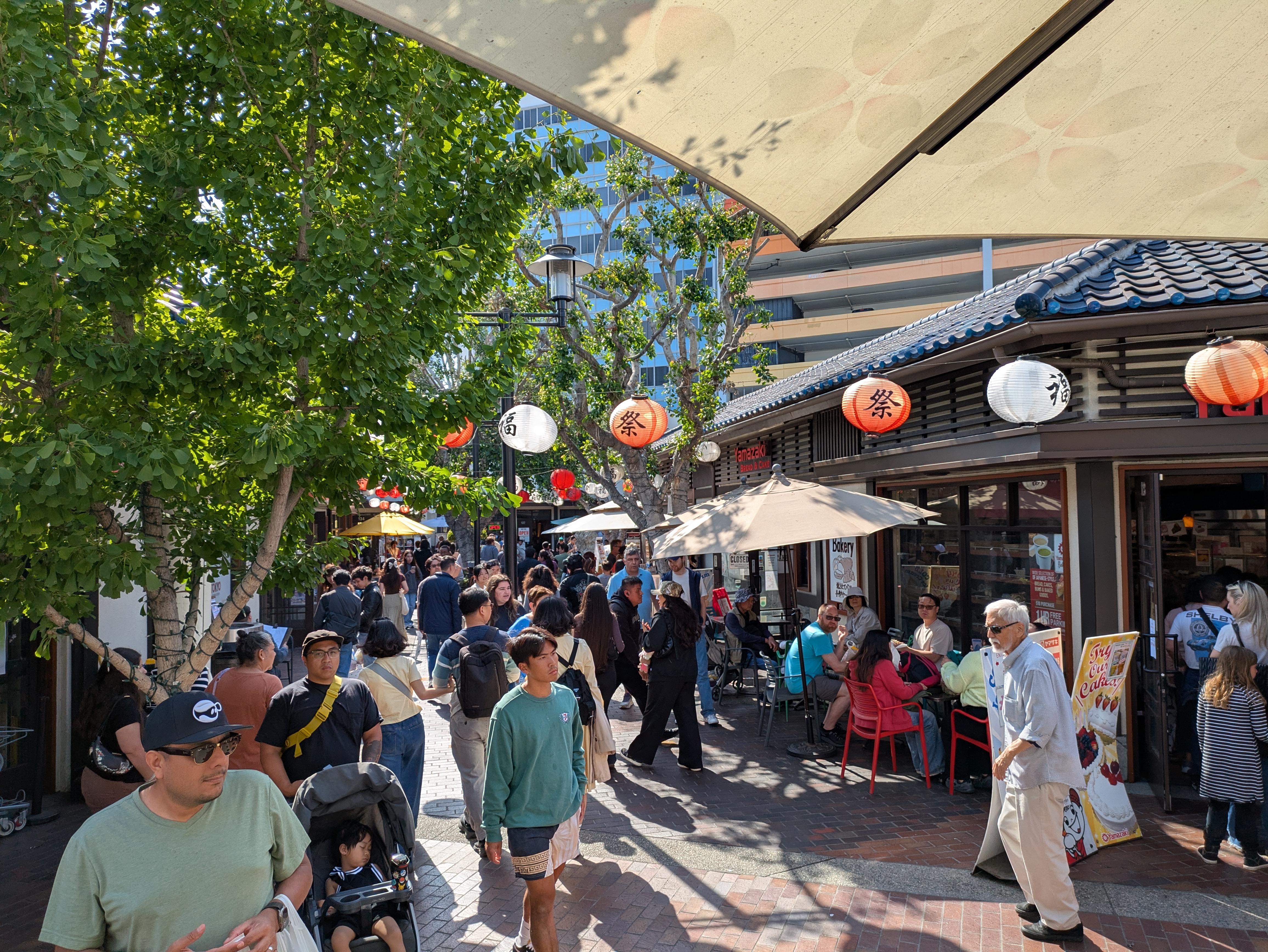
Returning to that red watchtower near 1st and Central, let’s enter Japanese Village Plaza. This mall is probably the most active spot in Little Tokyo, packed with throngs of sightseers on the weekends. The mall is very cute, with shingled rooves and hanging Japanese lanterns, as well as plenty of trees, landscaping, and places for people to sit. In the center of the mall, outside the small grocery store, is a small stage where people occasionally sing karaoke or play an instrument.
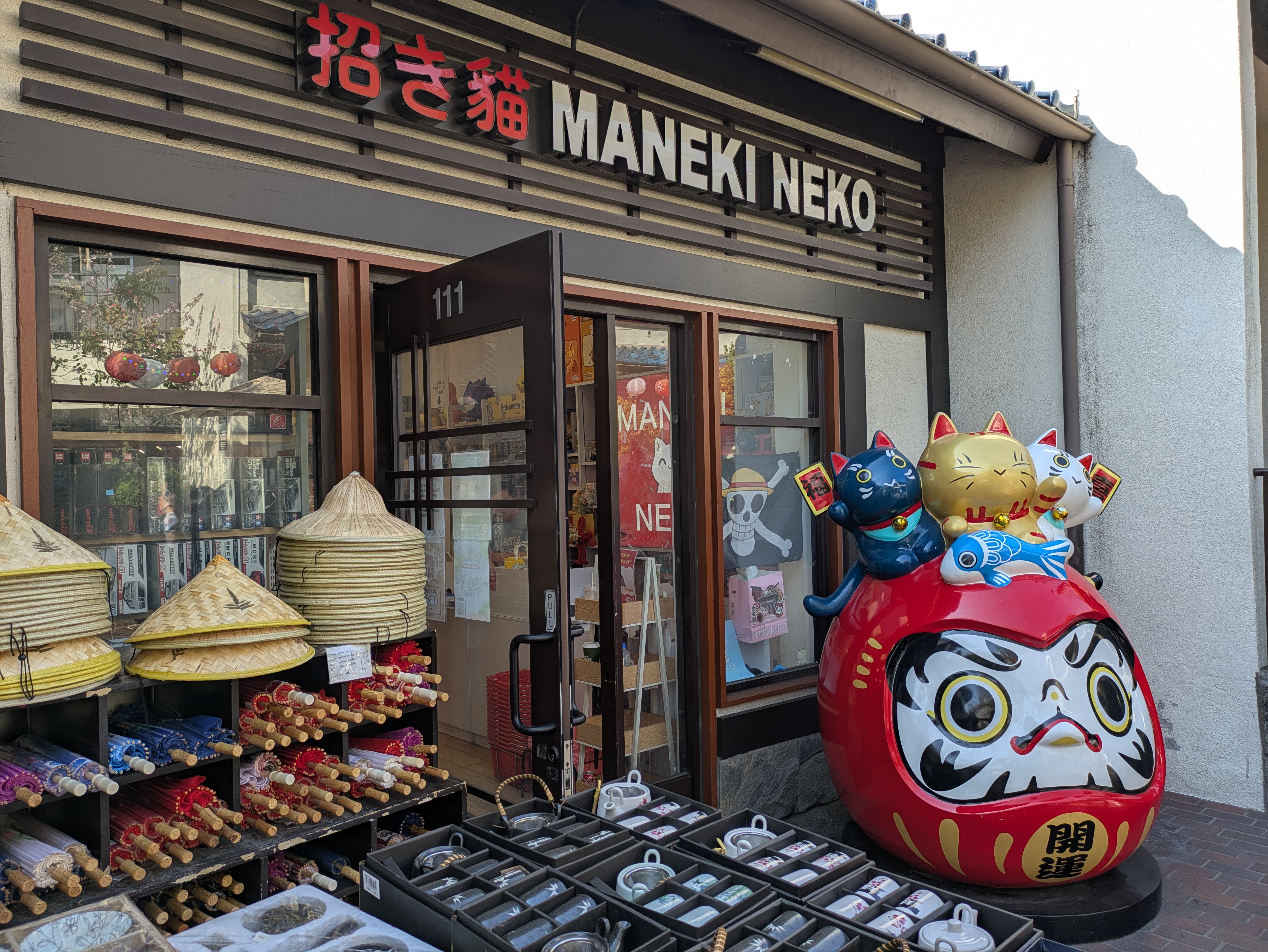
The mall has plenty of places to eat and shop that are worth checking out. Of particular note are Maneki Neko, a Japanese pop culture store full of plushies, toys, and collectibles that is always jam-packed with shoppers. Next door is a Sanrio store, for those looking to get their Hello Kitty, Kuromi, or Pompompurin fix (after waiting in the line just to enter). Just across and upstairs is Catch, full of blind boxes, gachapon, and tons of adorable collectibles. Across from the grocery store, where the path curves around, is Yamazaki Bakery, popular for its steamed buns, pastries, and delicious (and often adorable) cakes. Just past is Cafe Dulce, with its excellent donuts and coffee drinks.
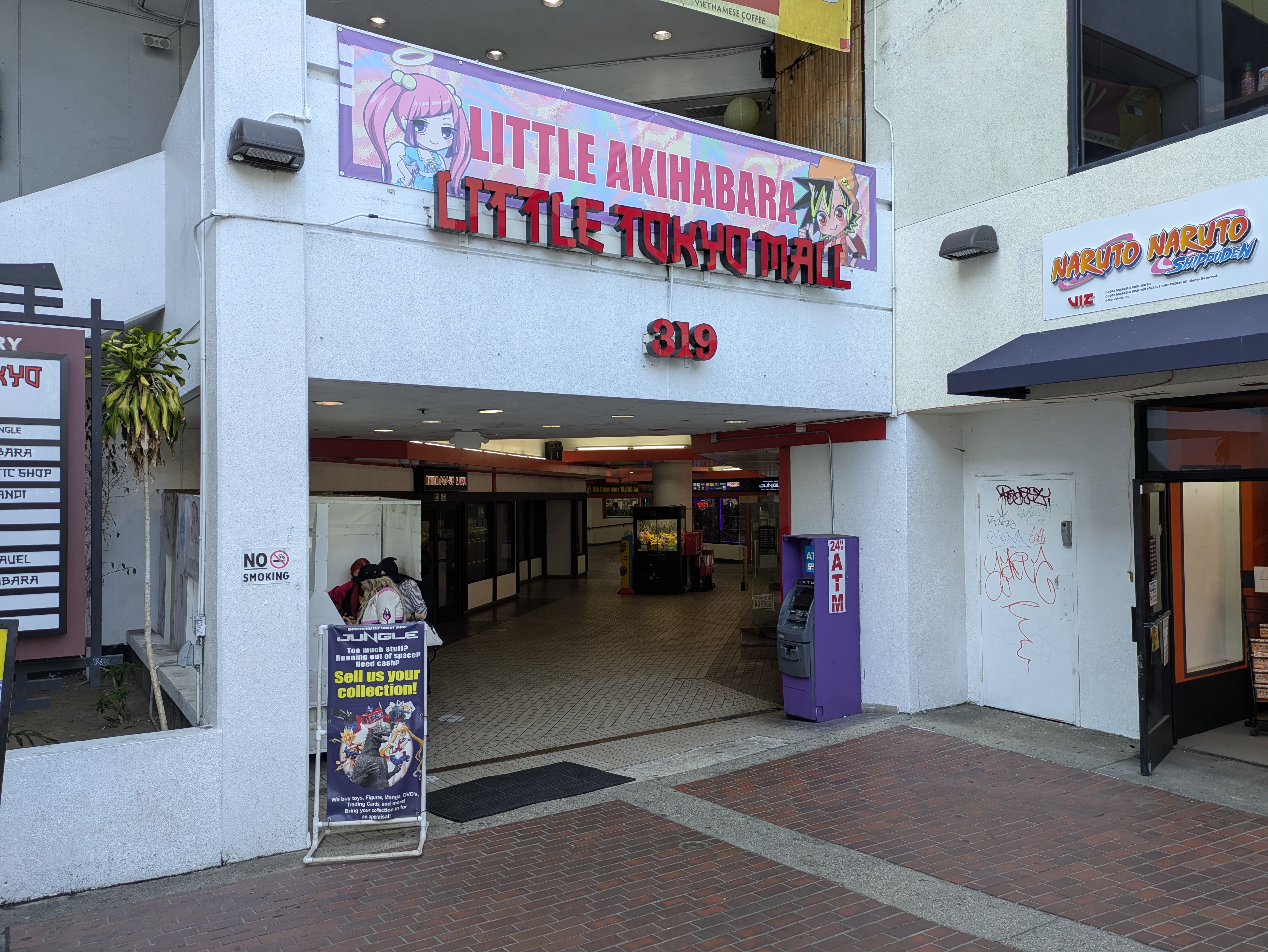
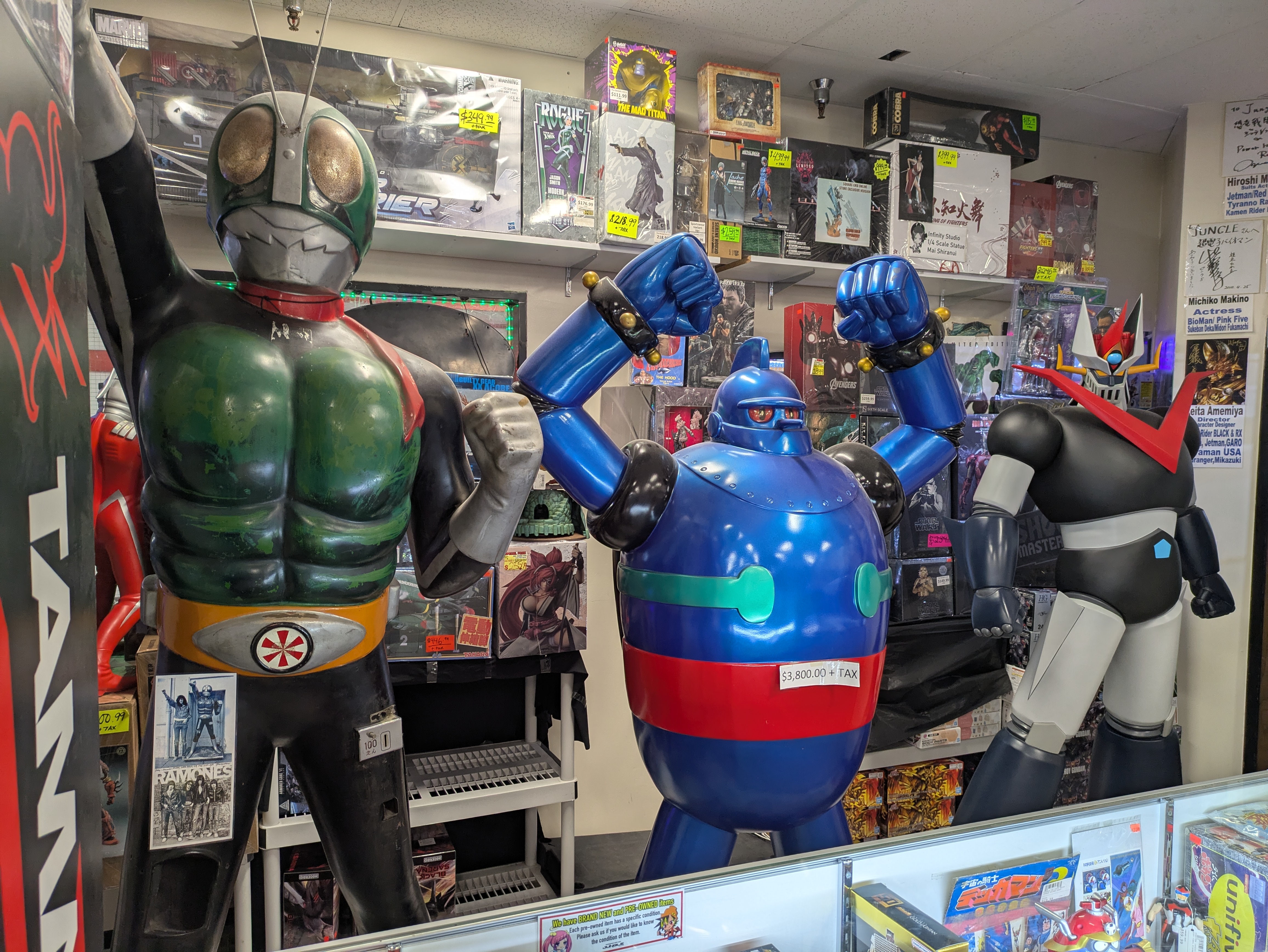
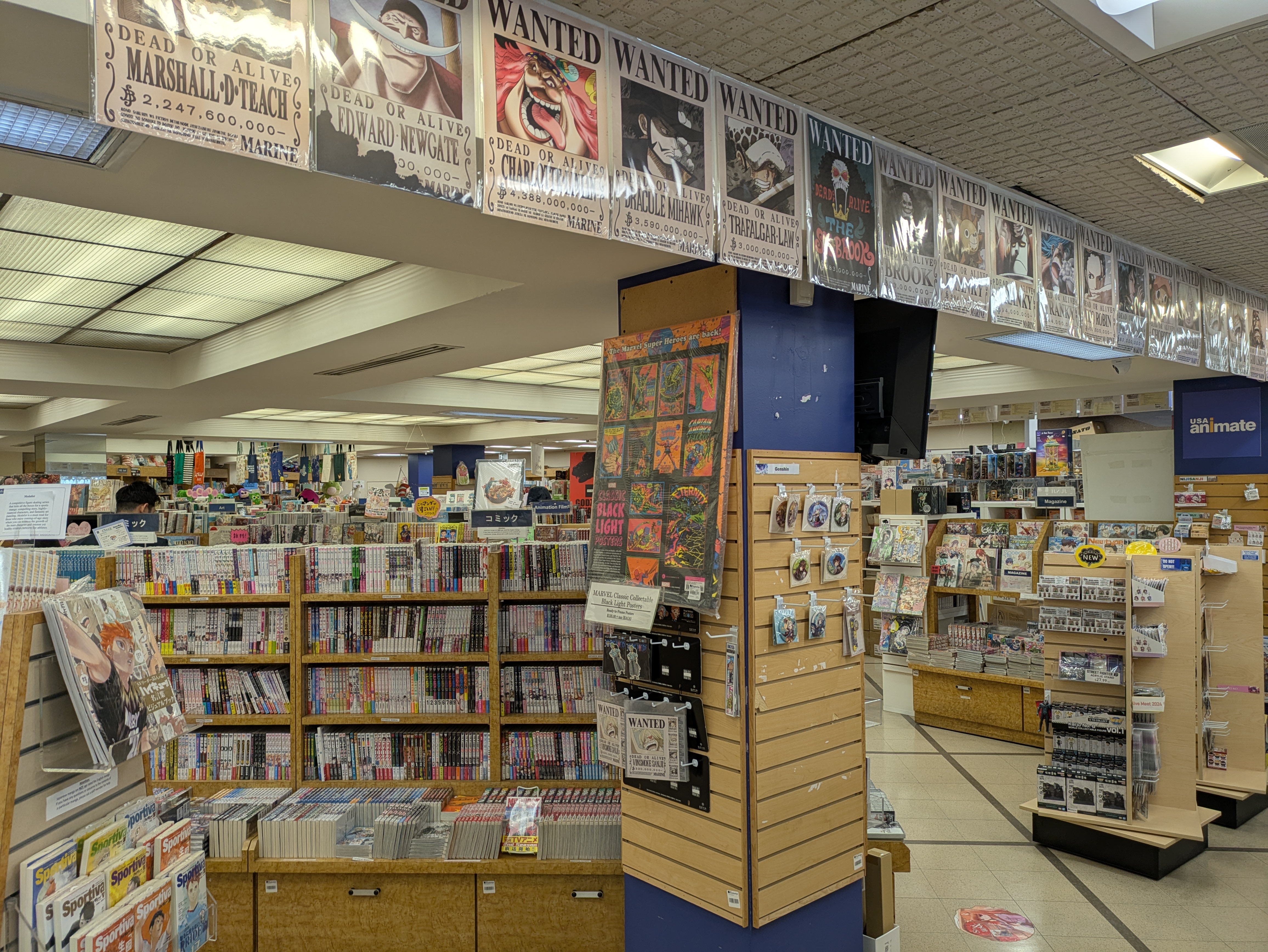
At Cafe Dulce, the path splits, with the left path exiting the mall onto 2nd Street. Continue straight and you’ll enter the underground section of Little Tokyo Mall. The 2nd floor holds a couple of restaurants, while the half-sunken first floor hosts several photo booths and claw machines, pop culture stores and pop-up shops. Admittedly, the mall is a bit dingy (especially coming out of the cute Village Plaza), but there’s one can’t-miss attraction: Anime Jungle, a massive anime-focused collectibles store with a selection so huge that it’s split into three separate stores, all across the hall from each other: one specifically for action figures and models, one for trading cards, and one for everything else. This is where the hardcore collectors go to find (or sell) stuff that’s hard to come by this side of the Pacific.
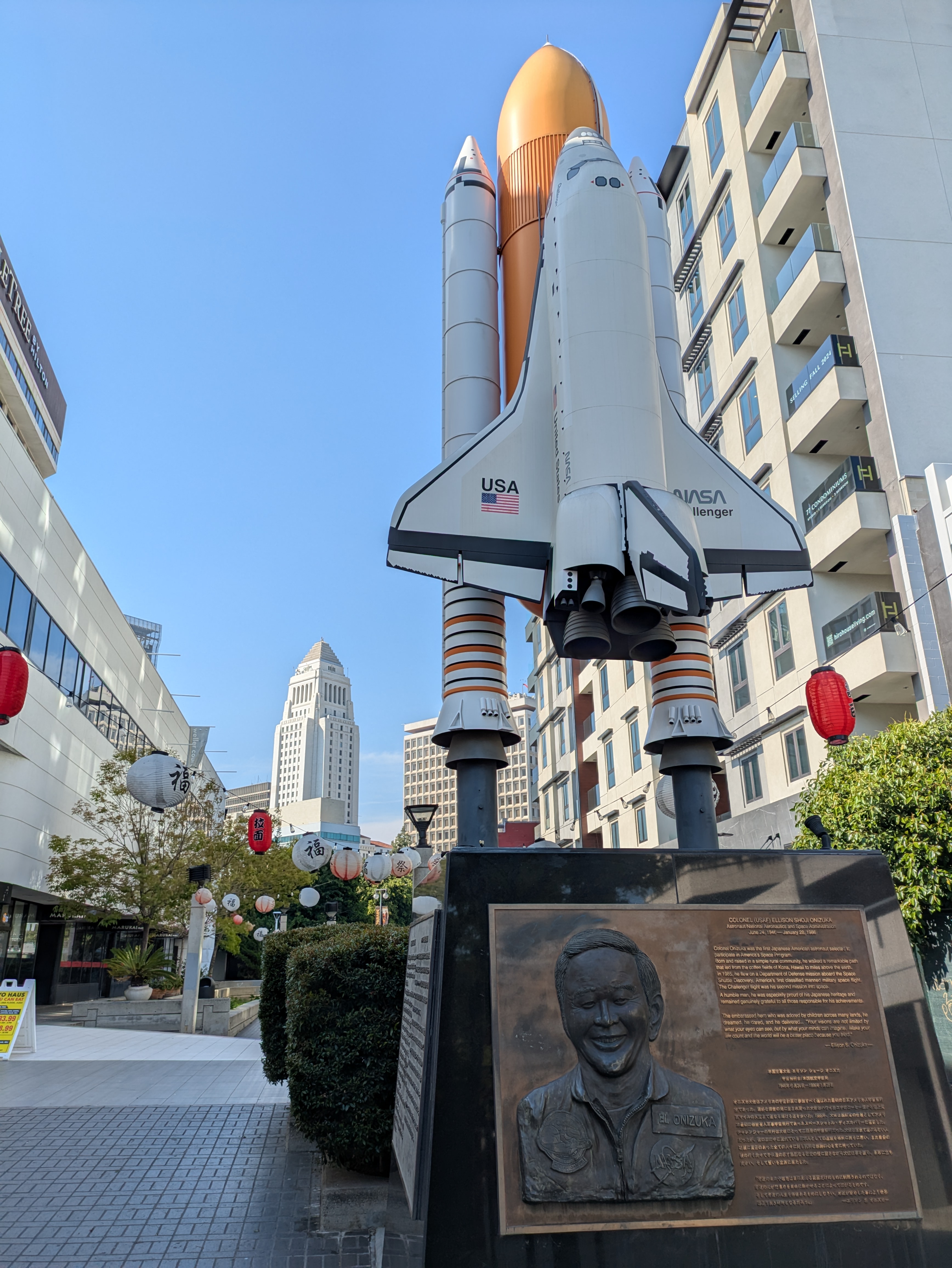
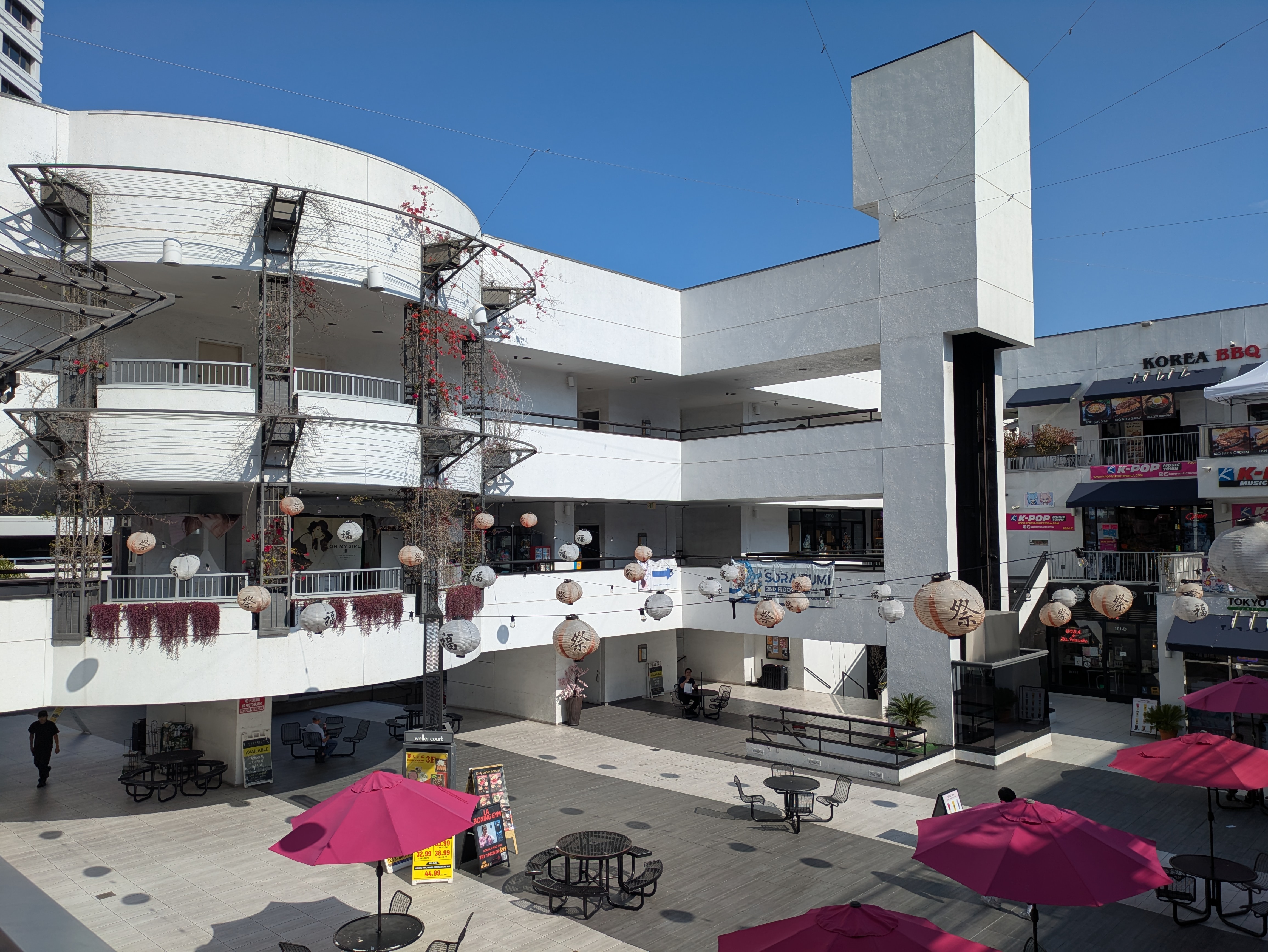
Head out to 2nd Street and up to the corner of San Pedro, and you’ll be standing across from the curving facade of Weller Court, another Little Tokyo mall. A pedestrian mall cuts up across the block, with a great view of City Hall up the way. In the center of the mall is a memorial to the crew of the Space Shuttle Challenger, particularly crew member Colonel Ellison Shoji Onizuka, the first Japanese American astronaut. On the first floor of Weller Court is Midori Matcha, which sells matcha-flavored everything: drinks, pastries, ice cream, cakes, perfect for a treat on a hot day.
On the second floor was Kinokuniya Bookstore, one of Little Tokyo’s best stores, although it is currently in the process of moving to a new location. Part of a chain of Japanese bookstores, Kinokuniya had a wide selection of Japanese-language books, music, and merchandise, as well as a very solid selection of stationery supplies, a large manga section, and lots of books on Japanese cooking and how to learn Japanese. But there was also plenty of good English-language books that lean into pop culture and Los Angeles-focused themes, as well as tons of very adorable pins, stickers, and cute stationery.
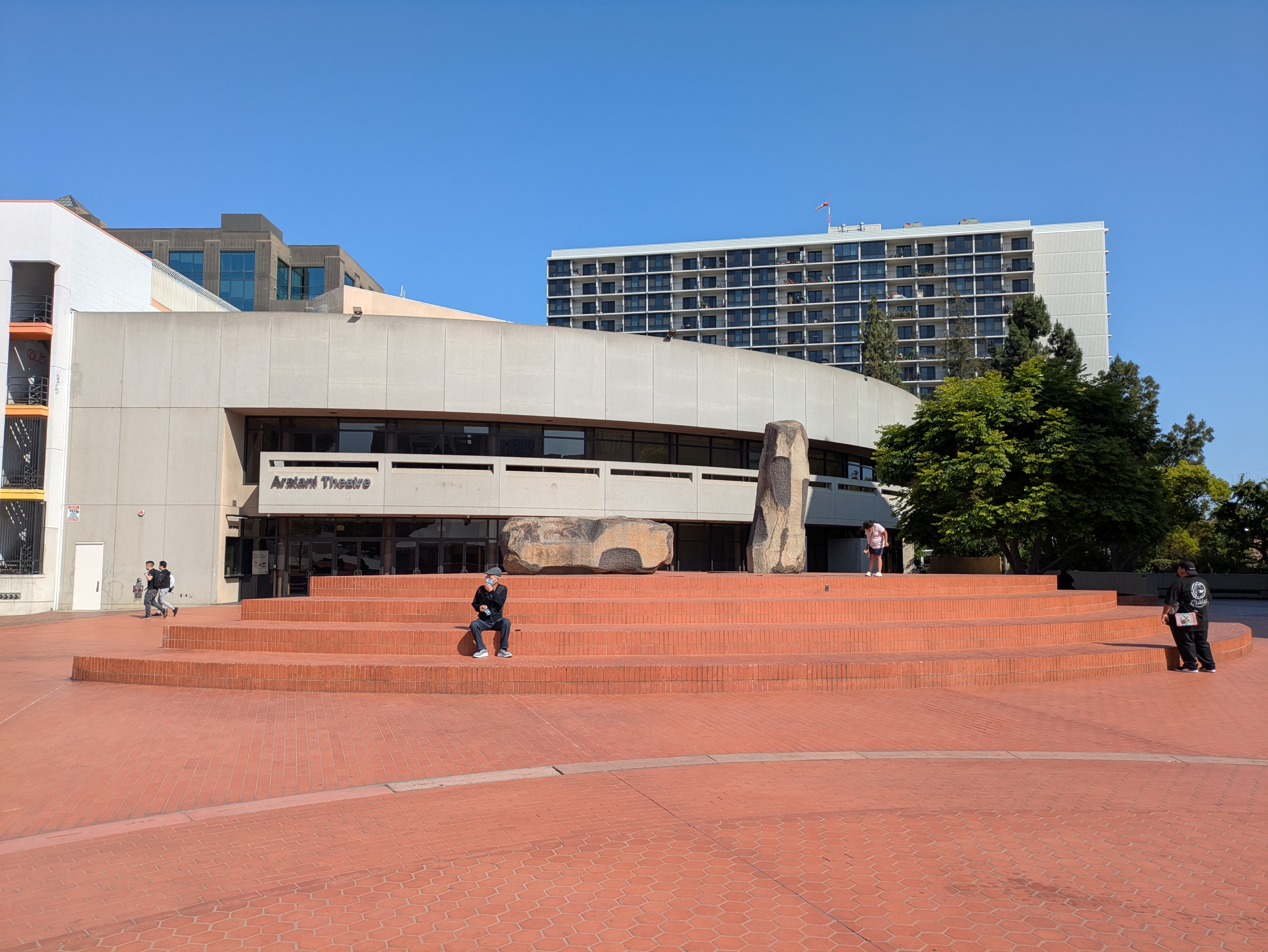
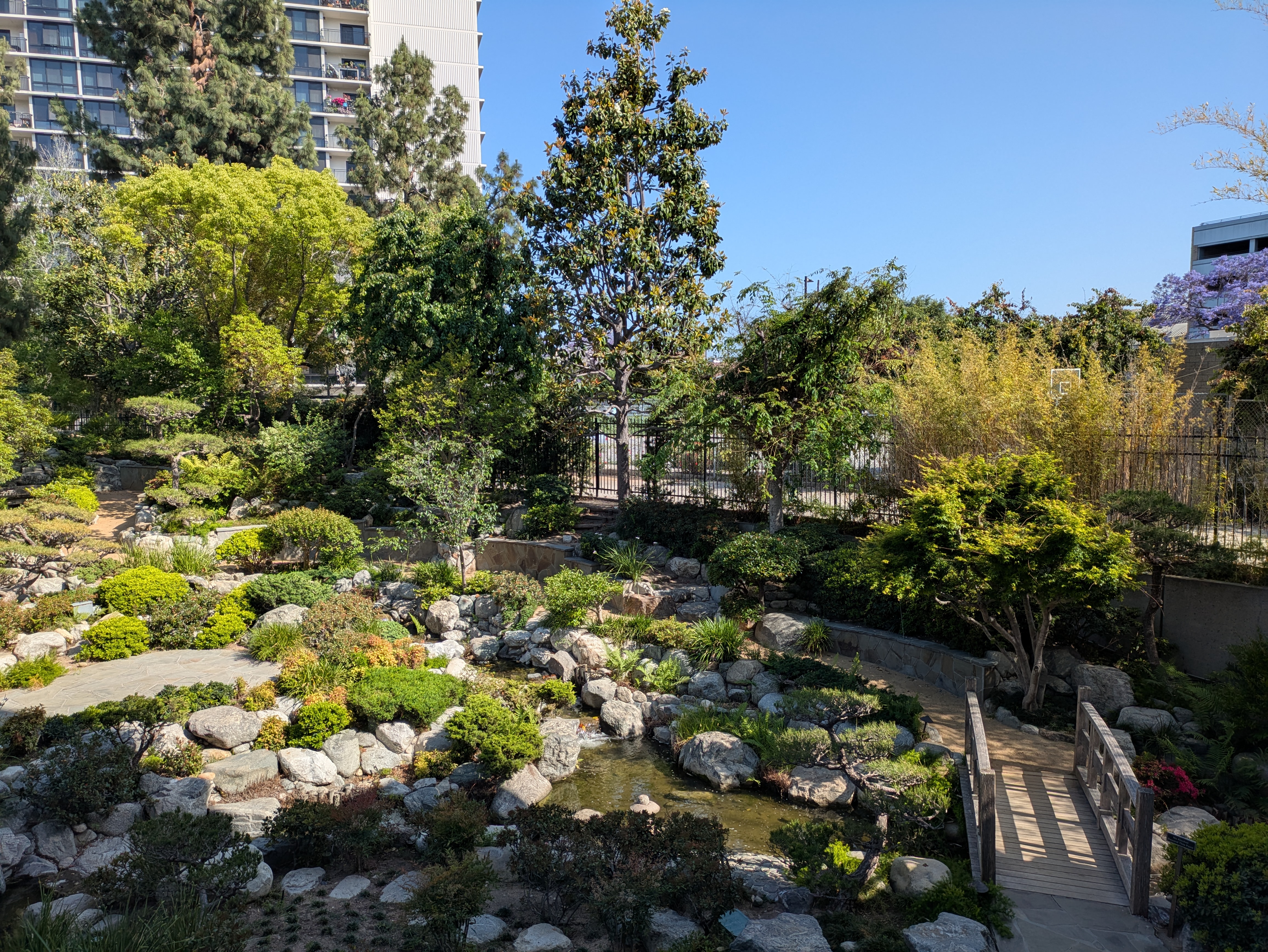
Returning down 2nd Street to the Japanese Village Plaza, there’s one neighborhood institution just to the south that demands mentioning. Right across the street from the entrance to the Village Plaza, the pedestrian mall continues to a large, red brick plaza in front of the Japanese American Cultural and Community Center, or JACCC for short. Admittedly, this plaza feels like a dead zone compared to the bustle of Village Plaza, often only occupied by skateboarders, but weekends see slightly more people around. JACCC hosts a lot of classes and events, as well as shows hosted in their Aratani Theatre, so there’s not much to see if you’re not coming for an event. However, JACCC does have the interesting feature of a beautiful Japanese garden which you can view from a balcony at the southern edge of the plaza. Sadly, the garden is not open to the public and is mostly used only for private events, but it’s a pleasant sight in a neighborhood that lacks for green spaces.
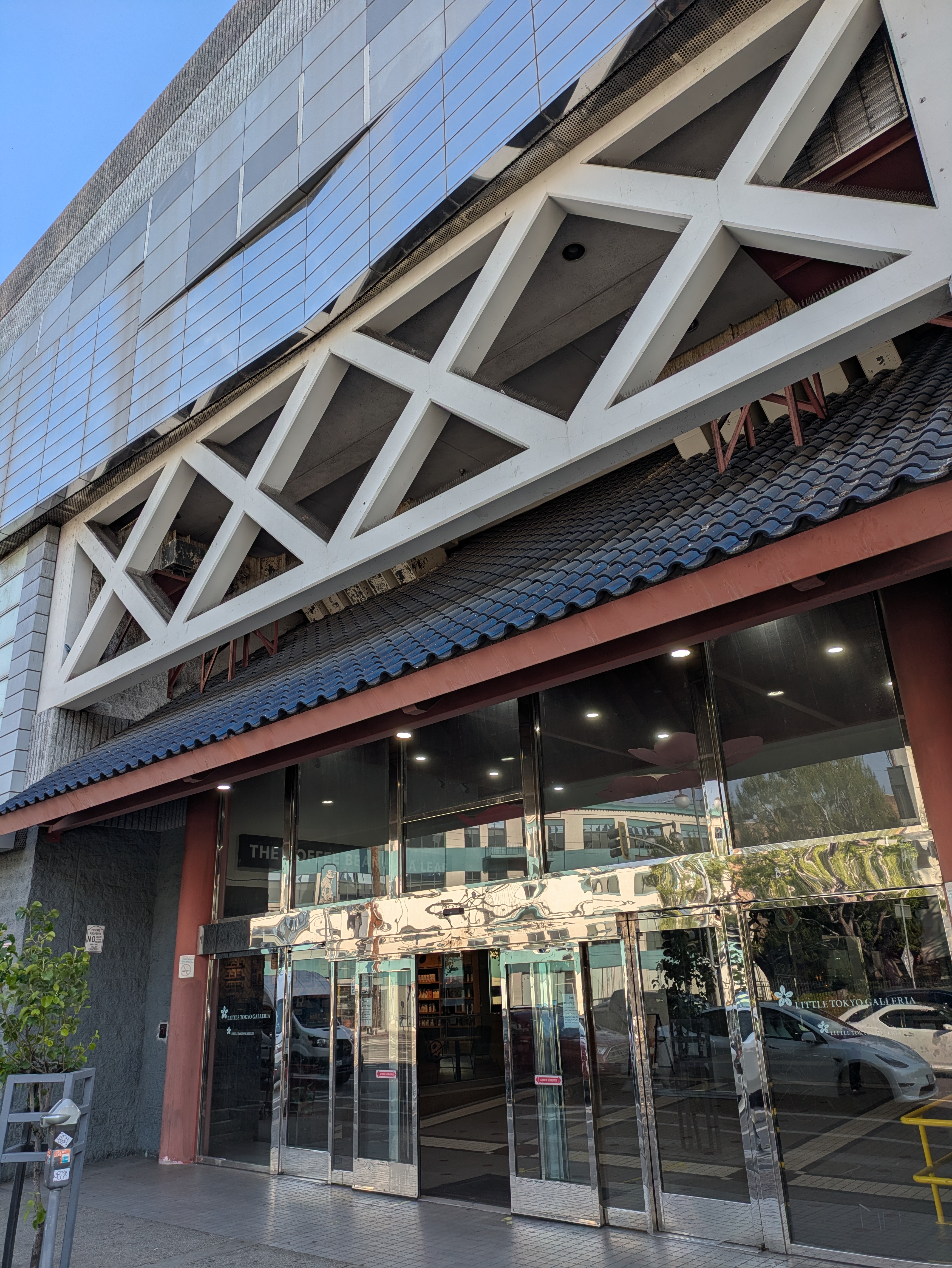
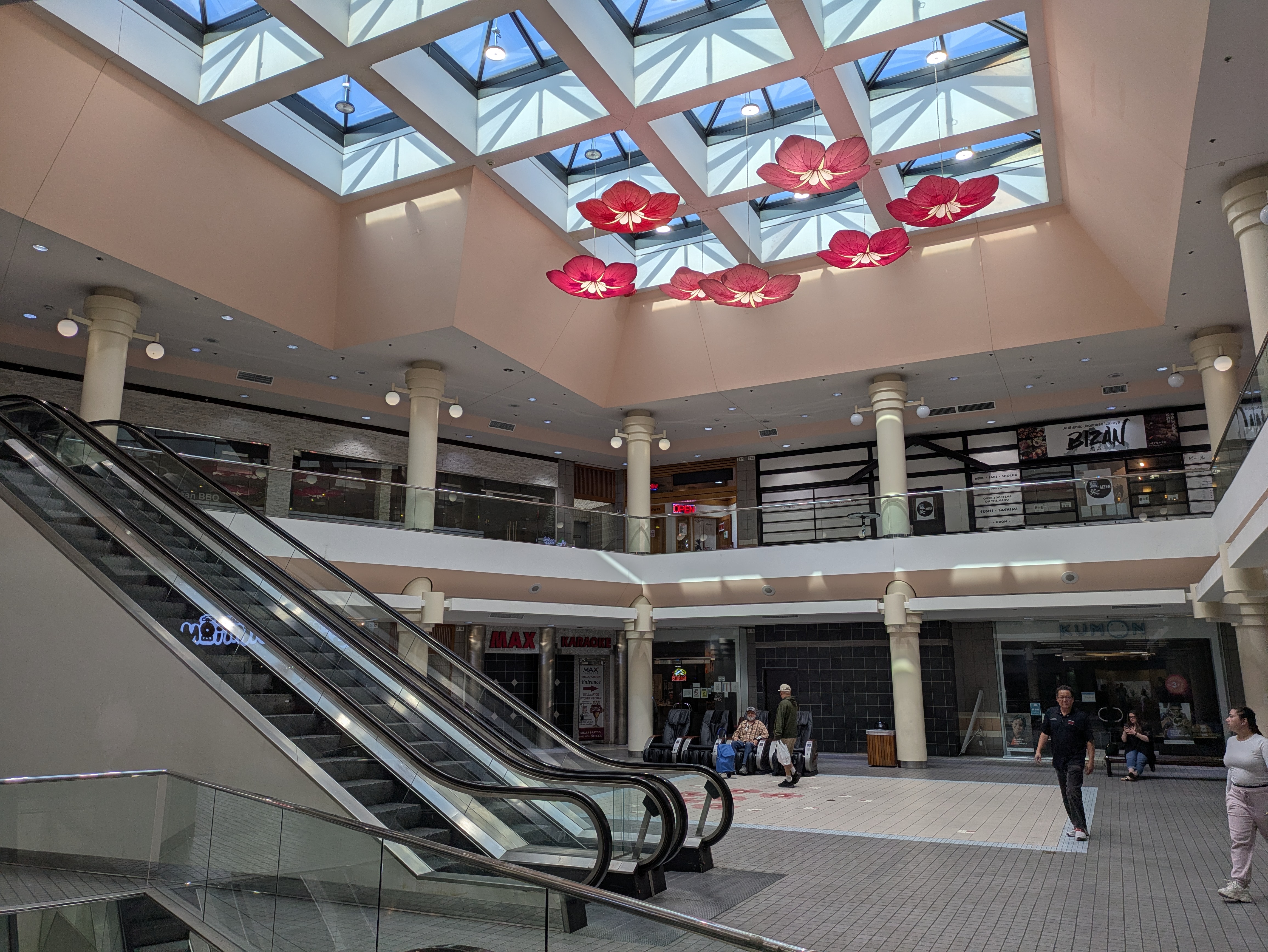
The last sight to mention is on the very southern edge of Little Tokyo, on 3rd Street between Central and Alameda. The Little Tokyo Galleria is a large shopping mall that occupies most of the block, with three floors of shops and restaurants. Most of the activity is on the first floor, with a big Daiso location and a large Japanese grocery store, though there are also some shops on the 2nd floor (including the adorable Happibara Station) and an arcade and bowling alley on the third.
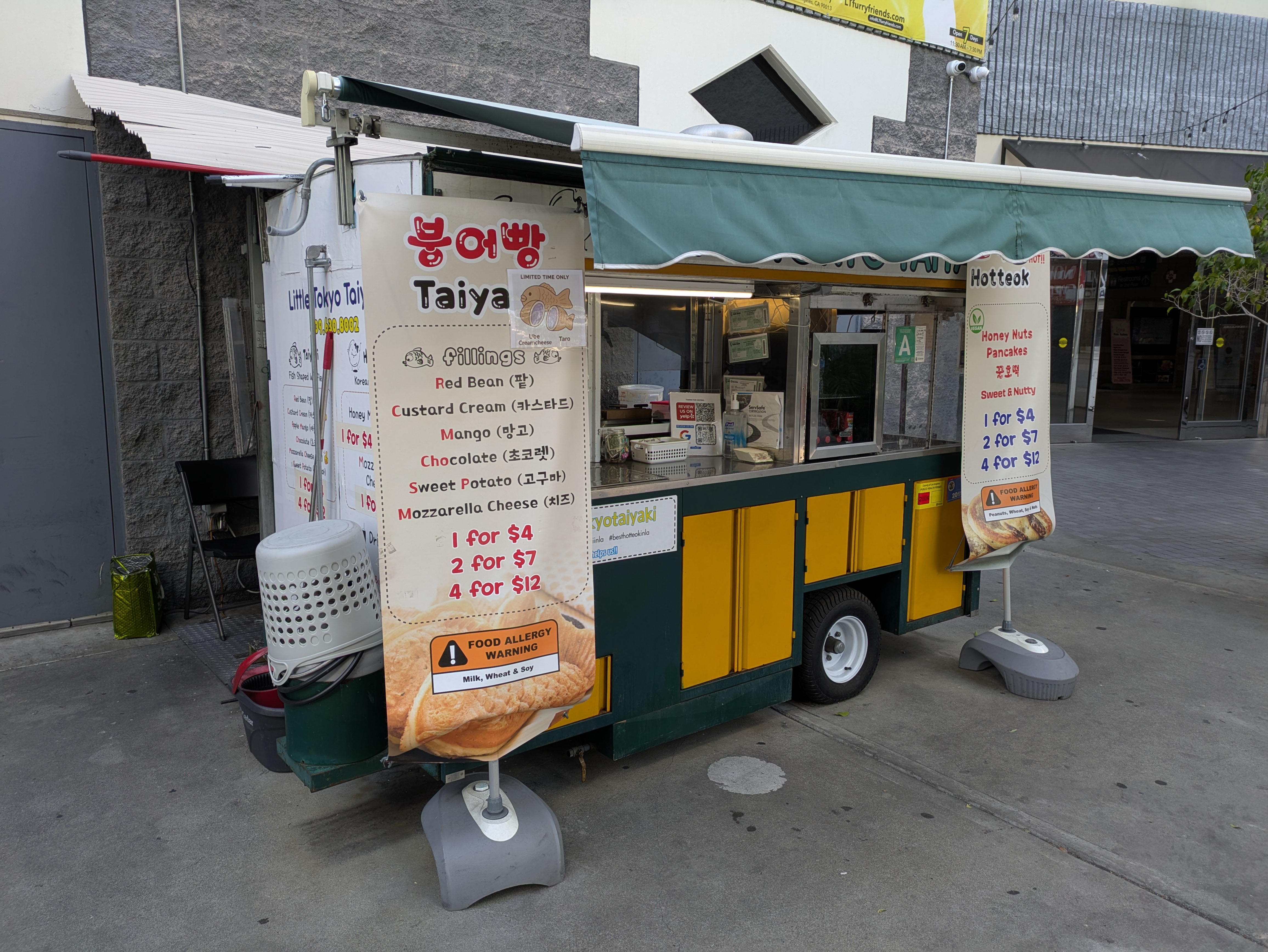
In the back of the Galleria, a small walkway separates the mall proper from its parking garage, where there’s a fun taiyaki stand (for the uninitiated, tayaki are fish-shaped pastries filled with ice cream, custard, or red bean paste). Particularly on weekend evenings, when the string lights over the walkway are turned on, it’s a surprisingly tranquil and fun spot to be. And if you prefer something savory, just follow the walkway out to the parking lot at the corner of 4th and Alameda, where Tacos La 26 (formerly the extremely popular Ave 26 Tacos in Lincoln Heights) serves up their excellent street tacos.
Of course, no guide to Little Tokyo is complete without talking about the food, and there are a lot of great places to grab a meal here. We’ve already mentioned the extremely popular Daikokuya for ramen and Far Bar for drinks and bar food on 1st Street, but there’s many more options. Next door to Daikokuya, Kaminari Gyoza makes some fantastic fried dumplings and bento boxes.
Another favorite of ours is Shin-Sen-Gumi Hakata Ramen, part of a chain of hakata-style ramen joints which sits on Central just south of the Metro station, and is very popular (expect a wait for a table, but not as long a wait as Daikokuya) and very flavorful. Even closer to the Metro station (literally right next door) is Bungraze, which makes an excellent hamburger.
On 2nd Street just west of Central is Wolf & Crane Bar, a cozy and often surprisingly mellow spot that has great cocktails. And at the 2nd Street entrance to the Japanese Village Plaza is Kura Revolving Sushi, for the fun conveyor belt sushi experience (except long waits for a table). And this is barely scratching the surface, there’s more places to eat in Little Tokyo than we can possibly cover, these are just some of our favorites.
 Transiting Los Angeles