This is a transcript of our interview with Miles in Transit; if you would like to listen to it instead, it’s available on our podcast here.
I’m very honored that today we have a guest: noted YouTuber, musician, and transit advocate Miles in Transit. Miles, thank you for joining us!
Thank you! I like the musician part there.
It’s true! I just got to watch your Miles in Transit concert video and I loved it. For our listeners who aren’t familiar with your work, could you briefly introduce yourself and tell them a little bit about what you do?
Sure! So, my name’s Miles and I run this YouTube channel called Miles in Transit where the tagline is that “I push transit to its limits, while attempting to be entertaining.” And so I’ll do different challenges trying to ride a bunch of buses or finding the cheapest way between two places or visit the least used Amtrak station in each state. I really enjoy riding transit and I like seeing how I can push the boundaries of what American transit is capable of, which sometimes isn’t much but I try my best and make the most of what I have.
Yeah, some of your challenges are wild. I especially love the Race to Rockaway Beach, which was basically you and a bunch of your friends racing from Midtown Manhattan out past JFK Airport, but every single team was taking a different mode of transit.
Yeah, we had a couple Great Races and those are so much fun. They’re such a Herculean effort to produce, but hoping to do one this upcoming year, we’ll see!
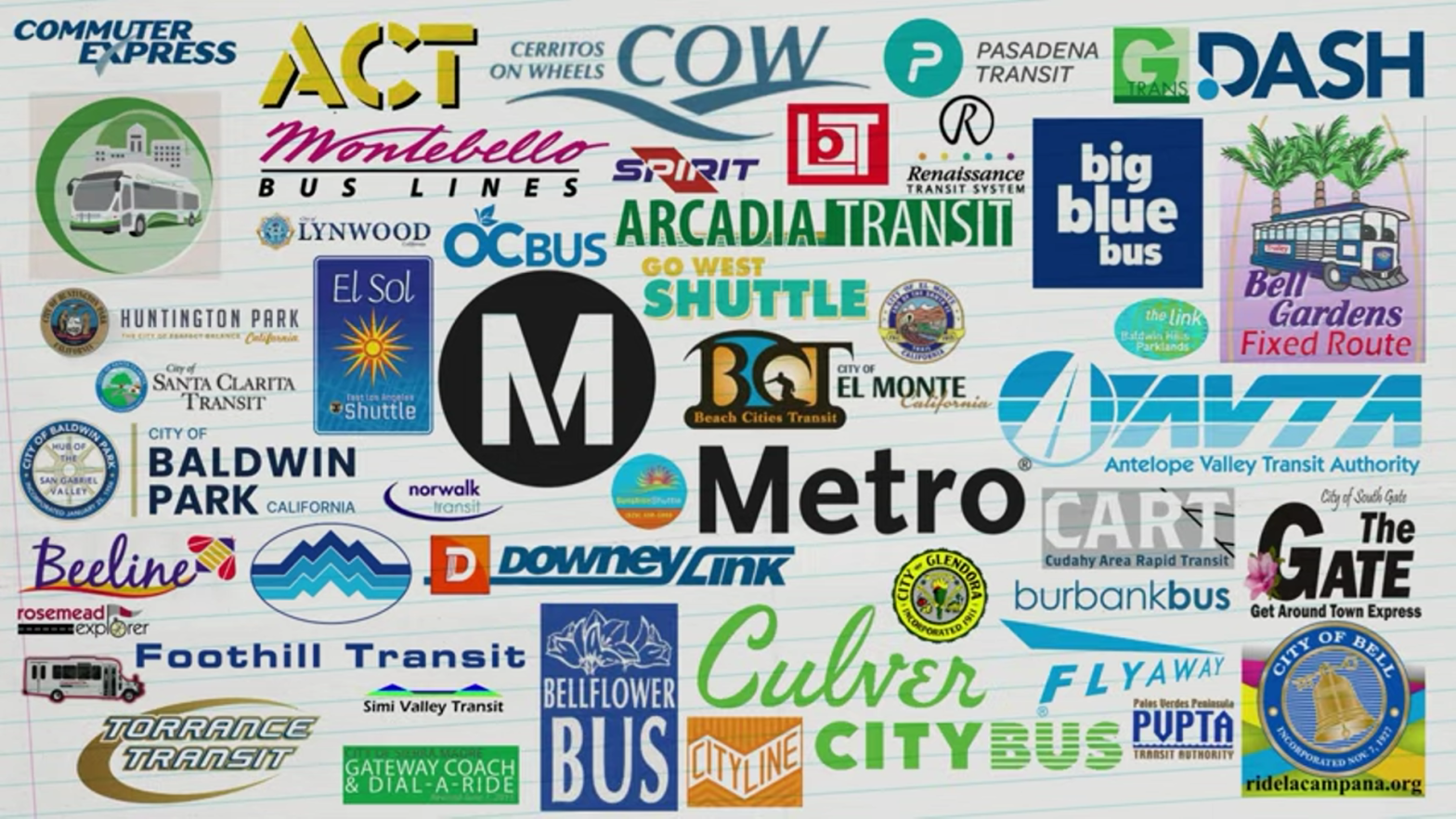
And so for the latest video you released, you attempted to ride every single transit system in Los Angeles County over the course of a single weekend. And there’s like, 45, I think it was. And you know, I run a travel guide about L.A. transit, I like to think of myself as a transit expert, and you rode things that I’ve never heard of. Like we have a bus called the C.O.W. We have a bus called the Pumpkin Line. I was like, “wait, Baldwin Park has a bus line?” So where did the idea for this challenge come from, and what was the appeal for you to actually undertake this?
So basically I ended up at the very last minute with a free, three-day weekend and I just put out a message on Twitter like, hey, does anyone have anything crazy I can do over the course of a weekend? And someone suggested, I can’t remember if they made the exact suggestion or something similar, riding all the different systems in L.A. and I was like, oh, that’s interesting. Because I knew that L.A. had a super fragmented transit network, and I just didn’t realize the full scope of it until I looked at the Metro system map and saw just how many systems were listed, which was 45.
And as it turns out, from my comment section, there are other systems that Metro didn’t put on their map that they easily could, because it’s in the service area, but for some reason they don’t list them all. So I guess I technically didn’t attempt all of them, but I did all the ones on the map. And it just seemed like such a cool idea. I really enjoy doing these intense planning sessions of just trying to find links between different transit systems and this was a real challenge. I basically put the thing out on Twitter on the Monday before, and then Monday night and Tuesday night I stayed up super late, Tuesday night I booked last-minute flights and I was like, “oh my god, this is so crazy, I can’t believe I’m doing this.” I literally went to L.A. just to do this trip with this three-day weekend. And I’m actually very grateful the video is doing well, because it’s paying back the amount I spent on it.
Yeah, you can tell from the video that a lot of planning went into it. You clearly had a very, very specific itinerary in mind. And I’m curious what that process was like, just taking this all in and trying to figure out how to piece it all together.
Yeah, I made a spreadsheet and I listed out all the transit systems and did checkboxes of what runs on weekdays, what runs on Saturdays, what runs on Sundays. Actually, that aspect helped by filtering it by the day, so I knew on Friday I had to do all the systems that only run on weekdays, and there’s a lot of systems that run on Saturdays but not Sundays, so I could focus on those for Saturday. And then on Sunday there weren’t too many left. I think I gave myself 8 hours or so if I needed to be able to patch things up. And I ended up needing that time. So I made this plan and from those systems I laid them all out on a Google My Map, I put pins in all the towns where the systems were to try to plot out a route, see where I needed to go, and just sorta went from there, using Google Maps and all the different websites these agencies have.
I’m picturing the conspiracy map from It’s Always Sunny in Philadelphia.
Honestly, yeah, it was a nutty planning process. And then if you watch the video, you see that as I actually started to do it, there were systems that just didn’t exist or came super late and just threw the plans off. So that was an exciting challenge too, trying to figure out on the fly, how can I salvage this? Where can I go now that I’ll still be able to maybe come back and get this system later?
Well that’s something I’m curious about, how much of the problems that you ran into were you anticipating? Did it truly come as unexpected, or did you figure that something like this might happen?
I mean, I think I came in knowing that it would be bad, but my post-mortem of this trip is that I didn’t know the floor of bad transit could go so low. I figured that stuff would probably be late, and I left some padding for it, but one of the first systems I tried to do, the West Covina Go West bus, I stood out there for 45 minutes waiting for this bus. It finally got to the point that I had to go, I had to keep to the schedule, and right then I saw the bus go by. So it was either 45 minutes late or 20 minutes early, and those are both unacceptable. It’s also the second trip of the day! It should not be that bad at 7 in the morning. That totally floored me.
Yeah, traffic in L.A. is bad, but it’s not THAT bad.
Right. The very first system, the Glendora transit, that just didn’t show up. And there were others that didn’t show up. It exceeded my expectations of how terrible it could be, I have to say.
And I imagine in planning it, a lot of these systems don’t take TAP cards, they’re probably not on the Transit app, or they just have their schedules posted in weird hidden pages on their city websites or something.
That was another thing I had to do, was list out the cost and how to pay for them. Some of them take TAP, some of them say they take TAP but actually the TAP machine is broken so they’ll just let you on for free. What I ended up doing was the day before I flew out, I went to a laundromat and just stuck a five dollar bill into the change machine and took a ziploc bag of quarters.
It’s a good thing you got out before the laundromat attendant could yell at you, because I’ve tried that and they’re like, “Hey! No!”
It was an unstaffed laundromat, thankfully.
In the end you still managed to ride 40 out of the 45, which is an incredible feat. But there’s some really bad stuff. Special shout-out to Cudahy Area Rapid Transit, which I feel like “Cudahy” is the only accurate word of that acronym. It’s certainly not rapid, and I would argue it’s probably not transit.
That was actually a funny one because I was live-Tweeting the trip as I went along, and I specifically called that one out as the worst bus I’ve ever attempted to ride, because it didn’t show up. And the route tries to serve every street in this tiny little town so you don’t know what the bus is doing. If you look at the map, it’s insane. And the mayor of Cudahy saw the tweet and we got into a little exchange of words.
I remember that, and I was kinda disappointed in that because I’m familiar with this person and she actually is a fairly progressive politician. I don’t know if there’s some local pride happening there or something. But you show the map of what the bus route is and what it reminded me of was those Cities: Skylines “One Road City” challenges where the road keeps doubling-back on itself. It goes down a street, goes one block over, and then takes the next street all the way across. It looks insane.
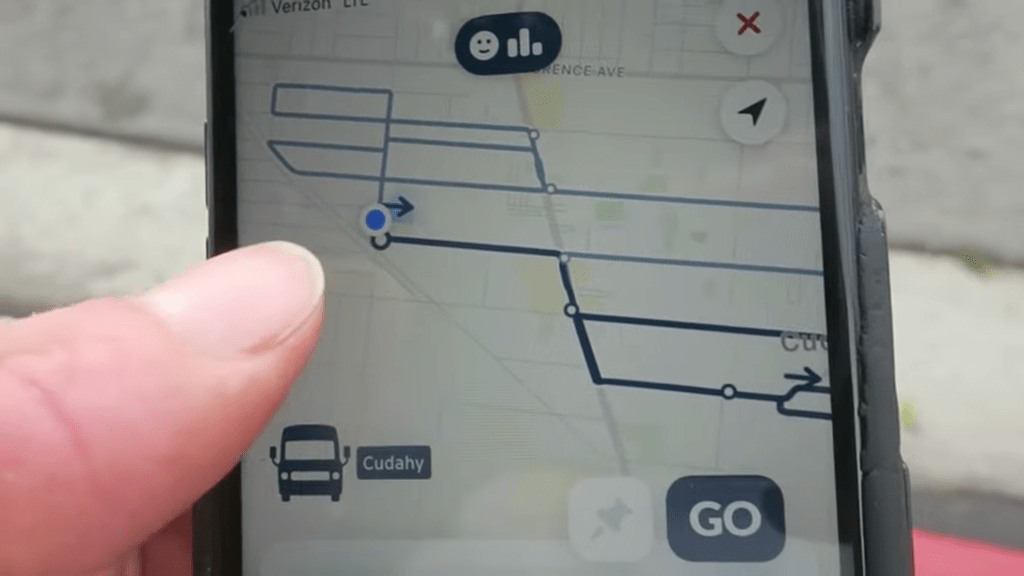
Yeah, I will say though that one of the things I complained about to her was that they didn’t list out the individual stops, so you couldn’t tell where the bus was going. And later on they updated their schedule and their GTFS feed, which is what goes into Google Maps and Transit app, they updated those to have the stops, and I like to think I played a part in that.
I’d like to believe that too. Okay, so that was the bad side. But on the flip side, were there any favorite transit systems or favorite routes you had?
Yeah, so I really tried to come out of it not being a negative Nancy, because there were certain systems that I really was impressed by, the big G.O.A.T. being L.A. Metro. I’ve actually always appreciated them, but I came out of this with a much bigger appreciation for what they’re able to do in what is ostensibly a very transit-unfriendly area. But there were a lot of cases where I would show up at a stop and there’s a bus that’s coming every 8 minutes in this very suburban area. And it shows up and it’s a quite busy bus with full-seated loads and standees. And they need bus lanes, they probably need more rail, which they’re working on, they’re extending the rail system, but I just have to give them so much credit for having so many buses on the roads. Just the sheer amount of service they provide. And on the flip side, it’s a little sad that maybe we could take some of these municipal systems and put those transit resources into improving the L.A. Metro lines through the municipalities to help out way more people. But regardless, I think the L.A. Metro has a super impressive service for what it’s running in. I gotta give them a lot of credit for that.
Yeah, it’s very normal for people to bash on L.A. transit, and I get it, but I appreciate that you leave the video on that note, that appreciation for what Metro is able to pull off, whatever flaws it has.
And I feel like a lot of it isn’t L.A. Metro’s fault. I think that the region is so sprawled out that a lot of their routes are so long. So many of their routes will be like two hours, end to end. If you have a bus that’s just going through a grid and it’s dozens of miles and it takes two hours, then yeah, you’re going to have poor reliability unless you have a lot of bus lanes. Which L.A. doesn’t, because I imagine it’s a pretty car-brained area.
You’ve ridden transit all over the country, and you’ve ridden really small systems, like rural systems, small town systems, and you mention in the video that L.A. has the most extreme level of fragmentation of any transit network of any city you’ve been to. What do you think makes L.A. the way it is?
Truthfully, I wish I knew more, but I’ve gleaned some stuff from my comments and know that basically there were some transit propositions passed and some amount of that funding went towards municipalities as kind of a blank check, just “hear you go, run some transit.” And there’s just not much accountability with it, they can kind of do whatever they want. And I think as long as they have certain data points they can give, no one is really checking to see if the service is any good or if anyone’s using it. I think a lot of it also comes down to just how fragmented the municipalities are, and that I don’t really know much about, but it’s kinda insane how many different little fiefdoms there are.
It’s the old joke about L.A. being 99 suburbs in search of a city. Which, there’s truth to that, but it’s also one of the things I find fascinating about L.A., because you have this incredible diversity of cultures across the urban landscape. But you describe them as fiefdoms, and that is the perfect word, because that’s exactly how I’ve heard people describe the L.A. city council districts, and county supervisorial districts, and of course every single individual little municipality. People are super into local control.
Based on what I know about the history of L.A. transit, something that stood out to me is that it has gone through these cycles of consolidation and then fragmentation. The original streetcar lines were consolidated into the Pacific Electric, but then in the 1910s the Pacific Electric just stopped building new streetcar lines, so the suburbs start their own bus systems. And then all the private systems fail in the ‘50s and ‘60s when it became impossible to run it as a business, so they all go under government control and get consolidated into the RTD, and then starting in the ‘70s, the RTD starts getting split up. Foothill Transit started in the late ‘80s, and that was extremely contentious and led to the creation of Metro in place of the RTD. Suburban versus regional power dynamics is such a big theme in our local politics.
It also seems like that process of fragmentation is kinda still going on. People were saying that Metro just gave up a couple routes to Pasadena Transit. It’s still happening. At least Pasadena Transit is one of the decent ones.
What incentive does a small city have to start its own transit system?
I think it’s an issue of control. To me, it seems like L.A. Metro is seen as this big monolith that doesn’t necessarily have the individual municipalities in mind. They’re very much a regional system, and their routes are very long and go through these many different little towns. I think that every municipality wants to have local control over its transit. And I think it works when the city is big enough for that to work. Like in the case of Big Blue Bus or Culver City, those are some other ones that I think work really well, those are fairly big towns that can run a transit system that’s actually robust and useful and go places.
I could just totally see a place like Cudahy wanting their own bus to help their residents and only their residents. And that’s why these routes are going down these little streets and going to places that no legitimate bus route would go to unless it was conforming to these municipal boundaries specifically to serve local residents. But even then, it’s not doing very well. These systems are small enough that they don’t have tracking, they often don’t have good fare systems, you might just give a quarter to the driver, there might not even be a farebox. They just don’t have the resources.
Well I imagine with a system that small, you don’t even have the resources to hire a proper transit planner to tell you what a sensible route would be. It’s probably just some city engineer, some random person who’s just like, “I don’t know, I guess here?”
Honestly, yeah. It’s genuinely like in Cities: Skylines. I always cringe when I watch Cities: Skylines YouTubers who don’t really know how transit works and just tap the bus stop everywhere.
And I think there could be value, maybe, in for example having a Gateway Cities transit system. Like if they wanted to band together and actually pool those resources for something that can just get people somewhere. I still think honestly that L.A. Metro could serve those areas better, but I think it would be reasonable if they wanted to at least have something that goes beyond the limits of one 10,000 person town.
Yeah. Well, Foothill Transit is a good example of a mid-sized regional system, because the municipalities of the San Gabriel Valley got together and said this is what they wanted to do. And that’s an example where it actually kinda works.
Yeah, I know Foothill Transit has controversial origins, but I loved Foothill. Their seats are so comfortable! They are the best seats of any transit bus agency I’ve ever been on. On the older buses, they recline! Also, the Silver Streak is this kind-of BRT route that goes from Montclair to Downtown L.A., this super long route, and it runs 24 hours a day! When I flew in, my flight arrived at 1am and I took the Silver Streak at 2 in the morning. I love that that’s an option, that’s so cool!
It’s a good service. And I believe the El Monte Busway was the first busway in the country. I guess it’s been converted to HOV lanes so technically it’s not a busway now, but when it was built it was just a busway.
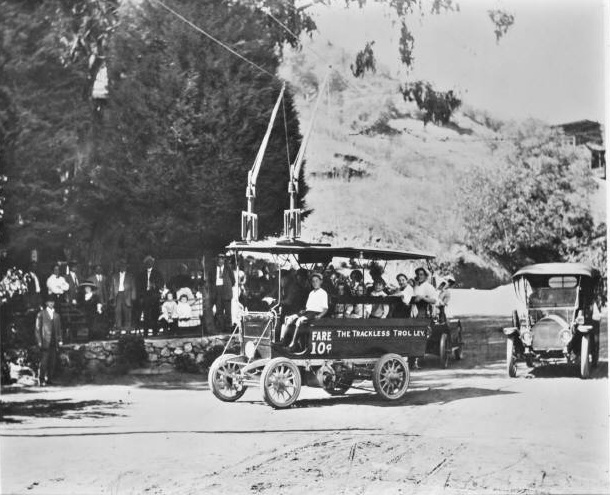
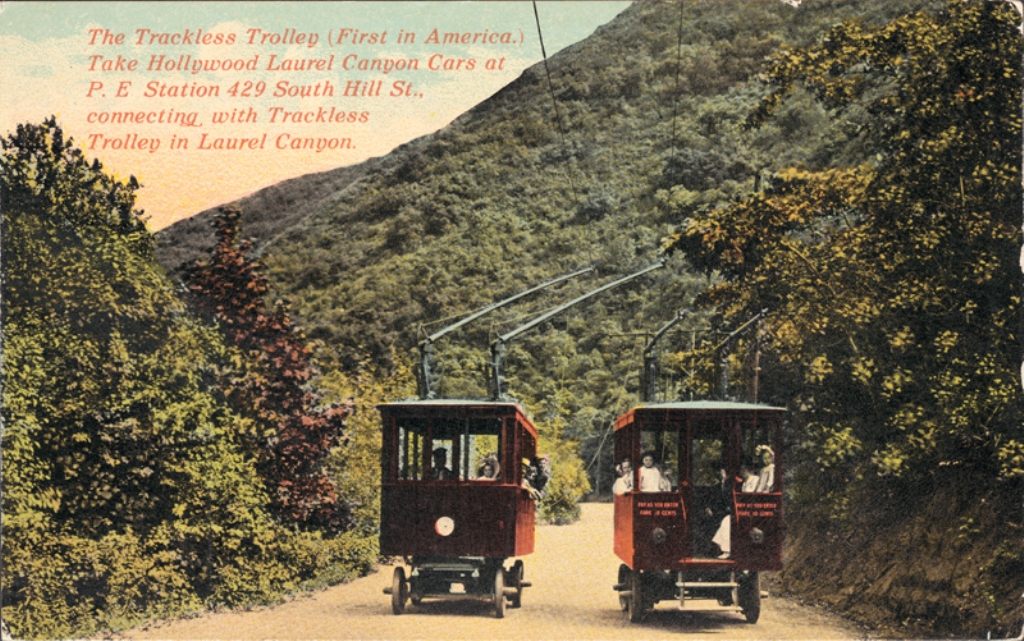
Actually, fun fact, at one point in the video you mention the Laurel Canyon bus (Metro #218) and how beautiful it is. You just released a trolleybus video, which I haven’t gotten to watch yet, but did you know that the first trolleybus in North America was in Laurel Canyon?
Really? No way, we didn’t know that!
It only lasted from 1910 to 1915, and it might even be the first motorized bus in L.A. Look up the “Laurel Canyon Trackless Trolley.” It looks wild, it’s this rinky-dink wooden car with a giant trolley pole coming out the top. But the road was very steep, so the real estate developer of Laurel Canyon couldn’t build a streetcar line up it, and automobiles weren’t reliably powerful enough to get up the road yet. But the developer saw a trackless trolley system in, I think it was Europe, and he decided to build one here. It doesn’t sound like it was very reliable, but technically it was the first trolleybus in North America!
I looked up the pictures, and that is insane.
Yeah, apparently the trolley pole kept getting dislodged from the wires and of course it’s on these steep slopes so it was crazy. I don’t know why he didn’t just build a cable car. I think he was kind of a tech enthusiast, so he was excited about the new technology.
A gadgetbahn!
Going back to the larger point you mentioned that maybe the resources for some of these smaller systems should just be diverted into Metro. Are there any good case studies from other cities to follow? Any places where they actually consolidated their services or at least made something more comprehensible?
I don’t know if I can think of any. I can think of examples where it’s not like that but you would expect it to be, namely Pace in Chicago. Basically, CTA handles the city of Chicago, and then there’s a ring around it that’s done by a system called Pace that just handles every bus in the suburbs. And what I think is cool about that is that you can make all of these suburb-to-suburb connections that in a lot of other cities would be really impossible to do, where you have to go into downtown and back out. By having this unified system all throughout Chicagoland, it’s like, “oh, there’s a bus from Elgin to Aurora.” I don’t know what the situation was like before Pace existed, I’m sure they were fragmented at some point. But Pace is going through a bus network redesign that should make things even better.
And I guess another one that’s an interesting case study is New Jersey Transit, which is just a statewide transit agency. I think there’s definitely an argument to be made that the sheer size of it sometimes makes it feel like some of the cities get left behind and don’t necessarily have the most robust transit. But they are also working on a redesign of various parts of their network, so I think that should help. But what I love about NJT is they have, especially in South Jersey, these long, sprawling routes that will get you to all these little towns that absolutely would not have any transit service if it was just little fragmented agencies. They do these long regional routes that only run a couple of times a day, but they’re providing this really baseline important service to these very small rural areas, and I think there’s something to be said for that.
I think the advantage of a big system is that you can have regional connections that couldn’t be made otherwise. And so in L.A., it’s just this thing of you can take the Bell shuttle on its little loop, and then you walk a little bit and take the Huntington Park shuttle on its little loop.
Yeah, city limits are pretty arbitrary at the end of the day, especially in a region like Los Angeles.
We have a lot of rail expansions happening, which I think promote both fragmentation and cementation of the system, because it encourages all these suburbs to start up their own line which goes to the local Metro or Metrolink station, but it also lends this political and cultural influence to Metro because there’s a train line coming to your suburb. Coming from the East Coast, how do you feel about L.A.’s transit prospects going into the future?
It looks really good to me. I mean, honestly I think it’s easy to be jealous of how much expansion is happening in L.A., because a lot of the East Coast systems built everything in the early 1900s, and it’s great, but there just hasn’t been any expansion since. New York is very slowly building the Second Avenue Subway, which has the highest ridership per mile you’ll get of any transit expansion in the U.S. and it’s happening so slowly.
In L.A. you got the D Line expanding, the K Line is almost done, the A is being expanded to Pomona. And actually, I think that feeder lines are kinda nice. If a municipal system wanted to run its own little feeder lines into a light rail station, I think that’s actually pretty beneficial because it’s feeding into the regional network. I think that is getting people to a destination instead of just looping aimlessly. Actually having a bus that takes you to a rail station, I think that’s a really good way to feed rail, versus a park-and-ride for example. A bus is a lot more efficient at getting people to a train.
And I think the Olympics are a really good way to galvanize transit expansion. Everyone is talking about a car-free L.A. Olympics and I’m very excited to see what that entails. Because if we see them going nuts with all these bus lanes to try and speed things up and make things workable for the Olympics, I think once you put something in it has a habit of sticking around.
We always conclude our interviews by asking what places people recommend visiting in L.A., but this is the first time we’ve had a non-Angeleno on. Speaking from a travel perspective, something that I thought was interesting about your video is that, by its very nature, you were spending most of your time in the suburbs of Los Angeles, so you were seeing a very different side of the city compared to what most visitors see. Were there any fun surprises or hidden gems that you came across in your travels?
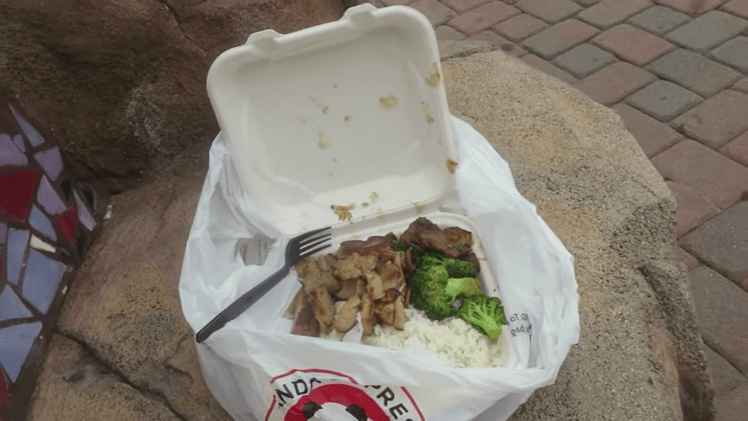
I remember Alhambra being really nice. And you know what was really sad about that is that Alhambra has a very high Asian population, a lot of Chinese, and I go to Panda Express in the video, because I need to go somewhere quick.
To be fair, you explain that in the video, you were on a time limit and you needed fast food! It was understandable.
The other one I really want to shout out is Glendale, because as someone who is half-Armenian, I really want to spend more time in Glendale because I thought it was so cool that there’s bilingual signs in English and Armenian. I really want to spend more time there, go to some bakeries, and get some great lamb. That’s a place I know I want to get back to.
Sadly, there were no diners here for you to check out.
No, but there’s a couple cool Googie ones that aren’t factory-built, but are still very cool. And there’s one spot in North Hollywood called Bruxie in an actual 1920s factory-built diner. It’s part of a chain, but their business is in this little diner.
—
A massive thanks to Miles for taking his time to be interviewed, and please check out his YouTube channel. Even if you’re not a transit enthusiast, his videos are very accessible and engaging!
 Transiting Los Angeles
One thought on “Miles in Transit, and L.A.’s many many bus systems”