Most guidebooks treat the section of A Line south of Downtown (previously known as the Blue Line, as many still informally know it) as little more than a shuttle between Downtown Los Angeles and Downtown Long Beach, and that’s if they even mention it at all. With the exception of Expo Park and (sometimes) the Watts Towers, just about everything south of the 10 gets left out of visitor guides. The A Line also has an undeserved reputation for being exceptionally dangerous, likely borne out of the fact that it travels through the predominately Black and Latino communities of Compton and South L.A.
I think it would be fair to consider this section of A Line the rowdiest train line in the city, where you’re most likely to see the kinds of behavior that don’t pose any risk but that Metro frowns upon: vendors selling on the train, riders having loud conversations or cradling boomboxes playing loud music, teenagers riding bikes or skateboards on the platform, and the like. But dangerous? No more so than Metro’s other rail lines.
We thought this vast swath of Los Angeles deserved better, so we’ve been spending some time traveling the A Line and finding things to see that don’t get the attention they deserve. You’ve likely heard of the Watts Towers, but these other attractions are little-known beyond the neighborhoods they call home.
Vernon station
South of Downtown, the A Line passes through a mostly industrial area of warehouses and railroads, with many wholesale stores, distribution facilities, and scrapyards. At first glance, there doesn’t seem to be anything interesting to see here. But at the intersection of Vernon Avenue and Alameda, just a couple blocks east of Vernon station, is one of the most colorful places to shop and eat anywhere in Los Angeles.
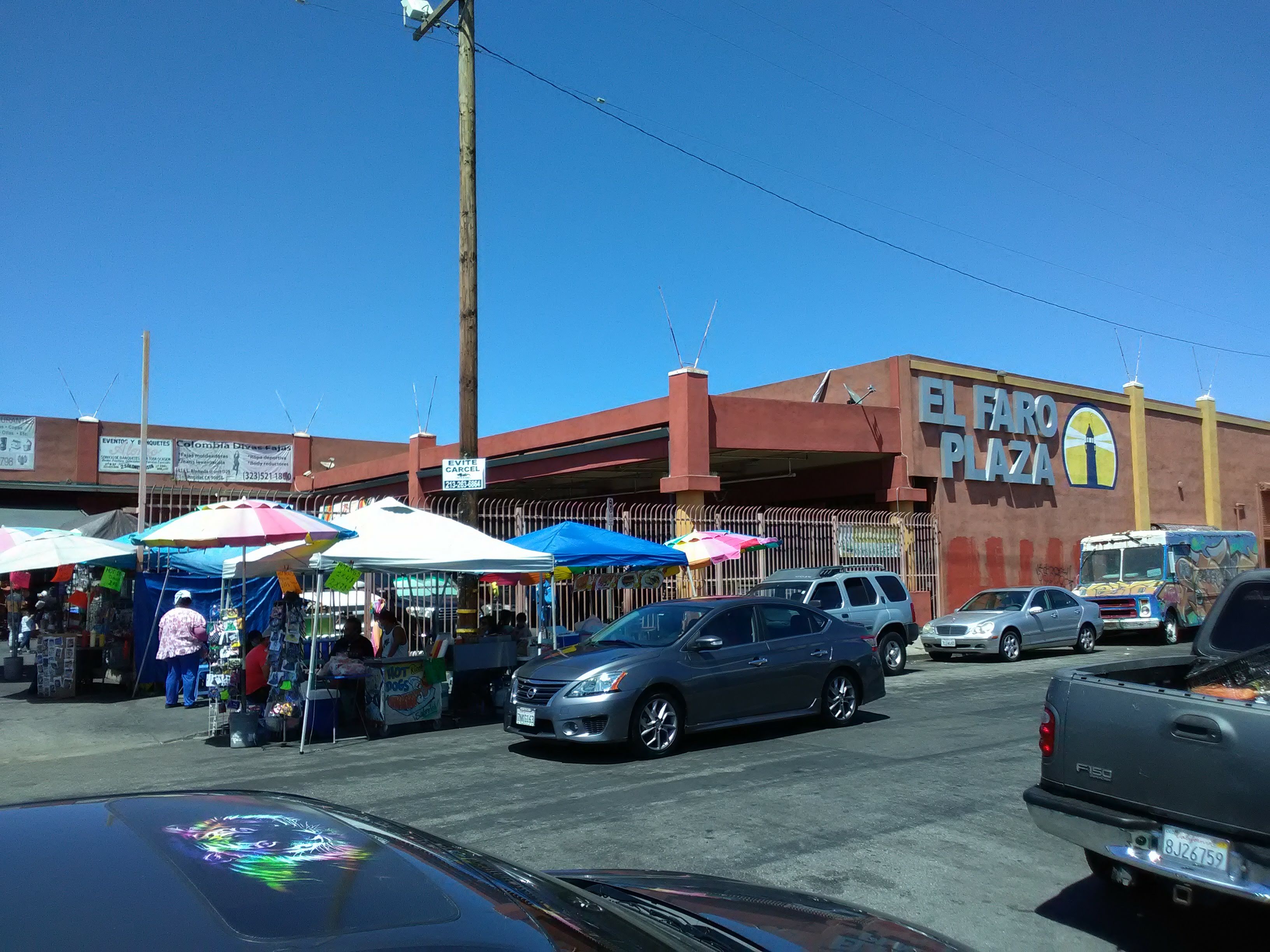
On the massive lots southwest of Vernon and Alameda are two huge warehouses that hold a pair of vibrant and bustling swap meets: El Faro Plaza and the Alameda Swap Meet. Together they form the closest thing to a Mexican street market that can be found in Los Angeles, catering to the Latin American families of the city. Spanish is the norm here, although you’ll be able to get by even with only a handful of phrases. Just make sure to carry cash, as many vendors will be cash only.
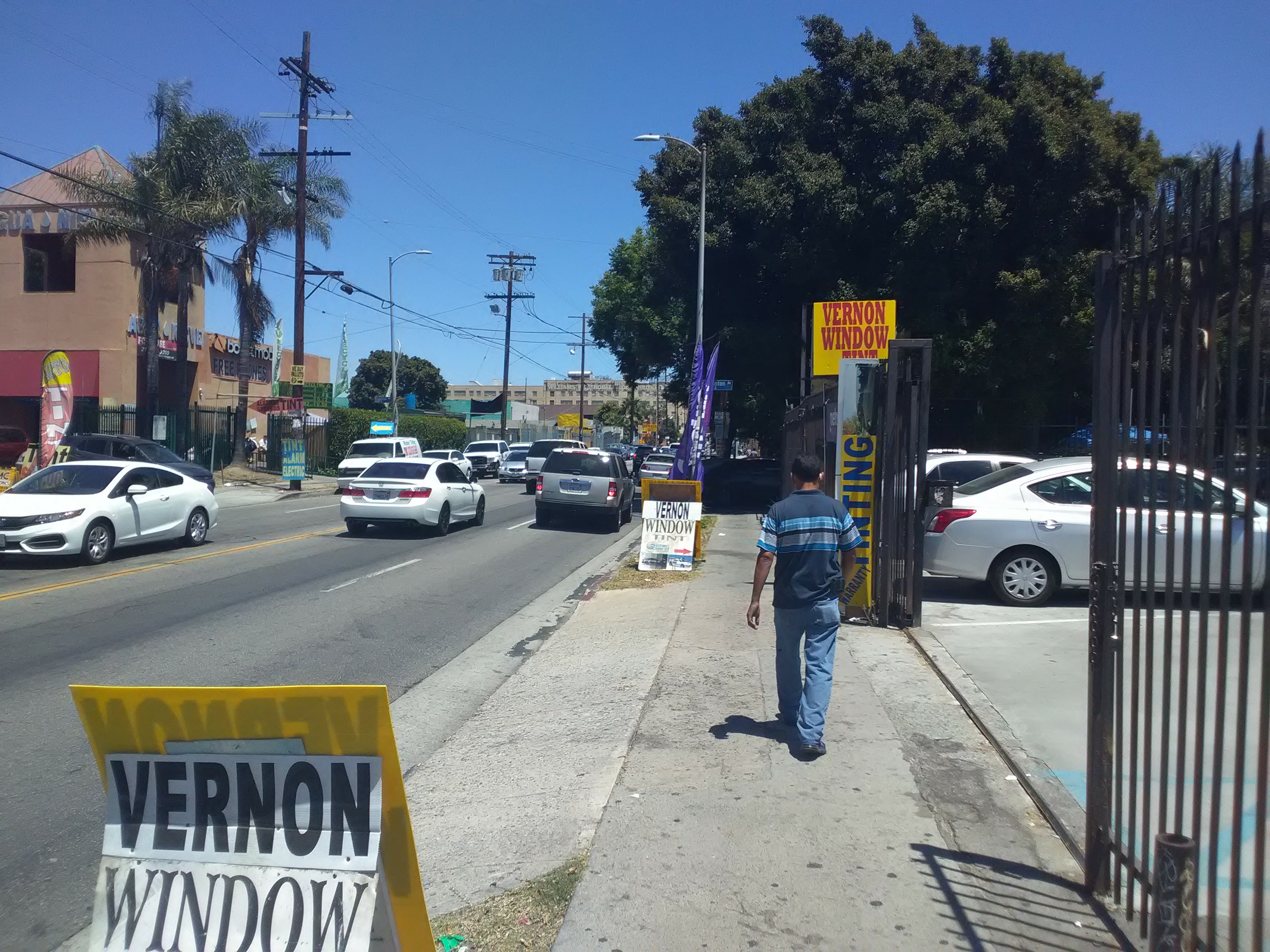
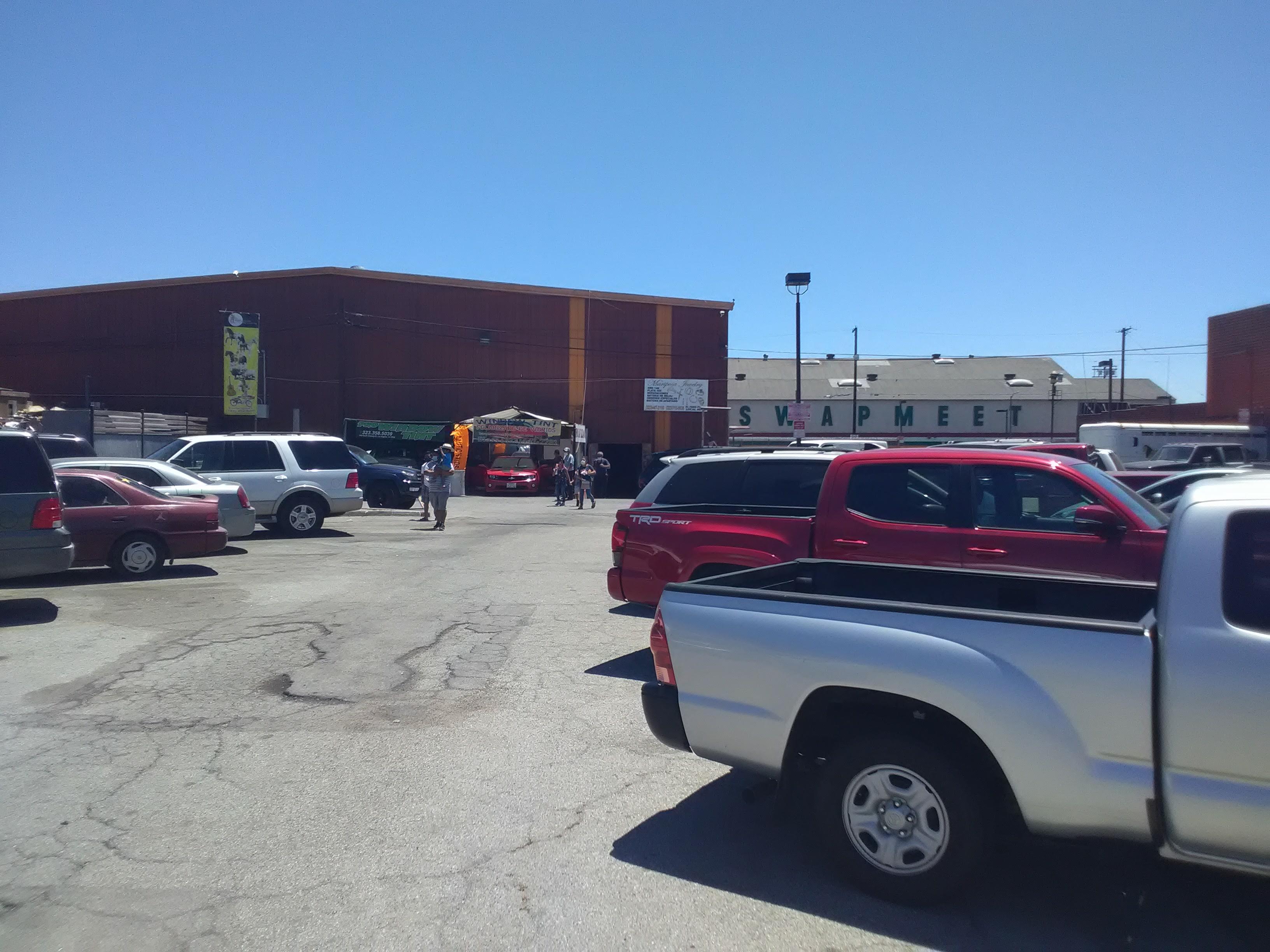
The Alameda Swap Meet sits just a couple of blocks from Vernon station, poking out above the surrounding stores and houses. As you exit the platform, make a right and walk down Vernon Avenue. The sidewalk is a tight one, wedged between busy traffic on the street and fenced-off lots on the other, although there are a couple of nice tall trees where produce stands have set up in the shade. After a couple of blocks, you’ll come across the orange warehouse of El Faro Plaza, behind the orange gating surrounding the busy parking lot. The Alameda Swap Meet sits just beyond to the south.
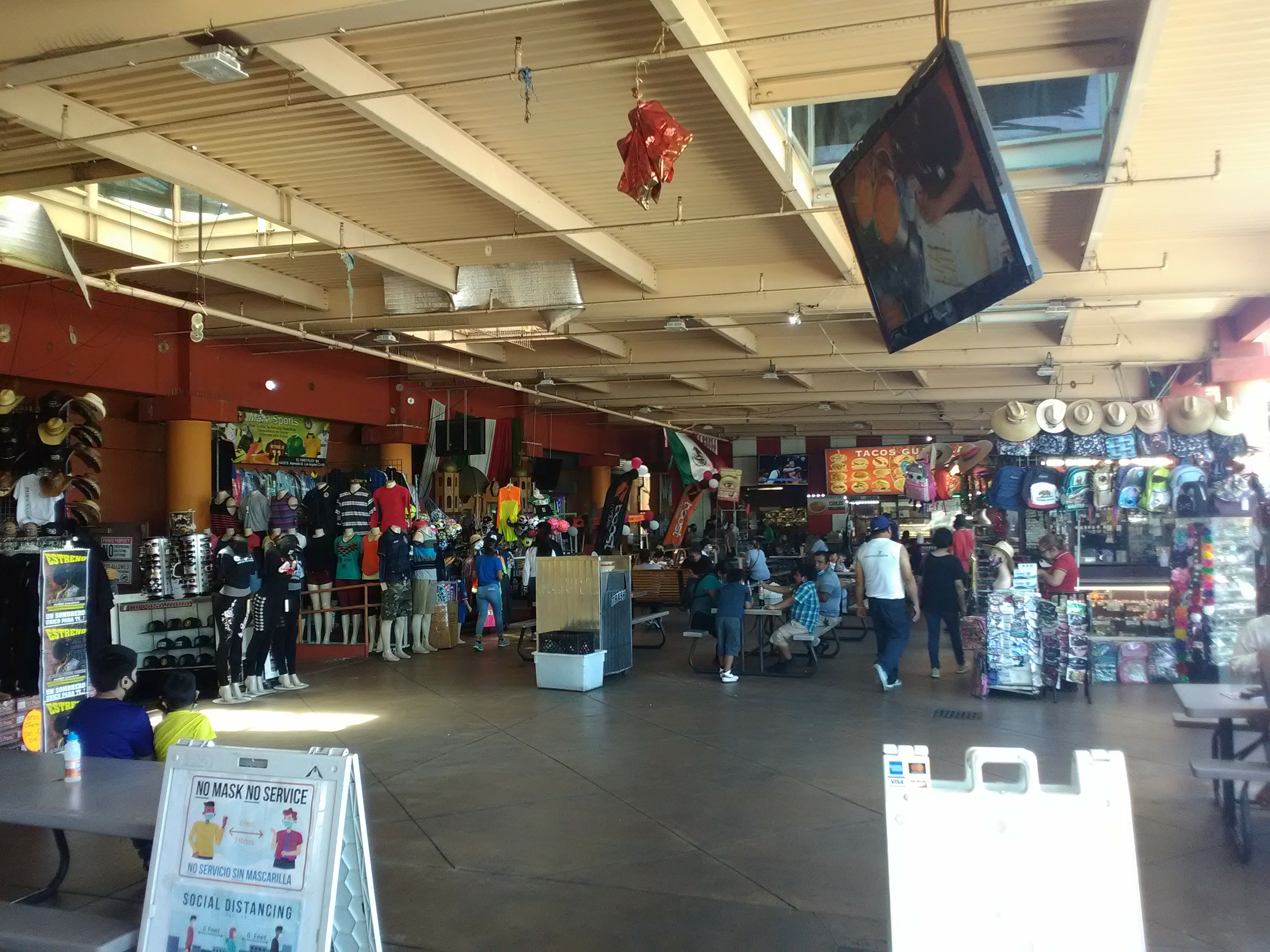
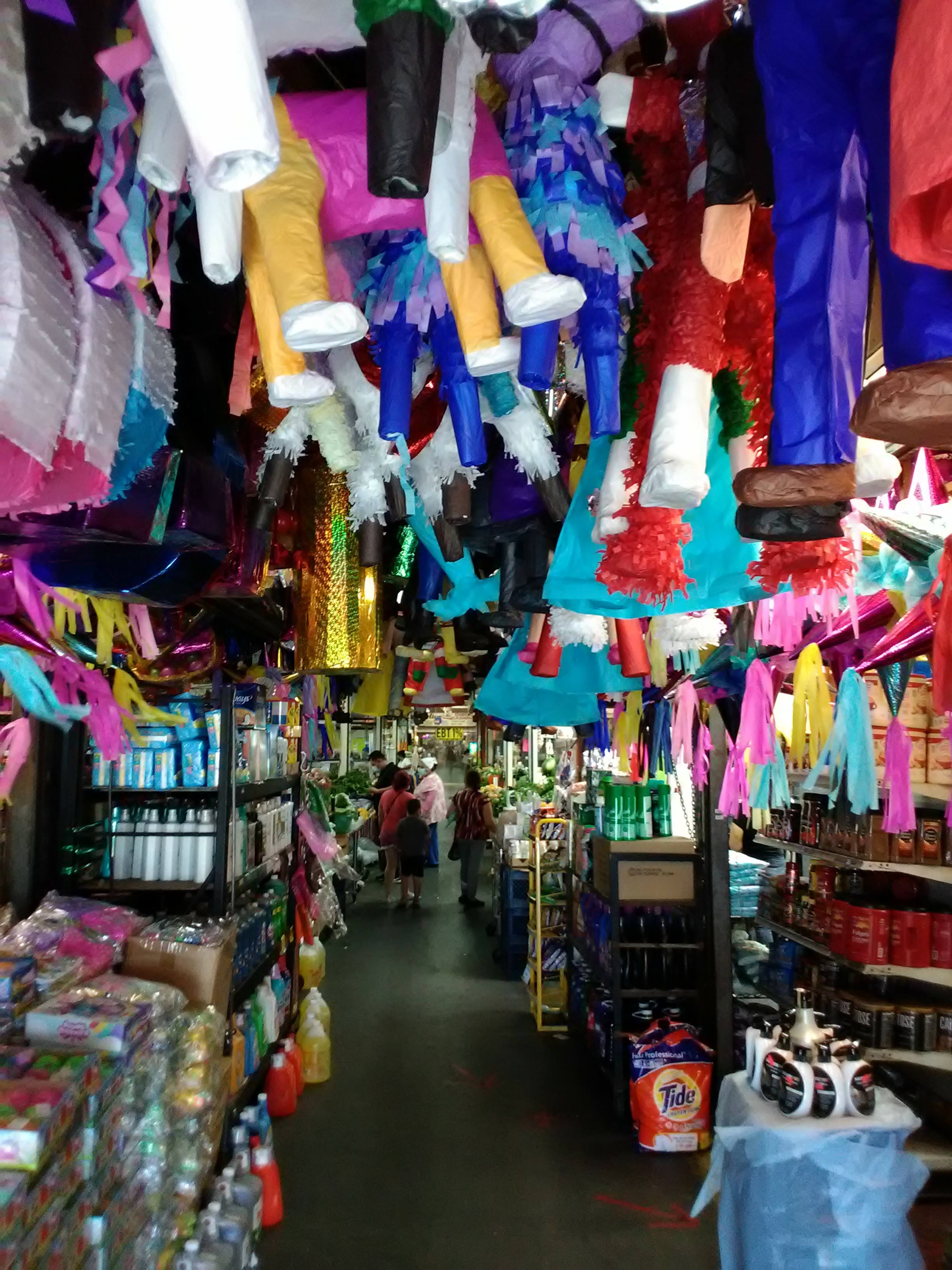
Within the walls of these two markets, you will find an amazing array of products: leather boots, hardware, electronics, sports caps, flowers, toys, quinceañera dresses, piñatas, clothing, furniture, produce, exotic pets, you name it. There’s tattoo parlors, massage clinics, beauty salons, optometrists, auto repair shops, and jewelers. And this is to say nothing of the food, which comes from dozens of vendors serving a wide variety of regional Latin American specialties. The Alameda Swap Meet is the older and larger of the two, with most of the vendors inside a cavernous warehouse. El Faro is slightly newer and has the better food selection, with a great food court on the north side of the building facing Vernon. TVs hang from the ceiling above the cafeteria tables, and during a soccer match the food court will be packed with excited fans sitting on the edge of their seats before erupting after a goal.
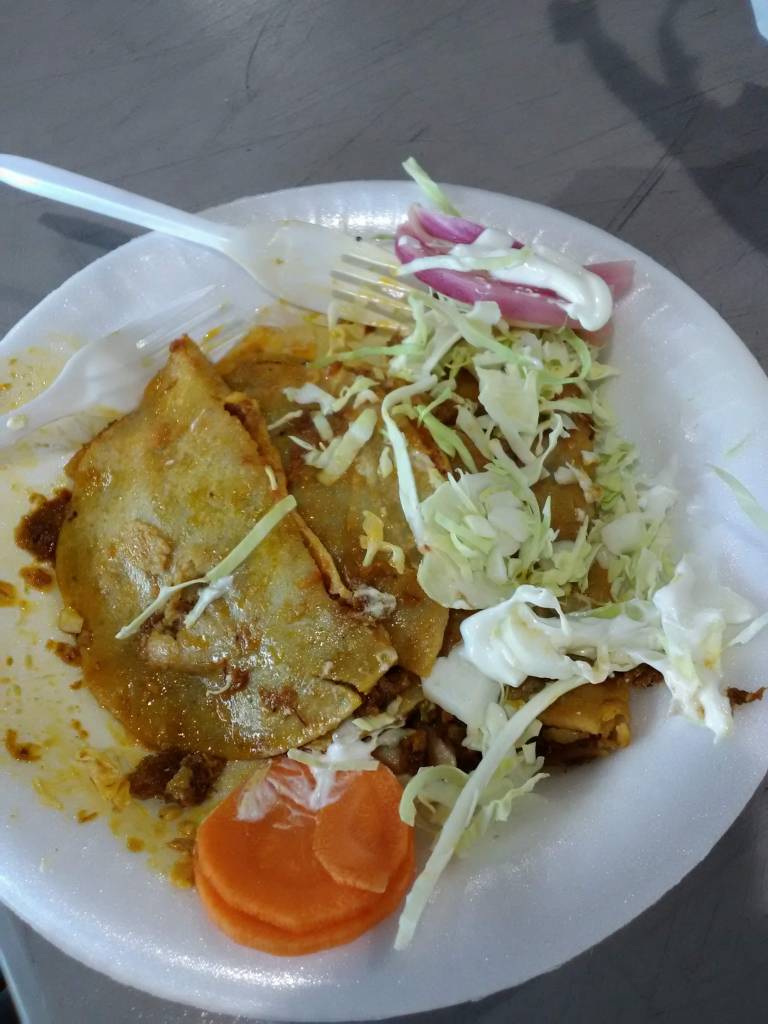
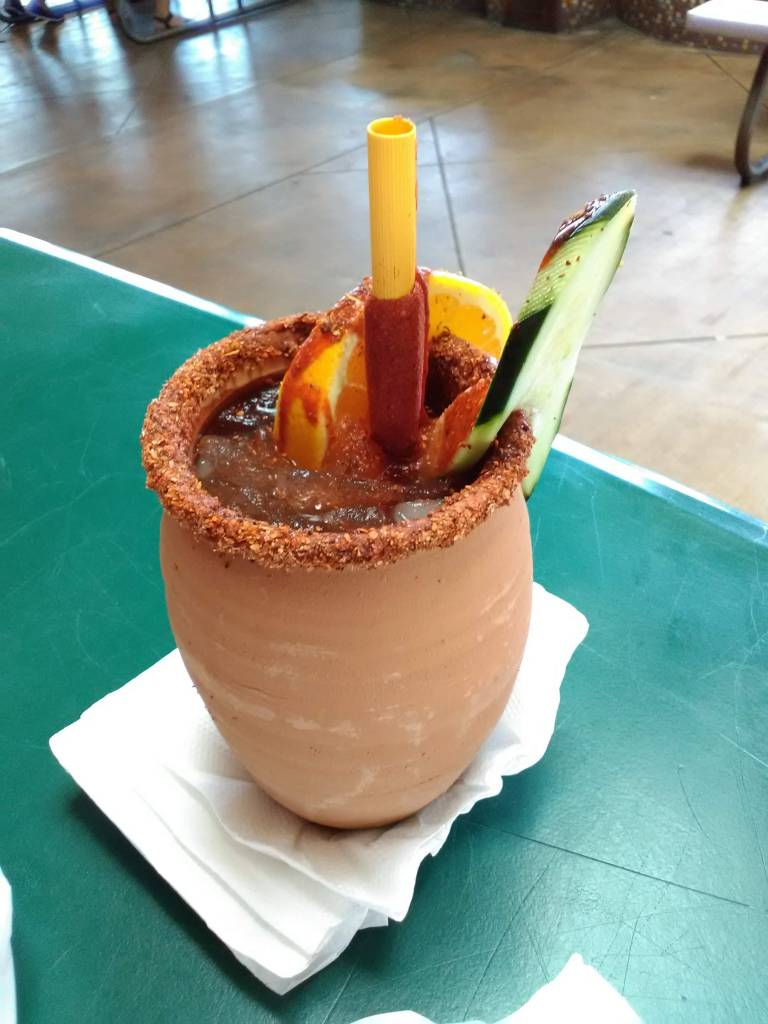
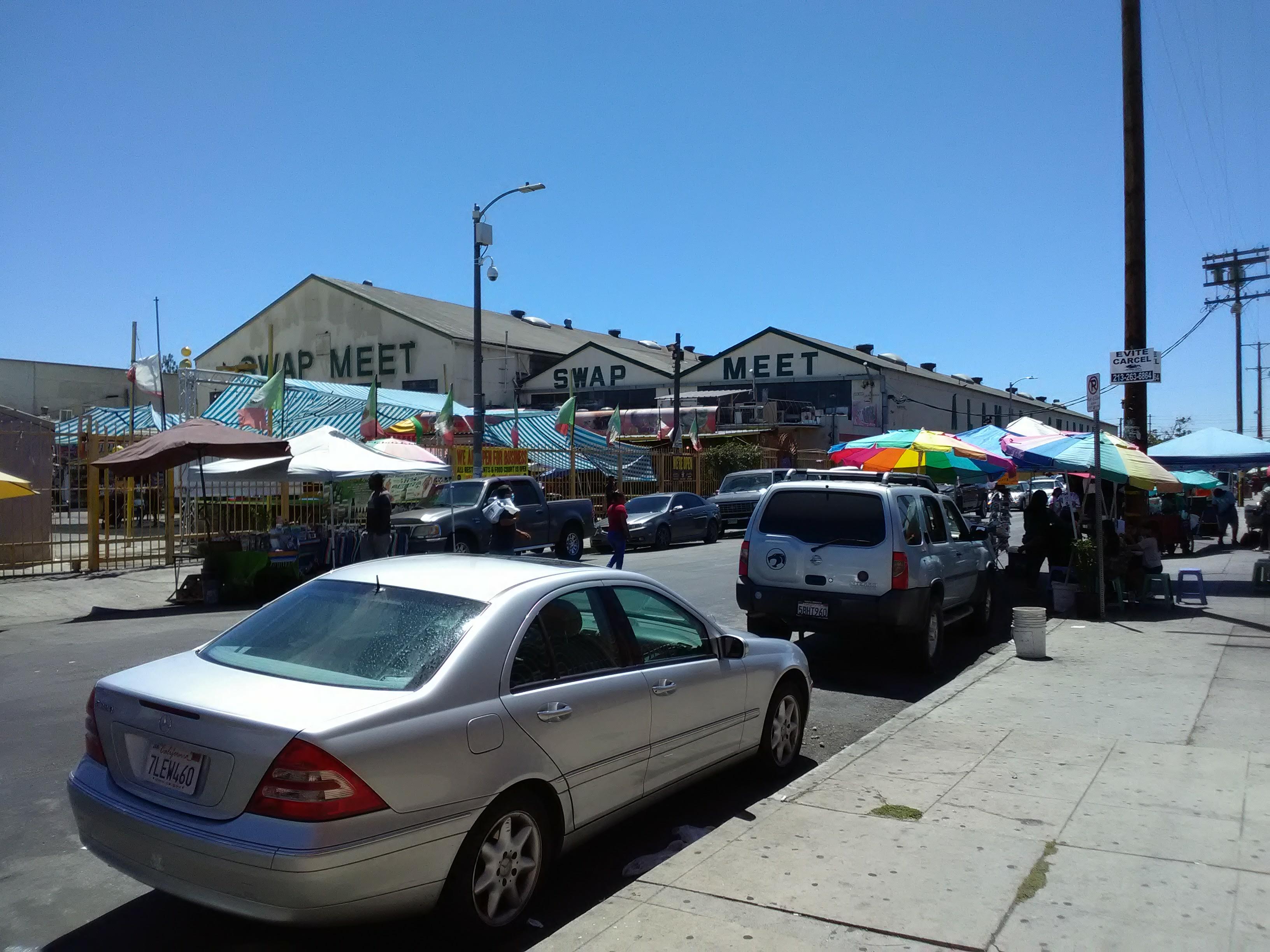
The center of activity is along 45th Street, a narrow side street that separates the two markets that is lined with cars and sidewalk vendors. Midway down the block is a sort of plaza formed out of a pair of asphalt lots carved out of the buildings’ footprint. On one side, the fence of the Alameda Swap Meet is topped with a line of Mexican flags, separating the street from a stage, a bouncy castle, and a bunch of food stalls. On the other side of the street, a crowded driveway flanked by vendors on both sides leads to some auto repair shops, while tucked in one corner is a pony rides tent next to a pet store showing off exotic birds. The weekend is definitely the best time to come, because it’s when you’ll find the market at its most active and exciting, with dancing and music performances at the Alameda Swap Meet’s stage and long lines of cars spilling out onto the surrounding streets.
Slauson station
The elevated Slauson station will be an important transfer point in the future, should a proposed rail line to Artesia be completed. It sits on the border between an industrial area and a residential neighborhood, overlooking a lumber yard, a bunch of scrapyards, and a railroad junction, with a view of the Downtown skyline in the distance.
The next three stations on the line are all located near large parks, with Florence station being near Roosevelt Park and Firestone station next to Washington Park. But Slauson probably has the most interesting park of the three. From the platform, you can also spot a large grove of trees a couple blocks west of the station. This is Augustus F. Hawkins Nature Park, a lush oasis built in 2000 to reintroduce a natural habitat on a former industrial site and provide much-needed green space to the surrounding neighborhood. It’s a short walk from Slauson station along a newly built bicycle path; as you exit the station, make a left and cross Slauson at the first crosswalk you come across, then follow the bike path until you reach the park. The entrance will be right around the corner on Compton Avenue.
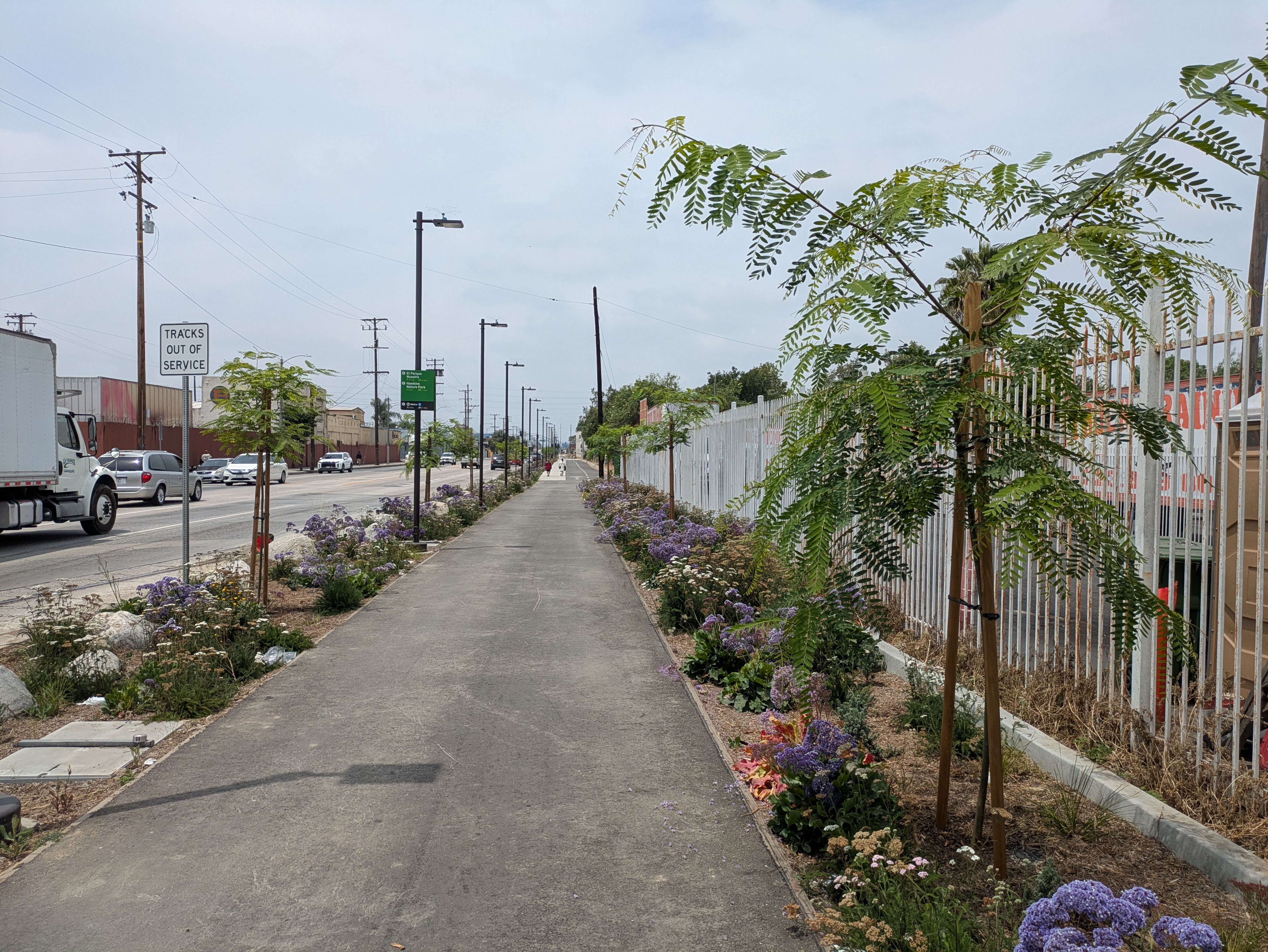
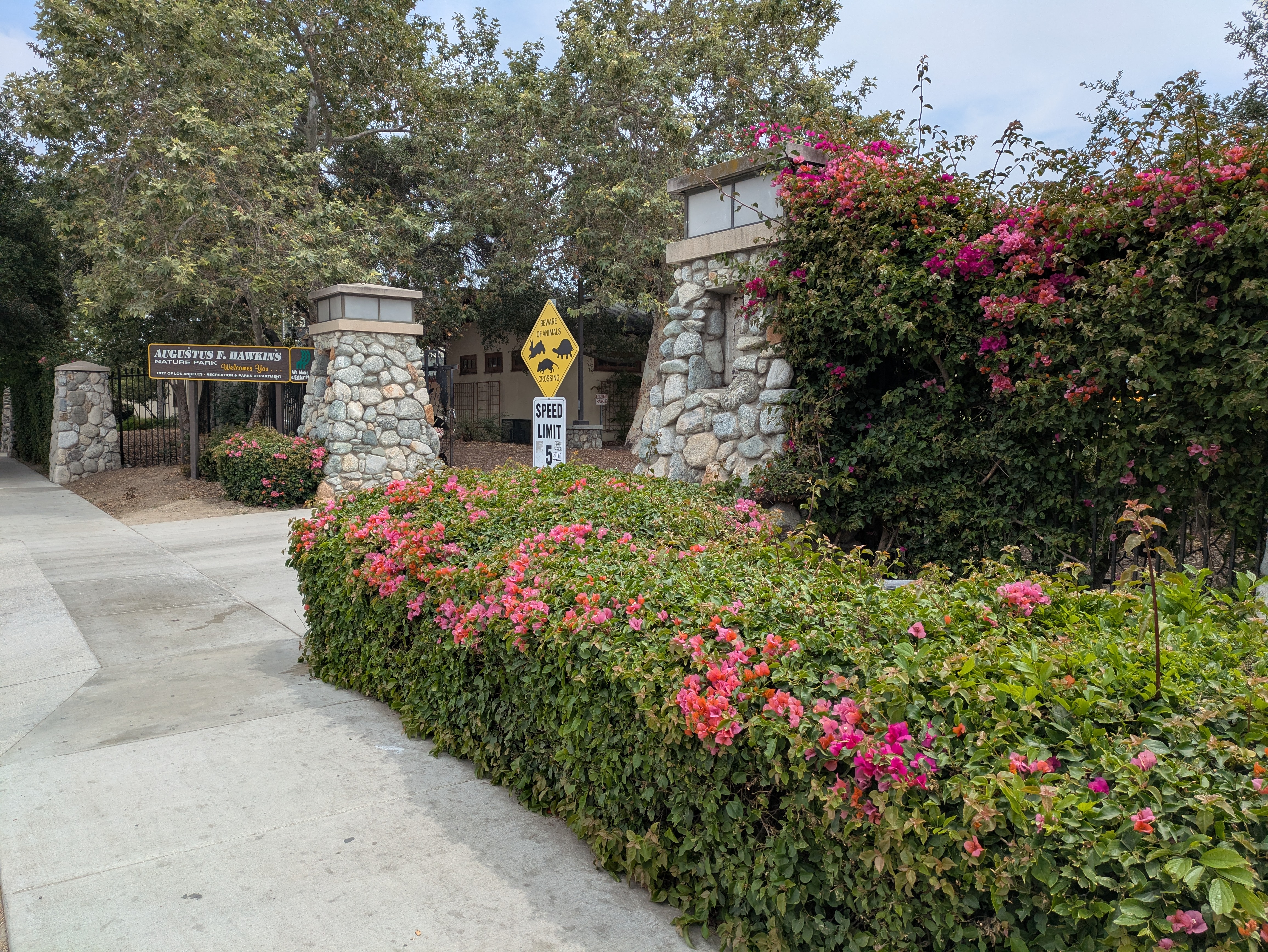
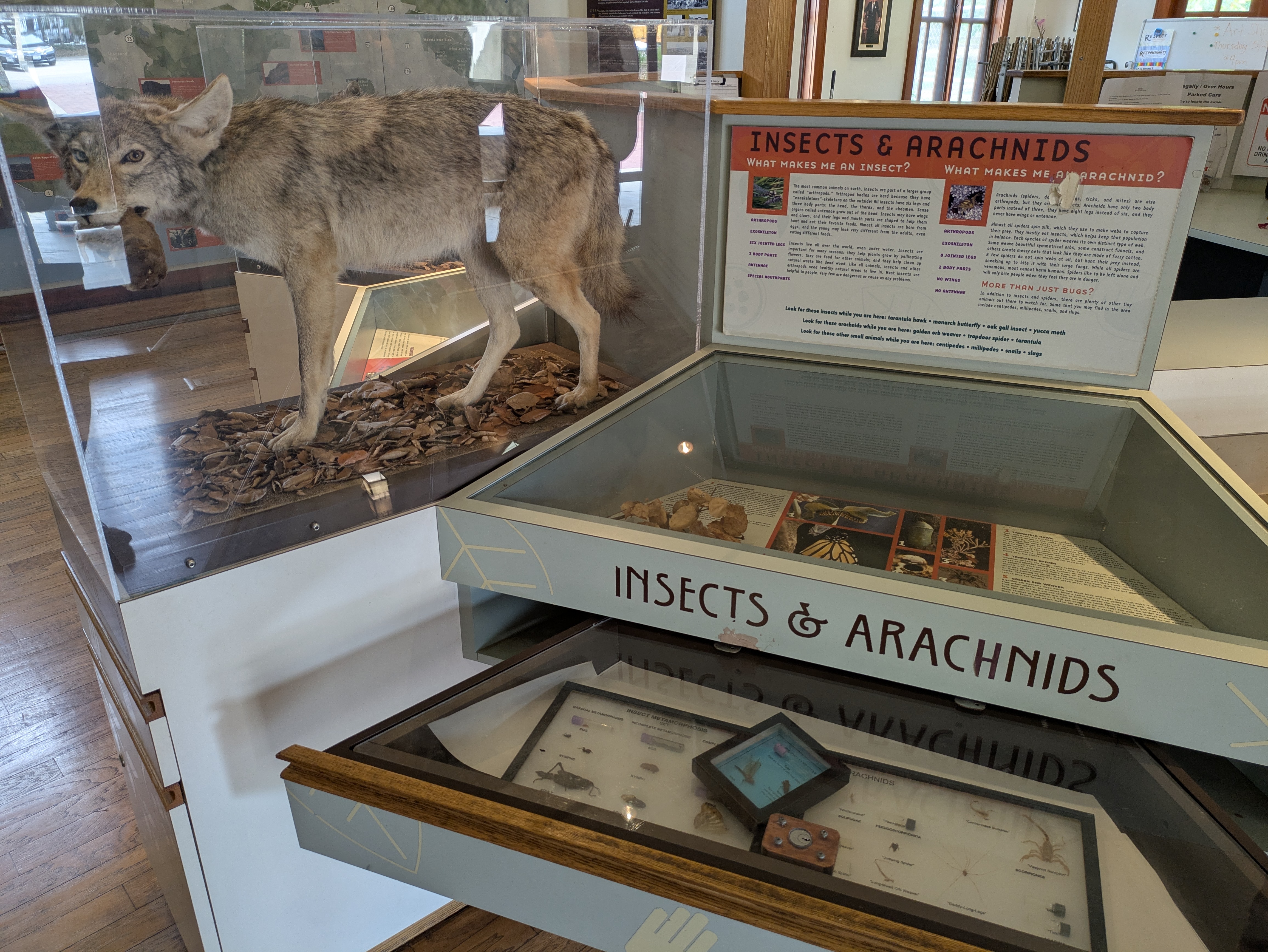
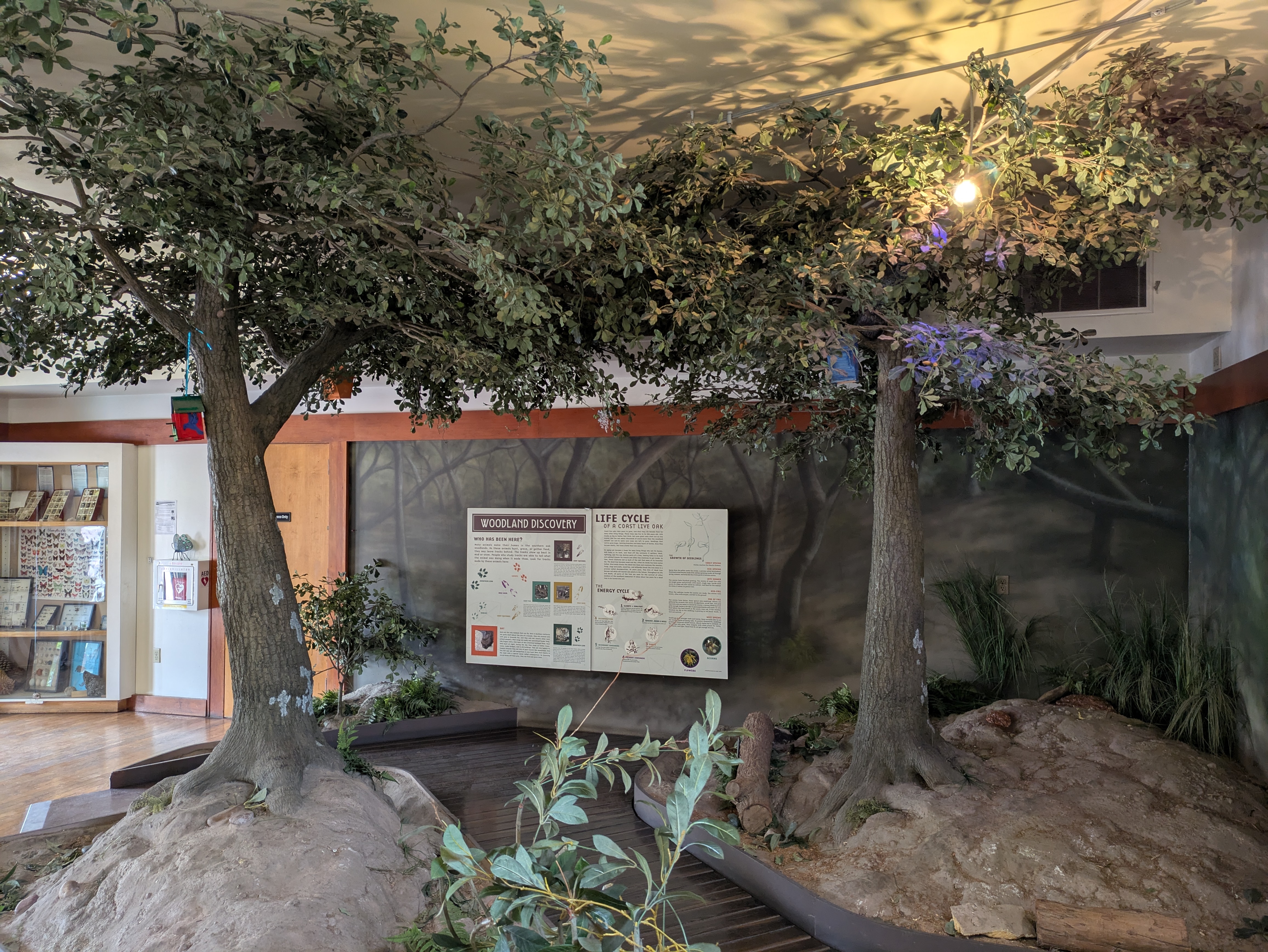
Next to the parking lot, you’ll find the park’s nature center, which has exhibits on the natural environment created by the Santa Monica Mountains Conservancy. Inside, you’ll find taxidermied figures of coyotes, birds, and other native fauna, a tiny re-creation of a woodland habitat, and educational classrooms. The staff are very enthusiastic and excited to give you a tour of the exhibits.
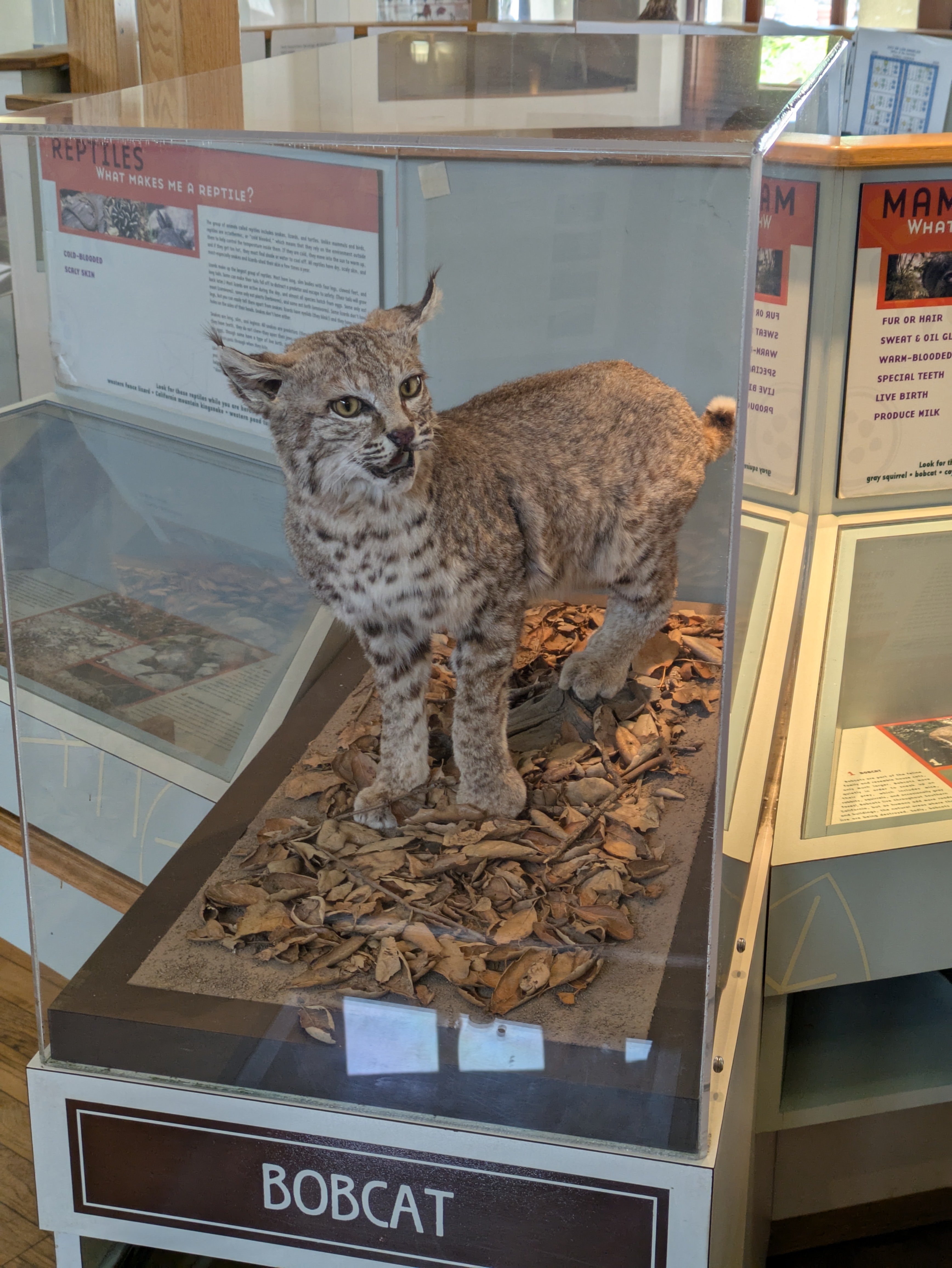
The park itself has a very simple layout. Past the nature center is a big lawn at the center. From here, a paved trail loops around a large nature pond filled with ducks and turtles, and past some hillier features along the edges of the park. In one area, a spiral-shaped trail rings up a small hill, with a little view of the park from the top. In another, water cascades down a picturesque, stone-lined fountain, pumped to the surface by a little windmill. A thick grove of trees encircles the park, offering serenity in the midst of the urban landscape.
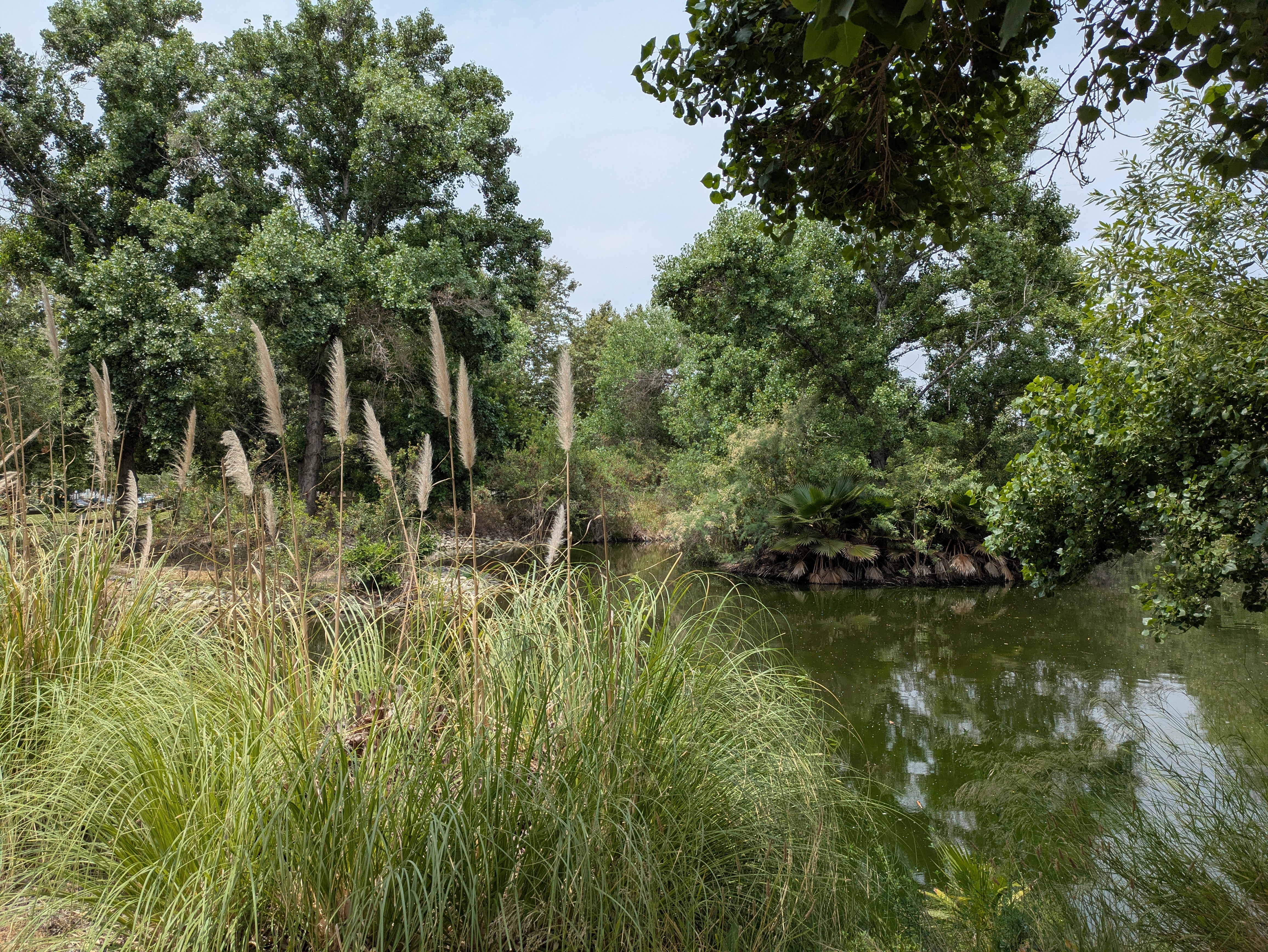
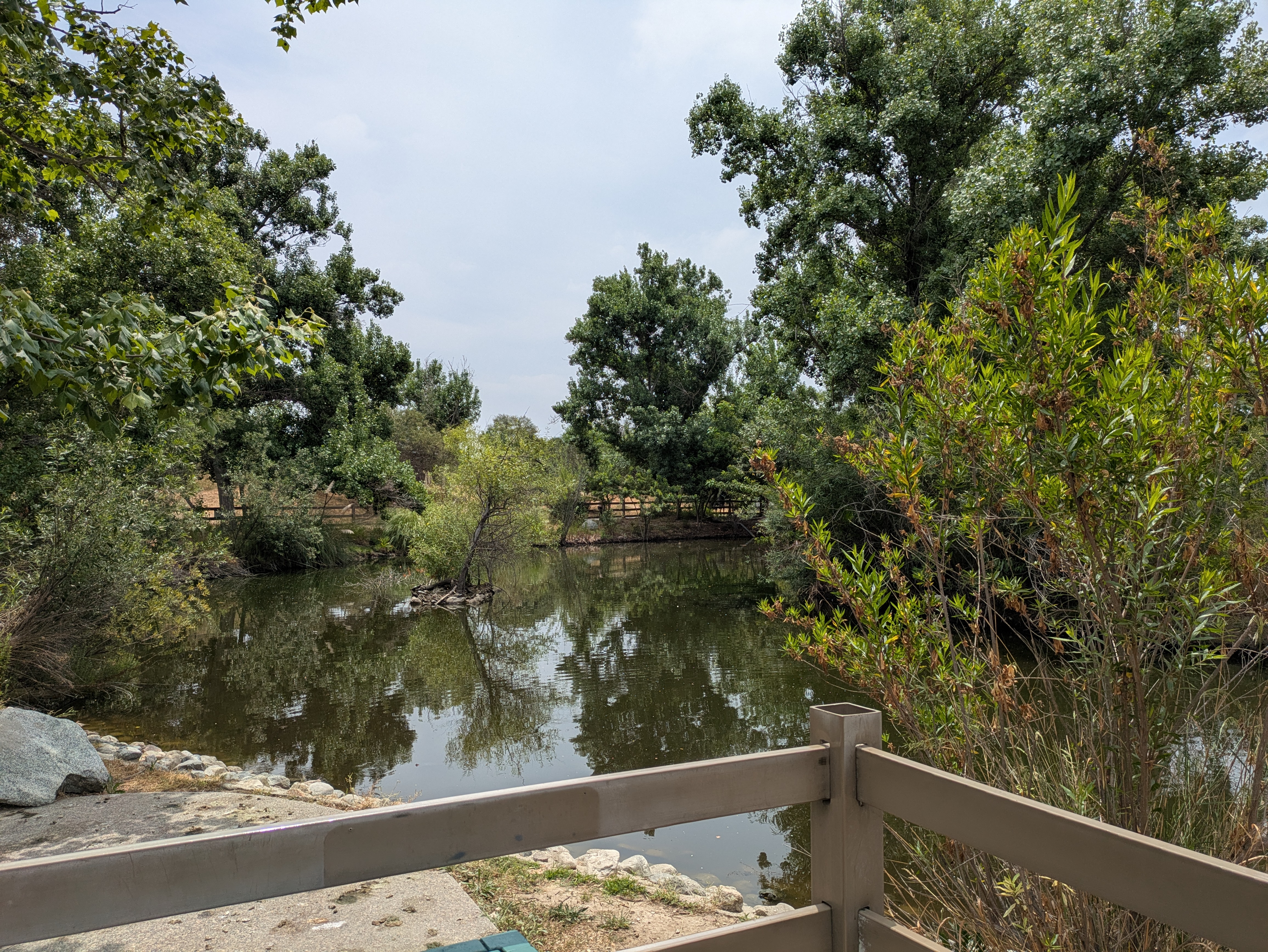
Although if one feature of the park stands out to me, it would be fences. A tall iron-wrought fence lines the edge of the park, with most of the gates seemingly always locked. Even the pond is encircled with a wood post fence that limits access to the water’s edge. The posted hours for the park are 10am-7pm on the weekdays, 10am-5pm on the weekends.
103rd Street/Watts Towers station
As the name suggests, this station is located near the famed Watts Towers, which is one of those attractions that I feel like a lot of people have heard of but few have actually visited.
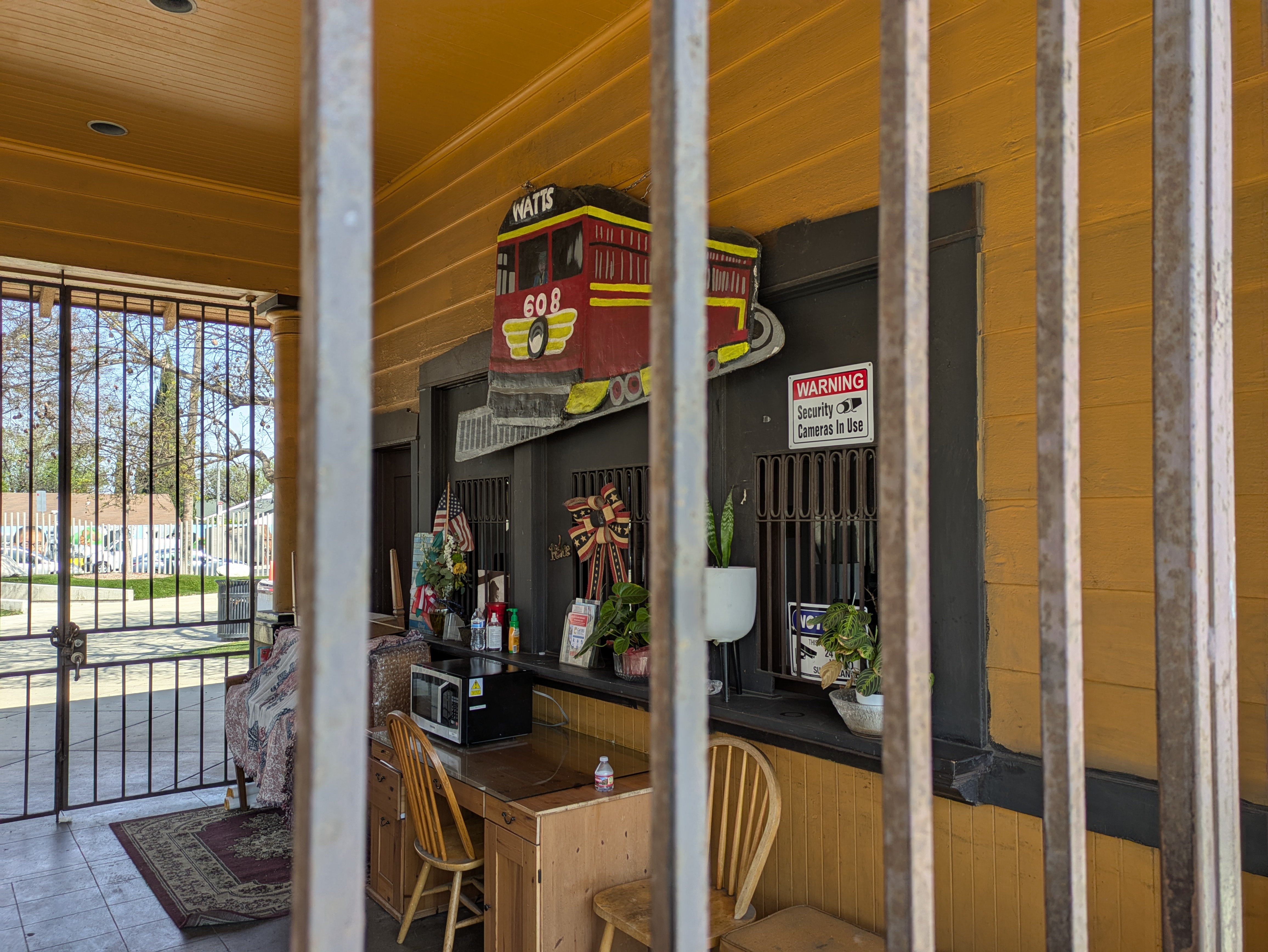
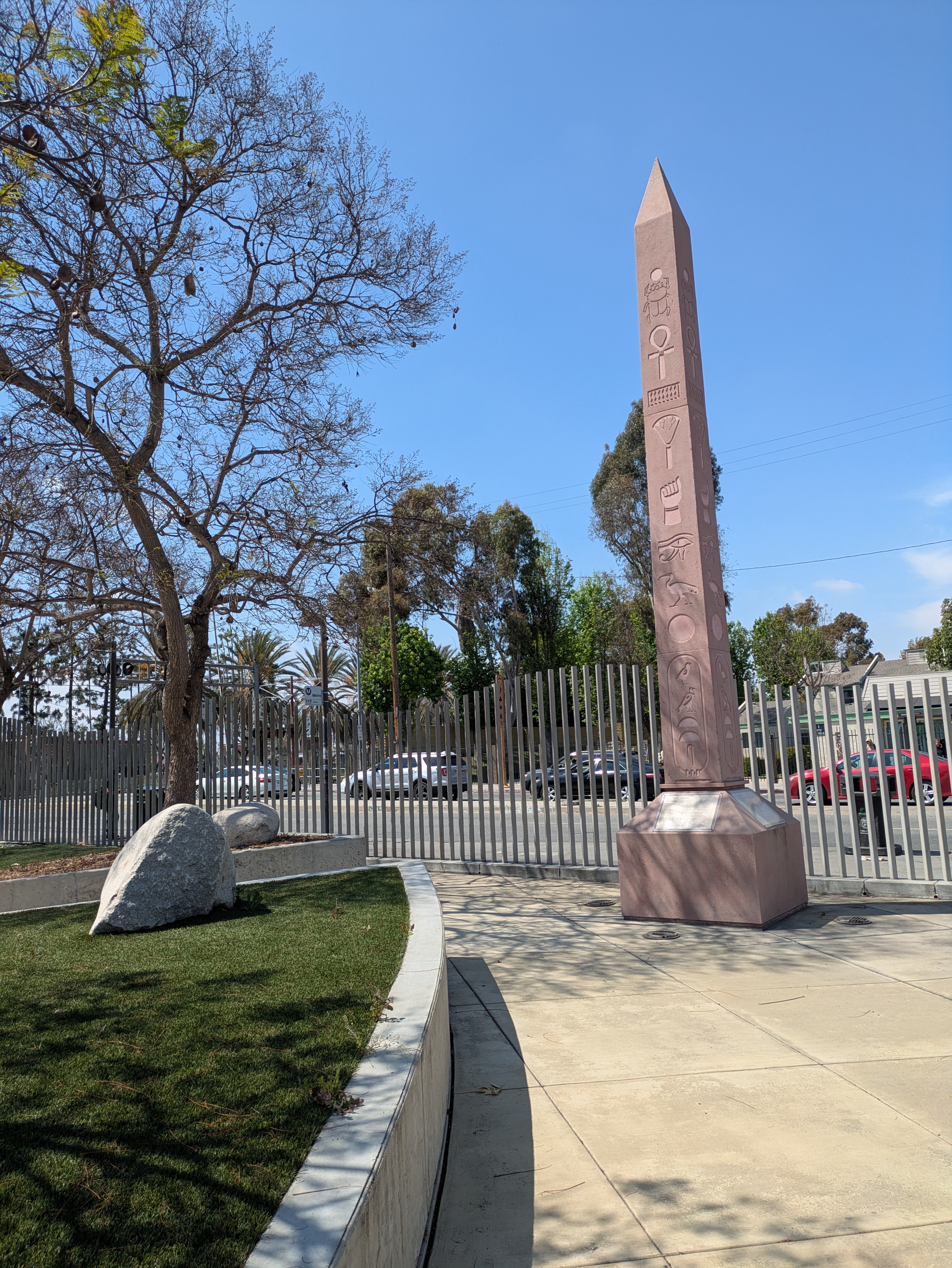
Adjacent to the platform itself is the old Watts Station, a cute orange building that served as the neighborhood’s Pacific Electric streetcar station and is the oldest building still standing in Watts. Today it serves as a customer service center for the Department of Water and Power, and a couple vendors are usually set up in the open space facing the sidewalk. Bizarrely, there’s a perfectly nice plaza next to the station that is fenced off behind heavy metal bars and seemingly always locked. A pyramid sits in the middle of the plaza, while an obelisk stands just out of reach, with “WATTS” spelled out in Egyptian hieroglyphics.
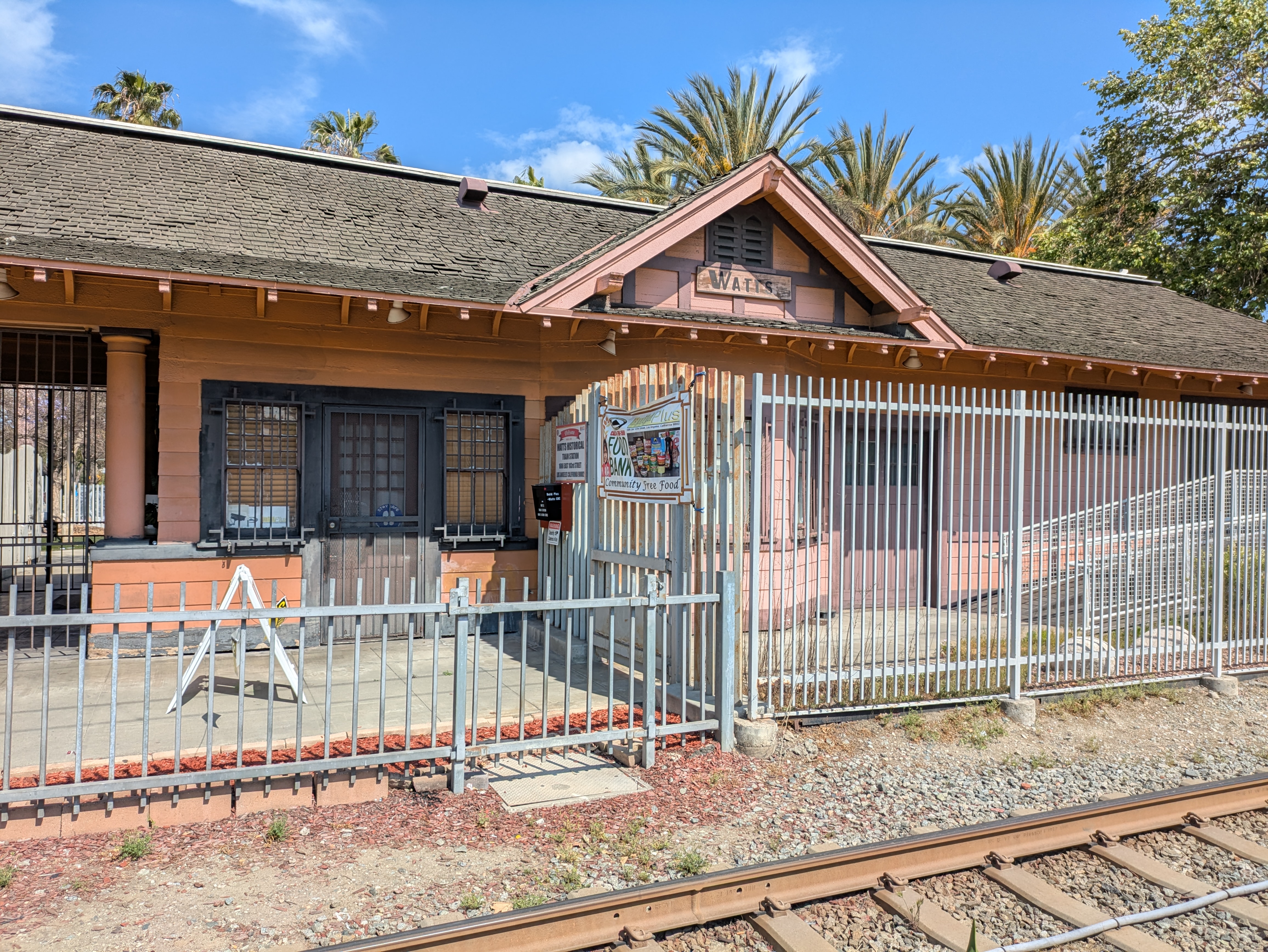
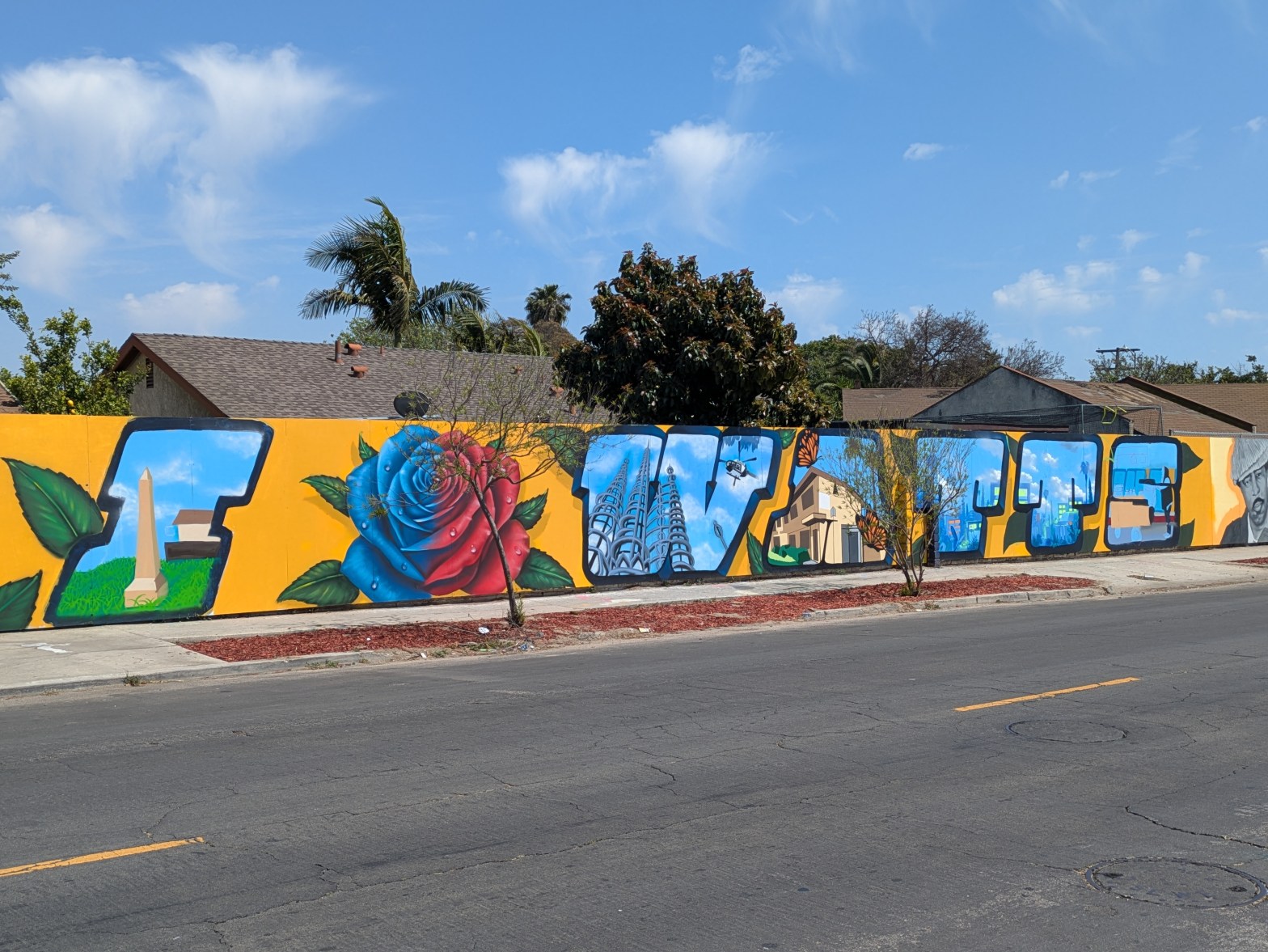
Watts can often have a neglected feel. It’s not uncommon to see broken glass or trash. But as you pass the station and make a right onto the street paralleling the train tracks, there’s also great care taken, exemplified by the murals that grace the walls along the street.
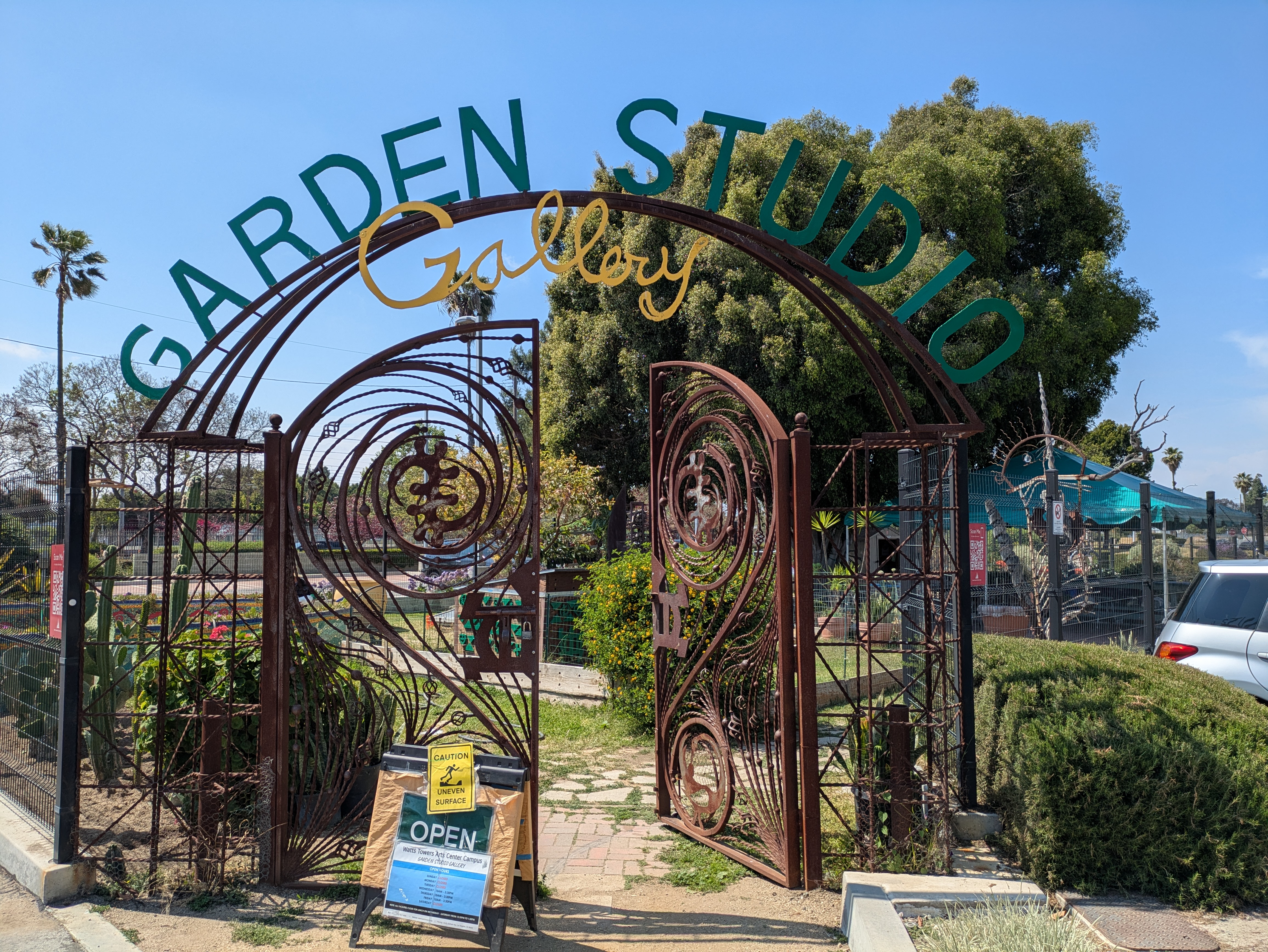
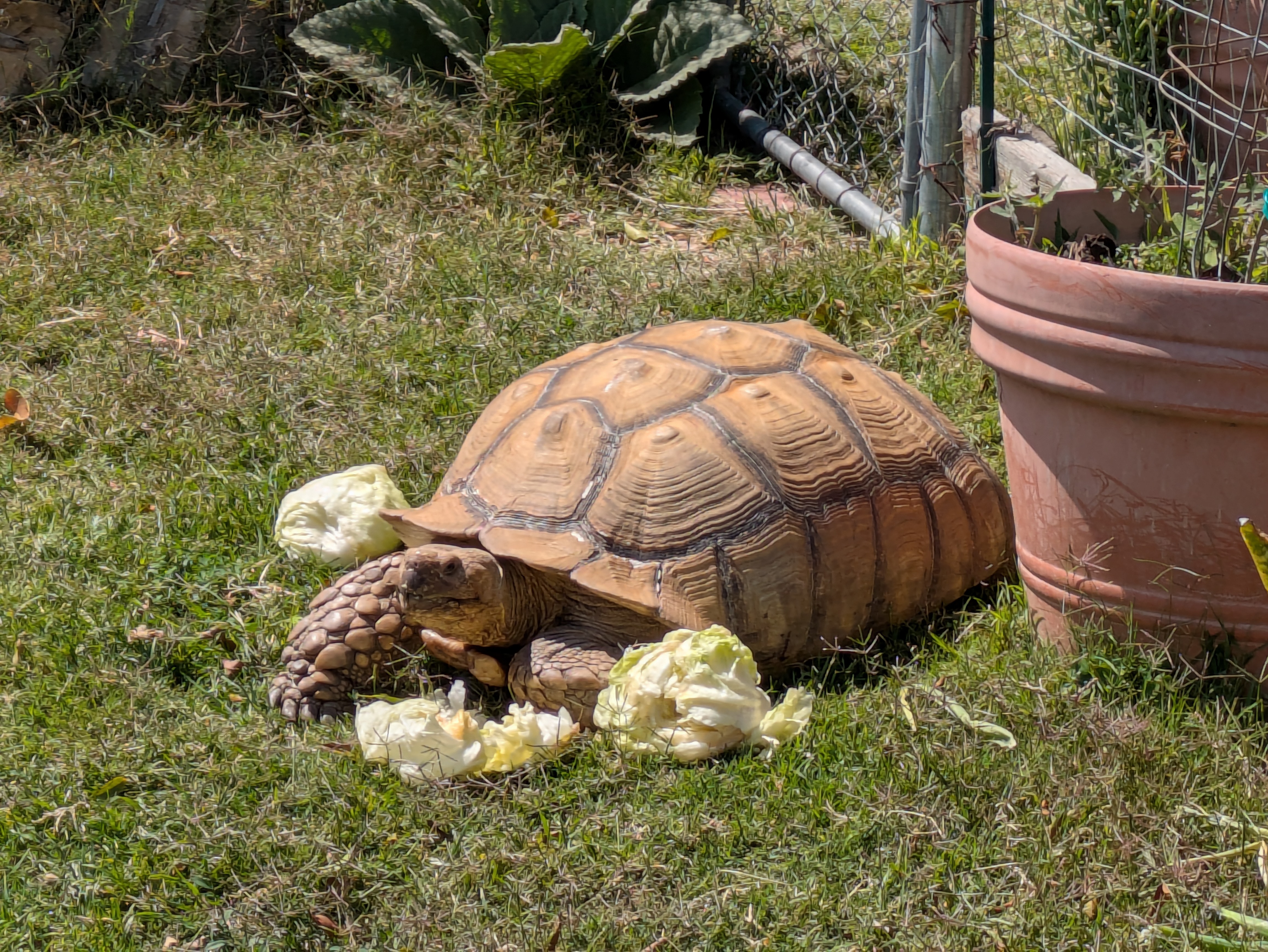
But the triangle-shaped park space surrounding the Watts Towers is well-kept, with grassy lawns, shade-giving trees, and clean sidewalks. The first thing you’ll encounter upon entering the park is its most endearing feature: a community garden called the Garden Studio Gallery. Through its beautifully-wrought metal gates, you’ll find small sculptures that look like pieces of the towers, numerous flowers, a charming turtle pond held inside a mosaic tile-walled enclosure, and most unexpectedly and delightful of all, a large tortoise occupying a grassy enclosure near the gate. The garden is only open Wednesdays, Thursdays, and Fridays 10am-3:30pm, when the friendly caretakers will also be in the garden.
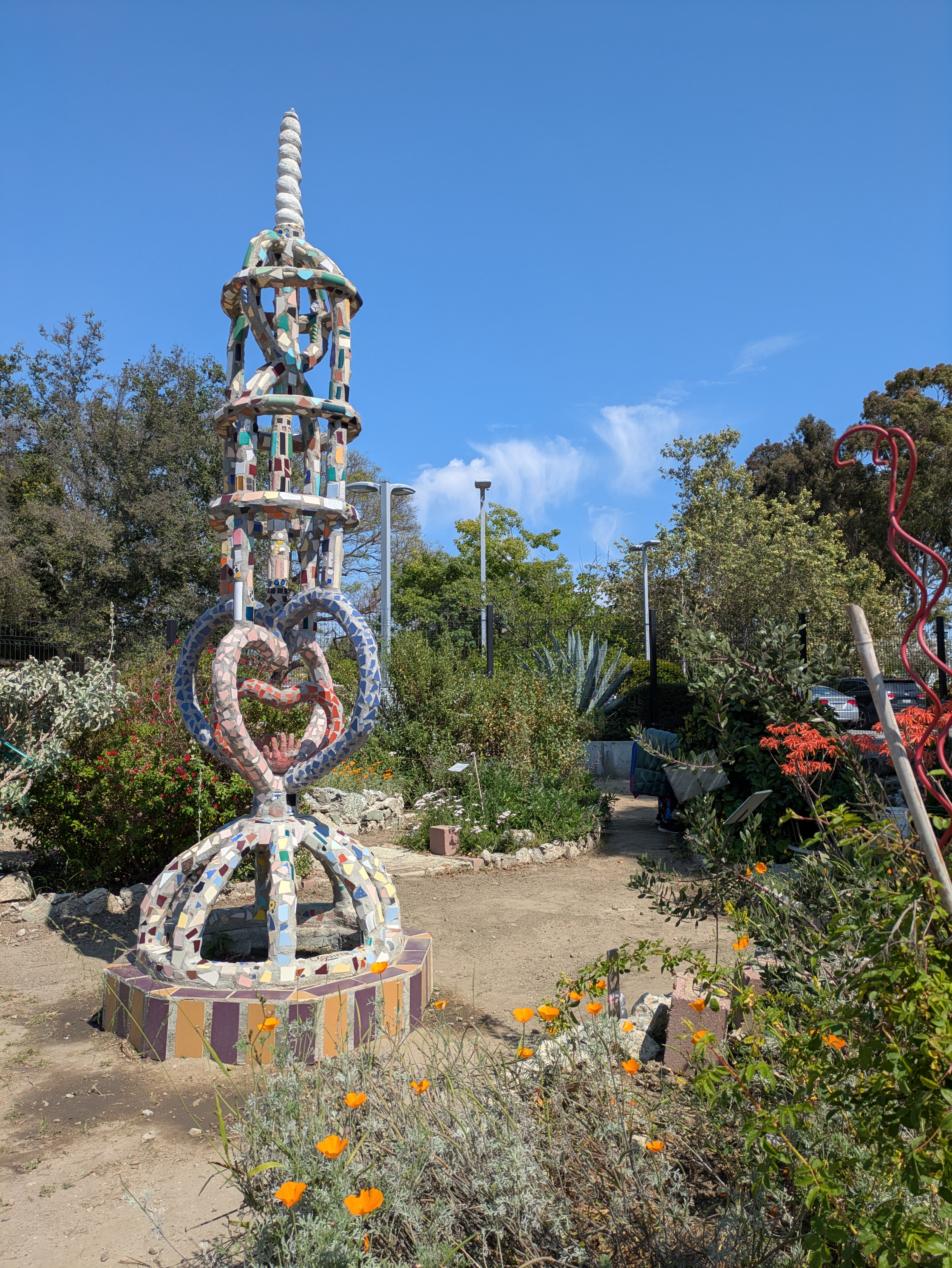
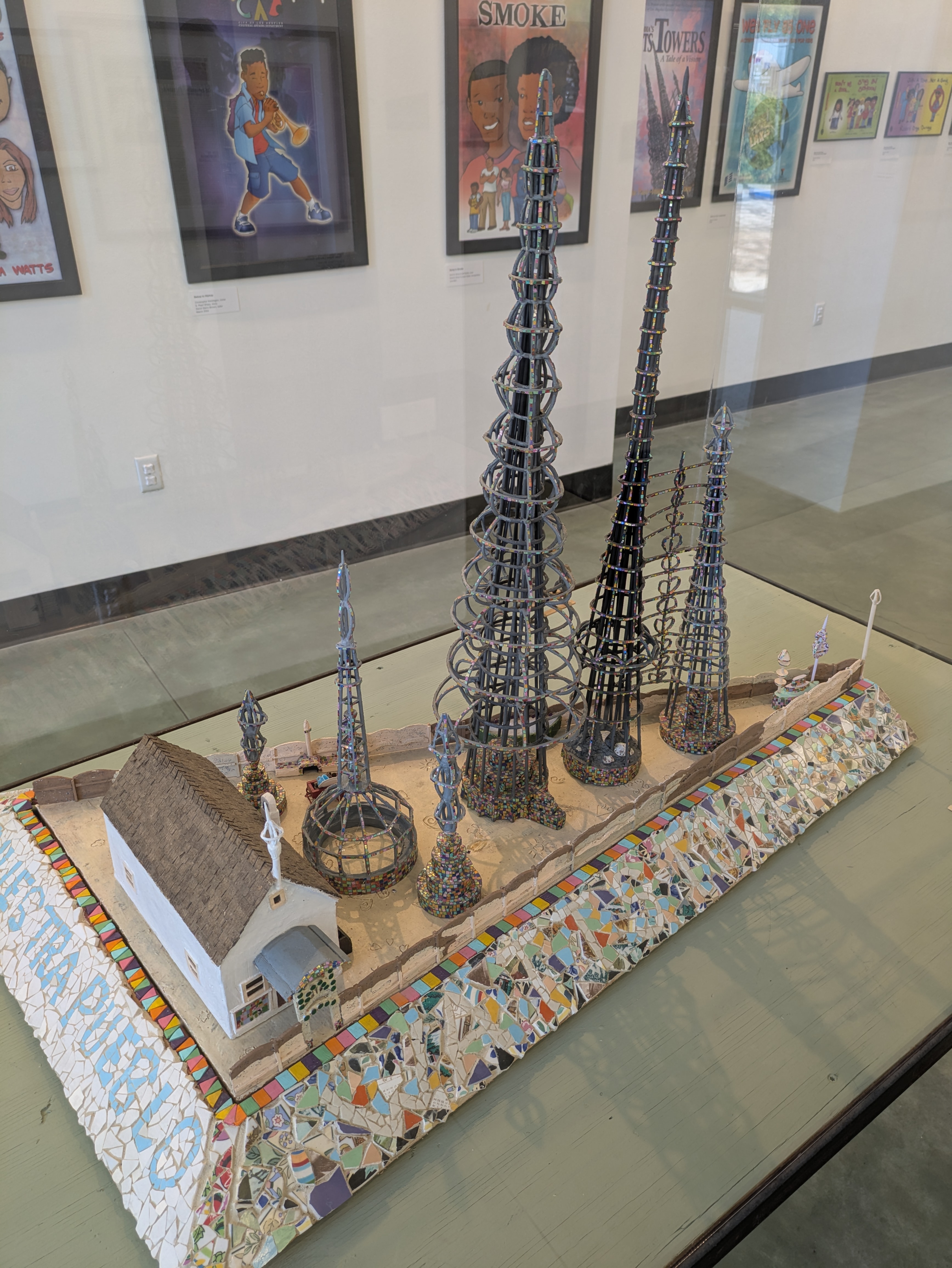
Just past the garden is the arts center, which consists of two buildings. The newer Charles Mingus Youth Arts Center holds a lovely gallery with changing exhibitions as well as a few permanent collection objects from artists who were inspired by the towers, including a scale model of the towers themselves.
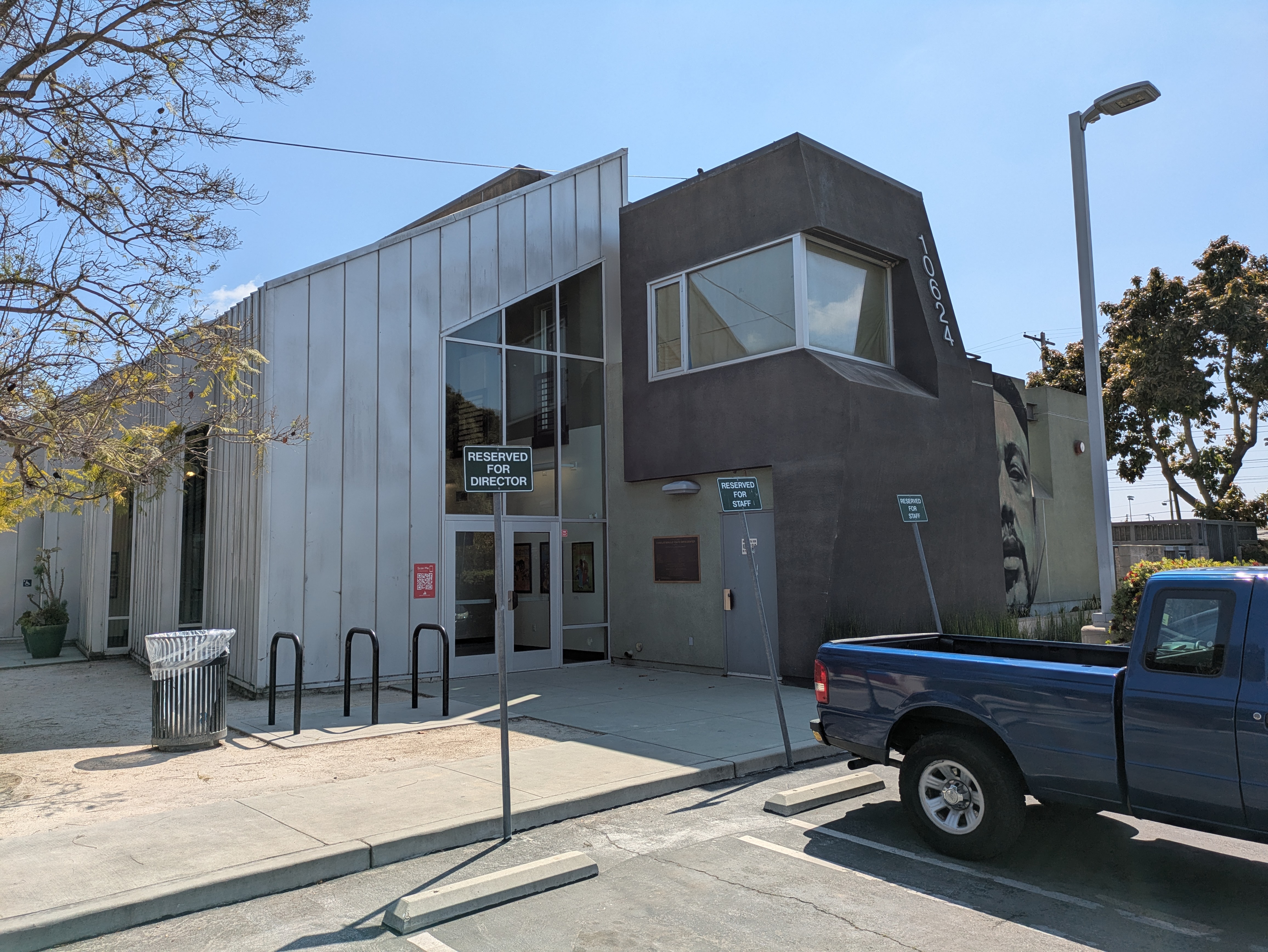
The older building, the Watts Towers Arts Center, is the primary visitor center for the complex. The arts center is open Wednesdays through Saturdays 10am-4pm, closing for a lunch break from 12:30-1:30. Next to the front door is a short statue of Simon Rodia, the creator of the towers. Behind its tile-adorned walls, the center has another large changing exhibit gallery as well as a smaller gallery of musical instruments, where a film about the history of the towers plays. At the front desk is a small gift shop, which is where you can purchase a spot on a guided tour of the towers, which are only offered on Thursdays, Fridays, and Saturdays (and they only accept cash or checks).
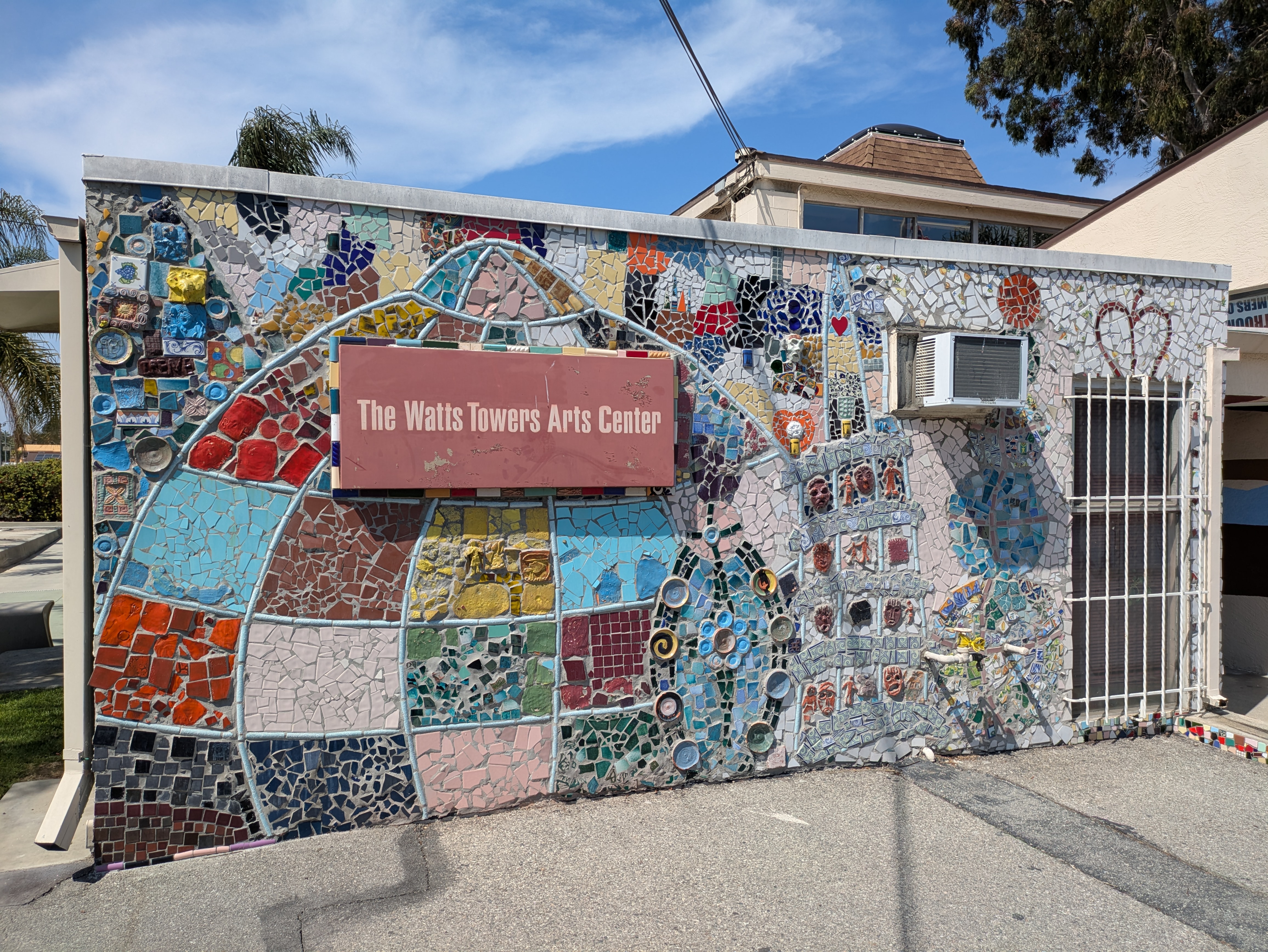
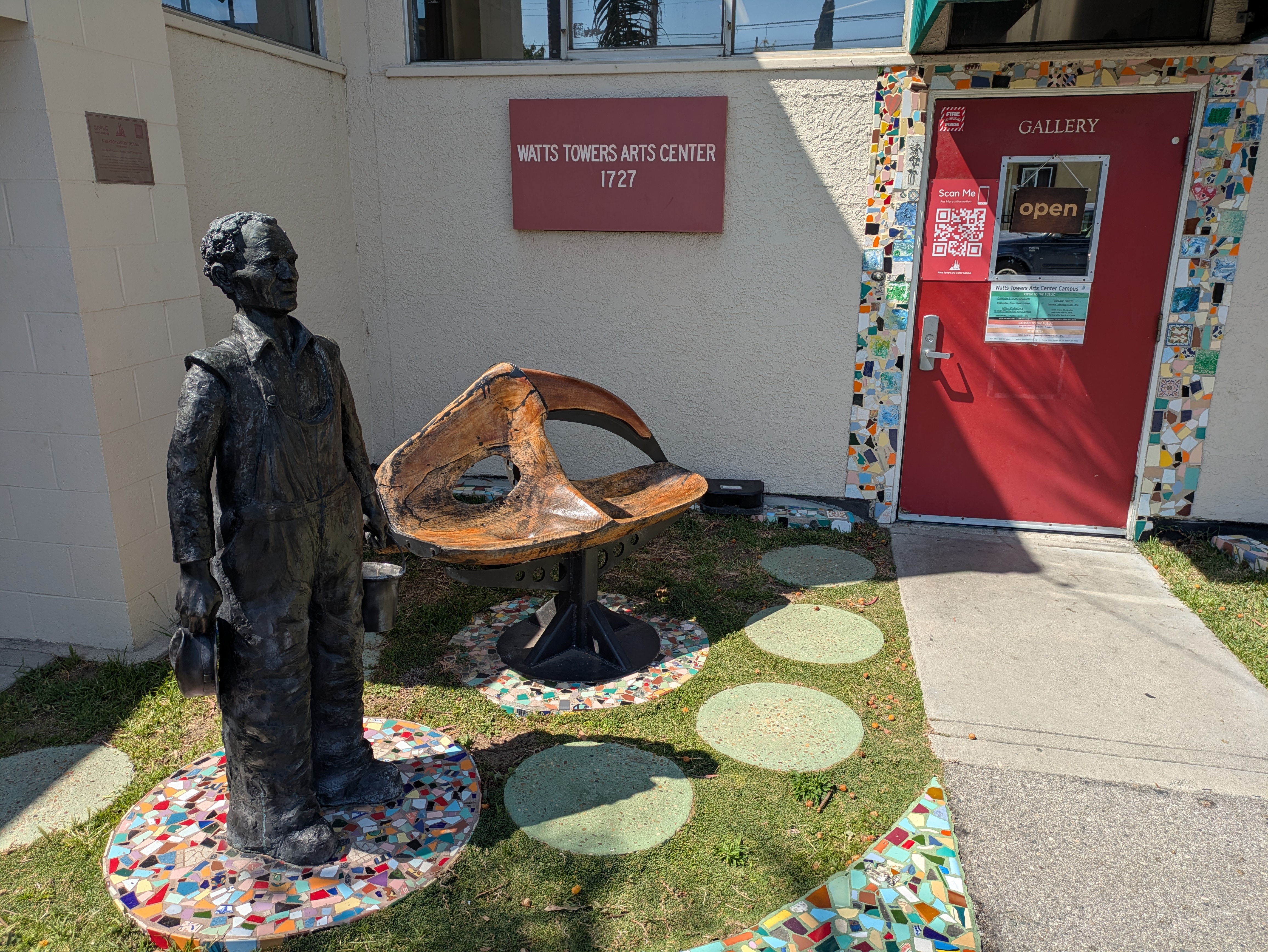
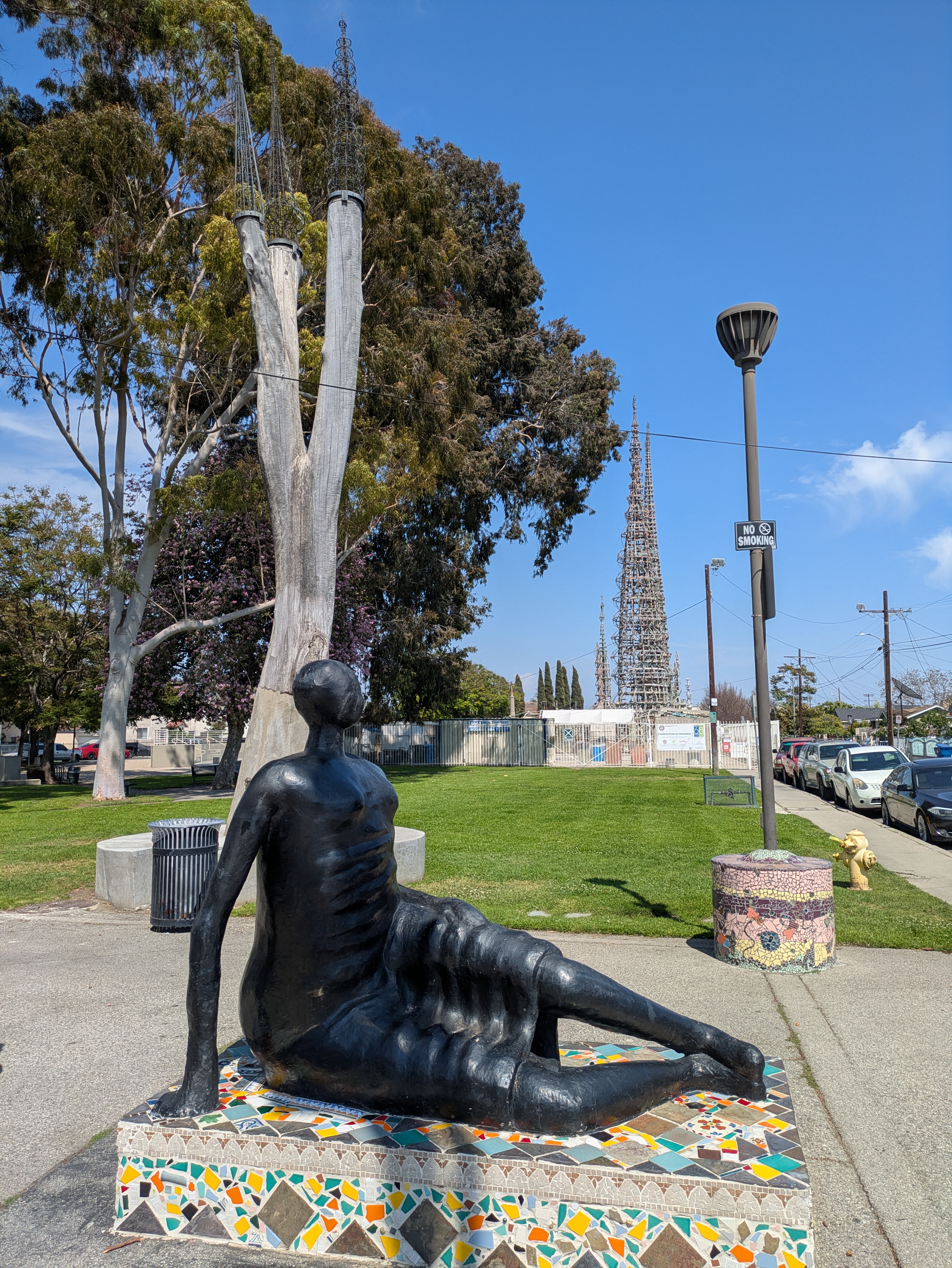
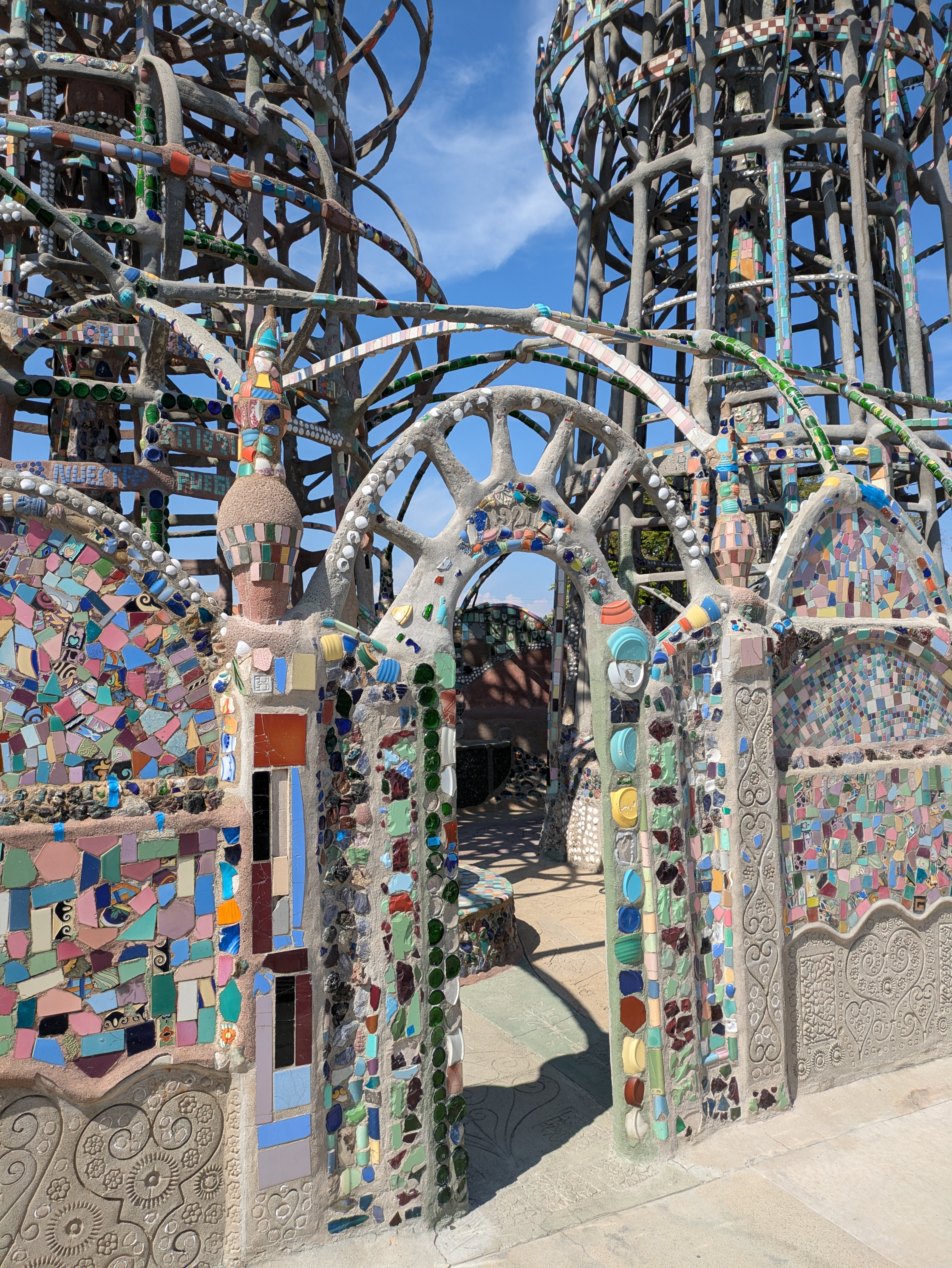
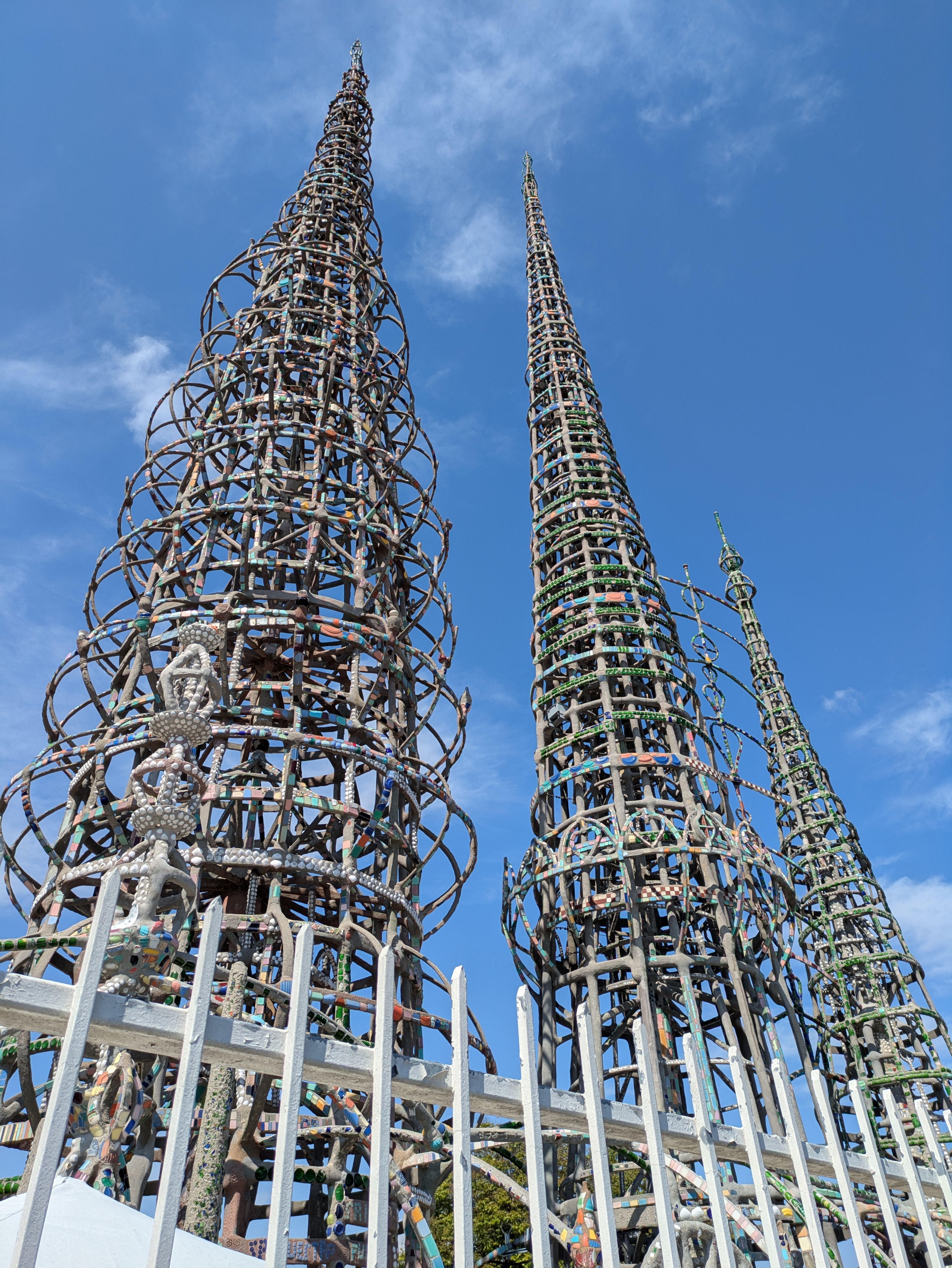
From the front door, you can see the towers themselves, which sit in a small, fenced-off enclosure in the very back of the park. You can only enter the towers on one of the guided tours led by the arts center. Despite the fence, you can still get pretty close to the towers and admire their finer details, like the adobe walls surrounding the base and the colorful mosaics that adorn them. In the sunlight, the towers glimmer from all the tile and glass embedded within its structure.
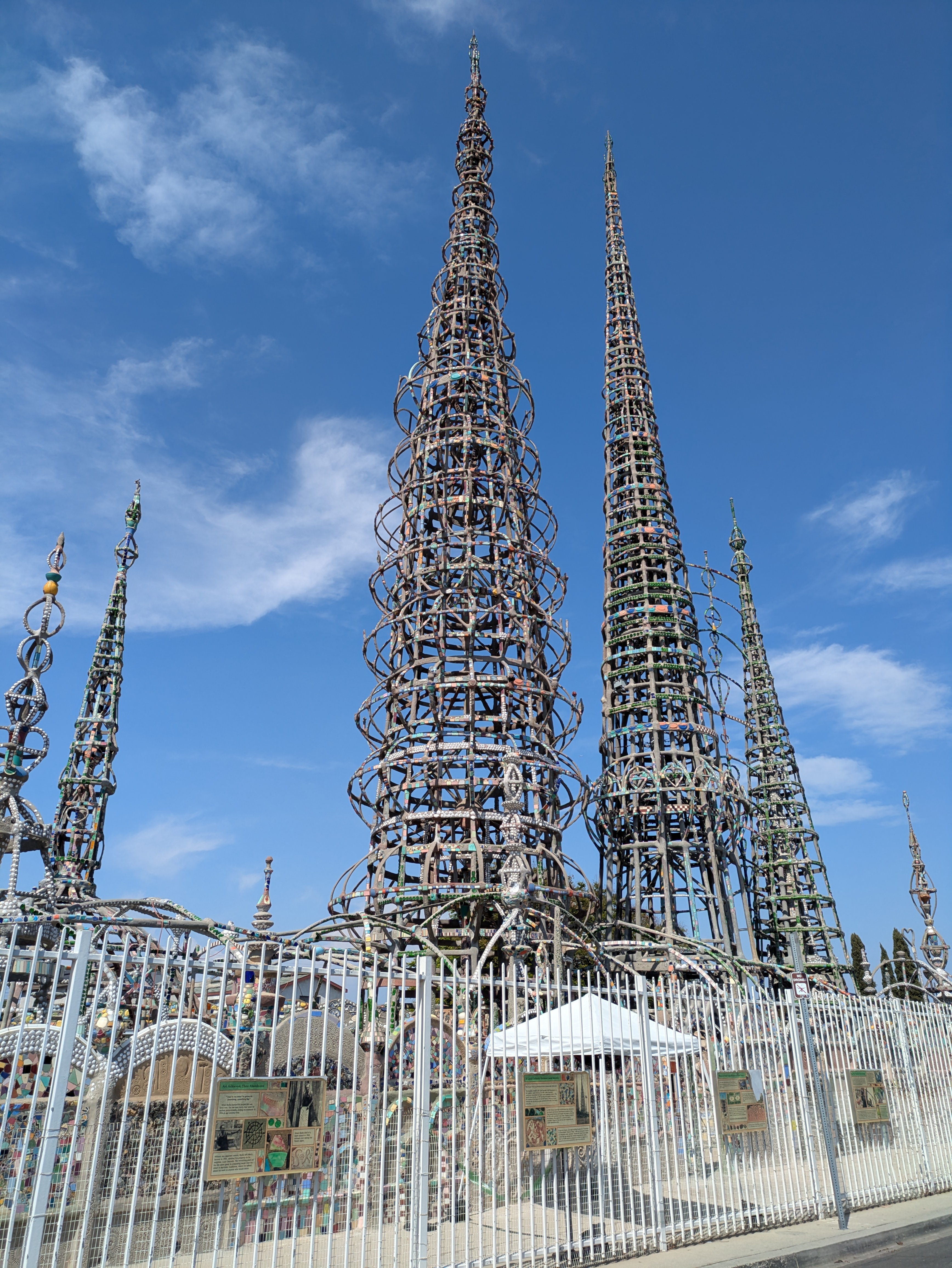
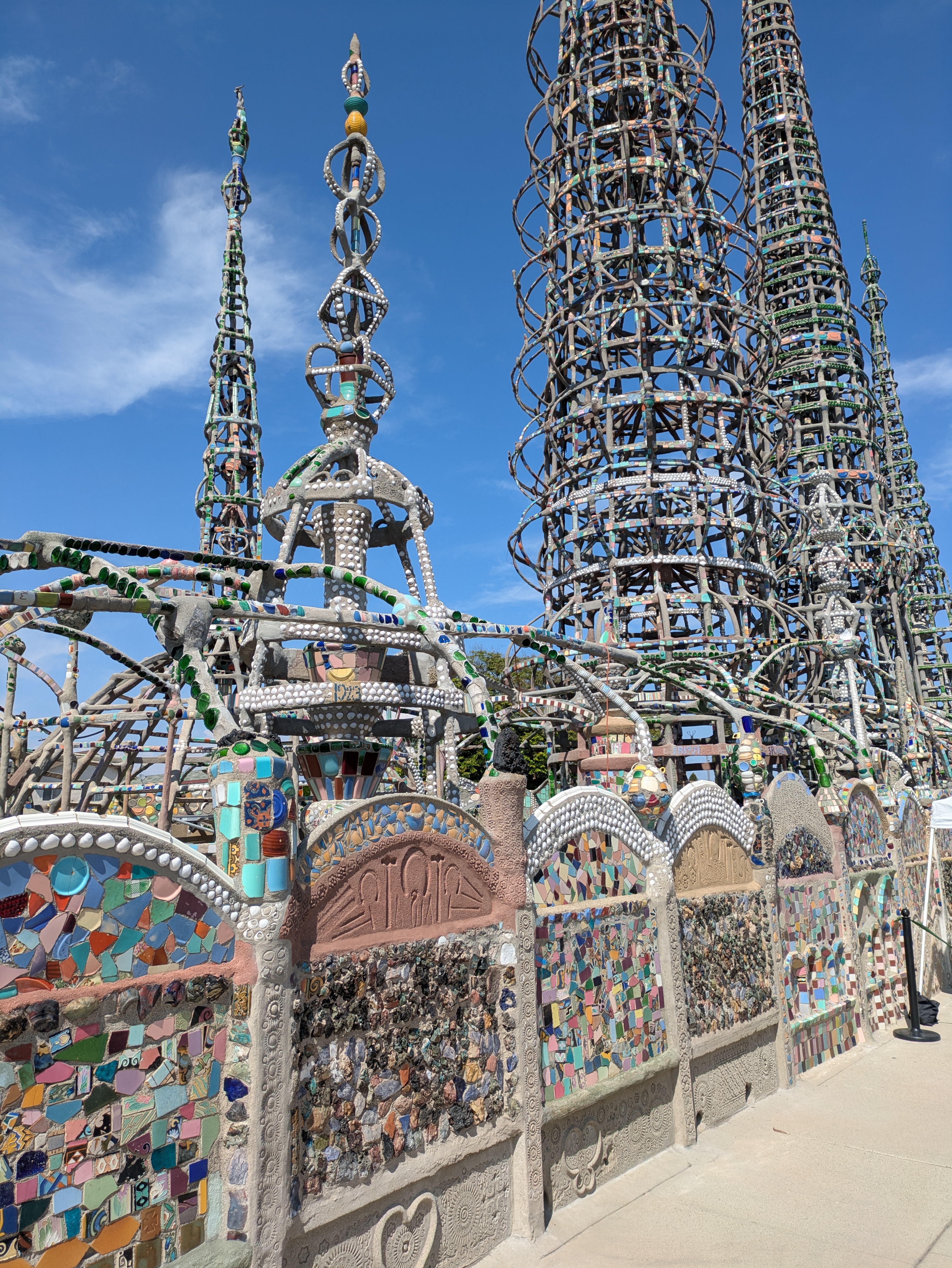
The towers face a quiet residential street, where a set of signs mounted to the fence explain the history and creation of the towers. Standing next to them, the tallest tower reaches almost 100 feet above you, just high enough for you to have to crane your neck to gaze up at it. The residents of this street are apparently accustomed to visitors, as a house just across the street has a lovely ceramic tile bench set up out front for you to sit down and admire the towers, as well as the exquisite handiwork on the bench.
Compton station
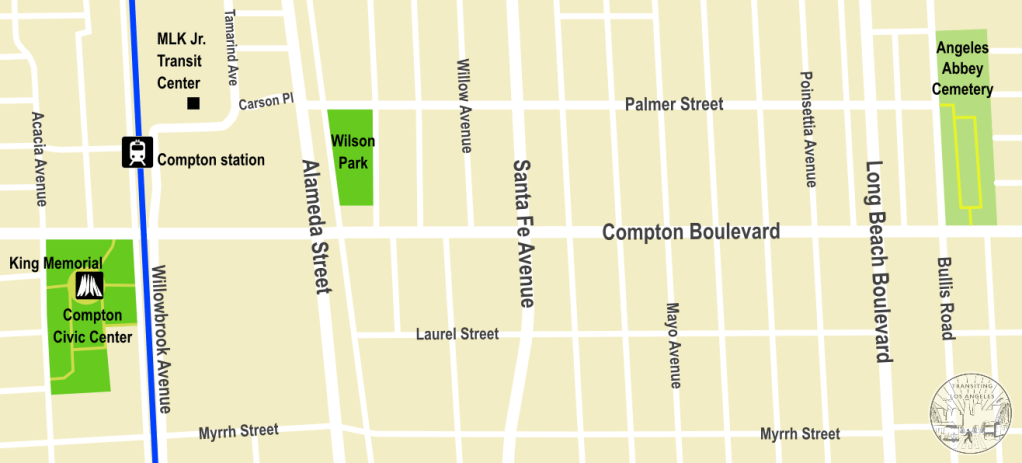
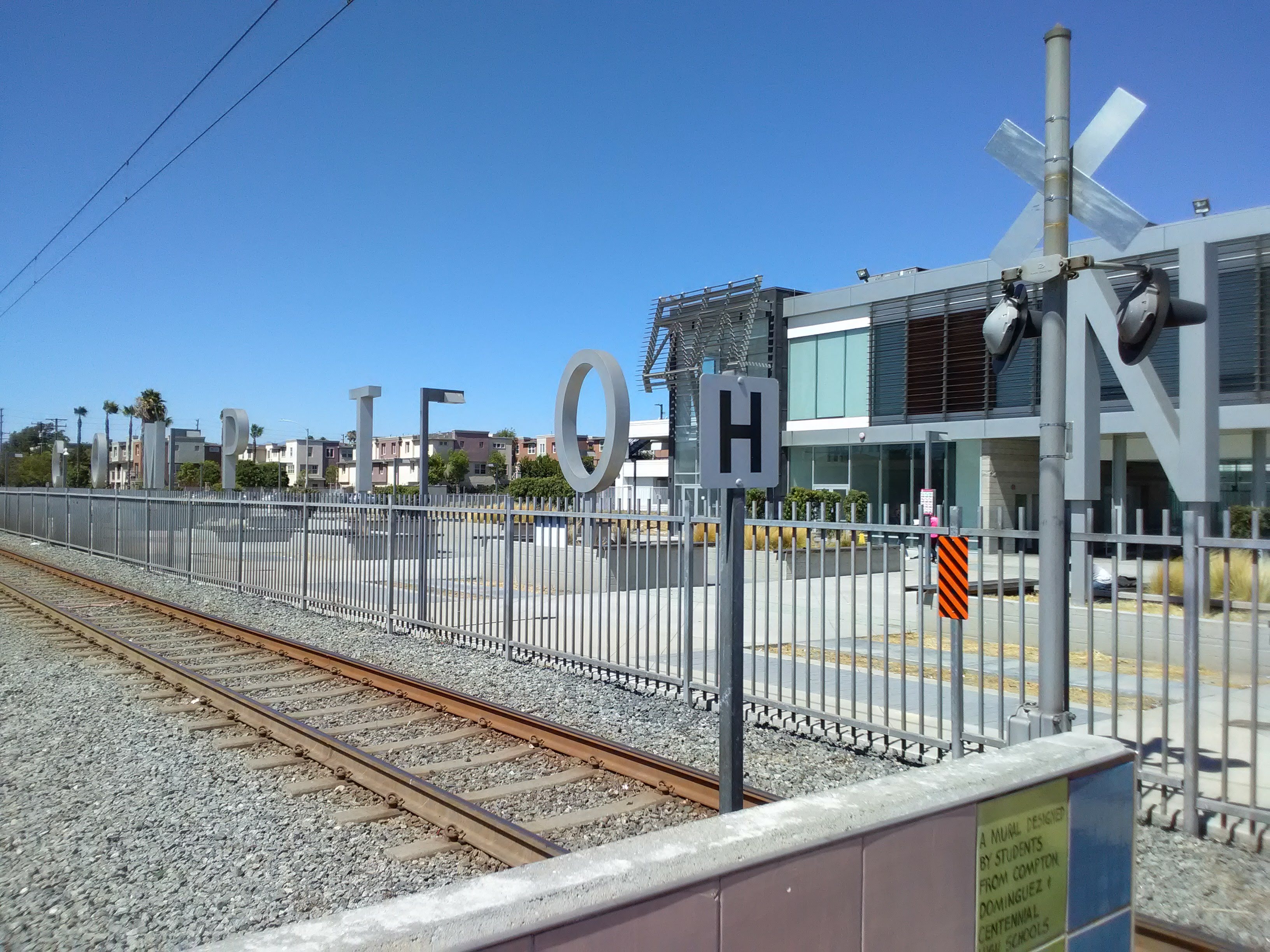
Few communities have as maligned a reputation as Compton, which even today is still known primarily for gang violence and gangsta rap. But the days of heavy crime are long past, and visitors stepping off the train now will notice a lot of tributes to African American and civil rights leaders. Within steps of the Metro station are three tributes to Martin Luther King, Jr alone, including the name of the transit center adjacent to the station (with its towering letters spelling out “COMPTON”) and an obelisk flanked by lions dedicated to both MLK and Cesar Chavez.
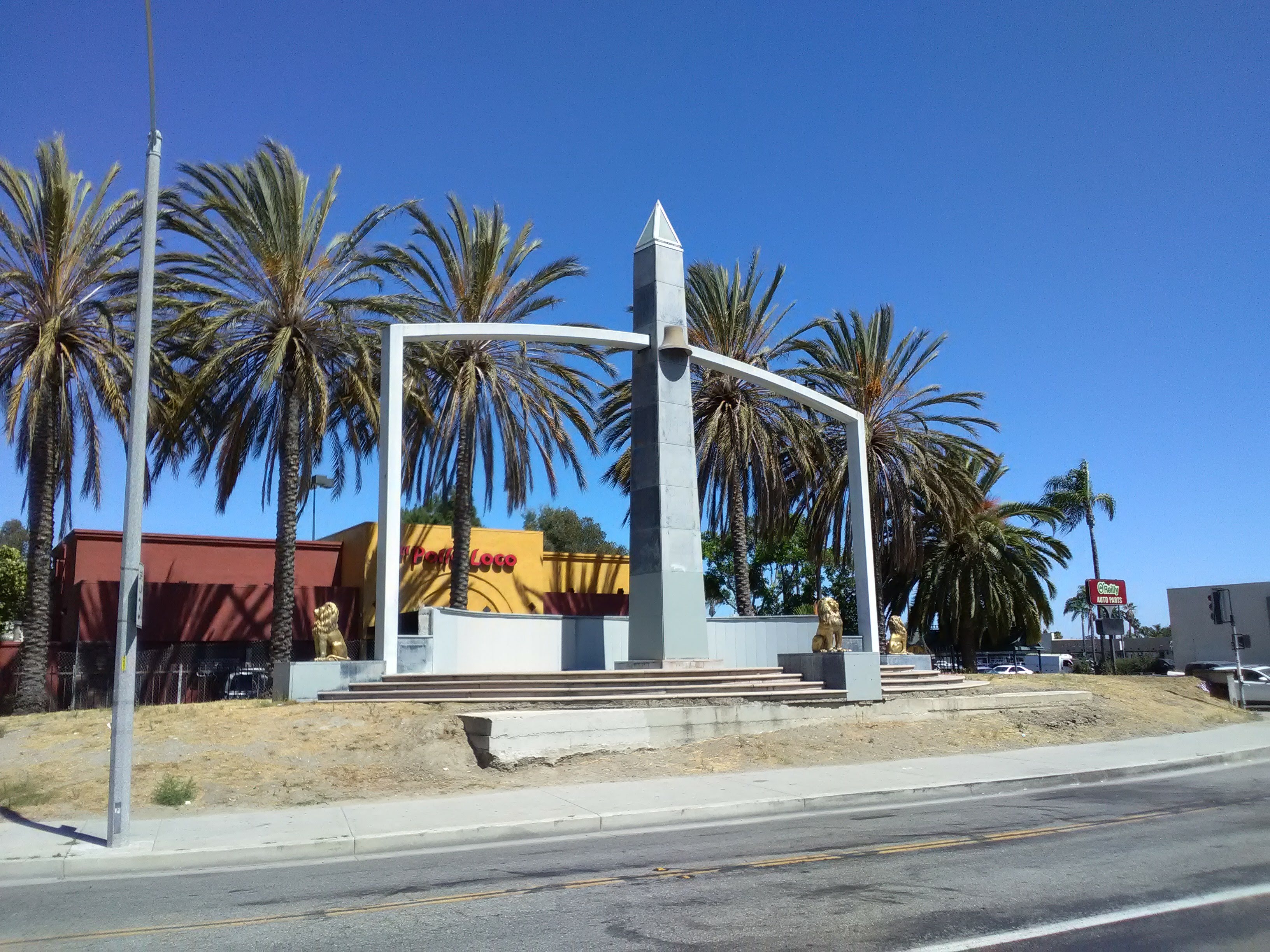
The third tribute is the most interesting one, however. Across the main drag from the station is Compton Civic Center, easily spotted by the tall white Modernist tower of the county courthouse, which is easily the tallest building around. In front of the courthouse is the King Memorial, a gleaming sculpture that bears an uncanny resemblance to Space Mountain. A plaque at the memorial’s base dates the sculpture to 1978, only ten years after King’s death and five years before the passage of Martin Luther King, Jr. Day as a federal holiday (and three years after the first Space Mountain opened, in case you were wondering). It’s quite impressive to step inside and gaze up at, and its shape even seems to shift as you walk around it and view it from different angles.
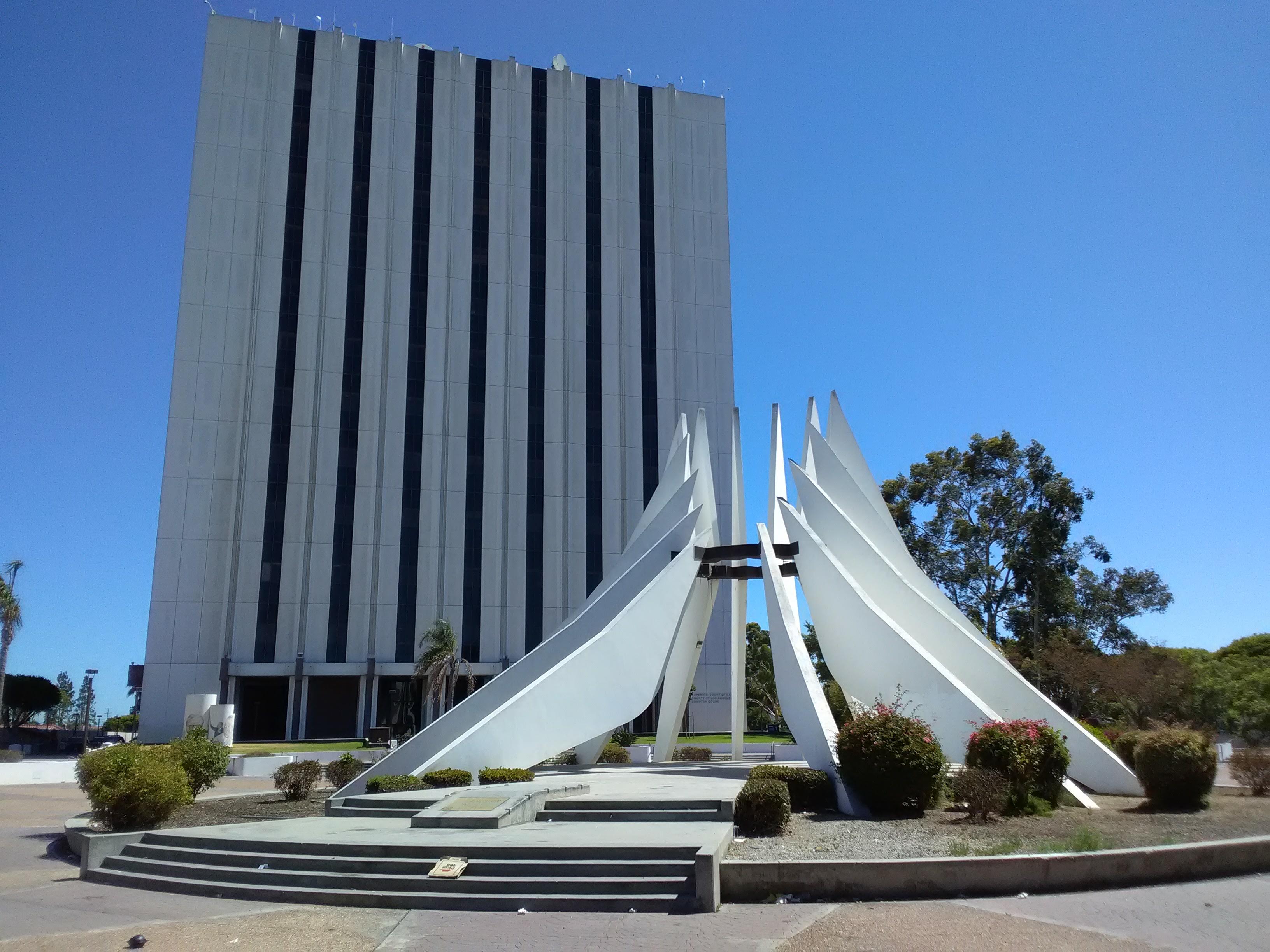
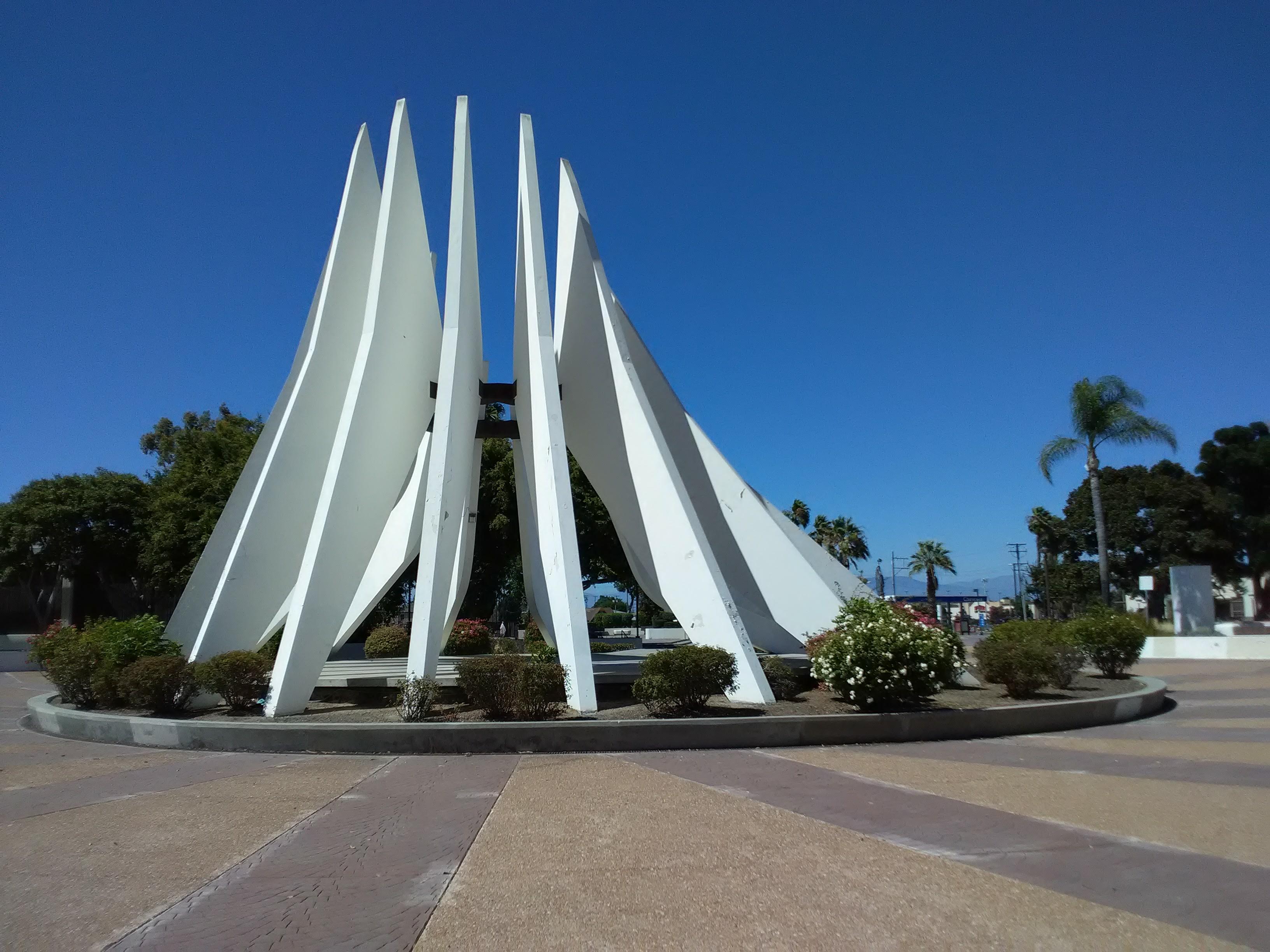
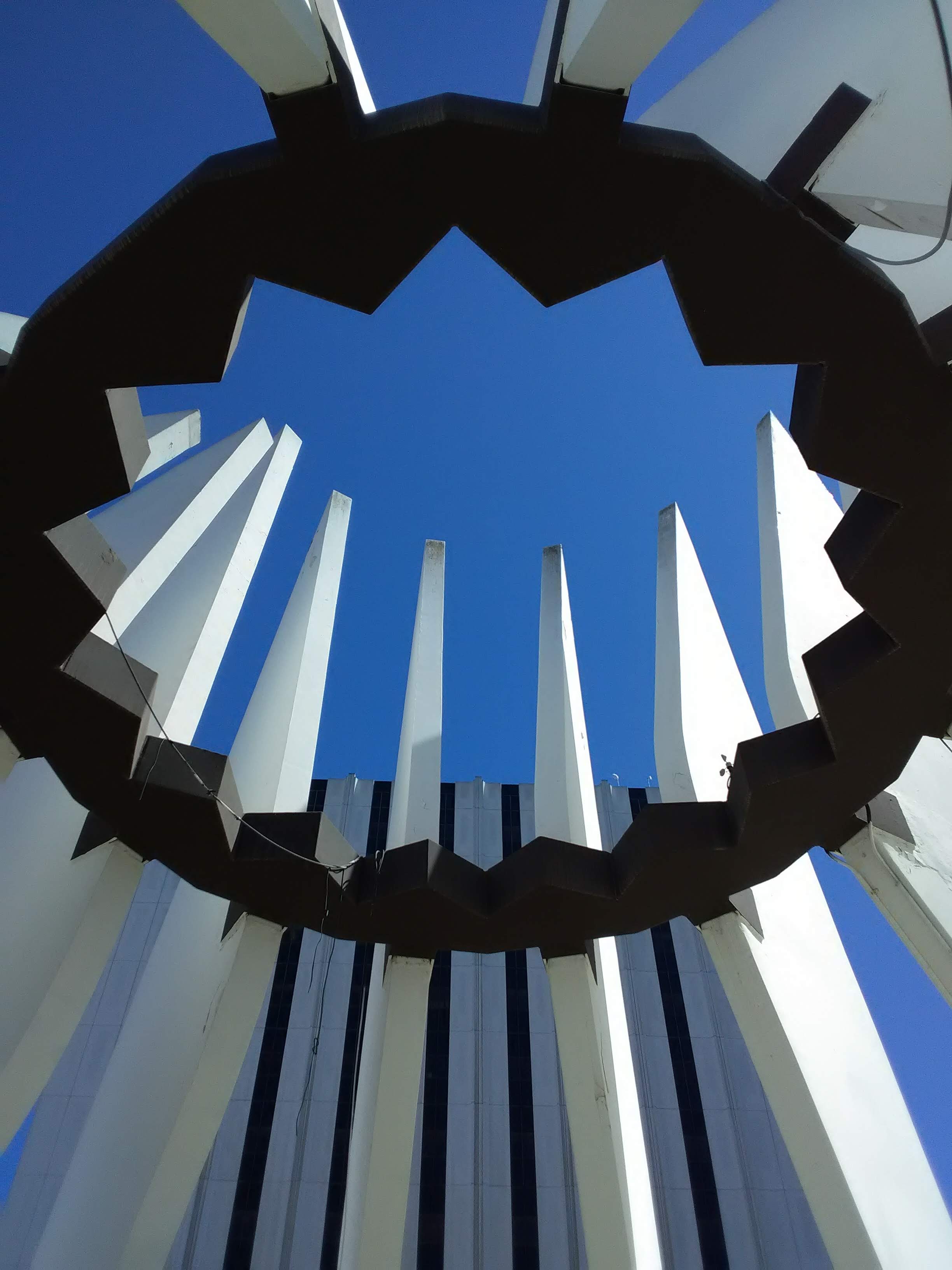
Compton Civic Center is probably one of the most well-preserved examples of ’70s Modernist architecture I’ve ever seen, down to the paving and landscaping. It can feel a little desolate, but also strangely captivating. There are other examples of public art on the campus, including a set of impressive law-themed tile mosaics set within the corners of the courthouse building. Behind the courthouse is a little park, with a stage adorned with a quote from King.
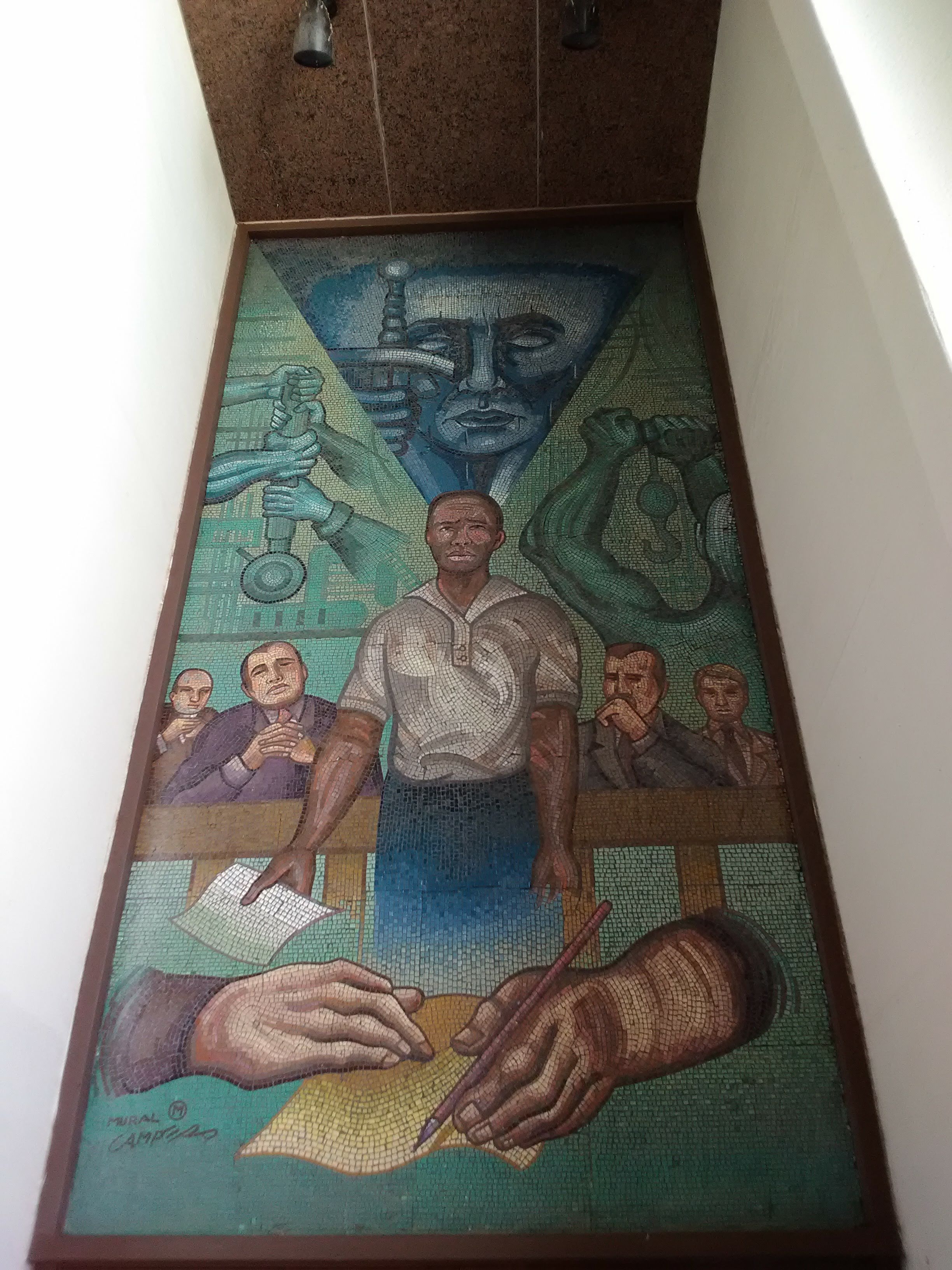
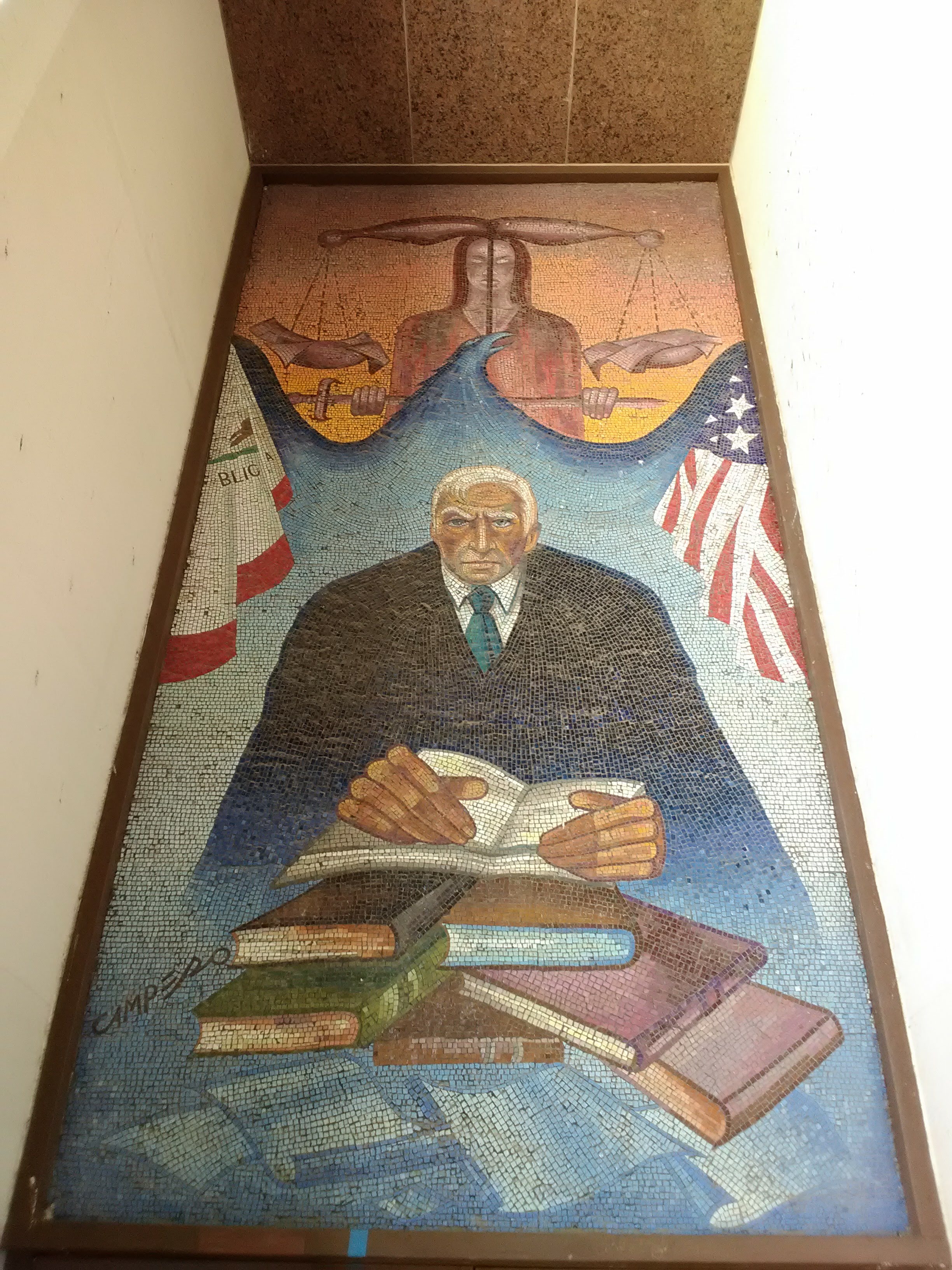
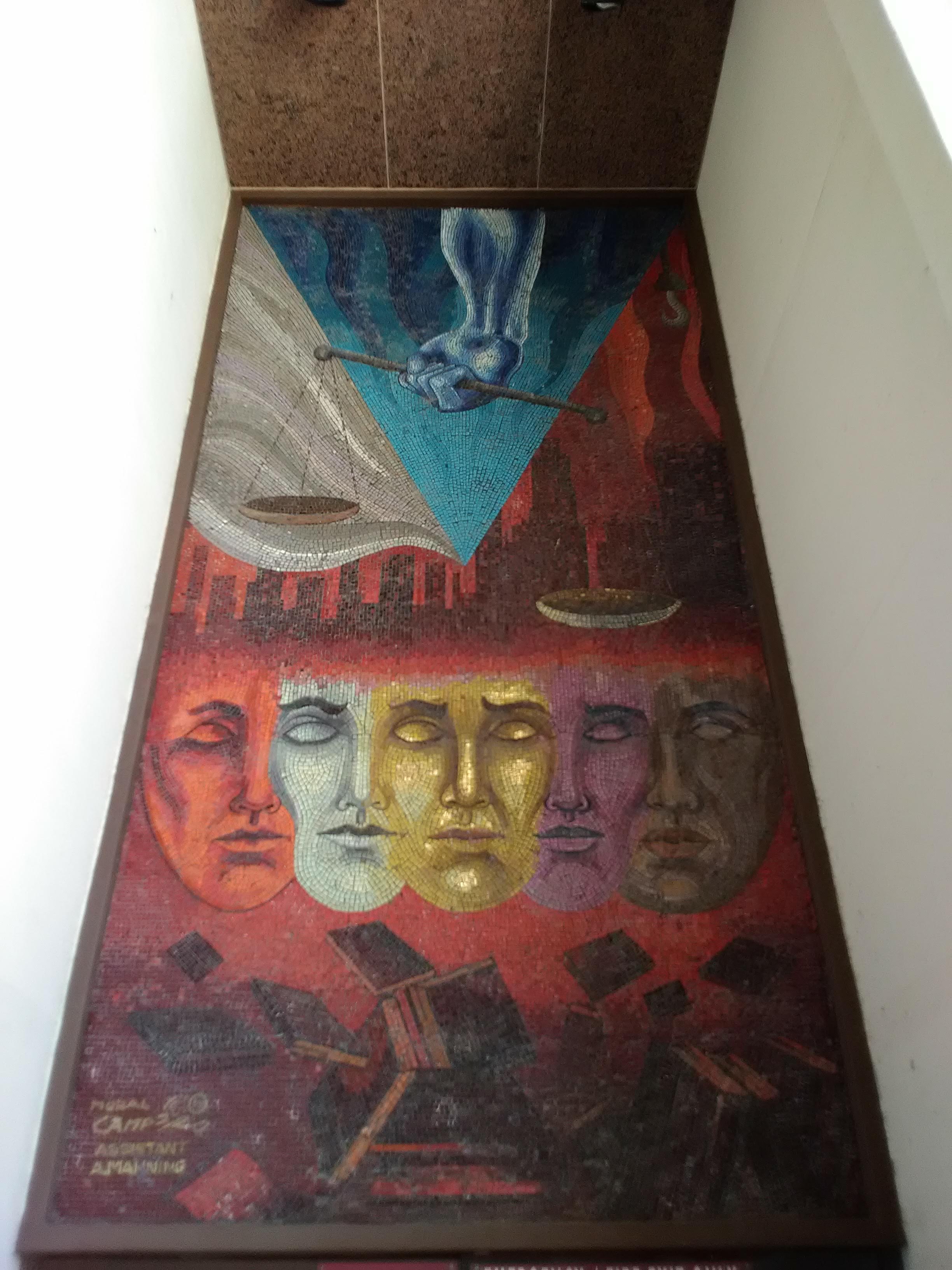
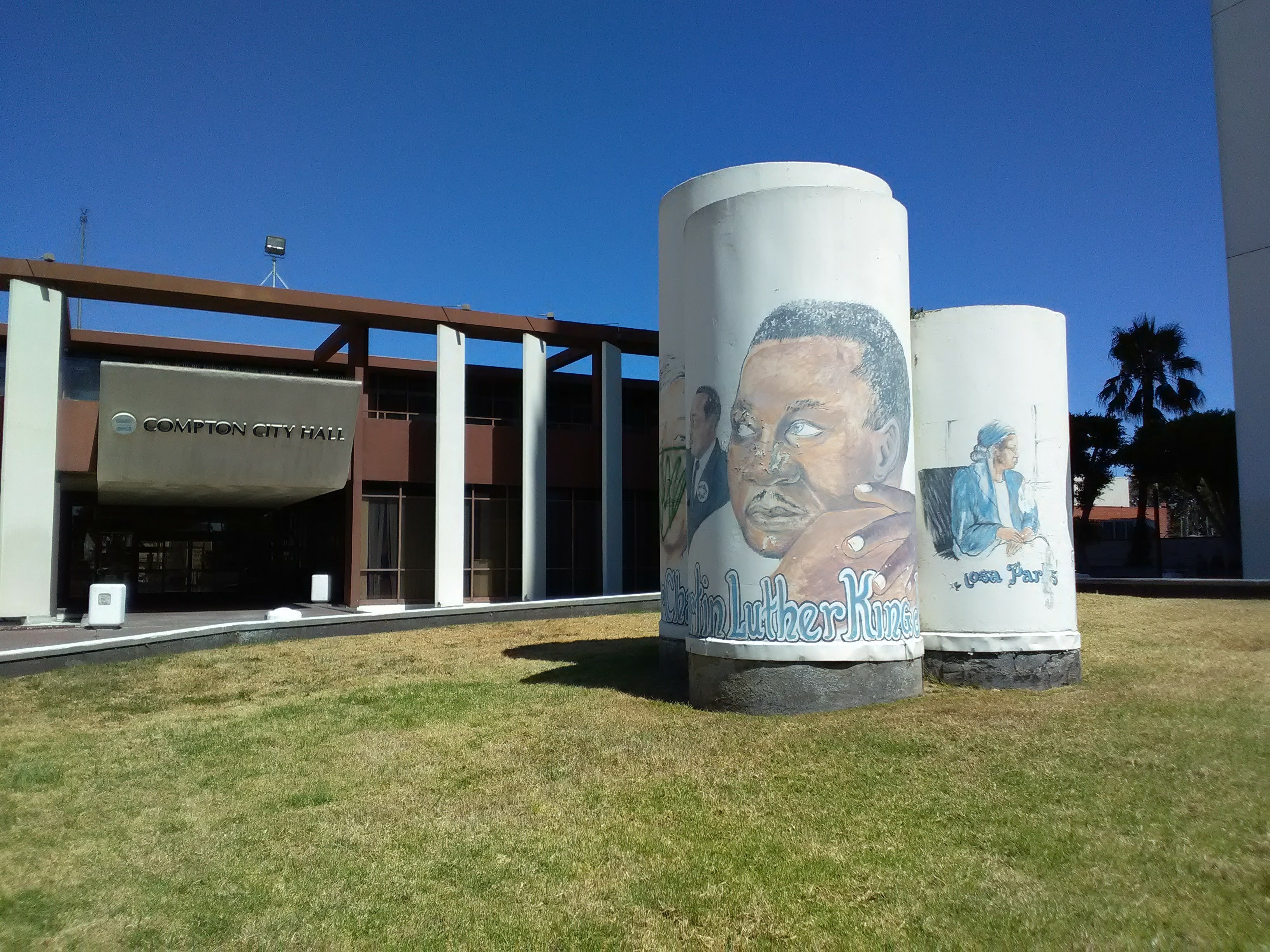
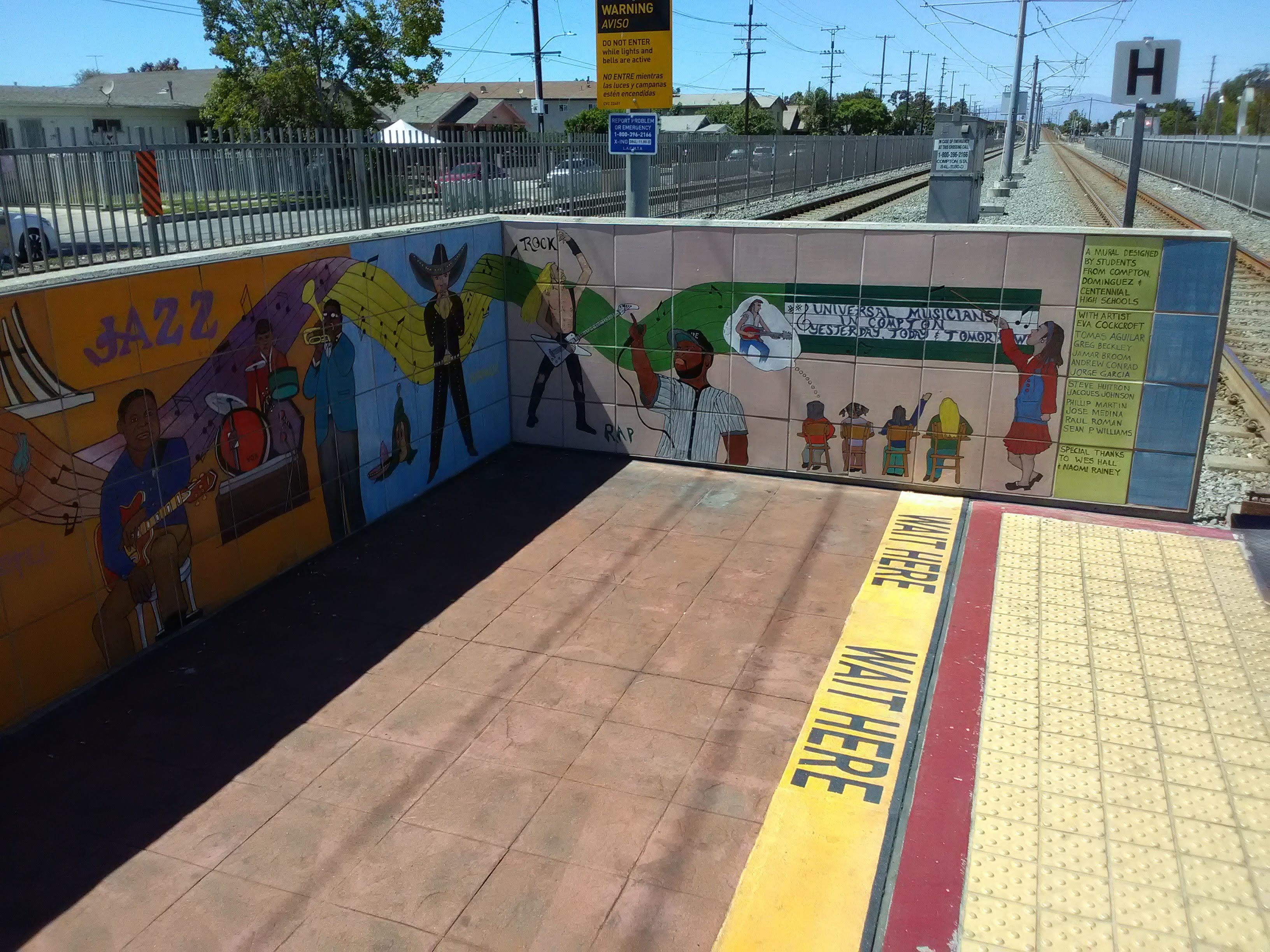
In addition to the King memorial, the civic center also has murals paying tribute to King, Cesar Chavez, Rosa Parks, and a large mural of Barack Obama on city hall facing the train tracks. Compton wears its identity as a Black community heavily on its sleeve, though in recent years Latinos have become the majority, as is the case with much of South LA. My favorite civic tribute is a mural designed by local schoolchildren sitting at the entrance to the Metro station, which depicts some of the famous musicians who have called Compton home.
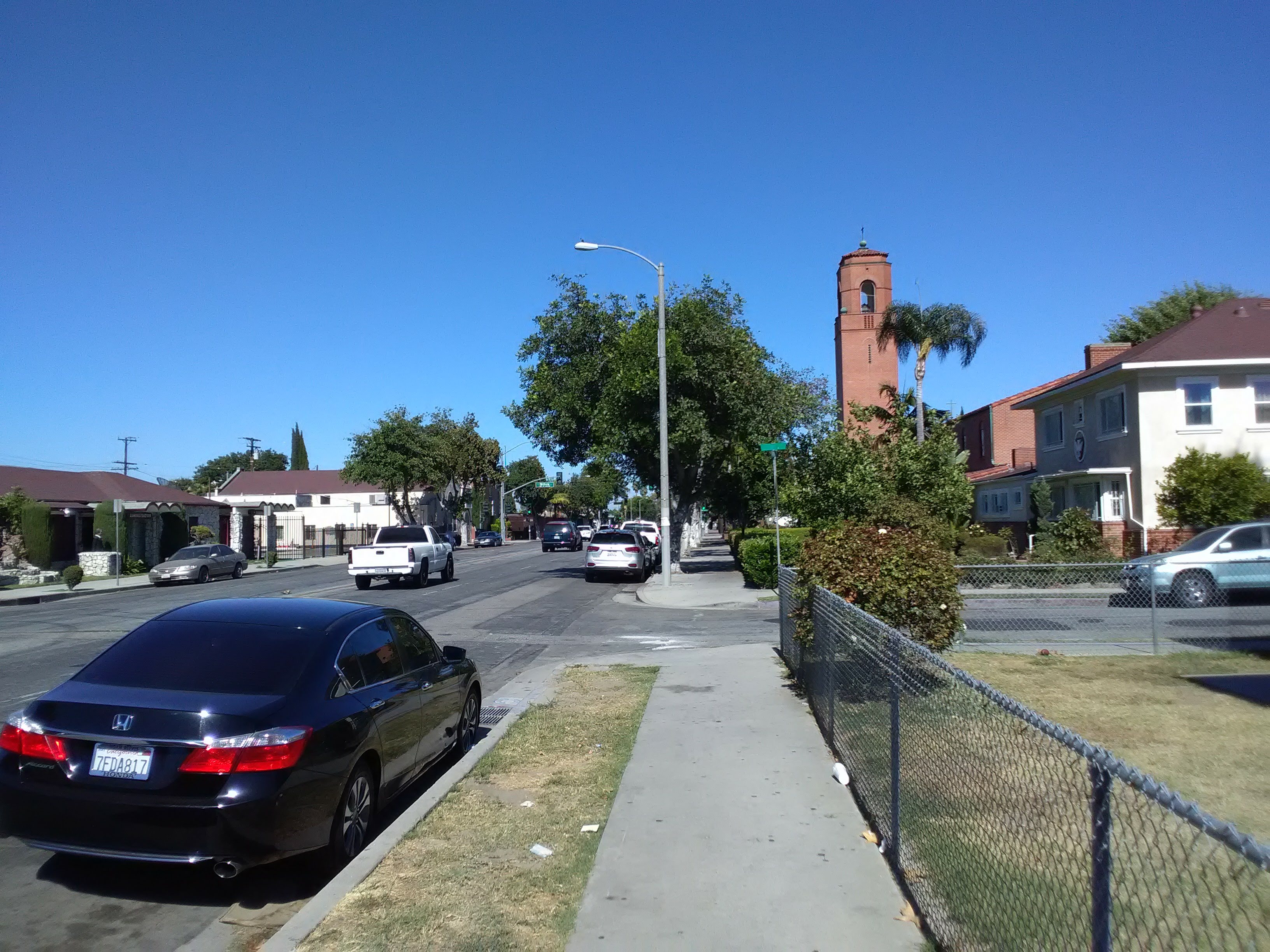
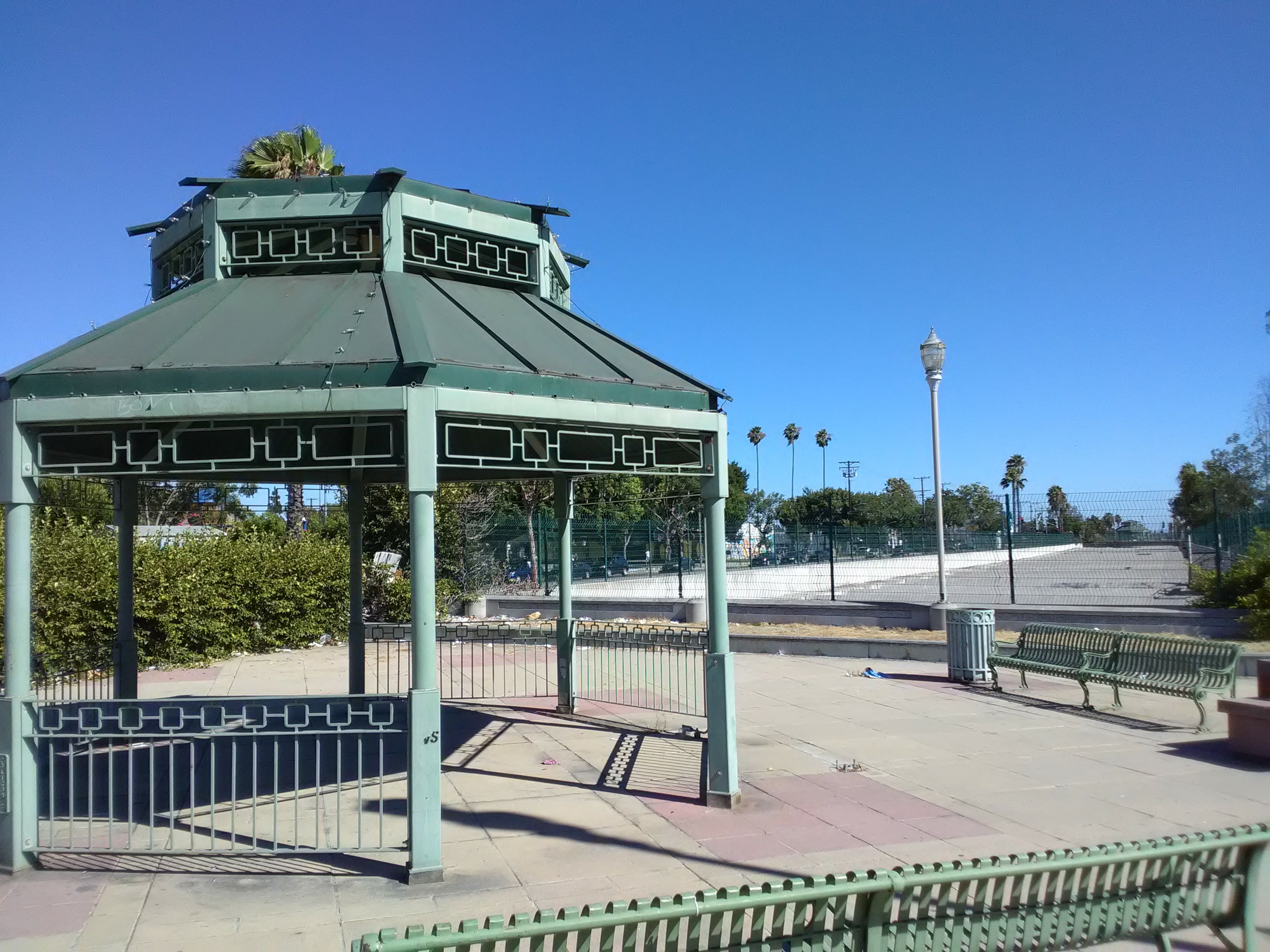
Although the civic center is impressive, a far more spectacular piece of architecture sits nearby, about a 20 minute walk east of the station: the Angeles Abbey Cemetery. Although you can walk there along Compton Boulevard, the town’s main drag, it’s more direct and far more pleasant to take Palmer Street just to the north. Palmer is a lovely residential street lined with cute little houses and manicured lawns, a park, a couple of pretty churches, and plenty of shade trees along the sidewalk, something desperately lacking on Compton Boulevard. Getting to the Abbey from the Metro station is straightforward enough: as soon as you exit the platform, head straight past the transit center and keep heading straight as much as possible until you reach the Abbey. Along the way, you’ll get a flavor of this peaceful neighborhood, with families playing in the yards and friends chatting on the front porches.
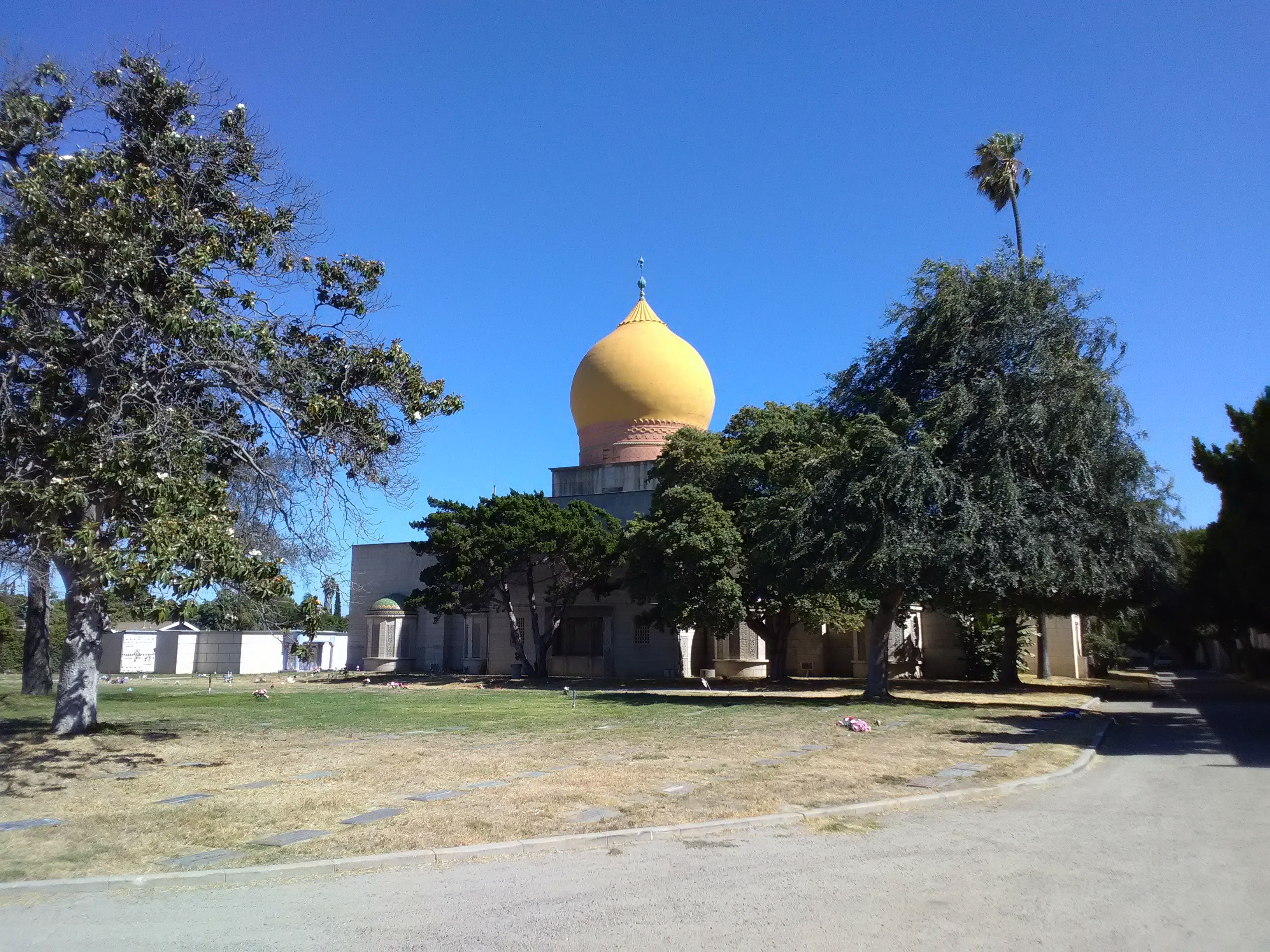
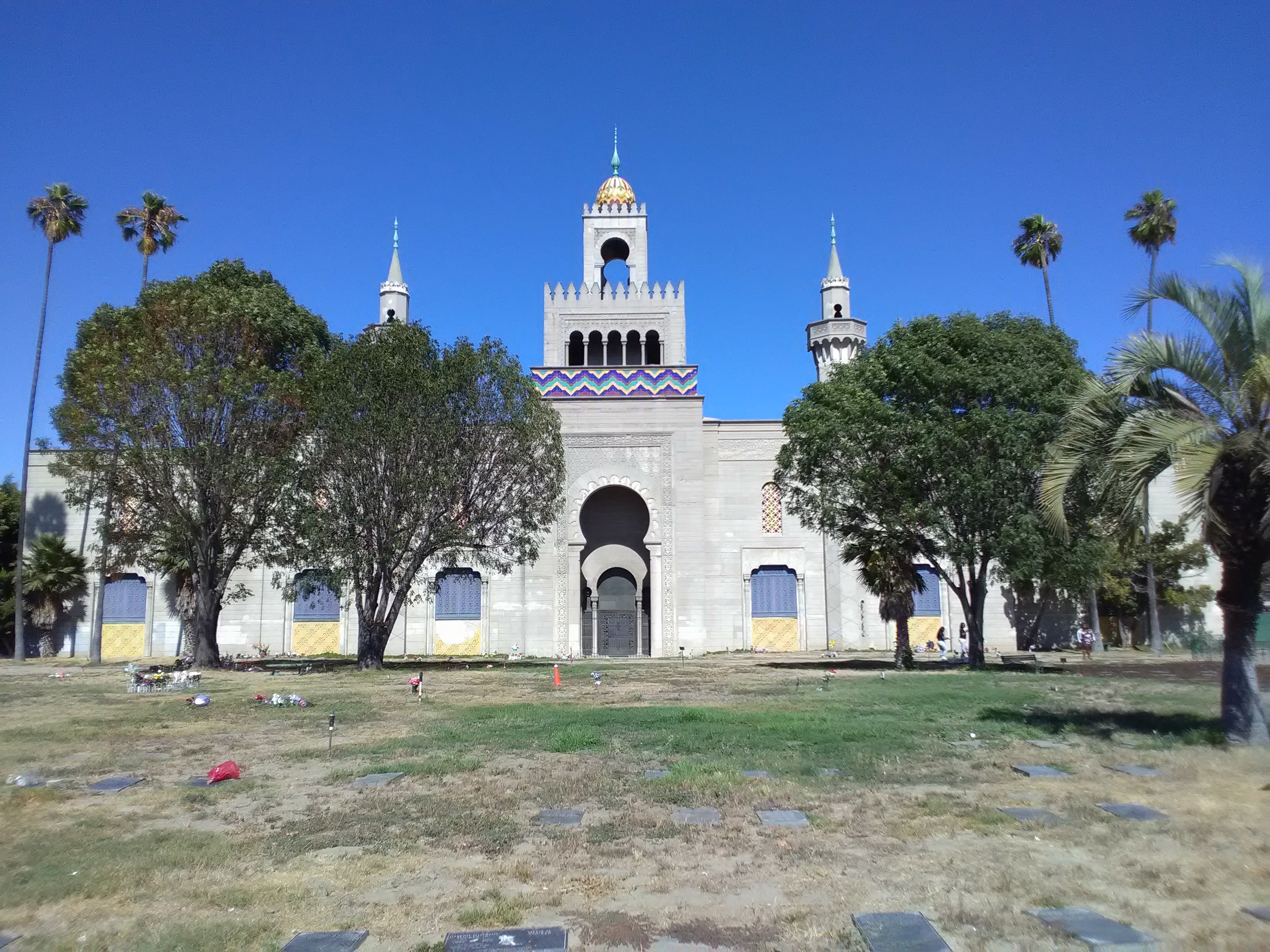
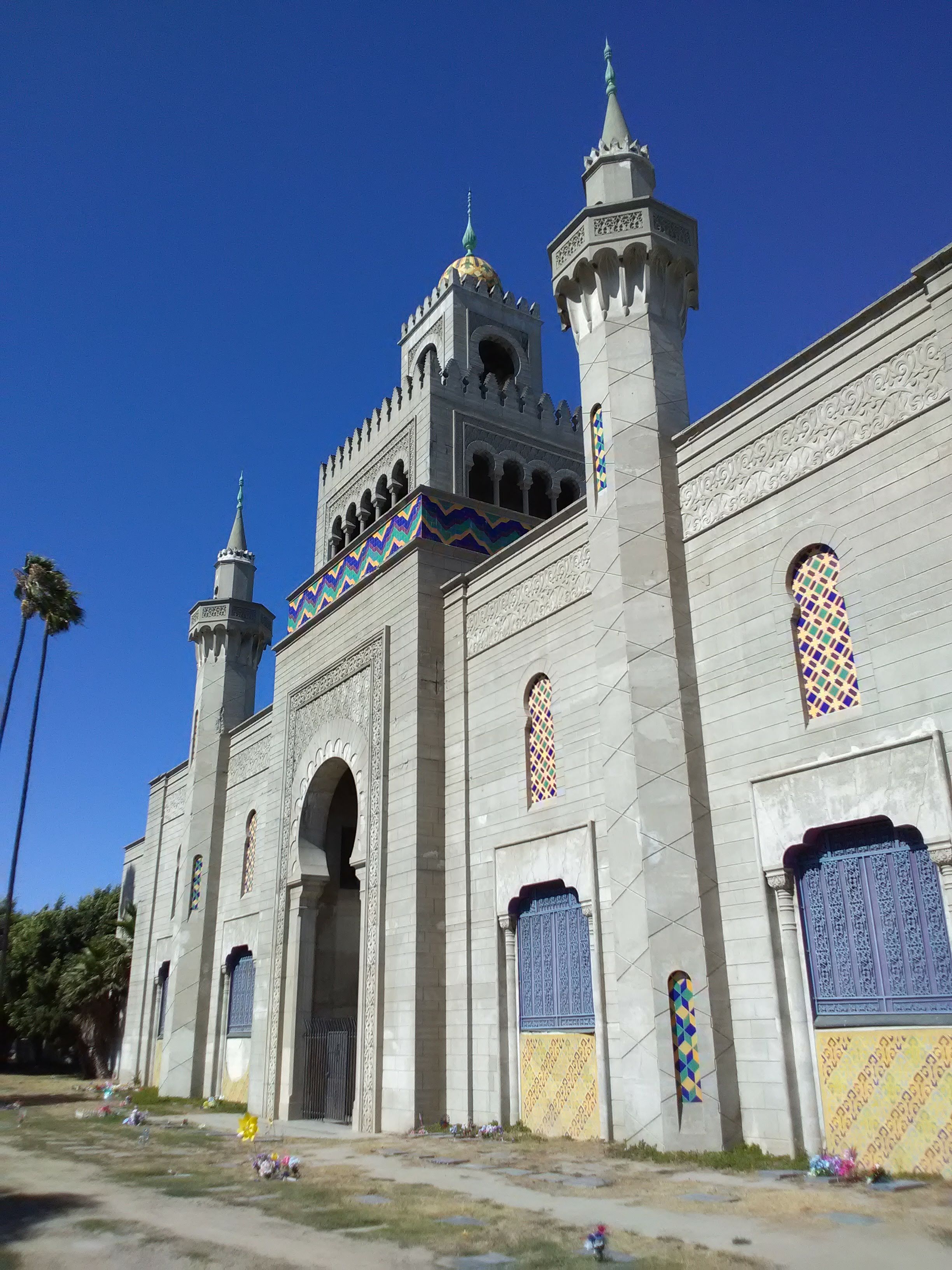
You’ll spot the Abbey long before you reach it, and it is truly impressive. Before you, across a wide cemetery, will be a palatial Moorish-style mausoleum towering above the lawn, with towers, intricate details, and a giant keyhole-shaped entrance. To your right will be another mausoleum, this one capped with a giant orange onion dome inspired by the Taj Mahal. The entire complex was built in the 1920s in a mixture of Islamic architectural styles, and walking around is a tranquil and captivating experience. Parts of it are in rough shape (in particular the cemetery lawn, which is covered in dry grass), but its beauty still shines through.
 Transiting Los Angeles