San Diego is a goofy city, and I say this from a place of love, having lived there as a child. For starters, it’s a lot bigger than we give it credit for: as the center of a metro area of over 3 million people, San Diego is a truly massive city and if you were to pick it up and drop it in almost any other state, it would easily be the biggest city around. But because it sits in the shadow of Los Angeles, it is routinely thought of as a “minor” city, one lacking the cultural pull and relevance of its bigger neighbors upstate.
This leads to a weird paradox, where some locals insist on San Diego being treated as one of the big boys, just as relevant as Los Angeles and San Francisco, thank you very much; while others are perfectly happy downplaying the city’s true size, as a quiet town free of the bustle and craziness of L.A. This is aided by San Diego’s insistence on a clean cut, all-American image, which belies the city’s hidden depths, cultural diversity, and genuine weirdness.
For our part, Angelenos are perfectly happy to indulge San Diego’s self-delusions. It’s our peaceful, pretty little neighbor to the south, perfect for a nice getaway. Sure, they get a little full of themselves and talk smack, but like a little brother, it’s impossible to stay mad at them for long. Ours is an eternally paternalistic relationship, one that they both resent and are happy to take advantage of. Stay classy, San Diego.
Amtrak’s frequent Pacific Surfliner train connects Los Angeles to San Diego, with a one-way trip currently costing $36 per person. There are two stations in San Diego: Old Town and Downtown. Downtown is the end of the route and the main station, located at the historic Santa Fe Depot, although the Old Town stop is convenient to attractions there and also has good transit connections. Make sure to check ahead for any travel advisories on the Surfliner website, because there’s often track work or even lengthy closures due to landslides.
The train trip from L.A. to San Diego takes about three hours each way, so while technically it can be done as a day trip (if you leave early enough), it’s better as an overnight trip if you can afford it. Downtown has lots of hotels, and is the best place to look for something convenient to the Surfliner.
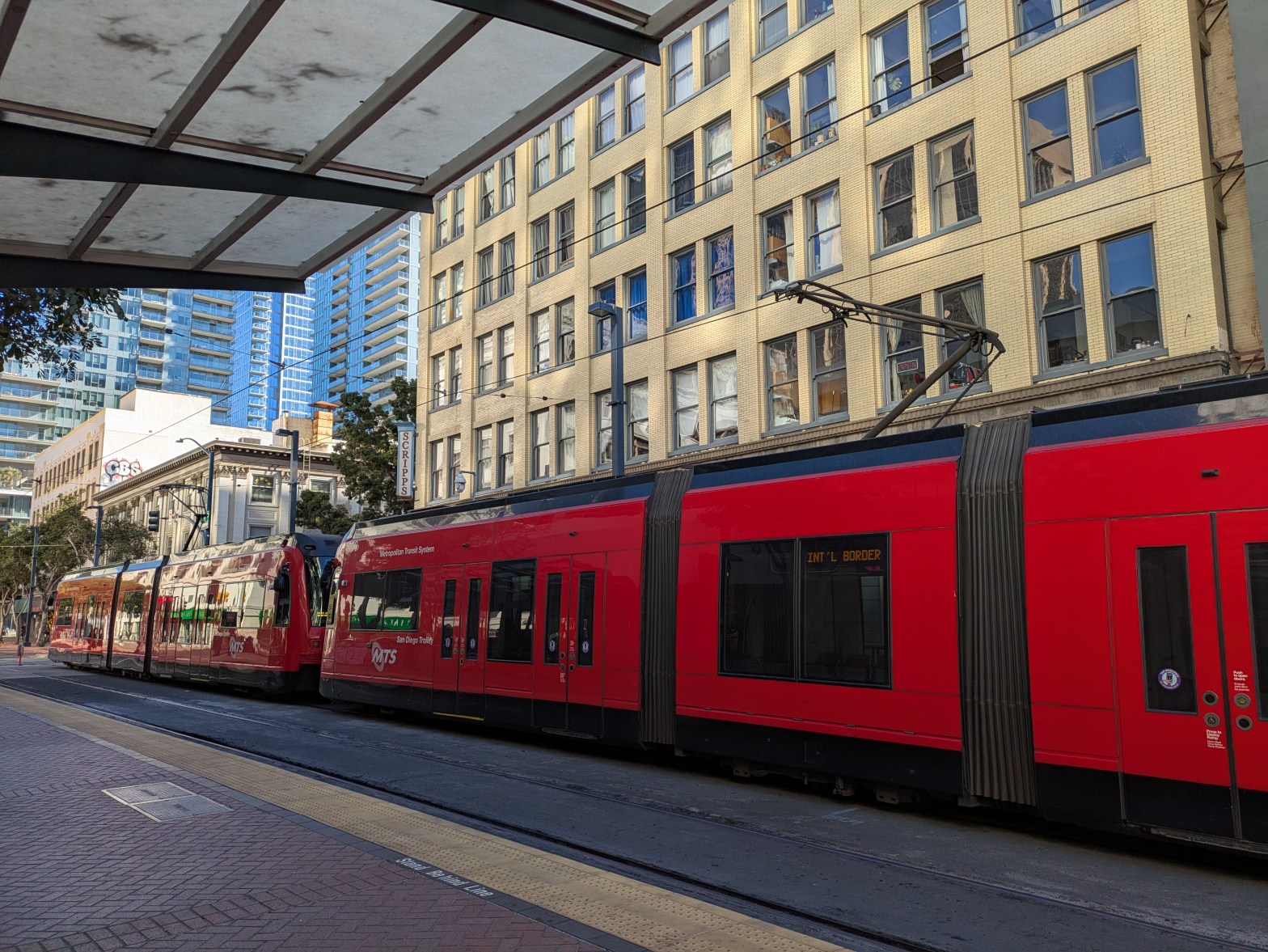
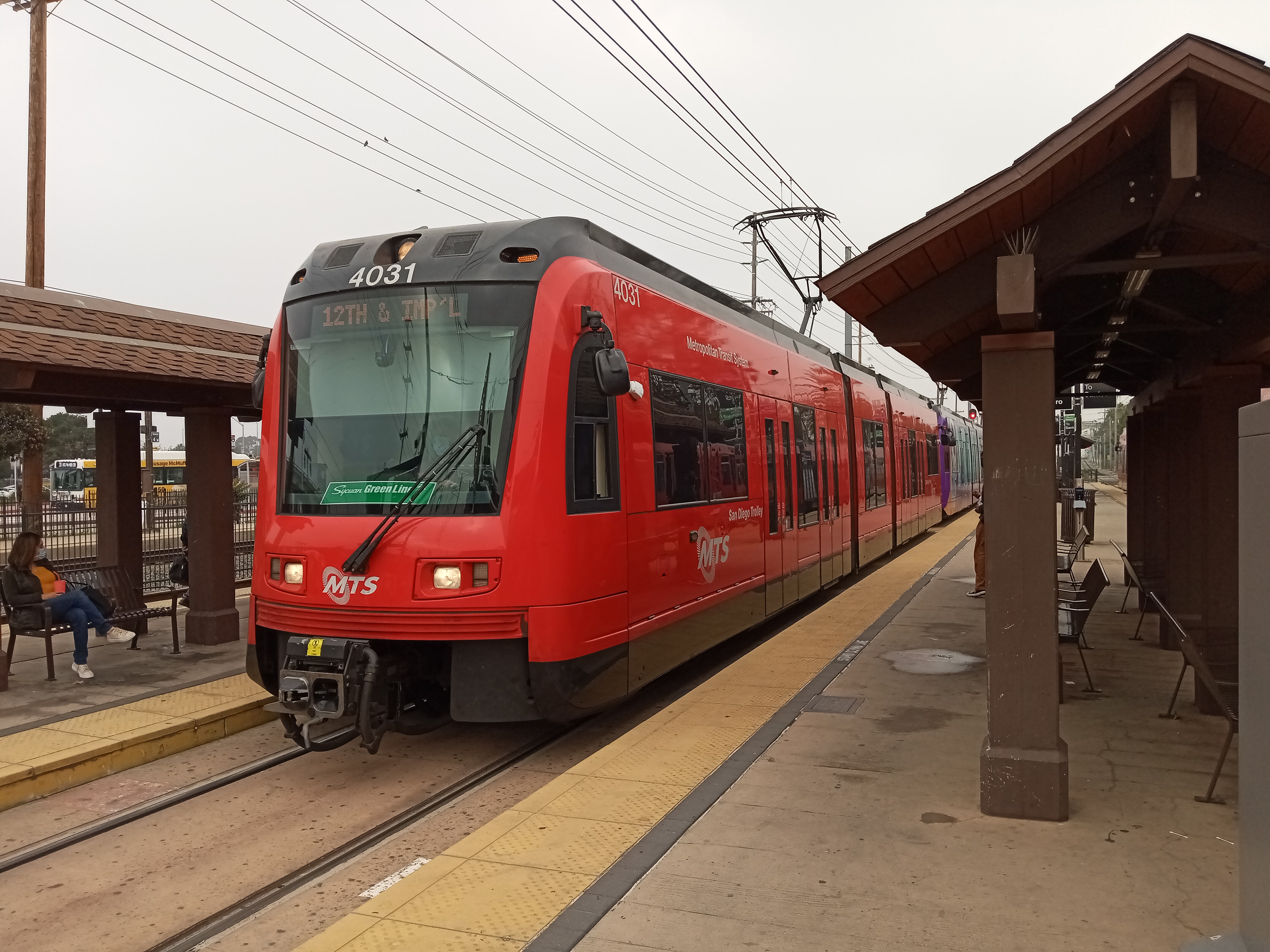
San Diego is not only easy to reach by train, but a lot of the city’s main tourist attractions are quite easy to reach by transit. MTS, the local transit agency, runs the buses and the San Diego Trolley, a light rail system (in fact, the first modern light rail system in the country) with shiny, cherry red trains that loop around downtown and connect to a few of the more far-flung attractions. And then there’s also ferries and sightseeing buses that make for fun ways to get around the city.
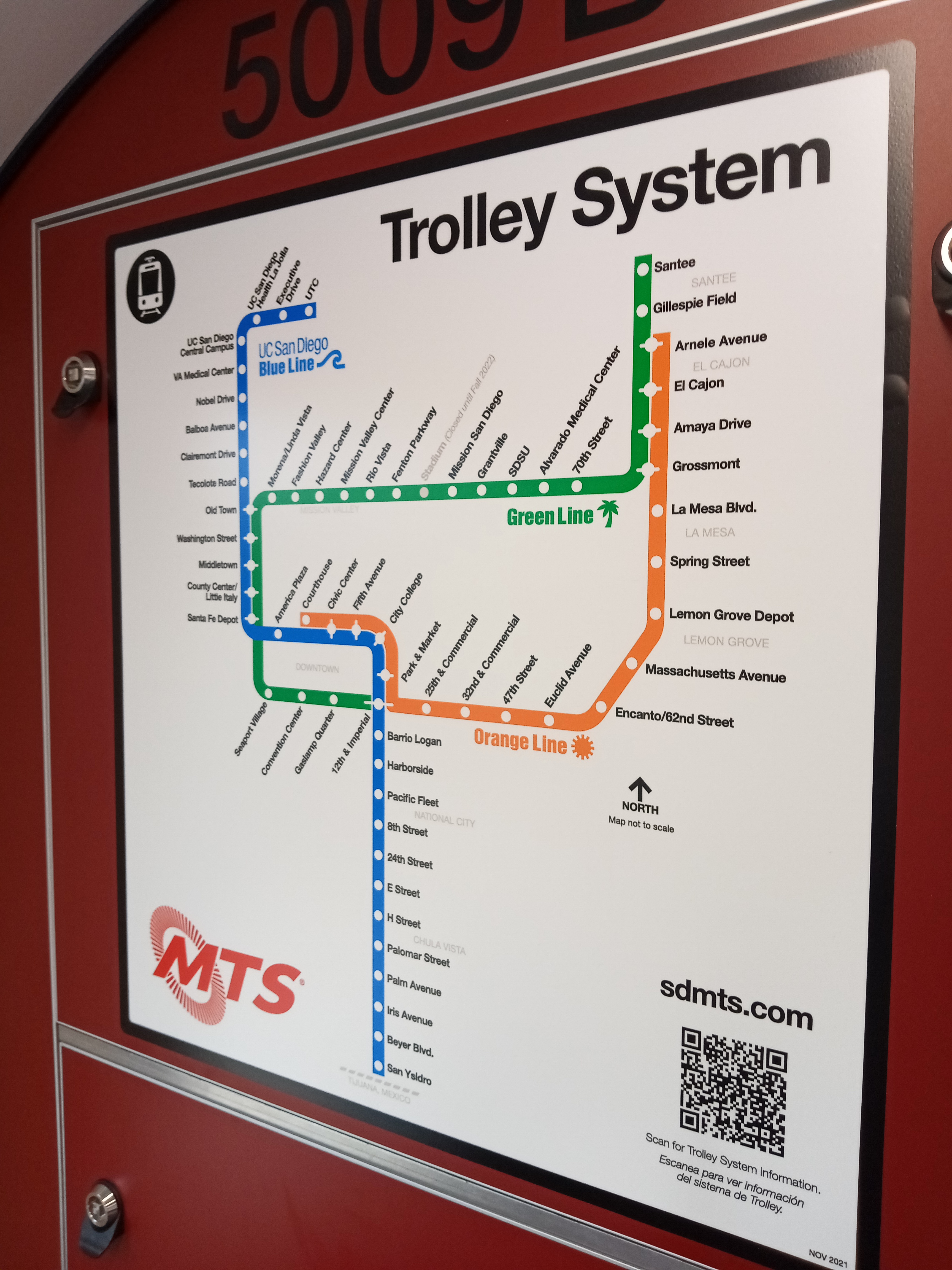
A regular one-way fare on MTS is $2.50 and includes free transfers for two hours. San Diego transit systems use a fare card called Pronto, which can be purchased from ticket machines at train stations ($2 per new card) or downloaded to your phone with the Pronto app (anyone who has used TAP in L.A. will be familiar with this system). A day pass is $6, and if you’re using Pronto it will automatically cap at that.
One handy feature is, unlike TAP in L.A., Pronto readers will also accept contactless payments from credit/debit cards or smartphone wallets, so you don’t strictly need the Pronto card or app. Although if you don’t use Pronto, it won’t cap your fares, so keep that in mind if you plan on riding a lot.
Given the wealth of attractions in San Diego, this is by no means a comprehensive list. Instead, we’re going to cover a few of our favorite places in relatively minimal detail, focusing on the neighborhoods that are the most transit accessible.
Downtown
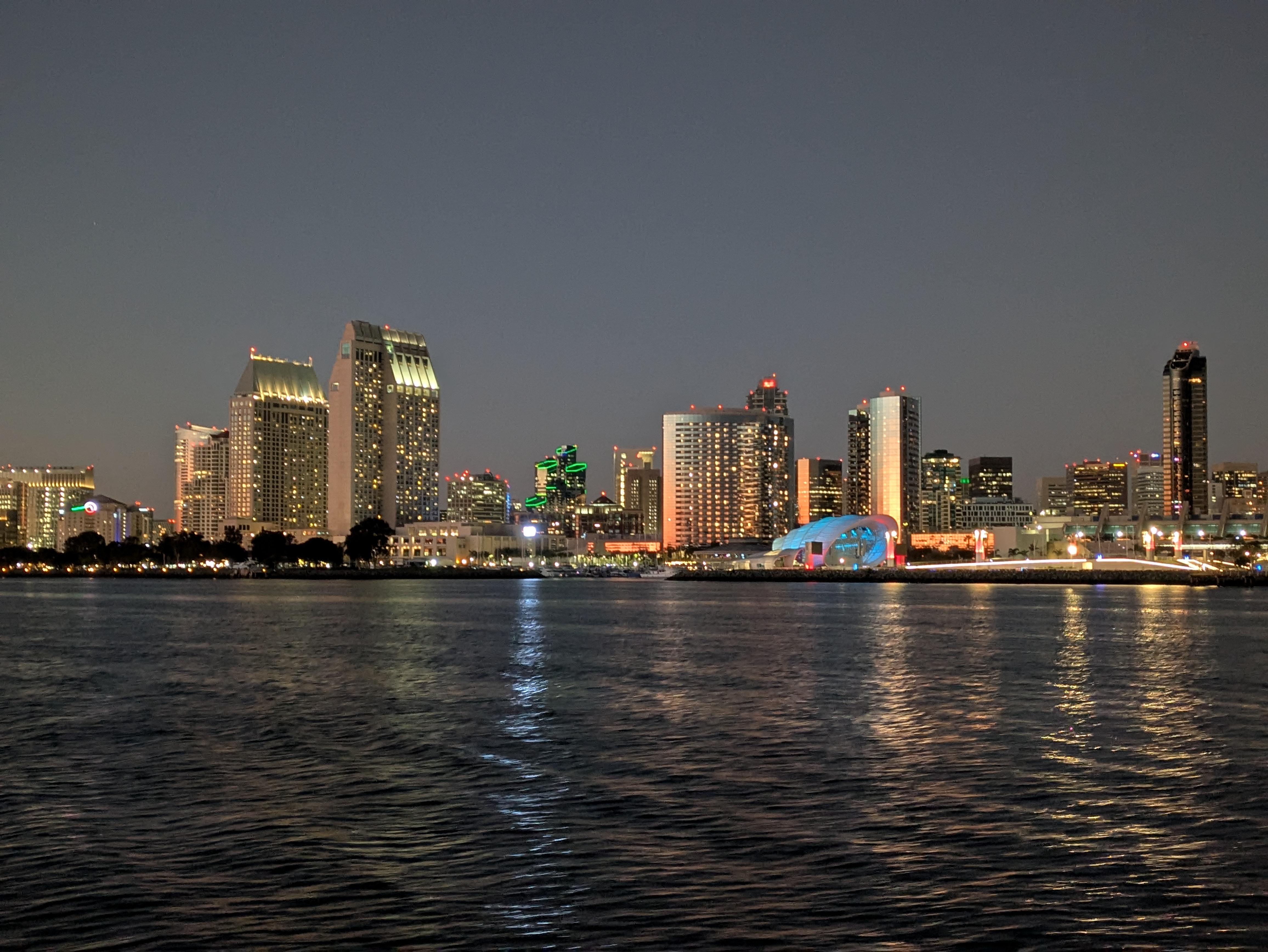
Most of Downtown’s tourist attractions are arrayed along the waterfront, which has a pretty sleek skyline. Downtown is very walkable, but large enough that it would take you a long time to walk from one end to the other. Fortunately, the Trolley makes it very easy to get around Downtown, with stops convenient to just about anywhere Downtown.
The Green Line travels along the waterfront, stopping at Little Italy, the Santa Fe Depot, Seaport Village, the Convention Center, Gaslamp Quarter, and Petco Park. The Blue and Orange Lines travel a slower, street-running route that serves more of the employment centers, namely Civic Center and City College, with the Blue Line also stopping alongside the Green Line at Little Italy and Santa Fe Depot. All three lines converge at 12th/Imperial, a transit center at the very southeastern corner of Downtown near Petco Park.
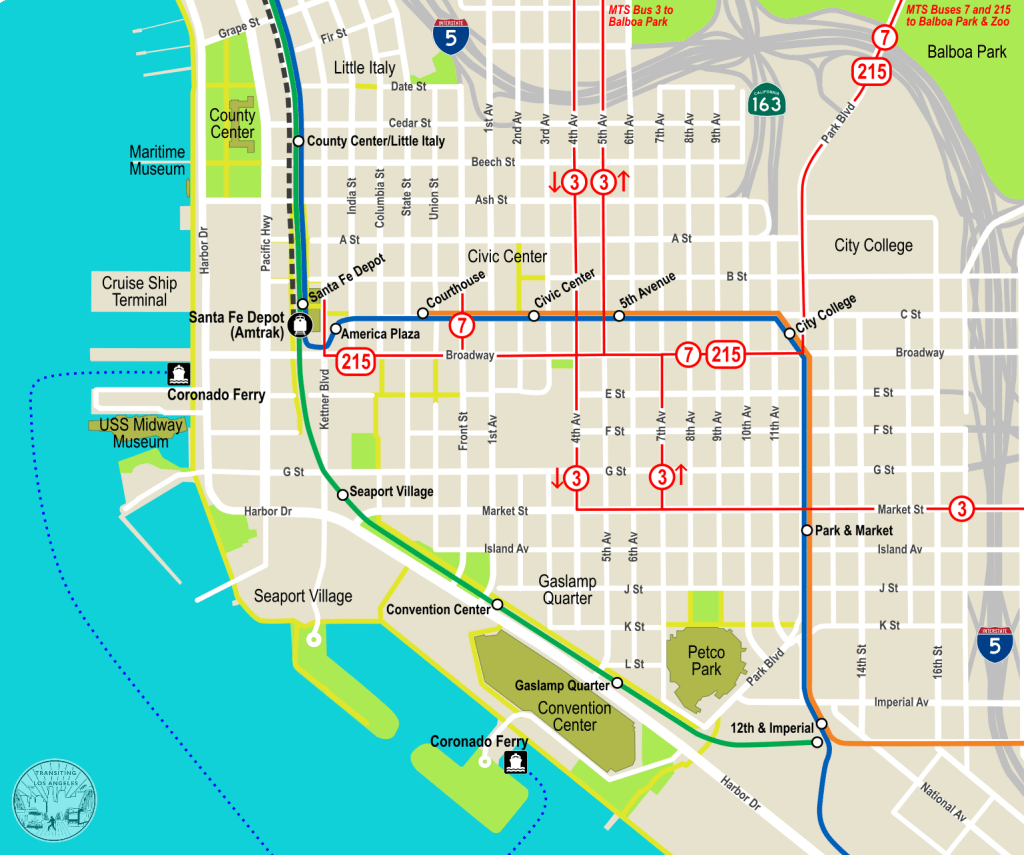
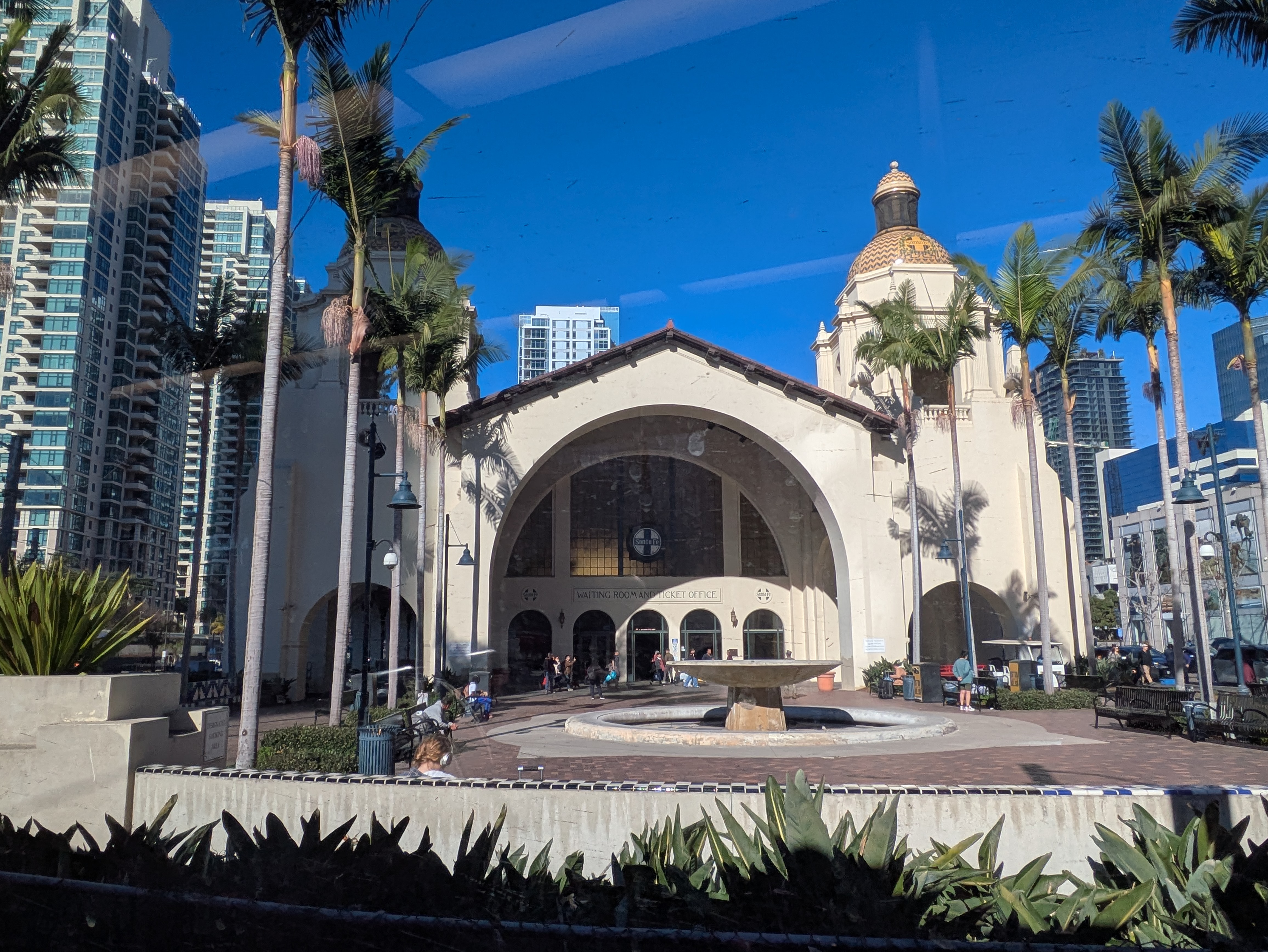
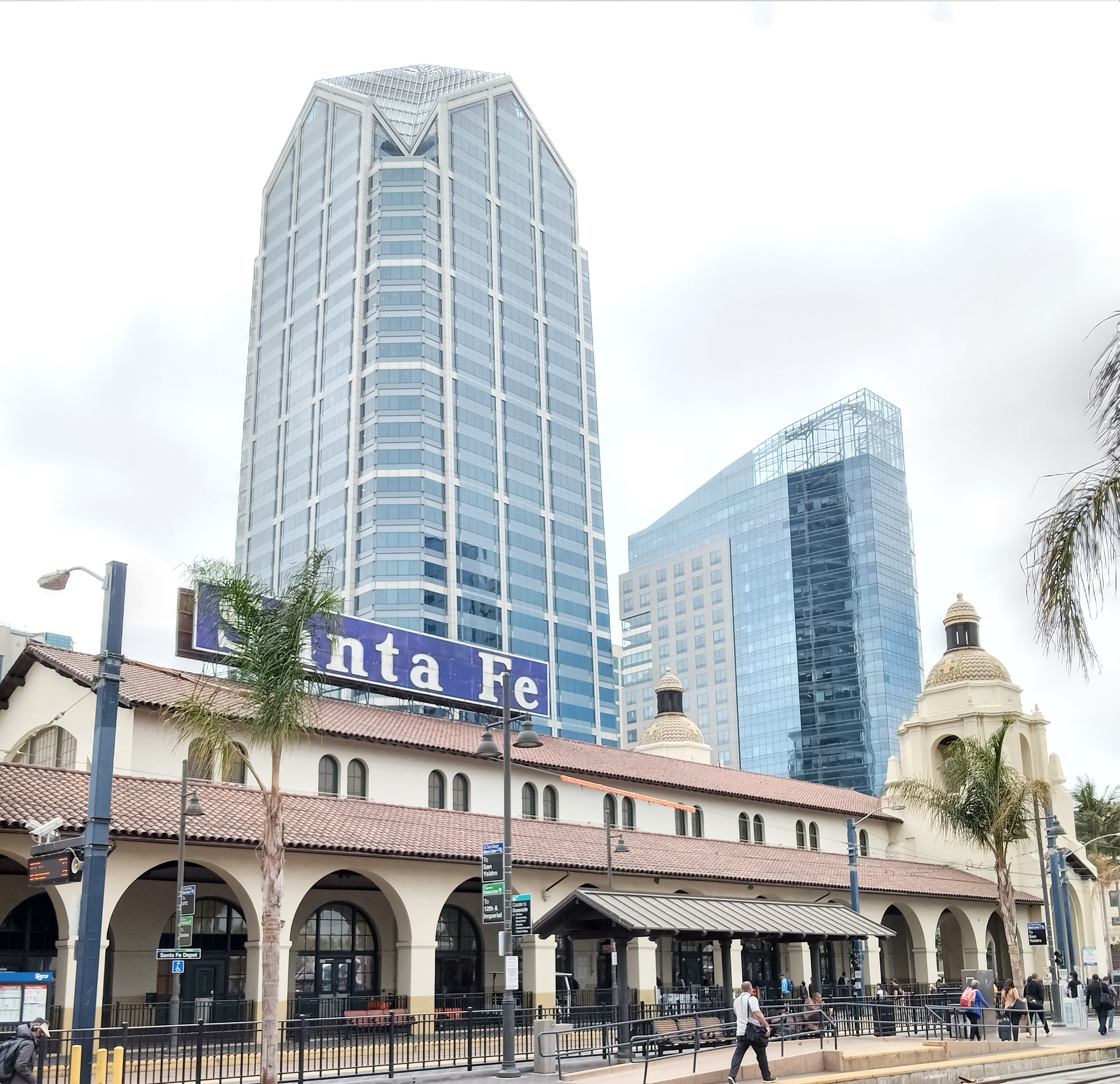
Starting from where you’ll step off the train in San Diego, the historic Santa Fe Depot train station is a grand, beautiful building, built in 1915 to welcome people to the Panama-California Exposition and built in the same Spanish Colonial style as the expo buildings that make up today’s Balboa Park. Outside, the platforms serve Amtrak trains, the Coaster commuter train (which runs up the coast to Oceanside), and the Blue and Green Trolley lines. Inside is a spacious waiting room beneath an arched ceiling, with a newspaper stand and historic displays among the wooden benches and elaborate tilework on the walls. Outside is a small courtyard with a fountain surrounded by palm trees, with trolleys frequently passing by as they loop around to America Plaza station across the street (yes, there are two Trolley stations that are literally across the street from each other).
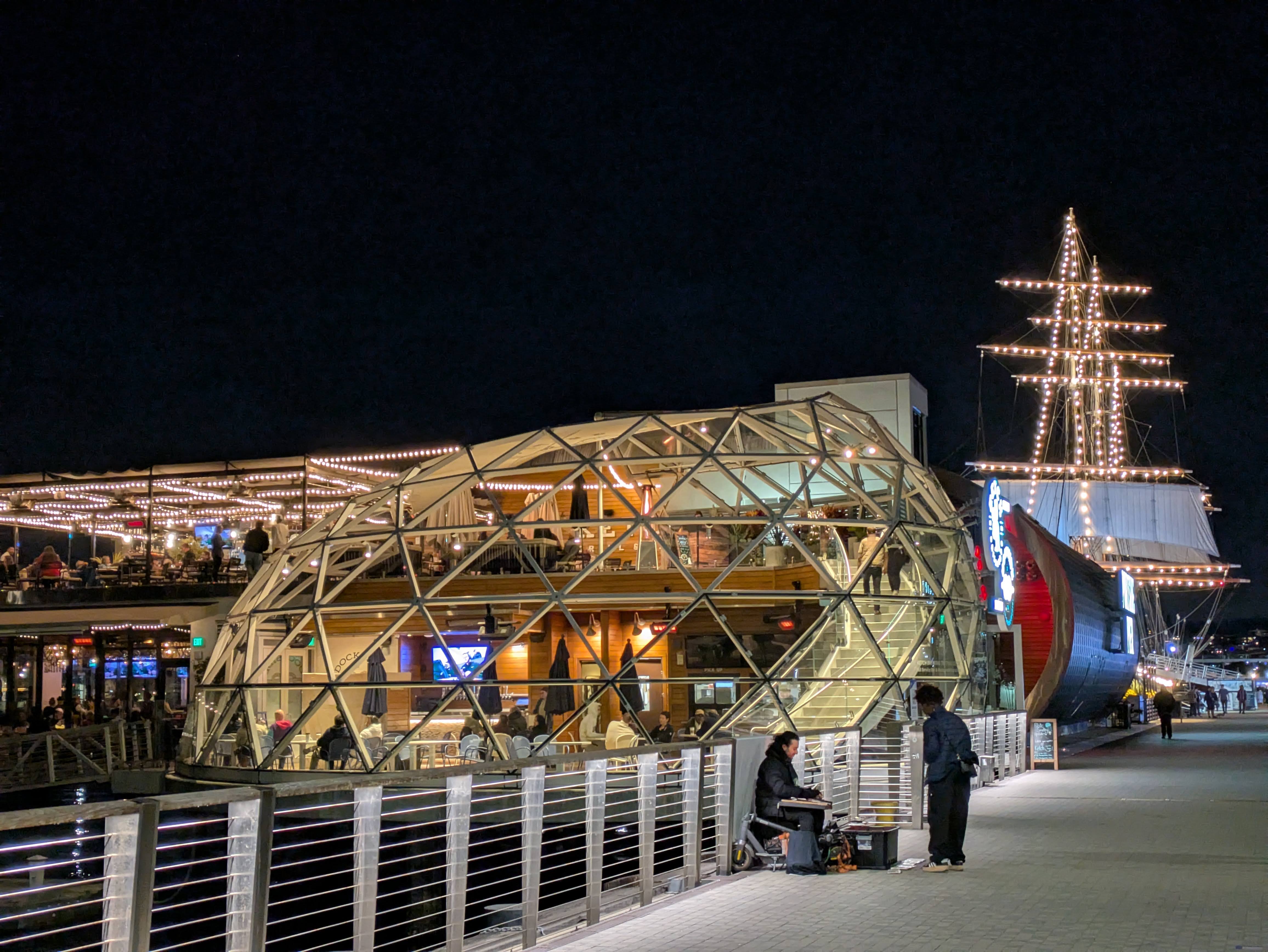
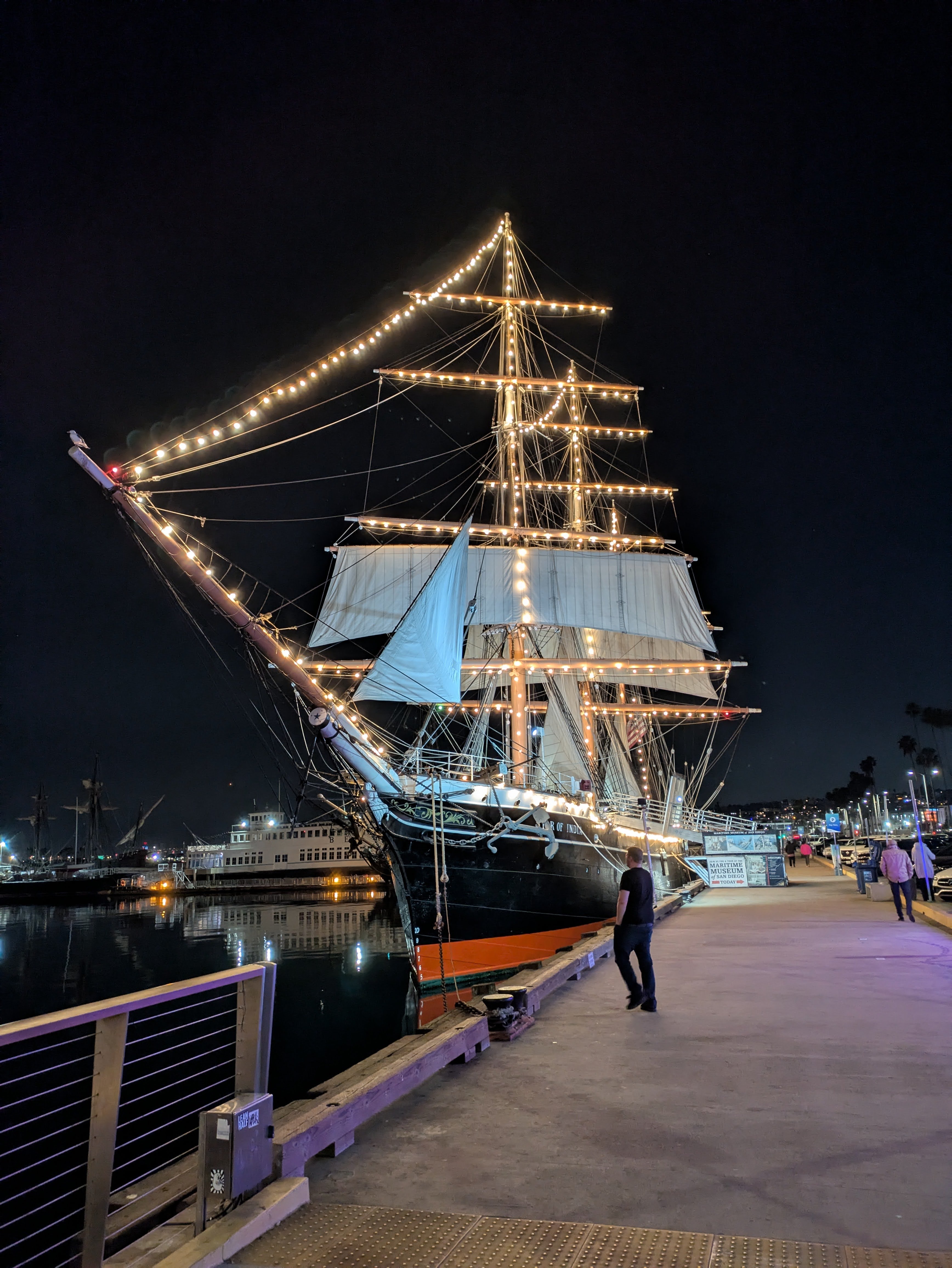
The waterfront is just two blocks west of the train station, with the pier at the foot of Broadway serving hourly ferries to Coronado and local harbor and whale watching cruises. A block north is the cruise ship terminal, while a block south is Navy Pier, home to the USS Midway aircraft carrier, which has now been turned into a popular museum. A few blocks north from the Broadway Pier is the Maritime Museum, which preserves several historic ships that are open for tours, most notably the Star of India, the world’s oldest active sailing ship. Just before you reach the Star of India you’ll pass Portside Pier, a food hall with several seafood-focused eateries, with a cool glass dome on one side that holds bar seating for one of the restaurants.
The northernmost part of Downtown is Little Italy, which occupies the small wedge of Downtown between the harbor and the 5 freeway leading up to the airport. The closest Trolley stop is County Center/Little Italy station, which sits between Beech and Cedar Streets on the very corner of the neighborhood. Just two blocks east is India Street, and the five or so blocks of India north of Cedar Street are the commercial heart of Little Italy, lined with numerous Italian delis, cafes, and restaurants, as well as a bunch of pocket parks and little monuments that celebrate the neighborhood’s Italian heritage. The center of activity is a block of Date Street off India that’s closed to cars and has been converted to a plaza that hosts the weekly farmers market every Saturday morning.
The southern side of the waterfront is dominated by the Convention Center, which has its own Trolley station on Harbor Drive, and hosts the massive Comic Con every July. On the way down along the waterfront is Seaport Village, a fishing village-themed mall with lots of shops and an antique carousel. Behind the convention center itself is a marina and a large waterfront park with a bandshell and another stop for the ferry to Coronado, an island in San Diego Bay which is home to a major U.S. Navy base. The ferry departs every half-hour from here (versus once an hour at Broadway Pier) on a short ride aboard a historic little ferry boat, with fantastic views of the skyline from the water, stopping at a small shopping center on the Coronado side.
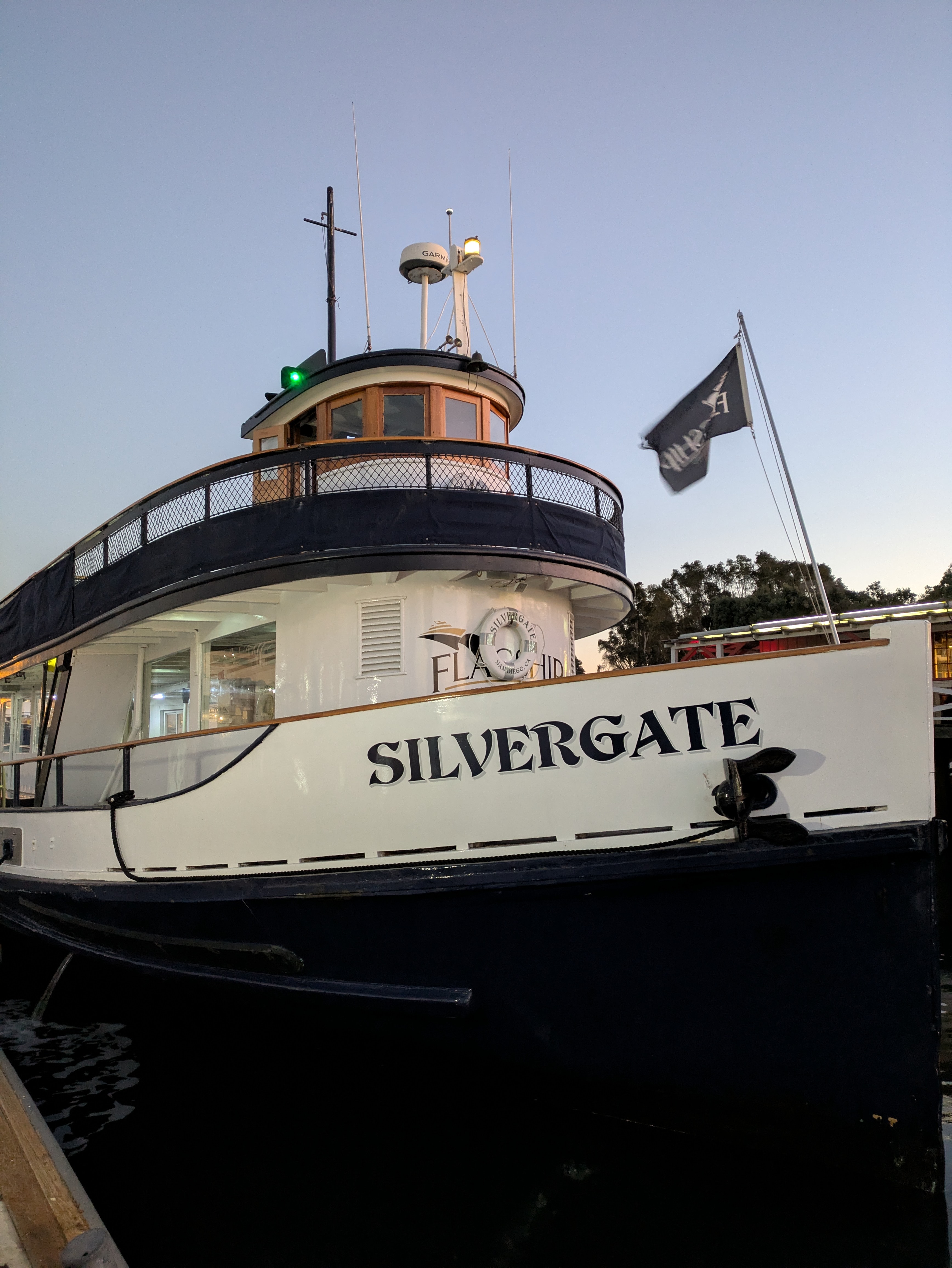
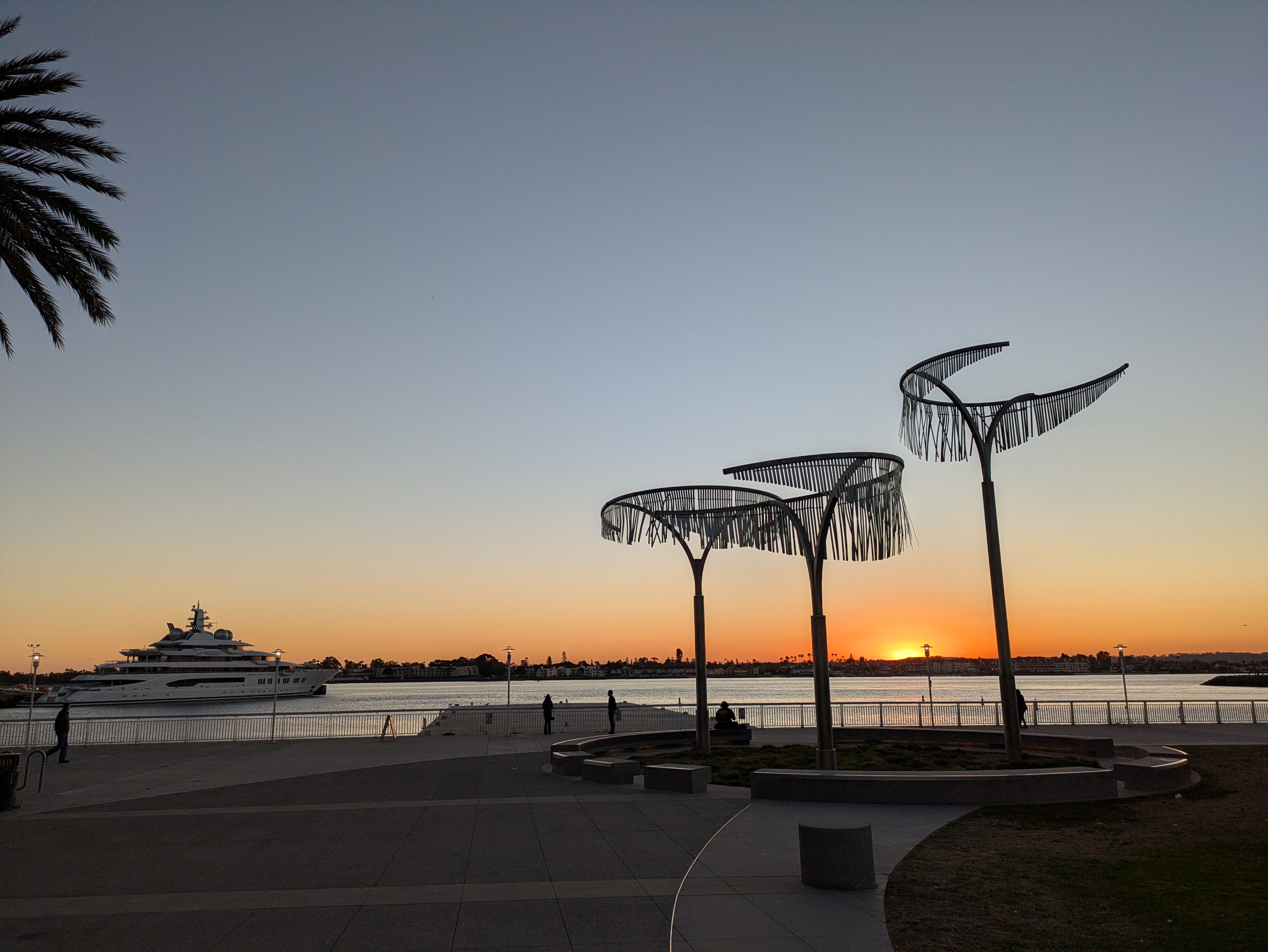
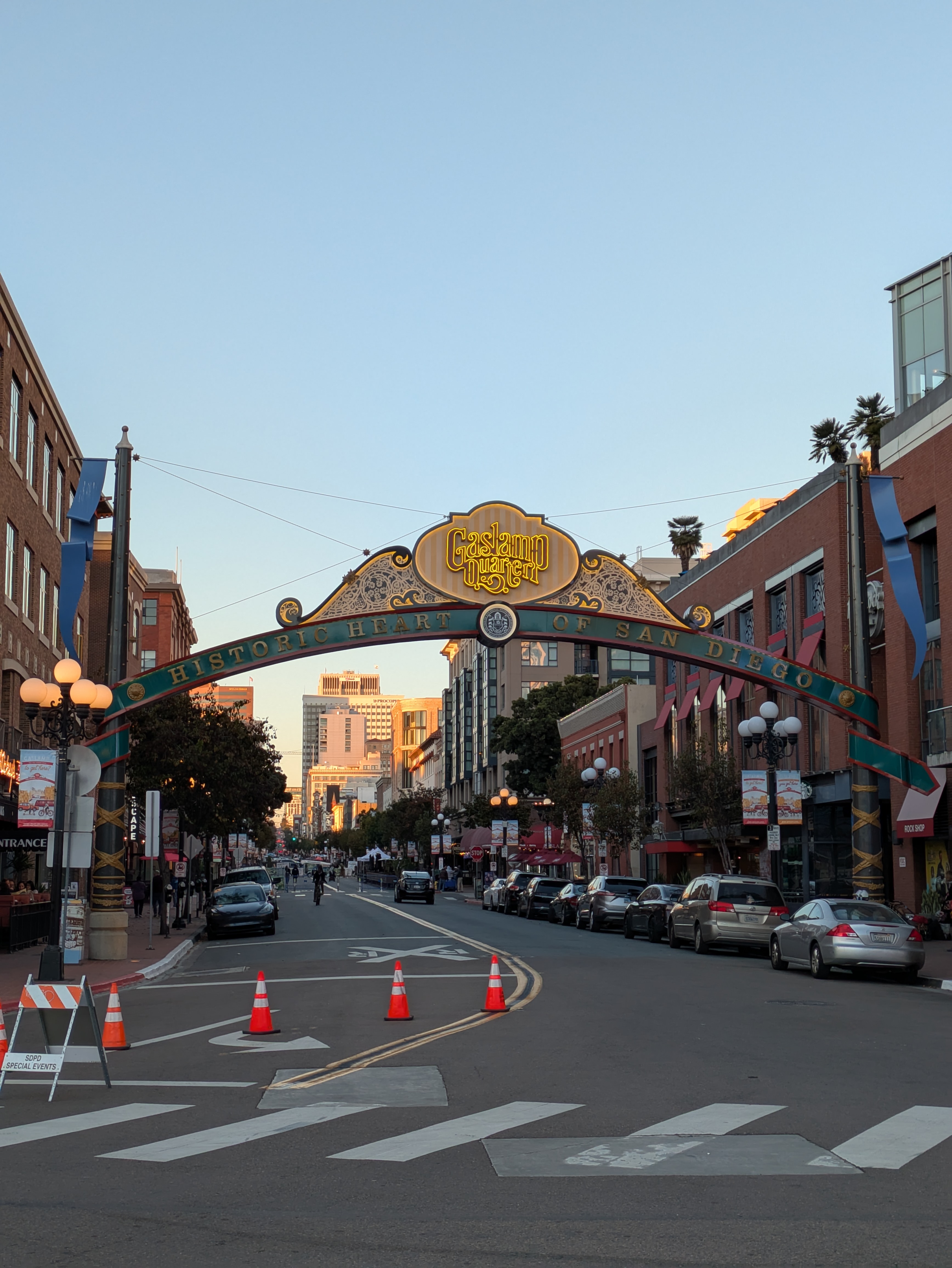
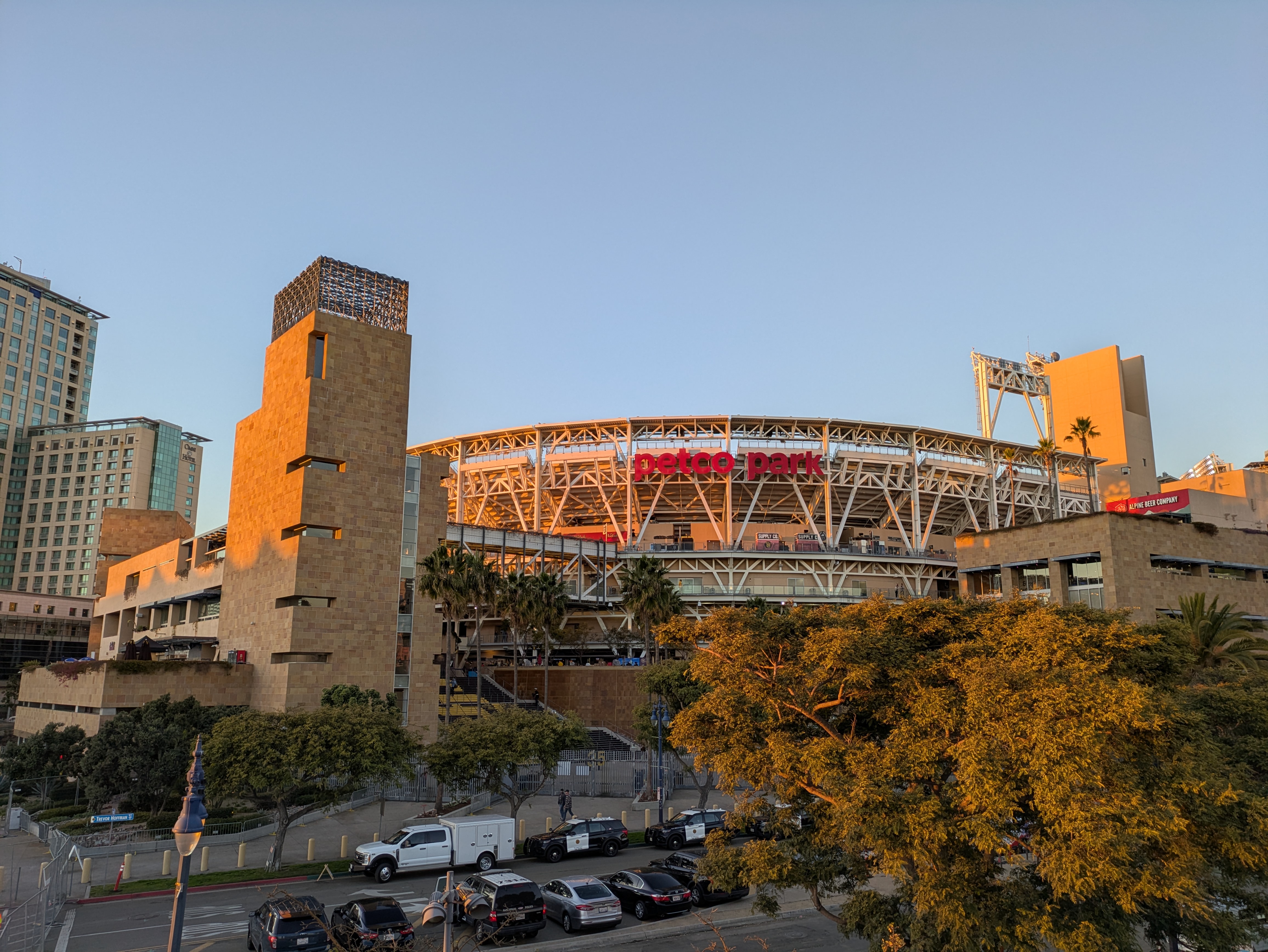
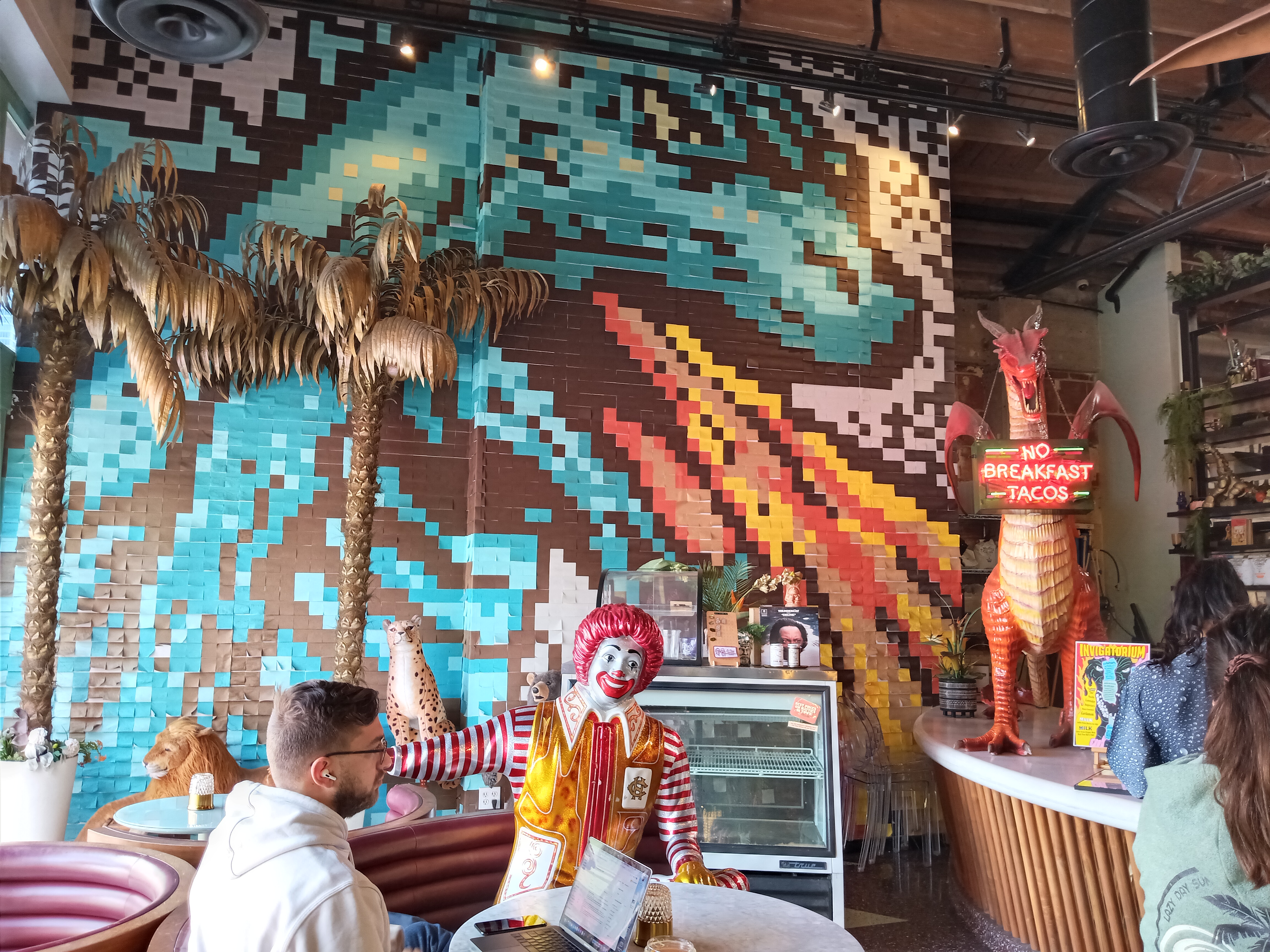
On the other side of the convention center, across Harbor Drive, is the historic district of Gaslamp Quarter, which has a Trolley station next to the archway that marks the 5th Avenue entrance into the district. Gaslamp is Downtown’s oldest neighborhood and has most of its historic buildings, and has turned into a trendy area full of bars and restaurants. Dominating the neighborhood is Petco Park, the home field for the San Diego Padres and definitely one of the nicest ballparks in Major League Baseball. A special feature of the stadium is a nice public park on the north side of the field with a great view into the ballpark, which is open on non-game days and is used as a picnic lawn on game days. Straight up from the ballpark on 9th Avenue, just north of Market, is The Invigatorium, a very unique coffee shop and bar with great brunch food and very goofy decor, like figures of dinosaurs, dragons, a giant disco ball, and a statue of Ronald McDonald.
Balboa Park
Probably San Diego’s best attraction, Balboa Park is a massive public park in the middle of the city, built atop a mesa overlooking Downtown, home to numerous museums, cultural attractions, gardens, and the famous and renowned San Diego Zoo. There is so much to see, in fact, that you could spend three whole days here (with one day for the zoo alone) and still not see everything the park has to offer.
Getting to Balboa Park by transit requires taking the bus, but it’s a mercifully short ride from Downtown, taking only 10-15 minutes depending on traffic. Rapid bus 215 travels up Park Blvd directly from Santa Fe Depot, stopping at Zoo Place on the eastern side of the park and close to the entrance to the zoo (you can also take the local 7 bus, which also follows Park Blvd and makes more stops, although it starts at the civic center in Downtown and doesn’t go all the way to Santa Fe Depot). The other option is to take the 3 bus, which runs along 4th/5th Avenues from Downtown up along the western edge of the park. Just get off at Laurel Street, which will turn into El Prado as it enters the park.
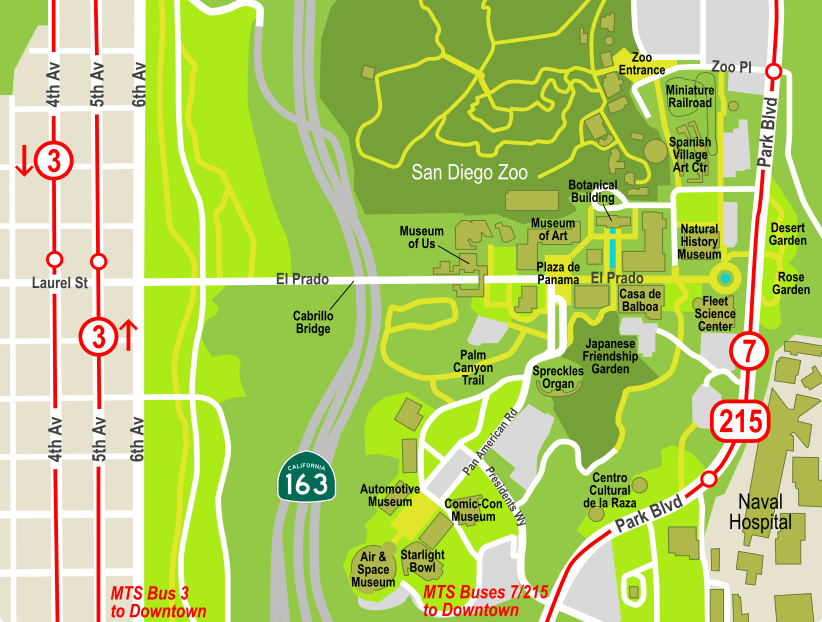
El Prado is the main street through Balboa Park, lined with most of its museums and most iconic structures. It’s also the oldest section of the park, dating back to when the park was built as a fairground to host the Panama-California Exposition in 1915, held to celebrate the opening of the Panama Canal and promote San Diego as the first port of call for ships heading north from the canal. If entering from the western side of the park, you’ll cross over the Cabrillo Bridge, entering the park as fairgoers would have a century ago.
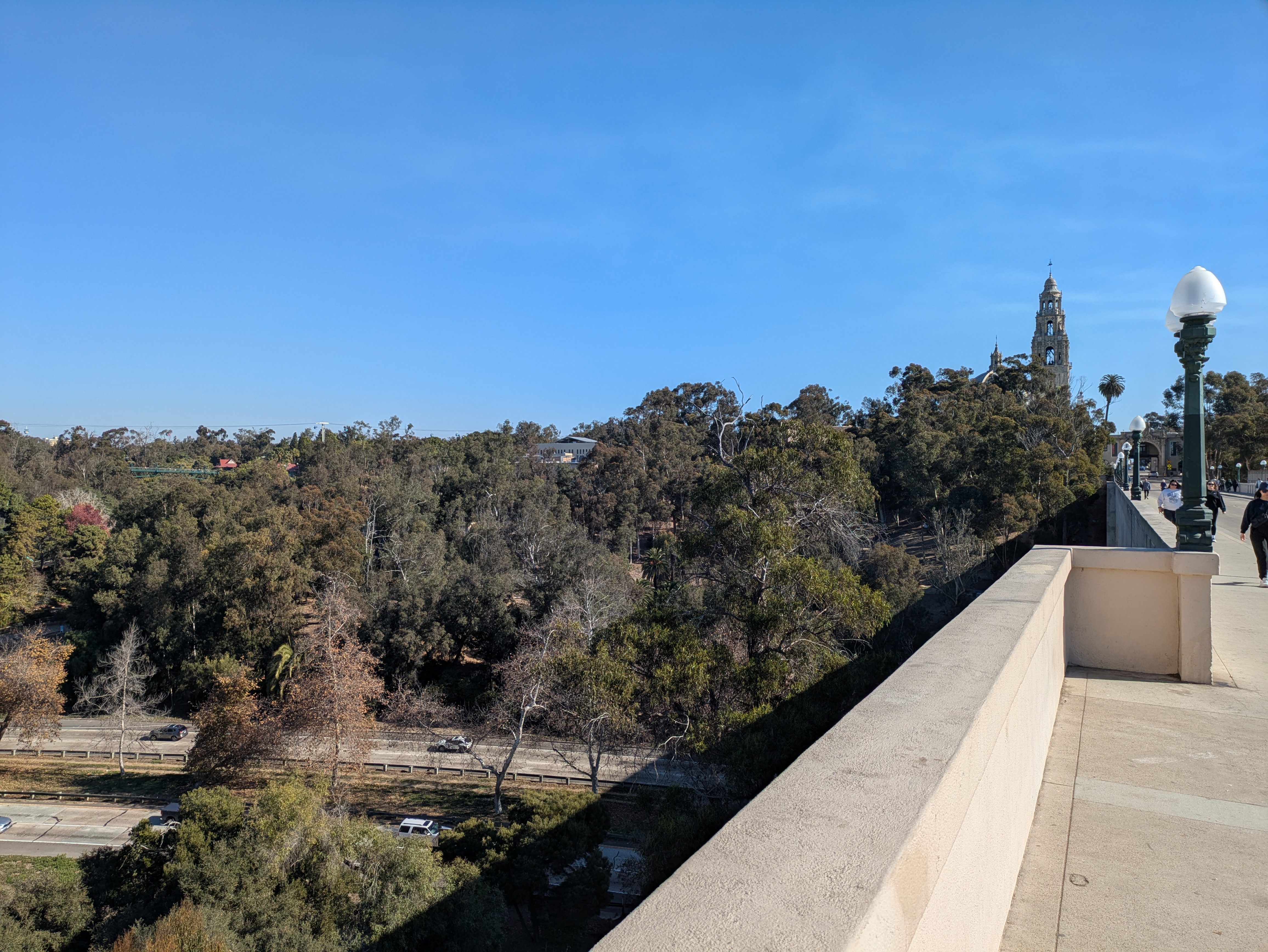
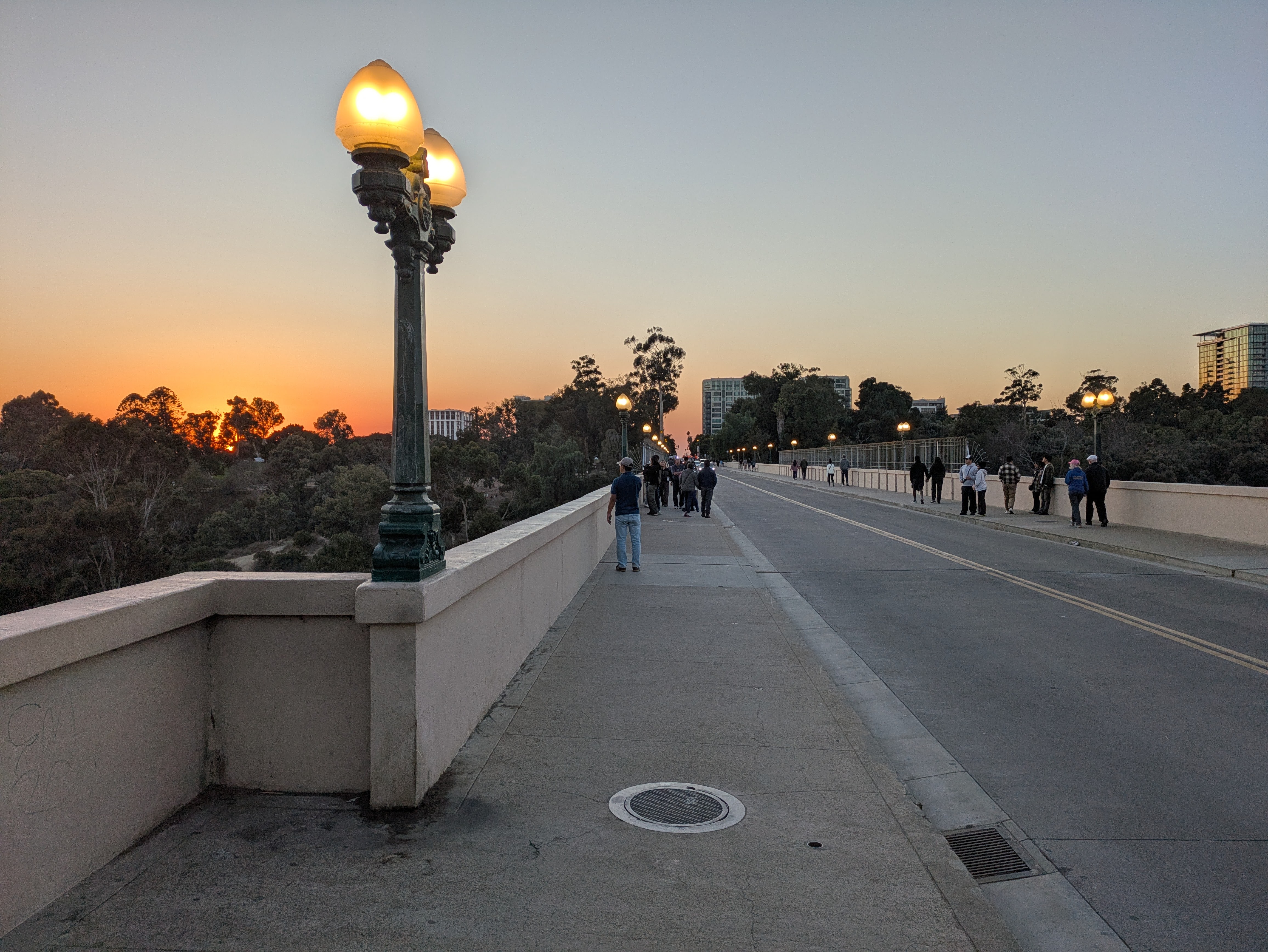
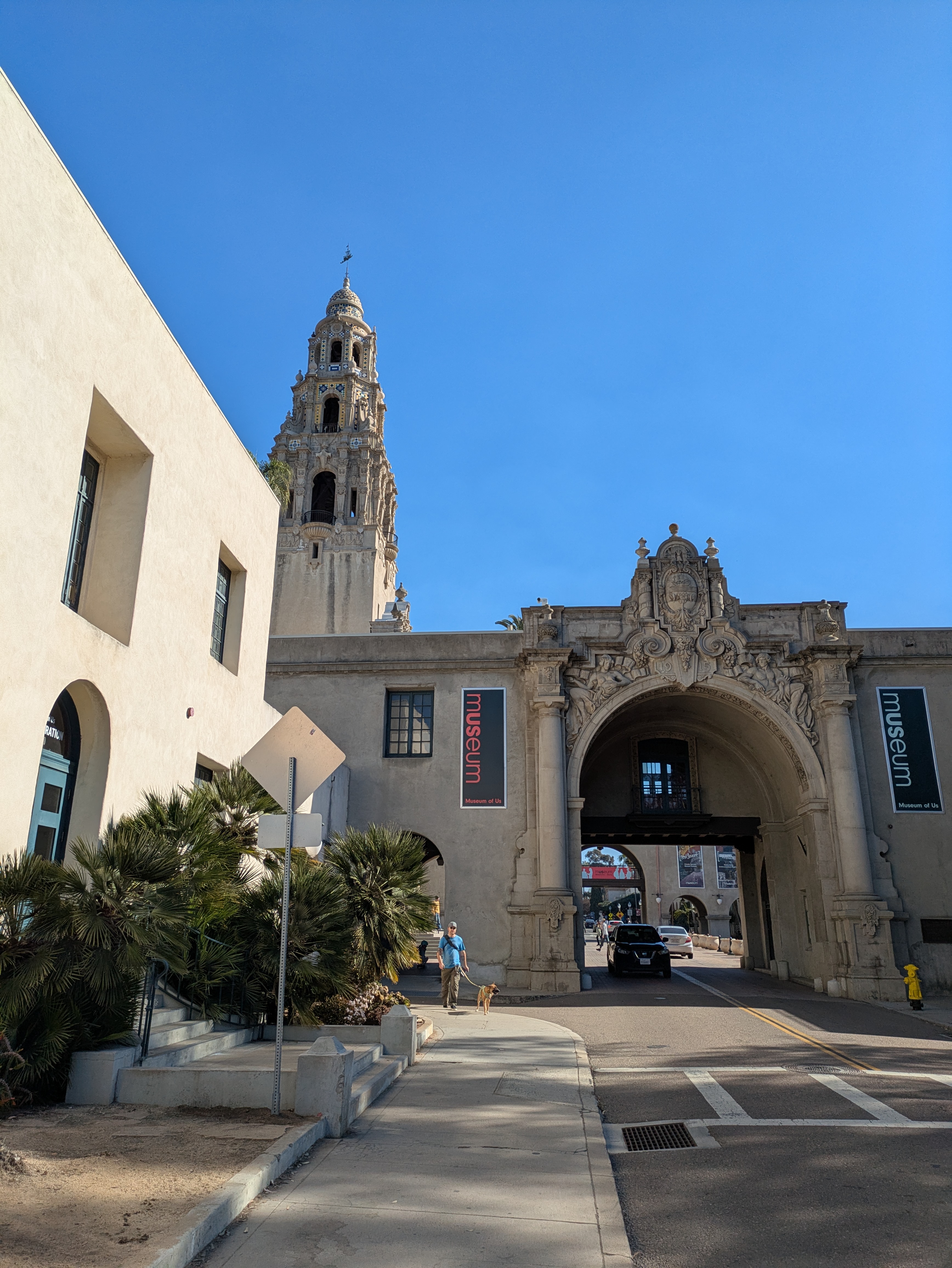
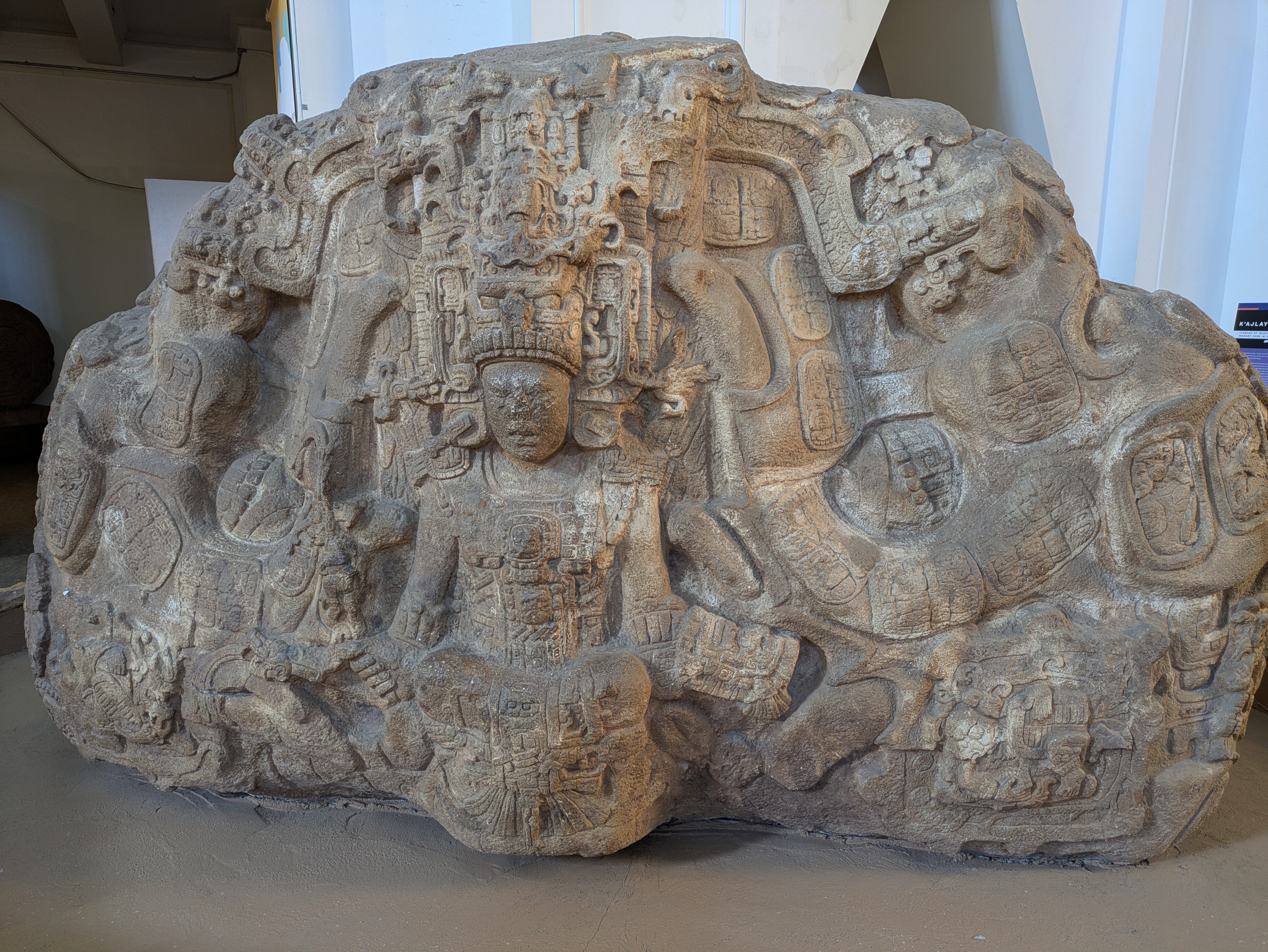
The first building you’ll encounter after crossing the bridge is the California Building, whose gorgeous Spanish Baroque style tower is a central icon of Balboa Park. The building is occupied by the Museum of Us, an excellent anthropology museum with lots of great exhibits, including some monumental Mayan stone artifacts in the main hall. The museum also runs tours of the California Tower, which we highly recommend both for the fantastic view and because the docents offer so much history that serves as a great introduction to Balboa Park.
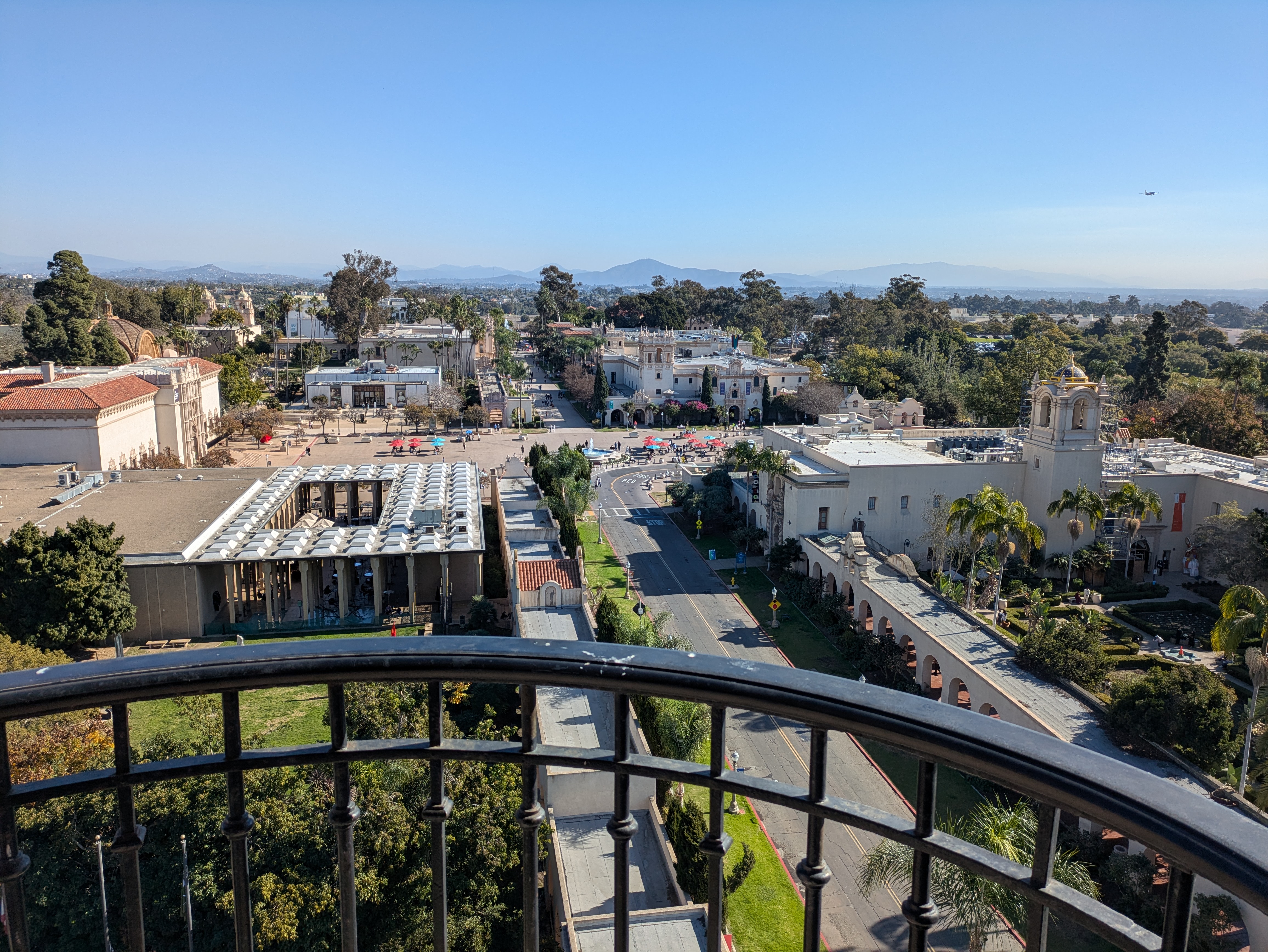
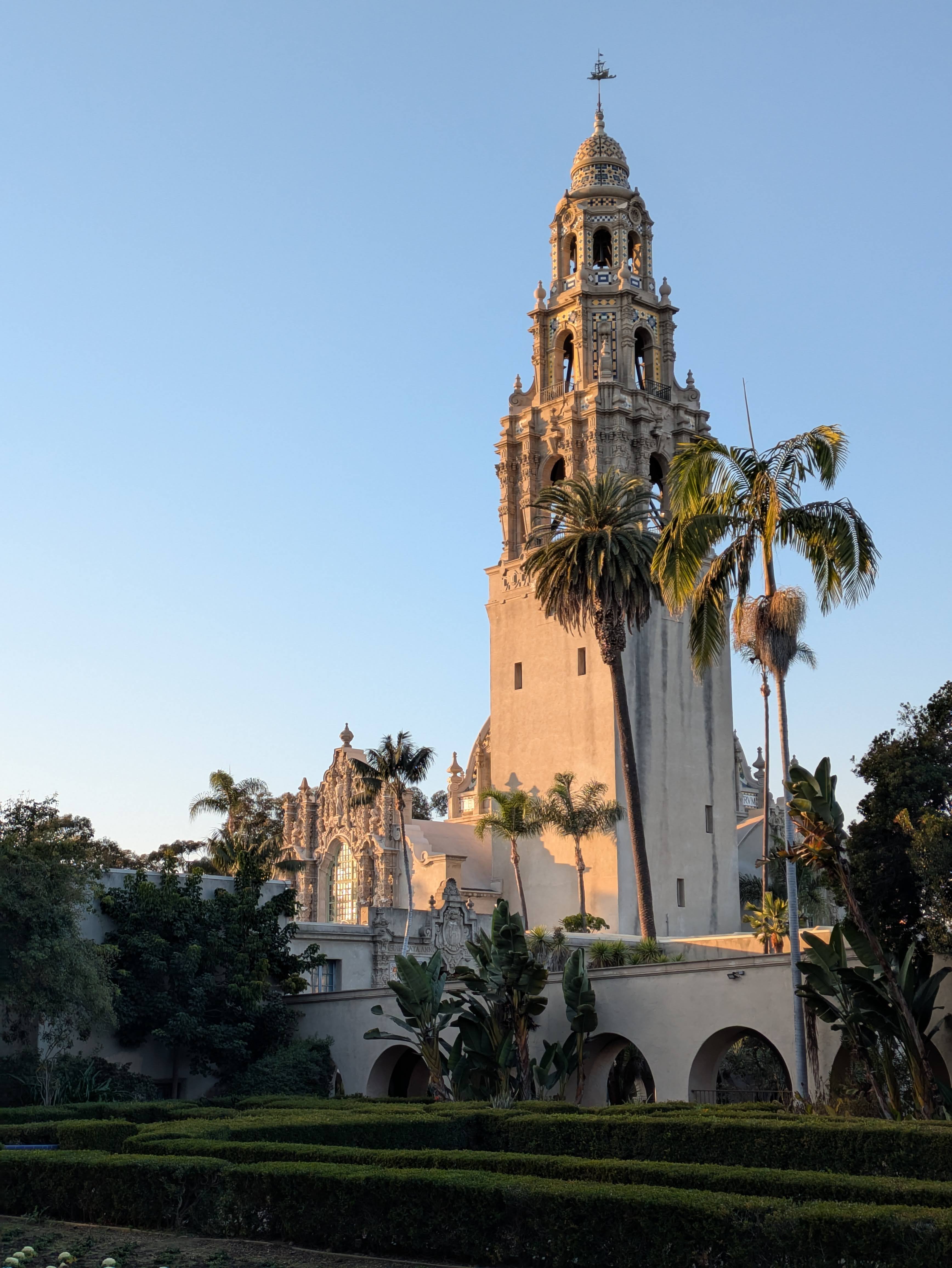
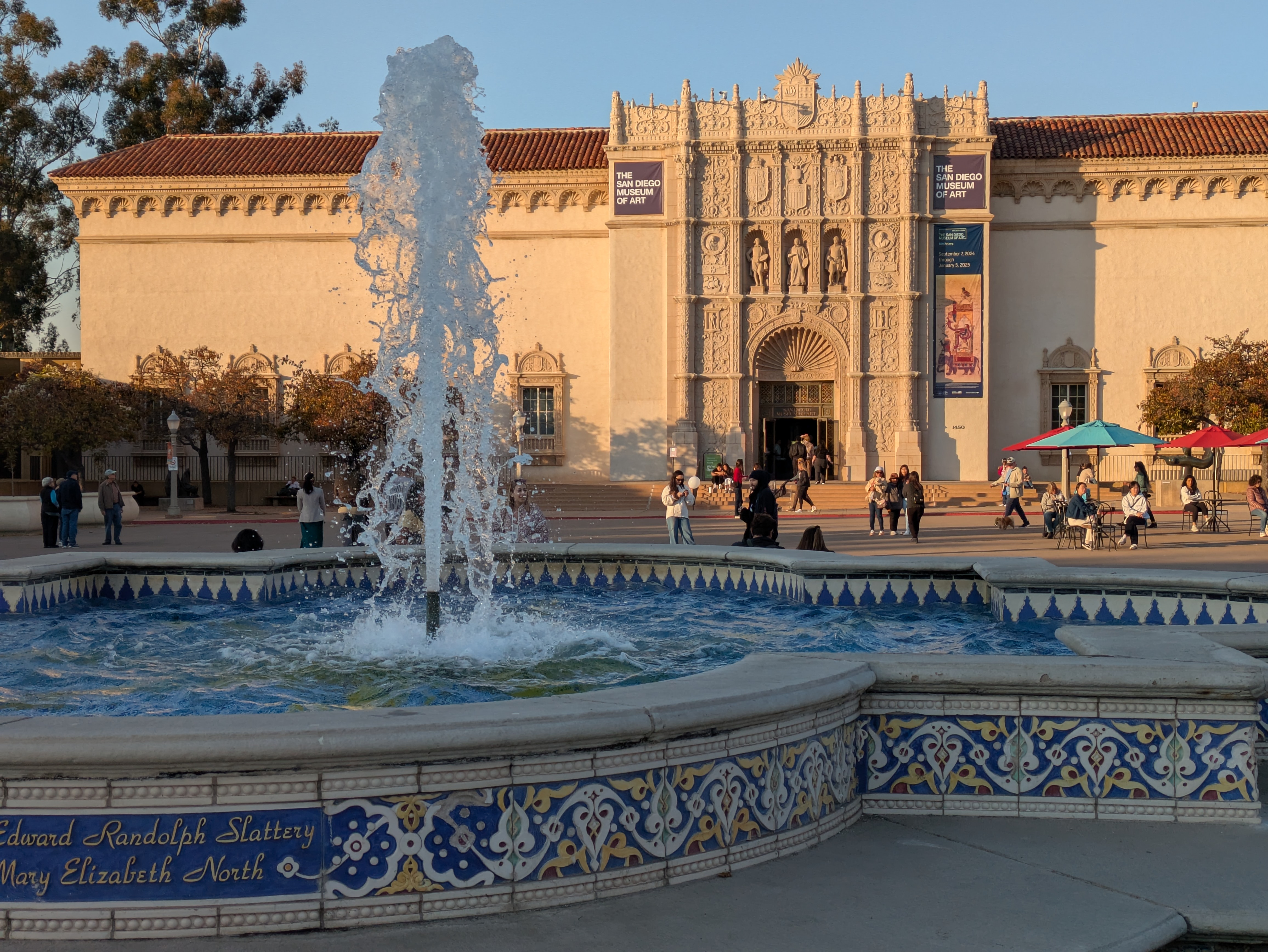
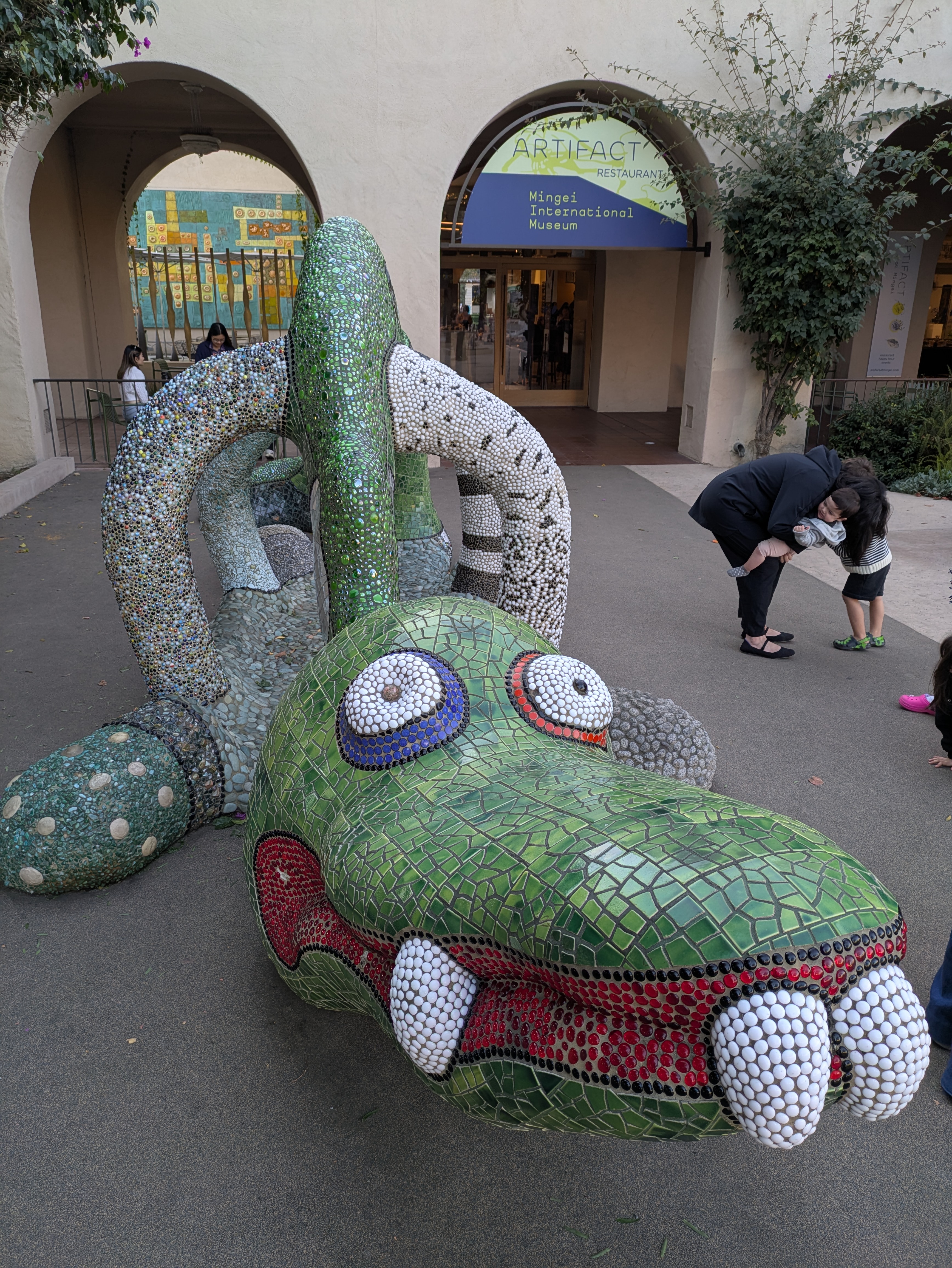
Past that, we reach the halfway point of El Prado, the expansive Plaza de Panama, a focal point of the park with lots of tables and umbrellas arranged around a large fountain in the center. The plaza is surrounded by Balboa Park’s most notable art museums. On the north side is the San Diego Museum of Art, which has a very large and varied collection from all over the world. To the northeast is the small but free Timken Museum of Art, which has a great collection of European works. And on the southwestern corner is the Mingei International Museum, which has a very engaging collection of folk art and craft. Outside the Mingei are a set of colorful tile sculptures by Niki de Saint Phalle that are built so that children can climb on them.
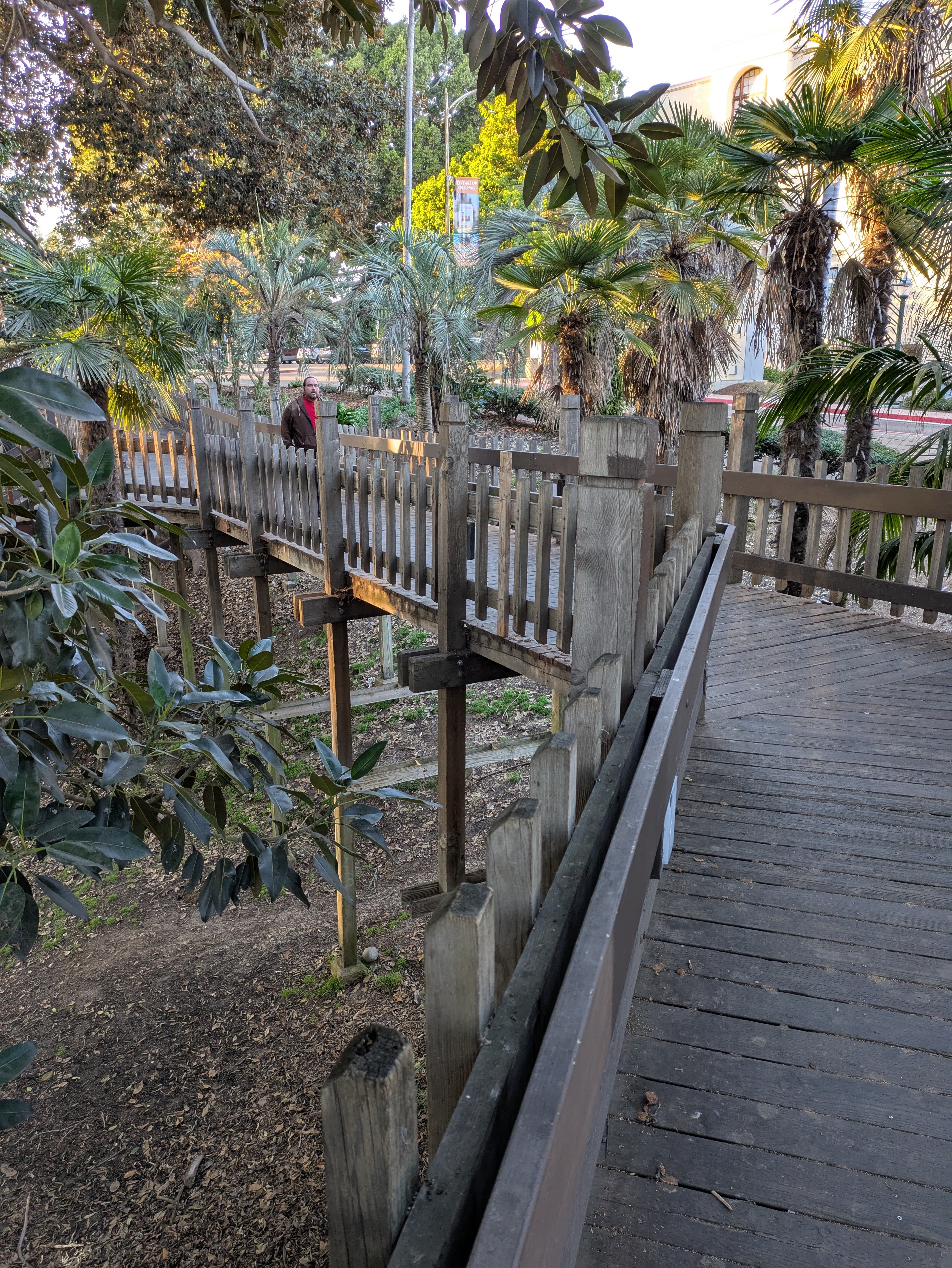
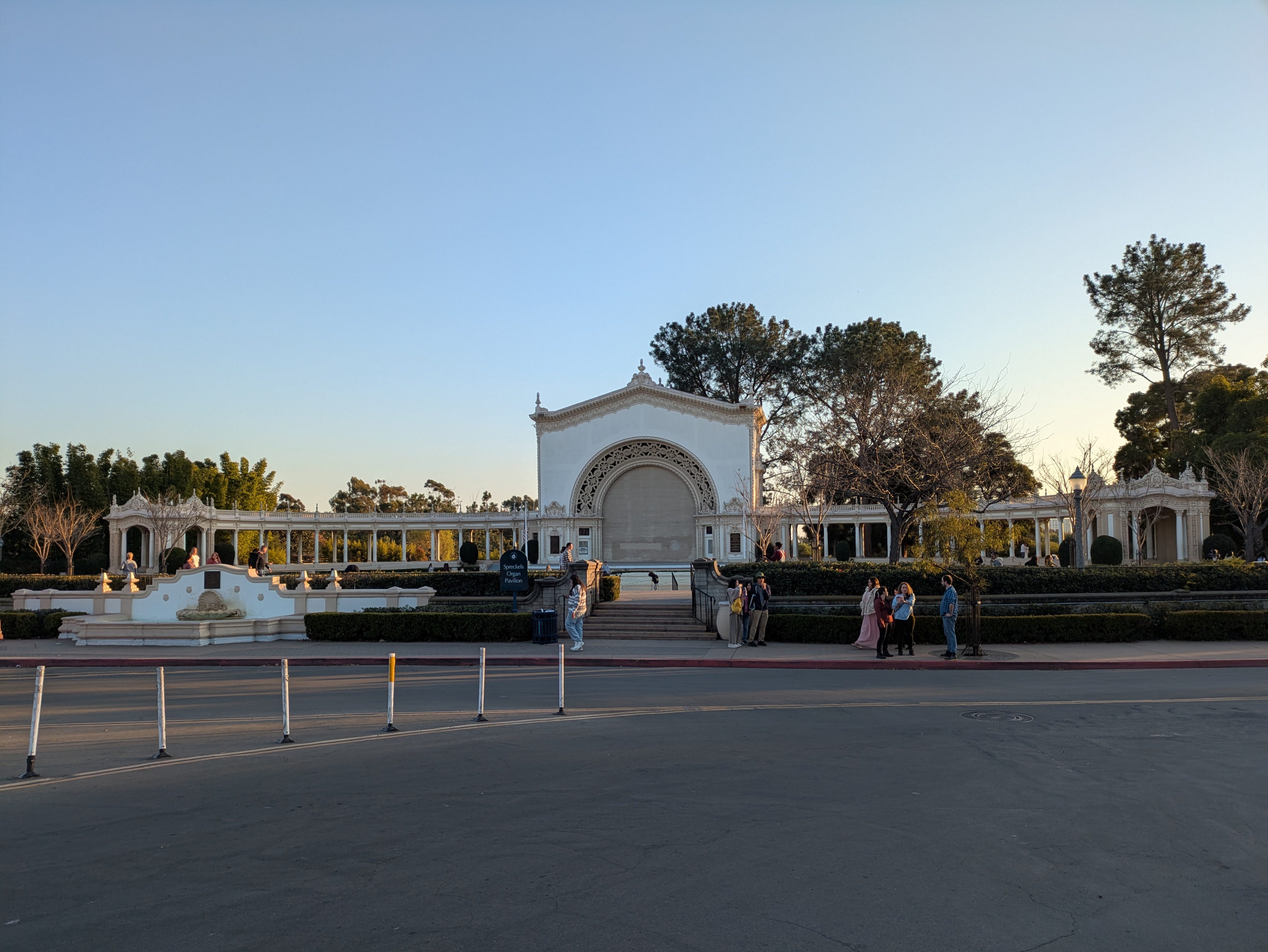
Turning south from the plaza and following the road will take you to the Spreckels Organ Pavilion, a concert venue that holds the world’s largest outdoor pipe organ. Next door is an elaborate Japanese garden, although paid admission is required. And across the street, behind the Mingei, is the trailhead for Palm Canyon Trail, marked by a boardwalk structure that crosses over the canyon through a grove of trees. Plaza de Panama is also where you where you can pick up a free tram to the southern side of the park, where a cluster of slightly more modern buildings holds the popular Air and Space Museum and the Automotive Museum.
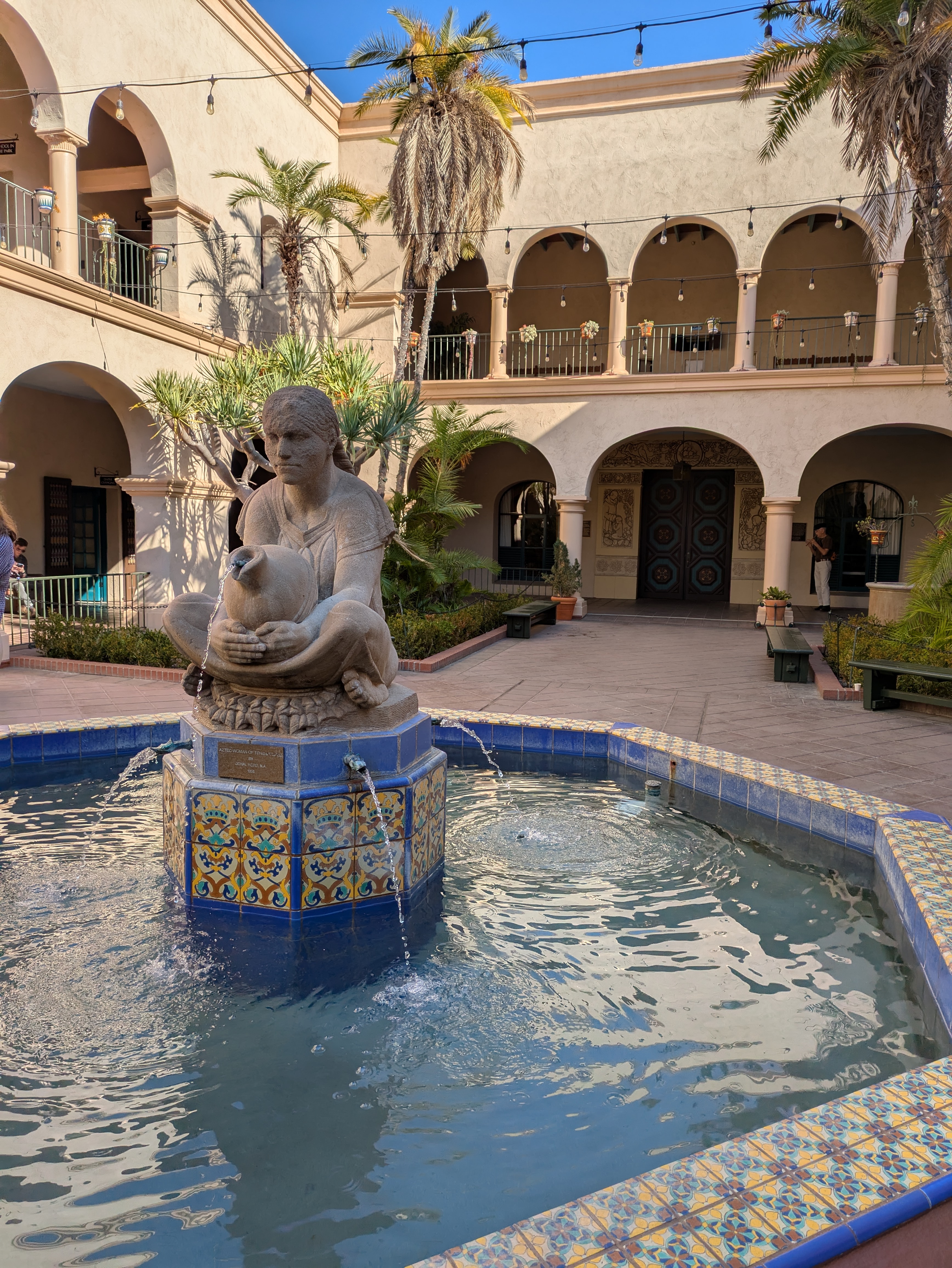
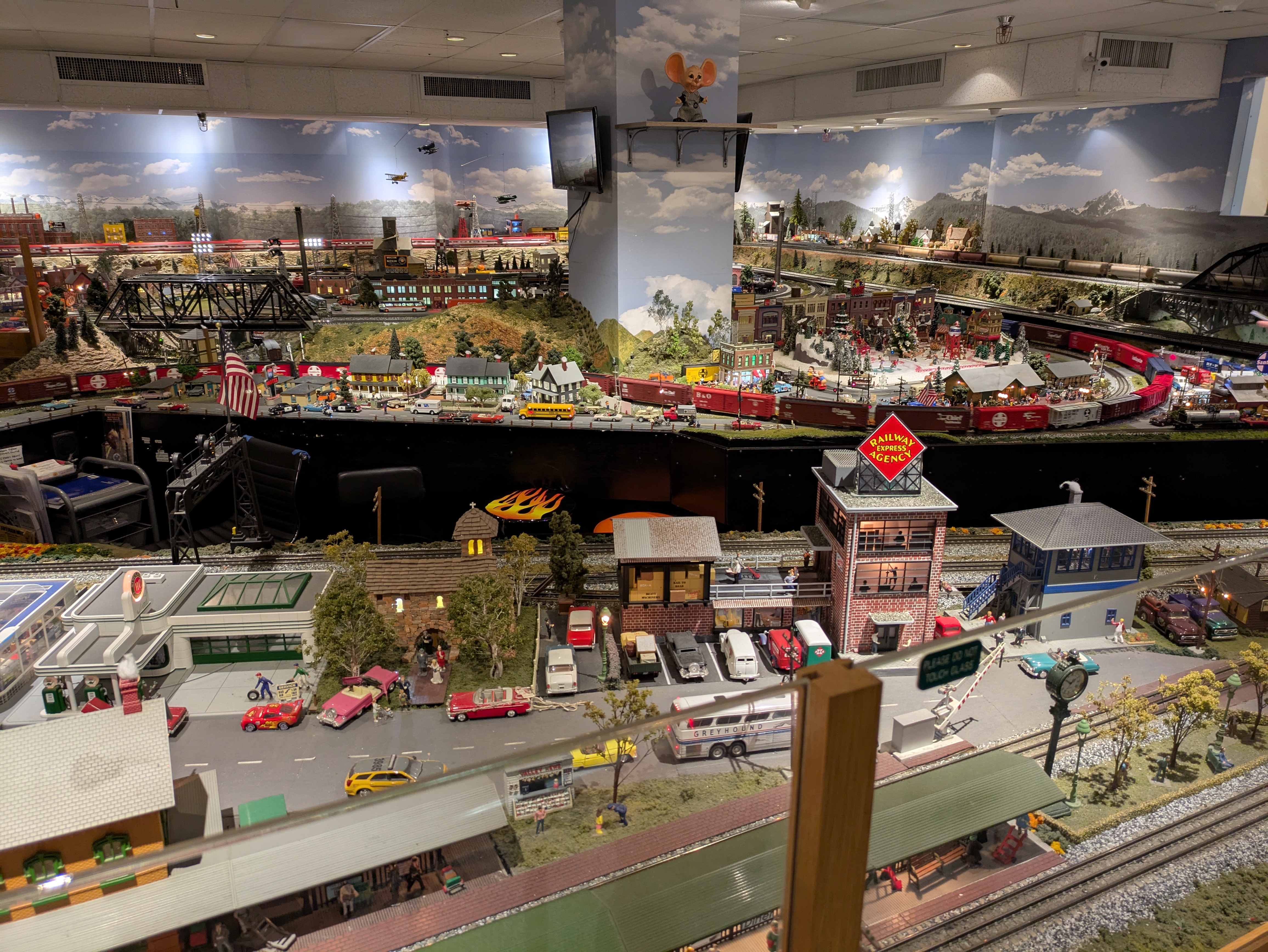
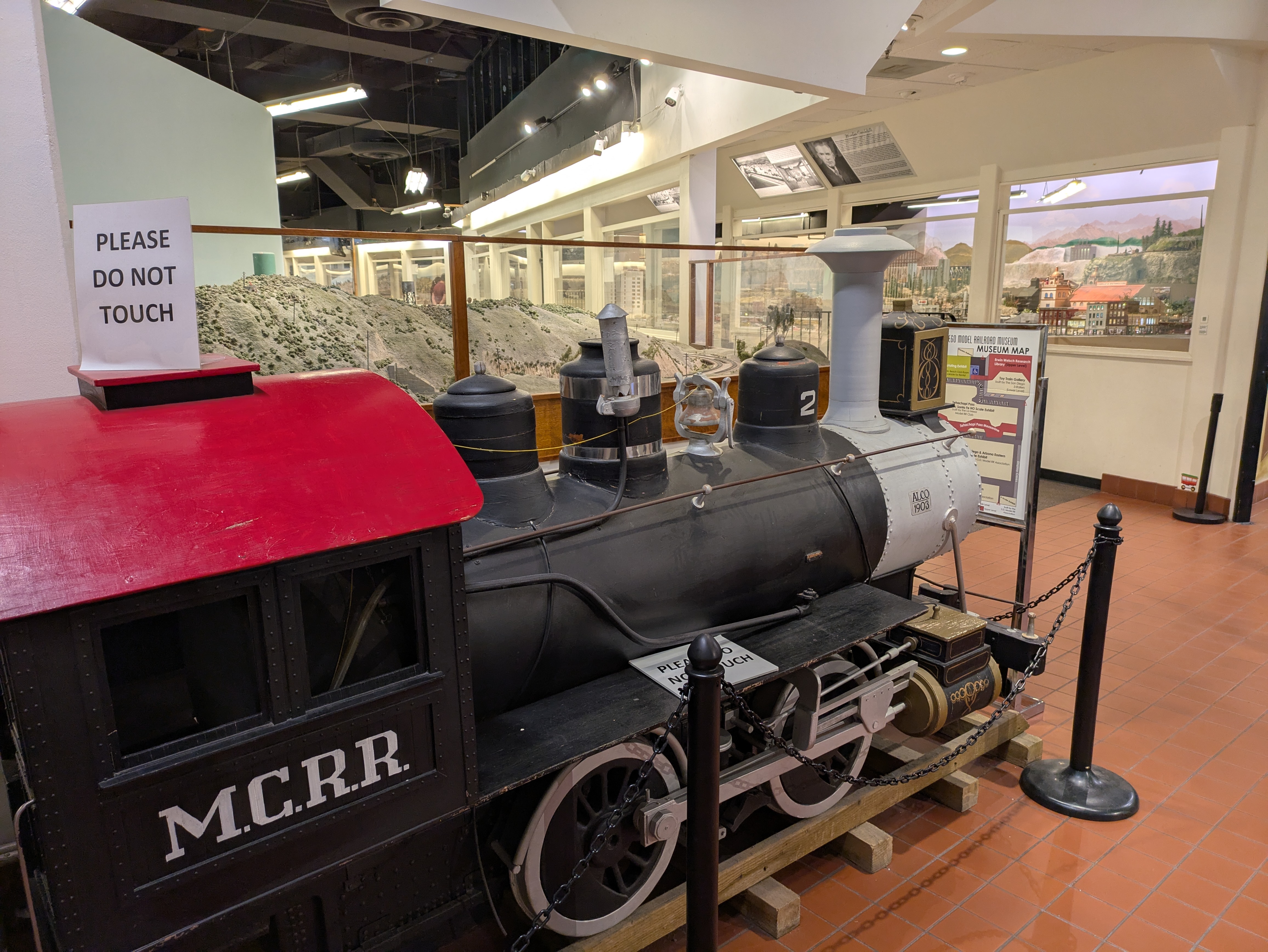
Continuing east on El Prado from Plaza de Panama, you’ll pass the House of Hospitality, home to the visitors center and the park’s (pricey) restaurant. Just past is Casa de Balboa, which holds three separate museums: the San Diego History Center, the Museum of Photographic Arts, and the San Diego Model Railroad Museum, which is the largest model railroad museum in the country and an absolute delight for children, with several massive layouts with working miniature trains and tons of fun features and easter eggs, as well as exhibits on the history of railroading in Southern California.
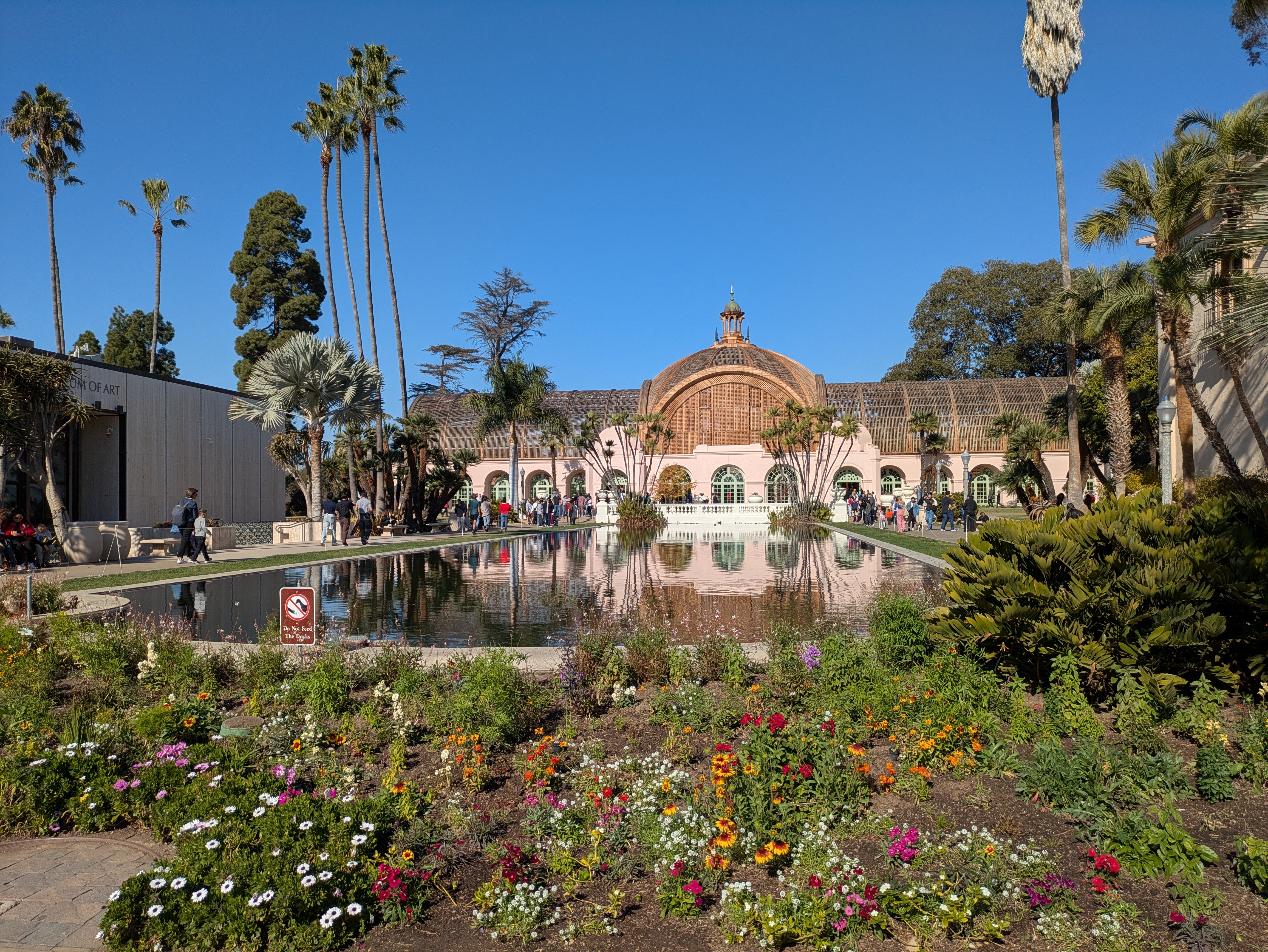
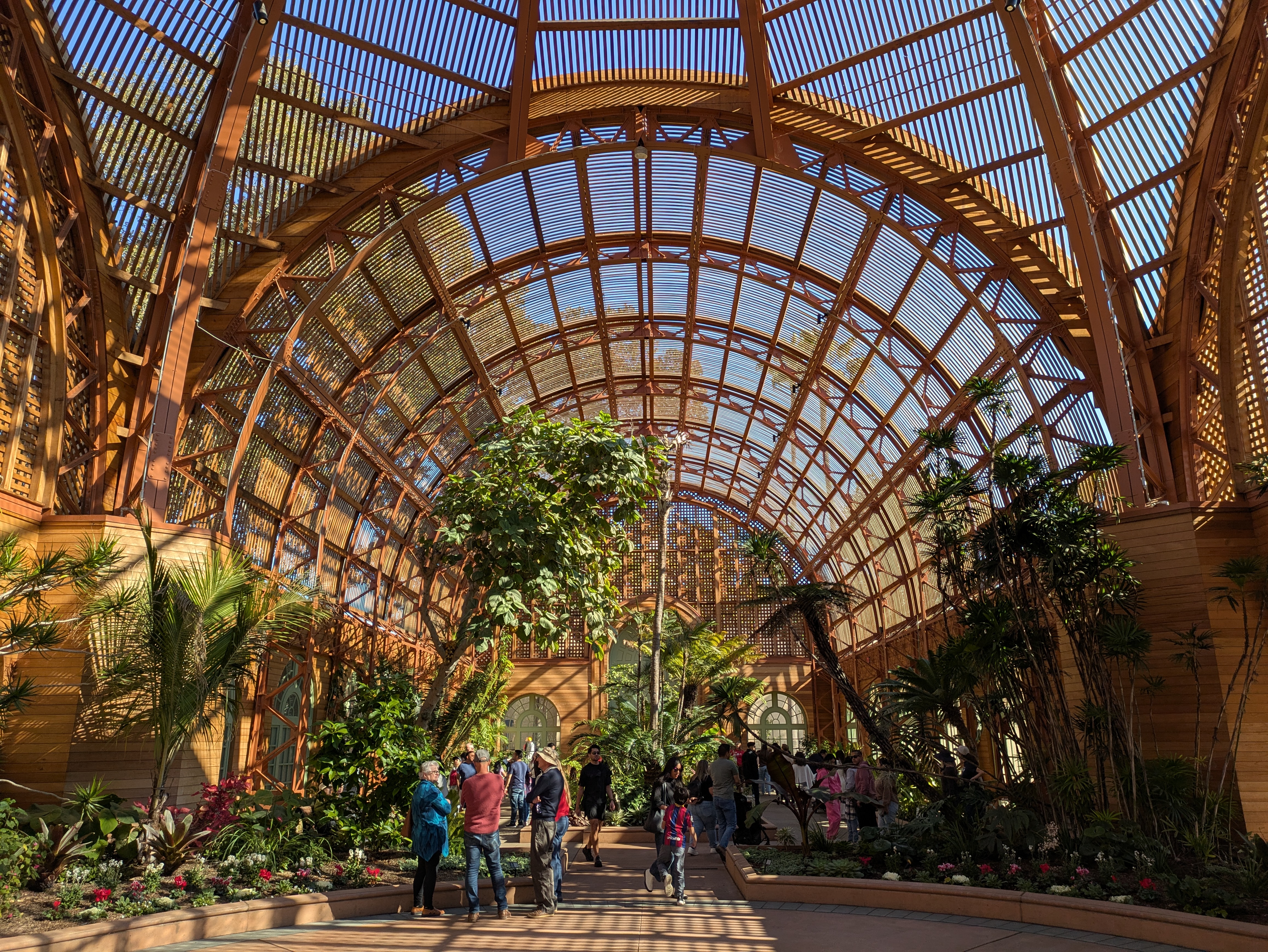
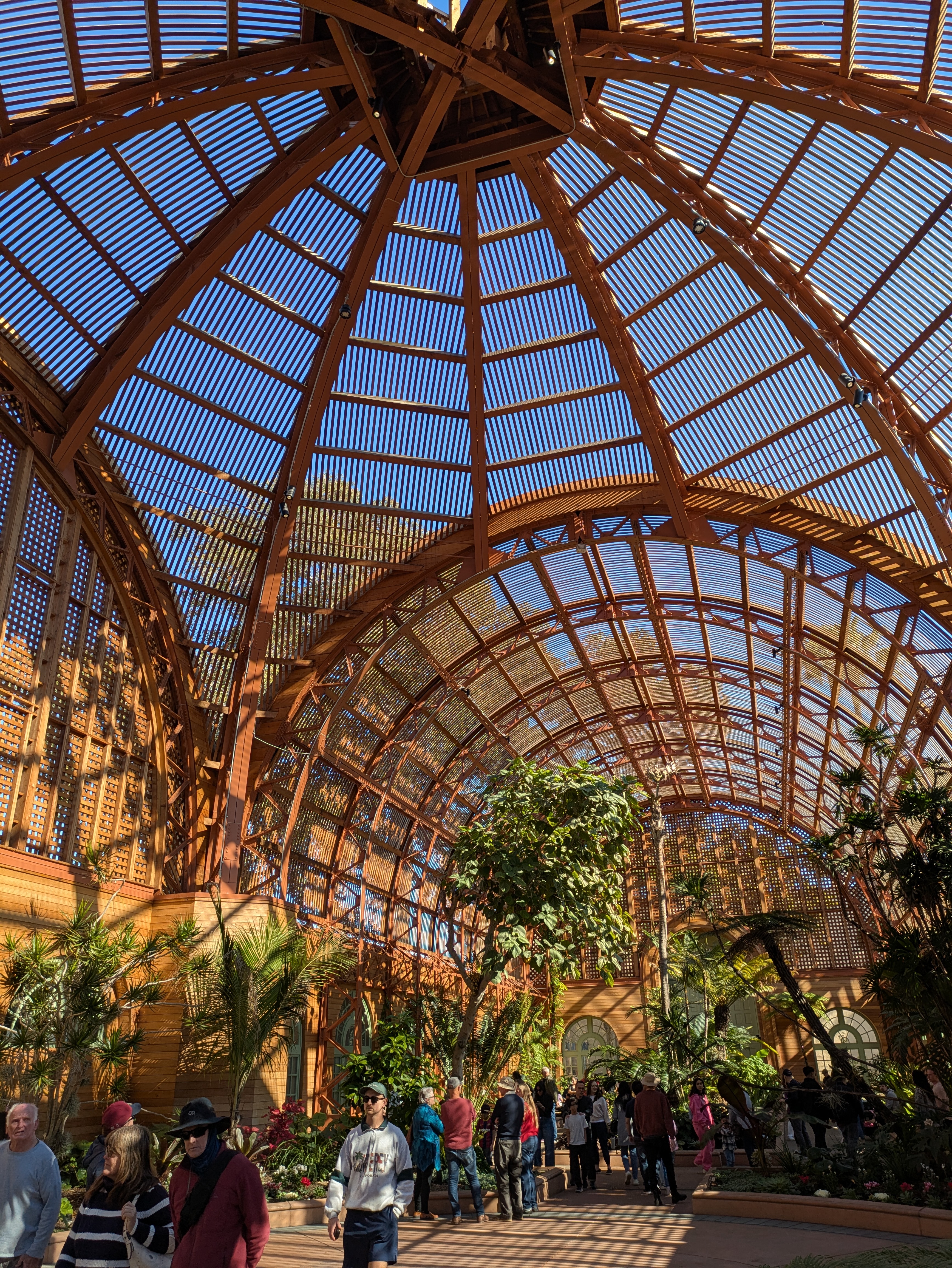
On the other side of El Prado is Balboa Park’s most beautiful structure, which you’ll see from El Prado at the end of a long lily pond: the Botanical Building, a historic wood slat greenhouse that holds a lush garden of tropical plants beneath a soaring domed ceiling. Expect it to be busy, with lots of people taking advantage of the beautiful backdrops for their photos and videos.
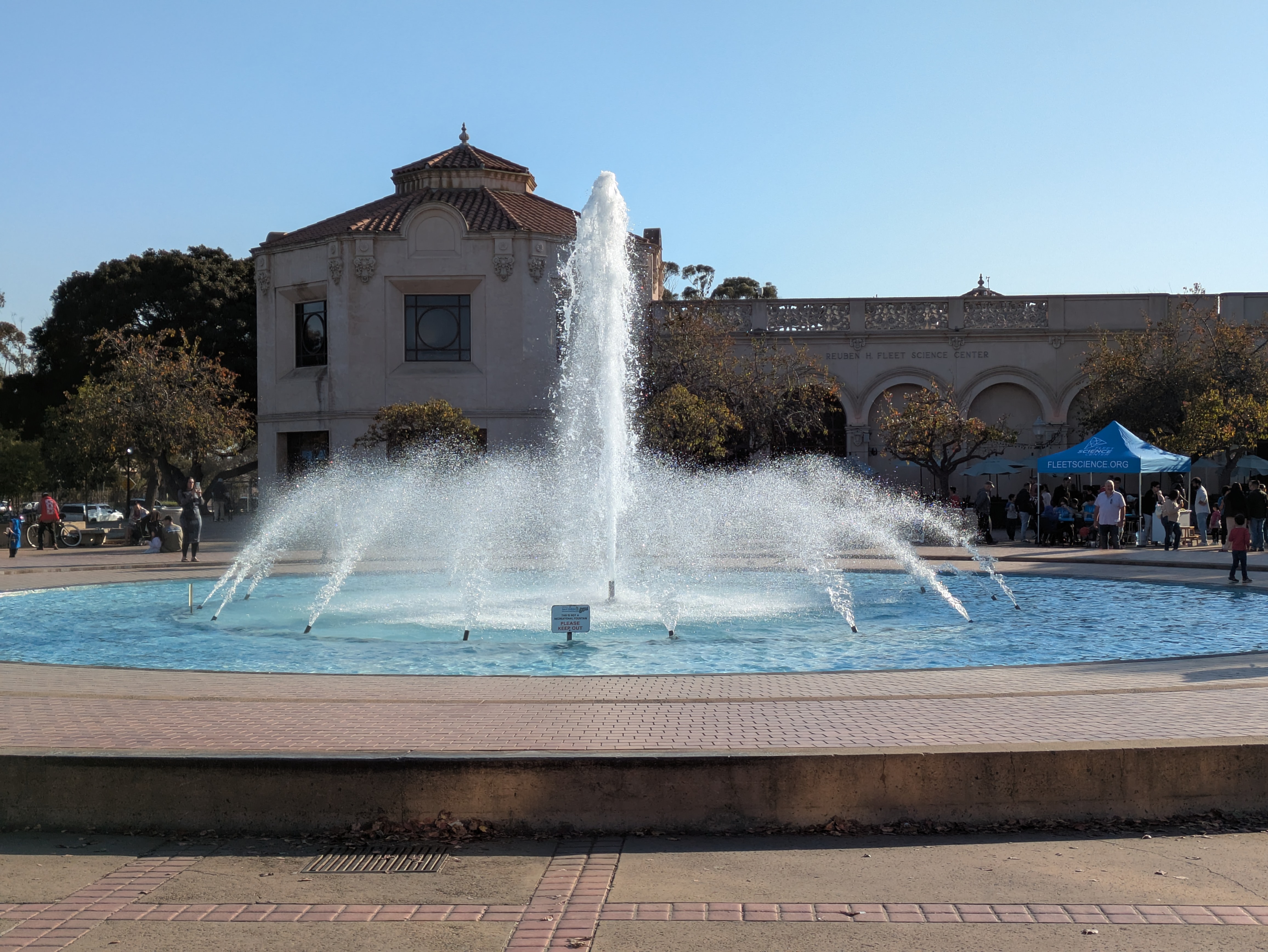
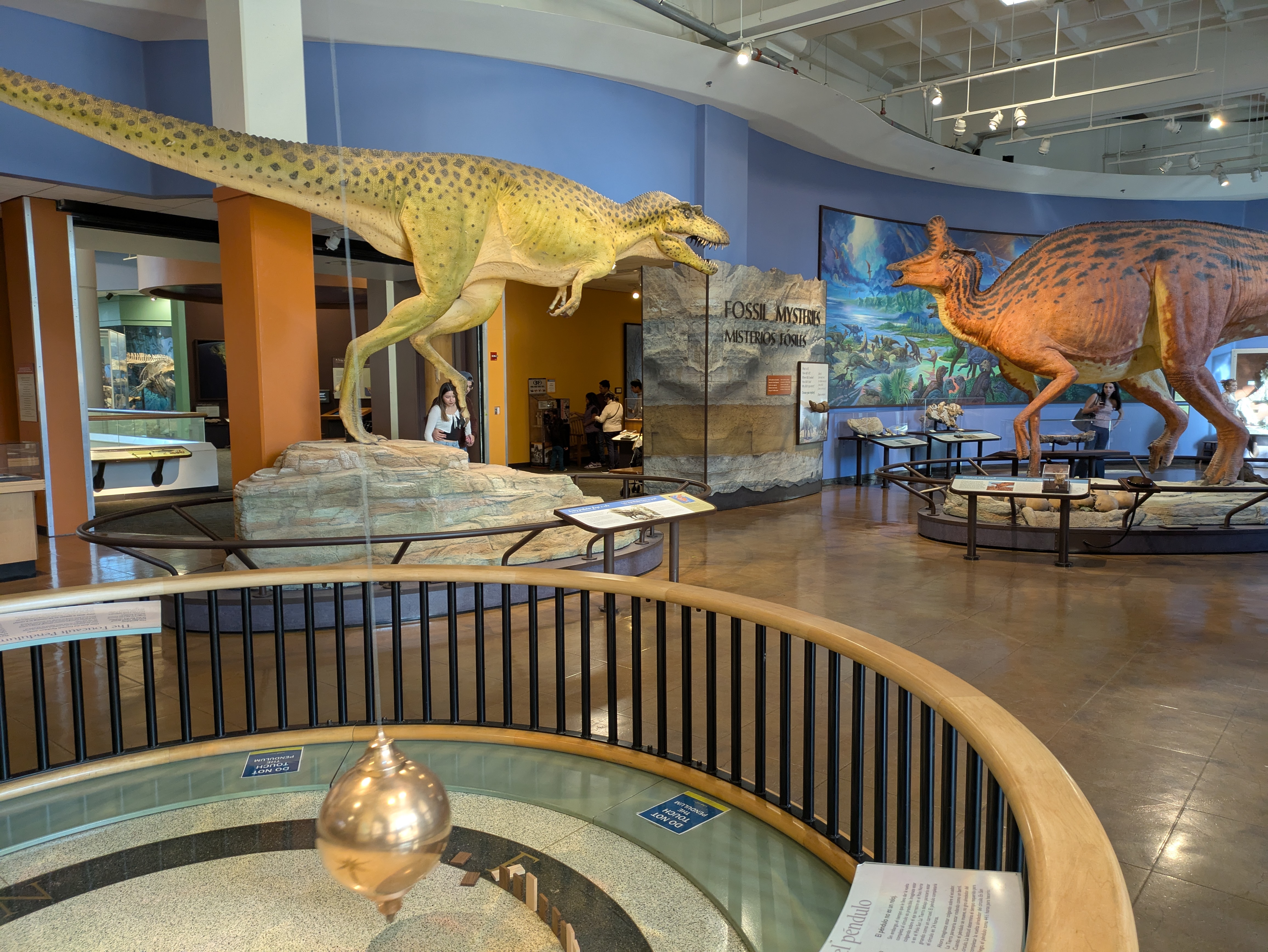
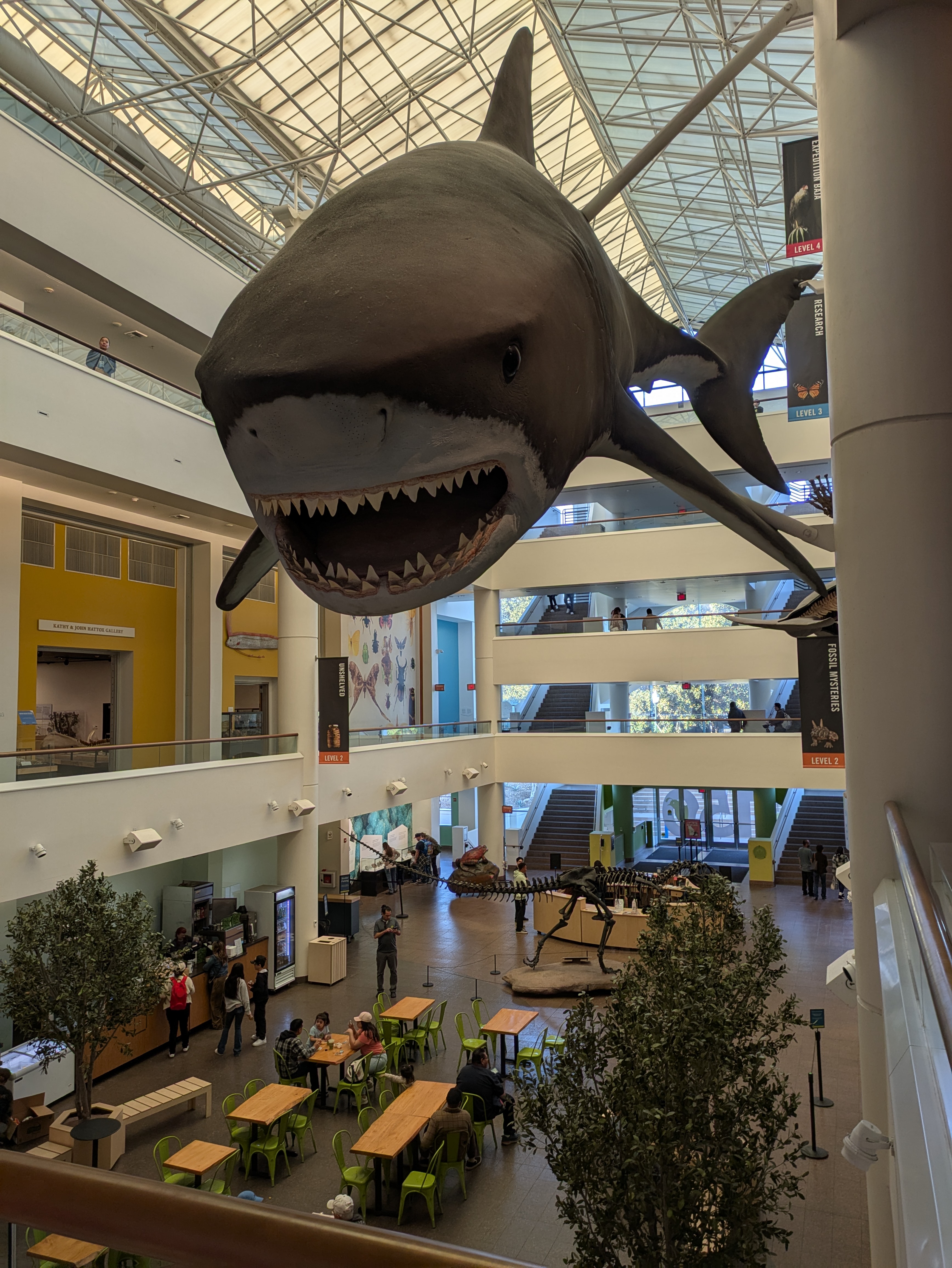
At the eastern end of El Prado, where it meets Park Blvd, are the park’s two science museums facing another large plaza with a massive fountain. On the south side is the Fleet Science Center, which has lots of hands-on science exhibits geared towards children, while on the north side is the San Diego Natural History Museum, a massive museum with four floors of exhibits covering local ecology, geology, and paleontology, with lots of dinosaur skeletons, natural specimens, and colorful dioramas of wildlife.
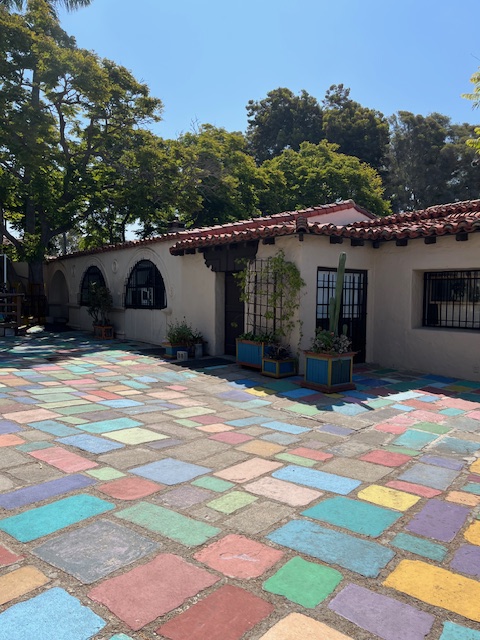
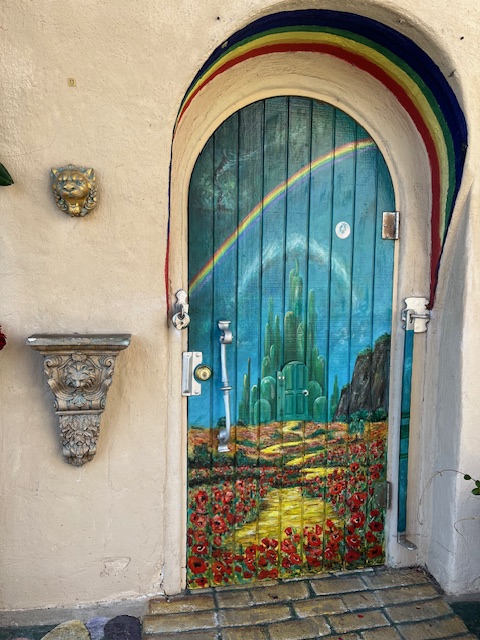
The last set of attractions sit just north of the Natural History Museum, along Park Blvd as you approach the entrance to the San Diego Zoo. For the kids, there’s an antique carousel that dates back to 1910 and a miniature train that takes kids and their parents on a short ride around this corner of the park. Next door is the Spanish Village Art Center, an adorable collection of Spanish-style cottages arranged around a colorful courtyard filled with art studios and shops run by local artists. If you’re looking for a more unique souvenir, this is definitely the place to look.
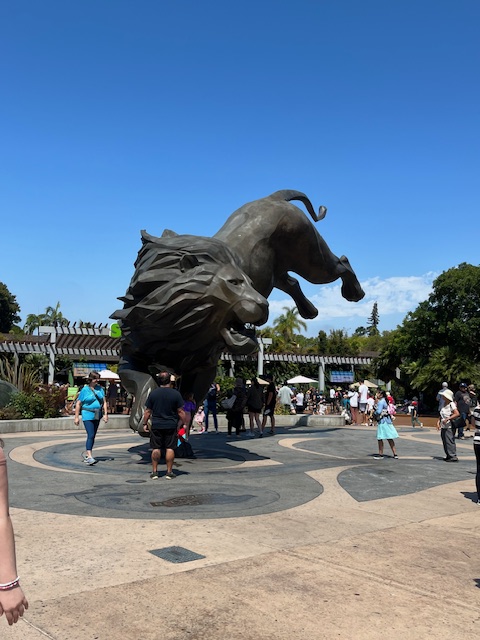
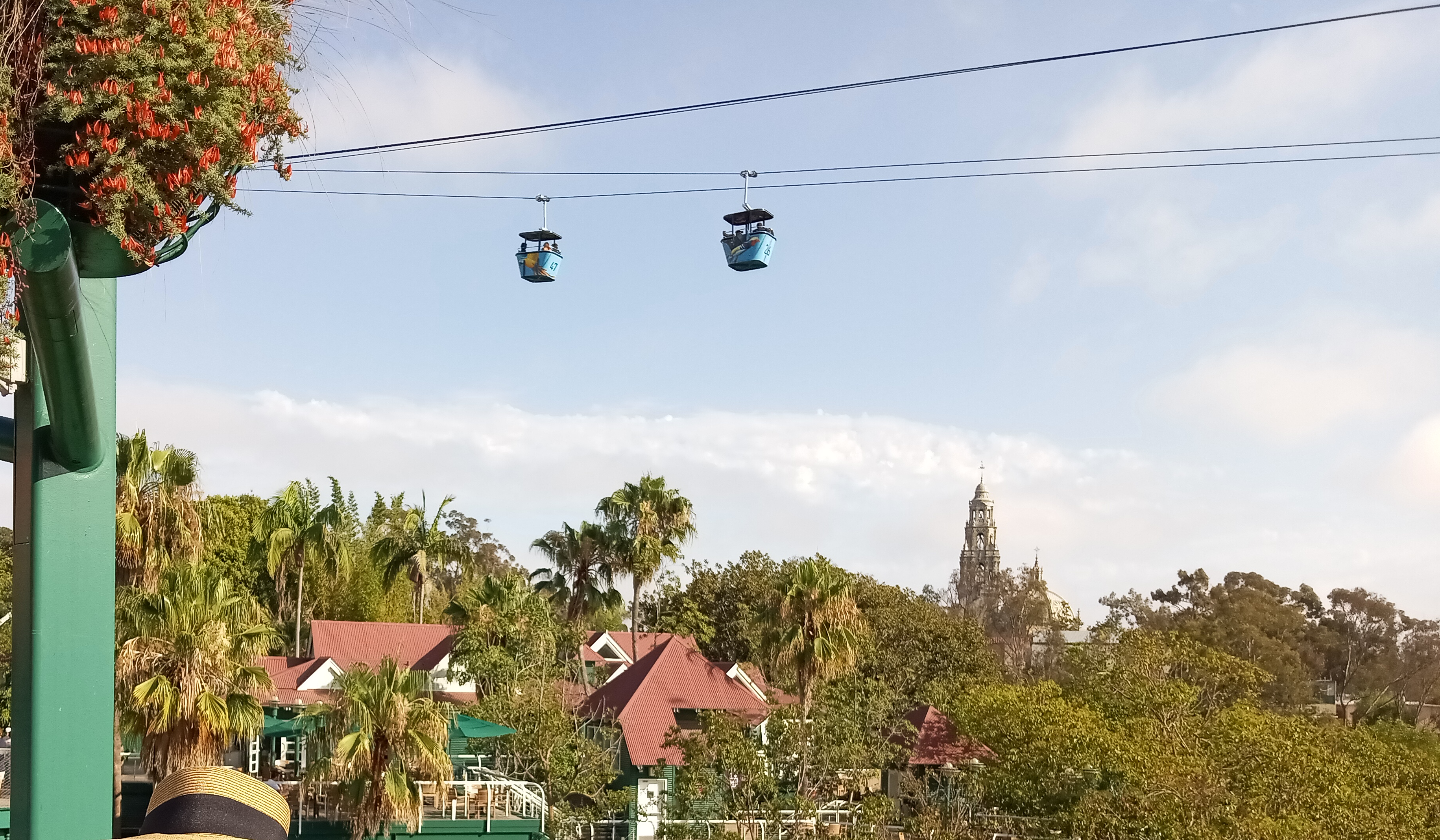
And then there’s the San Diego Zoo, which honestly is so massive we can’t even begin to cover it here, with animals not found on any other zoo on the continent and huge, elaborate enclosures. What I will say is that it very much lives up to the hype and is worth the steep admission fee, but requires an entire day on its own to do it justice. And you will be doing a lot of walking. The terrain is extremely hilly, with most of the exhibits clustered on mesas separated from each other by steep canyons, so take advantage of the double-decker bus tours and the aerial tram, both of which are included in your admission.
Old Town
In 1769, the first European settlement in California was established at this spot. That year, the Spanish founded a mission and a presidio on a bluff overlooking a native Kumeyaay village near the mouth of the San Diego River. After a few years, the mission moved to its present site further upriver, while the presidio remained. The town of San Diego began forming at the base of the bluff in the 1820s, after Mexico had won its independence from Spain. One effect of this is that there was no prominent church facing the plaza, as had been the case in earlier Spanish settlements (although a church was later built a couple blocks south).
After the American takeover of California, Old Town quickly became overshadowed with the establishment of “New Town,” today’s Downtown, on the shores of San Diego Bay. Old Town took on a new identity as a tourist attraction, fueled by public fascination with a romantic vision of Spanish California. Old Town today is a mix of history-themed tourist trap and serious historic preservation, with the oldest part of the district managed as a free state park that provides walking tours and runs the park as a living history museum.
Transit service to Old Town is very convenient, with a transit center and train station for Trolley, Coaster, and Amtrak Surfliner service located directly across the street from the state park. Even if you don’t hop off the Amtrak here, both the Blue and Green Trolley lines stop here and it’s a very short ride from Downtown. From the platform, just cross the street into the park and you’ll be a short walk from just about everything in Old Town.
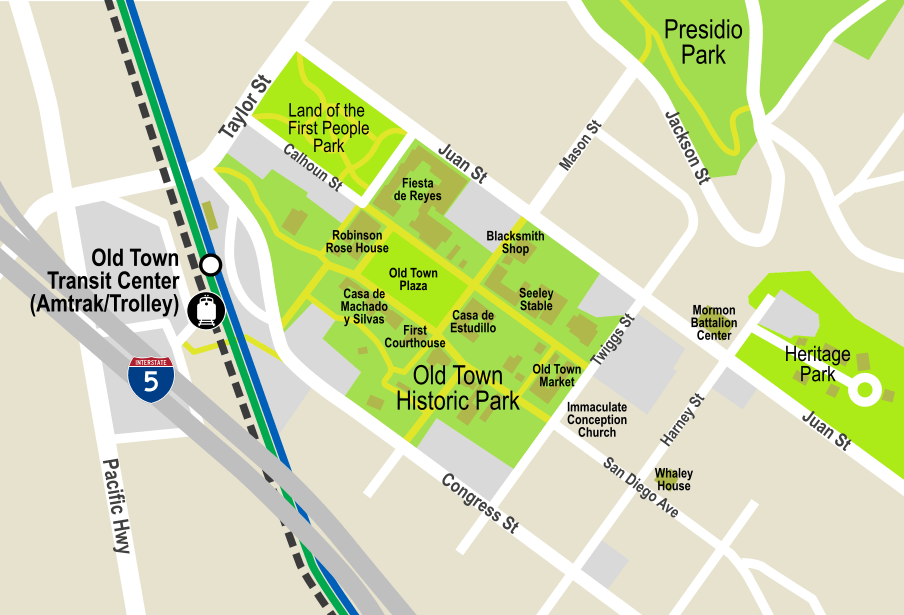
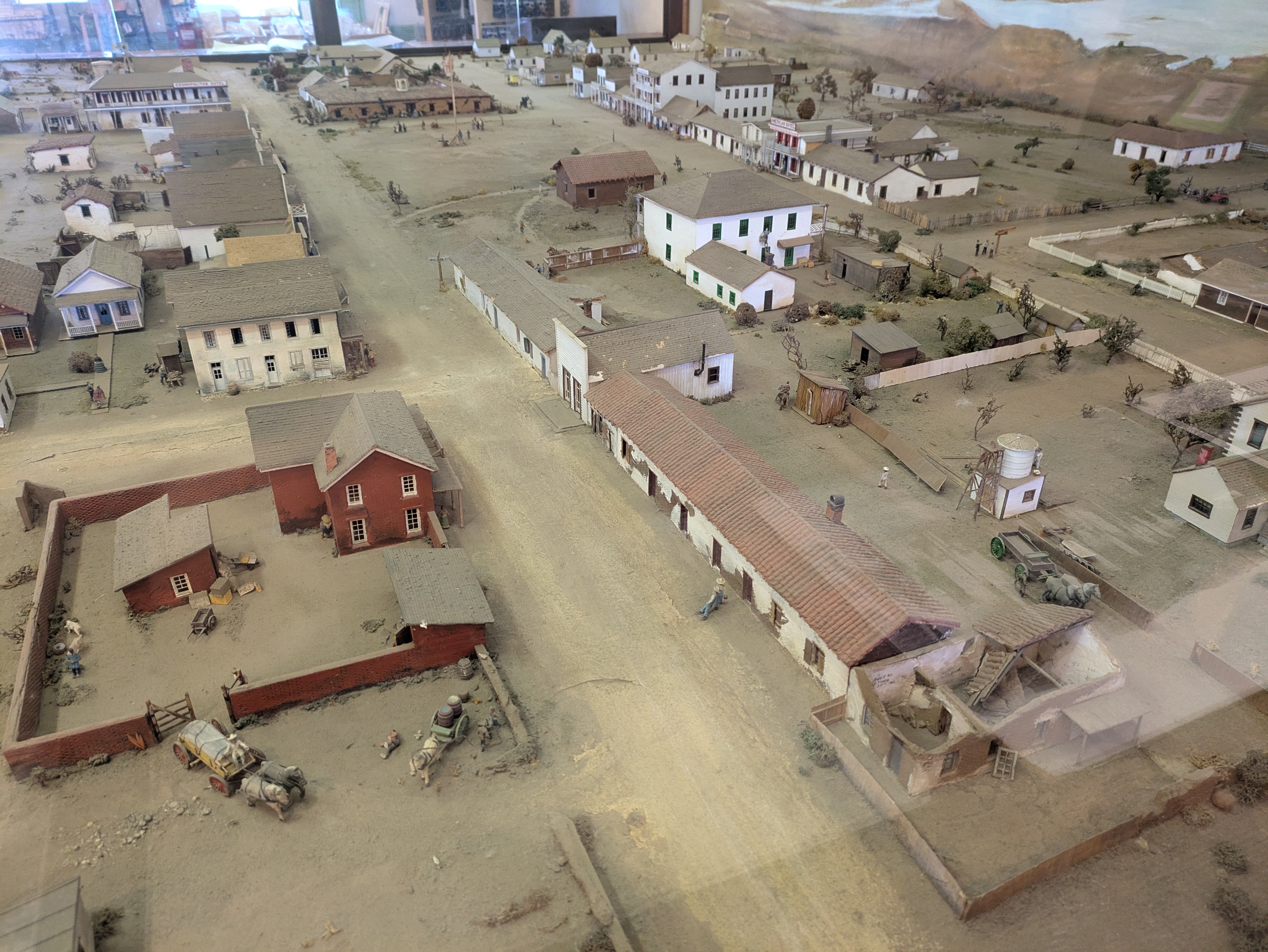
The best place to start is the Robinson Rose House, which holds the visitor center and sits on the corner of the plaza closest to the train station. Inside is a diorama of Old Town as it would have appeared in the 1870s along with a gift shop. Walking tours of the park start here at 11am and 2pm, and we highly recommend them as they’re free and the docents—who wear period garb—are very friendly and knowledgeable, plus you might get to enter parts of the park that are normally off-limits to visitors. You just have to sign up at the desk in the visitor center before the tour.
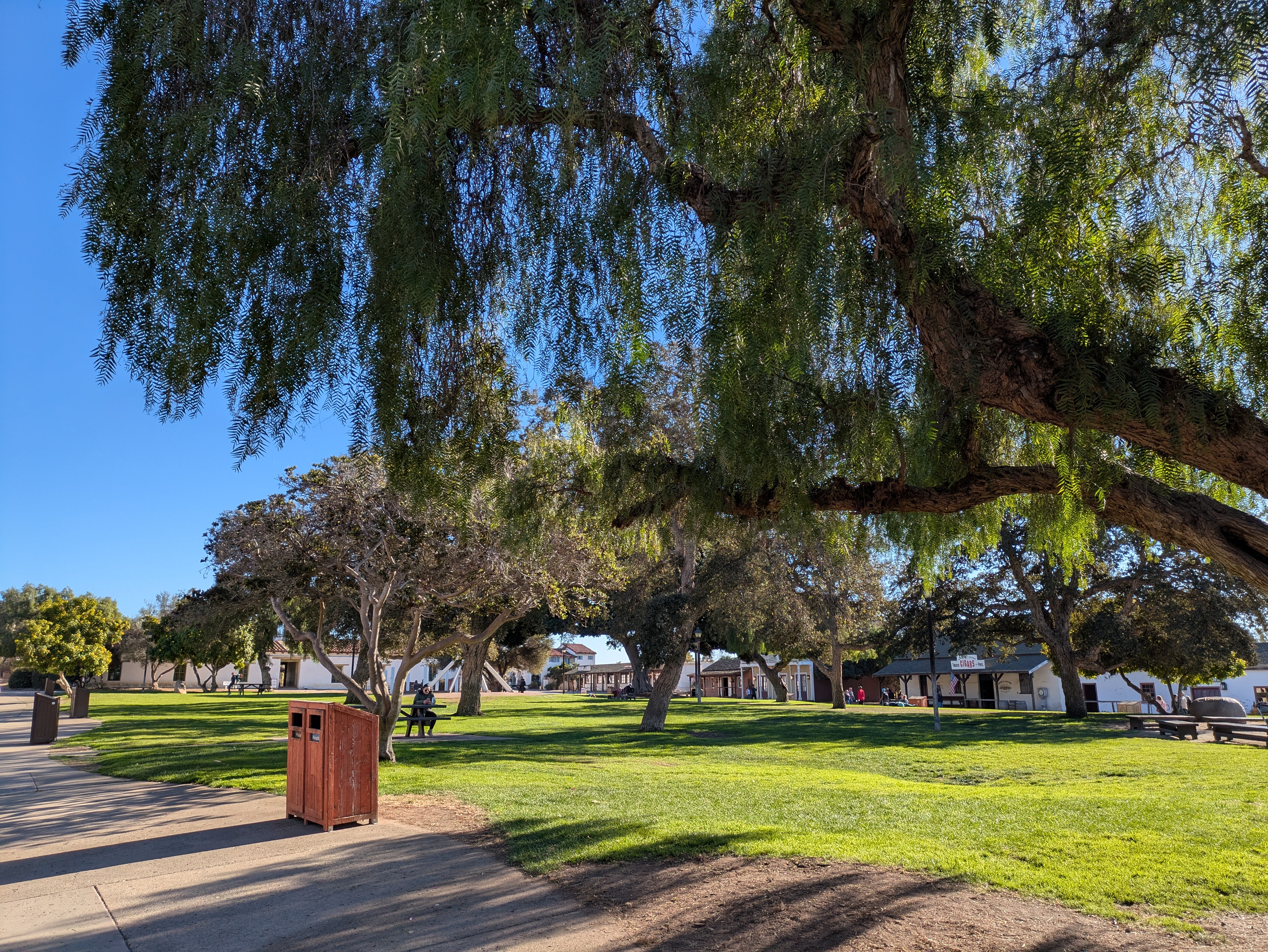
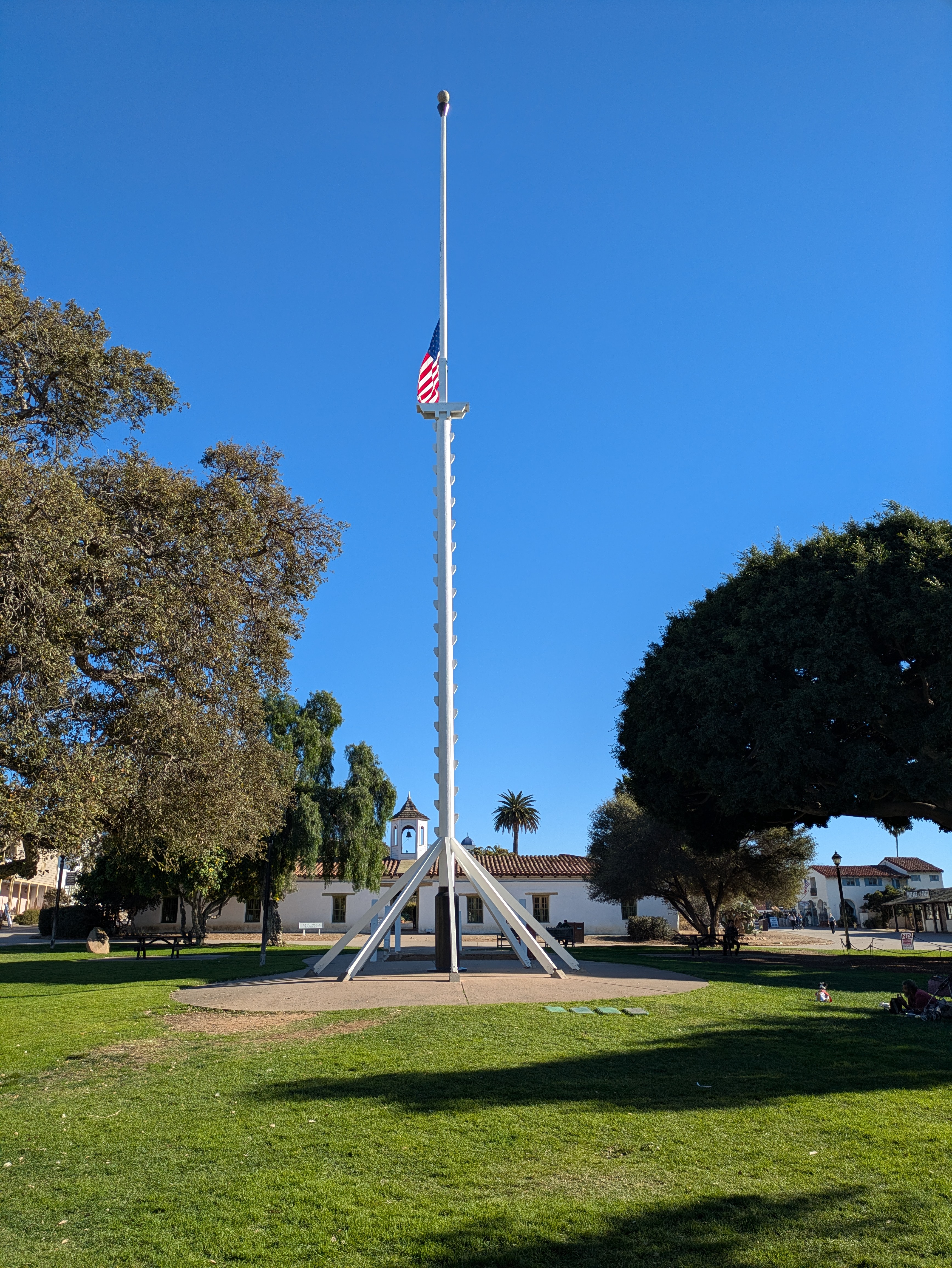
The plaza is a nice grassy park that’s the focal point of the district, with a tall flag pole and Old West props, lined on all sides with historic buildings, most of which have been converted into cute tourist shops. On the north corner of the plaza you’ll find Fiesta de Reyes, a picturesque little shopping mall surrounding a brick courtyard that’s full of shops selling souvenirs and artwork, as well as a popular touristy Mexican restaurant. And then there are the museums. Besides the Robinson Rose House, also facing the plaza is La Casa de Machado y Silvas, a historic adobe with a recreated kitchen inside; the First San Diego Courthouse, a reconstruction of the town’s first courthouse with a jail cell sitting in the back; and the crown jewel, La Casa de Estudillo, a large adobe that was once home to the town’s most distinguished family, with multiple rooms surrounding a beautiful inner courtyard. And wandering around at each site are more docents in period garb.
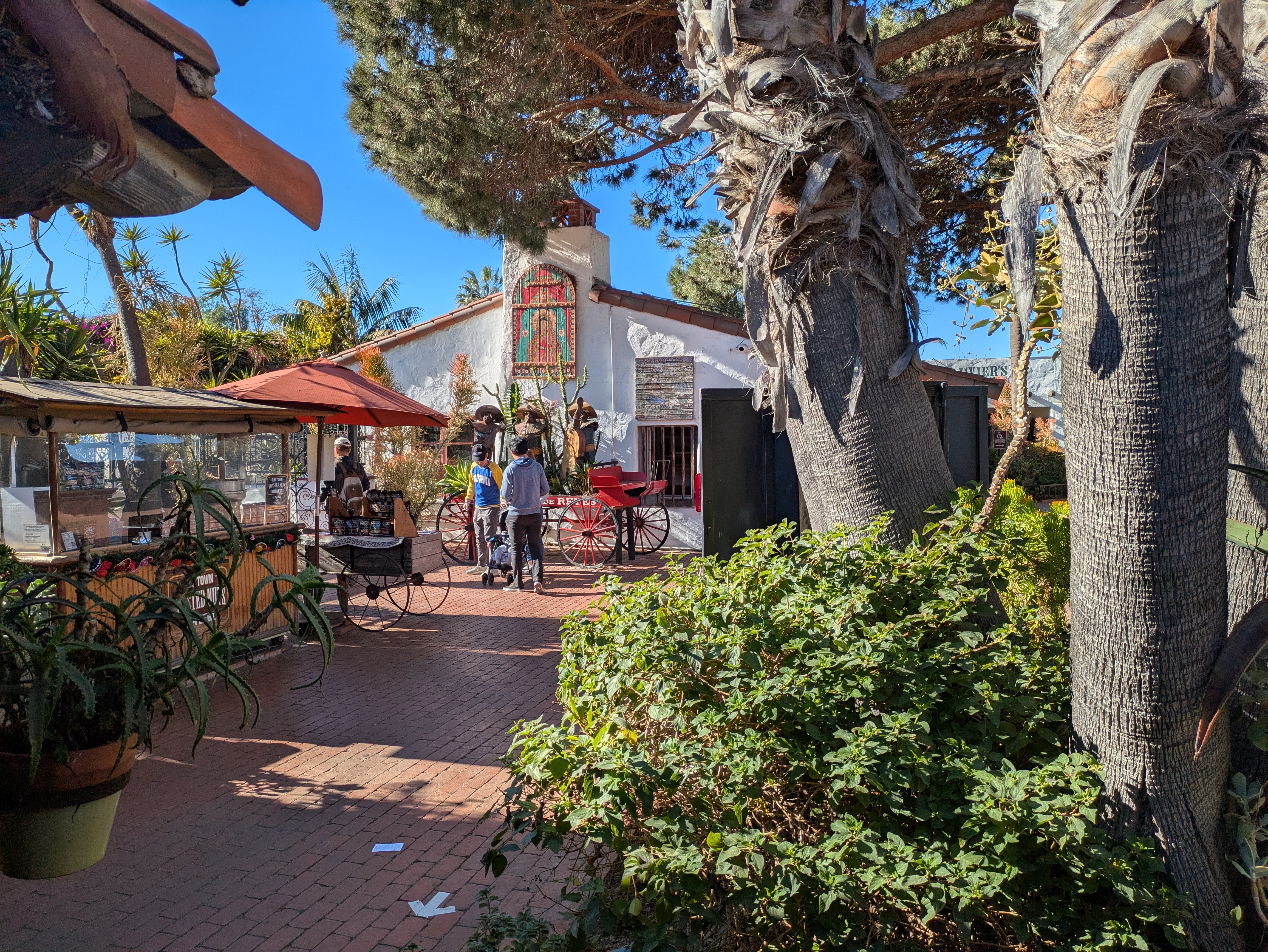
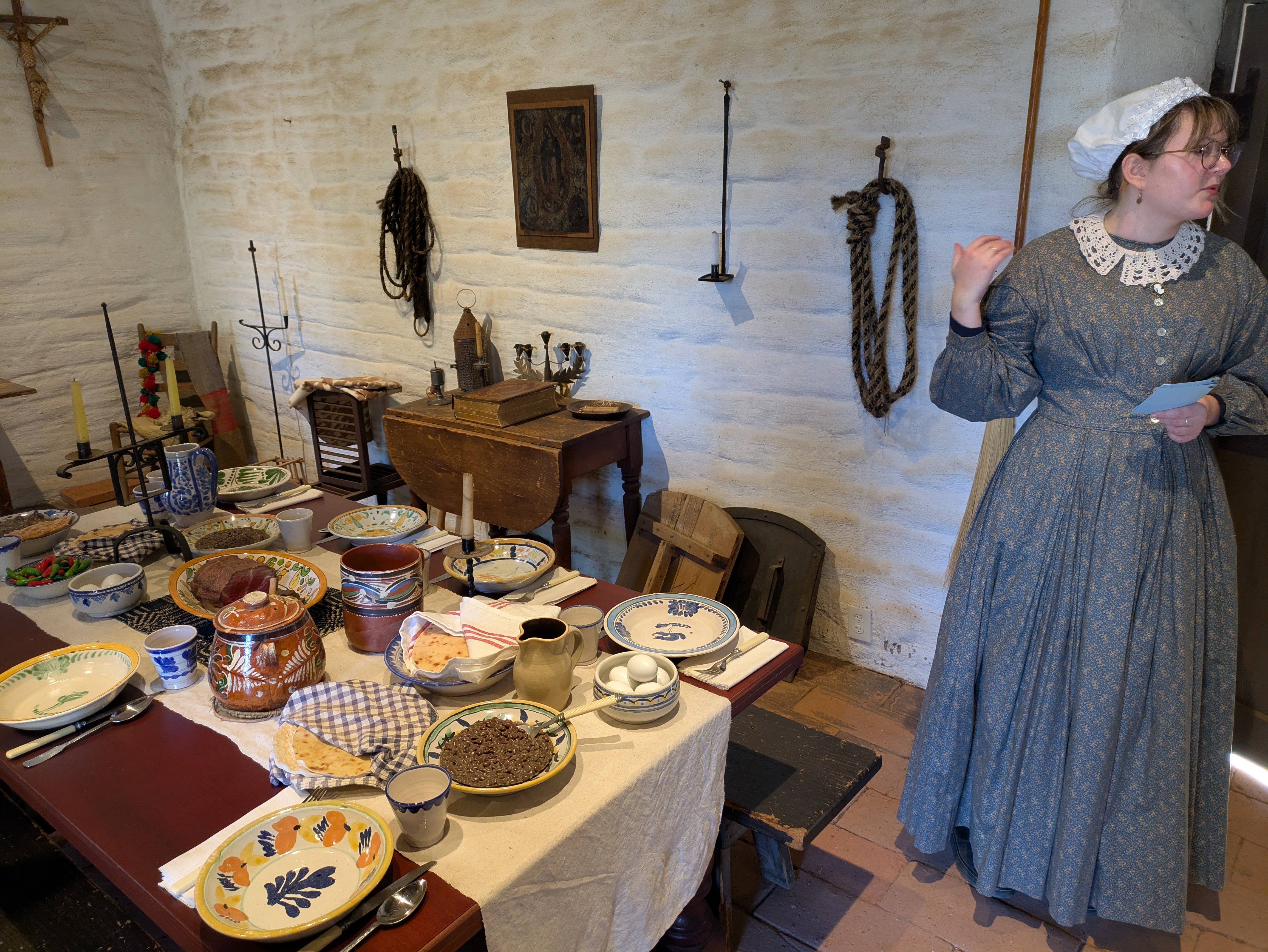
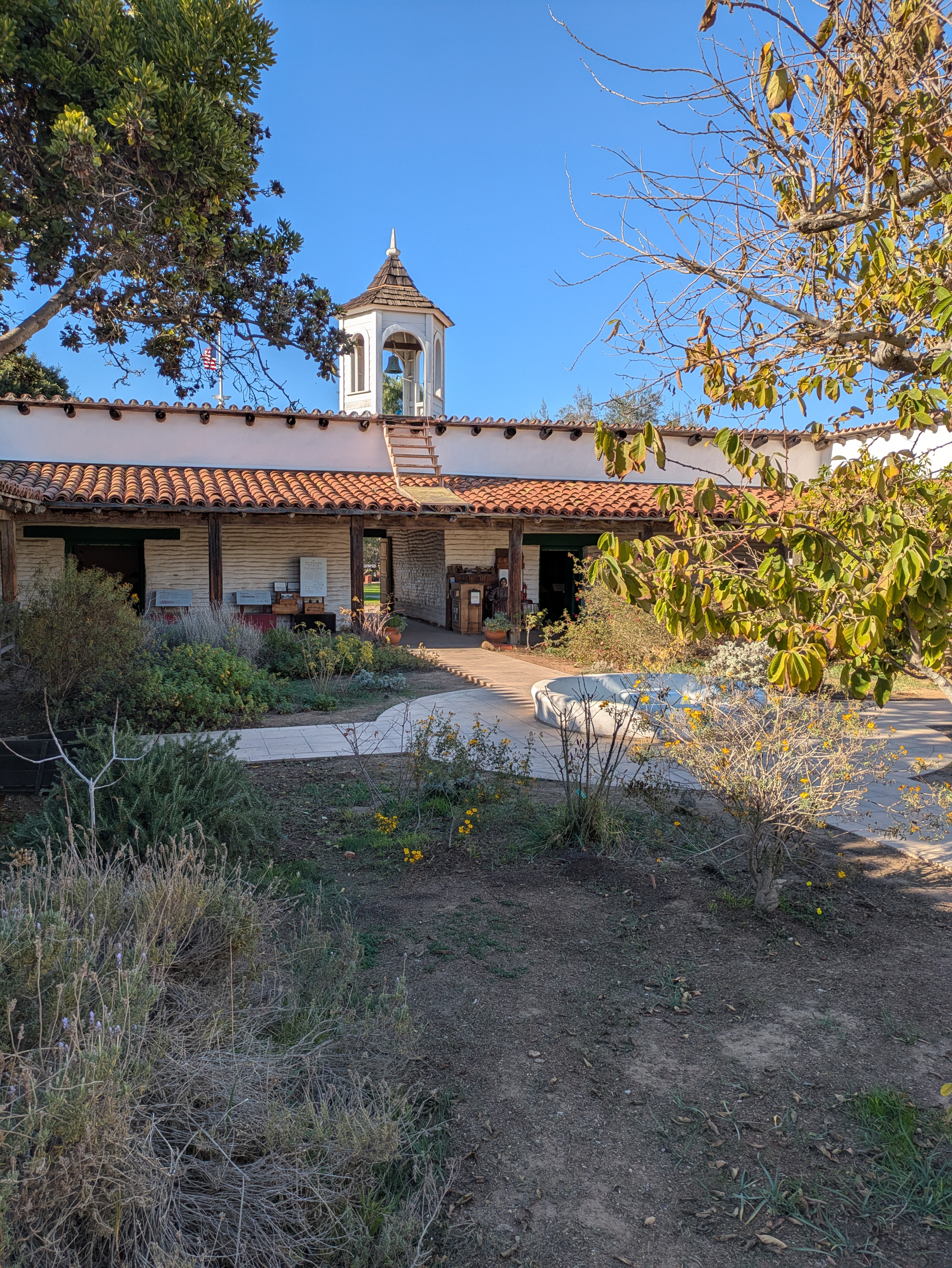
Other houses and historic sites are scattered around the blocks just off the plaza, including a schoolhouse and other adobes. Behind the Cosmopolitan Hotel, which sits across from one corner of the plaza, is a blacksmith shop and a stable, both open to enter on the weekends. The blacksmith shop hosts demonstrations, while the stable is a museum with various stagecoaches and horse-drawn carriages on view.
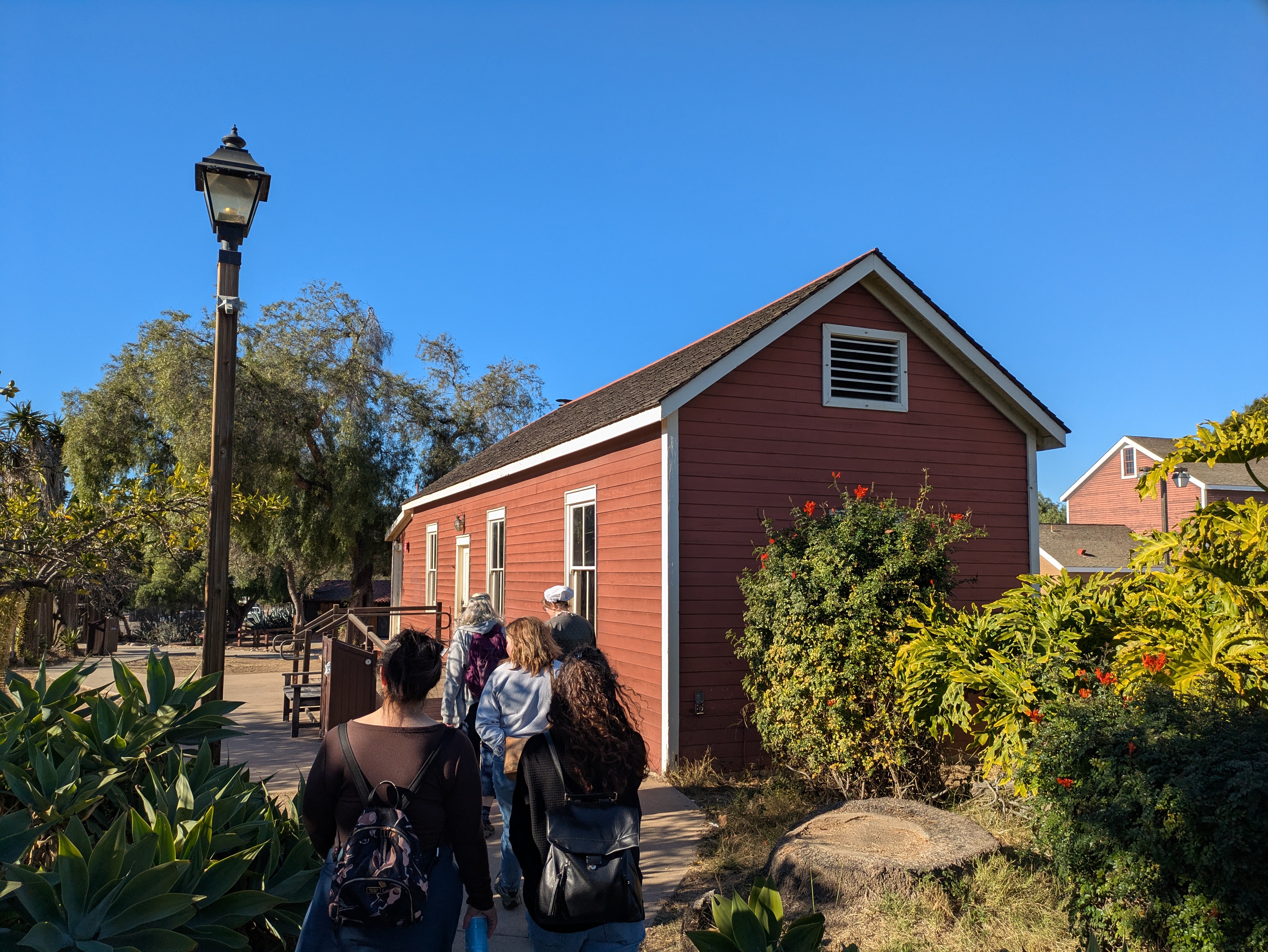
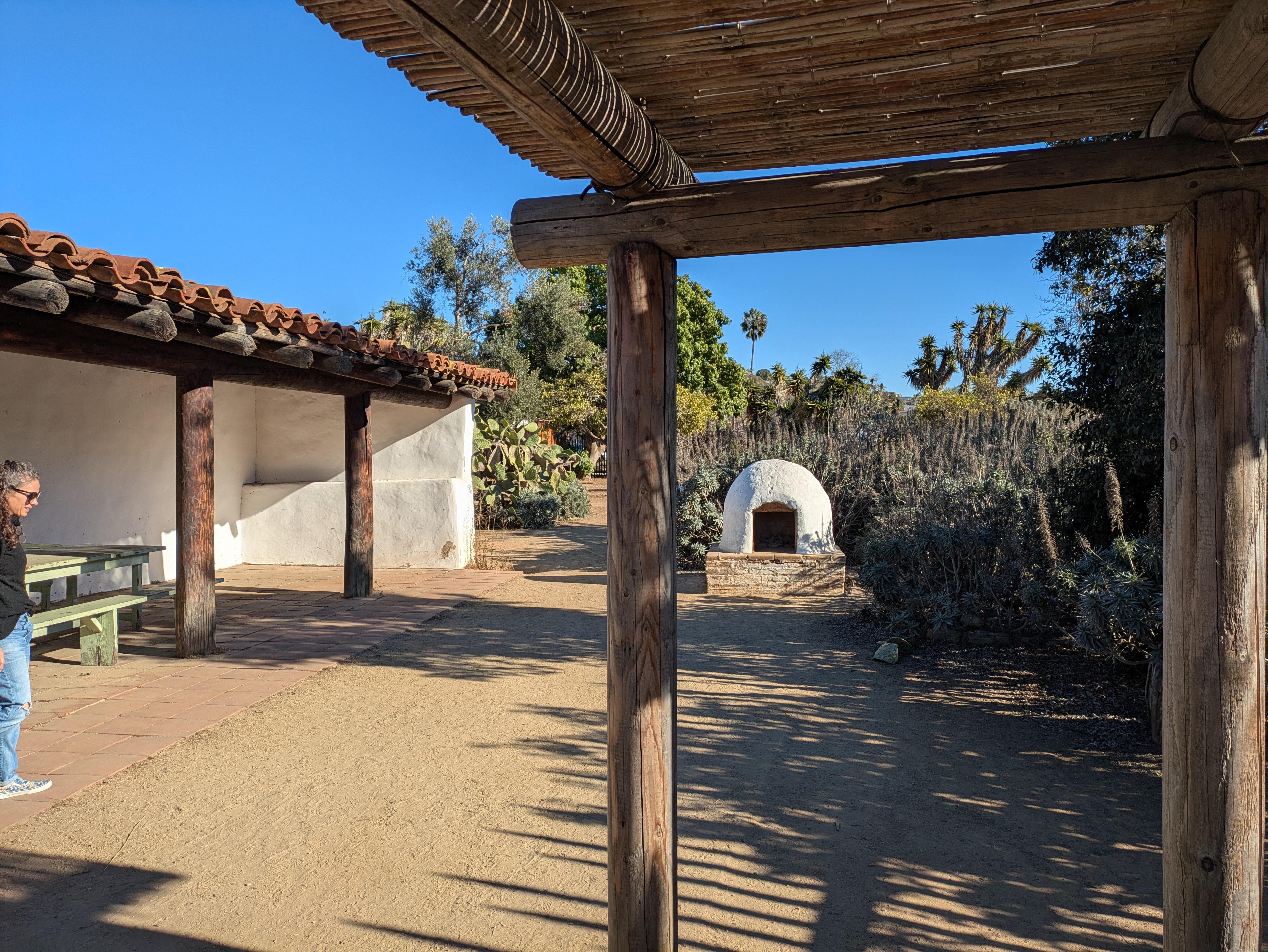
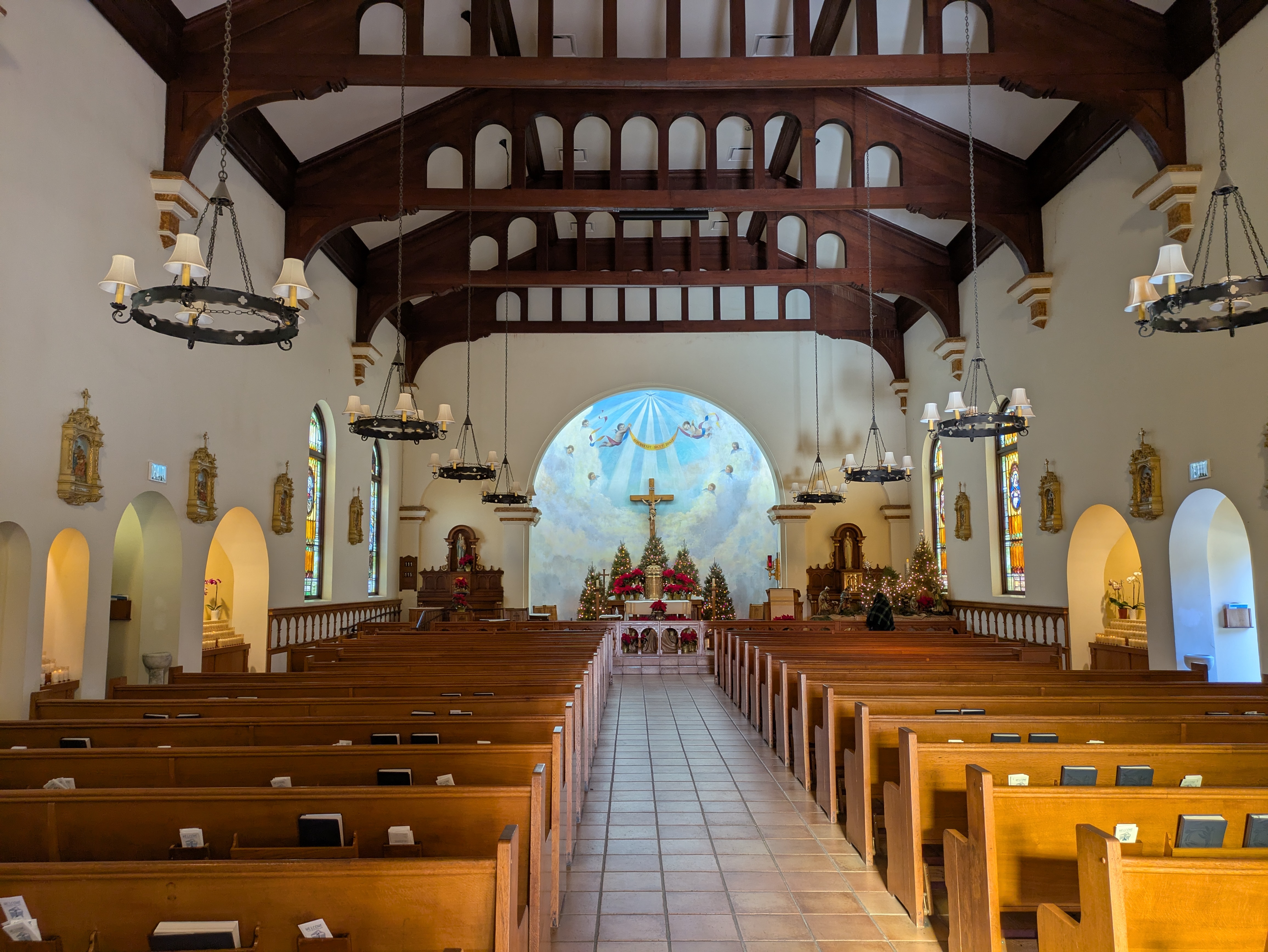
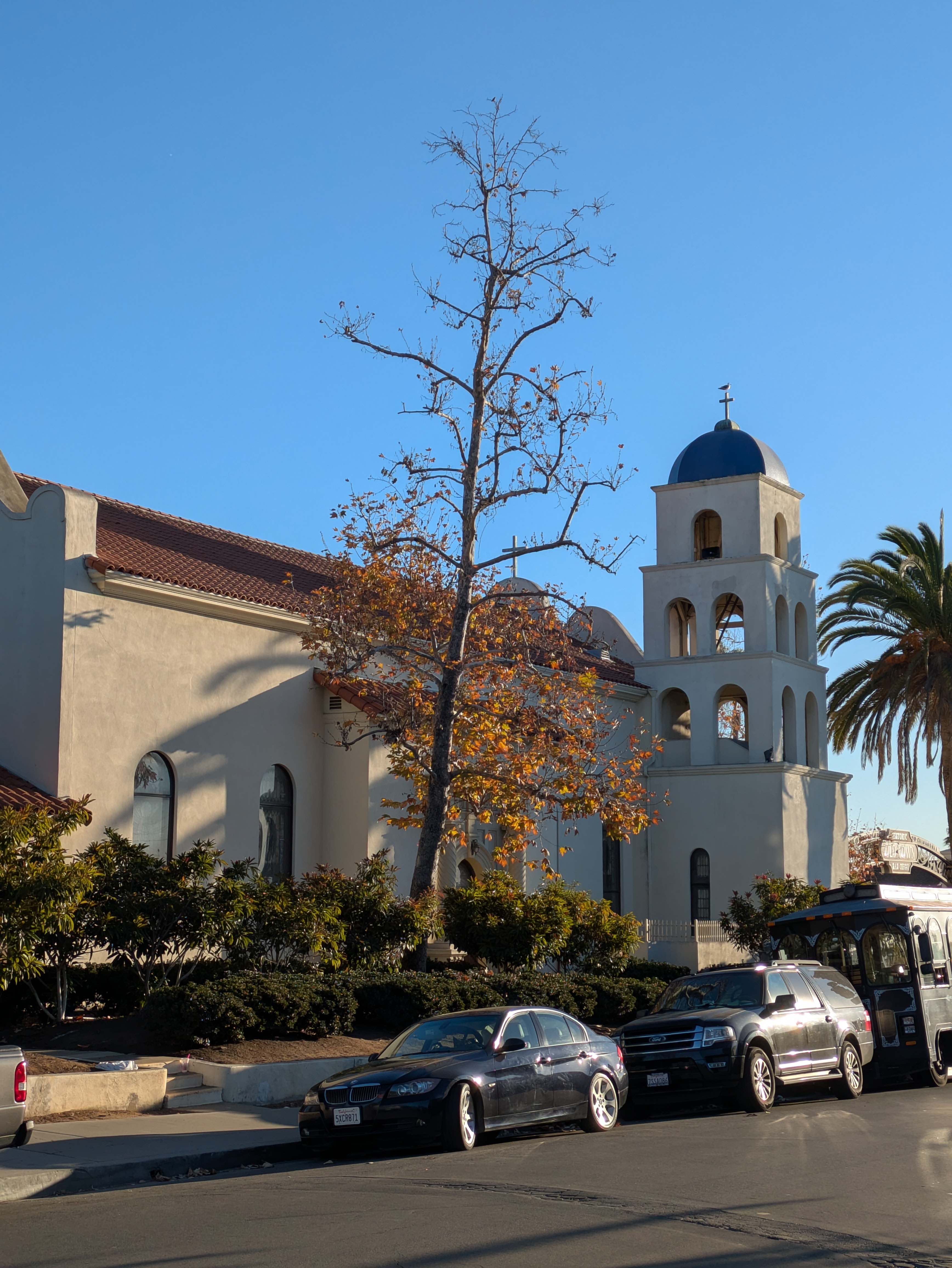
Continuing south, the park ends at Twiggs Street, where the more touristy operations are concentrated, including a few small shopping centers, a whole bunch of stores, and the main stop for Old Town Trolley Tours, the hop-on/hop-off tour buses that circle between here, Downtown, Coronado, and Balboa Park, using distinctive orange buses dressed up to look like trolleys. Directly across the street is Immaculate Conception Church, a picturesque Catholic church dating back to 1917. A block south, at San Diego Ave and Harney Street, is Old Town’s most famous tourist trap: the Whaley House, an old brick house and commercial building that is very historically significant to San Diego, but the house has taken on a new life as “America’s most haunted house,” leading to it being featured in virtually every ghost hunting show and a big emphasis on part of the museum on ghost tours.
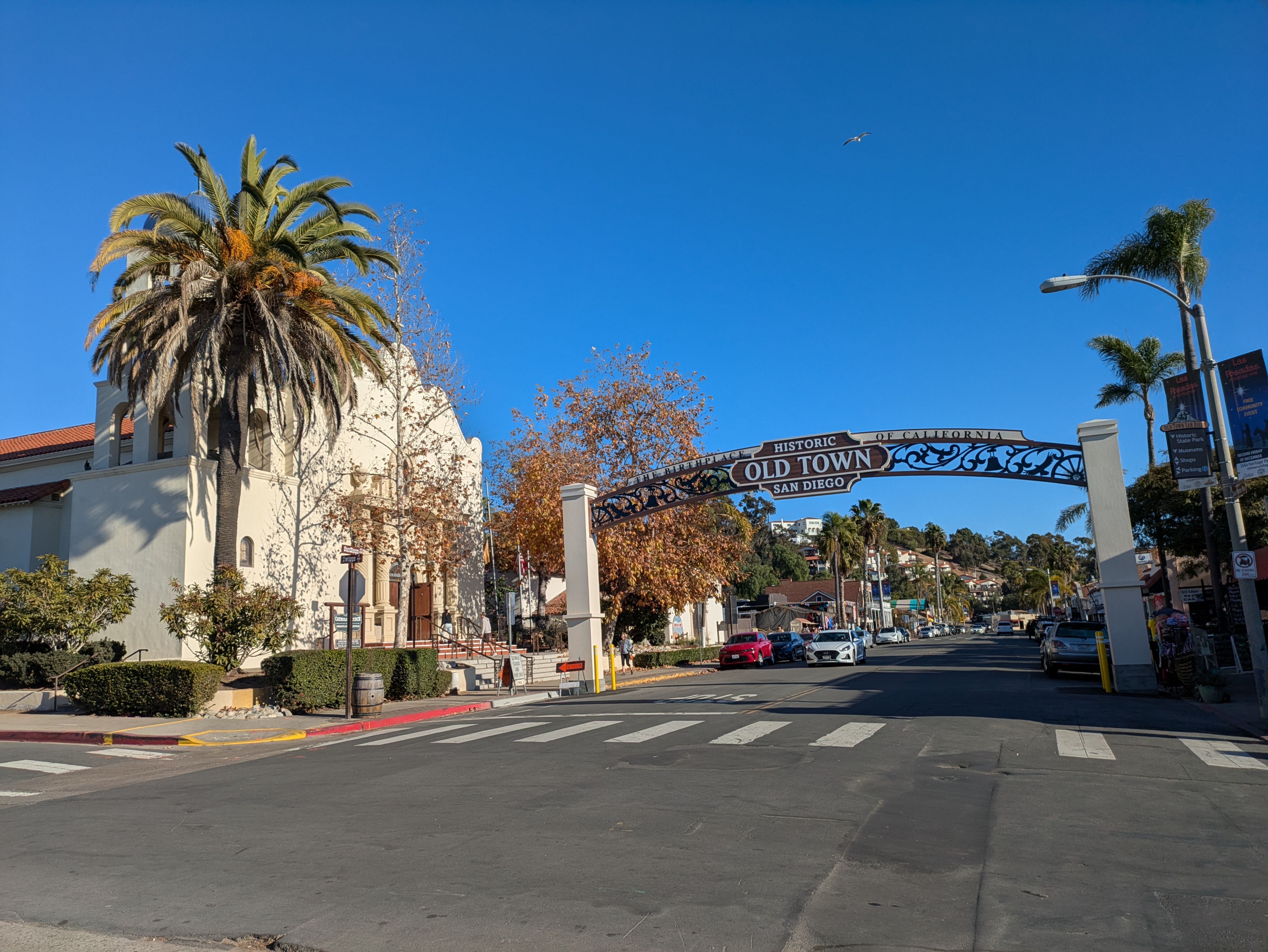
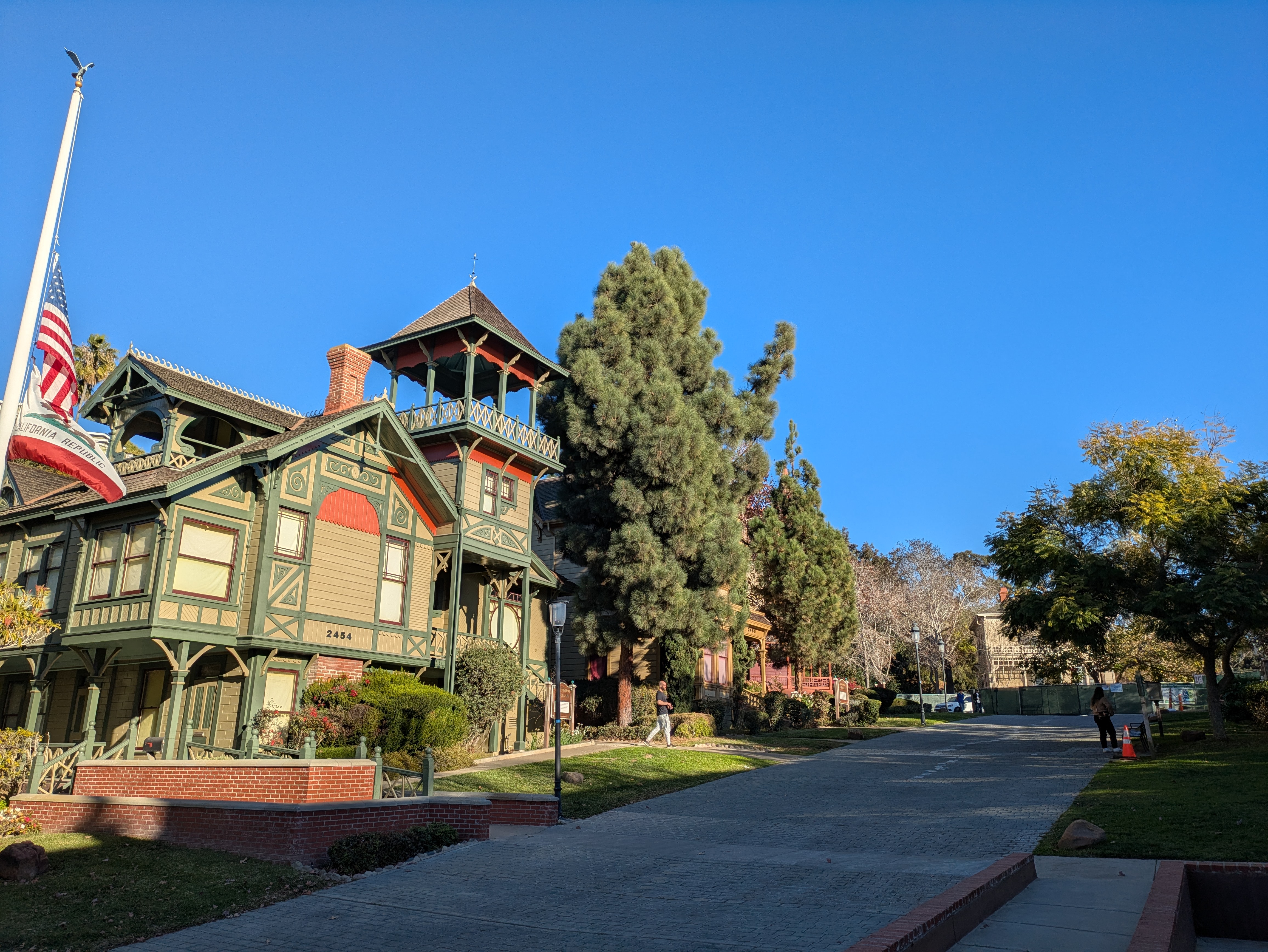
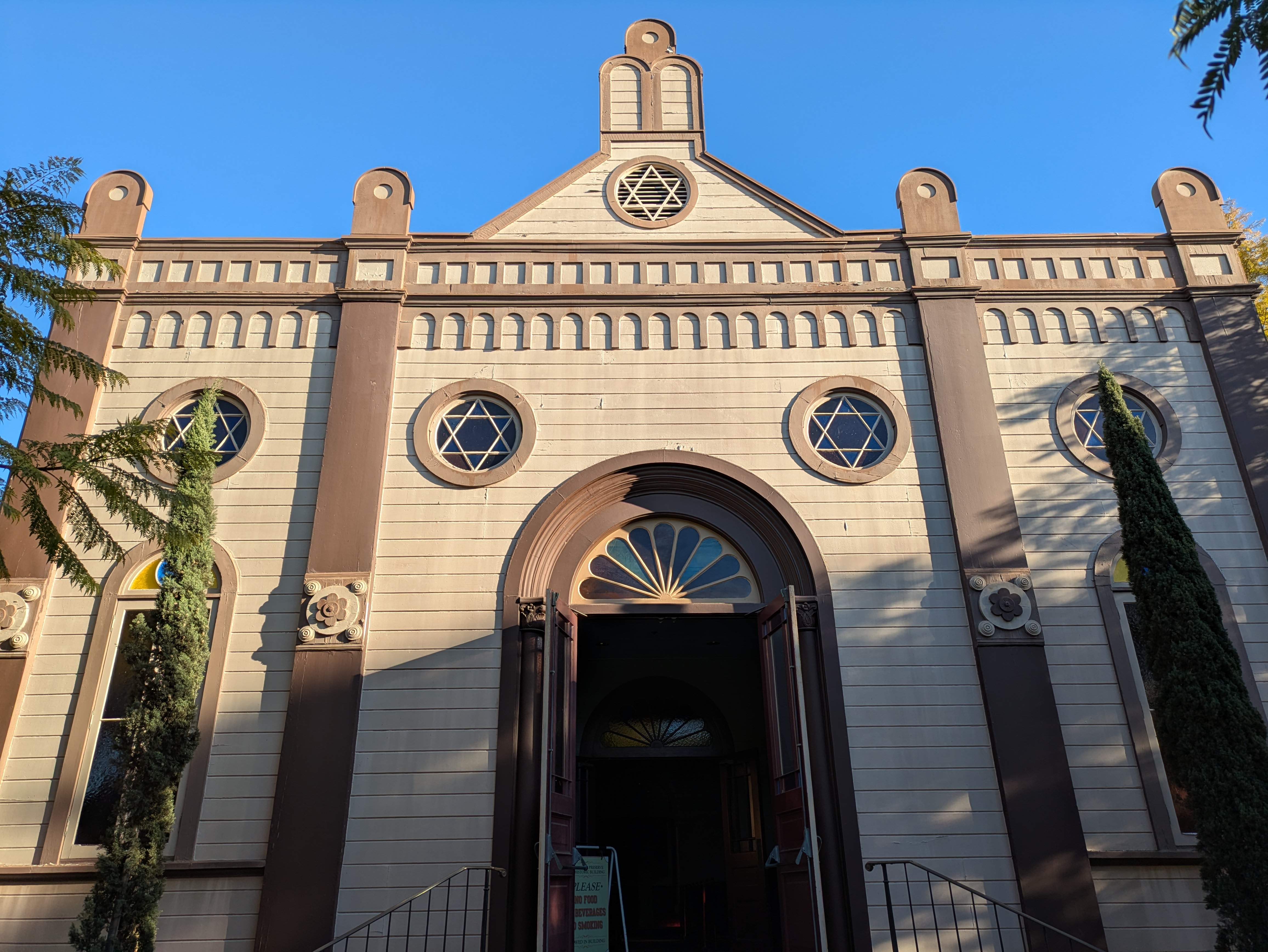
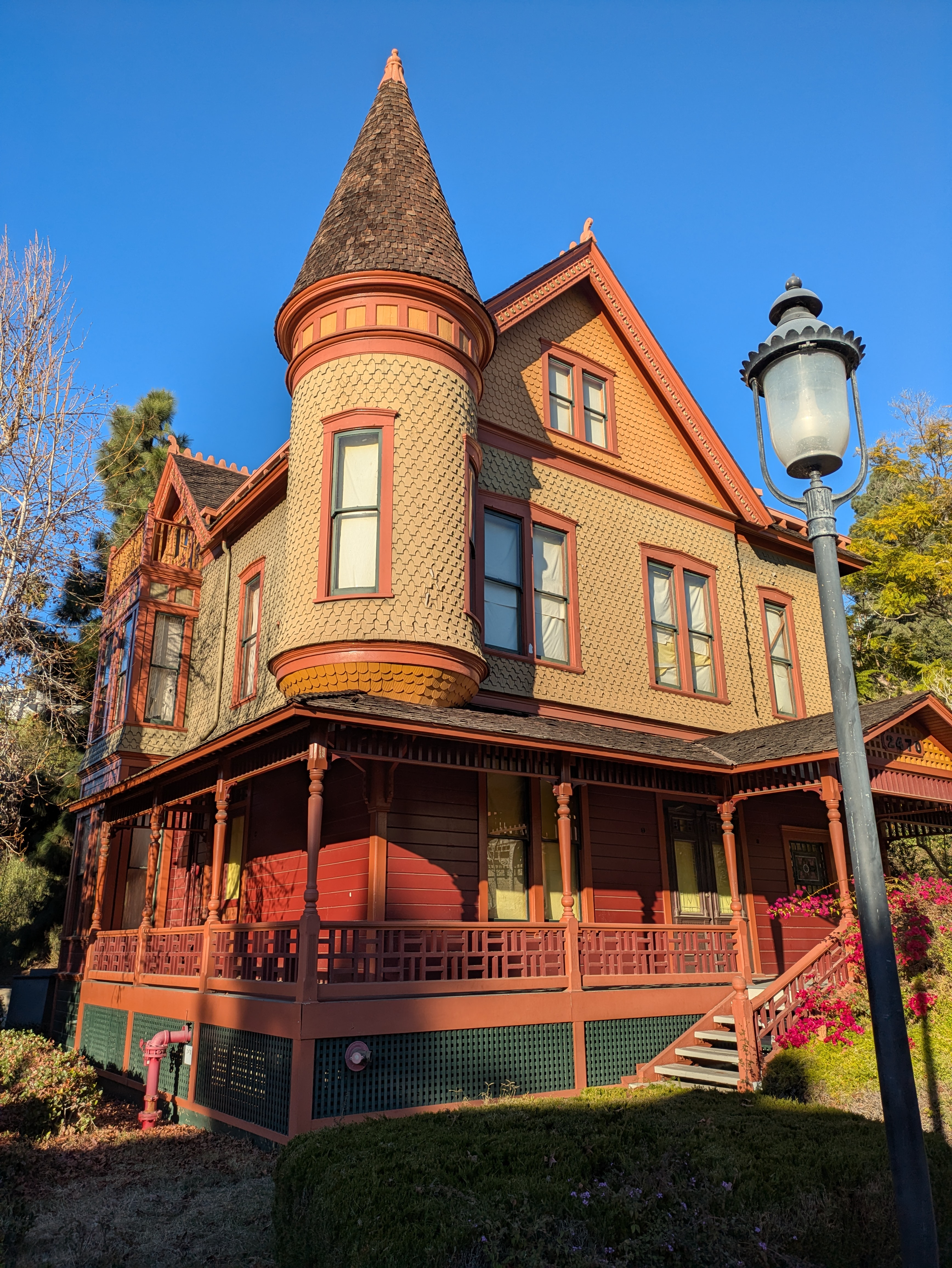
A block north of the Whaley House, off the corner of Harney and Juan Streets, is Heritage Park, a grassy and charming park with a collection of Victorian houses arranged along a cul-de-sac, all of which were moved here to preserve them. The houses aren’t open for tours, but one building in the park is: the Temple Beth Israel, the first synagogue in San Diego, which you’re welcome to enter and take in.
Across the street from Heritage Park is the Mormon Battalion Center, which is certainly the strangest museum in Old Town. The Mormon Battalion was a group of Mormon soldiers who supported the U.S. Army during the Mexican-American War, primarily through building forts, roads, and other infrastructure. The museum is actually run by the Mormon church, and its docents are young missionaries, so the emphasis is really on glorifying the Battalion (and, by extension, the Church of Latter-Day Saints). Actual historical content is extremely limited here, instead it’s just a collection of gimmicky props, photo backdrops, and a gold panning activity. Suffice to say, we recommend skipping this one.
UCSD and La Jolla
Arguably San Diego’s most beautiful neighborhood, La Jolla is a gorgeous, very wealthy district perched atop a scenic ocean cove with steep cliffs plunging into the water. Nearby, perched atop a hill just a short ways to the north, is the campus of UC San Diego, which has some unique sights that make it worth a visit.
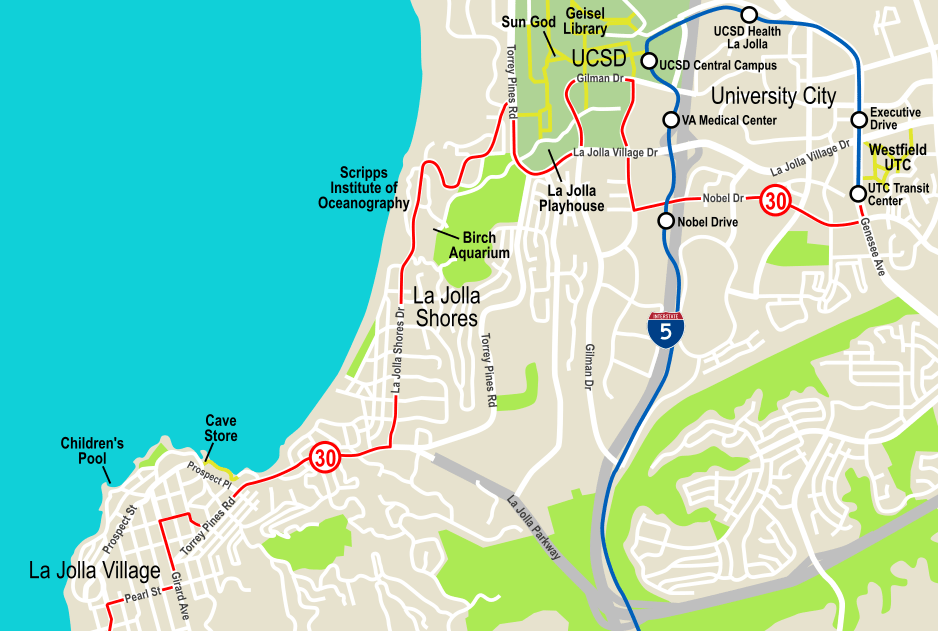
UCSD is directly served by the Trolley, with the Blue Line continuing north from Downtown and Old Town along the 5 and up the hill to campus. Just get off at UCSD Central Campus station. Getting to La Jolla requires a short bus ride on Route 30 from UCSD, which picks up on Gilman Drive along the southern edge of campus (take the Old Town-bound buses to get from UCSD to La Jolla, and the UTC/VA Med Center-bound buses to get back to campus). The 30 runs about every 15 minutes on weekdays and every 30 minutes on weekends.
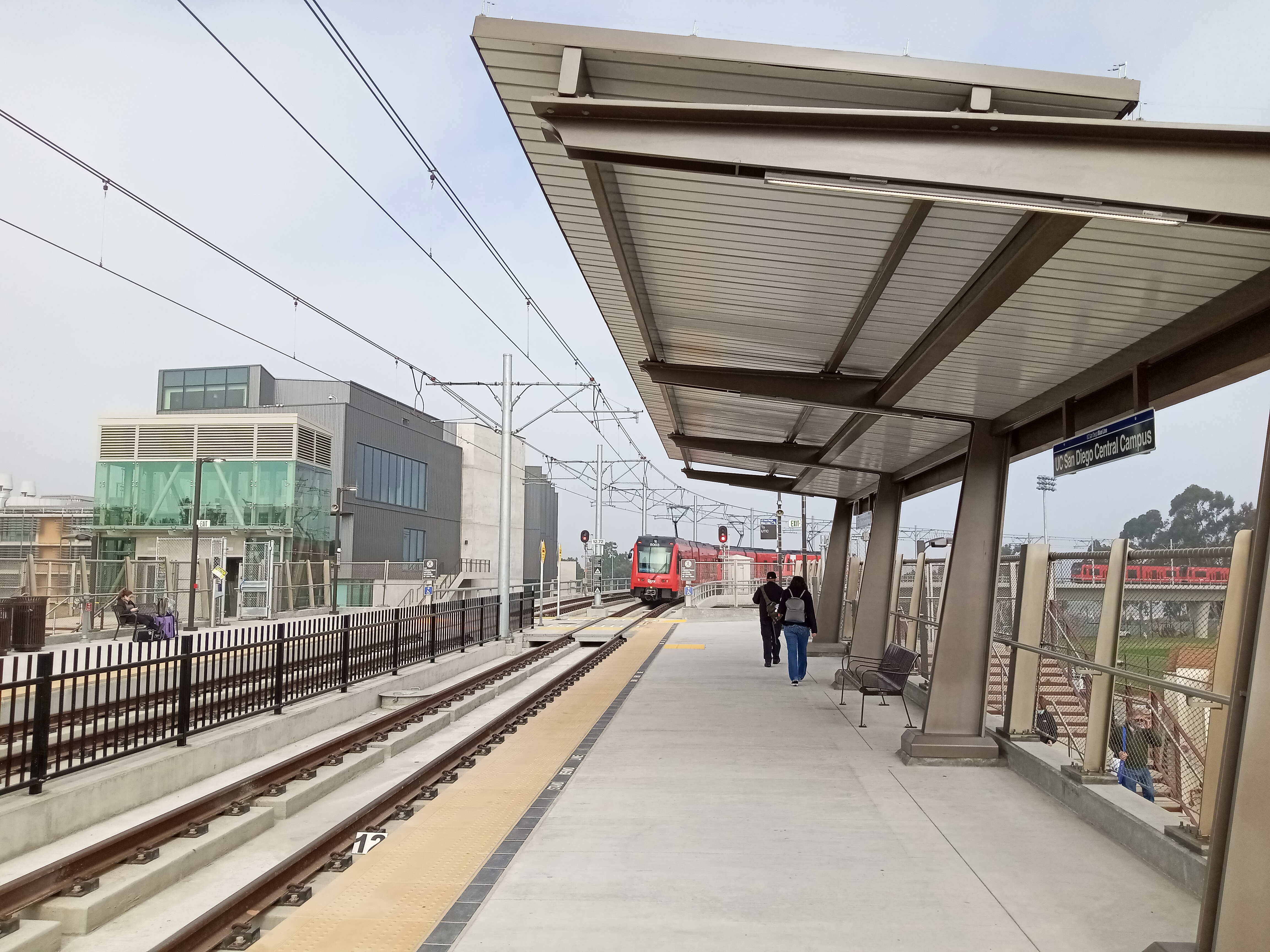
The UCSD Trolley station is an elevated structure on the eastern side of campus, next to a large plaza and an amphitheater surrounded by student housing. From the station, enter the campus and head roughly west to get to the center of activity on campus.
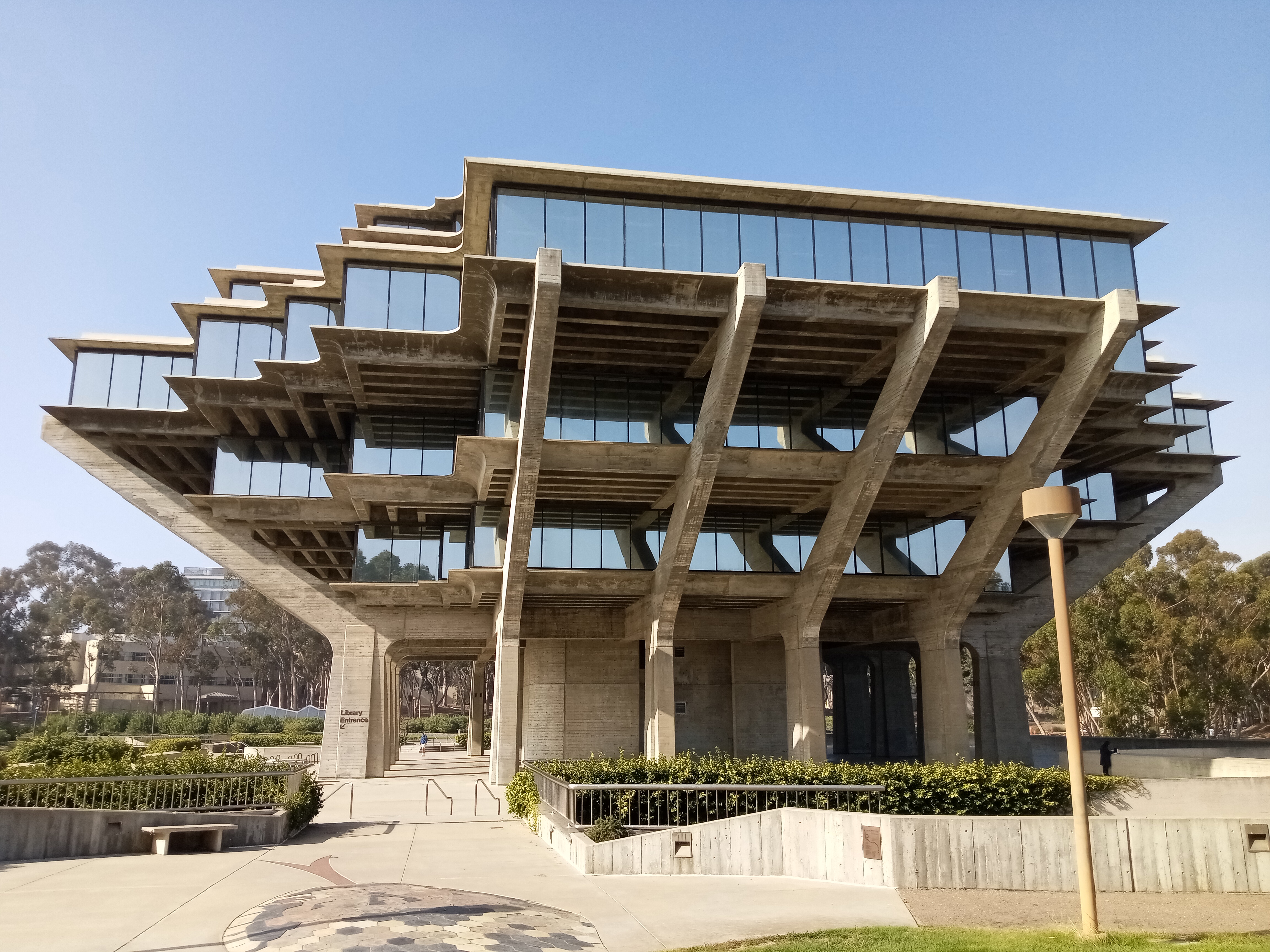
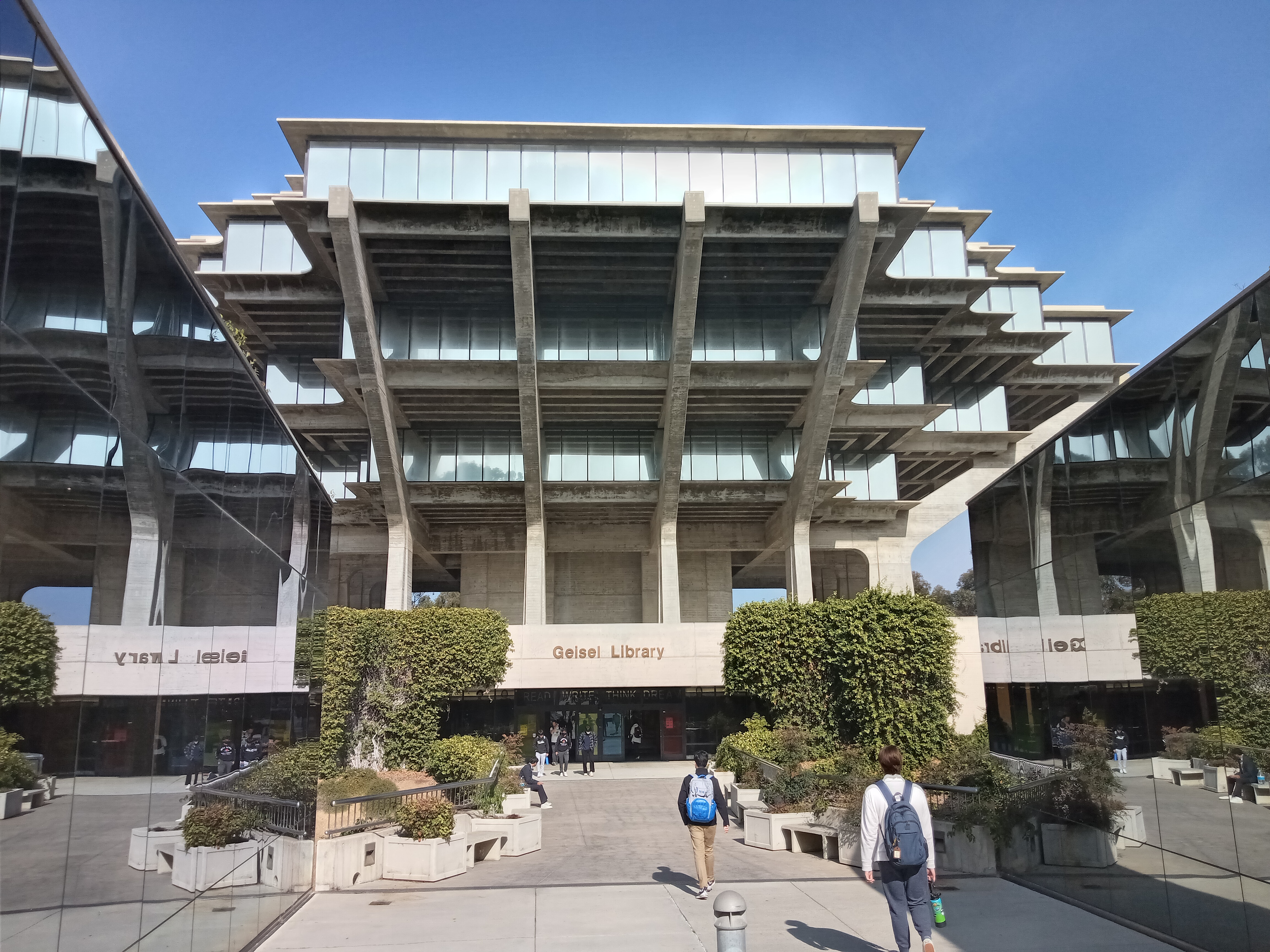
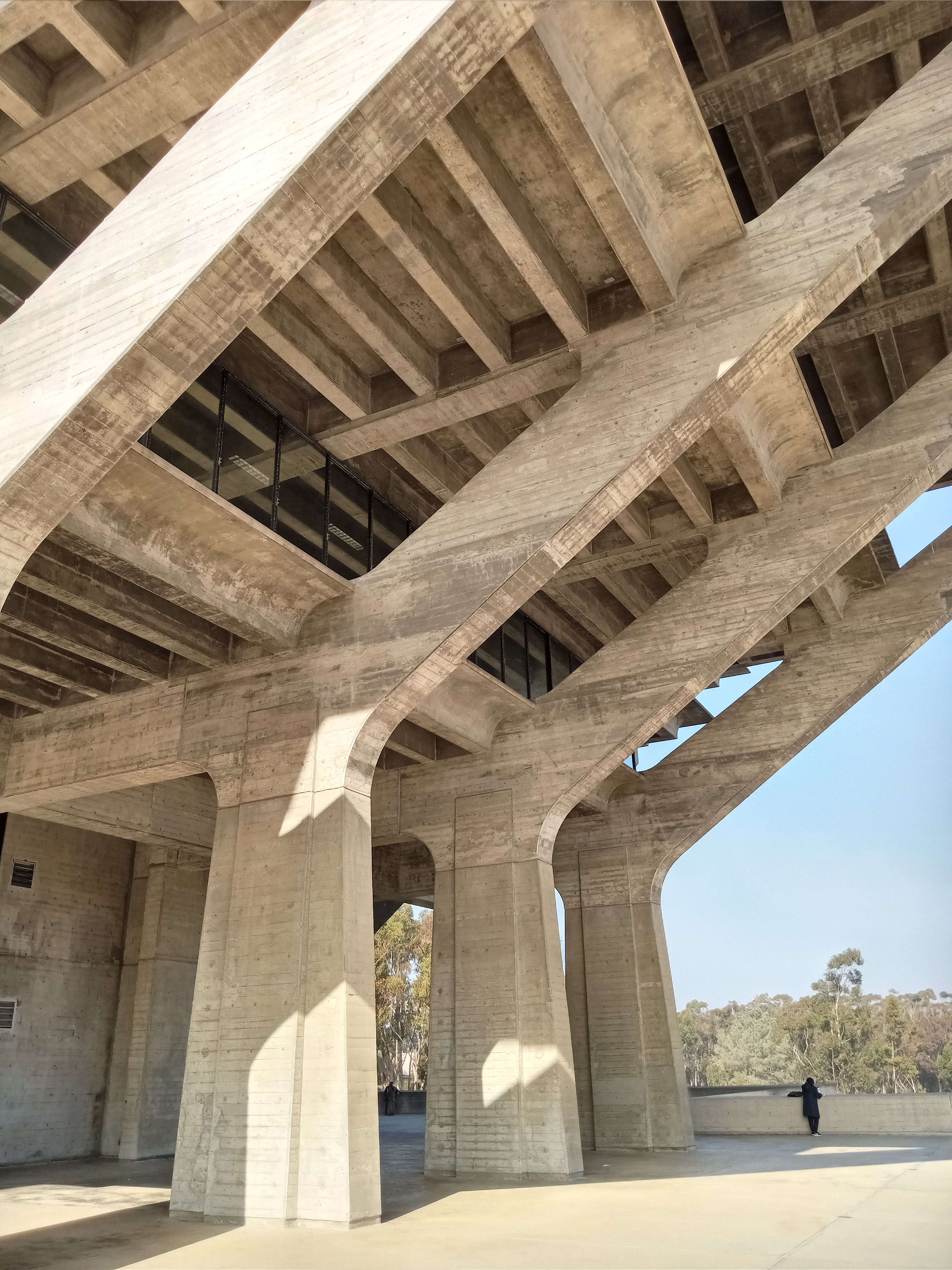
The architectural centerpiece of campus is Geisel Library, a Brutalist masterpiece which sits in the very center of campus, about a 10 minute walk from the Trolley station. The library resembles a spaceship that landed in the middle of campus, with the middle floors sticking out far above the base. The views from inside are great, though the building’s unique design does make the layout a bit confusing. The library is named for Theodor Seuss Geisel, better known as the famed children’s author Dr. Seuss, who settled in La Jolla and donated generously to the library. The library has a collection of his original drawings, sketches, and manuscripts, some of which are on display inside, while a statue of the author with his most famous creation, The Cat in the Hat, sits outside.
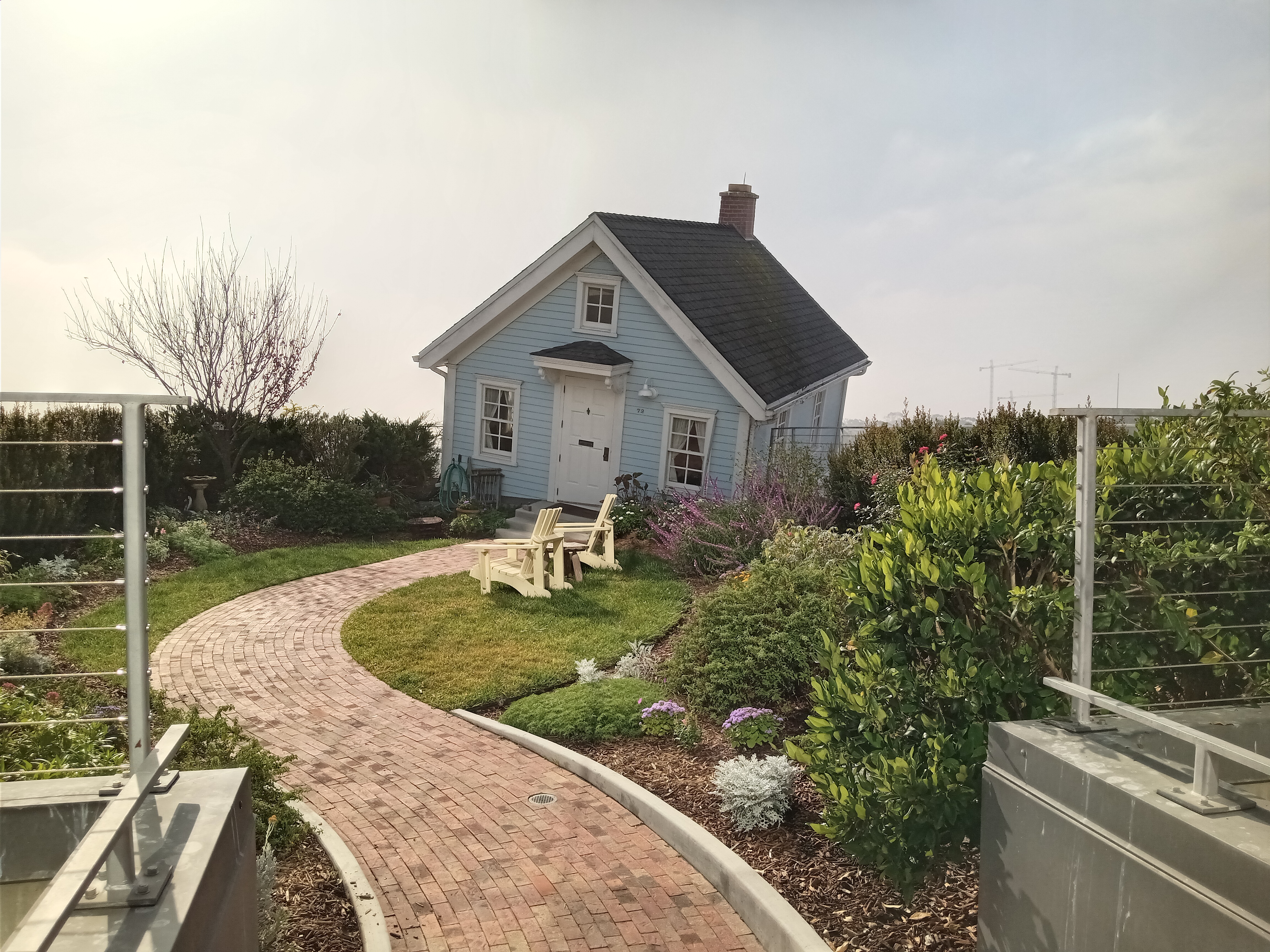
Directly east of the library, a winding path dubbed the Snake Path (and decorated as such) winds through a scenic garden, connecting to Warren Mall at the tail end. On the north side of the mall is the school of engineering, which is topped by the campus’ most stunning artwork: Fallen Star, which resembles a small house perched precariously on the roof of the building. It’s open to the public, although visiting hours are very limited, but you can always take the elevator up and admire it from the windows.
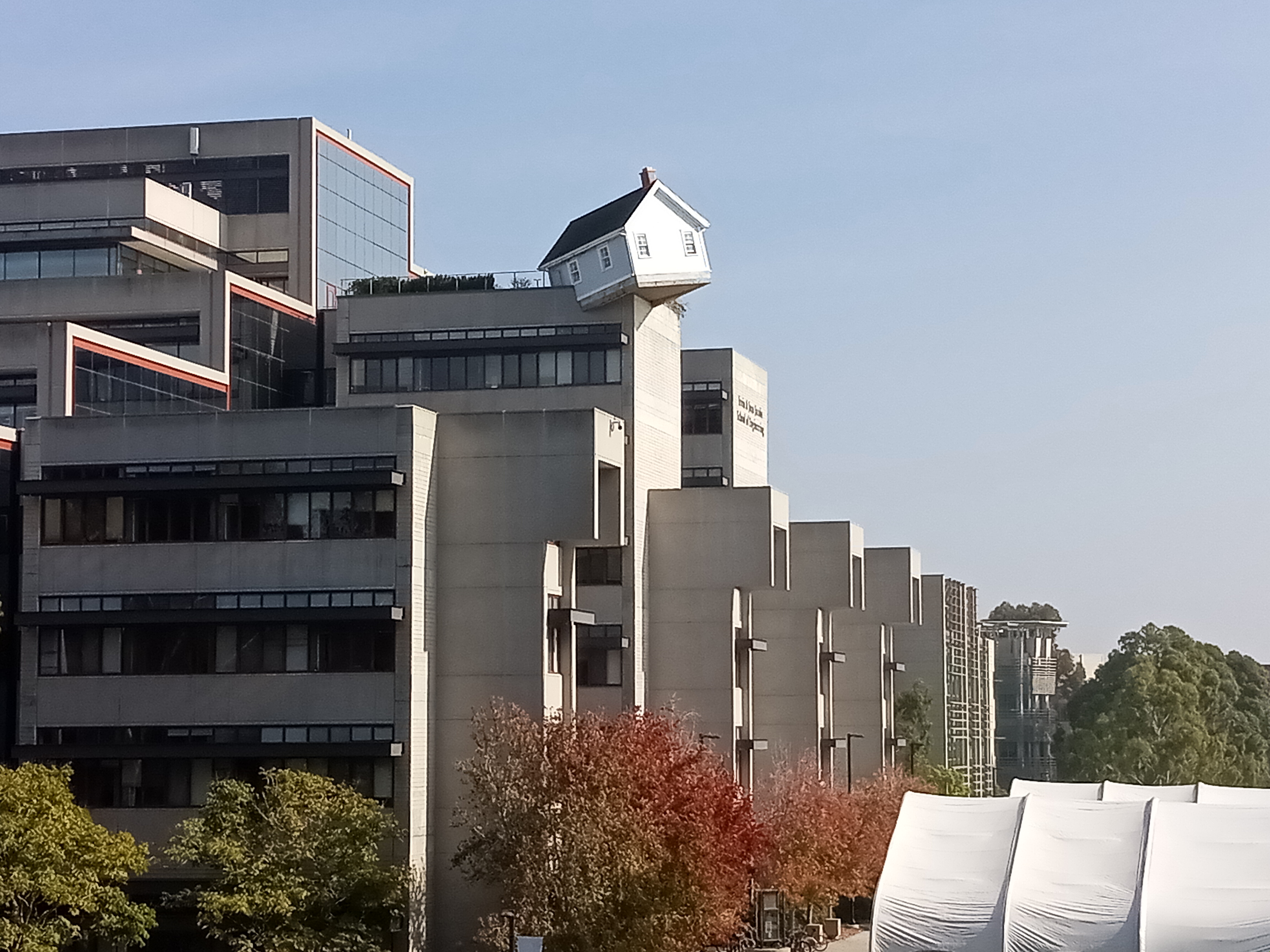
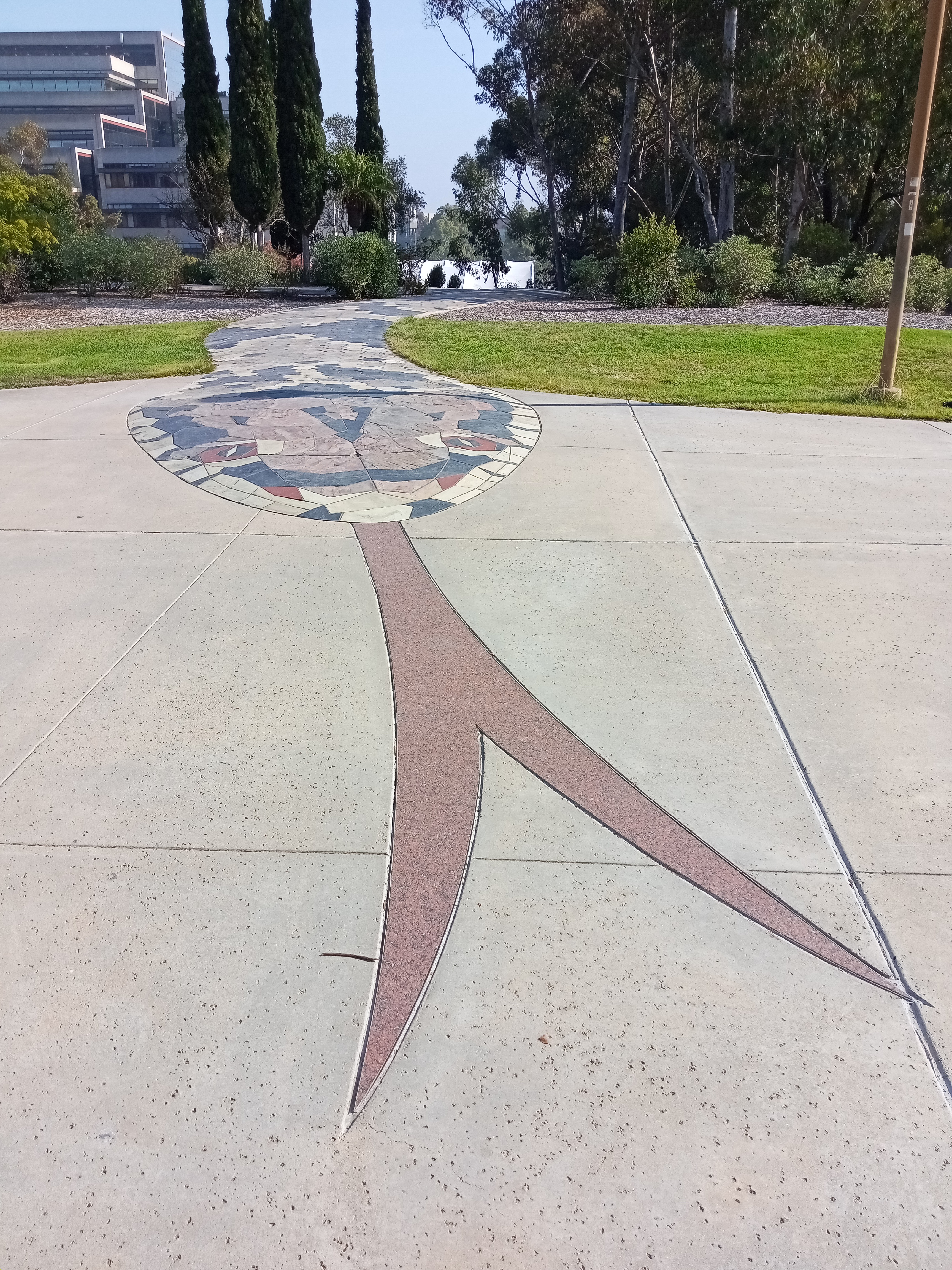
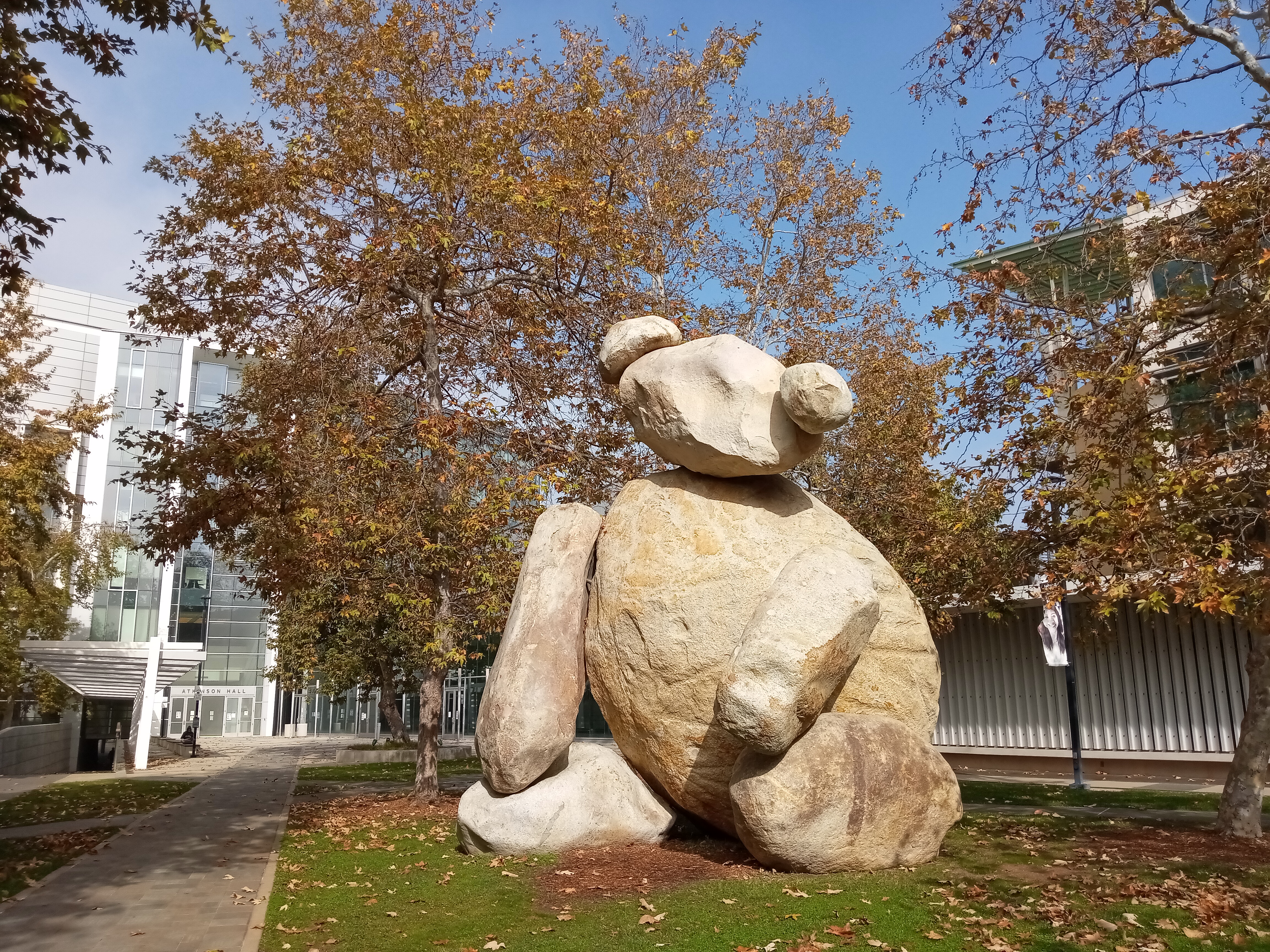
Along the west side of the library and the student center, a grove of eucalyptus trees covers the slope. Heading past the student center and up the slope will take you to the western side of campus. The first thing you’ll encounter is a grassy lawn overlooked by the Niki de Saint Phalle sculpture Sun God, which depicts a vividly colored bird standing atop an ivy-covered arch. Since its installation, it has become a beloved icon of the campus, with the lawn being a popular spot for student events.
Continuing south from the Sun God lawn will take you along the main axis through the western side of campus. Between Bonner and Mayer Halls, another exceptional example of Brutalist architecture stands in the form of a three-level pedestrian bridge spanning between the two buildings, with striking geometric forms. At the very southern edge of campus, surrounded by eucalyptus groves, is the university’s “Theater District,” home to several venues. Just outside the theater complex is the lowkey Che Café, a collectivist-run music venue that has played host to a lot of rock, indie, and punk bands over the years. At the heart of the theater complex is the very prestigious La Jolla Playhouse, which has produced many Broadway musicals.
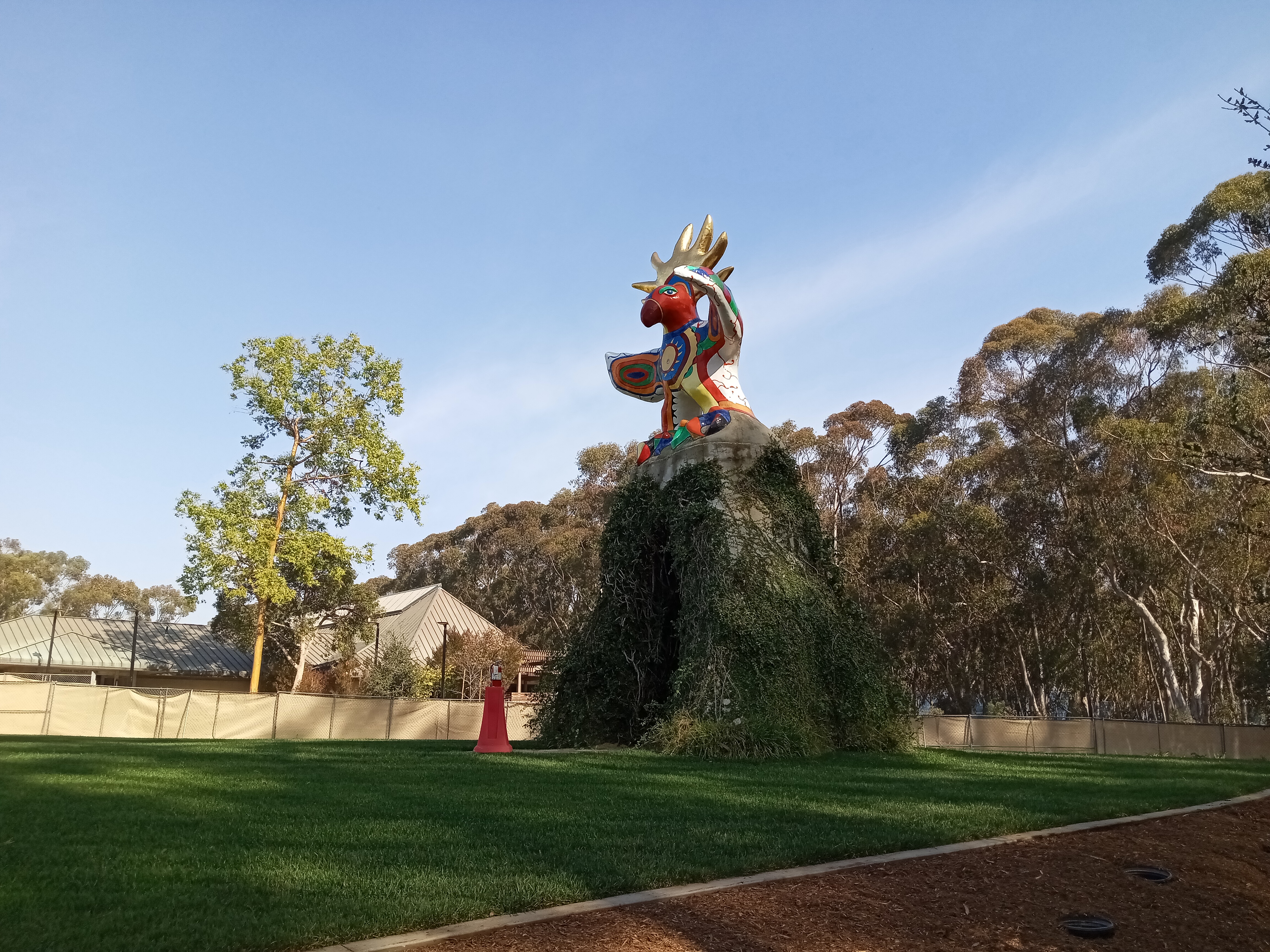
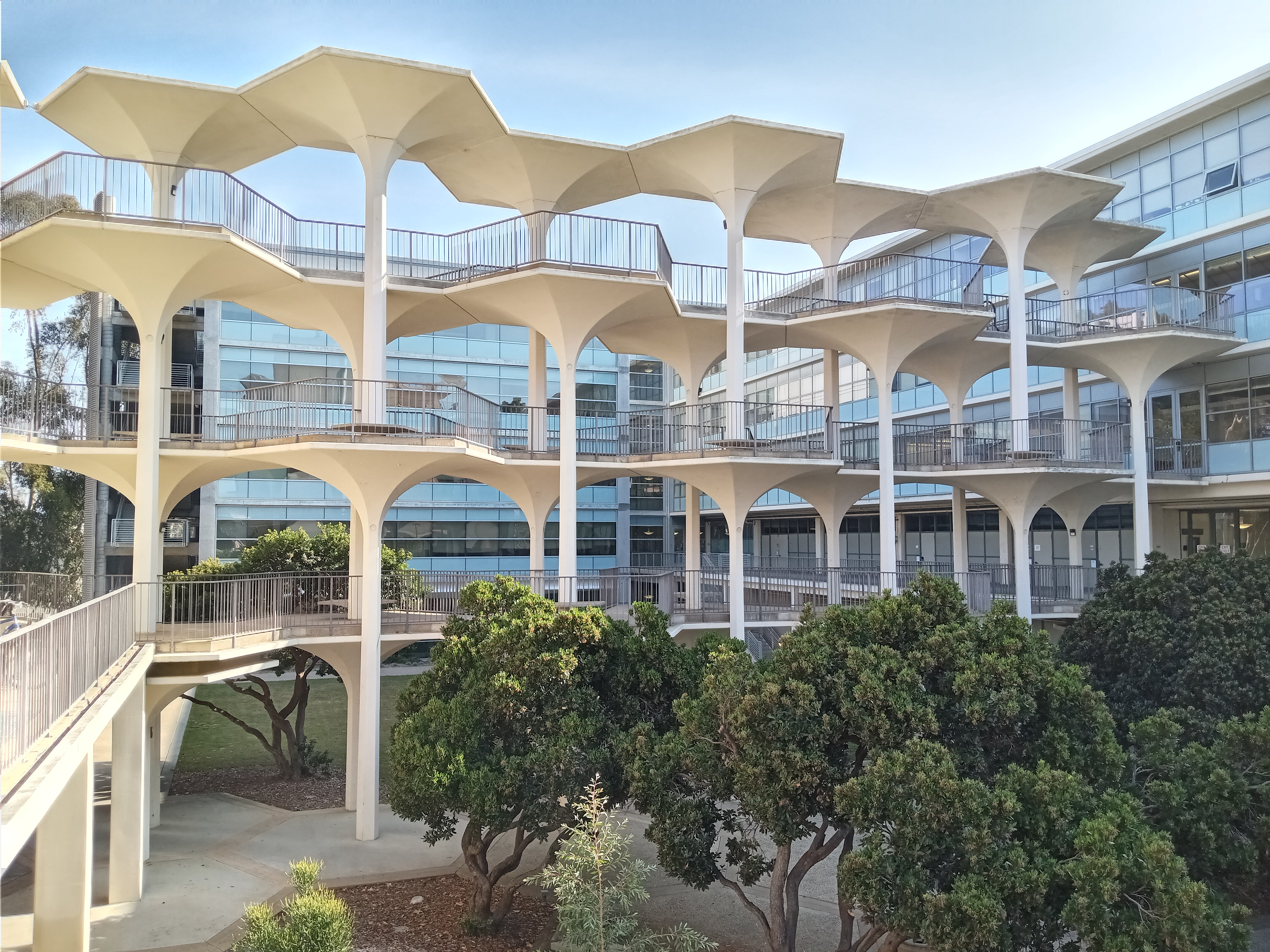
Taking the 30 bus from UCSD, the bus winds down through scenic La Jolla Shores, a neighborhood overlooking a wide, sandy beach. In the neighborhood is the campus of the Scripps Institution of Oceanography, a research institute attached to UCSD focused on oceanography, geology, and marine biology, with some of the most renowned programs in these fields. Overlooking the Scripps campus, the Birch Aquarium is the public face of the institute, with exhibits on the marine life of the Pacific Ocean, with giant octopus, sea turtles, little blue penguins, a kelp forest, and lots of fish on view, as well as an interactive tide pool area with a great view over the ocean. The closest bus stop is at La Jolla Shores Drive & Downwind Way, where a pedestrian bridge crosses over the road; from there, it’s about a 10 minute walk uphill (note, it’s a bit steep) on Downwind Way to the aquarium.
After passing through La Jolla Shores, the bus will enter La Jolla Village proper, the upscale district that overlooks the beautiful cove. The closest stop to the cove is at Torrey Pines Road & Prospect Place, just a 5 minute walk up the street from The Cave Store, a popular touristy gift shop that holds a stairway leading down into a natural sea cave—by paid admission, of course. But there’s plenty of gorgeous scenery right outside that’s free of charge.
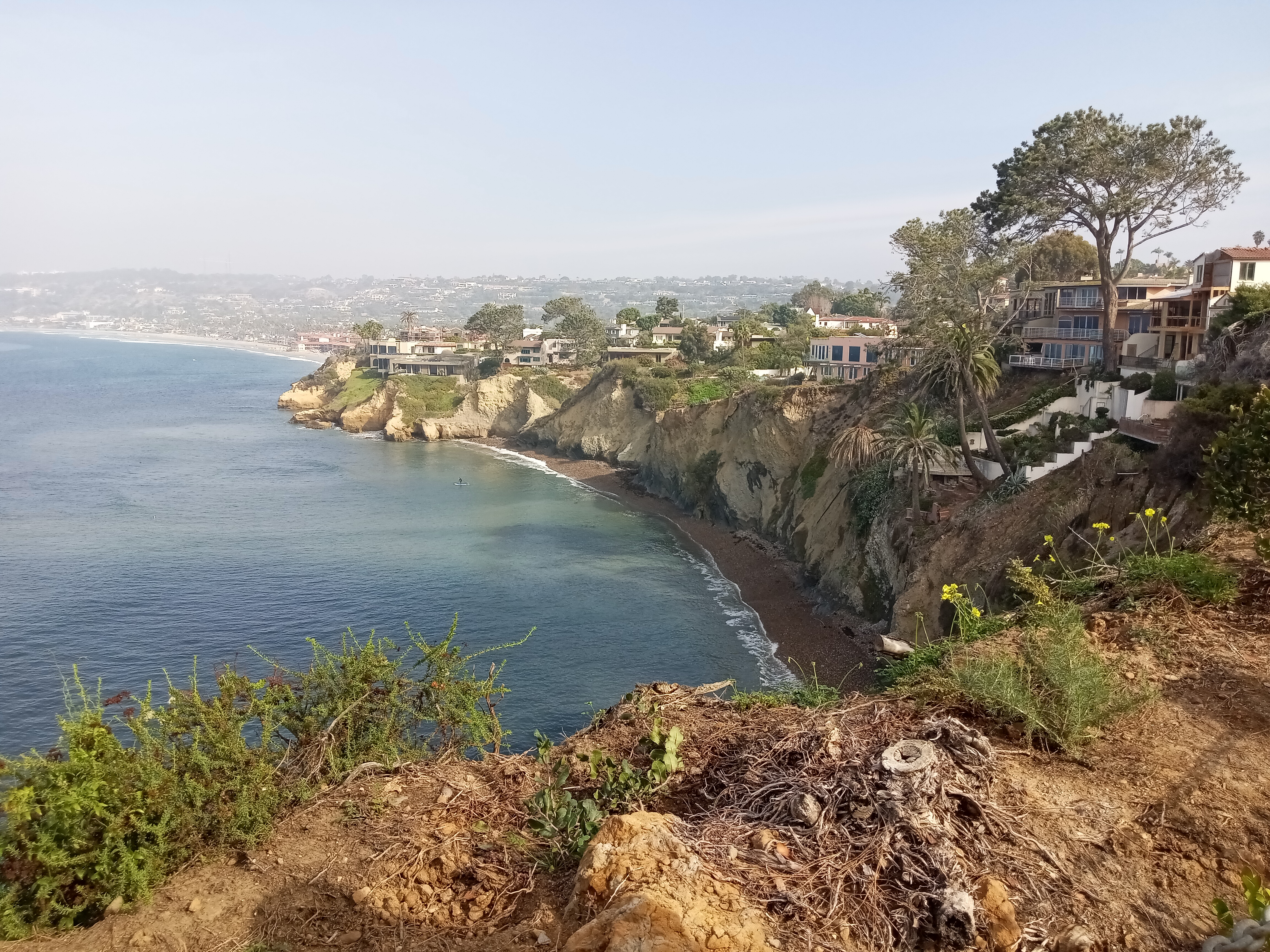
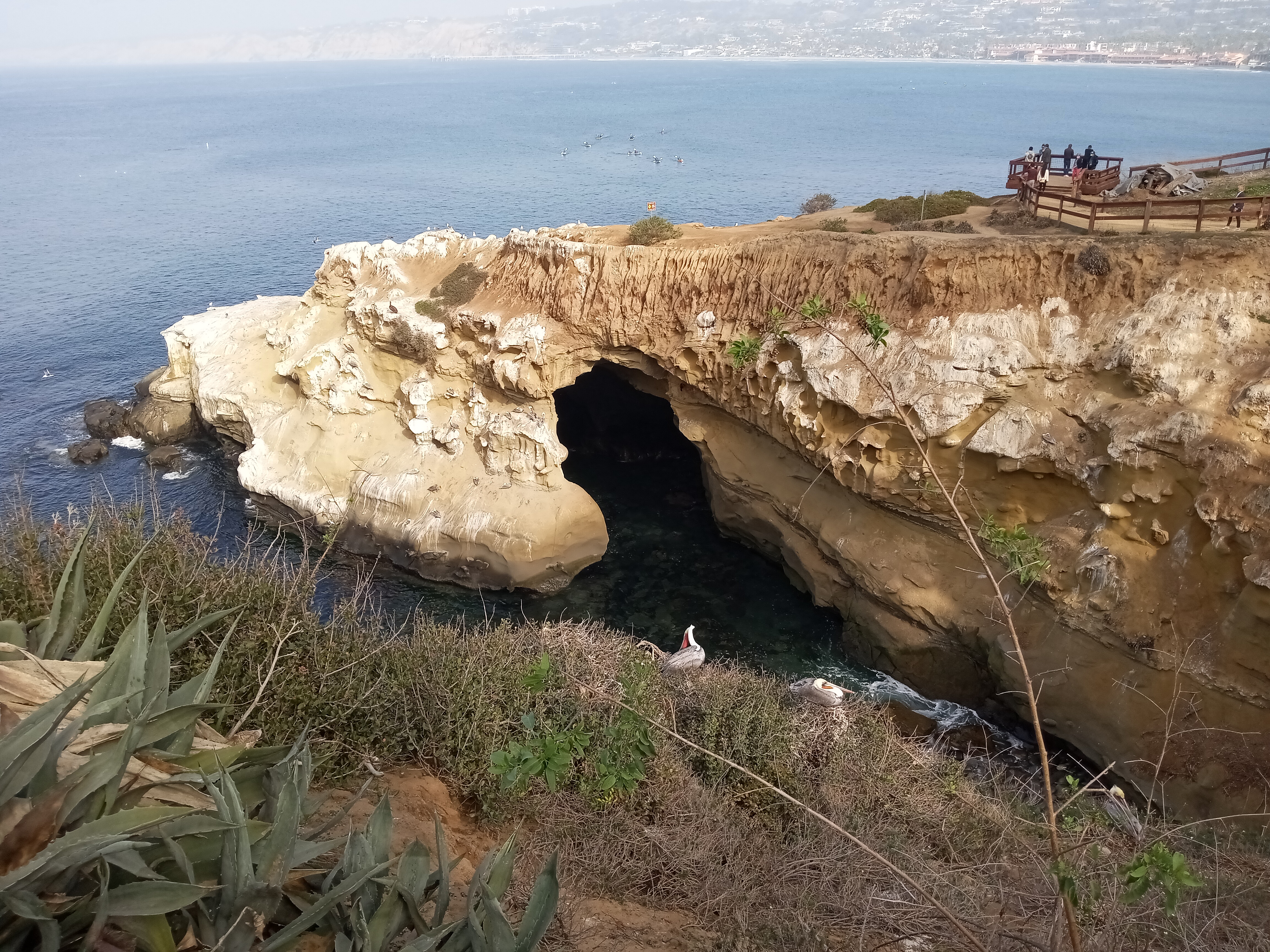
Coast Blvd hugs the winding coastline through La Jolla Village, at times tightly clinging to the edge of the cliffs. In front of The Cave Store, a short hiking trail splits off, with splendid views of the ocean and the waves crashing into the cliffs below. Walking along the edge, you’ll see flocks of seabirds nesting in the cliffs just below you, and kayakers braving the waves as they try to get close to the sea cave. And further along Coast Blvd, where a grassy park overlooks the water, a series of coves hold tiny beaches accessible only be steep, sandy stairways.
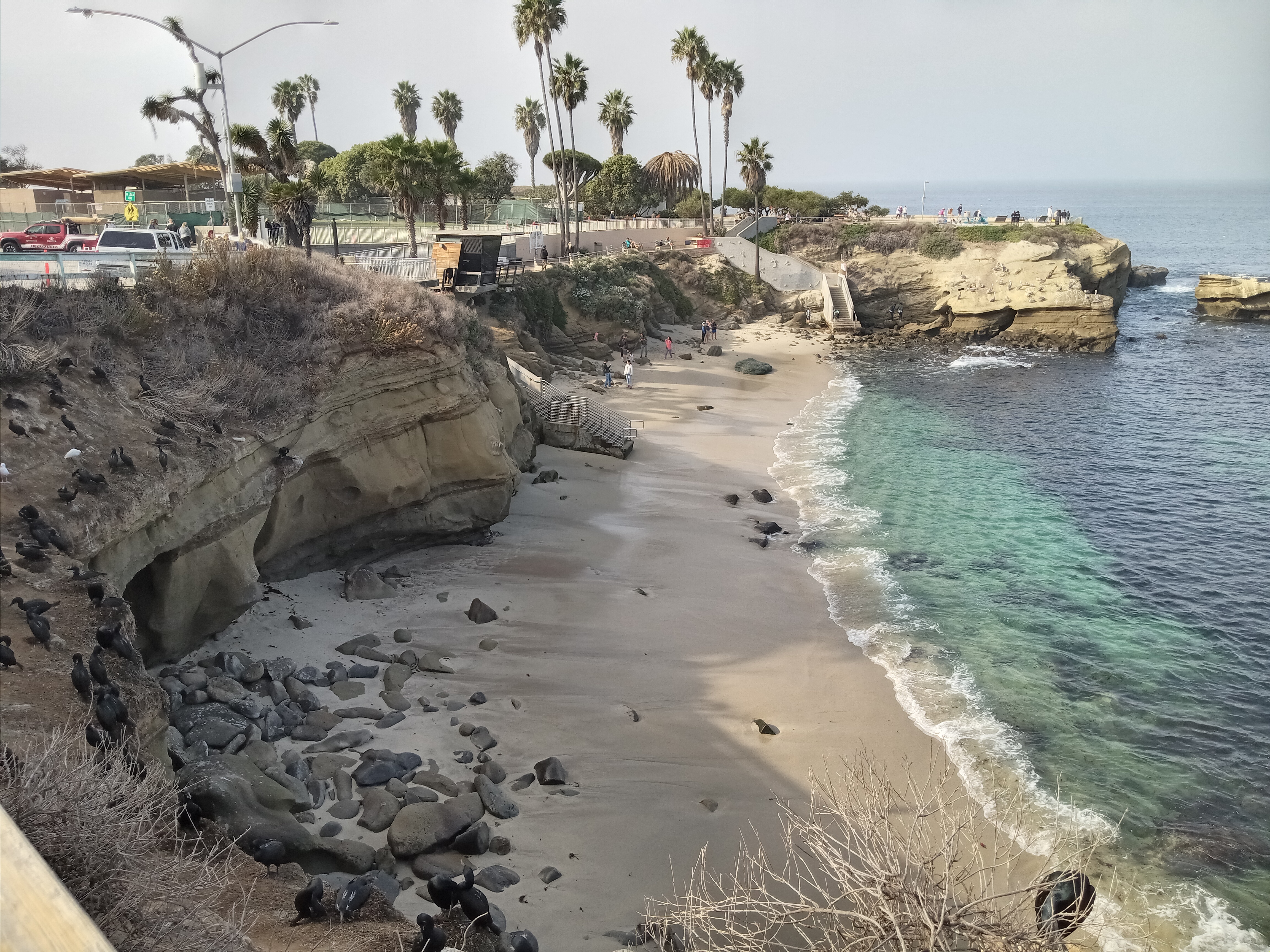
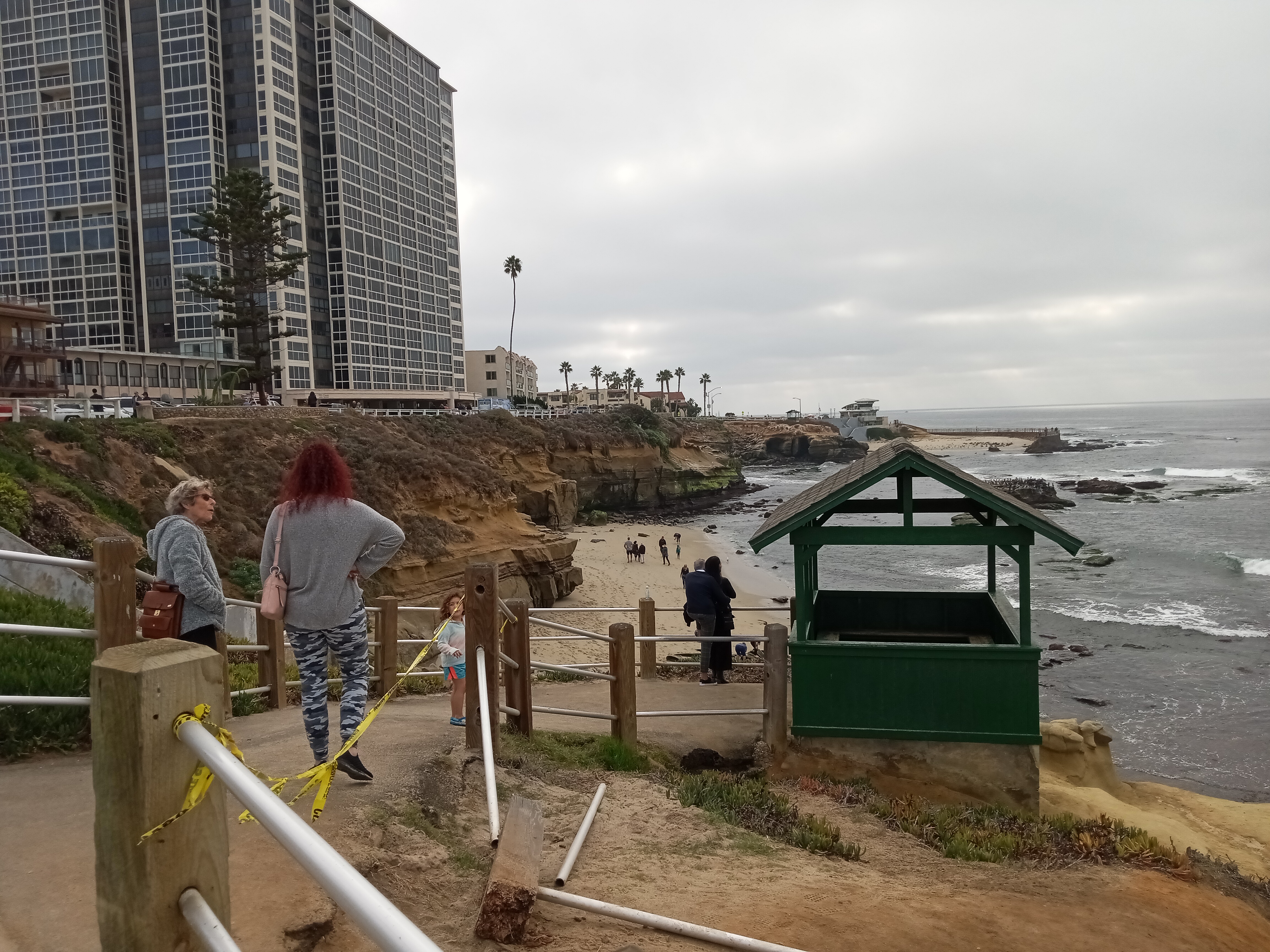
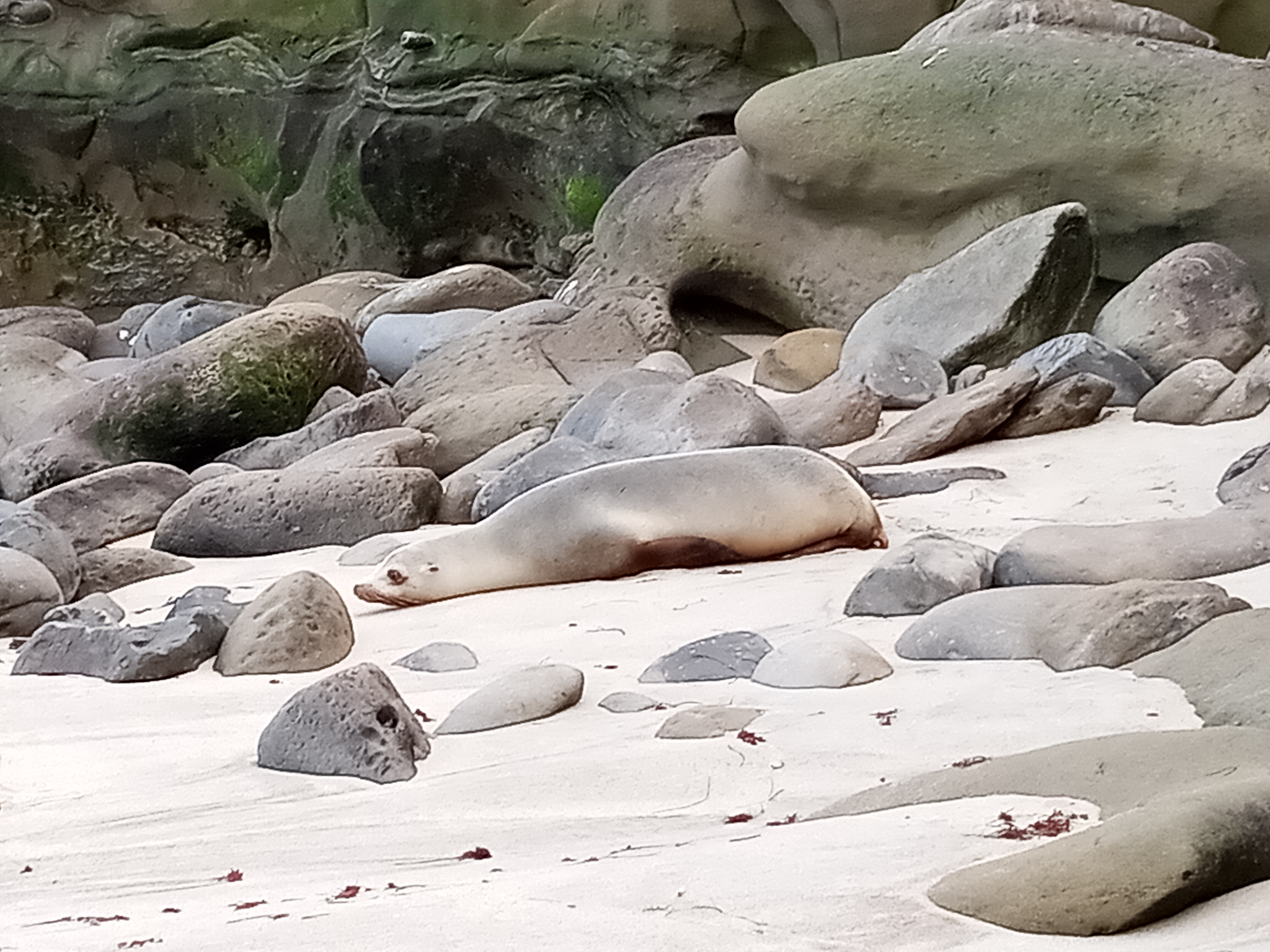
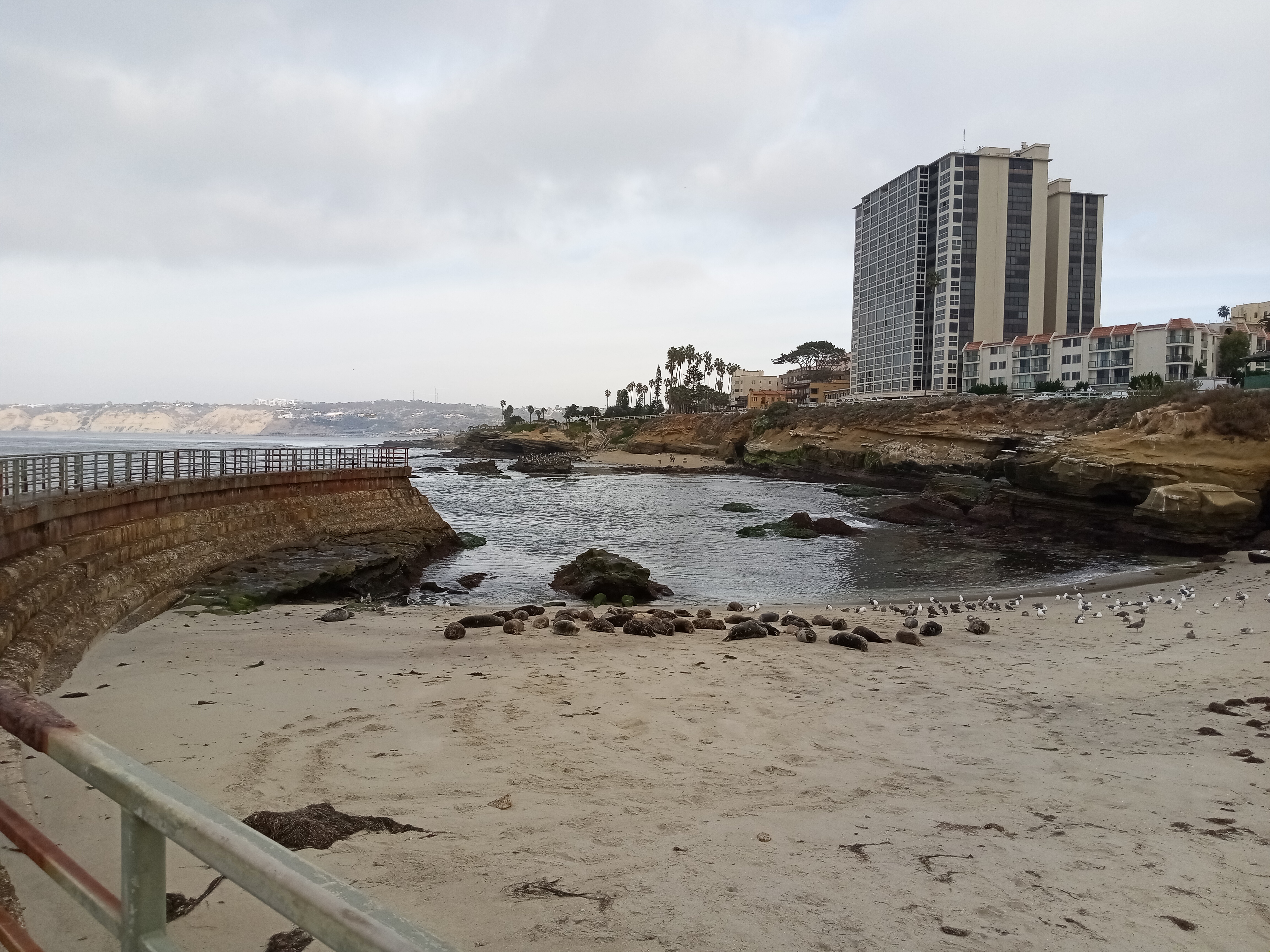
This brings us to La Jolla’s other major attraction, besides the scenery: sea lions. The coves have become a popular breeding ground for pinnipeds (the scientific term for seals and sea lions), with some beaches occasionally closed off due to the sheer number of them. They make for a delightful sight, particularly the masses of pinnipeds lounging at Children’s Pool, which is at the far end of the coves and has a long breakwater arcing around that gives you a great view. If you do happen to encounter a seal or sea lion on a beach, it is very important to stay far away; they can get stressed pretty easily and even get aggressive, and they are very large.
Being an upscale and touristy neighborhood, La Jolla has a lot of luxury hotels and a lot of really good places to eat, but expect high prices. One particularly charming spot is Brockton Villa, a long-standing and very popular brunch place on Coast Blvd near the Cave Store. It sits inside an old beach cottage, with abalone shells imbedded in the rock walls of the foundation. The food is excellent, with particularly good French toast. Reservations are all but necessary on the weekends.
The main bus stop for La Jolla Village is at Silverado St & Herschel Ave, a few blocks inland from the cove. From here you can take the 30 either back to UCSD (take “UTC/VA Med Ctr” bound buses) or continue down along the coast on the Old Town-bound bus through Pacific Beach.
 Transiting Los Angeles